
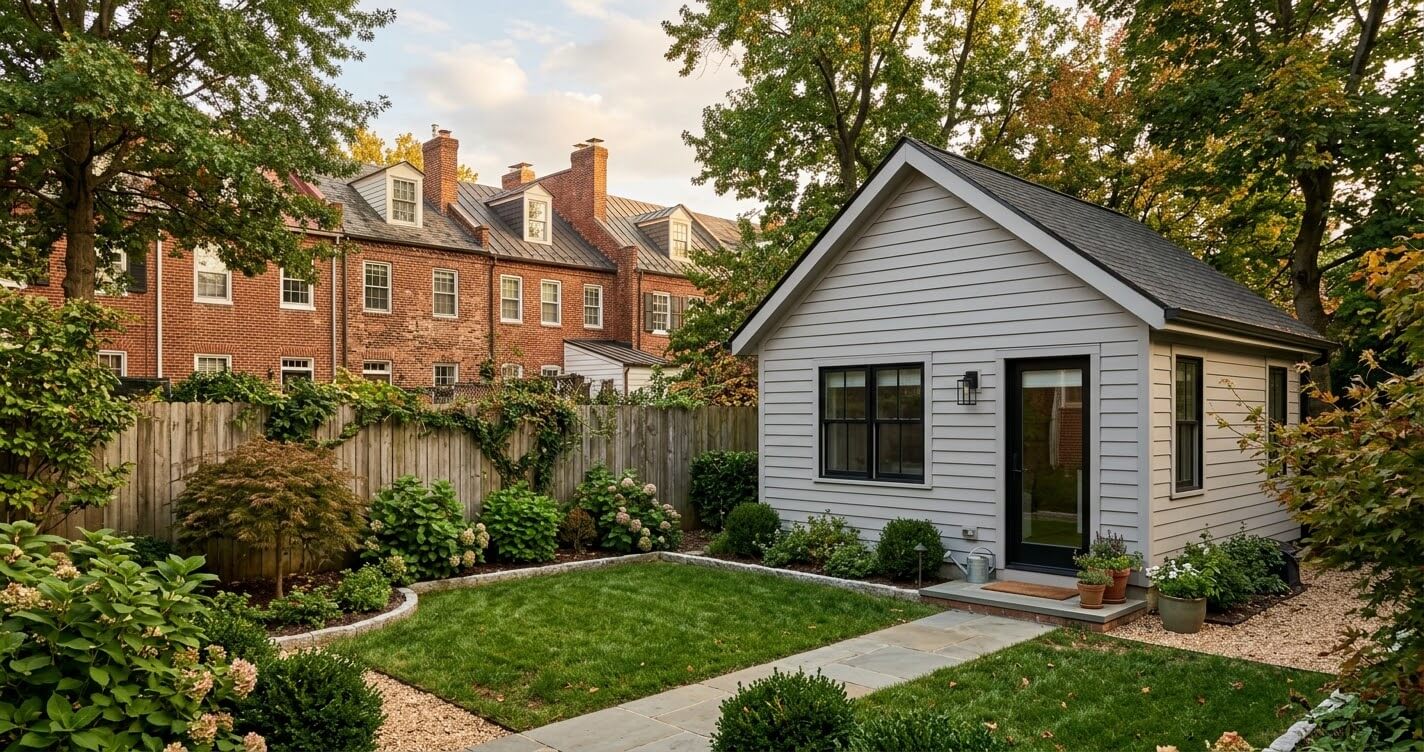
An ADU permit Alexandria VA homeowners need is an administrative building permit combined with a zoning compliance review under Zoning Ordinance Section 7-203, there is no public hearing for most lots, though properties inside a local historic district also need Board of Architectural Review (BAR) approval. The process runs through the city’s online ePermit system rather than a walk-in office, and it applies whether the ADU is a basement apartment, a garage conversion, or a new detached backyard structure.
Alexandria has allowed accessory dwelling units citywide since City Council formally approved the policy on January 23, 2021, following a multi-year community engagement process led by the Department of Planning & Zoning with research support from the Urban Institute. That makes Alexandria’s ADU program one of the longest-standing in Northern Virginia, predating similar policy discussions in Fairfax County and Arlington County by several years.
This guide breaks down exactly what an Alexandria ADU permit application requires: size limits, setback rules, owner-occupancy requirements, historic-district review, and the step-by-step approval sequence, so homeowners can plan a project that clears zoning review on the first submission.
For homeowners who want a design-build partner to manage this process directly, our ADU Builder in Alexandria, VA service page outlines how our team handles design, permitting, and construction as a single contract.
What Counts as an ADU in Alexandria, VA?
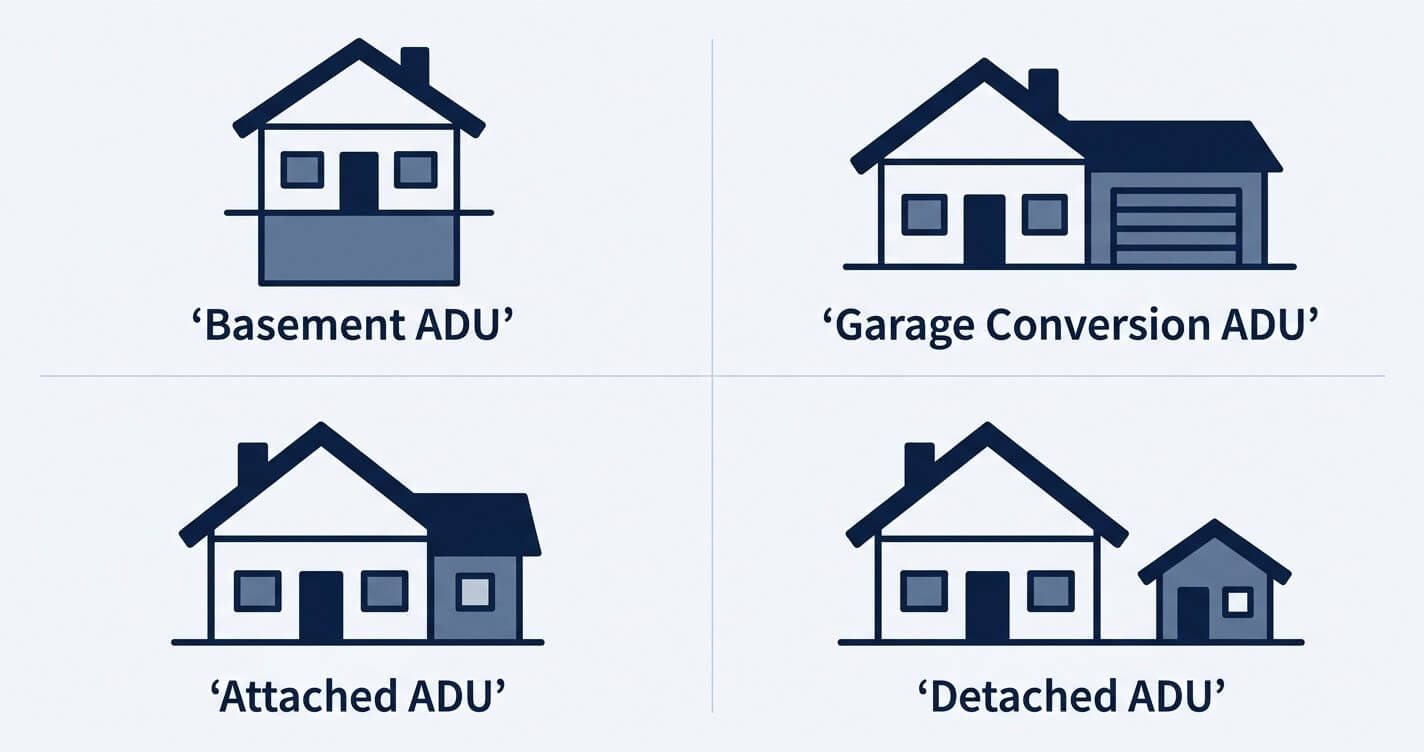
An ADU in Alexandria is a secondary, independent living unit on the same lot as a single-family home; it must have its own kitchen, sleeping area, and bathroom, and can take the form of a basement apartment, garage conversion, attached addition, or new detached structure. Alexandria’s zoning ordinance treats all of these configurations under the same Section 7-203 framework, though detached units face additional bulk and setback standards that attached or interior units do not.
The City’s own definition emphasizes three goals behind the policy: allowing new units compatible with established neighborhood character, gradually increasing lower-cost housing stock, and giving residents additional housing flexibility.
Types recognized under Alexandria’s ordinance:
- Basement or English basement apartments within the existing home
- Garage conversions (attached or detached garages)
- Attached additions with a separate entrance
- New detached backyard structures (subject to the accessory-building size and setback rules covered below)
Homeowners comparing this to jurisdictions across the Potomac should note that Fairfax County calls the same concept an “Accessory Living Unit” (ALU) rather than an ADU, a naming difference explained in our Accessory Living Unit Fairfax County VA guide.
ADU Size Limits in Alexandria: How Big Can You Build?
A detached ADU in Alexandria is capped at the greater of one-third of the main house’s floor area, or a fixed minimum tied to lot size, 100 square feet on lots of 2,500 square feet or less, 350 square feet on lots between roughly 2,500 and 8,000 square feet, and 600 square feet on lots of 8,000 square feet or more. Height cannot exceed the main house’s height or 20 feet, whichever is less.
These figures come directly from Section 7-203 of the City of Alexandria Zoning Ordinance. The ordinance calculates the size limit using the accessory building’s first-floor footprint, not total finished area, which matters for homeowners considering a two-story detached structure.
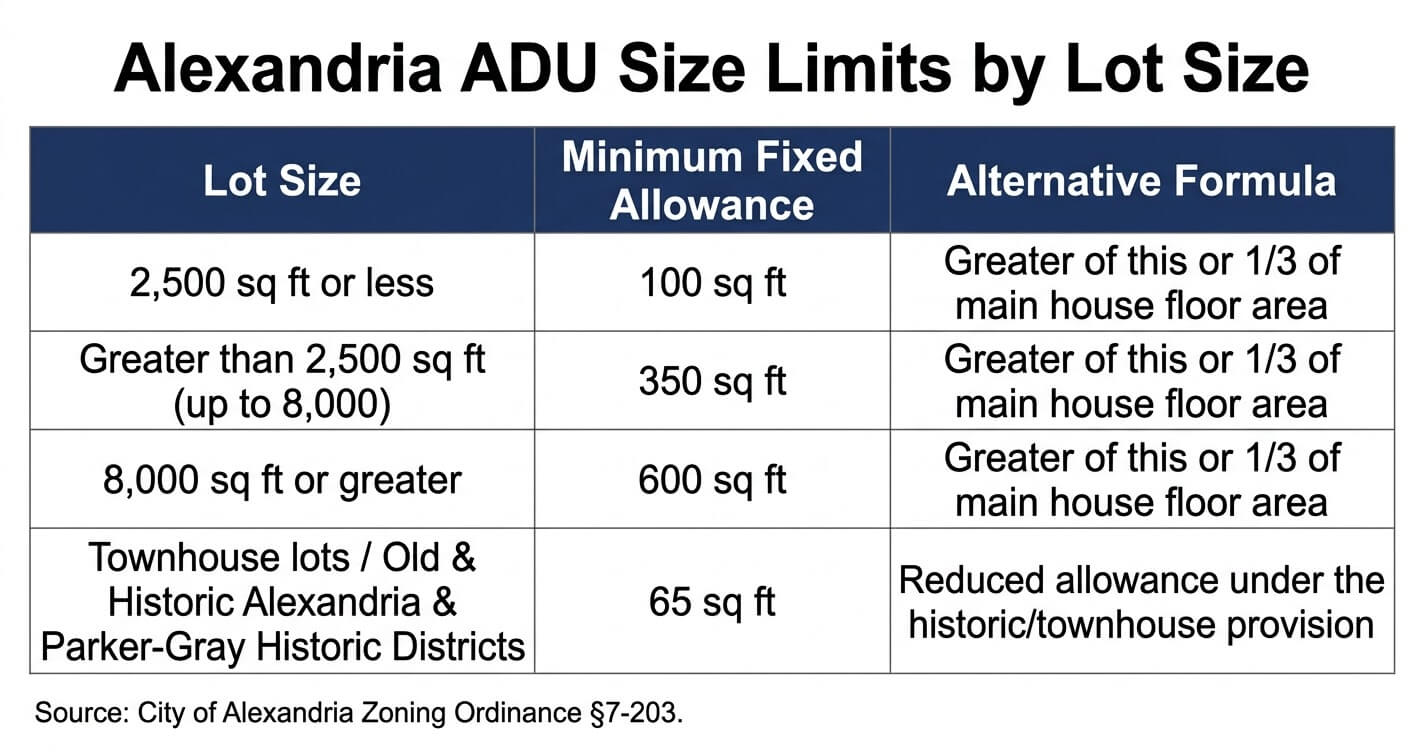
A reduced 65-square-foot allowance applies specifically to lots developed with townhouse dwellings and to properties within the Alexandria Old and Historic District or the Parker-Gray Historic District, a detail homeowners in Old Town frequently overlook when sizing a project.
For interior ADUs (basement apartments, attached conversions), the size calculation works differently because the unit is bound by the existing walls of the primary structure rather than a separate footprint, homeowners should confirm the applicable calculation with Planning & Zoning staff before finalizing floor plans.
Homeowners comparing project costs across configurations may find it useful to review our ADU Cost Alexandria VA guide, which breaks down typical construction budgets by ADU type.
Setback and Site Requirements for an Alexandria ADU
A detached ADU in Alexandria must sit at least 1 foot from the side and rear property lines, that setback increases to 3 feet if the structure has windows facing the lot line. Homeowners with an existing detached garage or shed that already exceeds current height, size, or setback standards may still be able to convert it into an ADU, but only with a special exception from the Board of Zoning Appeals (BZA).
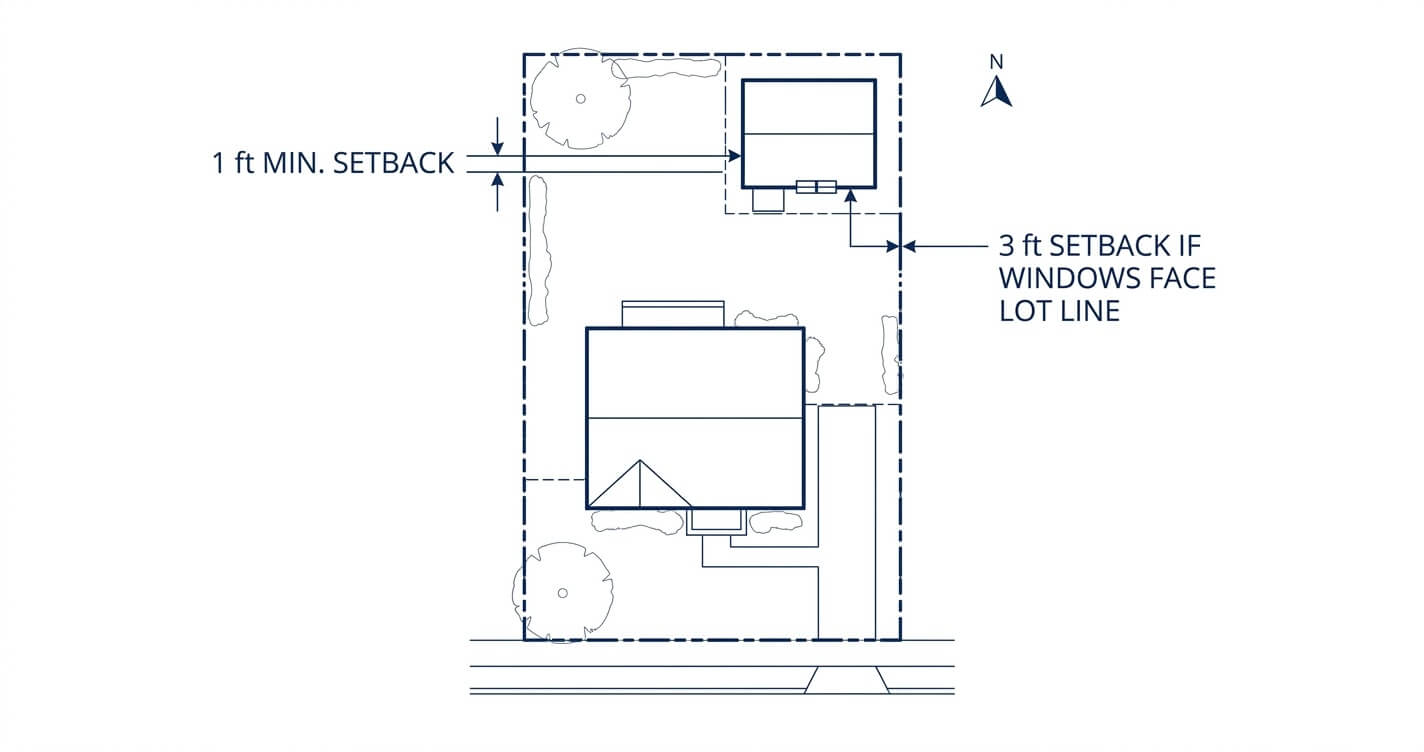
These bulk and setback standards apply regardless of other underlying zoning-district requirements, the ordinance treats an accessory building containing an ADU as its own category, similar to how it treats detached garages, rather than applying the primary structure’s setback rules.
Site planning considerations that commonly affect Alexandria ADU projects:
- Utility trenching distance from the main house to a detached unit
- Tree preservation requirements on older, heavily wooded lots
- Stormwater and impervious-surface calculations, particularly on smaller Old Town lots
- Alignment with the main house’s architectural character, especially in design-review zones
Owner-Occupancy, Ownership, and Rental Rules
Alexandria requires that the property owner live in either the main house or the ADU, not necessarily both, but at least one, and the ADU and primary residence must remain under common ownership; only one family may occupy the ADU at a time. No additional off-street parking is required for the ADU itself, and none of the home’s existing required parking spaces may be removed to accommodate construction.
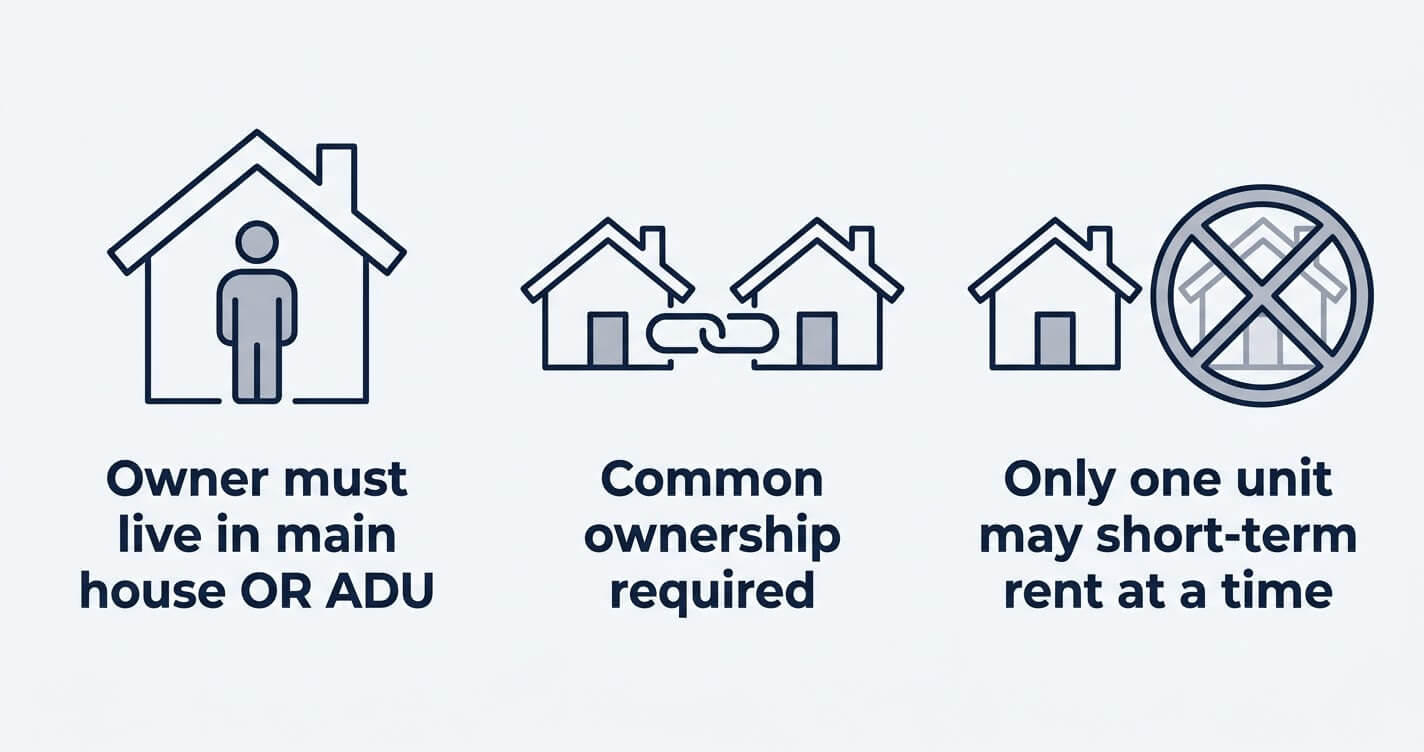
Short-term rental of the ADU is permitted under current city policy, but the main house and the ADU cannot both be rented short-term at the same time, only one of the two units on the property may operate as a short-term rental in any given period.
For homeowners weighing long-term rental income against these occupancy rules, our ADU Rental Income Northern Virginia guide walks through realistic rent ranges and ROI expectations across the region, including basement and detached configurations comparable to what Alexandria’s ordinance allows.
Given that only 42.1% of occupied housing units in Alexandria are owner-occupied, the remaining 57.9% are renter-occupied, with median gross rent at $2,089, the occupancy and ownership rules matter for a large share of the city’s housing stock when an owner is evaluating whether their property currently qualifies.
The Alexandria ADU Permit Process, Step by Step
An Alexandria ADU permit application is submitted through the city’s online ePermit portal, reviewed administratively by the Department of Planning & Zoning without a public hearing, and then proceeds to a standard building permit and trade permits before construction can begin. Homeowners in a historic district need an additional Board of Architectural Review step before the zoning review is complete.
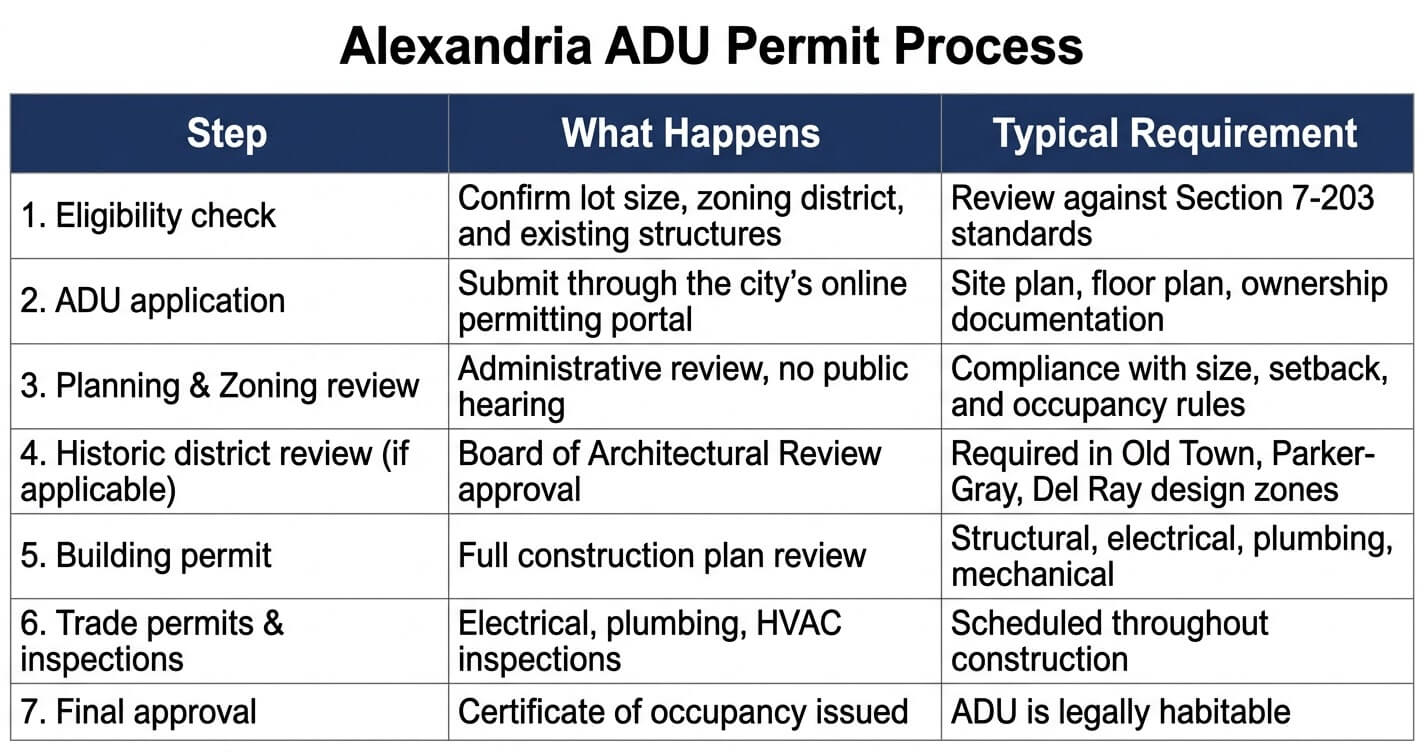
Homeowners planning a project on a smaller Alexandria lot may benefit from discussing footprint and setback options with an experienced design-build team before finalizing a floor plan, since Alexandria’s size formula can produce a smaller allowable footprint than homeowners expect on a compact Old Town or Del Ray parcel.
Historic District Rules: Old Town, Parker-Gray & Del Ray
Any ADU that is visible from a public right-of-way inside the Alexandria Old and Historic District, the Parker-Gray Historic District, or a designated historic overlay generally requires Board of Architectural Review (BAR) approval in addition to standard zoning and building permits. This review looks at exterior massing, materials, and compatibility with the surrounding historic streetscape, not just the ADU’s compliance with size and setback rules.
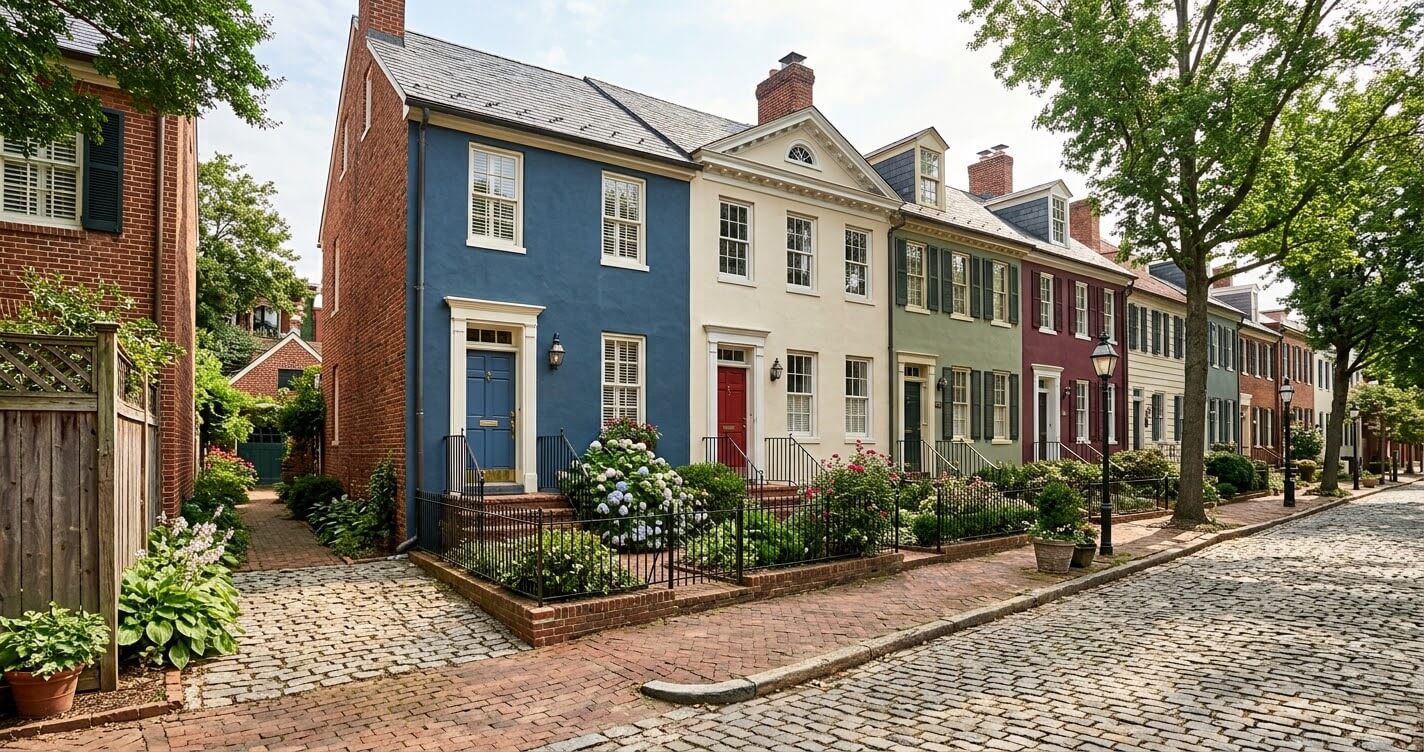
Because these districts also carry the reduced 65-square-foot allowance described earlier, homeowners in Old Town or Parker-Gray are working within the tightest size constraints in the entire city, which makes early floor-plan review especially important before submitting for BAR approval.
How Alexandria’s ADU Rules Compare to Fairfax County and Arlington
Alexandria, Fairfax County, and Arlington County each regulate ADUs under their own separate ordinances, and none of the three follow identical size, setback, or permit-process rules, a plan that satisfies one jurisdiction’s requirements will not automatically satisfy another’s. Alexandria’s process is the most streamlined of the three on paper (a single administrative permit, no public hearing for most lots), but its size limits are also the most restrictive on smaller lots.
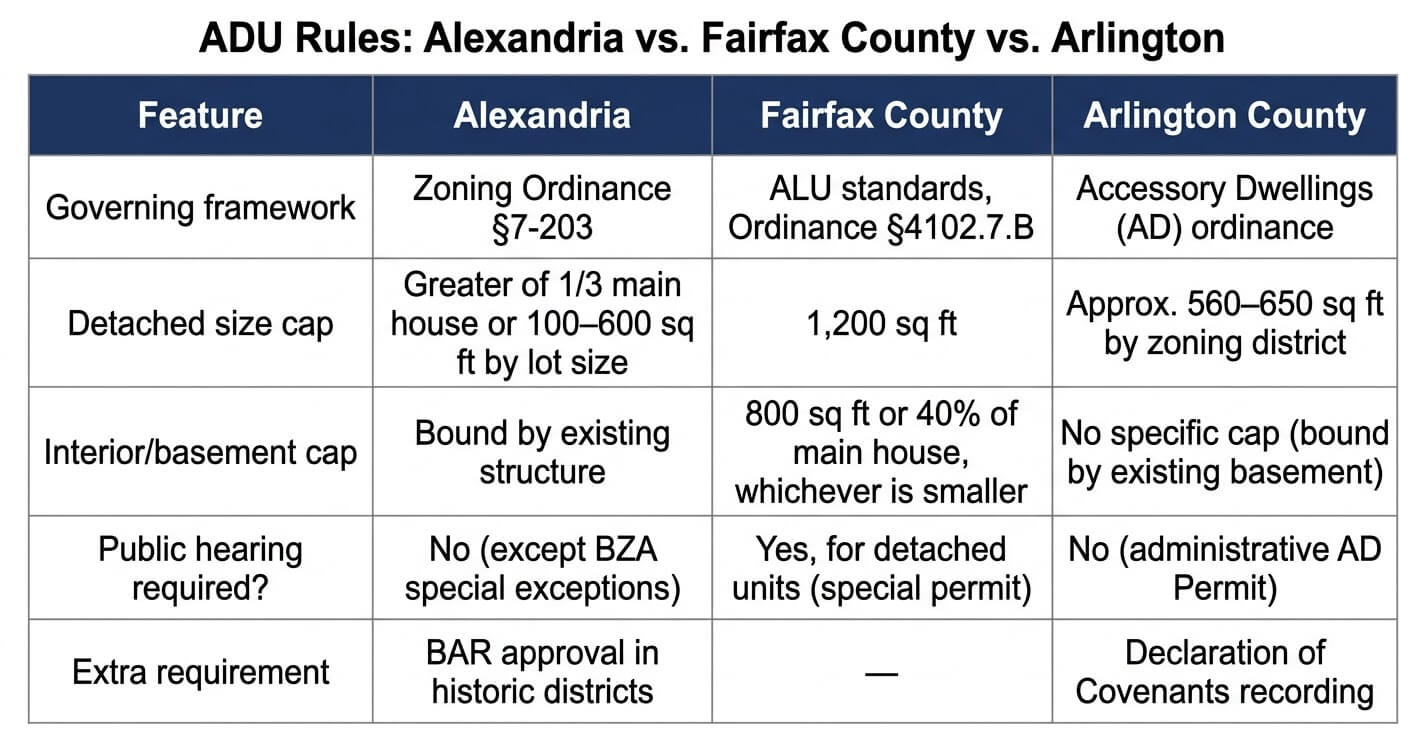
Homeowners can review the full county-specific breakdowns in our ADU Permit Fairfax County VA guide and our ADU Permit Arlington VA guide, both of which follow the same format as this Alexandria guide.
Virginia’s SB 531: What It Means (and Doesn’t Mean) for Alexandria
Virginia’s Senate Bill 531, signed by Governor Abigail Spanberger on April 13, 2026, requires localities statewide to permit ADUs by right in single-family zoning districts and caps ADU permit fees at $500, but the law exempts any locality that already had an ADU ordinance in effect as of January 1, 2026, and Alexandria has had one since 2021. That means Alexandria continues operating under its existing Section 7-203 rules rather than the new statewide standard, at least for now.
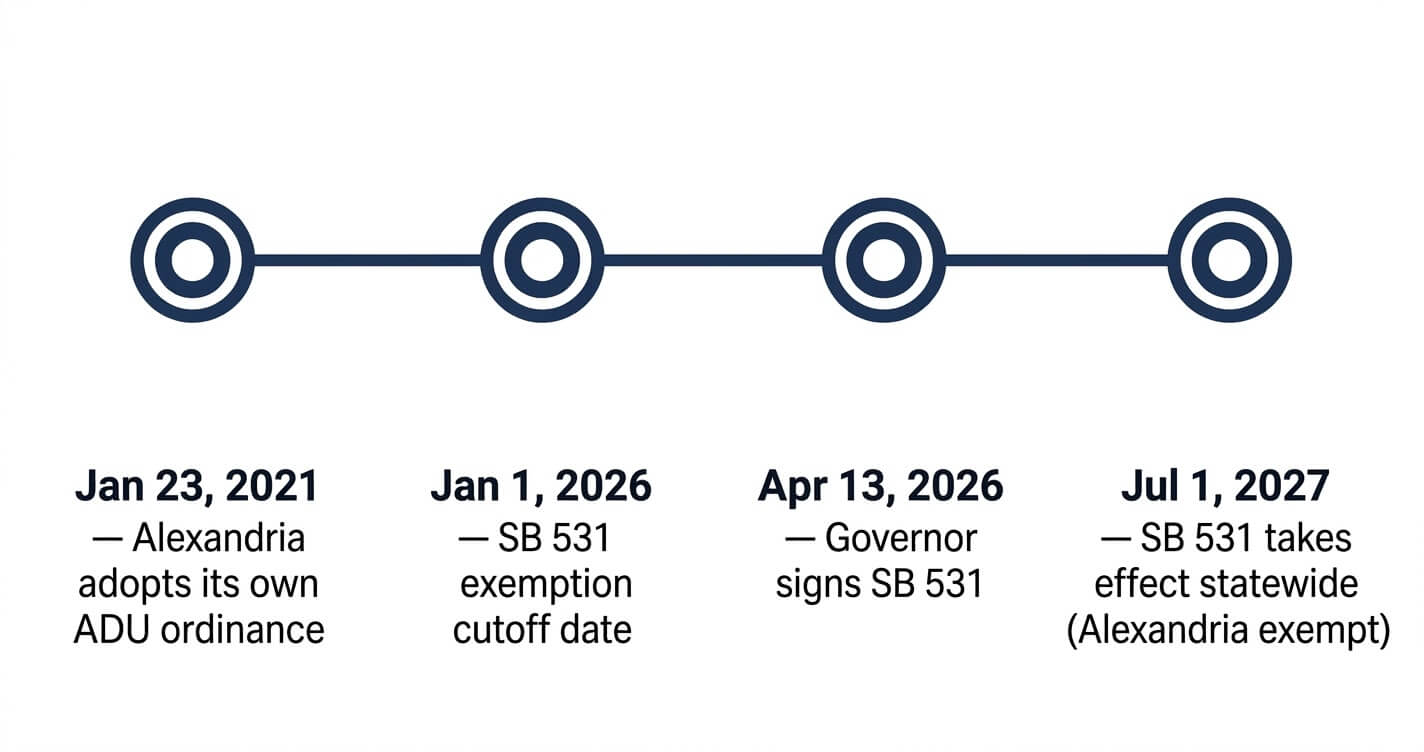
SB 531 carries a delayed effective date of July 1, 2027, and its text specifically defines the by-right standard, the $500 fee cap, and restrictions on setback and occupancy requirements for localities that did not already regulate ADUs.
Because Alexandria’s 2021 policy predates the bill’s January 1, 2026 cutoff, homeowners should plan around the city’s current Section 7-203 rules rather than assume the new statewide framework applies here.
For a deeper look at how SB 531 is reshaping ADU policy in jurisdictions that did not already have an ordinance, see our Arlington ADU Rules 2027 guide, which covers the same legislation from Arlington’s perspective.
Common Alexandria ADU Permit Mistakes to Avoid
The most common mistake homeowners make in Alexandria is designing an ADU around Fairfax County or Arlington’s size and setback numbers instead of Alexandria’s own Section 7-203 formula, the three jurisdictions are not interchangeable. A close second is skipping Board of Architectural Review consideration for a historic-district property until after a floor plan is already finalized.
Additional mistakes that commonly delay Alexandria ADU applications:
- Assuming a “granny flat” built years ago without a permit can simply be legalized retroactively without a full compliance review
- Underestimating how the reduced 65-square-foot historic-district/townhouse allowance affects design options
- Overlooking the common-ownership and owner-occupancy requirement when a property is held in a trust or LLC
- Attempting simultaneous short-term rental of both the main house and the ADU, which the ordinance does not allow
What an Alexandria ADU Permit Costs and How Long It Takes
Most Alexandria ADU projects move through Planning & Zoning review administratively rather than through a public hearing, which generally makes the zoning portion of the timeline faster than in jurisdictions requiring a special-use permit for detached units, though the total project timeline still depends heavily on building-permit review, historic district approval where applicable, and construction scheduling. Homeowners should budget for the zoning determination, building permit review, and trade permit inspections as three distinct phases rather than a single approval step.
Because Alexandria does not publish a single fixed processing-time guarantee for ADU applications, homeowners planning a project on a specific timeline should confirm current review queues directly with the Department of Planning & Zoning at the contact listed on the city’s ADU policy page before setting a construction start date.
Homeowners considering an ADU for rental income or multigenerational housing should evaluate the full project cost, not just permit fees, our ADU Cost Alexandria VA guide and ADU Tax Benefits Northern Virginia guide both address budgeting considerations beyond the permit itself. Consulting with an experienced design-build team early in the process can help identify realistic sizing, siting, and timeline expectations for a specific Alexandria property.
Frequently Asked Questions
Do I need a permit to build an ADU in Alexandria, VA?
Yes. Every ADU in Alexandria requires a building permit and a zoning compliance review under Zoning Ordinance Section 7-203, submitted through the city’s online ePermit portal.
How big can an ADU be in Alexandria?
A detached ADU’s footprint is capped at the greater of one-third of the main house’s floor area or a fixed minimum ranging from 100 to 600 square feet depending on lot size, with a reduced 65-square-foot allowance for townhouse lots and historic districts.
Do I have to live in the ADU or the main house?
Yes. Alexandria requires the property owner to occupy either the ADU or the main house, and both structures must remain under common ownership.
Can I rent out my Alexandria ADU short-term?
Short-term rental of the ADU is allowed, but the main house and ADU cannot both operate as short-term rentals at the same time.
Does my property need Board of Architectural Review approval?
Only if the ADU is visible from a public right-of-way within the Alexandria Old and Historic District, the Parker-Gray Historic District, or another designated historic overlay.
How does Alexandria’s ADU ordinance compare to Fairfax County’s?
Fairfax County calls the same concept an Accessory Living Unit (ALU) and allows a larger 1,200-square-foot detached cap, but requires a special permit with a Board of Zoning Appeals hearing for detached units; Alexandria’s process is administrative with no public hearing for most lots.
Will Virginia’s new SB 531 change Alexandria’s ADU rules?
Not immediately. SB 531 exempts localities, including Alexandria, that already had an ADU ordinance in effect as of January 1, 2026, so Alexandria continues under its existing Section 7-203 rules.
What is the fastest type of ADU to get approved in Alexandria?
Interior conversions such as basement apartments generally avoid the detached-structure setback and BZA special-exception issues that can slow down new construction, though every project still requires the same zoning and building permit review.
Final Thoughts
An ADU permit Alexandria VA homeowners pursue today is governed by rules the city has refined since adopting its ADU policy in January 2021, a framework built specifically around Alexandria’s older, denser lot patterns rather than borrowed from a neighboring county. Getting the size formula, setback distances, and ownership requirements right from the start is what separates a smooth administrative approval from a project that stalls in review.
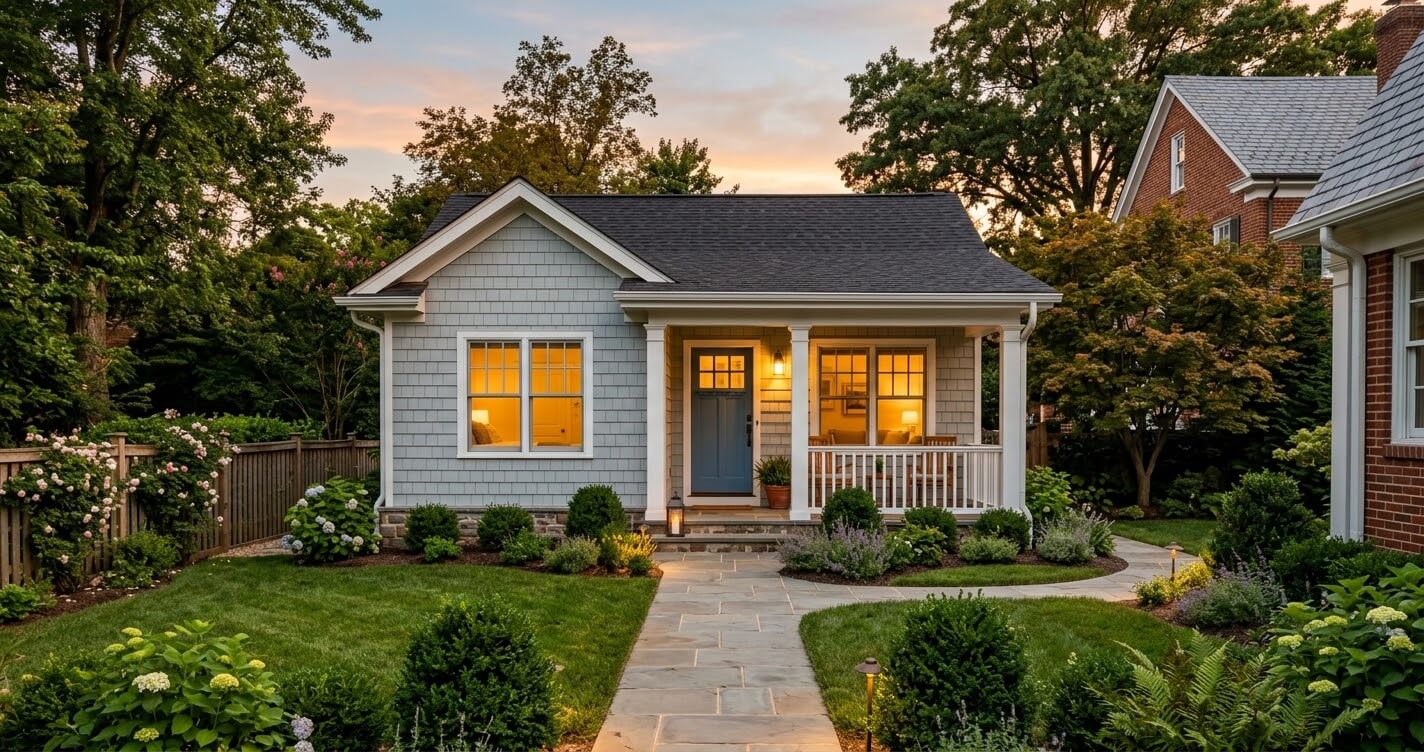
Planning an ADU in Alexandria? Contact US Home Design Build to review your lot’s zoning eligibility, size limits, and permit timeline with our team.
Visit our ADU Builder Northern Virginia page to see how we handle design, permitting, and construction as one coordinated process.
