
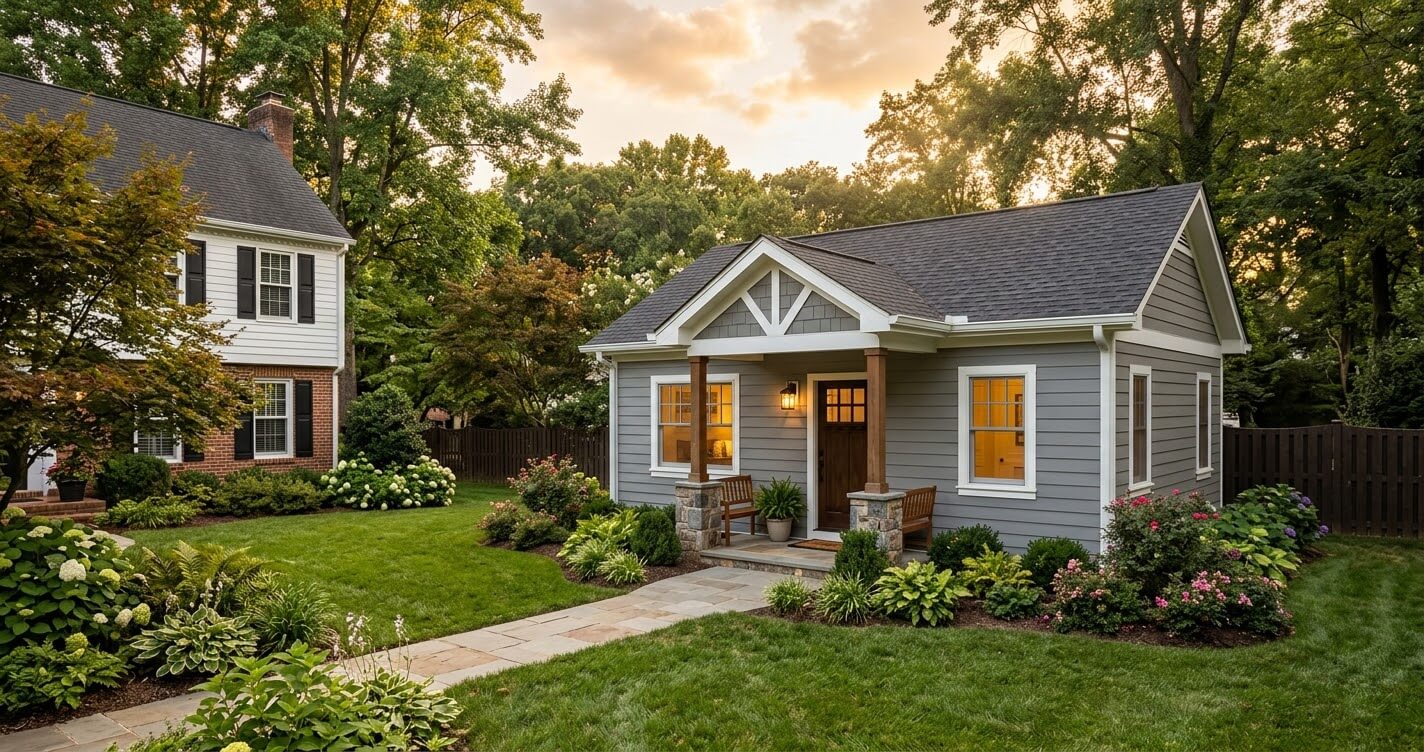
ADU vs Assisted Living Northern Virginia comes down to one core financial difference: an accessory dwelling unit (ADU) is a one-time construction cost that becomes a permanent asset, while assisted living is a recurring monthly expense that ends only when care ends. For homeowners across Fairfax County, Arlington, McLean, Vienna, and the rest of Northern Virginia who are weighing how to support an aging parent, that difference in cost structure often matters as much as the sticker price itself.
US Home Design Build has worked with Northern Virginia homeowners planning ADUs specifically for aging parents and multigenerational households, and the question we hear most often isn’t “which option is cheaper on day one,” but “which option makes sense over five, ten, or fifteen years.” This guide walks through the real 2026 numbers on both sides; cost, financing, zoning, and quality of life, so you can compare them clearly before making a decision.
How Much Does Assisted Living Cost in Northern Virginia in 2026?
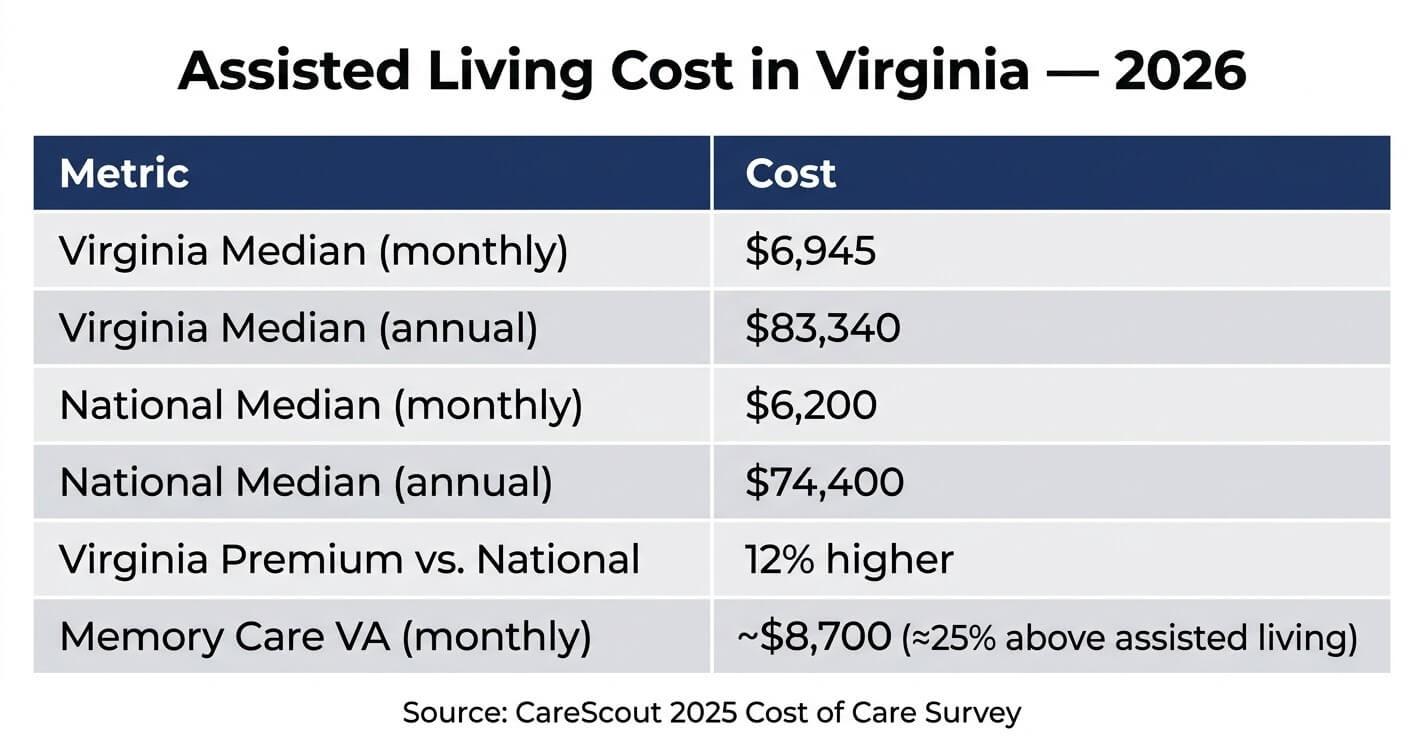
Assisted living in Virginia costs a median of $6,945 per month in 2026, about $83,340 per year, which is 12% above the national median of $6,200 per month. Northern Virginia facilities, concentrated in higher-cost metro submarkets, typically price at or above this statewide figure.
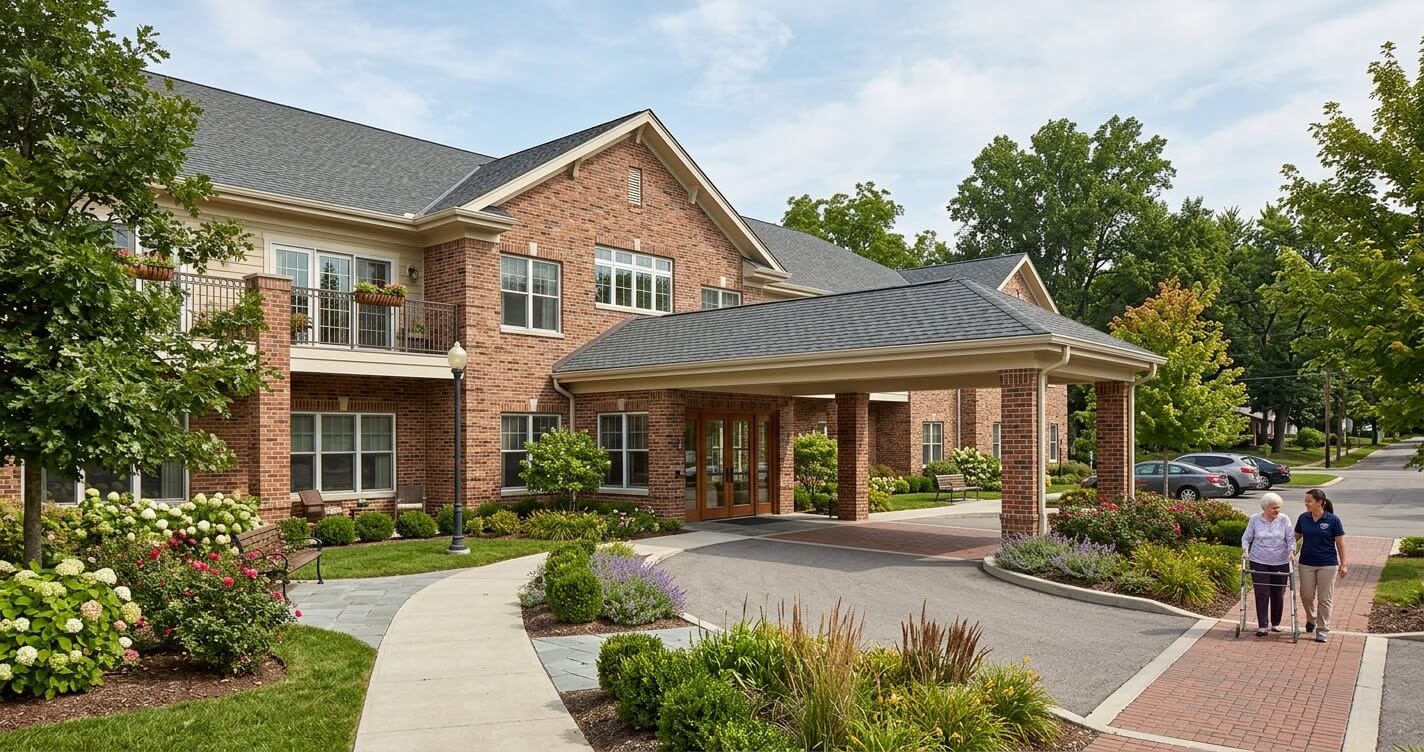
According to the CareScout 2025 Cost of Care Survey (Genworth Financial), which collected pricing from long-term care providers nationwide between July and November 2025, the national median monthly cost of assisted living rose 5% year-over-year to $6,200, or $74,400 annually. Virginia’s statewide median runs higher, at $6,945 per month, or $83,340 per year, a 12% premium over the national figure.
A typical assisted living monthly fee covers a private or one-bedroom unit, meals, housekeeping, transportation, help with daily activities like bathing and dressing, 24-hour staff availability, and emergency response. It usually does not cover skilled nursing, memory care, or higher acuity medical services, those come at an additional cost.
Memory care runs meaningfully higher. In Virginia, memory care averages roughly $8,700 per month, about 25% above the standard assisted living rate, which is consistent with the typical industry markup for dementia and cognitive-care services.
How Much Does an ADU Cost in Northern Virginia in 2026?
An ADU in Northern Virginia typically costs between $85,000 and $300,000+ as a one-time construction expense, depending on whether it’s an interior conversion, an attached addition, or a fully detached structure. Unlike assisted living, this cost is paid once and results in a permanent, usable structure that adds to the home’s value.
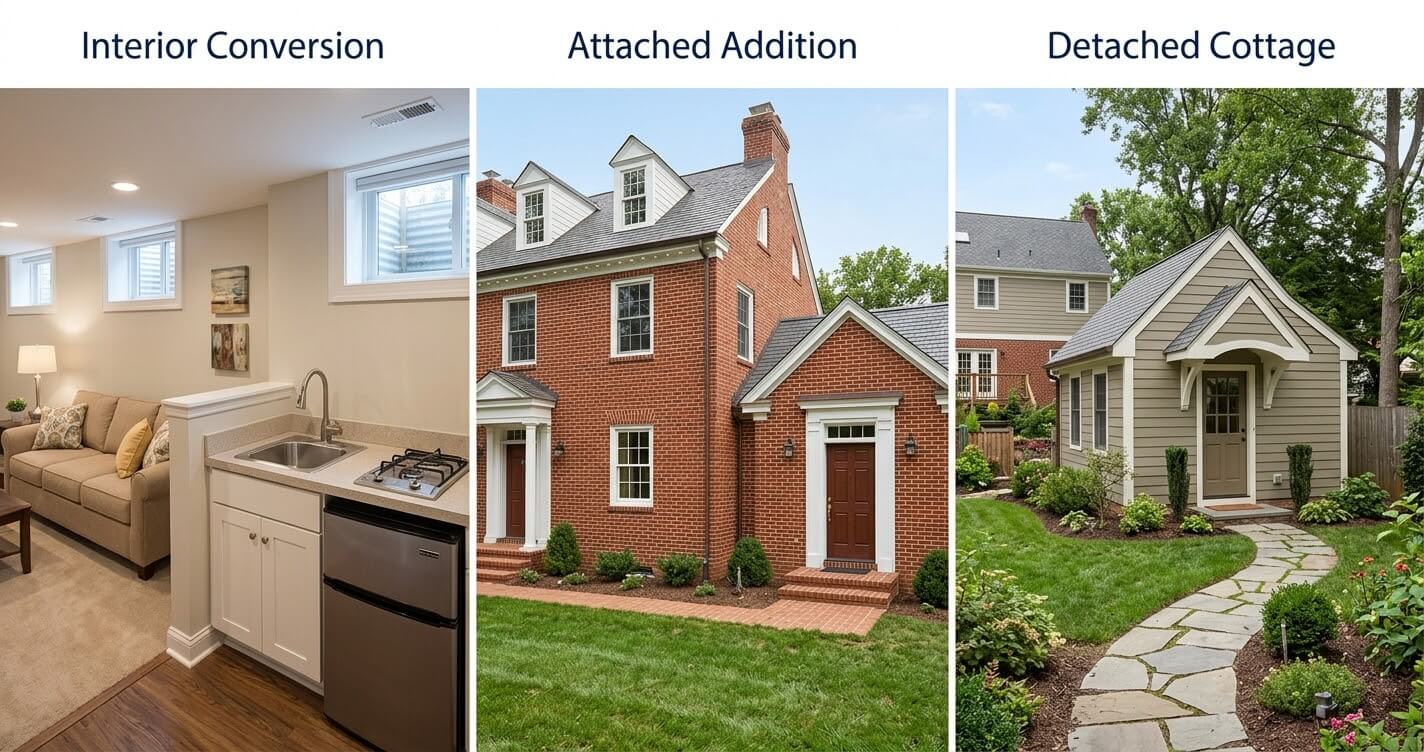
Cost varies significantly by ADU type. Interior conversions, finishing an existing basement or converting a garage, sit at the lower end of the range because they reuse existing structure and utility connections. Attached additions fall in the middle, requiring new framing and systems but sharing a foundation and roofline with the main house. Detached backyard cottages carry the highest cost, since they require a full new foundation, independent utility trenching, and standalone HVAC. For a complete breakdown of pricing by ADU type, size, and finish level, see our ADU Cost Northern Virginia 2026 Ultimate Guide, which covers real 2026 pricing factors in depth rather than repeating them here.
Because this is a one-time investment rather than a recurring fee, the total cost of an ADU is fixed at the time of construction, aside from routine maintenance, which is typically a small fraction of a home’s overall upkeep. That fixed-cost structure is the central financial contrast with assisted living, which continues billing monthly for as long as care is needed.
ADU vs Assisted Living: Real 2026 Cost Comparison
A mid-range $150,000 ADU breaks even against Virginia’s $83,340-a-year assisted living cost in under two years, and every year after that, the ADU keeps saving money while adding home equity, whereas assisted living costs continue indefinitely with no remaining asset once care ends.
The table below lines up both options side by side using 2026 figures for Northern Virginia and Virginia statewide averages:
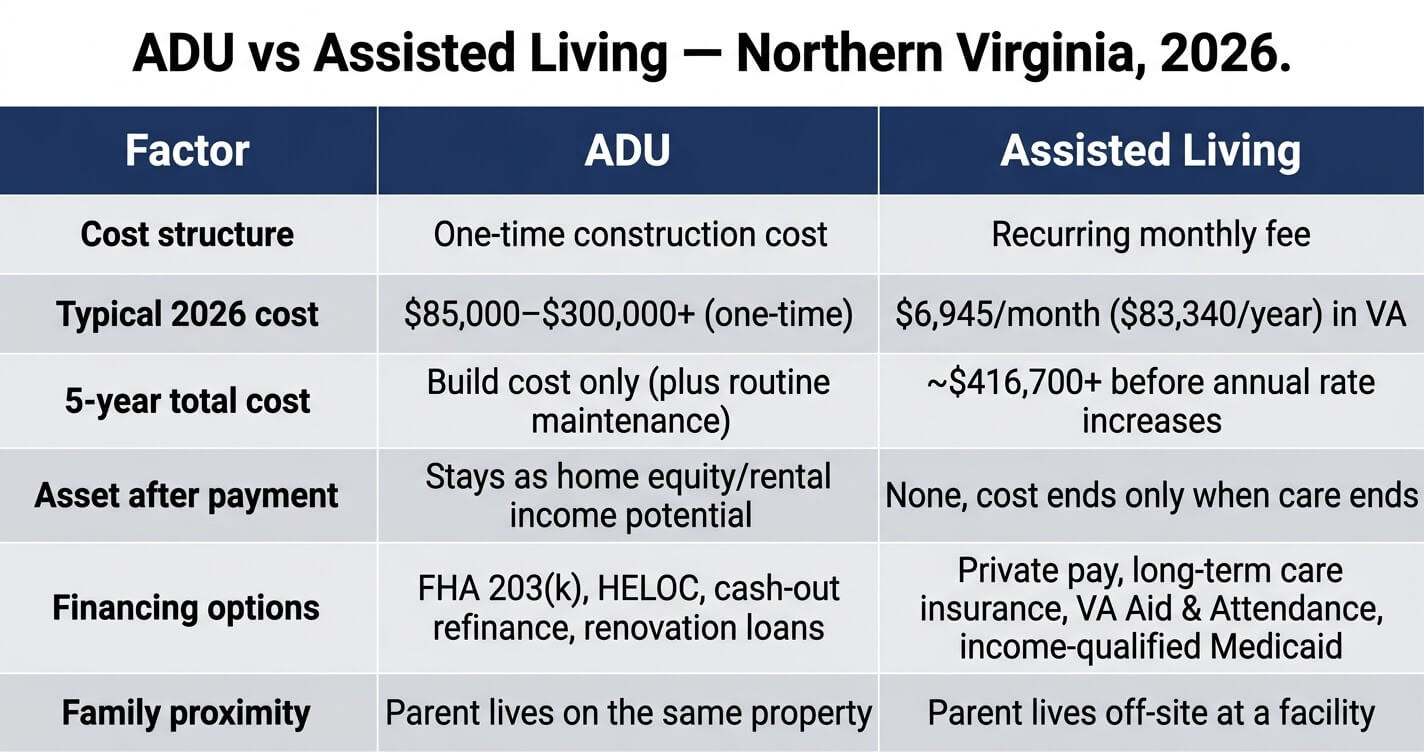
Using a $150,000 mid-range ADU against Virginia’s $83,340 annual assisted living median, the ADU’s one-time cost is recovered in well under two years compared to paying for assisted living, and that comparison doesn’t yet count the added home equity a permitted ADU typically creates. For a detailed look at how ADUs affect resale and appraised value in Northern Virginia, see our ADU Home Value Northern Virginia guide.

On the financing side, many Northern Virginia homeowners fund an ADU through an FHA 203(k) renovation loan, a HELOC, or a cash-out refinance rather than paying cash outright, our FHA ADU Financing Northern Virginia guide covers eligibility and process. Some ADU costs may also be partially offset through available tax provisions; see our ADU Tax Benefits Northern Virginia guide for what currently qualifies.
Beyond Cost: Quality of Life and Family Considerations
Cost isn’t the only factor. An ADU tends to work best when a parent needs proximity, independence, and light support, while assisted living or a higher level of care is usually the better fit when a parent needs 24-hour medical supervision, skilled nursing, or specialized memory care that a home-based setup can’t safely provide.
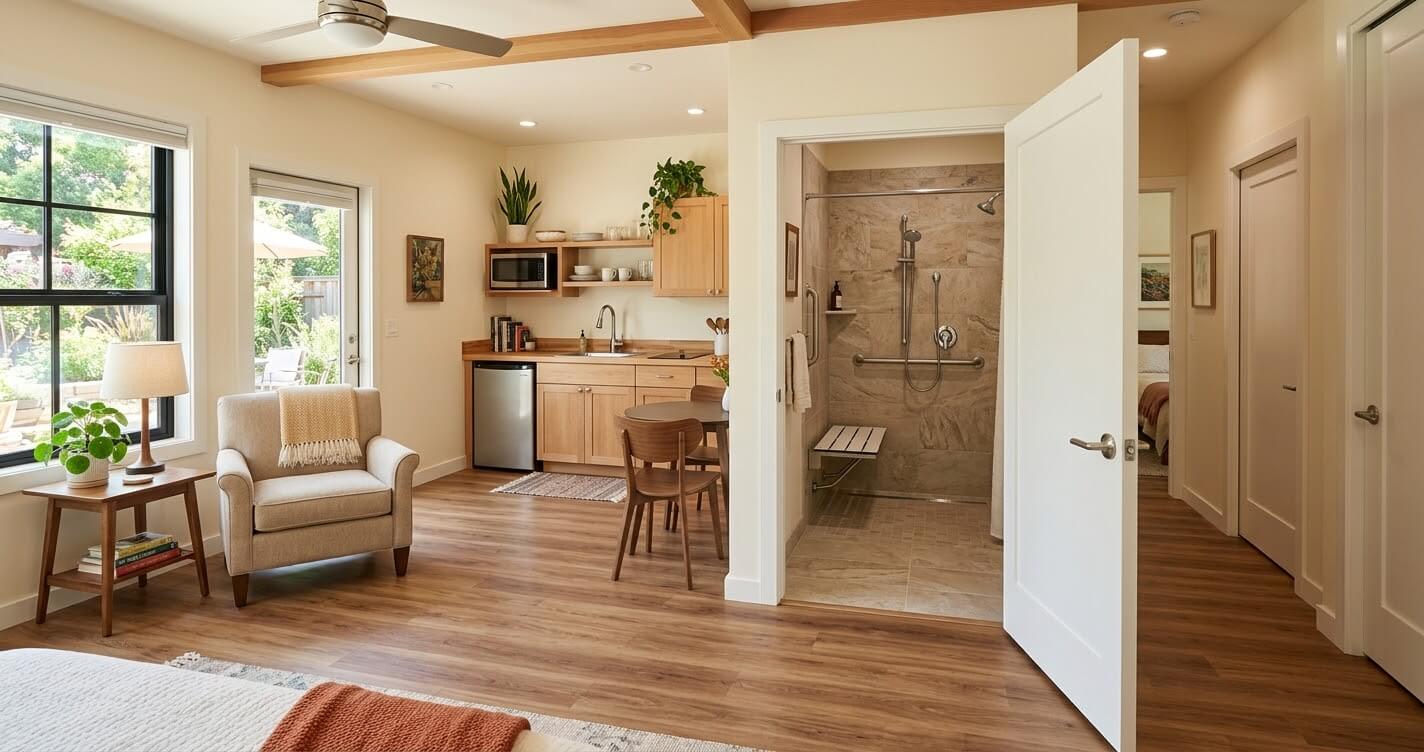
An ADU keeps a parent close, often literally in the backyard or over the garage, which supports frequent contact, shared meals, and quicker response in an emergency. It also preserves the parent’s privacy and independence better than moving into a shared household. But it shifts day-to-day caregiving responsibility onto the family, which is a real commitment that assisted living staff otherwise handle.
This tradeoff is playing out at scale nationally. In 2020, about 6.0 million U.S. households, 7.2% of all family households, were multigenerational, up from 5.1 million in 2010, according to the U.S. Census Bureau.

It’s worth being direct about the limits here: an ADU is not a substitute for skilled nursing or memory care. If a parent has advanced dementia, needs 24-hour medical monitoring, or requires care beyond what a family can reasonably coordinate, assisted living or a licensed memory care facility is typically the safer and more appropriate choice, regardless of cost. Homeowners planning an ADU around aging-in-place needs; wider doorways, zero-step entries, accessible bathrooms, may also want to review our Aging in Place Remodel Northern Virginia guide, which covers universal design considerations that apply directly to an ADU built for a parent.
Is an ADU the Right Choice for Your Family? Key Questions to Ask
An ADU tends to make sense when the parent is largely independent, the property has room to build under local zoning, and the family can provide or coordinate day-to-day support, if any of those isn’t true, assisted living or in-home care may fit better.
- What level of care does the parent currently need, and is it likely to increase in the next 3–5 years?
- Does the lot support an ADU under local zoning; lot size, setbacks, and whether an interior or detached unit is allowed?
- What’s the realistic budget, and which financing option fits the family’s situation?
- Who will provide day-to-day support once the ADU is built, and is that sustainable long-term?
Families considering an attached option rather than a fully detached structure should also look at our in-law suite addition service page, which covers attached-unit layouts that share a roofline with the main house.
Families weighing an ADU against assisted living may benefit from discussing lot feasibility and realistic costs with an experienced design-build team before comparing facility quotes.
Zoning and Permit Considerations Before Building an ADU for a Parent
Before committing to an ADU over assisted living, confirm your specific jurisdiction allows it. Fairfax County regulates these as Accessory Living Units (ALUs) with a two-track permit process, while Arlington County requires a separate Accessory Dwelling (AD) Permit, and each has different size, setback, and occupancy limits.
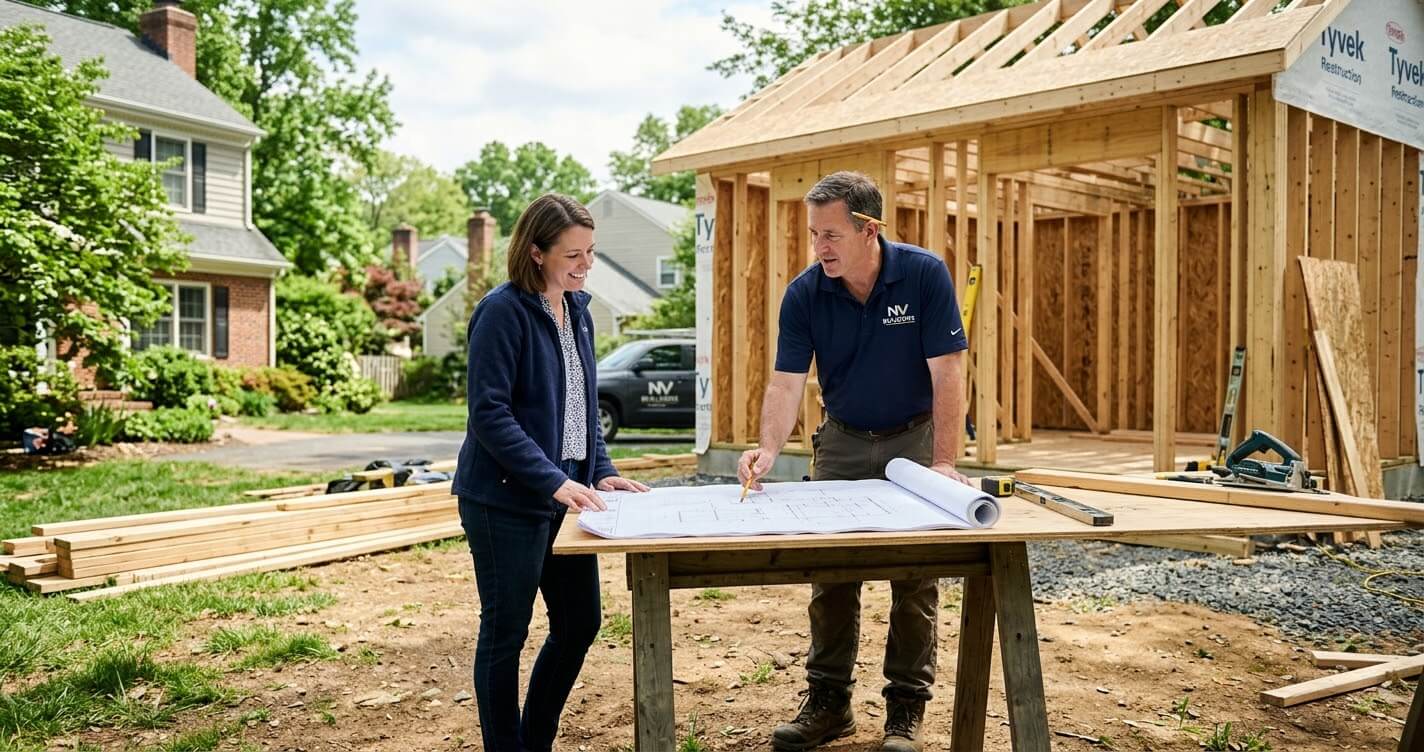
Permit requirements vary meaningfully by jurisdiction across Northern Virginia. In Fairfax County, an interior ADU that meets all standard requirements can often be approved through a staff-level administrative permit, while detached units require a special permit and a public hearing before the Board of Zoning Appeals, our ADU Permit Fairfax County VA guide covers eligibility, size limits, and timelines in full. In Arlington County, homeowners need a separate Accessory Dwelling (AD) Permit from the Arlington County Zoning office, see our ADU Permit Arlington VA guide for that jurisdiction’s specific process.
Confirming zoning eligibility early, before comparing facility costs or committing to a financing plan, avoids discovering late in the process that a detached unit isn’t feasible on a given lot.
Frequently Asked Questions
Is an ADU cheaper than assisted living in Northern Virginia?
Yes, in most cases. A typical ADU costs $85,000–$300,000+ as a one-time expense, while assisted living in Virginia runs $83,340 a year ($6,945/month). Even a higher-end ADU can cost less than four years of assisted living, after which it keeps providing value at no added monthly cost.
How much does assisted living cost per month in Virginia in 2026?
Assisted living in Virginia costs a median of $6,945 per month in 2026, about 12% above the national median of $6,200. Costs vary by facility, location, and level of care.
Can an ADU be used for a parent who needs medical care?
An ADU works well for parents who are largely independent or need light daily support, but it isn’t a substitute for skilled nursing or memory care. Families with a parent who needs 24-hour medical supervision typically still need in-home nursing care or a licensed care facility.
Does building an ADU for an aging parent increase home value?
Yes, a permitted, code-compliant ADU typically adds to a home’s assessed value in Northern Virginia, in addition to functioning as usable living space. See our ADU Home Value Northern Virginia guide for detailed figures.
What financing options exist for building an ADU for a family member?
Homeowners typically finance ADUs through an FHA 203(k) renovation loan, a HELOC, a cash-out refinance, or a dedicated renovation loan. Our FHA ADU Financing Northern Virginia guide covers eligibility and process in detail.
How long does it take to build an ADU in Fairfax County or Arlington?
Timelines typically run four to nine months from permit approval to completion, though administrative interior permits move faster than special permits required for detached units. Permit review time varies by jurisdiction, see our Fairfax County and Arlington ADU permit guides for jurisdiction-specific timelines.
Final Thoughts
ADU vs Assisted Living Northern Virginia ultimately comes down to the kind of care a parent needs and how a family wants to structure the cost: a one-time investment that builds equity, or a recurring monthly fee that provides facility-level care with no lasting asset. For families where independence and proximity are the priority, an ADU is often the financially stronger long-term option, for higher-acuity care needs, assisted living remains the safer and more appropriate choice.
Considering an ADU for an aging parent in Northern Virginia? Contact US Home Design Build to discuss your property’s zoning eligibility, realistic costs, and timeline.