

Home renovation insurance Northern Virginia isn’t a single product you buy off the shelf, it’s the combination of your existing homeowners policy, your contractor’s coverage, and, for larger projects, a short-term builder’s risk policy that protects the work while it’s in progress. Our design-build team at US Home Design Build has coordinated renovations across Fairfax County, Arlington, McLean, Vienna, and Alexandria, and one of the most common gaps we see isn’t in the construction itself, it’s in the paperwork sitting in a drawer at home: a policy that was never updated for the project underway.
Before comparing coverage types, it helps to understand the scope of projects this applies to, see our home renovation services overview for the full range of kitchen, bathroom, basement, and whole-home projects covered here. This guide breaks down what a standard homeowners policy actually covers during a renovation, when builder’s risk insurance is required, what a contractor’s insurance protects (and what it doesn’t), and the steps to take before, during, and after the work is done.
Does Your Homeowners Policy Cover a Home Renovation?
No, a standard homeowners policy in Northern Virginia generally does not automatically extend to cover a renovation project. It’s written to insure your home “as is,” at its pre-project value, so materials staged on-site, work in progress, and any increase in rebuild cost typically fall outside standard coverage until the insurer is notified and the policy is adjusted.
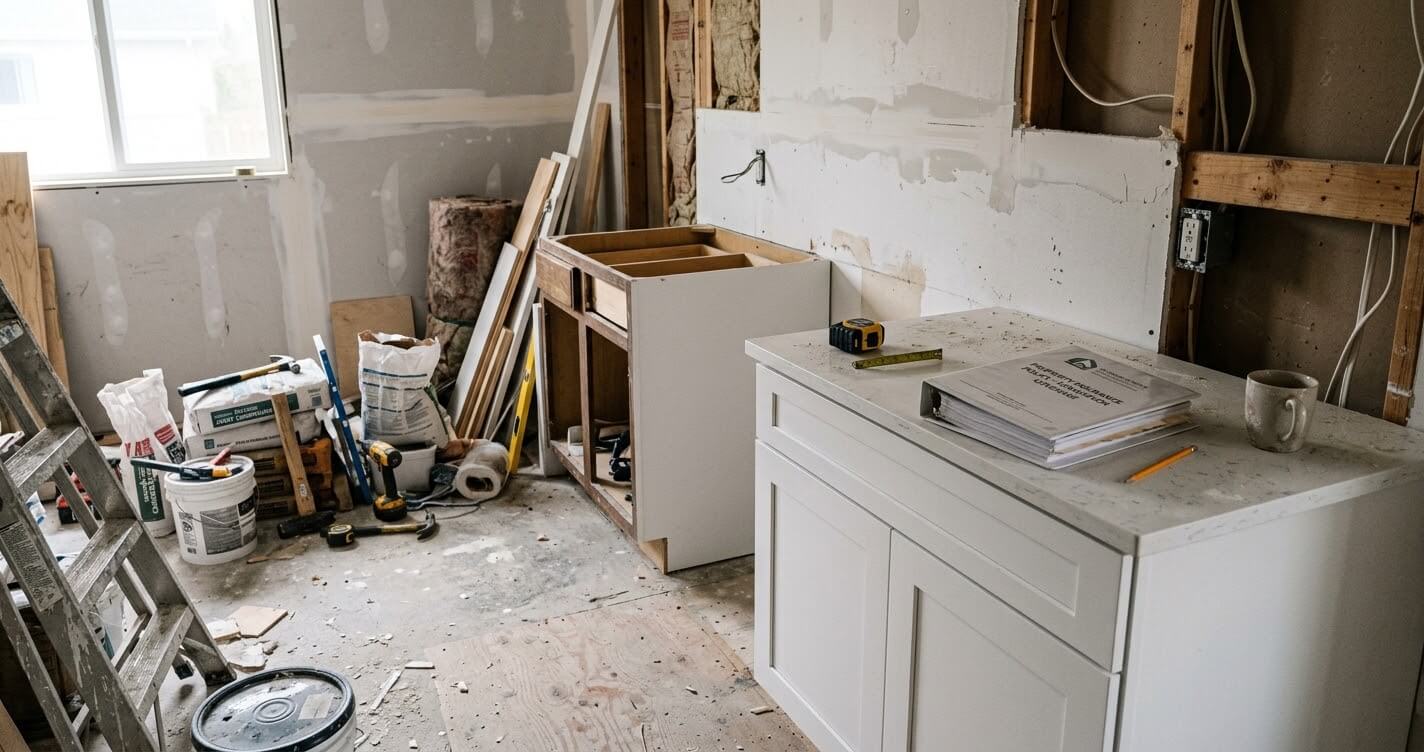
Most homeowners policies center on Coverage A, the dwelling limit, which is set to reflect your home’s rebuild cost at the time the policy was written. When a renovation is underway, that number is temporarily out of date twice over: the home is more valuable mid-project (materials on-site, partially completed work) and more valuable again once the project finishes. Insurers generally want advance notice before major structural, electrical, or plumbing work begins, both to price the risk correctly and to confirm the work is being performed by a licensed contractor.
This gap is common enough to show up in national survey data. In a survey of U.S. homeowners and independent insurance agents commissioned by Nationwide and conducted by Edelman Data & Intelligence, 51% of homeowners had completed a major renovation project within the prior two years, yet a comparable share never contacted their insurer to update coverage for the completed work, leaving many homes under-covered relative to their new rebuild cost.
When You Need Builder’s Risk (Course-of-Construction) Insurance
Builder’s risk insurance, also called course-of-construction coverage, is typically needed for structural work: additions, second-story build-outs, whole-house remodels, or any project that requires a building permit. Cosmetic updates such as painting, flooring, or fixture swaps usually don’t require it.
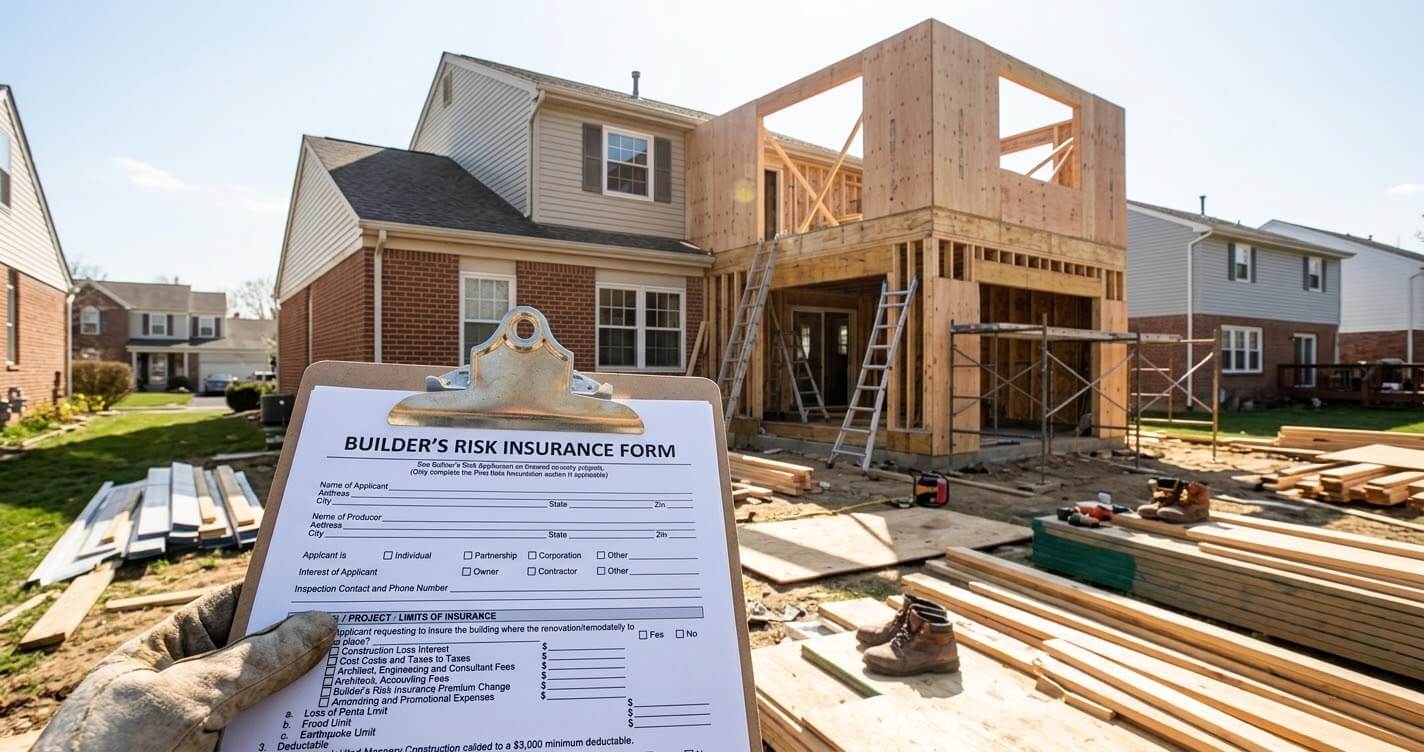
Builder’s risk is a short-term policy that runs for the duration of construction and typically covers materials and supplies staged on-site, the portion of the home actively under construction, and losses from causes such as fire, wind, and theft that occur specifically during the build. It generally excludes the same perils a standard homeowners policy excludes unless specifically endorsed, flood and earthquake being the most common gaps, and it usually terminates automatically once the project is completed or occupied.
A whole house remodel in Northern Virginia is one of the clearest cases where builder’s risk coverage applies, since the project typically touches structural, electrical, and mechanical systems at the same time, increasing the value of materials and unfinished work exposed on-site at any given point.
What Your Contractor’s Insurance Covers – and What It Doesn’t
A licensed contractor’s general liability and workers’ compensation insurance protects you if a worker is injured on your property or if the contractor accidentally damages your home during the project. It does not replace your own homeowners or builder’s risk coverage, and it won’t pay to repair damage that isn’t the contractor’s fault, such as a storm, an unrelated fire, or theft of your own belongings.
Virginia’s Department of Professional and Occupational Regulation licenses contractors in three classes based on contract value: Class C for projects between $1,000 and $10,000, Class B for projects between $10,000 and $120,000, and Class A for larger work, with Class A and Class B applicants required to demonstrate financial responsibility as part of licensure.
Because licensing requirements scale with project size, homeowners should confirm that a contractor’s license class actually matches the scope of the planned renovation, not just that a license exists. A Class C license, for example, is not sufficient for a project priced above $10,000, regardless of the contractor’s experience. Always request a certificate of insurance (COI) directly from the insurance carrier rather than a copy provided by the contractor, since a COI confirms active coverage at the time of verification.
For a full breakdown of what to verify before signing a contract, see our guide on choosing a home renovation contractor in Northern Virginia, which covers license verification, insurance certificates, and the DPOR lookup tool in more detail, along with our companion guide on how to choose a home remodeling contractor for a scorecard-based vetting approach.
Homeowners Policy vs. Builder’s Risk vs. Contractor’s Insurance
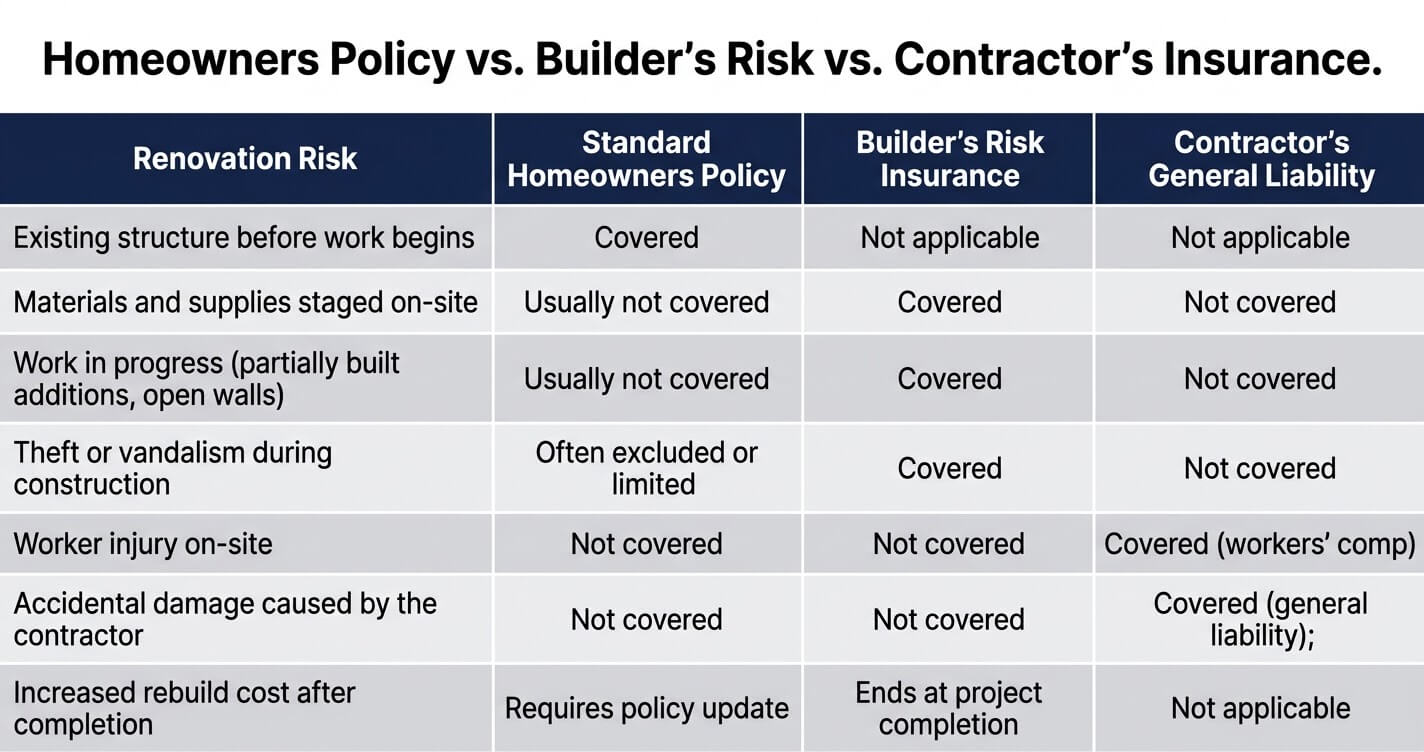
Coverage varies by carrier and policy; confirm specifics with your agent and contractor before construction begins.
Living In vs. Moving Out During the Renovation
Staying in your home during a renovation generally keeps your existing policy active without special action, but moving out for an extended period, commonly 30 days or more, can trigger a vacancy clause that reduces or suspends coverage unless you notify your insurer first.
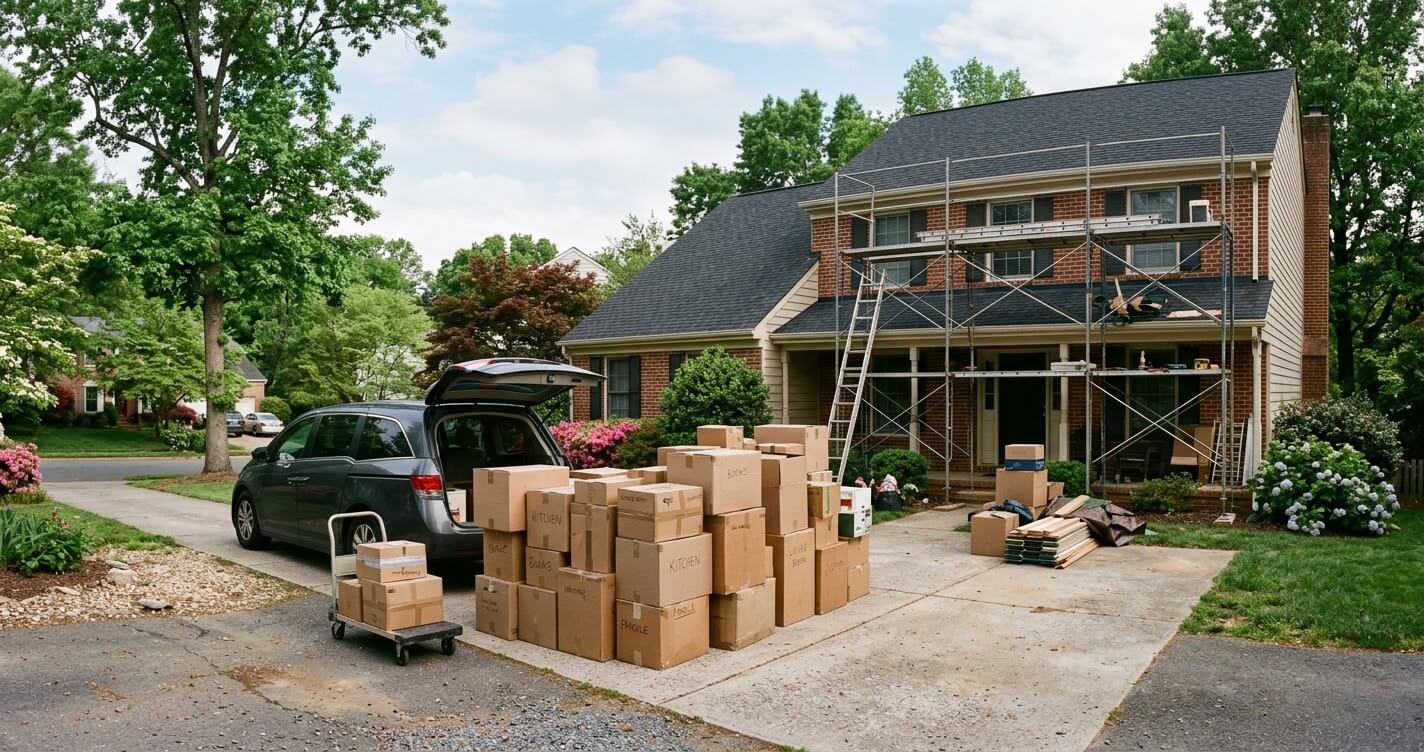
Vacancy clauses exist because an unoccupied home carries different risk for fire, water damage, and theft. If a renovation requires relocating for several weeks or months, whether for a whole-house remodel or a project that removes a kitchen or bathroom from use, notify your insurer of the dates and reason for the vacancy so the policy can be endorsed accordingly. Homeowners who phase a renovation by floor or wing, remaining in part of the home throughout, generally avoid this issue entirely, which is one reason sequencing decisions early in the planning process matter as much for insurance as for budget.
Northern Virginia Permits, Historic Districts, and Insurance
Permitted work creates a paper trail that Fairfax County, Arlington County, and other local building departments, and insurance companies, may request after a claim or at resale. Unpermitted structural, electrical, or plumbing work can result in a denied claim, even when the damage itself is unrelated to the unpermitted item.
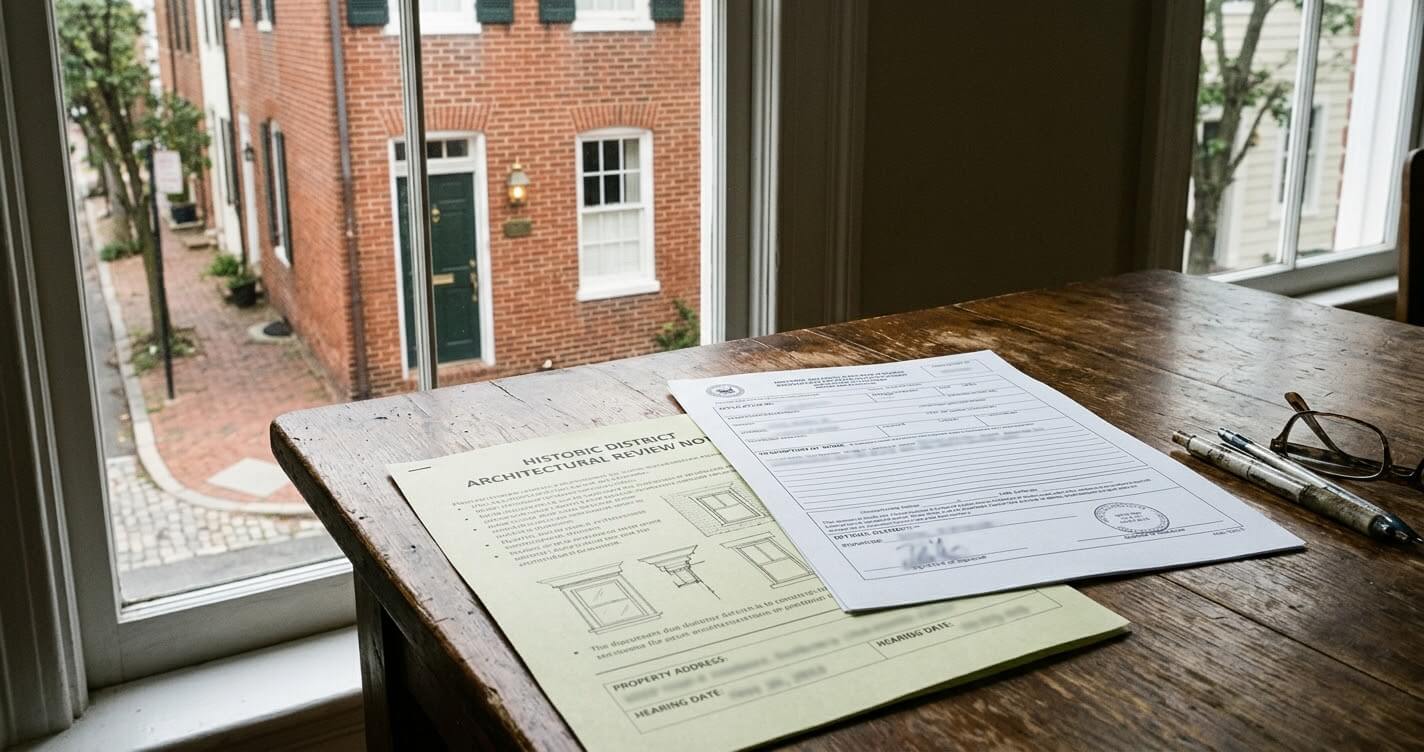
Permit records matter to insurers because they document that work was inspected against the Virginia Uniform Statewide Building Code, reducing the likelihood that the loss traces back to substandard construction. For a full breakdown of when permits are required across project types, see our guide to Remodeling Permit Fairfax County.
Alexandria’s Old Town and other historic districts add a further layer: exterior changes may require Board of Architectural Review approval in addition to a standard building permit, and skipping that review can complicate both the permit record and any related insurance claim. This overlaps with the historic-district considerations covered in our kitchen remodeling mistakes in Alexandria guide.
Updating Your Policy After the Renovation Is Done
Once construction wraps up, the single most important step is updating your dwelling coverage limit to reflect the home’s new square footage and finishes, based on rebuild cost, not the home’s new market value, which insurers do not use for reconstruction pricing.

Research from the Federal Reserve Bank of Chicago, drawing on U.S. Census Bureau American Housing Survey data collected between 2007 and 2017, found that roughly 6% of U.S. homeowners carried no property insurance at all during that period, with mortgaged homeowners far more likely to be insured than those who own their homes outright. That coverage gap tends to widen further whenever a home’s true rebuild cost rises above its originally insured amount, which is exactly what happens after an addition or a whole-house remodel.
This is worth planning for given how much renovation activity Northern Virginia homeowners are financing in the first place. Homeowner spending on remodeling and repairs nationwide is projected to reach approximately $518 billion by the end of 2026.
Common Home Renovation Insurance Mistakes Northern Virginia Homeowners Make
Most home renovation insurance problems in Northern Virginia trace back to timing: homeowners contact their insurer after a loss instead of before construction starts, when a quick policy notification would have closed the gap entirely.
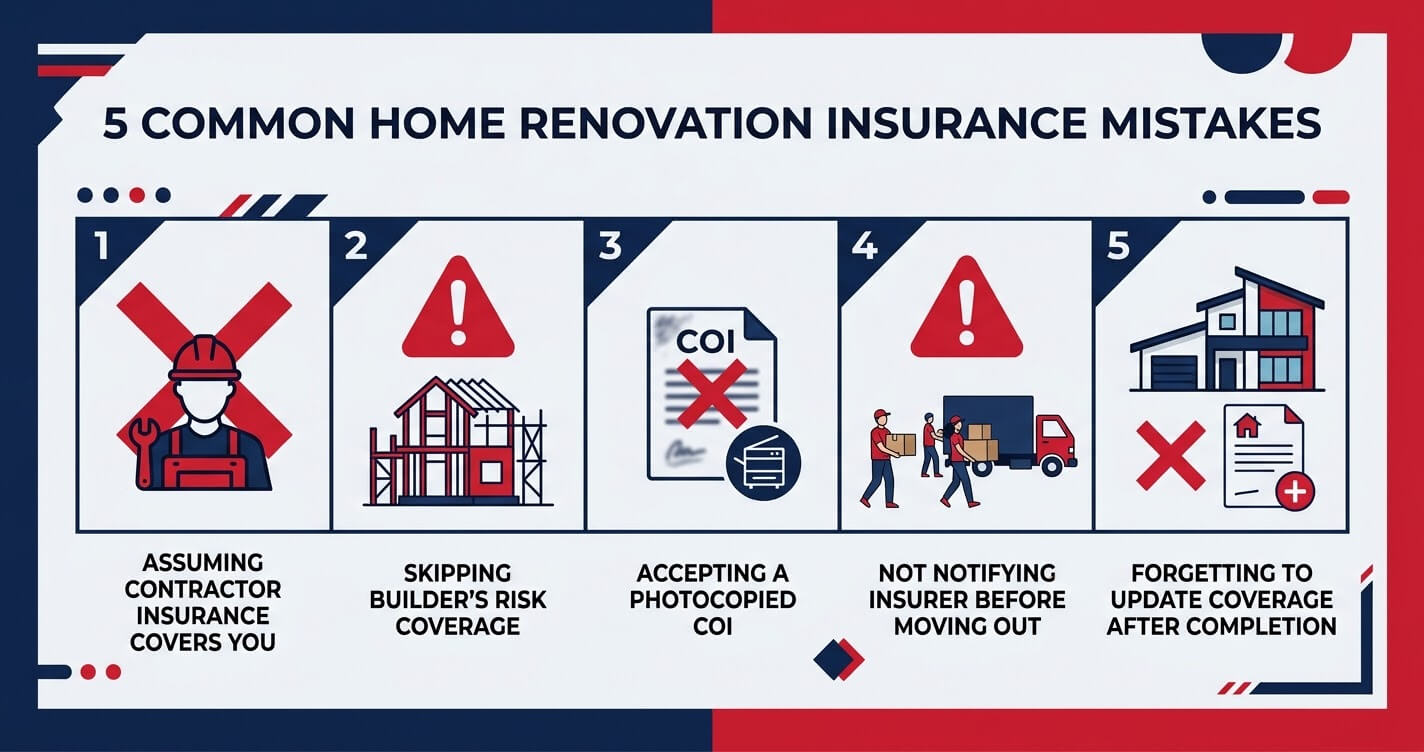
- Assuming the contractor’s insurance covers the homeowner’s own property and belongings, when it only covers injury and contractor-caused damage.
- Skipping builder’s risk coverage on a structural project because the homeowner didn’t realize the permit itself was a signal that coverage was needed.
- Accepting a photocopied certificate of insurance from the contractor instead of verifying active coverage directly with the carrier.
- Moving out for a phased or full renovation without notifying the insurer, risking a vacancy-clause reduction in coverage.
- Finishing the project and never updating the dwelling coverage limit, leaving the home underinsured relative to its new rebuild cost.
Homeowners considering a similar project may benefit from discussing insurance requirements, contractor licensing, and permitting scope with an experienced design-build team before finalizing budgets or signing a contract.
Frequently Asked Questions
Does homeowners insurance cover a kitchen or bathroom remodel?
Not automatically. A standard policy covers your home at its pre-renovation value, so materials and work in progress during a kitchen or bathroom remodel typically fall outside coverage until the insurer is notified and, for larger projects, until builder’s risk insurance is added.
What is builder’s risk insurance and do I need it?
Builder’s risk insurance is a short-term policy covering materials, work in progress, and the structure during active construction. It’s typically needed for permitted, structural projects like additions or whole-house remodels, and generally isn’t required for cosmetic updates.
Do I need to tell my insurance company before renovating in Northern Virginia?
Yes, for any project involving structural, electrical, or plumbing changes. Notifying your insurer before work begins allows the policy to be adjusted for the project and avoids a gap in home renovation insurance in Northern Virginia if a loss occurs mid-project.
What happens if my contractor isn’t insured?
If an uninsured contractor causes damage or a worker is injured on your property, the homeowner can be held financially responsible, since there is no general liability or workers’ compensation policy to absorb the claim.
Does moving out during a renovation affect my coverage?
It can. Vacating a home for roughly 30 days or more without notifying your insurer can trigger a vacancy clause that reduces or suspends coverage, so any extended move-out during a renovation should be reported to the carrier in advance.
How much does builder’s risk insurance cost in Virginia?
Cost depends on the project’s construction value, scope, and duration, and is typically quoted as a percentage of the total project cost by the insurer or broker; homeowners should request quotes alongside their contractor’s insurance verification during the planning phase.
Final Thoughts
Getting home renovation insurance Northern Virginia right is less about buying a single new policy and more about sequencing three things correctly: verifying your contractor’s coverage before signing, adding builder’s risk insurance when the project scope calls for it, and updating your own dwelling coverage once the work is complete. Homeowners weighing a full-scale project against other options may also find it useful to compare the numbers in our renovate vs. sell in Northern Virginia guide, since insurance and financing costs factor into that decision as well.
Planning a renovation in Northern Virginia? Contact US Home Design Build to discuss your project scope, permitting needs, and insurance considerations with our team.
