
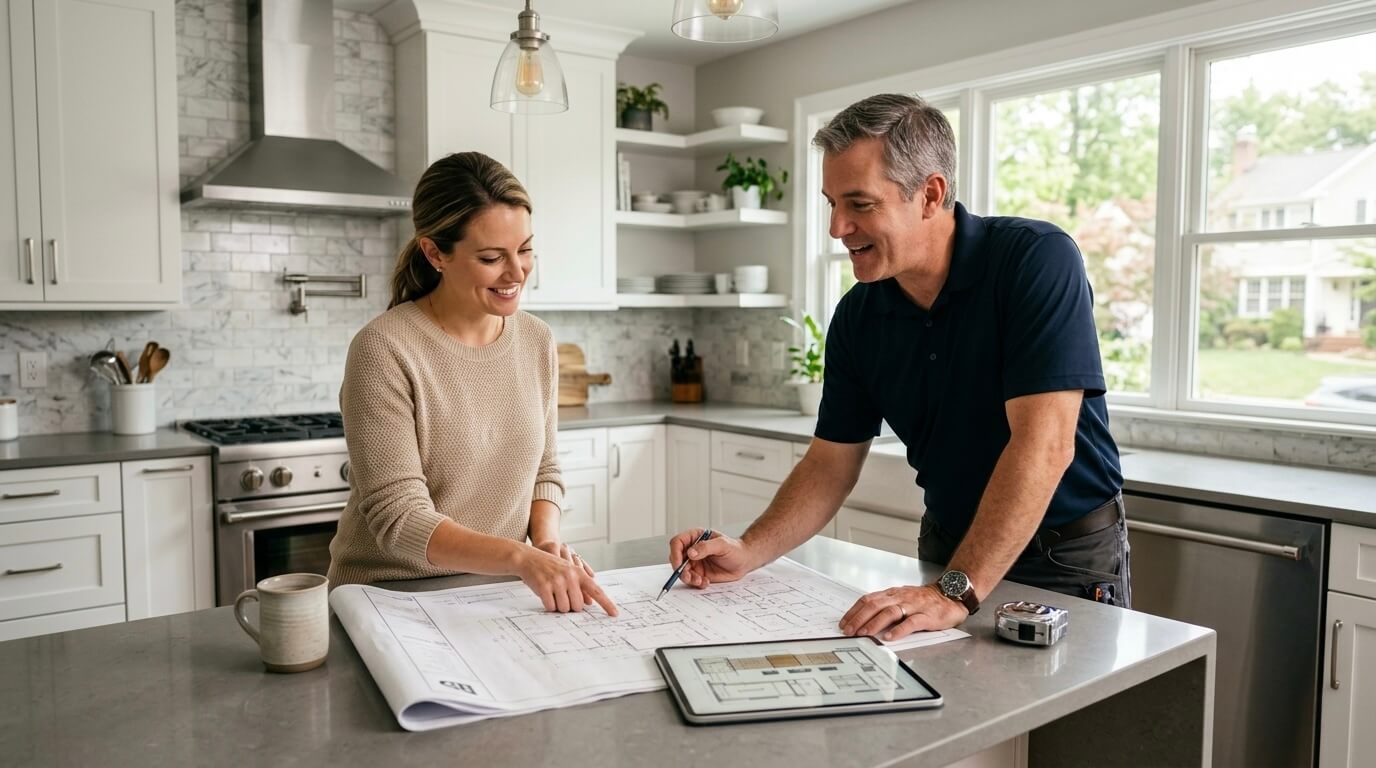
Choosing a home renovation contractor (Northern Virginia) comes down to three things: verifying a valid Virginia contractor license, confirming hands-on experience in your specific county, and getting a detailed written scope before any contract is signed. Skipping any one of these is where most renovation problems start.
Northern Virginia’s renovation market is unusually complex for homeowners to navigate alone. Fairfax County, Arlington County, the City of Falls Church, and the surrounding jurisdictions each run their own permitting systems, inspection schedules, and zoning rules, so a contractor’s paperwork and local track record matter as much as their portfolio photos. Knowing how to choose a home renovation contractor in Northern Virginia protects both the budget and the timeline of a project before a single wall comes down.
This guide walks through the 10 questions worth asking every contractor during the vetting process, the red flags that should end a conversation early, and the specific Virginia licensing and permitting rules that make this market different from a typical renovation project elsewhere in the country. Our team at US Home Design Build has coordinated design-build renovations across Fairfax County, Arlington, McLean, Vienna, and Falls Church, and the questions below reflect the vetting gaps that most often surface after a project has already started.
Why Choosing the Right Home Renovation Contractor Matters in Northern Virginia
Northern Virginia homeowners face higher stakes when hiring a contractor because the region combines an aging housing stock, jurisdiction-by-jurisdiction permitting, and renovation costs that routinely run above the national average. A contractor who is a strong fit in one county can still be the wrong fit for a different jurisdiction’s process.
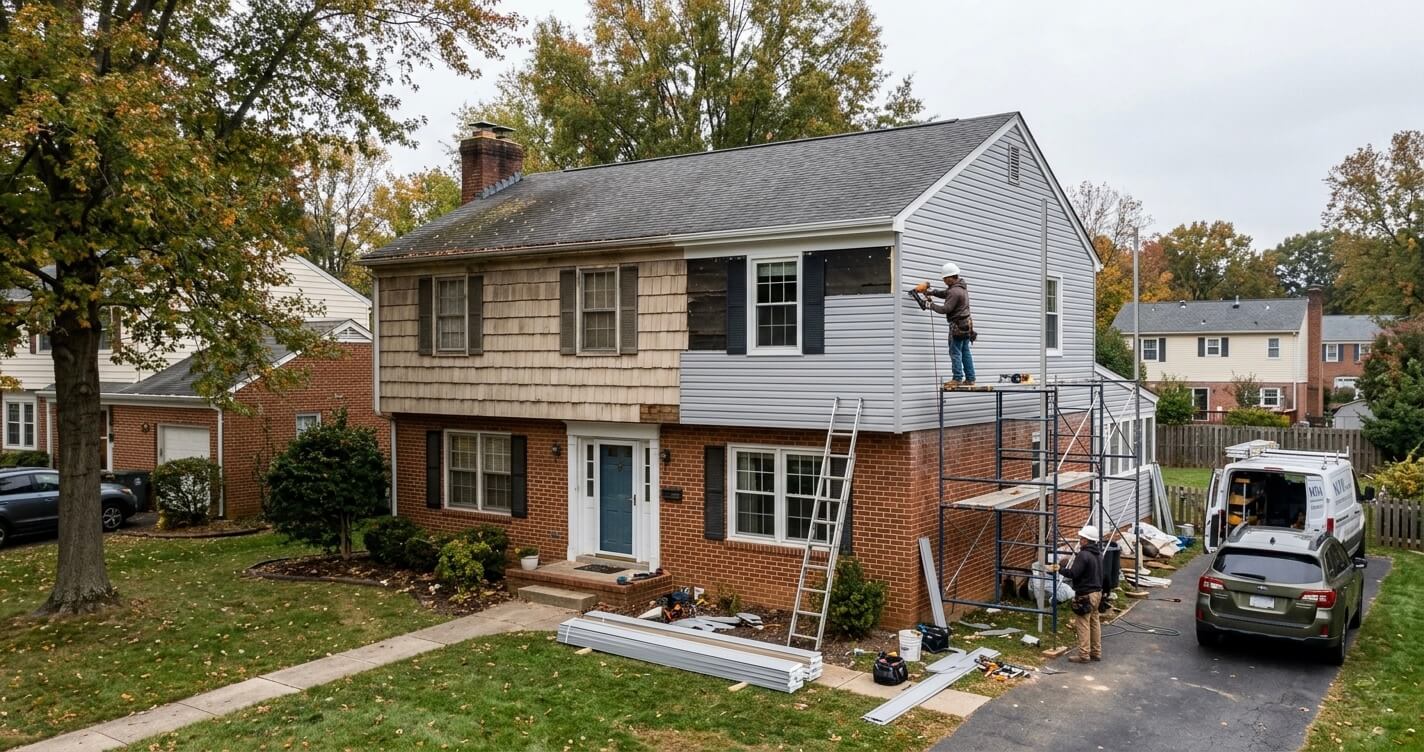
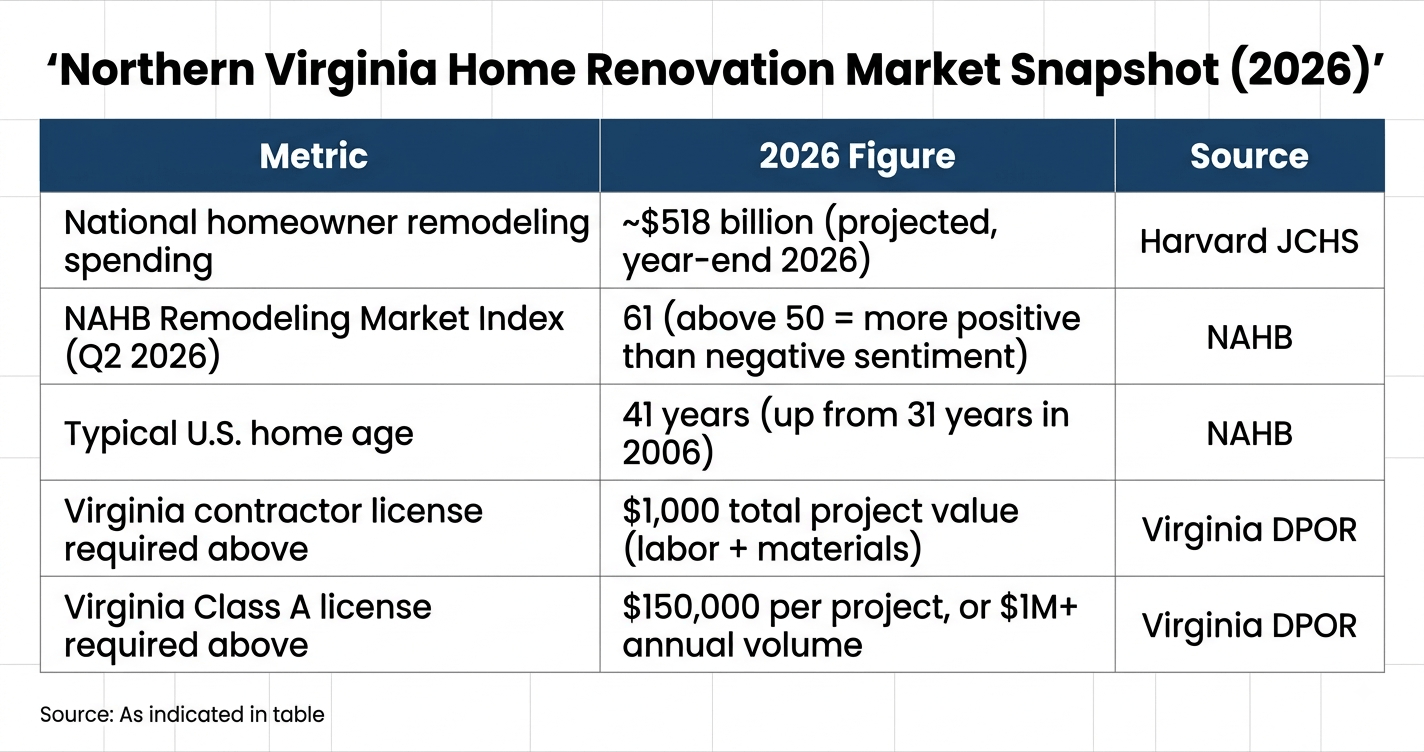
Homeowner spending on remodeling and repairs nationwide is projected to reach approximately $518 billion by the end of 2026, according to Harvard Joint Center for Housing Studies. This scale of national investment is part of why vetting has become a standard step for homeowners rather than an afterthought, more renovation dollars in the market also means more contractors competing for the same projects, including some without the licensing or local experience to back up their bids.
According to National Association of Home Builders (NAHB), the typical U.S. home is now about 41 years old, up from 31 years old in 2006. Northern Virginia’s housing stock follows this same aging trend, particularly in established neighborhoods across Fairfax, Arlington, and Falls Church, which means renovation projects here more frequently uncover outdated wiring, plumbing, or framing that only an experienced local contractor will know how to plan around.
Question 1: Is the Contractor Properly Licensed and Insured in Virginia?
Yes, this should always be the first question. Virginia law requires a contractor license from the Department of Professional and Occupational Regulation (DPOR) for any project where combined labor and materials exceed $1,000, and the contractor’s license class must match the size of the project.
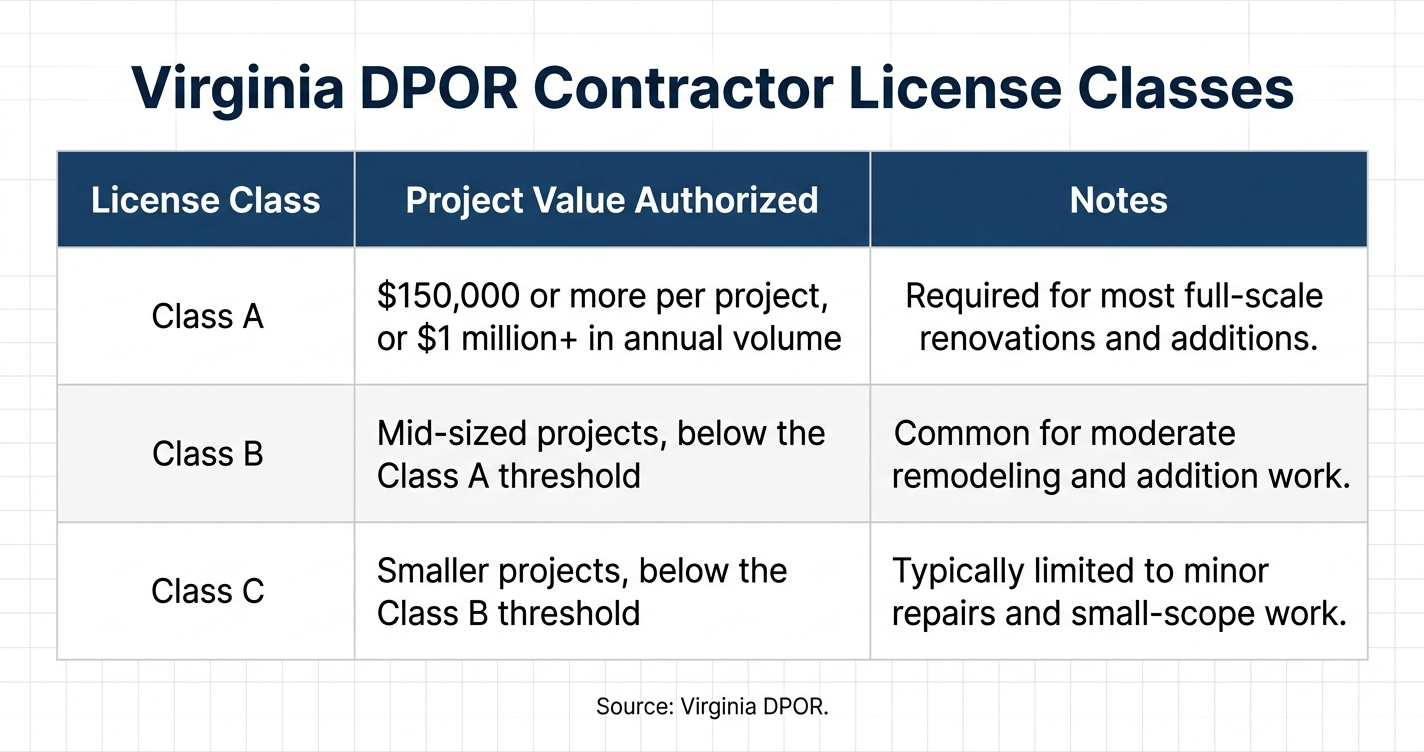
Virginia’s Board for Contractors requires a Class A license for any single project valued at $150,000 or more, or when a contractor’s total construction volume within a 12-month period reaches $1 million or more. Class B and Class C licenses cover smaller project values below that threshold. Homeowners can confirm a contractor’s exact license class and status directly through DPOR’s public license lookup before signing anything.
A licensed contractor also carries general liability insurance and, in most cases, workers’ compensation coverage, both of which protect the homeowner if a worker is injured on the property or if the project causes accidental damage. Ask to see a certificate of insurance directly from the carrier, not just a photocopy provided by the contractor.
Question 2: Do They Have Experience in Your Specific Northern Virginia County?
A contractor’s general experience isn’t enough; ask specifically about completed projects in your county or city, since permitting requirements and inspection processes differ between Fairfax County, Arlington County, and the smaller jurisdictions like Falls Church and Vienna.
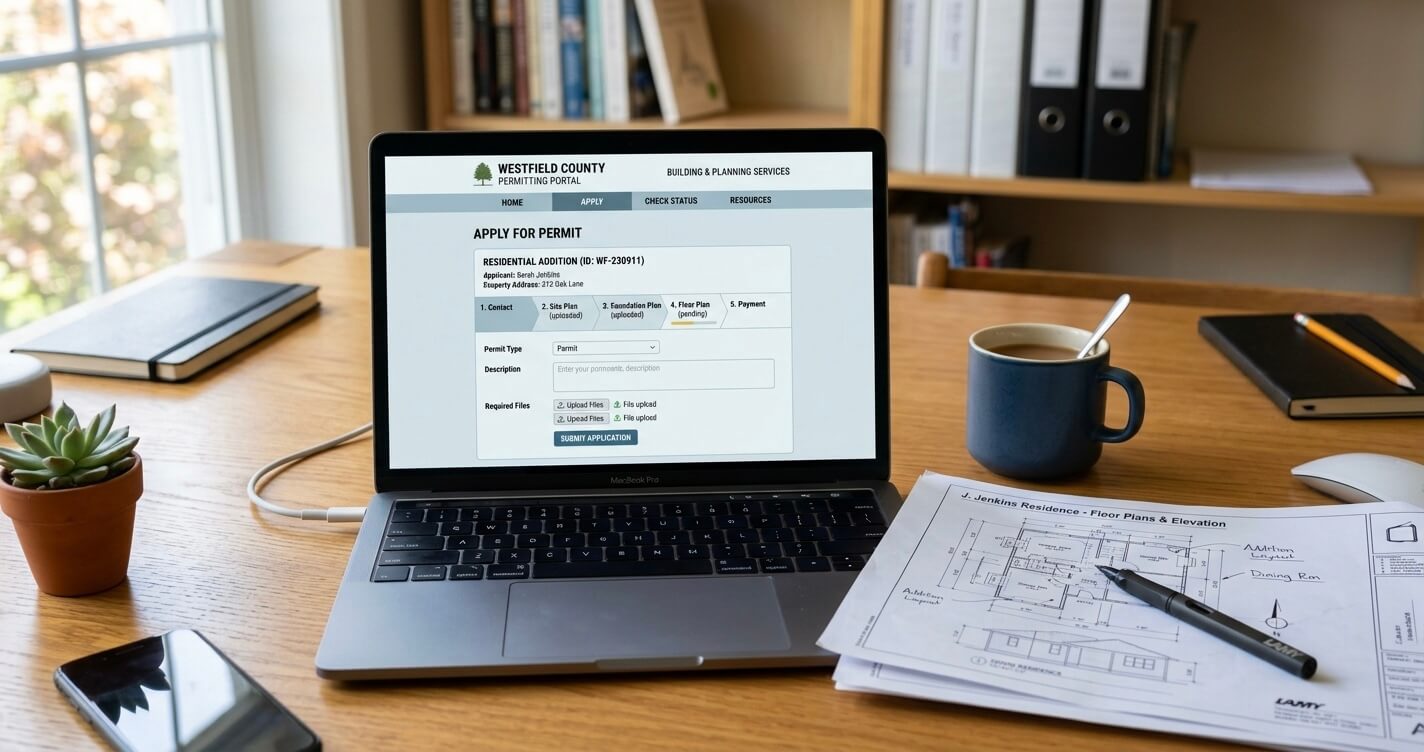
Fairfax County processes residential building permits through its online Land Development Services portal. A contractor with recent, direct experience in that portal will typically move a project through plan review with far fewer resubmissions than one encountering the county’s process for the first time. This is especially relevant for structural work like a home addition, where zoning setbacks and lot coverage limits vary by jurisdiction.
Question 3: Can They Show Recent, Local Reference Projects?
Ask for at least two or three completed projects similar in scope to yours, ideally within the past 12–18 months, and contact the homeowners directly rather than relying only on the photos a contractor shares.
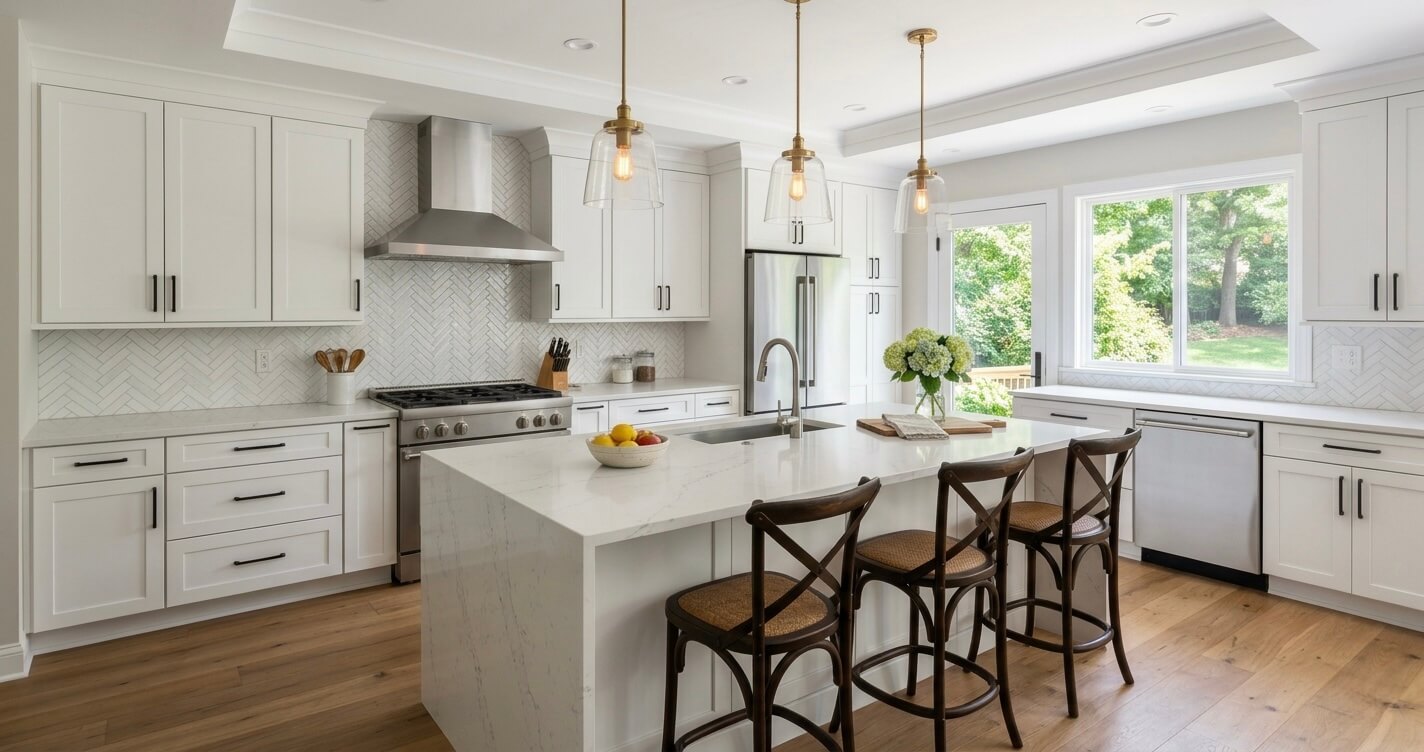
A contractor’s Kitchen Remodeling Vienna VA project portfolio, for example, should include enough detail; scope, rough budget range, and timeline, for a homeowner to judge whether the work is genuinely comparable to what they’re planning, not just cosmetically similar in the after photos.
Question 4: Who Manages the Permits and Inspections?
The contractor should pull all required permits directly, not the homeowner. If a contractor asks the homeowner to pull permits personally, treat that as a warning sign rather than a cost-saving convenience.
Fairfax County’s own guidance states that while property owners may obtain permits in their own name, it is strongly recommended that a properly licensed contractor pull the permits as the responsible party, since this gives the county a direct path to enforce compliance if work doesn’t meet code. A contractor who is reluctant to pull permits under their own license is often signaling that their license doesn’t cover the scope of the project, or that they aren’t licensed at all.
Question 5: Is This a Design-Build or General Contracting Model?
Design-build means one company manages both design and construction under a single contract, which creates one point of accountability. A separate architect-plus-general-contractor model can work well too, but it requires the homeowner to coordinate between two parties if issues arise.

For a full breakdown of how the two models compare, including which one tends to reduce delays on structurally complex projects, see the Design-Build Northern Virginia guide.
Question 6: What’s Included in the Written Estimate?
A trustworthy written estimate itemizes materials, labor, permit fees, and allowances line by line, not a single lump sum. It should also specify what is explicitly excluded, such as unforeseen structural repairs discovered after demolition.
Compare estimates from at least two or three contractors on the same defined scope of work, not just the bottom-line total. A lower bid that excludes permit fees, disposal costs, or design revisions often ends up costing more once change orders are added.
Question 7: What’s a Realistic Timeline for This Project?
A realistic timeline accounts for design finalization, permit review time, material lead times, and construction, and a contractor should be able to explain each phase separately rather than quoting one combined number.
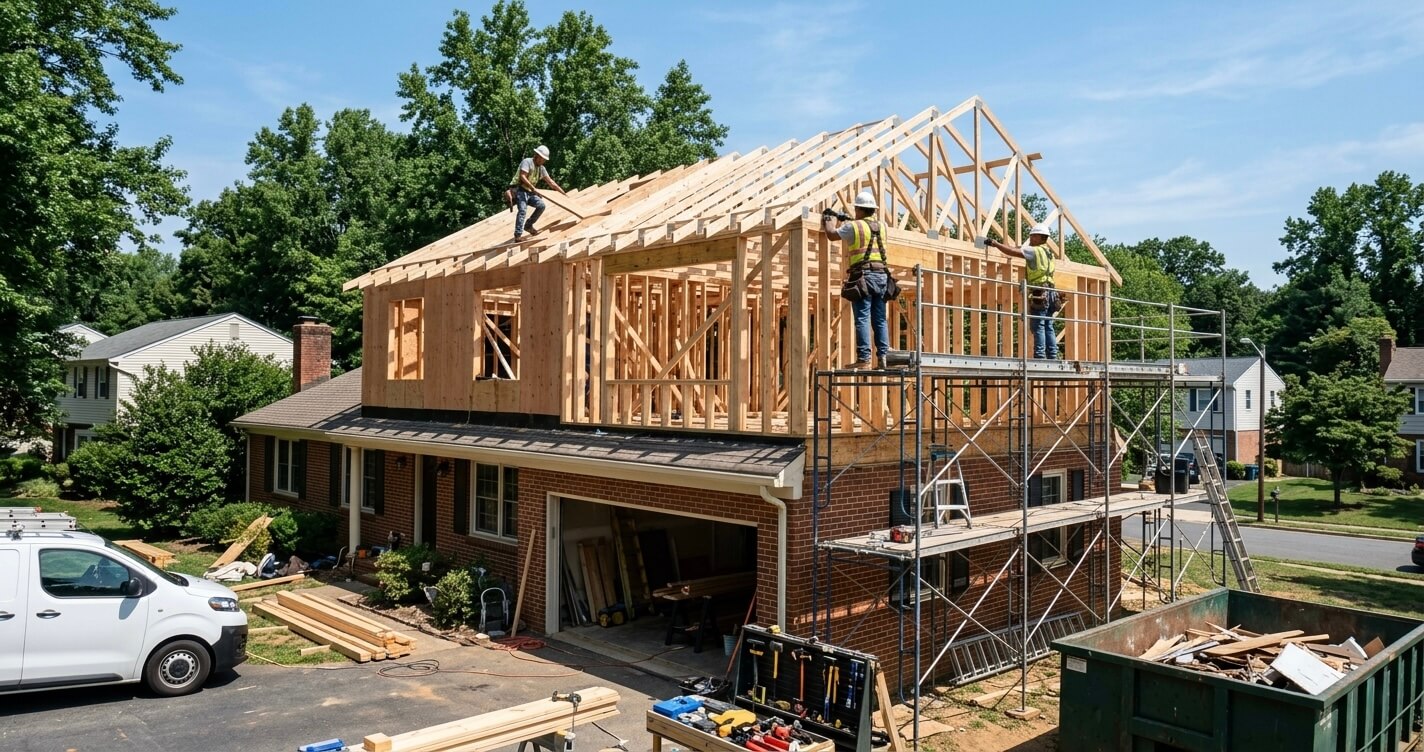
Larger structural projects, such as a second story addition, carry longer permit review timelines than a cosmetic remodel because they trigger structural engineering review in addition to standard building plan review. A contractor who gives the same timeline estimate regardless of project complexity likely hasn’t accounted for jurisdiction-specific review steps.
Question 8: How Are Change Orders Handled?
Every change order should be documented in writing, with the added cost and schedule impact specified, before the additional work begins. Verbal agreements to changed scope are one of the most common sources of billing disputes.
Ask to see a sample change order form during the vetting process. A contractor who already has a standardized process in place is generally more organized about documentation across the entire project.
Question 9: What Warranty Do You Provide?
Look for a workmanship warranty of at least one to two years, separate from the manufacturer warranties that cover individual materials and fixtures. The written contract should specify exactly what the workmanship warranty covers.
Ask what happens if an issue surfaces after the warranty period on a defect that existed but wasn’t visible during the original walkthrough, an established local contractor will typically have a clear answer rather than a vague reassurance.
Question 10: Who Will Be My Main Point of Contact?
There should be one named project manager or point of contact responsible for day-to-day communication, not a rotating cast of subcontractors relaying information secondhand.
Ask how often you’ll receive updates and through what channel; email, phone calls, or a project management platform, and confirm that this person will be reachable throughout the entire project, not just during the sales process.
Red Flags to Watch for When Hiring a Contractor
The clearest red flags are a large upfront cash deposit request, reluctance to provide a DPOR license number, no written contract, and high-pressure tactics to sign immediately. Any one of these should pause the hiring decision until resolved.
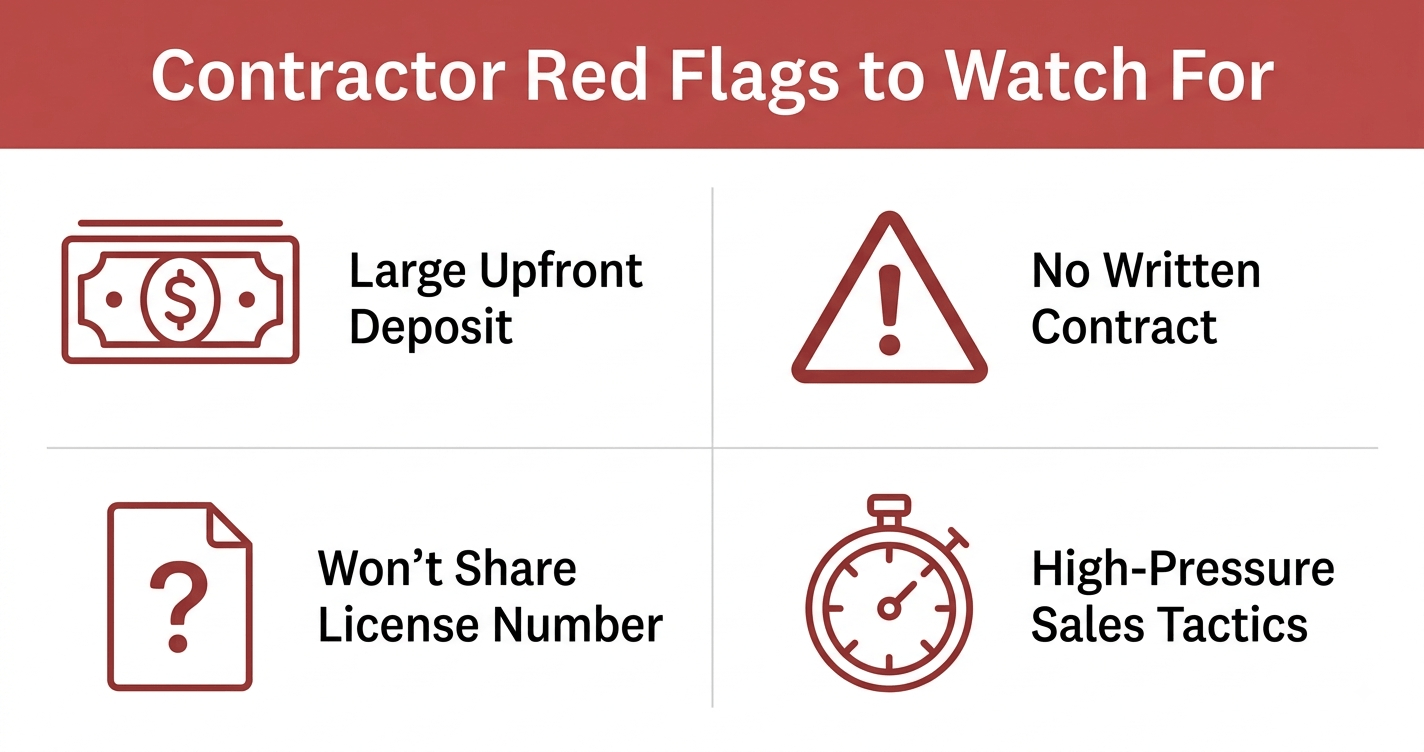
Additional warning signs include a contractor who cannot name the specific permits your project requires, one who discourages you from checking references, or estimates that come in significantly below every other bid without a clear explanation for the difference. Virginia caps upfront deposits by regulation in many cases, so an unusually large deposit request is worth questioning directly with the contractor before moving forward.
Northern Virginia Home Renovation Market at a Glance (2026)
The data below summarizes the national and regional benchmarks referenced throughout this guide, useful as a quick reference when comparing contractor claims against independently sourced figures.
Virginia DPOR Contractor License Classes
Virginia issues three contractor license classes; A, B, and C, scaled to project value, and every homeowner can verify a contractor’s class directly through DPOR’s public license lookup before signing a contract.
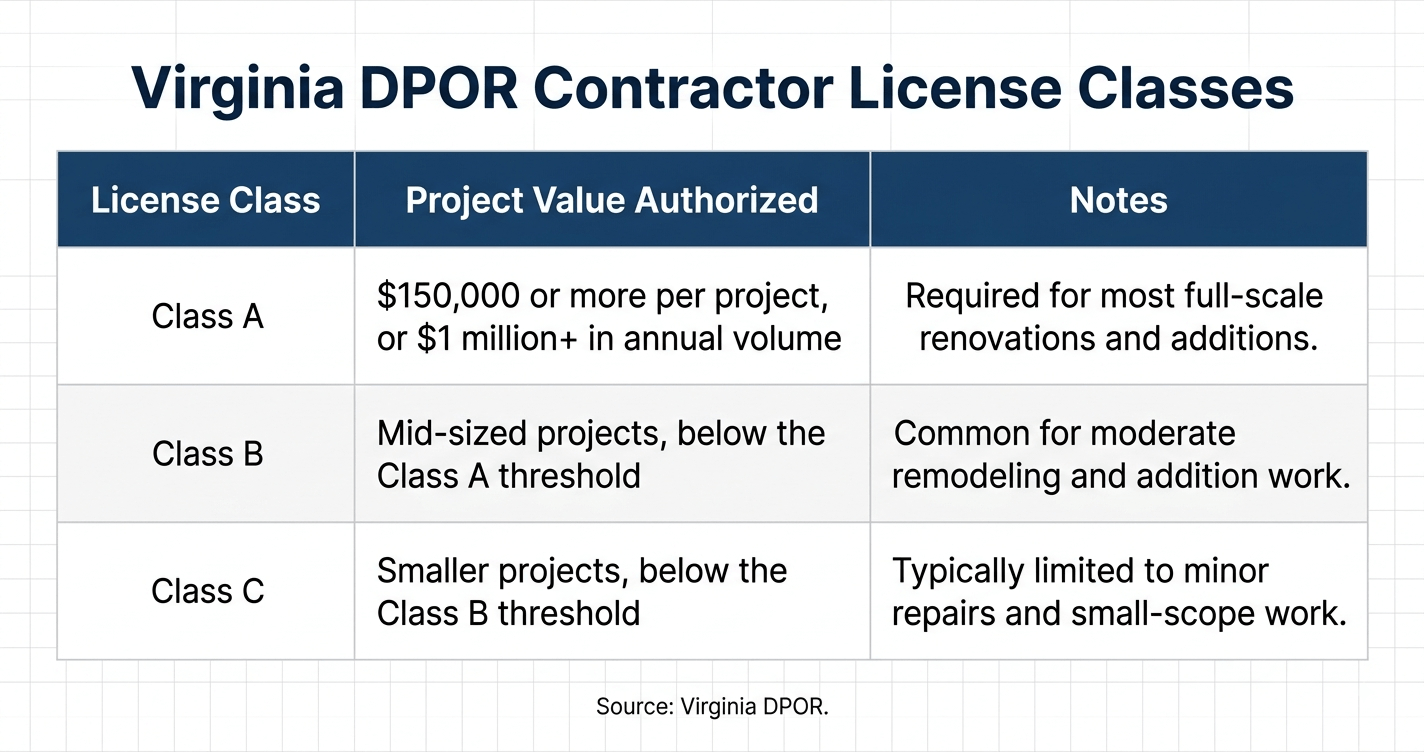
Source: Virginia Department of Professional and Occupational Regulation (DPOR)
Homeowners weighing a design-build firm against separate architects and contractors may find it useful to talk through their project scope with an experienced local team before finalizing a budget.
Frequently Asked Questions
How much does it cost to hire a home renovation contractor in Northern Virginia?
Contractor pricing in Northern Virginia varies by project scope, but the region’s costs typically run above national averages due to higher labor and material costs.
For a full breakdown by project type, see the Best ROI Home Improvements Northern Virginia guide, which compares renovation costs against expected resale returns.
Do I need a licensed contractor for a small renovation project in Virginia?
Yes. Virginia requires a DPOR contractor license for any project where combined labor and materials exceed $1,000; there is no small-project exemption.
What’s the difference between a design-build firm and a general contractor?
A design-build firm manages both design and construction under one contract with one point of accountability. A general contractor typically builds from plans an architect has already produced separately.
See the full Design-Build Northern Virginia guide for a detailed comparison of both approaches.
How do I verify a contractor’s license in Virginia?
Use DPOR’s public license lookup tool to confirm the contractor’s license number, class, expiration date, and any disciplinary history before signing a contract.
The lookup tool is available directly through dpor.virginia.gov.
What questions should I ask before signing a renovation contract?
At minimum, ask about license class, permit responsibility, payment schedule, warranty terms, and the change-order process, all ten questions covered in this guide are worth confirming in writing before signing.
A written contract should reflect the answers to every one of these questions, not just a verbal agreement made during the sales visit.
How long does it take to find and hire a good contractor?
Plan for two to four weeks to research, interview, and compare at least two or three contractors before signing; rushing this step is one of the most common sources of renovation regret.
Add extra time if the project requires a design-build proposal, since a detailed written estimate for a larger project can take one to two weeks to prepare properly.
Should I get multiple quotes before choosing a contractor?
Yes, at least two to three quotes on the same defined scope of work, so pricing, timeline, and inclusions can be compared directly rather than guessed at.
A wide spread between quotes is common in Northern Virginia given the range of licensing classes and business sizes in the market; the lowest bid is not automatically the best value once scope, warranty, and permit handling are factored in.
Final Thoughts
Knowing how to choose a home renovation contractor (Northern Virginia) comes down to verifying licensing directly with DPOR, confirming county-specific permitting experience, and getting every commitment, from the estimate to the warranty, in writing before construction begins. The ten questions above give homeowners a concrete framework for that vetting process, rather than relying on instinct alone.
US Home Design Build has managed design-build renovations across Fairfax County, Arlington, McLean, Vienna, and Falls Church, coordinating licensing, permitting, and construction under a single point of accountability for each project. For more on what that process looks like day to day, see the Home Renovation Northern Virginia service page.
Planning a renovation in Northern Virginia and want a contractor who already knows the permitting process in your county? Contact US Home Design Build to discuss your project, budget, and timeline.