
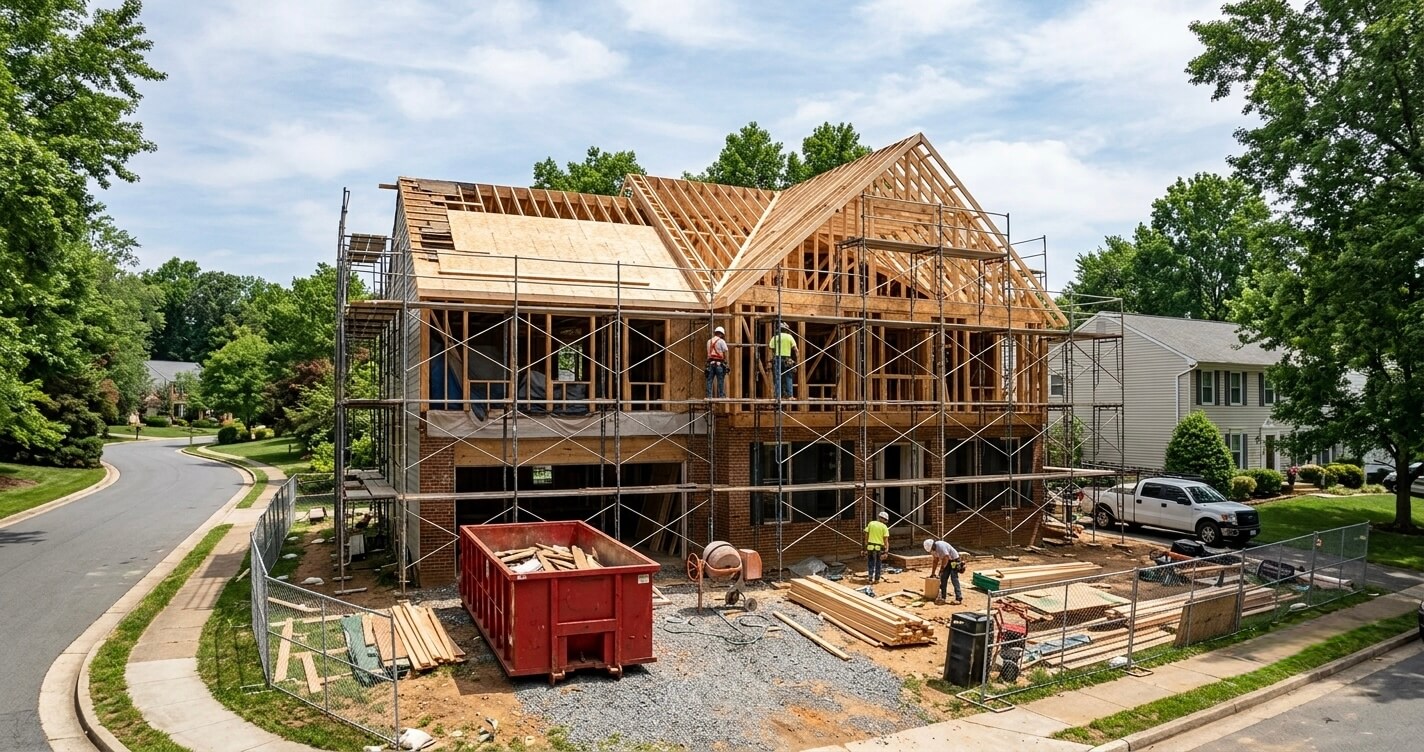
A whole house remodel Northern Virginia typically runs $150 to $450+ per square foot depending on scope, with most full-home projects taking 6 to 14 months from initial design through final walkthrough. For homeowners in McLean, Vienna, Fairfax, Reston, Great Falls, and Burke weighing a full-home renovation against an addition or a sale, the planning phase, not the first swing of a demolition hammer, is what determines whether a project stays on budget. Whole house remodels ranked among the most common remodeling project types completed in 2025, alongside kitchen and bathroom remodels, according to the NAHB/Westlake Royal Remodeling Market Index, which confirms this is a proven, high-demand category of work rather than a niche one.
Our design-build team at US Home Design Build has planned and built whole-home renovations across Northern Virginia’s older housing stock for years, and this guide breaks down real 2026 cost ranges, a step-by-step budgeting framework, permitting requirements, and the planning mistakes that most affect how a whole house remodel in Northern Virginia turns out.
What Does a Whole House Remodel Cost in Northern Virginia in 2026?
A whole house remodel in Northern Virginia costs roughly $150–$220 per square foot for a cosmetic-to-mid-range refresh, $220–$325 per square foot for a mid-range remodel involving new systems and some layout changes, and $325–$450+ per square foot for a full gut renovation with structural work. On a typical 2,500-square-foot Northern Virginia home, that places total project costs anywhere from about $375,000 to well over $1.1 million, depending on scope and finish level.
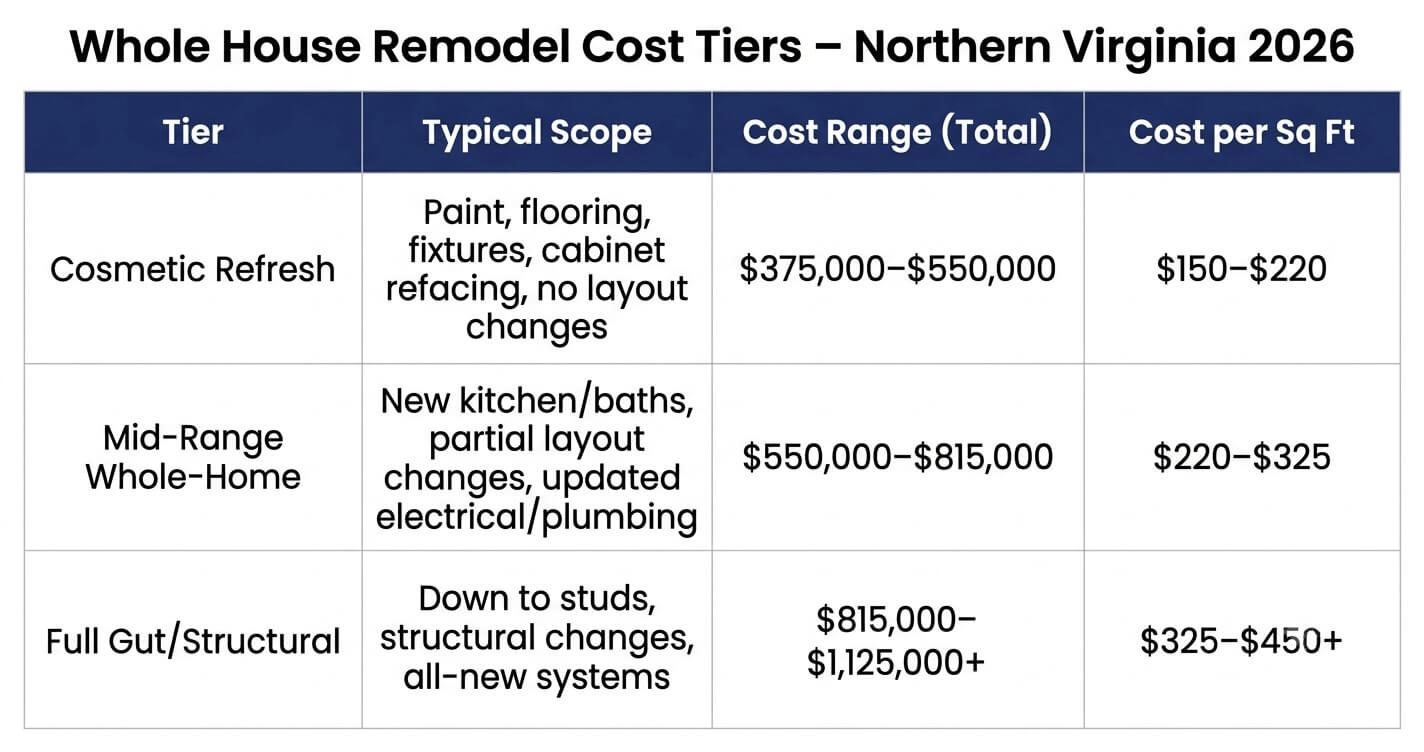
Figures are estimated ranges based on a ~2,500 sq ft Northern Virginia home; individual project costs vary by lot conditions, home age, and finish selections.
Several factors push a whole house remodel toward the higher end of these ranges. Structural changes, such as removing load-bearing walls or altering the roofline, add engineering and framing costs before finishes are even selected. Full replacement of electrical, plumbing, and HVAC systems, common in Northern Virginia homes built before the 1990s, adds cost but reduces the risk of mid-project surprises. Permitting complexity varies significantly by jurisdiction, and higher-end finish selections (custom cabinetry, natural stone, high-efficiency systems) can add 20–30% over builder-grade alternatives.
Total U.S. homeowner spending on home improvements and maintenance is projected to reach $518 billion by the end of 2026, according to the Harvard Joint Center for Housing Studies’ (JCHS) Leading Indicator of Remodeling Activity (LIRA). This national spending trend reflects sustained demand for major renovation work even as year-over-year growth moderates, and it aligns with what we see locally: homeowners increasingly choosing to reinvest in existing homes rather than take on a new mortgage at current rates.
Northern Virginia costs typically run higher than national averages for whole house remodels, driven by regional labor rates, more complex permitting processes across Fairfax, Arlington, Loudoun, and Prince William counties, and a housing stock where many homes were built in the 1960s–1980s and now require systems upgrades alongside cosmetic work. Homeowners budgeting off national cost calculators should expect Northern Virginia pricing to sit above the national midpoint for comparable scope.
What’s Included in a Whole House Remodel?
A whole house remodel typically includes the kitchen, all bathrooms, core mechanical systems (electrical, plumbing, and HVAC), and refinishing or reconfiguring the layout throughout the home, which is what distinguishes it from a single-room remodel that touches only one space and from a home addition that adds new square footage rather than updating existing space.
Kitchen
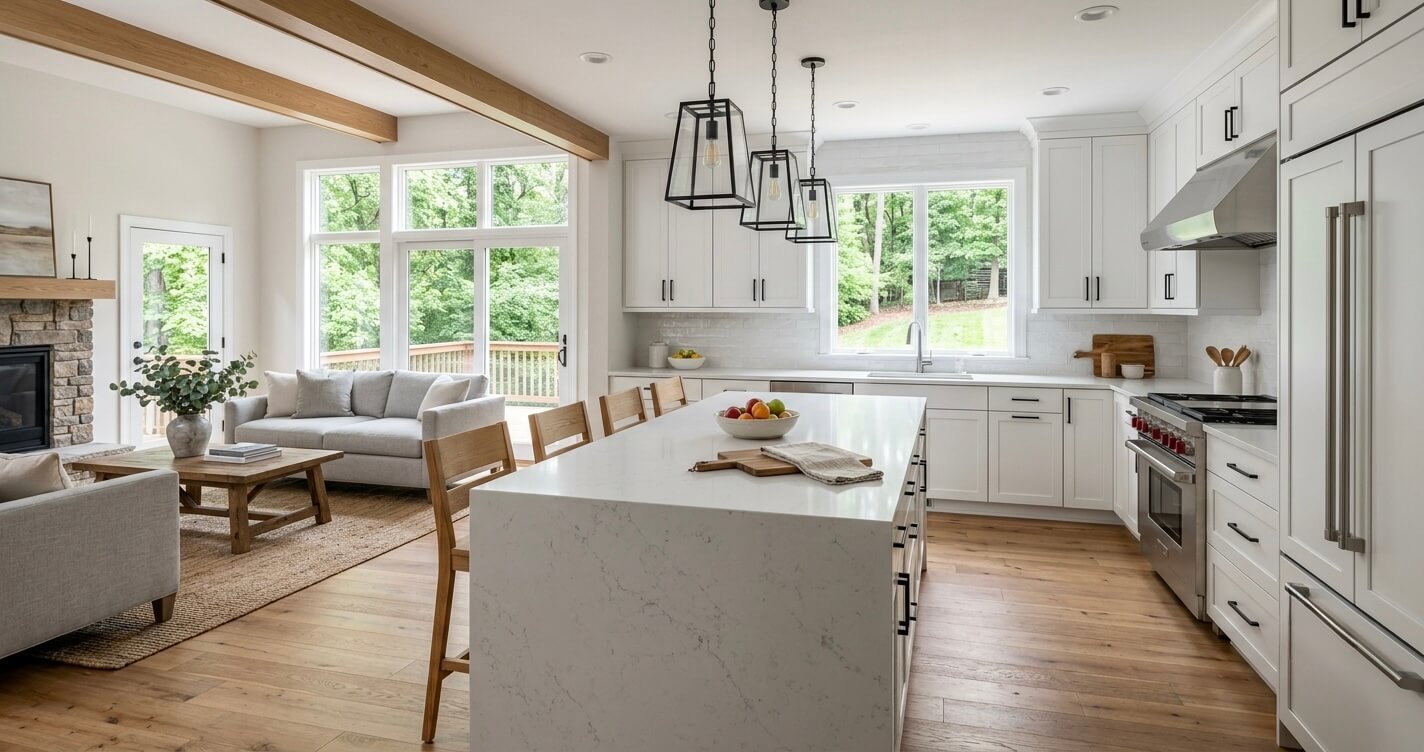
The kitchen is usually the highest-cost single room in a whole house remodel and often drives the layout decisions for adjacent living space. Most Northern Virginia whole-home projects fold in full kitchen remodeling services, including cabinetry, countertops, appliances, and often a layout change to open the kitchen to living areas.
Bathrooms
Primary and secondary bathrooms are almost always included in a whole house scope, since plumbing and electrical work is already open throughout the home. Homeowners typically bundle bathroom remodeling services across every bathroom in the home rather than updating them one at a time over several years.
Systems: Electrical, Plumbing, and HVAC
A true whole house remodel usually addresses aging electrical panels, outdated plumbing lines, and HVAC systems that are undersized or near end-of-life, particularly in homes over 30 years old. Replacing these systems while walls are already open is significantly more cost-effective than retrofitting them later.
Structural Work
Removing walls, changing the roofline, or reconfiguring the floor plan falls under structural work and typically requires an engineer’s involvement and a building permit before construction begins.
Basement and Additional Living Space
Many Northern Virginia whole house remodels also finish or reconfigure the basement, adding usable square footage without the cost of a full addition. This is often paired with basement finishing services as part of the same design-build scope of work.
A whole house remodel differs from a single-room remodel primarily in coordination: rather than sequencing separate projects over several years, all systems, finishes, and layout changes are planned and permitted together. It also differs from a home addition, which adds new square footage to the home’s footprint rather than reworking what already exists, a distinction covered in more detail in the next section.
Whole House Remodel vs. Home Addition vs. Selling: How Northern Virginia Homeowners Decide
The core decision usually comes down to whether your existing footprint fits your needs: if the layout just needs updating, a whole house remodel is typically the fastest and least disruptive option; if you need more square footage and the lot allows it, an addition can cost less per square foot gained than moving; and selling tends to make more financial sense when the lot, zoning, or setbacks can’t support the changes you actually need.
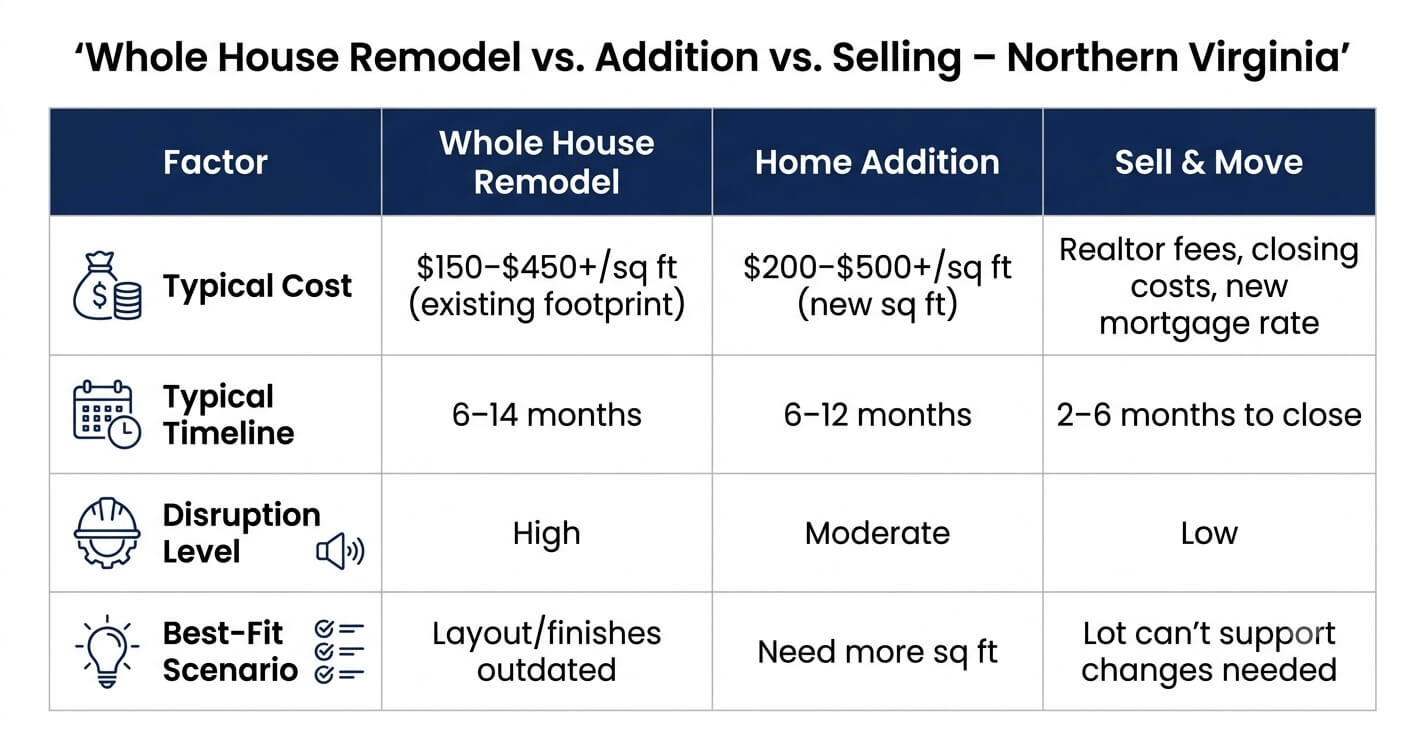
For a deeper side-by-side breakdown of the financial and lifestyle trade-offs, see our full Renovate vs. Sell Northern Virginia comparison guide.
How to Budget for a Whole House Remodel: A Step-by-Step Framework
Budget at least 10–15% above your target project cost as a contingency reserve, and work through four planning steps before finalizing floor plans: define scope and priorities, get a design-build estimate rather than piecing together separate bids, build in contingency for what’s behind the walls, and sequence the work realistically around your timeline and living situation.
Step 1: Define Scope and Priorities
Before pricing anything, rank which spaces matter most: kitchen, primary bath, systems, or layout. This ranking becomes the basis for trade-off decisions later. Our Best ROI Home Improvements in Northern Virginia guide breaks down which categories of work tend to hold value best, which is useful context when deciding where to allocate a limited budget.
Step 2: Get a Design-Build Estimate vs. Separate Bids
A single design-build estimate accounts for how design decisions affect construction cost from day one, whereas separate bids from an architect and then multiple contractors often surface cost conflicts only after the design is finalized, when changes are more expensive to make.
Step 3: Build in Contingency (10–15%)

Older Northern Virginia homes frequently reveal issues once walls are opened, outdated wiring, undersized ductwork, moisture damage, or foundation concerns, that were not visible during initial planning. A 10–15% contingency reserve absorbs these findings without forcing a mid-project scope cut.
Step 4: Sequence the Work
Homeowners choose between living through the renovation, moving out temporarily, or phasing the project by floor or wing. Sequencing affects both total cost and total timeline, and should be decided before construction contracts are signed, not during framing.
In 2024, an estimated $670 billion was spent on remodeling projects as roughly 20 million households, nearly one-quarter of all owner-occupied homes, undertook home improvements ranging from major renovations to smaller upgrades. This scale of participation shows that budgeting for a major remodel is a mainstream financial decision for homeowners nationally, not an outlier one.
What Permits Are Required for a Whole House Remodel in Northern Virginia?
Most whole house remodels in Northern Virginia require multiple permits, typically building, electrical, plumbing, and mechanical, because the scope usually touches structural, systems, and life-safety work at the same time. Permit requirements and review processes are set at the county or city level rather than region-wide, so the exact process depends on where the home is located.
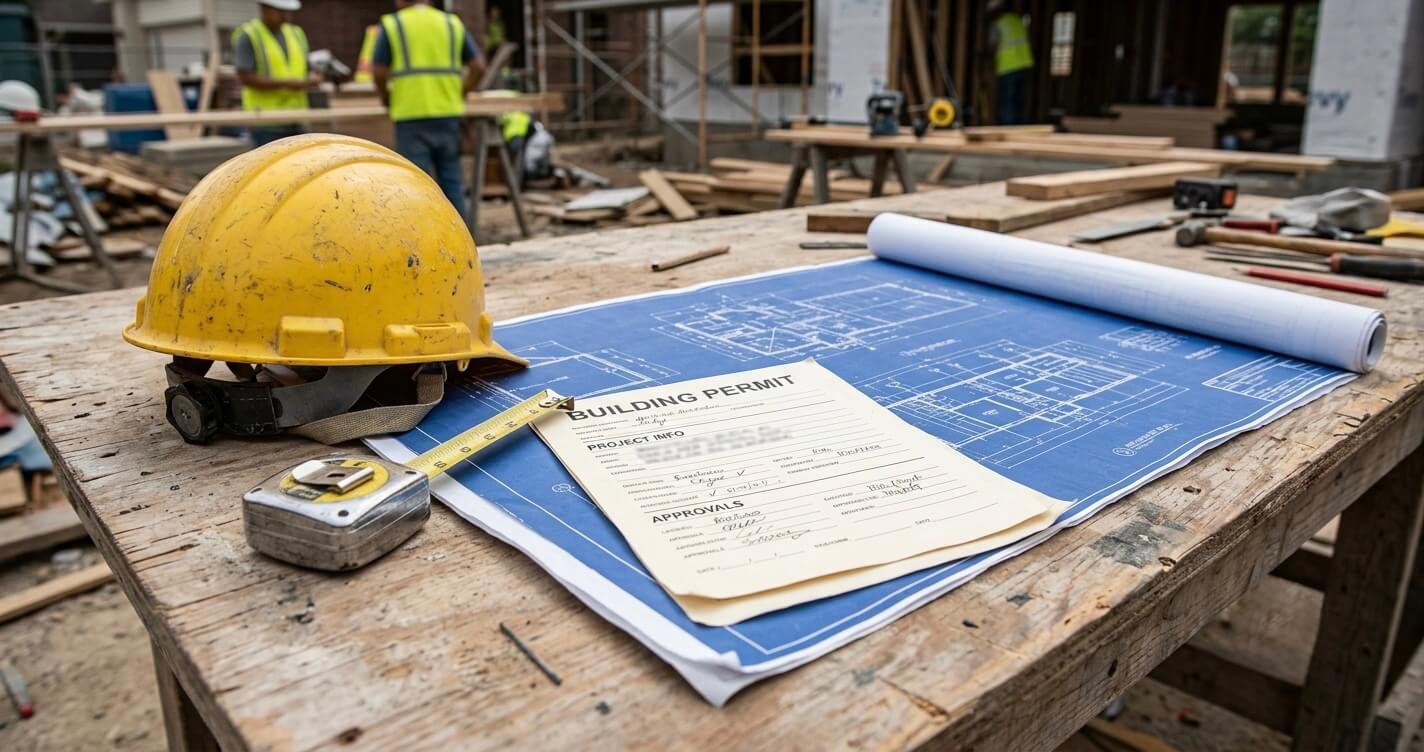
In Fairfax County, most whole house remodels are reviewed through the county’s Plan Review, Land Development, and Utilities System (PLUS) portal, with same-day or fast-track review available for certain project types through the county’s FIDO (Fairfax Inspections Database Online) process. Fairfax County Land Development Services publishes a clear breakdown of when a permit is required and a step-by-step overview of the permit process itself, both of which are worth reviewing before finalizing a project timeline.
Arlington County, Fairfax City, Falls Church, Loudoun County, and Prince William County each operate separate permitting offices with their own submission portals, fee schedules, and review timelines. A whole house remodel in McLean (Fairfax County) will follow a different permit process than the same scope of work in Arlington, so homeowners should confirm requirements directly with their specific county or city before assuming Fairfax County’s process applies region-wide.
Working through permitting is one of several reasons homeowners rely on an experienced local contractor; see our guide to choosing a home renovation contractor in Northern Virginia for the specific due-diligence questions to ask about permitting experience in your jurisdiction.
How Long Does a Whole House Remodel Take in Northern Virginia?
A whole house remodel in Northern Virginia typically takes 3 to 5 months for a cosmetic refresh, 7 to 10 months for a mid-range whole-home remodel, and 12 to 18 months for a full gut or structural renovation, measured from initial design through final walkthrough.
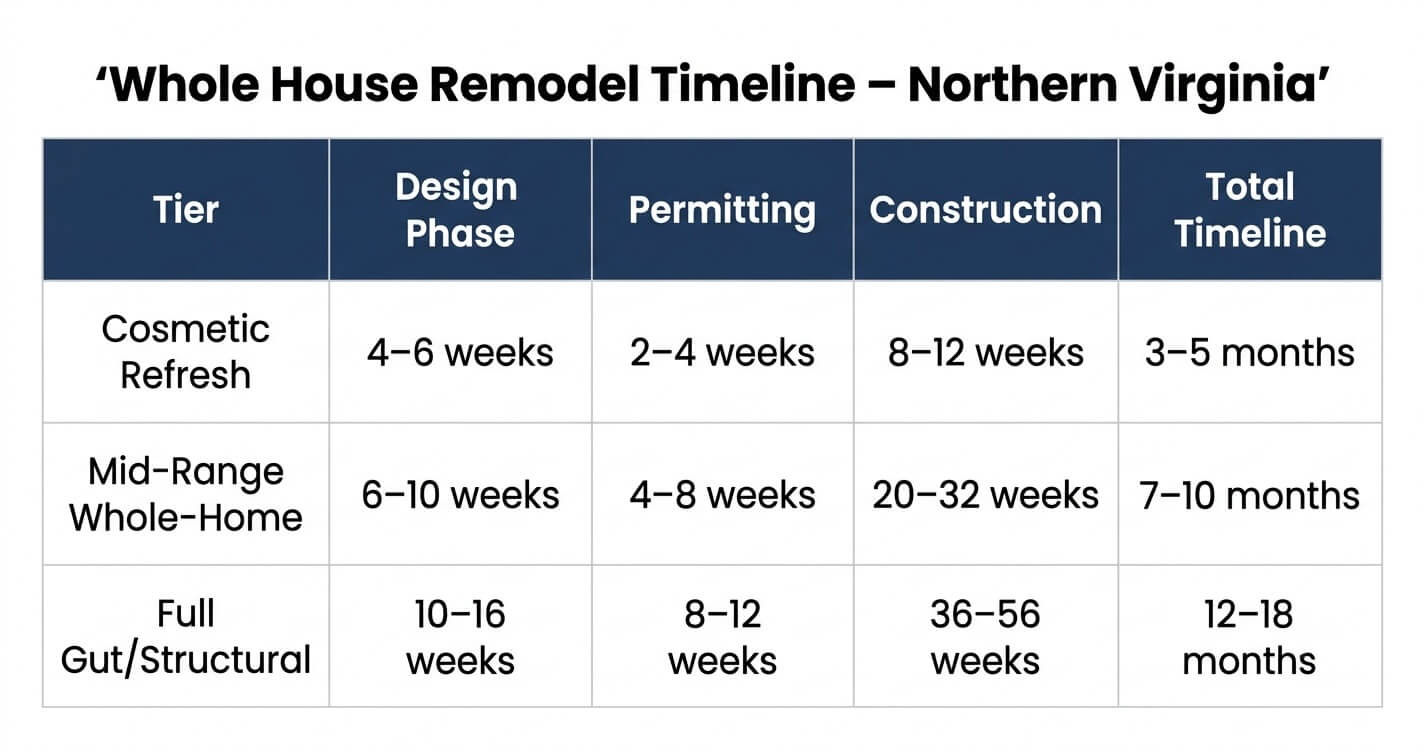
Estimated ranges; actual timelines vary by jurisdiction review times, material lead times, and scope changes made after construction begins.
The most common causes of delay on a whole house remodel are permit review backlogs at the county level, extended lead times on custom cabinetry, windows, or specialty materials, and mid-project scope changes that require re-permitting. Homeowners who lock in selections before construction starts and confirm permit timelines with their contractor upfront typically stay closest to their original schedule.
Design-Build vs. Hiring Separate Contractors for a Whole House Remodel
Design-build gives homeowners a single point of accountability and one contract covering both design and construction, while hiring an architect and contractors separately can sometimes produce lower individual bids but shifts coordination risk, and the cost overruns that often come with it, onto the homeowner.

When design and construction are handled by separate firms, cost conflicts between what was drawn and what can actually be built are often discovered mid-project, after the design is finalized and change orders become expensive. A design-build model, by contrast, prices constructability into the design phase itself, which reduces the likelihood of the budget overruns that phased, separately-contracted whole house remodels are more prone to. See our guide to choosing a home renovation contractor in Northern Virginia for the specific questions to ask any contractor, design-build or otherwise, before signing a contract.
A Real Whole House Remodel in Northern Virginia (Case Study Callout)
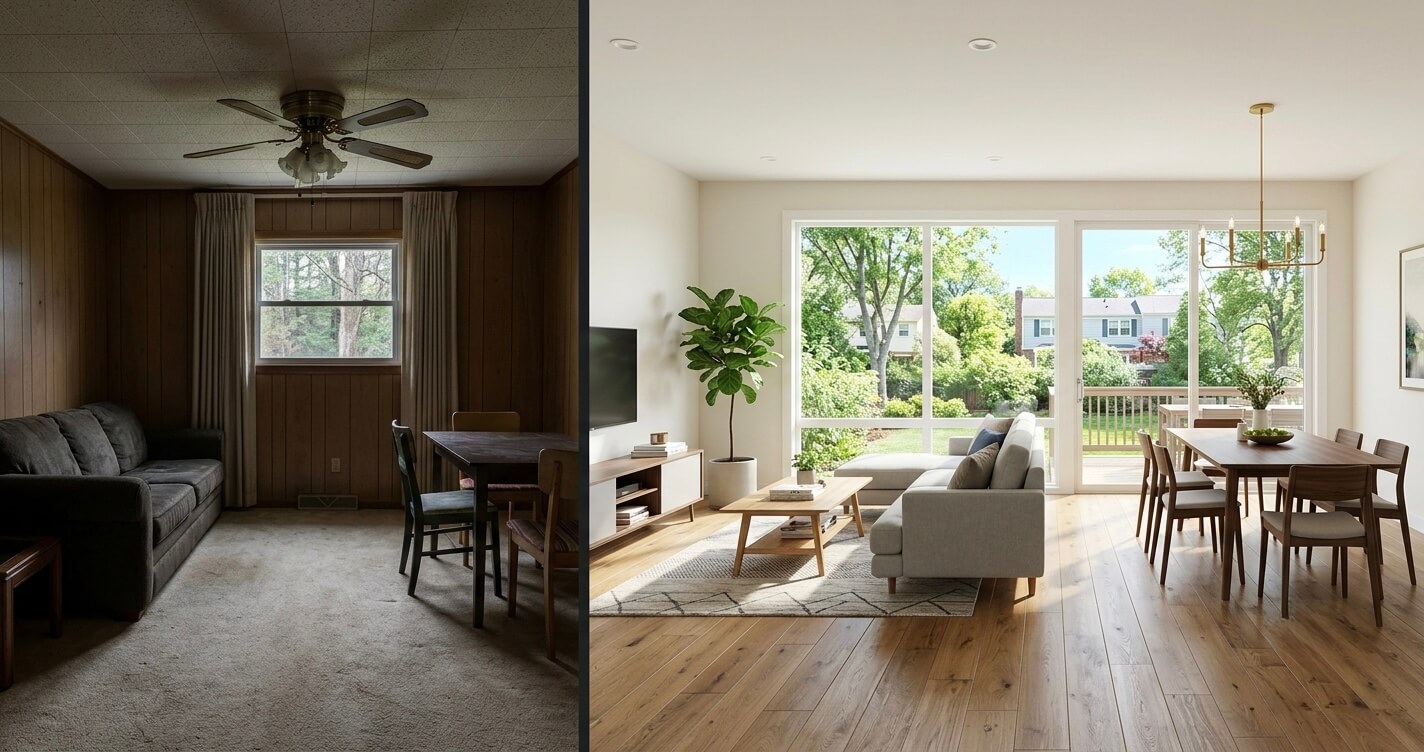
One example worth reviewing in full is our Full Home Renovation Before/After in Vienna, VA case study, which walks through the actual scope, sequencing, and design decisions behind a complete whole-home renovation in Vienna. It’s a useful reference point for homeowners who want to see how the planning framework in this guide, defining priorities, budgeting contingency, and sequencing the work, plays out on a real Northern Virginia project rather than in the abstract.
Common Whole House Remodel Mistakes to Avoid
The single biggest mistake homeowners make on a whole house remodel is under-budgeting for what’s behind the walls, systems, structural, and moisture issues that only surface once demolition begins, which is exactly what a 10–15% contingency reserve is meant to absorb.
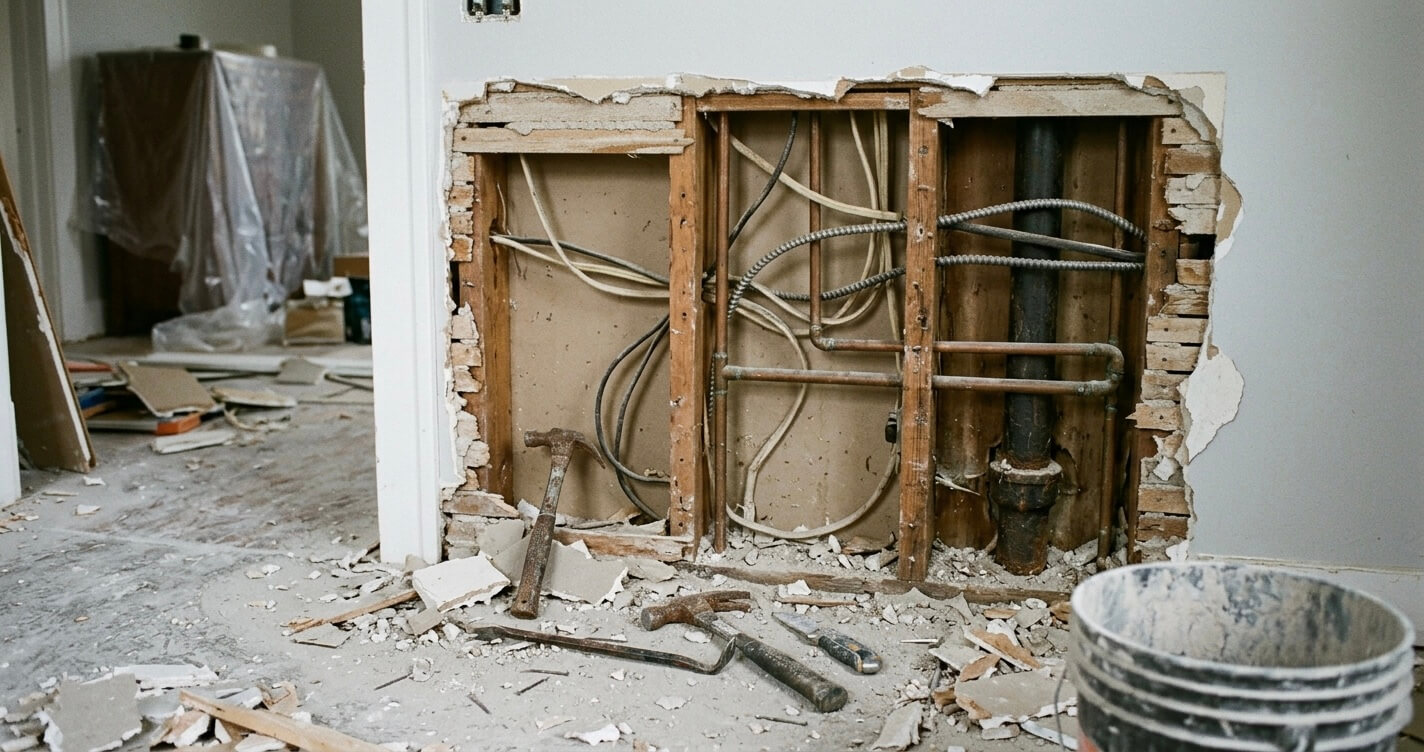
- Skipping the contingency reserve: Treating the estimate as the final number, rather than the starting number, is the fastest way to run out of budget mid-project.
- Finalizing the design before confirming permitting requirements: Structural changes that aren’t cleared with the county early can force costly redesigns later.
- Choosing finishes before the budget is locked: Selecting high-end finishes before confirming the systems and structural budget often forces cuts elsewhere later in the project.
- Underestimating the timeline for older homes: Homes built before the 1980s frequently need more systems work than initially scoped, which extends both cost and schedule.
- Piecing together separate bids without a single point of accountability: This shifts coordination risk onto the homeowner and is a common source of the overruns discussed in the design-build section above.
- Not sequencing around daily life: Deciding whether to live through construction, move out, or phase the project should happen before contracts are signed, not once work is underway.
Frequently Asked Questions
How much does a whole house remodel cost in Northern Virginia?
A whole house remodel in Northern Virginia typically costs $150–$450+ per square foot depending on tier, ranging from roughly $375,000 for a cosmetic refresh to over $1.1 million for a full gut renovation on a 2,500-square-foot home. Costs rise with structural work, full systems replacement, and higher-end finish selections.
How long does a whole house remodel take?
Most whole house remodels in Northern Virginia take 6 to 14 months total, with cosmetic refreshes completing in 3–5 months and full gut renovations taking 12–18 months from design through final walkthrough. Permit review times and material lead times are the two biggest variables.
Do I need a permit for a whole house remodel in Fairfax County?
Yes, nearly all whole house remodels in Fairfax County require permits for building, electrical, plumbing, and mechanical work, since the scope typically involves structural and systems changes. Fairfax County Land Development Services processes these through its PLUS portal, and homeowners should confirm specific requirements before finalizing a construction timeline.
Is it cheaper to remodel or build a home addition in Northern Virginia?
Remodeling the existing footprint is generally less expensive per square foot than building an addition, since addition costs include new foundation, roofline, and structural work in addition to finishes. However, if the existing layout can’t accommodate your needs regardless of finish quality, an addition may be the only option that actually solves the problem.
Should I renovate or sell my home in Northern Virginia?
The decision typically comes down to whether your lot and zoning can support the changes you need: if they can, remodeling is usually more cost-effective than moving; if they can’t, selling may make more sense. Our full Renovate vs. Sell Northern Virginia guide walks through the complete financial comparison.
How much should I budget for contingency on a whole house remodel?
A 10–15% contingency reserve above your target project cost is the standard recommendation, and this range is especially important for Northern Virginia’s older homes, where systems and structural issues behind the walls are common once demolition begins.
What’s the difference between a whole house remodel and a full home renovation?
The terms whole house remodel and full home renovation are largely interchangeable in industry use, and both refer to a coordinated project touching the kitchen, bathrooms, systems, and layout throughout the home, as opposed to a single-room remodel or a home addition.
Should I hire a design-build firm or separate contractors for a whole house remodel?
A design-build firm provides a single point of accountability and typically reduces the coordination risk that comes with hiring an architect and contractors separately. Separate bids can occasionally produce lower individual numbers, but homeowners take on more responsibility for managing conflicts between design and construction.
Planning Your Whole House Remodel in Northern Virginia
A successful whole house remodel in Northern Virginia comes down to planning before construction, not during it: defining scope and priorities, choosing between a design-build estimate and separate bids, building in a realistic contingency reserve, and sequencing the work around your timeline and living situation. Homeowners who work through these four steps before finalizing floor plans are far less likely to face the mid-project surprises and cost overruns that derail projects planned on the fly.
Homeowners planning a whole house remodel in Northern Virginia may benefit from discussing scope, sequencing, and realistic budget ranges with an experienced design-build team before finalizing floor plans.
Planning a whole house remodel in Northern Virginia? Contact US Home Design Build to discuss your goals, budget, and timeline with our team.