
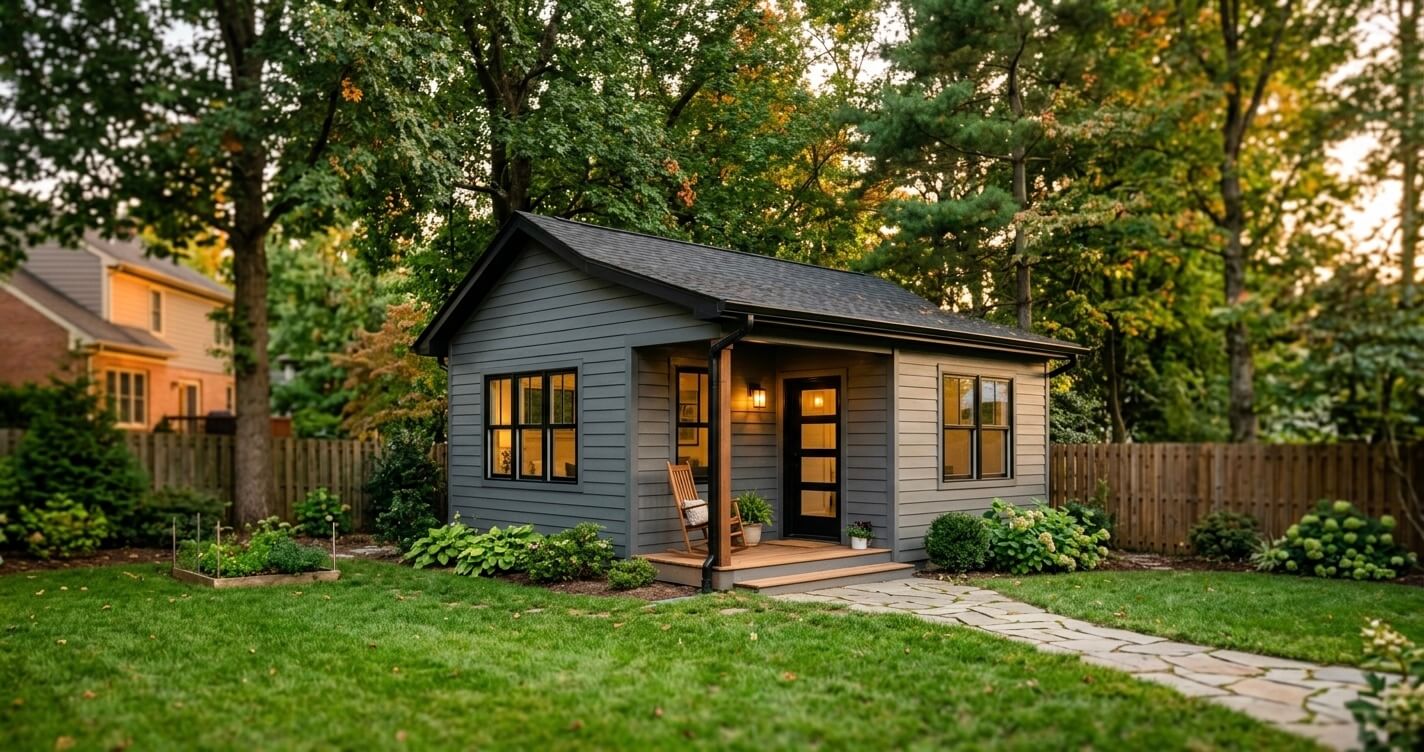
The Virginia ADU law SB 531 gives homeowners the right to build an accessory dwelling unit on a single-family zoned lot without a special use permit, effective July 1, 2027. Governor Abigail Spanberger signed the bill on April 13, 2026, ending a patchwork system in which individual Virginia localities could restrict or outright block backyard cottages, garage apartments, and in-law suites. For homeowners across Fairfax County, McLean, Vienna, Reston, Great Falls, and Burke, this is the most significant change to accessory dwelling unit rules in Northern Virginia in years.
Our design-build team at US Home Design Build has spent years navigating Fairfax County and Arlington permitting for additions, in-law suites, and ADU builds, and this guide breaks down exactly what the Virginia ADU law SB 531 changes, what it doesn’t change, and what homeowners should be doing right now to prepare.
What Is Virginia’s SB 531 ADU Law?
SB 531 is a Virginia law, signed April 13, 2026, that requires every locality in the Commonwealth to permit accessory dwelling units by right in single-family residential zoning districts, effective July 1, 2027. It also caps the ADU-specific permit fee at $500.
Before this law, Virginia had no statewide ADU standard. Each county and city set its own rules, and many, including Fairfax County, required a discretionary approval process that could take months and still end in denial.
Senate Bill 531 was carried by Sen. Kannan Srinivasan (D-Loudoun) and Sen. Saddam Salim (D-Fairfax), who had introduced similar legislation in prior sessions before it passed this year. The bill passed the Senate 21-19 and the House of Delegates 62-37 before reaching the Governor’s desk. It was publicly championed by the Commonwealth Housing Coalition and the Pacific Legal Foundation, both of which framed the law as a property-rights correction to restrictive local zoning.
For homeowners, the practical shorthand is this: an accessory dwelling unit, a backyard cottage, garage apartment, basement unit, or attached in-law suite with its own kitchen, bathroom, and entrance, becomes a permitted use on qualifying single-family lots statewide, not a special exception a locality can deny.
What Actually Changes for Northern Virginia Homeowners?
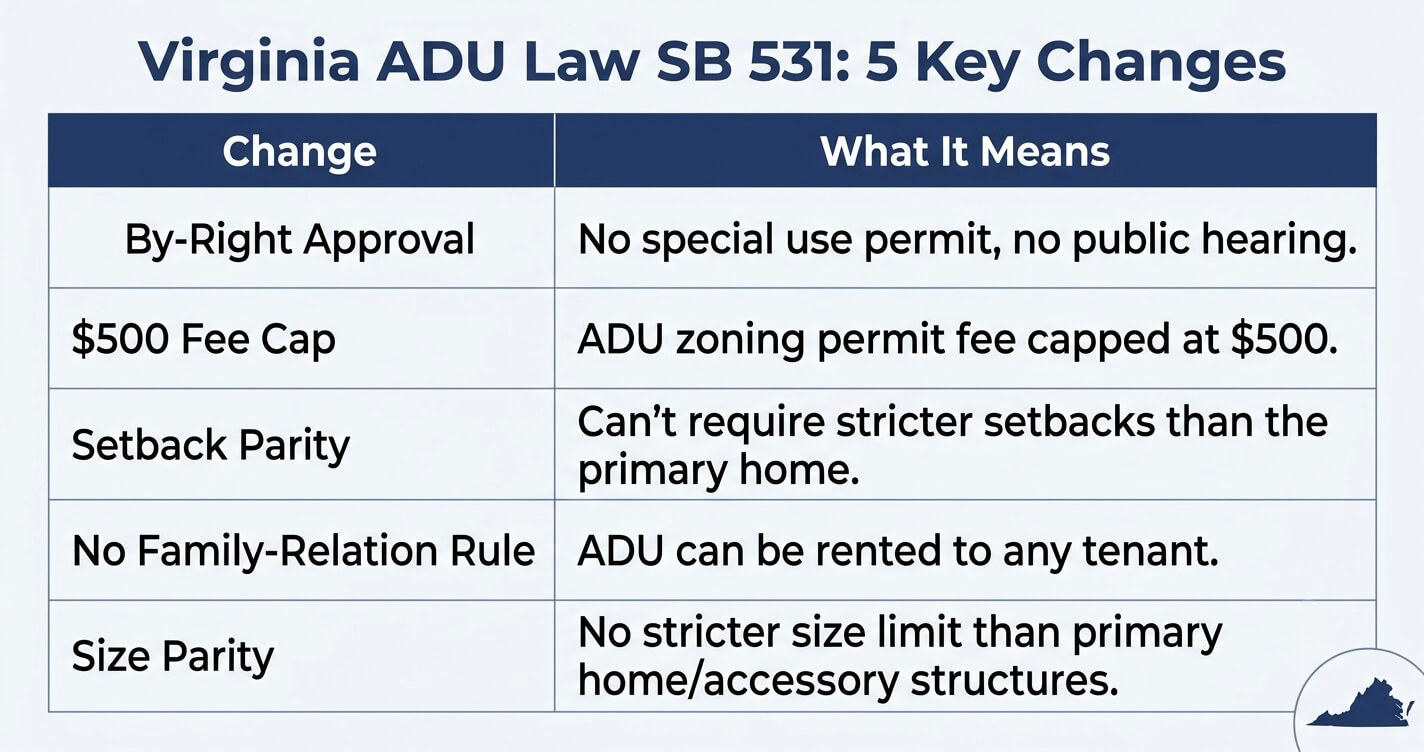
Virginia ADU law SB 531 makes five concrete changes: by-right zoning approval, a $500 cap on ADU permit fees, setback parity with the primary home, removal of family-relation occupancy rules, and a size-parity standard instead of a strict square footage cap.
Each of these directly affects how Fairfax County, Arlington, and surrounding jurisdictions can regulate ADUs after July 1, 2027.
By-right approval removes the discretionary layer. If a proposed ADU meets the applicable building and zoning code, the locality must approve it administratively, no special use permit application, no Board of Zoning Appeals hearing, and no public comment period where neighbors can object to the project on subjective grounds.
The $500 fee cap applies specifically to the ADU zoning/use permit itself, not to standard building, electrical, plumbing, or mechanical permit fees, which remain separate line items.
Setback parity means a locality cannot require an ADU to sit farther back from property lines than what applies to the primary home or to other accessory structures already permitted on that lot. Localities lose the ability to write ADU-specific setback rules stricter than everything else on the property.
The removal of the family-relation requirement is significant for homeowners considering rental income: some Virginia localities previously required the ADU occupant to be related to the primary homeowner. That restriction is gone, meaning the unit can be rented to any tenant, subject to a locality’s separate short-term rental rules.
On size, SB 531 does not set a statewide square footage cap. Instead, it uses a parity approach: an ADU can’t be restricted to a smaller size than what the same zoning district already allows for the primary home or other accessory structures. This is a common point of confusion worth flagging early: “no cap” does not mean “unlimited,” it means “measured by the same yardstick as everything else on your lot.”
Homeowners weighing whether their lot qualifies under the new law, and how these five changes apply to their specific property, may benefit from discussing the details with an experienced design-build team before finalizing plans or budgets.
How Does SB 531 Affect Fairfax County, Arlington, and Other NoVA Localities?
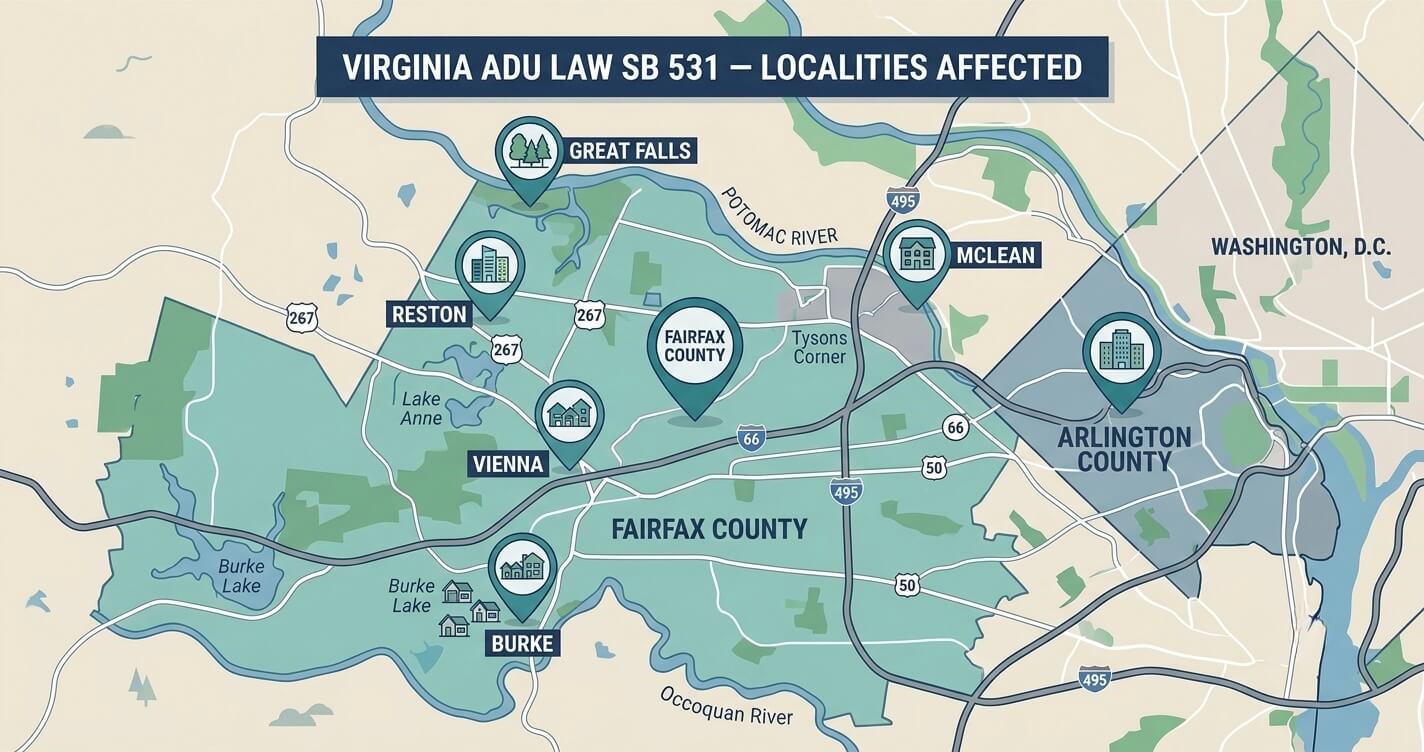
Fairfax County currently regulates accessory dwelling units under its own Accessory Living Unit (ALU) ordinance, which is more restrictive than SB 531 permits, so the county must rewrite that ordinance before the law takes effect on July 1, 2027. Arlington, Alexandria, and Falls Church each maintain separate zoning frameworks that will need similar review.
Under Fairfax County’s current ALU rules, homeowners submit ADU-related permits through the county’s PLUS (Planning and Land Use System) portal, and certain projects still require an ADU/ALU-specific form alongside standard building, electrical, and zoning review, as outlined in our Garage Addition Permit Fairfax County VA guide. That existing process reflects the pre-SB 531 rules; expect Fairfax County to publish updated ALU ordinance language as the 2027 deadline approaches, and treat any specific figures from the county’s current ordinance as subject to change rather than fixed under the new by-right framework.
Northern Virginia’s housing stock and market conditions are part of why this law carries real weight locally. Fairfax County continues to see strong housing demand and elevated home values, both of which increase homeowner interest in flexible secondary-living arrangements like ADUs. Homeowners in McLean, Vienna, Reston, Great Falls, and Burke all fall under Fairfax County’s zoning authority, so the county’s ordinance rewrite will directly determine local ADU rules in those communities once the state law takes effect.
Arlington and Alexandria maintain their own review processes independent of Fairfax County, and homeowners in those jurisdictions should expect a separate local rulemaking process ahead of 2027 rather than assuming Fairfax County’s revised ordinance will apply uniformly across Northern Virginia.
Timeline: What Happens Between Now and July 1, 2027
Virginia localities have until July 1, 2027 to bring their zoning ordinances into compliance with SB 531, but homeowners don’t need to wait until then to start planning an ADU project. Design, budgeting, and site evaluation typically take months on their own, well before a permit application is even submitted.
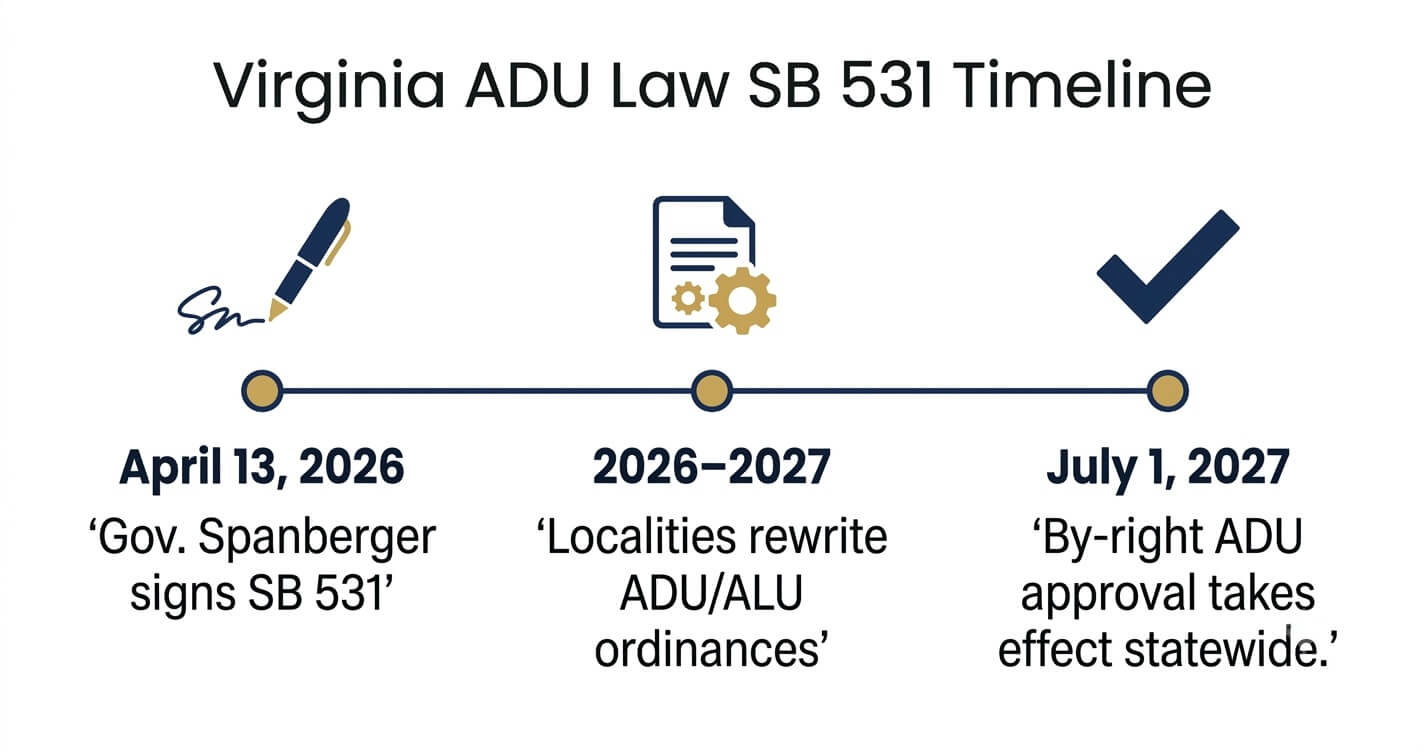
A realistic pre-2027 planning sequence looks like this: confirm your lot’s zoning district and any existing accessory structures, work through initial design and site feasibility with a design-build team, plan financing around current ADU cost ranges, and stay current on your specific locality’s ordinance update as it’s published. Homeowners who start this process now are positioned to submit for permits as soon as updated local rules take effect, rather than starting from zero in mid-2027.
It’s also worth setting expectations plainly: by-right zoning approval streamlines the zoning step specifically. It does not remove the requirement for standard building, electrical, plumbing, and mechanical permits, which still apply to ADU construction under Fairfax County’s process today, as detailed in our Remodeling Permit Fairfax County guide. A design-build approach, where one team manages design, permitting, and construction under a single contract, tends to reduce the back-and-forth that comes with navigating multiple review tracks. Our Design-Build Northern Virginia: 2026 Complete Guide walks through how that process works stage by stage.
What Type of ADU Makes Sense Under the New Law?
Four ADU types qualify under Virginia ADU law SB 531: detached backyard cottages, garage conversions, attached additions, and basement or in-law suite conversions, and the right choice depends on lot size, budget, and how the space will be used.
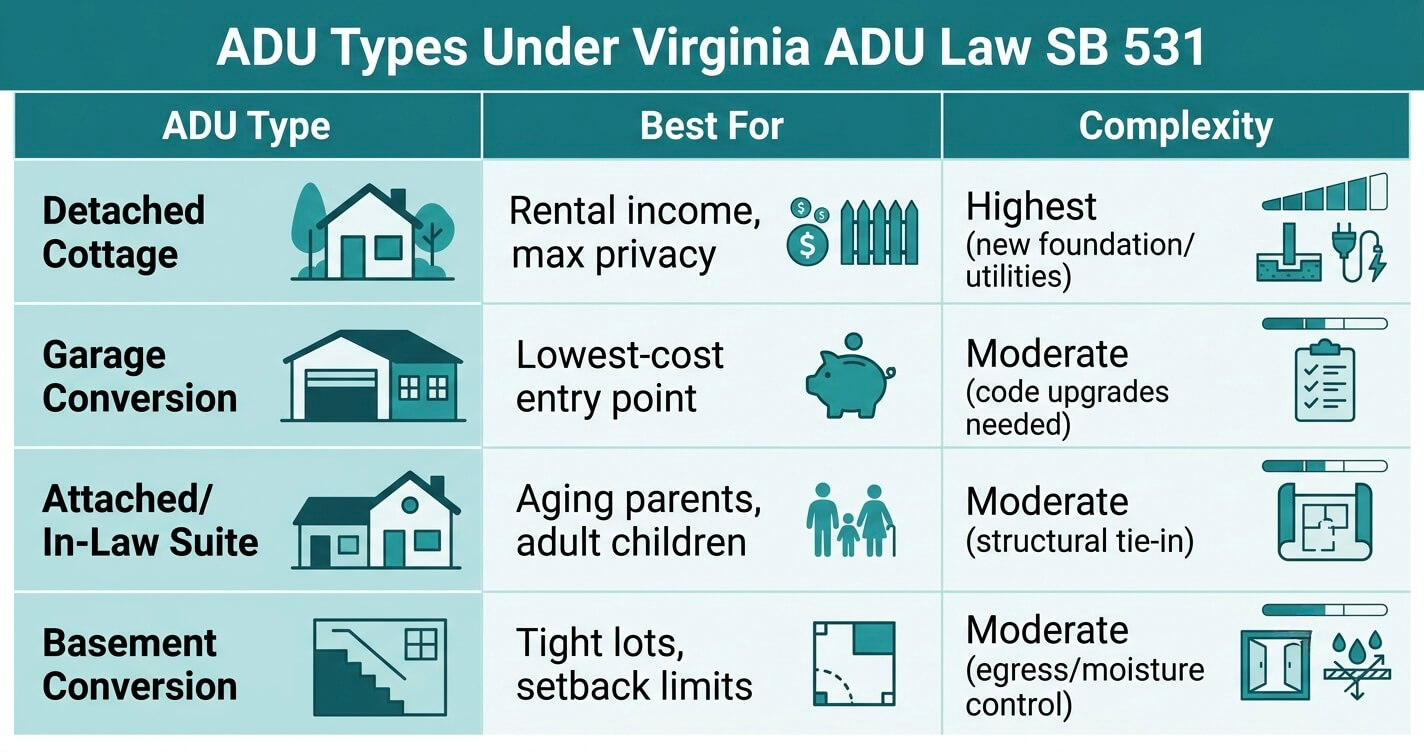
Detached ADUs offer the most privacy and flexibility for rental use, since they function as a fully separate structure, but they require the most site work: new foundation, utility runs, and full setback compliance.
Garage conversions are typically the lowest-cost entry point because the shell of the structure already exists, though many Northern Virginia garages weren’t originally built to residential living-space code, so foundation, insulation, and HVAC upgrades are common.
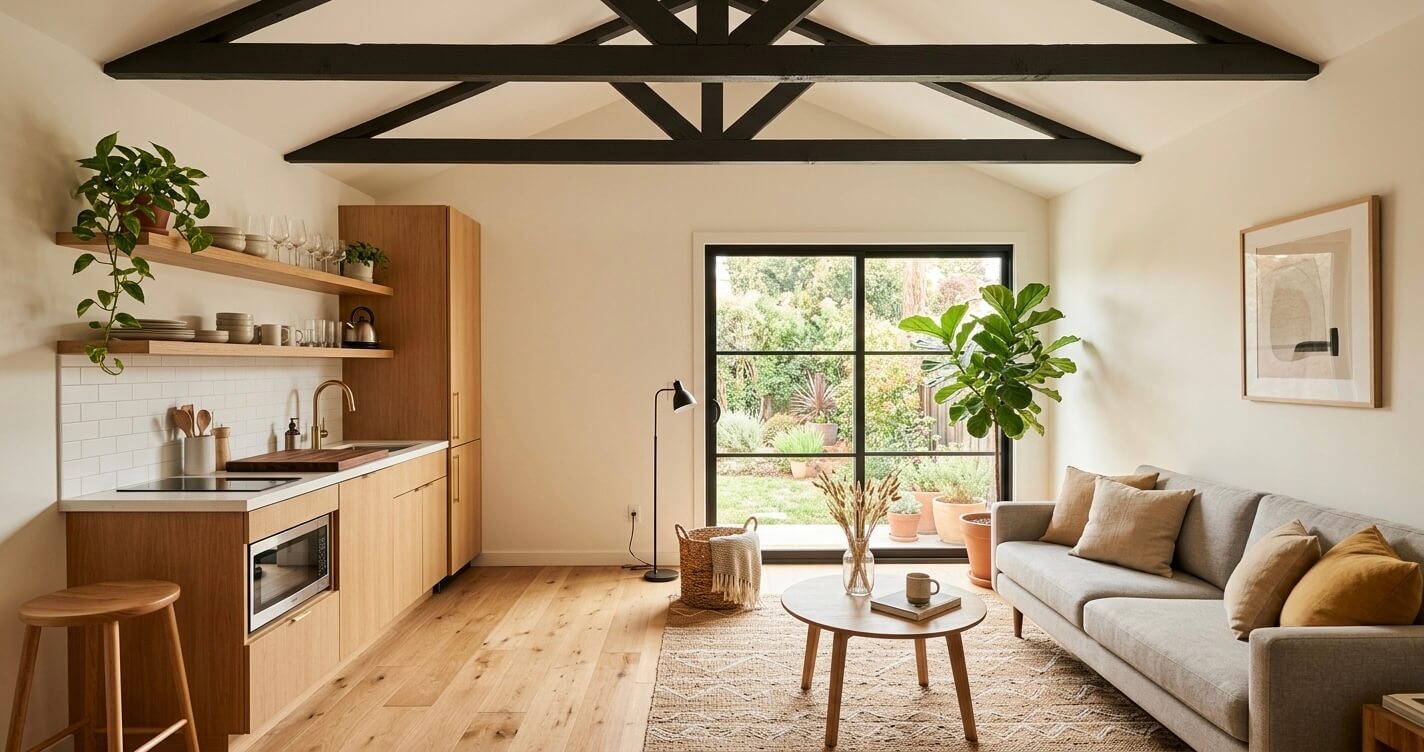
Attached additions and in-law suites integrate directly with the primary home, which can simplify utility connections but requires more structural coordination with the existing house. This is the ADU type most homeowners consider for aging parents or adult children who want proximity without sharing living space, and our In-Law Suite Addition Cost Northern Virginia guide breaks down real pricing factors for this specific configuration.
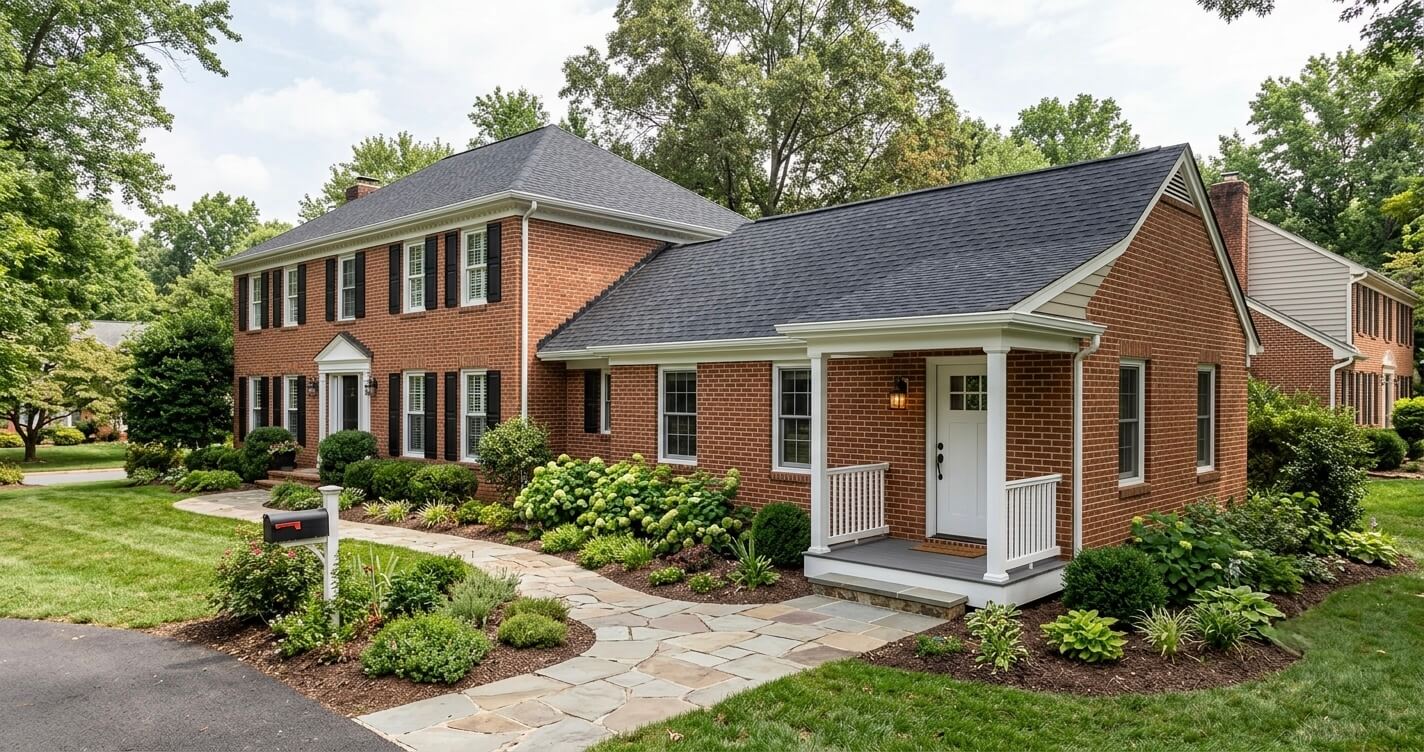
Basement conversions make sense on lots where a detached structure isn’t feasible due to setback or lot-coverage constraints, since the existing foundation and framing reduce some construction complexity, though egress and moisture control still require careful planning.
Housing age is a relevant factor across all four options: nearly half of U.S. owner-occupied homes, about 48%, were built before 1980, and the national median home age is now 41 years. Northern Virginia’s neighborhoods reflect that pattern, which is part of why garage and basement conversions in older homes often surface structural surprises once walls open up. For a full cost breakdown across all four ADU types, see our ADU Cost Northern Virginia 2026 Guide.
Accessory dwelling units are also increasingly recognized nationally as a flexible housing option that supports multigenerational living and aging in place, a trend behind why states like Virginia are loosening ADU zoning restrictions in the first place.
Common Misunderstandings About SB 531
The two most common misreadings of Virginia ADU law SB 531 are assuming ADUs now have unlimited size and assuming the law is already in effect, neither is accurate.
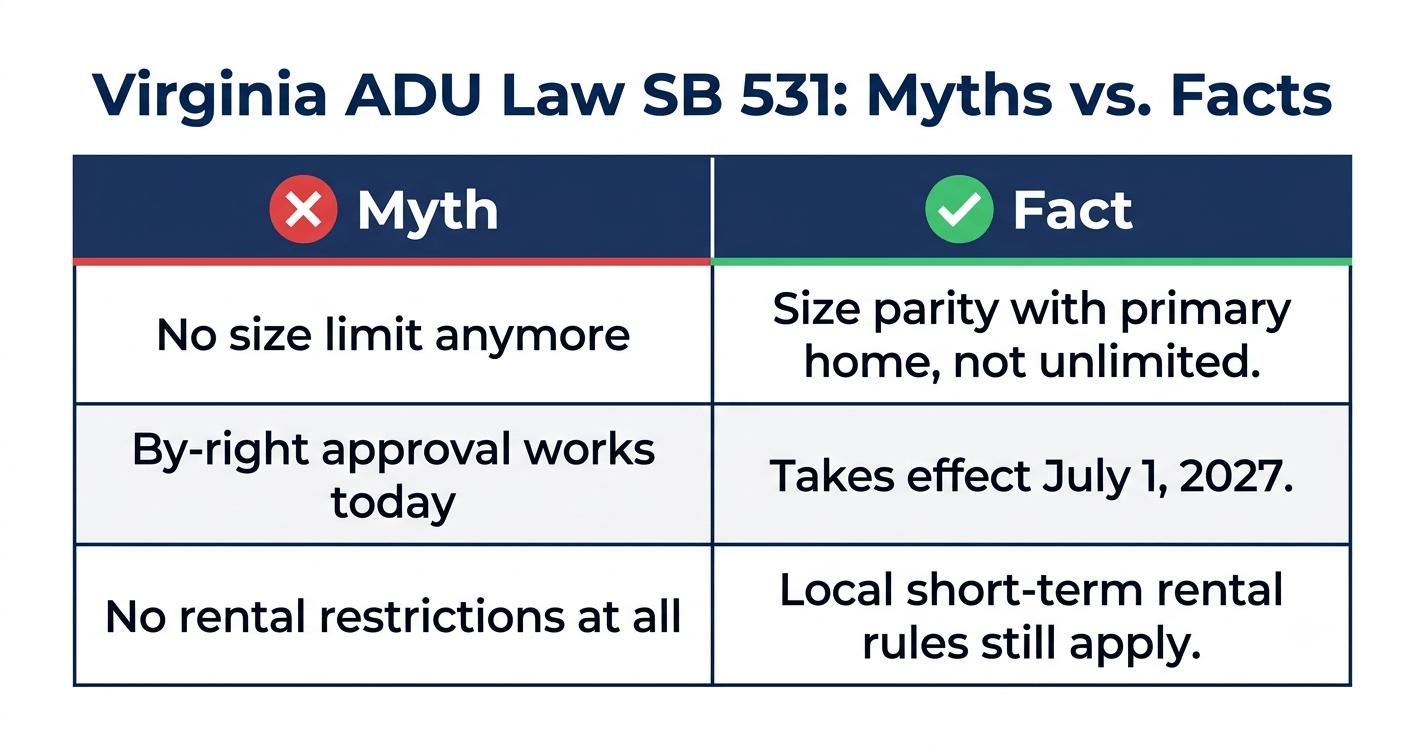
Myth: “There’s no size limit anymore.”
SB 531 uses a parity standard, not an unlimited allowance. A locality can’t apply a size restriction to your ADU that’s stricter than what already applies to your primary home or other accessory structures on the same lot, but local size rules haven’t disappeared, they’ve been standardized.
Myth: “I can apply for by-right approval today.”
Not yet. The law doesn’t take effect until July 1, 2027, and localities are still required to update their ordinances before that date. Submitting an ADU project today still goes through Fairfax County’s current ALU process.
Myth: “Any tenant, any use, no restrictions.”
SB 531 removes the family-relation occupancy requirement, but it doesn’t override a locality’s separate short-term rental ordinances. Homeowners planning to use an ADU as a short-term rental should confirm local short-term rental rules independently of the zoning change.
For a deeper look at planning pitfalls specific to ADU projects in this market, see our ADU Mistakes Fairfax County VA guide, which covers zoning, permitting, and utility-coordination mistakes homeowners commonly run into.
Steps to Take Now if You’re Considering an ADU
Homeowners can confirm lot eligibility, begin design work, and plan financing now, even though by-right approval doesn’t take effect until July 1, 2027. Getting these steps done early means being ready to submit as soon as updated local ordinances are published.
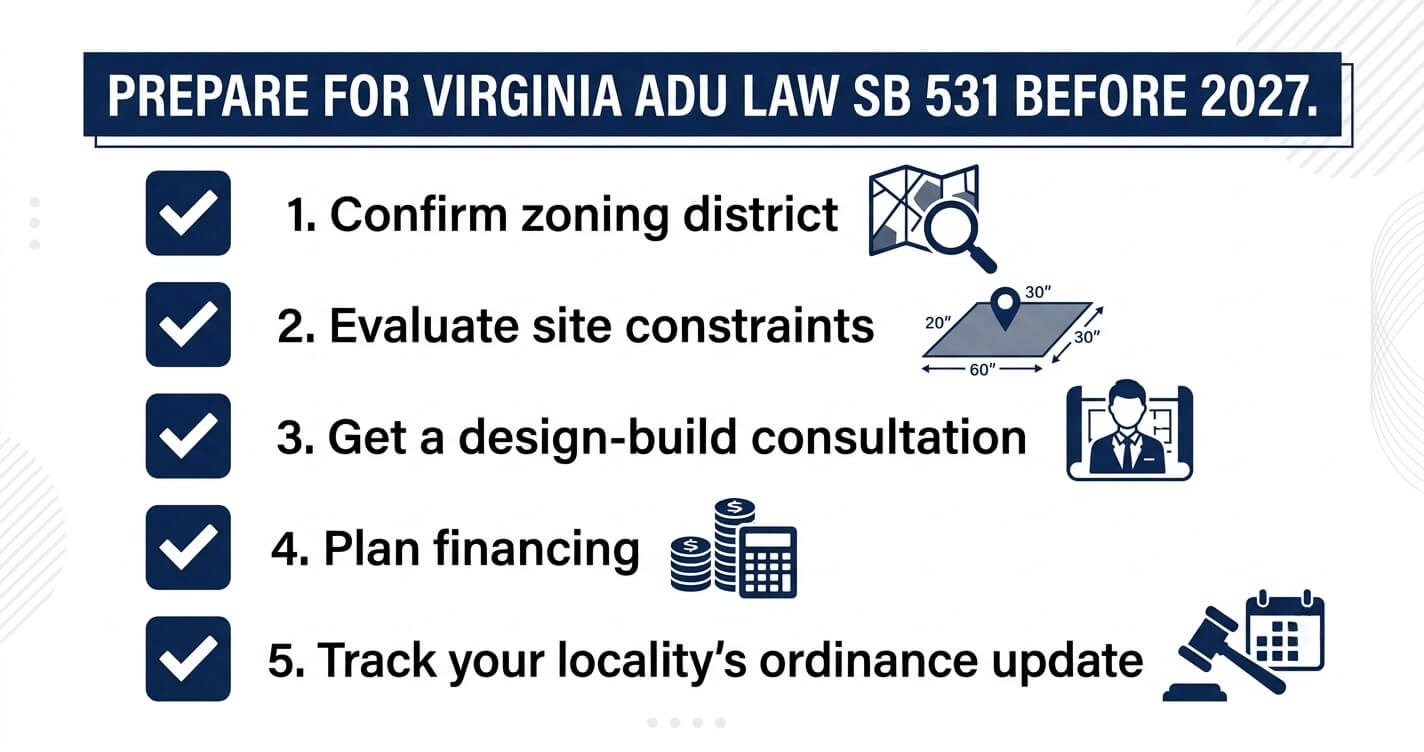
1. Confirm your zoning district and review any existing accessory structures already on your lot.
2. Evaluate site constraints, setbacks, slope, tree cover, and utility access, that will affect which ADU type fits your property.
3. Get a design-build consultation to establish rough scope, feasibility, and a realistic budget range before committing to a direction.
4. Review financing options against current ADU cost data; our Best ROI Home Improvements Northern Virginia guide breaks down how ADUs compare to other renovation projects on rental income and resale value.
5. Track Fairfax County’s (or your locality’s) ordinance rewrite as the 2027 deadline approaches, so your project timeline lines up with when by-right approval actually becomes available.
Planning an ADU in Northern Virginia ahead of the Virginia ADU law SB 531 effective date? Contact US Home Design Build to discuss your lot, budget, and timeline with our team, or start with our ADU builder Northern Virginia service page for a closer look at how we approach ADU projects from design through construction.
Frequently Asked Questions
What is Virginia’s SB 531 ADU law?
SB 531 is a Virginia law requiring every locality to allow accessory dwelling units by right in single-family residential zones, with ADU permit fees capped at $500. It was signed by Governor Abigail Spanberger on April 13, 2026.
When does SB 531 take effect in Virginia?
SB 531 takes effect July 1, 2027. Virginia localities, including Fairfax County, must update their zoning ordinances to comply by that date, though homeowners can begin design and planning work before then.
Does SB 531 apply to Fairfax County?
Yes, SB 531 applies statewide, including Fairfax County. The county currently regulates ADUs under its own Accessory Living Unit ordinance, which is stricter than the new law allows, so it must revise those rules ahead of the 2027 effective date.
How much can a locality charge for an ADU permit under SB 531?
Localities cannot charge more than $500 for the ADU-specific zoning permit. This cap applies to the ADU/zoning permit itself and is separate from standard building, electrical, plumbing, or mechanical permit fees.
Can I rent my ADU to someone who isn’t a family member?
Yes, SB 531 removes the family-relation occupancy requirement some Virginia localities previously enforced. Homeowners can rent an ADU to any tenant, though local short-term rental ordinances still apply separately.
Is there a size limit on ADUs under Virginia’s new law?
SB 531 doesn’t set a statewide square footage cap; it uses a parity standard instead. A locality can’t apply size restrictions to an ADU that are stricter than what applies to the primary home or other accessory structures on the same lot.
Do I still need a building permit for an ADU under SB 531?
Yes, standard building, electrical, plumbing, and mechanical permits still apply to ADU construction. By-right zoning approval removes the special-use permit and public hearing step, not the underlying construction permitting process.
How much does it cost to build an ADU in Northern Virginia?
ADU costs in Northern Virginia generally range from around $75,000 for a basement conversion to $350,000 or more for a detached new build. Costs vary by ADU type, size, and site conditions; see our ADU Cost Northern Virginia 2026 Guide for a full breakdown.
To Sum Up
Virginia ADU law SB 531 is a real, signed law that changes how Fairfax County, Arlington, and the rest of Northern Virginia will regulate accessory dwelling units starting July 1, 2027: by-right zoning approval, a $500 permit fee cap, setback and size parity, and no family-relation occupancy requirement. What it doesn’t do is eliminate local building permits, set an unlimited size allowance, or take effect immediately; Fairfax County and neighboring jurisdictions still have ordinance updates to complete before the deadline.
For homeowners in McLean, Vienna, Reston, Great Falls, and Burke, the practical move now is to start design and site evaluation early rather than wait for 2027.
Our design-build team at US Home Design Build has guided Northern Virginia homeowners through ADU, in-law suite, and addition projects for years, and we’re glad to help you figure out what SB 531 means for your specific property. Contact US Home Design Build to get started.
