

Financing a home addition in Northern Virginia has become the preferred choice for many homeowners who want to create more living space without giving up today’s valuable mortgage rates or moving to a new home. Whether you’re planning a second-story addition in McLean, an in-law suite in Fairfax County, or a larger family room expansion in Vienna, understanding your financing options early can make the entire process smoother and more affordable.
For most Northern Virginia homeowners, paying cash for a major addition isn’t necessary. Home equity loans, HELOCs, cash-out refinancing, and renovation loans provide flexible ways to fund projects while preserving savings for contingencies, furnishings, and other household expenses. The best financing solution depends on three primary factors: your available home equity, the scope of your project, and today’s lending environment.
The timing is particularly noteworthy. According to the Harvard Joint Center for Housing Studies, U.S. homeowner spending on remodeling and repairs is projected to remain above $500 billion through 2026, highlighting the sustained demand for improving existing homes rather than purchasing new ones. Similarly, the National Association of Home Builders notes that America’s housing stock continues to age, making renovations and additions increasingly common among homeowners seeking long-term value from their properties.
For Northern Virginia homeowners, financing decisions are often intertwined with design decisions. A lender will typically want to understand the scope, estimated costs, timeline, and contractor documentation before approving financing. Having these details established early can significantly streamline both underwriting and construction planning.
If you’re exploring a major addition project, our Home Addition services in Northern Virginia provide homeowners with comprehensive design-build planning that helps establish realistic budgets before financing discussions begin.
Throughout this guide, we’ll compare the most common financing options available in 2026, explain how lenders evaluate home addition projects in Northern Virginia, and discuss practical budgeting considerations that can help you borrow confidently without overextending financially.
How Much Does It Cost to Finance a Home Addition in Northern Virginia?
Financing a home addition in Northern Virginia typically means borrowing anywhere from $50,000 for smaller projects to $300,000 or more for large-scale additions. Your actual monthly costs will depend on the amount financed, your loan term, interest rate, and associated lender fees rather than the construction cost alone.
Many homeowners focus exclusively on construction costs, but financing costs may also include appraisal fees, lender closing costs, interest charges, and contingency expenses. Understanding both figures is essential when planning your total project budget.
One of the biggest misconceptions homeowners have when they finance a home addition in Northern Virginia is assuming that the project’s sticker price will equal its total cost. In reality, financing introduces several additional variables that should be considered before applying for any loan product.
For example, two homeowners borrowing the same amount may have significantly different monthly payments depending on their credit profile, loan structure, and repayment term. Similarly, financing a phased project through a HELOC can produce very different borrowing costs than selecting a fixed-rate home equity loan.
Typical Northern Virginia addition projects often fall within the following broad categories:
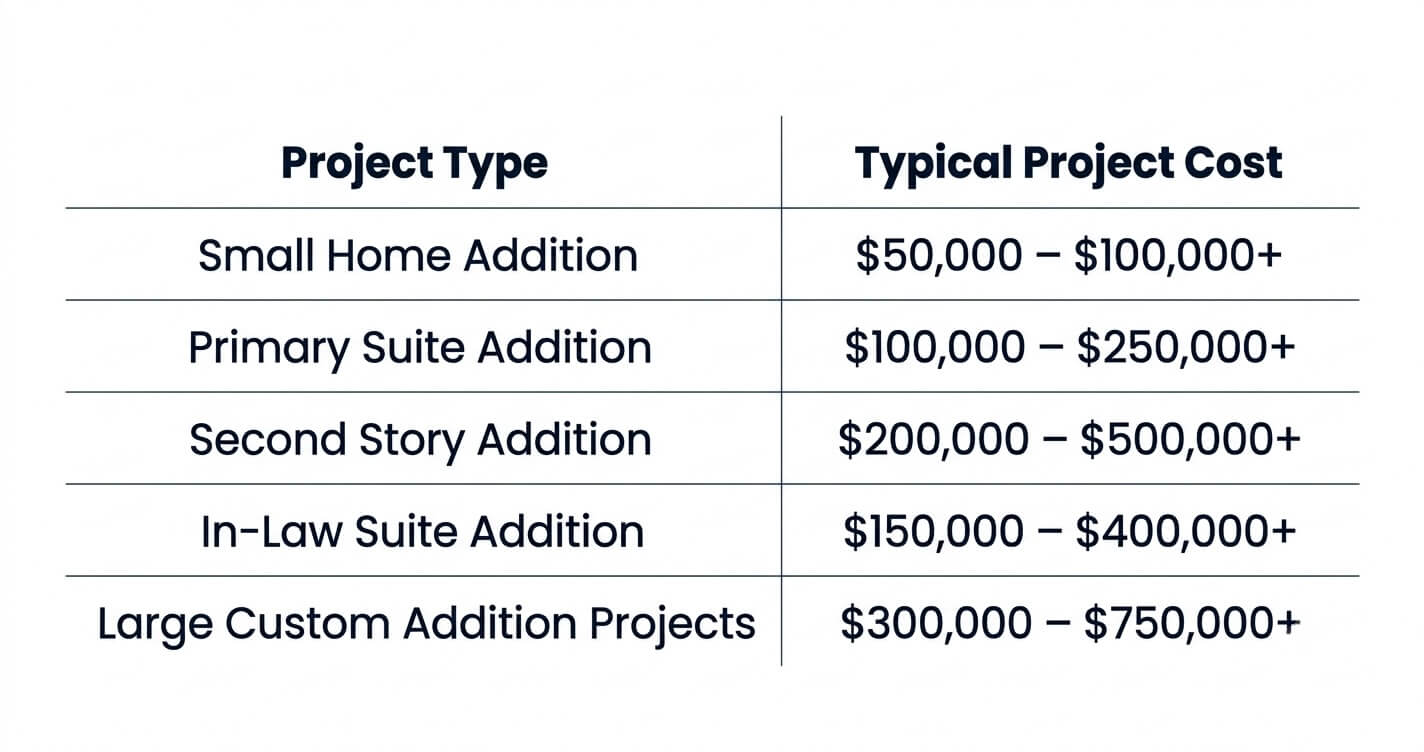
Actual costs vary significantly based on location, scope, finishes, structural requirements, permitting, and site conditions.
To better understand local pricing considerations, homeowners can review our detailed guides on Northern Virginia Home Addition Cost Explained and Second Story Addition Northern Virginia, both of which discuss the factors that significantly influence construction budgets.
Your Financed Cost Is Different From Your Construction Cost
When evaluating financing options, homeowners should account for expenses beyond labor and materials. These commonly include:
- Interest charges over the life of the loan
- Property appraisal fees
- Closing costs and lender fees
- Permit-related expenses
- Architectural and engineering costs
- Loan origination fees
- Title and recording fees (when applicable)
- Project contingencies for unforeseen conditions
For larger additions, these expenses can materially affect the overall financial commitment. Borrowing decisions should therefore be based on total project costs rather than preliminary contractor estimates alone.
Monthly Payment Examples
The table below provides simplified payment illustrations assuming a 20-year repayment period. Actual payments will vary based on market conditions, lender requirements, and individual borrower qualifications.
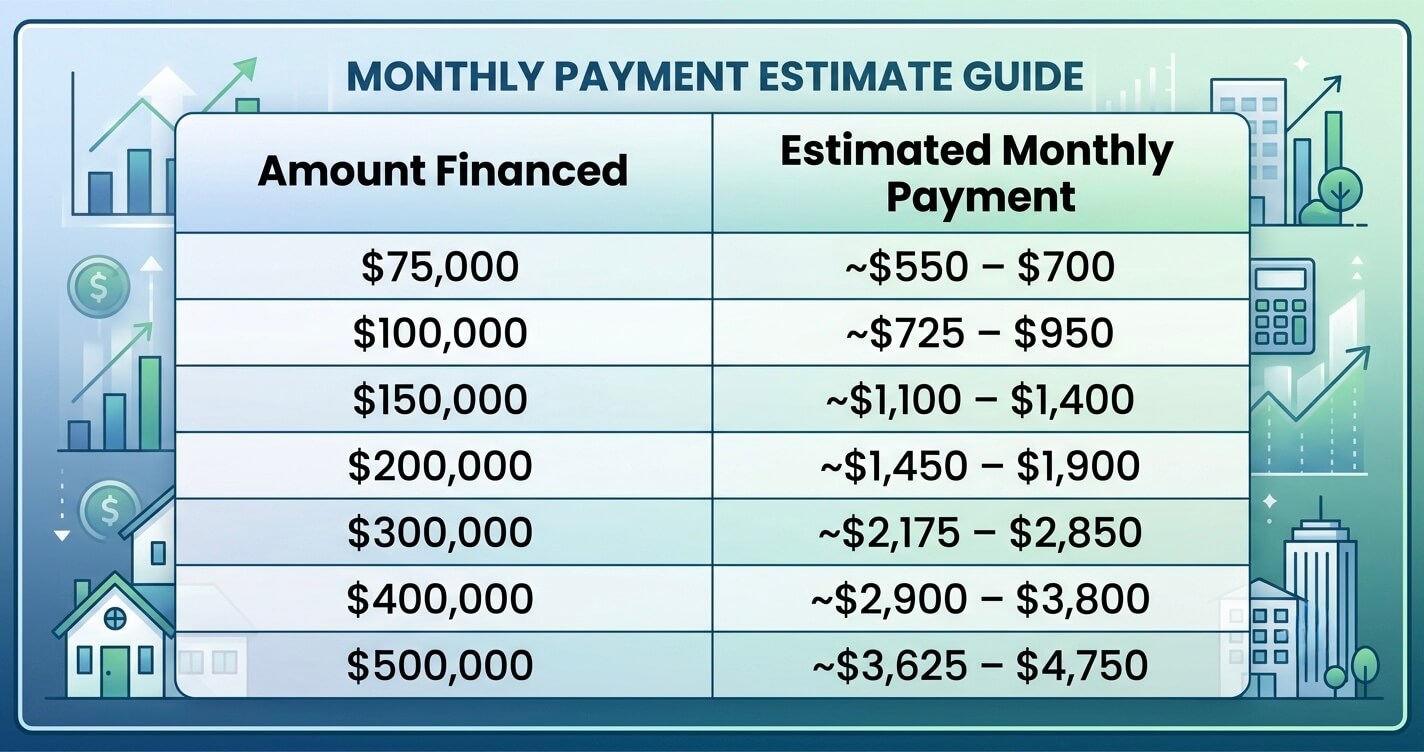
Illustrative estimates only based on common repayment scenarios in 2026. Actual rates and payments vary by lender, loan type, term length, and borrower qualifications.
National Home Addition Cost Trends
Nationally, home additions continue to represent one of the largest categories of residential remodeling investments. Recent industry estimates suggest that the average home addition project costs approximately $51,000 nationally, although larger projects routinely exceed six figures depending on scope and location.
Northern Virginia homeowners should recognize that local construction costs are frequently above national averages because of higher labor costs, permitting requirements, and premium finish selections common throughout Fairfax County, McLean, Vienna, Great Falls, and Arlington.
This makes accurate budgeting particularly important before selecting a financing product. Borrowing too little may delay construction, while borrowing substantially more than necessary can unnecessarily increase long-term interest costs.
Homeowners considering larger projects such as second-story additions may also benefit from reviewing our comprehensive Second Story Addition Northern Virginia: 2026 Guide, which explores design considerations and project planning in greater detail.
What Are the Main Ways to Finance a Home Addition?
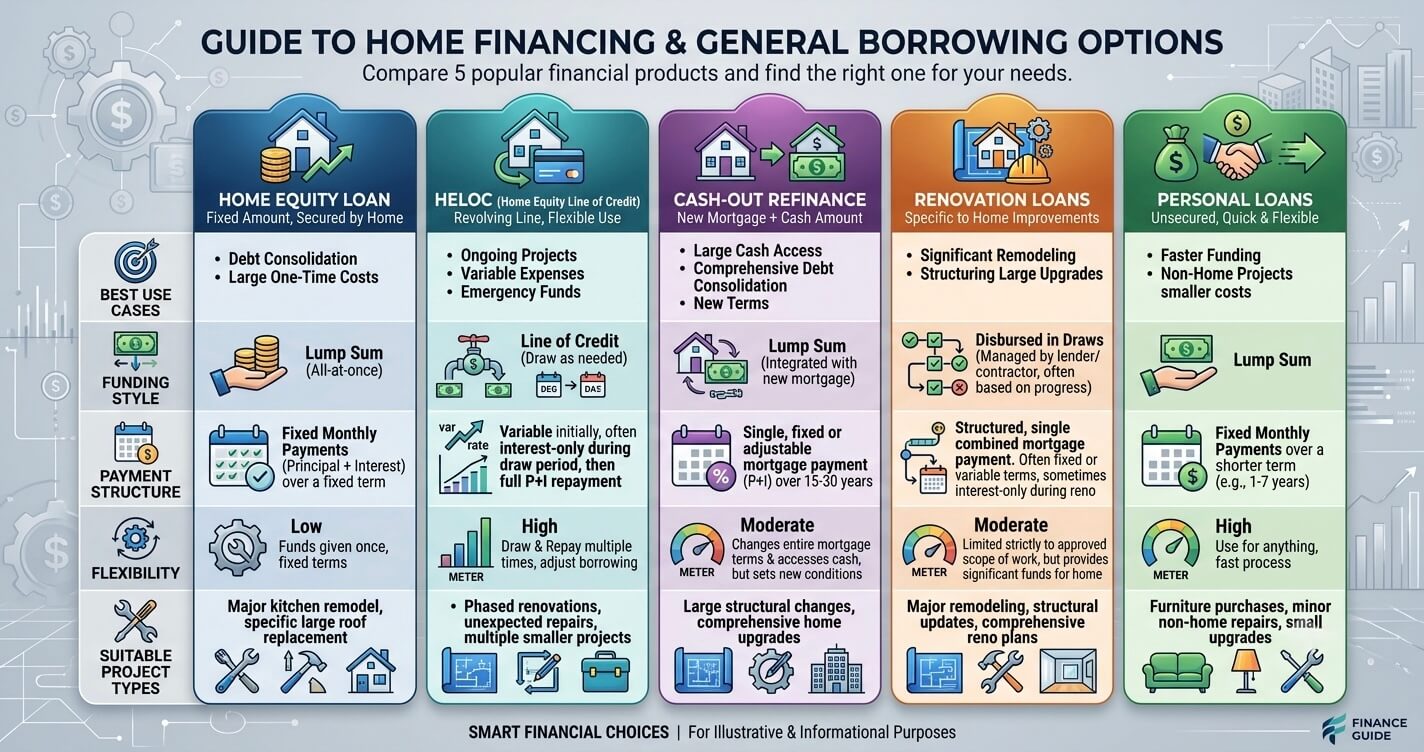
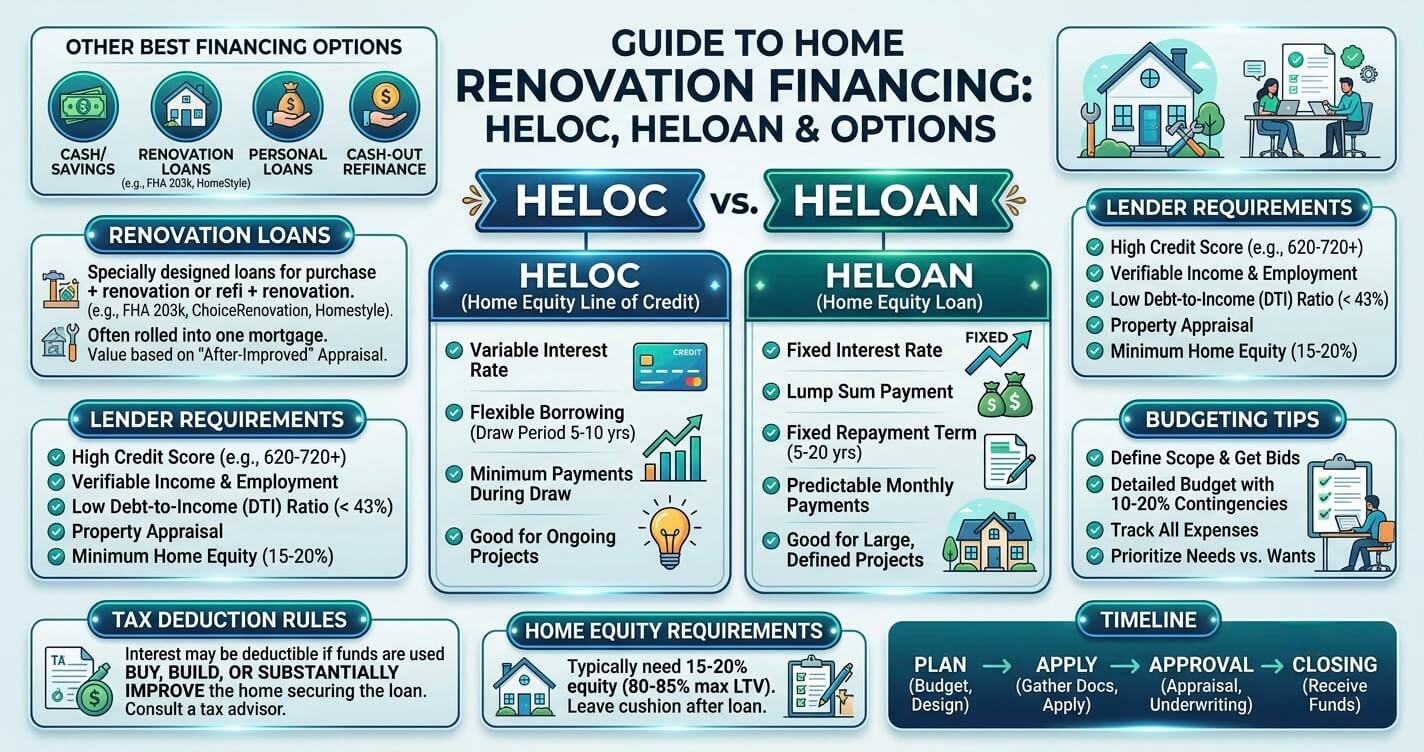
Most homeowners who finance a home addition in Northern Virginia use one of five options: a Home Equity Loan, HELOC, Cash-Out Refinance, Renovation Loan, or Personal Loan. The right choice depends on your available equity, project scope, borrowing needs, and current mortgage situation.
There is no universally “best” financing option. A HELOC may work well for phased projects, while renovation loans are often better suited for homeowners with limited equity or those purchasing and renovating simultaneously.
The financing landscape for home additions has evolved considerably over the last decade. Rising home values throughout Northern Virginia have significantly increased homeowners’ borrowing capacity, making home equity-based financing one of the most common approaches for major remodeling projects.
According to recent housing market data, many American homeowners continue to benefit from substantial tappable home equity, allowing them to fund renovations while remaining in their existing homes rather than entering today’s competitive housing market.
The five primary financing options include:
1. Home Equity Loan (HELOAN)
A Home Equity Loan provides a fixed amount borrowed against your home’s available equity. Borrowers typically receive:
- Fixed interest rates
- Predictable monthly payments
- Lump-sum funding
- Fixed repayment schedules
These loans are particularly useful when project costs have already been finalized and homeowners prefer payment certainty throughout the repayment period.
2. Home Equity Line of Credit (HELOC)
A HELOC functions more like a revolving line of credit secured by your home’s equity. It commonly offers:
- Flexible borrowing amounts
- Draw periods that allow staged withdrawals
- Interest payments only on borrowed amounts during certain periods
- Greater flexibility for projects with evolving costs
HELOCs are often advantageous when homeowners anticipate design changes or phased construction schedules.
3. Cash-Out Refinance
Cash-out refinancing replaces your existing mortgage with a larger loan amount, allowing homeowners to receive the difference in cash for renovation purposes.
Potential advantages include:
- Single monthly payment
- Competitive interest rates in favorable markets
- Longer repayment periods
However, homeowners with exceptionally low existing mortgage rates should carefully evaluate whether replacing their current mortgage makes financial sense.
4. Renovation and Construction Loans
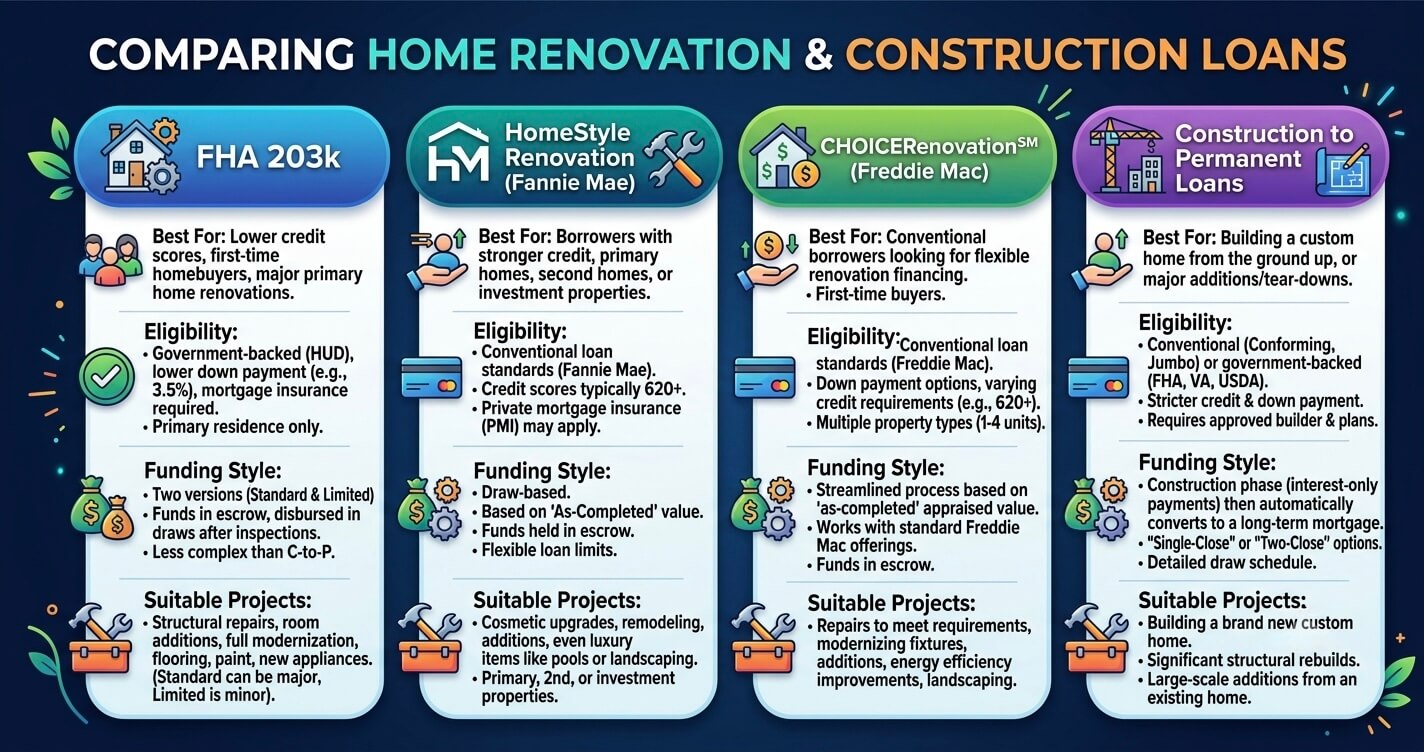
Several government-backed and conventional renovation loan programs remain available for qualifying borrowers, including:
- Fannie Mae HomeStyle® loans
- Freddie Mac CHOICERenOVATION® loans
- FHA 203(k) loans
- Construction-to-permanent financing options
These products may be particularly useful when homeowners have limited equity or are simultaneously purchasing and renovating a property.
5. Personal Loans
Unsecured personal loans generally require:
- No home equity
- Faster approval timelines
- Higher interest rates relative to secured products
- Lower borrowing limits
They may work well for smaller addition projects but are often less economical for six-figure construction budgets.
Why Home Equity Matters More Than Ever
The continued strength of the remodeling market reflects broader homeowner preferences nationally. Rather than relocating, many homeowners are choosing to invest in existing properties that better accommodate growing families, aging-in-place considerations, or changing lifestyle needs.
Northern Virginia’s relatively high property values can create meaningful financing opportunities when sufficient equity exists. Nevertheless, homeowners should avoid viewing available borrowing capacity as their ideal borrowing amount. Financing decisions should always begin with a clearly defined project scope and realistic construction budget.
Working with experienced professionals early in the planning process often produces more accurate lender documentation and significantly reduces surprises during underwriting.
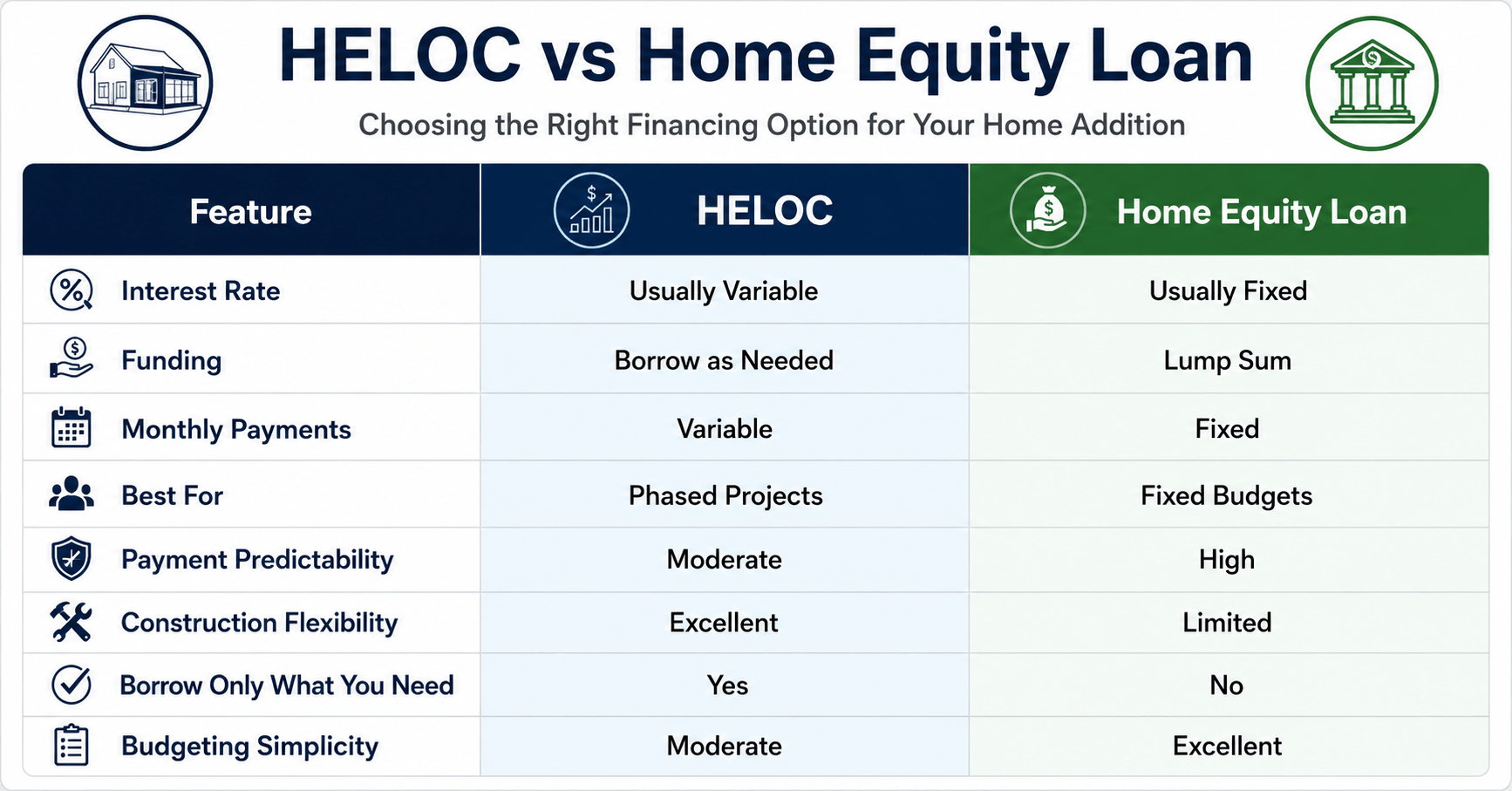
HELOC vs. Home Equity Loan for a Home Addition – Which Is Better?
A HELOC is generally better for home additions with phased construction schedules or uncertain costs, while a Home Equity Loan is often the better choice when you have a finalized design, fixed budget, and prefer predictable monthly payments.
Neither option is universally superior. The right choice depends on how much flexibility you need during construction, whether you prefer fixed or variable interest rates, and how confident you are in your project’s final cost estimate before construction begins.
For many Northern Virginia homeowners, the decision ultimately comes down to one question: Will my project’s scope remain fixed throughout construction?
If you’ve already completed the design phase, obtained detailed estimates, and finalized material selections, a Home Equity Loan may provide greater financial certainty. Conversely, if you’re planning a large-scale addition that may evolve during construction, a HELOC can provide the flexibility needed to accommodate phased borrowing.
This distinction becomes particularly important for projects such as second-story additions, master suite expansions, or in-law suites, where homeowners occasionally make design adjustments after construction begins.
HELOC vs. Home Equity Loan Comparison
Understanding Draw Periods and Repayment Periods
One of the most misunderstood aspects of HELOCs involves how the repayment structure actually works.
Most HELOCs include two distinct phases:
Draw Period
During the draw period, borrowers can typically:
- Borrow funds as construction progresses
- Withdraw only what is needed
- Make interest-only payments in some cases
- Preserve borrowing capacity for contingencies
For example, if your addition requires:
- Architectural drawings in Month 1
- Structural work in Month 3
- Interior finishes in Month 6
A HELOC allows you to borrow incrementally rather than paying interest immediately on the project’s entire cost.
Repayment Period
Once the draw period concludes:
- Monthly payments usually increase
- Principal repayment begins
- Further borrowing is generally restricted
- Interest rate changes may continue depending upon lender terms
Home Equity Loans operate differently. Borrowers receive the entire approved amount upfront and immediately begin making fixed monthly payments according to the loan agreement.
Which Option Works Better for Northern Virginia Projects?
Large Northern Virginia additions frequently involve:
- Architectural design revisions
- Structural engineering requirements
- County permitting timelines
- Material selection upgrades
- Site-specific construction considerations
Because of this, some homeowners appreciate HELOC flexibility during pre-construction planning. Others prefer locking their borrowing costs immediately after finalizing project specifications.
For projects with well-defined construction budgets, fixed-rate financing can substantially simplify household financial planning over the next fifteen or twenty years.
Homeowners considering larger projects may also benefit from reviewing our Second Story Addition Northern Virginia: 2026 Guide, which discusses many of the design considerations that influence financing decisions for complex additions.
What About Interest Rates?
Unlike traditional mortgage rates, HELOC rates can fluctuate throughout the borrowing period because many products are tied to benchmark rates established by financial markets. This means that monthly payments may increase or decrease over time.
By contrast, Home Equity Loans generally provide:
- Fixed monthly payments
- Fixed repayment schedules
- Greater long-term payment predictability
Rate environments change continuously throughout the year. Rather than relying on static figures, homeowners should compare current lender offerings before selecting a financing product.
Should You Do a Cash-Out Refinance Instead?
A cash-out refinance can be an excellent option when market rates are favorable and homeowners need substantial funding for a major addition. However, homeowners with exceptionally low existing mortgage rates should carefully evaluate whether replacing their current mortgage provides a meaningful financial advantage.
In Northern Virginia, cash-out refinancing often makes the most sense when borrowers can simultaneously improve their loan terms or require significantly larger borrowing amounts than traditional home equity products may provide.
Cash-out refinancing remains one of the most powerful financing tools available for major residential projects. Instead of obtaining a second loan secured by your home’s equity, homeowners replace their existing mortgage entirely with a larger mortgage and receive the difference in cash.
For example:
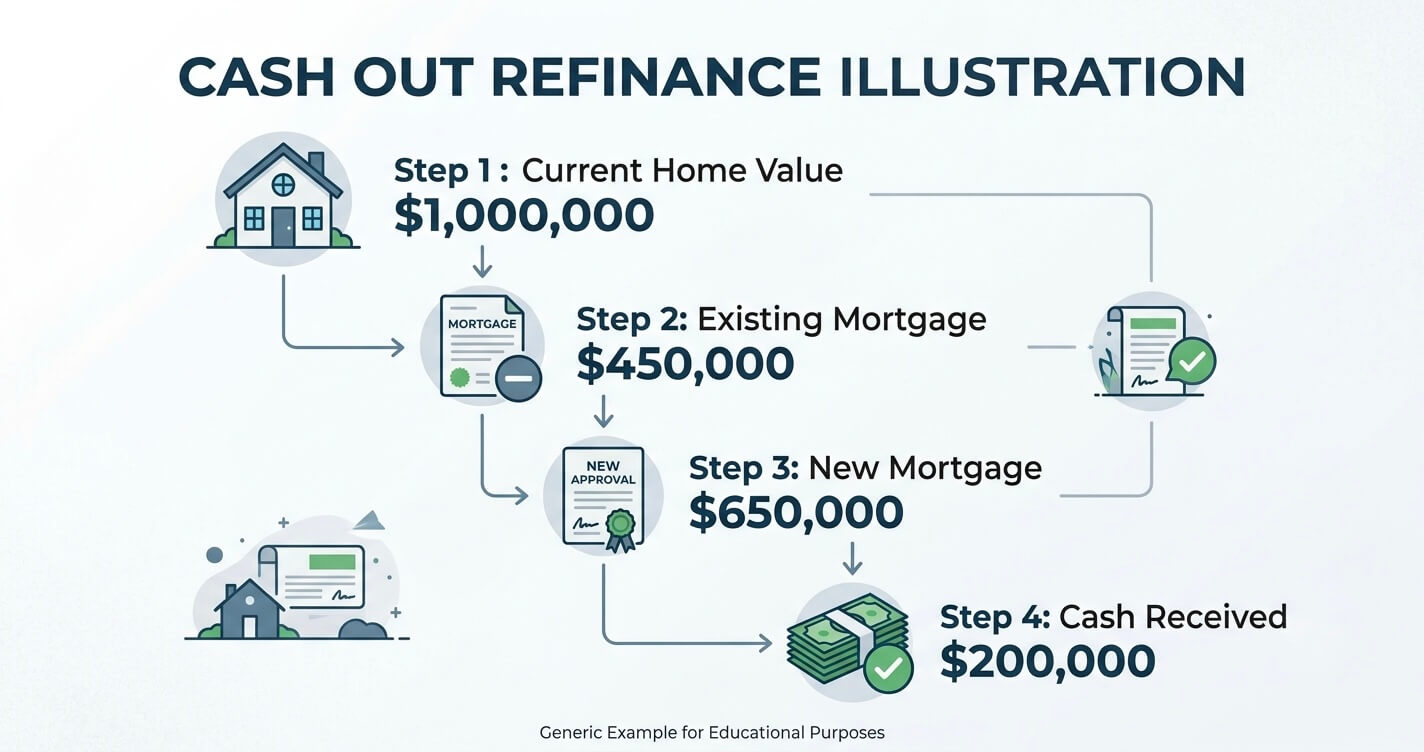
That $200,000 could then be allocated toward financing a major home addition project.
When Does Cash-Out Refinancing Make Sense?
Cash-out refinancing may be appropriate when homeowners:
- Need significant borrowing amounts
- Prefer a single monthly payment
- Can obtain favorable mortgage terms
- Plan to remain in their home long term
- Have accumulated substantial home equity
For major additions exceeding six figures, consolidating financing into one mortgage payment can simplify household budgeting considerably.
The Rate Lock Trade-Off
One consideration deserves particular attention in today’s lending environment.
Many Northern Virginia homeowners secured mortgage rates below 4% during earlier market cycles. Replacing those mortgages through cash-out refinancing may substantially increase their borrowing costs, even when the addition financing itself appears attractive.
For this reason, homeowners frequently compare:
- Keeping their existing mortgage and obtaining a HELOC.
- Keeping their existing mortgage and obtaining a Home Equity Loan.
- Replacing their mortgage entirely through cash-out refinancing.
There is rarely a universally correct answer. The most cost-effective solution depends upon:
- Existing mortgage rates
- Remaining mortgage balance
- Amount needed for construction
- Long-term housing plans
- Available home equity
Closing Costs Matter
Another important distinction involves transaction costs.
Cash-out refinancing commonly includes expenses such as:
- Loan origination fees
- Property appraisal costs
- Title services
- Recording fees
- Closing expenses associated with originating a new mortgage
By comparison, Home Equity Loans and HELOCs frequently involve lower transaction costs, although lender fees vary considerably between institutions.
Homeowners should therefore evaluate financing options based upon their total cost over time rather than focusing exclusively on interest rates.
A Practical Northern Virginia Example
Consider two homeowners financing identical $175,000 additions:
- Homeowner A currently has a 2.9% mortgage rate.
- Homeowner B currently has a 6.1% mortgage rate.
Despite identical project costs, their optimal financing strategies may differ substantially because replacing an exceptionally favorable mortgage can significantly increase long-term borrowing expenses.
This illustrates why financing decisions should always consider both the construction project and the homeowner’s broader financial position.
What Is a Renovation or Construction Loan, and Do You Need One?
Renovation and construction loans are specialized financing products designed for homeowners who are building, substantially renovating, or purchasing and improving residential properties. They are particularly useful when existing home equity is limited or when project costs exceed traditional borrowing options.
For Northern Virginia homeowners planning large additions, these loans can provide financing flexibility that conventional home equity products may not always offer, particularly when construction costs are significant or improvements materially increase property value.
Unlike Home Equity Loans or HELOCs, renovation financing is structured specifically around construction activities. Funds are frequently distributed according to construction milestones rather than provided entirely upfront.
This financing model provides additional protections for both borrowers and lenders throughout the construction process.
Common Renovation Loan Options
Several programs remain among the most widely utilized renovation financing products available to qualifying borrowers.
Fannie Mae HomeStyle® Renovation Loans
These loans may allow borrowers to finance:
- Structural additions
- Major remodeling projects
- Energy-efficient improvements
- Luxury upgrades not permitted under certain government programs
HomeStyle loans are frequently used when homeowners wish to combine purchase and renovation financing within a single mortgage product.
Freddie Mac CHOICERenovATION®
CHOICERenOVATION loans provide financing for:
- Home additions
- Major renovations
- Disaster resilience improvements
- Aging-in-place modifications
They may also permit financing based upon the home’s anticipated value after renovations are completed, which can significantly improve borrowing flexibility for qualifying applicants.
FHA 203(k) Loans
FHA 203(k) programs remain particularly valuable for homeowners who may not qualify for certain conventional financing products.
Potential advantages include:
- Lower down payment requirements
- Flexible qualification standards
- Combined purchase and renovation financing opportunities
Eligibility requirements vary considerably depending upon the specific loan program selected.
Construction-to-Permanent Financing
For larger addition projects, construction financing operates somewhat differently than traditional home equity borrowing.
Construction loans commonly involve three phases:
Phase One: Loan Approval
Lenders generally review:
- Construction plans
- Contractor documentation
- Estimated project costs
- Borrower qualifications
- Property valuations
Phase Two: Construction
Funds are usually released incrementally based upon:
- Construction milestones
- Inspections
- Approved draw schedules
- Contractor payment requirements
Phase Three: Permanent Financing
After construction is completed:
- Temporary financing converts into permanent financing.
- Regular mortgage payments begin.
- Construction-specific lending arrangements conclude.
Who Should Consider Renovation Financing?
These products may make sense for homeowners who:
- Have limited available home equity.
- Are purchasing and renovating simultaneously.
- Require substantial construction financing.
- Are planning complex structural additions.
- Prefer construction-specific lending solutions.
Homeowners planning custom additions can also explore our Custom Home Build Timeline Northern Virginia guide, which discusses budgeting and construction planning considerations relevant to larger residential projects.
How Much Home Equity Do You Need to Finance an Addition in Fairfax County, McLean, or Vienna?
Most lenders allow homeowners to borrow against their available home equity up to a combined loan-to-value (CLTV) ratio of approximately 80% to 85%, although some lenders may offer higher limits for exceptionally qualified borrowers. The amount you can borrow ultimately depends on your home’s current appraised value, existing mortgage balance, income, credit profile, and the lender’s underwriting guidelines.
For many Northern Virginia homeowners, appreciating property values in areas such as McLean, Vienna, Fairfax County, Great Falls, and Reston can create meaningful borrowing opportunities. However, available equity should be viewed as your borrowing ceiling, not necessarily the amount you should finance for your project.
Before applying for any financing product, homeowners should understand one important concept that lenders use during underwriting: Combined Loan-to-Value (CLTV).
CLTV represents the total amount borrowed against your home compared to its current appraised value. It includes:
- Your existing mortgage balance.
- Your proposed home equity loan or HELOC amount.
- Any additional secured liens against the property.
For example:
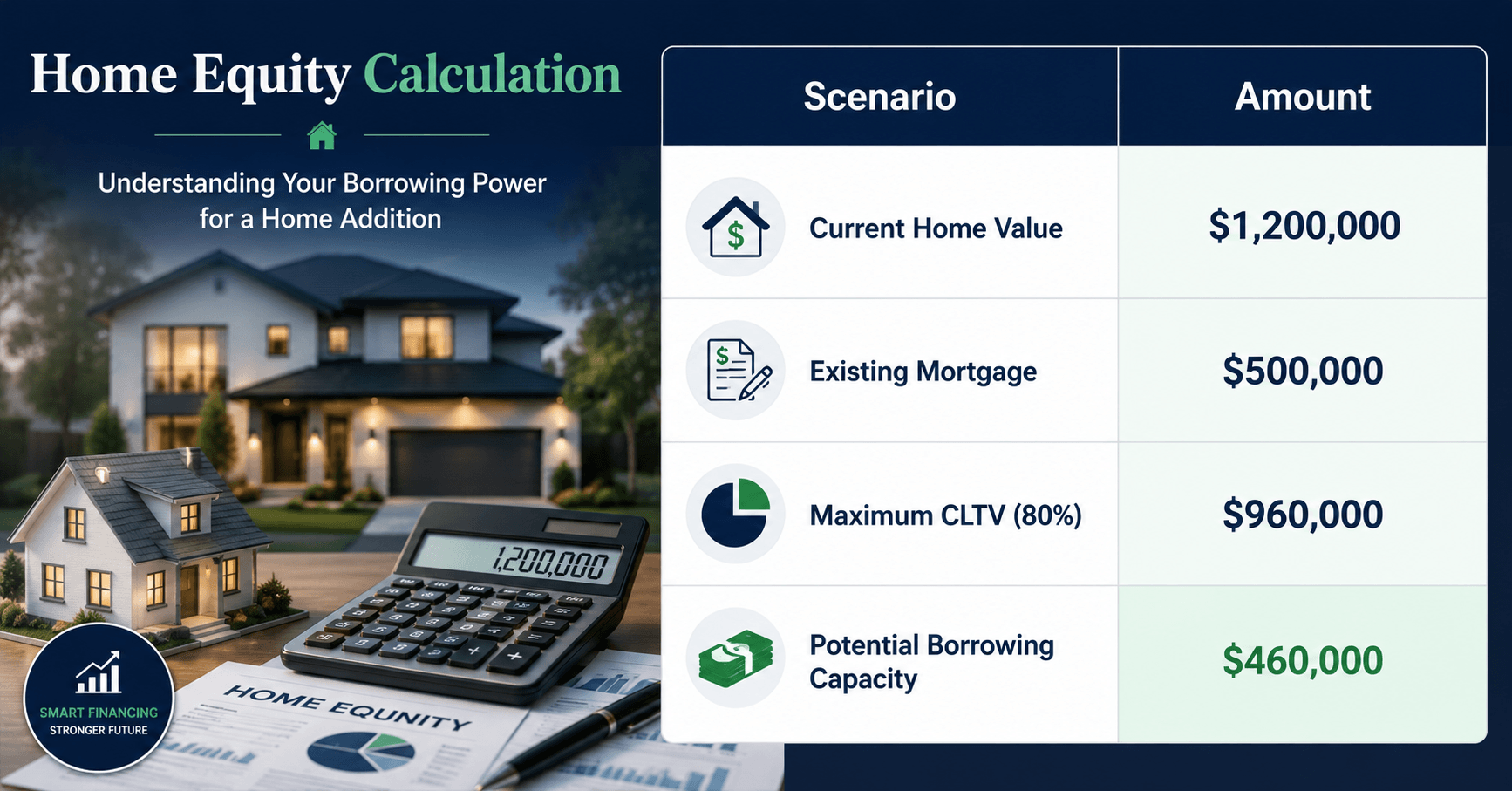
Illustrative example only. Actual borrowing limits vary by lender, credit qualifications, debt-to-income ratio, and loan program requirements.
Why Northern Virginia Homeowners May Benefit From Higher Property Values
Northern Virginia continues to remain one of the nation’s higher-value housing markets. Communities throughout Fairfax County frequently experience home values that substantially exceed national averages, which may provide homeowners with greater financing flexibility when sufficient equity has been established.
This can become particularly advantageous when financing projects such as:
- Second-story additions
- In-law suite additions
- Primary suite expansions
- Family room additions
- Multi-generational living spaces
- Whole-home addition projects
Higher property values do not automatically translate into higher borrowing approvals, but they can positively influence the amount of available equity when combined with strong borrower qualifications.
For homeowners considering larger projects, understanding the anticipated construction costs before speaking with lenders can significantly improve budgeting decisions. Our detailed guide on In-Law Suite Addition Cost Northern Virginia provides additional insights into the costs associated with one of the region’s fastest-growing addition categories.
How Do Lenders Calculate Available Equity?
Most lenders begin with three primary factors:
1. Current Property Value
Your home’s current market value is typically determined through:
- Professional appraisals
- Automated valuation models
- Comparative market analyses
- Lender-specific valuation processes
2. Existing Mortgage Obligations
Lenders will review:
- Remaining mortgage balances
- Existing home equity loans
- Outstanding HELOC balances
- Other secured obligations against the property
3. Borrower Qualifications
Additional considerations commonly include:
- Credit scores
- Debt-to-income ratios
- Employment history
- Income documentation
- Liquid asset reserves
Should You Borrow Your Maximum Available Equity?
Not necessarily.
One of the most common mistakes homeowners make is confusing their maximum borrowing capacity with their optimal borrowing amount. Financing should always align with a realistic construction budget rather than the maximum amount a lender is willing to approve.
For example, if your project is estimated to cost $175,000, borrowing $275,000 simply because it is available may substantially increase:
- Total interest expenses
- Monthly payment obligations
- Financial risk exposure
- Long-term debt commitments
Instead, homeowners should begin with finalized project specifications and work backward to determine appropriate financing needs.
Large additions frequently evolve during the design phase. Establishing accurate budgets before financing discussions can therefore reduce unnecessary borrowing and simplify lender underwriting requirements.
What Do Lenders Require Before Approving Addition Financing?
Most lenders evaluate five primary factors before approving home addition financing: your credit profile, debt-to-income ratio, available home equity, property valuation, and detailed project documentation. Providing finalized construction plans and contractor estimates early in the process can significantly improve financing timelines and underwriting efficiency.
For larger home additions in Northern Virginia, lenders frequently require substantially more documentation than homeowners initially expect. Preparing these materials before submitting an application can help avoid unnecessary delays during loan approval.
Regardless of which financing product you select, lenders share a common objective: determining both your ability to repay the loan and the property’s ability to support the requested financing amount.
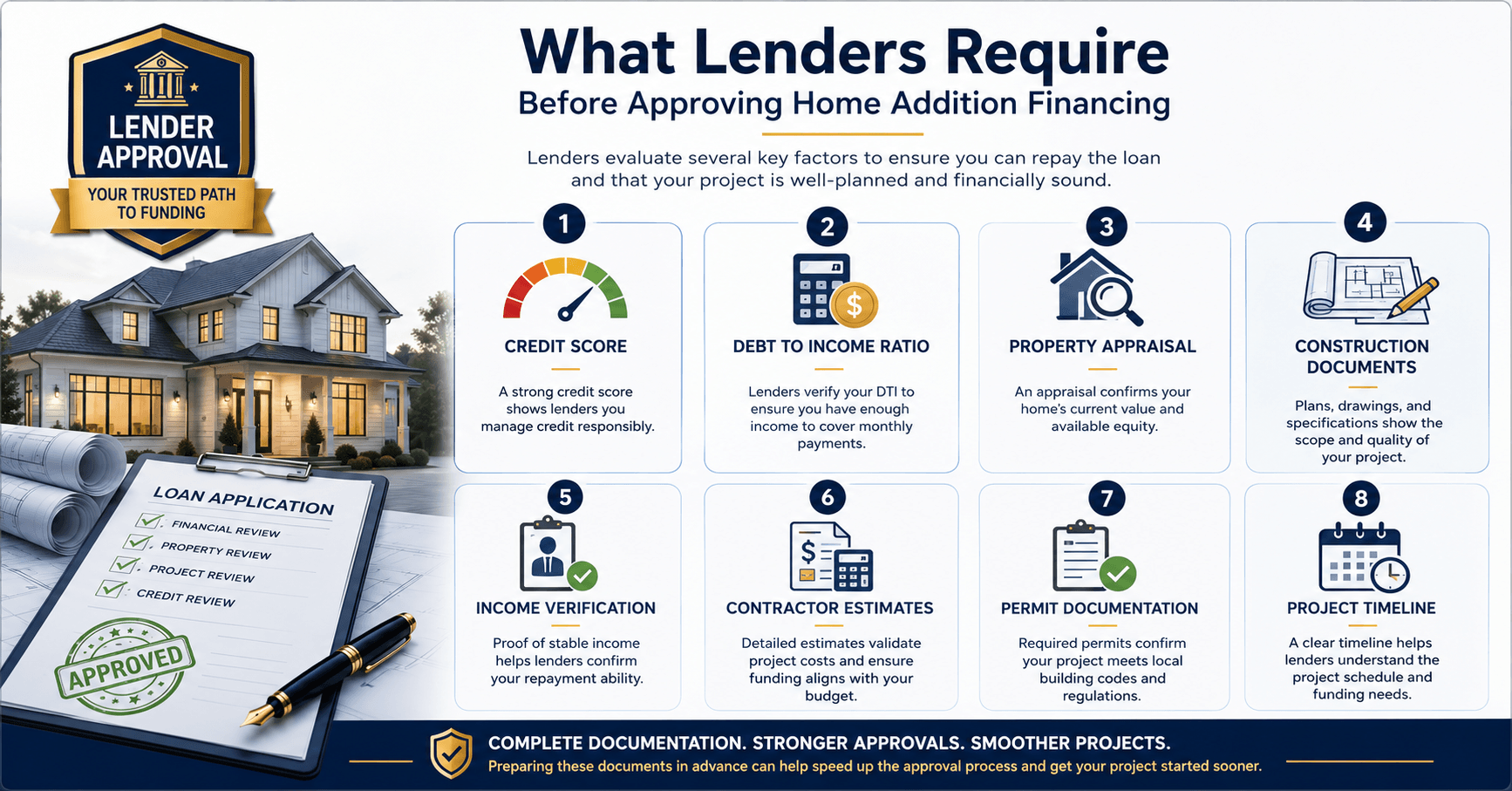
The following requirements are among the most commonly evaluated during the underwriting process.
Credit Score Requirements
Minimum credit score requirements vary considerably by:
- Loan program
- Individual lender policies
- Borrowing amounts
- Debt obligations
- Occupancy status
Although qualification standards differ, stronger credit profiles frequently provide access to:
- More favorable interest rates
- Higher borrowing limits
- Reduced lender fees
- Greater financing flexibility
Debt-to-Income Ratio (DTI)
Lenders also examine your debt-to-income ratio to determine whether your current financial obligations comfortably support additional monthly payments.
This calculation commonly considers:
- Existing mortgage payments
- Vehicle loans
- Credit card obligations
- Student loans
- Personal loans
- Proposed financing payments
Maintaining healthy debt-to-income ratios can significantly strengthen financing applications across virtually all loan products.
Property Appraisals
For many financing products, lenders require professional property valuations to determine:
- Current market value
- Available home equity
- Combined loan-to-value ratios
- Projected collateral positions
Appraisals become particularly important when financing larger additions that substantially increase property values.
Construction Documentation Matters More Than Many Homeowners Realize
For addition financing specifically, lenders frequently request documentation such as:
- Architectural plans
- Construction estimates
- Contractor information
- Project timelines
- Permit-related documentation
- Material specifications
- Payment schedules
Incomplete project information is one of the most common causes of financing delays.
For this reason, many homeowners begin conversations with their design-build professionals before formally applying for financing. Establishing realistic budgets and finalized project scopes early can simplify both construction planning and lender underwriting requirements.
As an example, our Master Suite Addition Before After Fairfax VA case study demonstrates the level of project planning that larger additions typically require before construction begins.
Homeowners preparing to finance a home addition often find that the lending process becomes considerably smoother once they have a firm project scope and estimate in hand. Speaking with an experienced design-build team early in the planning process can help establish realistic costs, timelines, and construction expectations before approaching lenders.
When Should You Start Gathering Financing Documents?
Ideally, homeowners should begin preparing financing documentation during the design phase rather than waiting until permit applications are submitted.
Early preparation often provides additional time to:
- Compare financing products.
- Review monthly payment scenarios.
- Resolve documentation requests.
- Coordinate construction schedules.
- Minimize project delays.
Financing decisions become considerably easier when lenders receive complete and accurate project information from the outset.
Is HELOC or Home Equity Loan Interest Tax-Deductible for a Home Addition?
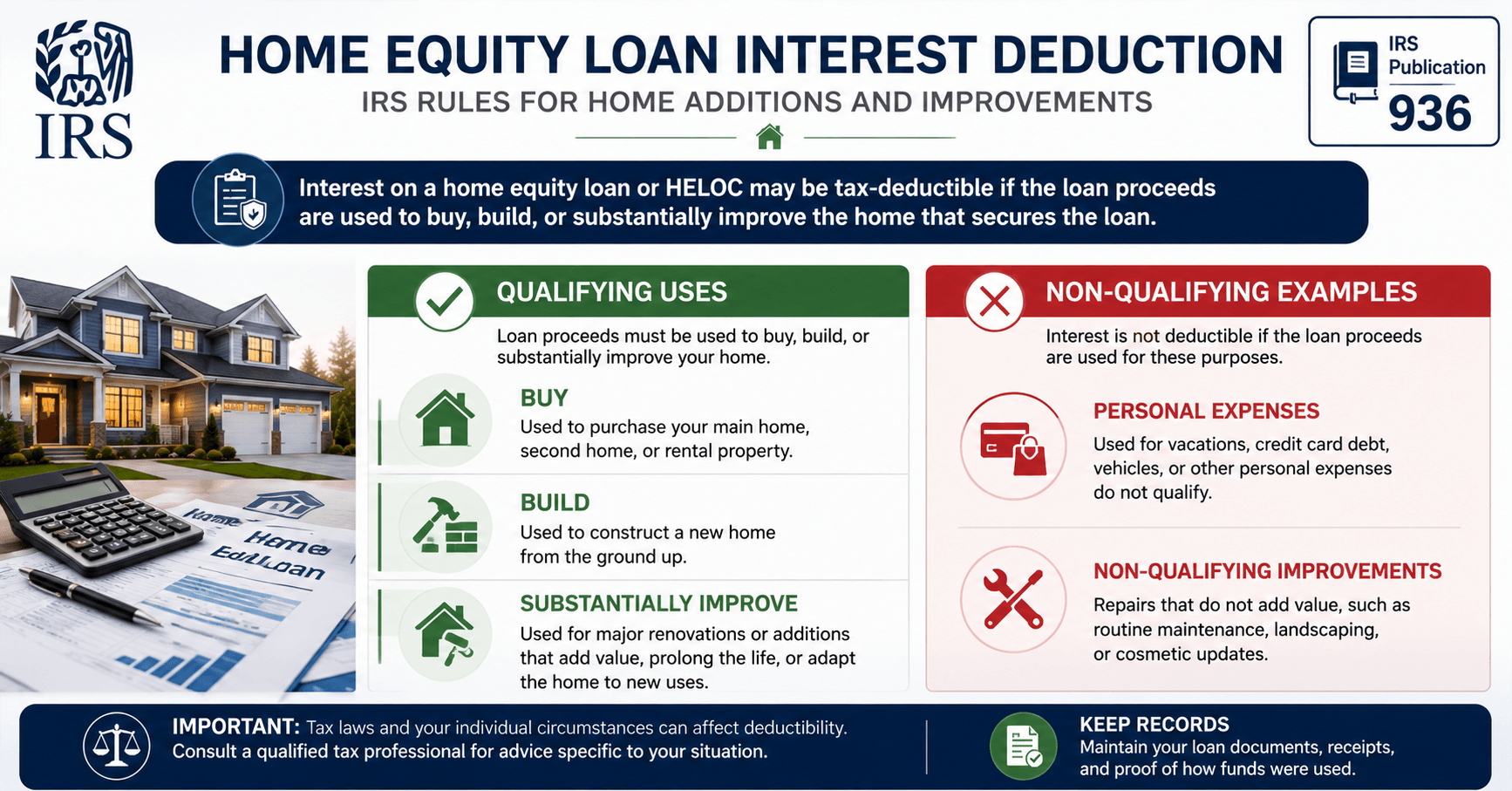
Potentially, yes. According to IRS guidance, interest paid on a Home Equity Loan or HELOC may be tax-deductible when the loan proceeds are used to buy, build, or substantially improve the home securing the loan. However, deductibility remains subject to applicable mortgage debt limitations and individual taxpayer circumstances.
Not every home equity loan automatically qualifies for tax deductions. How the borrowed funds are used is often more important than the financing product itself, making proper documentation particularly important for homeowners planning major additions.
One of the most frequently asked questions surrounding home addition financing involves potential tax benefits. Unfortunately, there is also considerable misinformation surrounding this topic.
The IRS does not determine deductibility based solely on whether the financing product is labeled a HELOC or Home Equity Loan. Instead, the determining factor is generally whether the borrowed funds were used to:
- Buy the home.
- Build the home.
- Substantially improve the home securing the loan.
Projects that materially improve residential properties may qualify under applicable IRS guidance when all relevant requirements are satisfied.
What Counts as a Substantial Improvement?
Examples may include:
- Second-story additions
- Primary suite additions
- In-law suites
- Family room additions
- Significant structural expansions
- Major kitchen additions
- Multi-room residential additions
By contrast, using home equity proceeds for unrelated expenses may not qualify under the same rules.
Why Record Keeping Matters
Homeowners should carefully maintain documentation including:
- Loan agreements
- Construction contracts
- Contractor invoices
- Payment records
- Permit documentation
- Architectural plans
Maintaining thorough records can become particularly valuable should additional documentation ever be required when preparing tax returns.
Mortgage Debt Limitations Still Apply
The IRS also establishes mortgage debt limitations that may affect deductibility calculations. These rules periodically change through federal legislation and may vary according to individual taxpayer circumstances.
For this reason, homeowners should avoid assuming that:
- Every HELOC qualifies automatically.
- Every renovation expense is deductible.
- Every borrower receives identical tax treatment.
Tax planning should remain individualized and based upon current federal tax guidance.
Speak With a Qualified Tax Professional
While understanding general IRS guidance is valuable during the planning process, homeowners should discuss their specific circumstances with qualified tax professionals before making financing decisions based upon anticipated tax benefits.
Financing should make sense independently of any potential tax advantages. Tax deductions, when available, should be viewed as a possible additional benefit rather than the primary justification for borrowing.
How to Budget and Avoid Overborrowing for a Home Addition
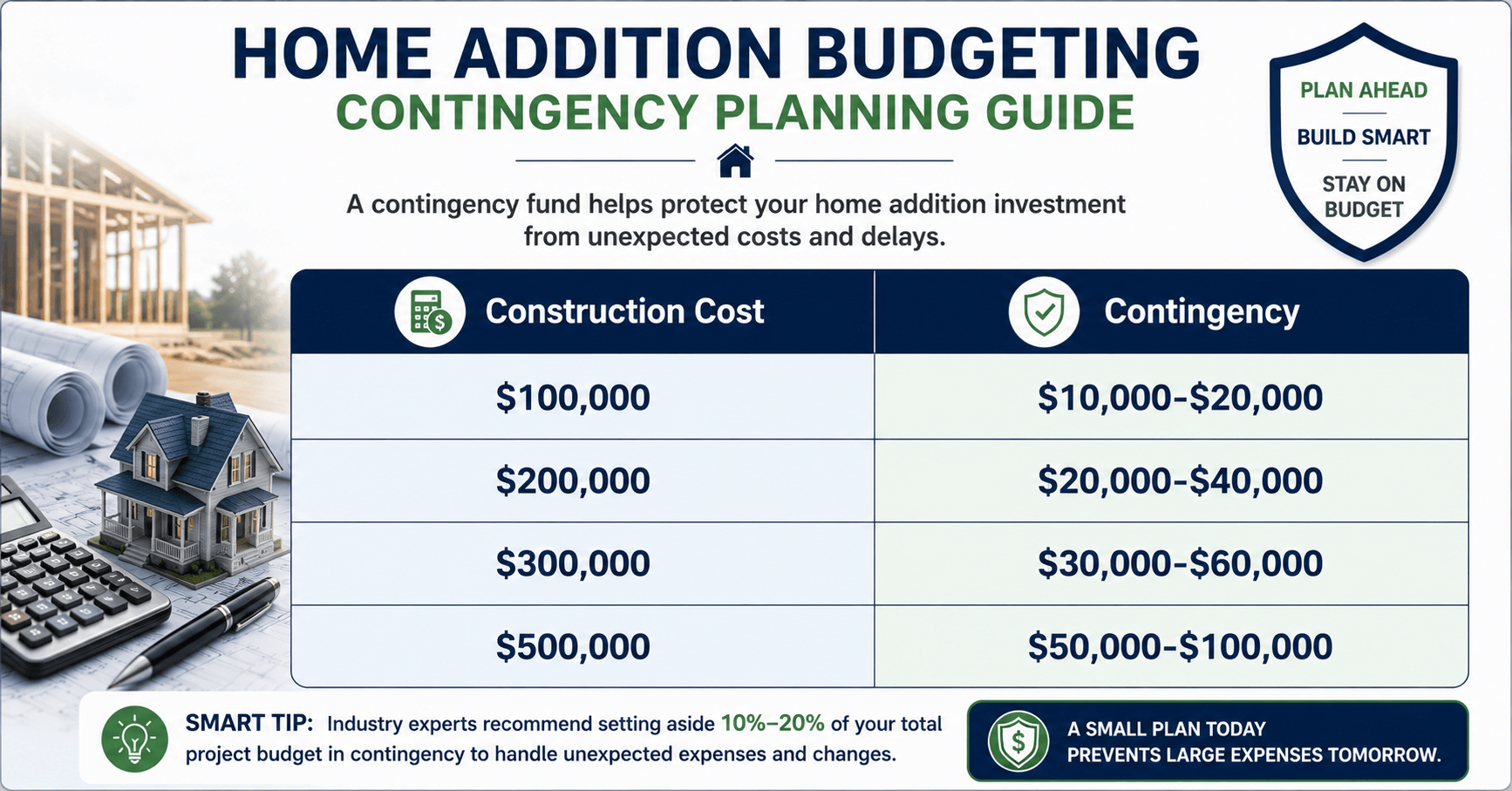
The most effective way to avoid overborrowing is to base your financing amount on a finalized project scope rather than preliminary estimates. Northern Virginia homeowners should also build a 10% to 20% contingency into their budget to account for unforeseen construction, permitting, and material-related expenses.
Financing should follow project planning, not the other way around. Borrowing before finalizing designs and construction estimates can significantly increase both financial and construction-related risks throughout the project lifecycle.
One of the most expensive mistakes homeowners make when financing a home addition is treating preliminary estimates as finalized construction budgets. Home addition projects naturally evolve throughout the design process, particularly when homeowners begin exploring structural changes, upgraded finishes, or additional living space requirements.
Before applying for financing, homeowners should establish four essential budgeting figures:
- Estimated construction costs.
- Design and architectural fees.
- Permit-related expenses.
- Appropriate contingency reserves.
The 10% to 20% Contingency Rule
Industry professionals frequently recommend maintaining contingency reserves for residential construction projects. While every project is unique, allocating approximately 10% to 20% of the total project budget can provide valuable financial flexibility when unforeseen expenses arise.
Contingency funds may prove beneficial when addressing:
- Structural discoveries during demolition.
- Material price fluctuations.
- Design modifications.
- Permit-related requirements.
- Engineering revisions.
- Project timeline adjustments.
- Site-specific construction challenges.
For example:
Homeowners should consider contingency planning as an essential component of their financing strategy rather than an optional expense.
Common Budgeting Mistakes Homeowners Make
Borrowing Before Finalizing the Design
Applying for financing before architectural plans are completed often results in inaccurate borrowing estimates. Larger additions frequently undergo multiple revisions before construction begins.
Ignoring Permit and Professional Fees
Construction costs are only one component of the project’s total financial commitment. Homeowners should also account for:
- Architectural services.
- Structural engineering.
- Permit costs.
- Survey requirements.
- Professional consultations.
- Financing-related expenses.
Financing the Maximum Available Amount
Being approved for a larger borrowing amount does not necessarily mean it represents the most financially prudent decision. Financing should align with realistic construction requirements rather than maximum lender approvals.
Underestimating Timeline-Related Costs
Construction timelines occasionally extend beyond original projections due to:
- Weather conditions.
- Permit review schedules.
- Material availability.
- Design modifications.
- Inspection requirements.
Maintaining appropriate financial flexibility throughout construction can significantly reduce unnecessary project-related stress.
Should You Renovate or Move Instead?
Financing considerations occasionally reveal that renovating may not represent the optimal long-term financial decision for every homeowner. In certain circumstances, purchasing a different property may provide greater value than undertaking extensive residential additions.
Questions homeowners should consider include:
- Will the addition adequately meet future family needs?
- Does the proposed investment align with neighborhood values?
- Are financing costs reasonable relative to anticipated benefits?
- Is moving financially advantageous given current market conditions?
Homeowners evaluating these broader financial considerations may also find our detailed Renovate vs. Sell Northern Virginia: What Makes More Sense in 2026? guide helpful when comparing their available options.
Ultimately, thoughtful budgeting remains one of the most important factors influencing both financing success and construction outcomes.
Northern Virginia Financing Timeline – When to Start the Loan Process
Northern Virginia homeowners should ideally begin discussing financing options during the design phase of their home addition project rather than waiting until construction is ready to begin. Starting early provides additional time for lender approvals, appraisals, documentation requests, and permit-related planning.
For most major additions, financing discussions should begin before permit applications are submitted and after preliminary construction estimates have been developed. Early financial planning frequently contributes to smoother construction timelines and fewer project delays.
Financing timelines vary considerably depending upon the loan product selected. Home Equity Loans and HELOCs may require only a few weeks in some cases, whereas renovation financing and construction loans can involve substantially longer approval processes.
Because financing frequently influences project scheduling, homeowners should view construction planning and financial planning as parallel processes rather than separate activities.
Recommended Financing Timeline
Phase One: Pre-Design Planning
During this stage, homeowners should:
- Establish preliminary project goals.
- Evaluate financing objectives.
- Review household budgets.
- Explore potential loan products.
Phase Two: Design and Budget Development
At this point, homeowners should begin gathering:
- Preliminary construction estimates.
- Architectural concepts.
- Project timelines.
- Financing comparisons.
This stage frequently provides the most appropriate opportunity to begin preliminary conversations with lenders.
Phase Three: Finalized Project Scope
Before formally applying for financing, homeowners should ideally have:
- Finalized construction plans.
- Detailed estimates.
- Contractor documentation.
- Preliminary scheduling information.
The more comprehensive the documentation package, the more efficiently lenders can generally evaluate financing requests.
Phase Four: Financing Application and Approval
During underwriting, lenders may request:
- Income documentation.
- Credit information.
- Property valuations.
- Construction documentation.
- Additional supporting materials.
Responding promptly to documentation requests can substantially improve approval timelines.
Phase Five: Permitting and Construction
Following financing approval, homeowners can proceed with:
- Permit submissions.
- Construction scheduling.
- Material selections.
- Project commencement.
A Simplified Northern Virginia Financing Timeline
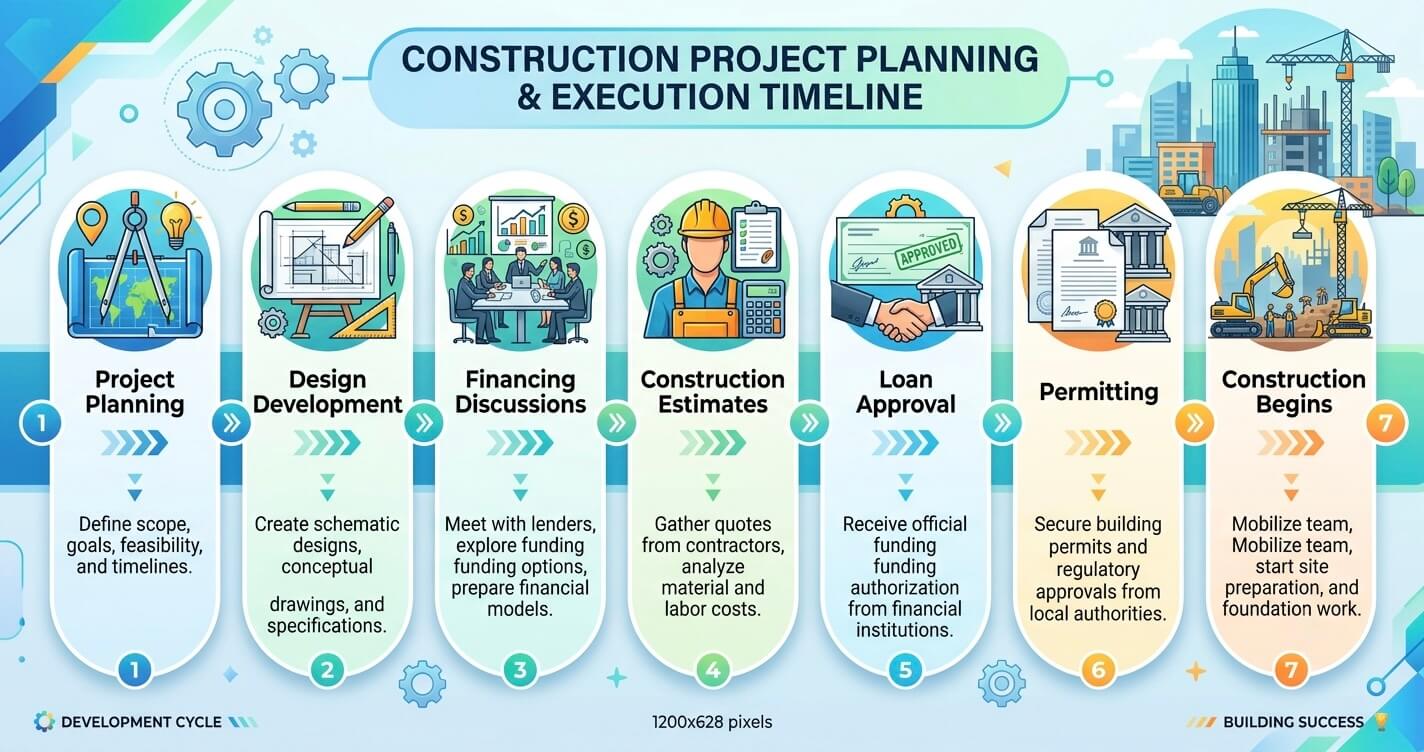
Illustrative timelines only. Actual project schedules vary significantly depending upon scope, permitting requirements, financing products, and lender processing times.
For larger and more complex residential projects, homeowners may benefit from reviewing our Custom Home Build Timeline Northern Virginia guide, which explores construction planning considerations throughout the residential building process.
Starting financing discussions early frequently provides homeowners with greater flexibility, improved budgeting accuracy, and fewer avoidable project delays.
Frequently Asked Questions (FAQs)
How much does it cost to finance a home addition in Northern Virginia?
The total cost depends upon the amount borrowed, loan type, interest rates, repayment terms, and lender fees. Most major Northern Virginia additions range from tens of thousands of dollars to several hundred thousand dollars depending upon project scope and construction requirements.
Is a HELOC or Home Equity Loan better for a home addition?
A HELOC is generally better suited for phased construction projects requiring borrowing flexibility, while Home Equity Loans typically work best when homeowners have finalized budgets and prefer fixed monthly payments.
Do I need good credit to finance a home addition?
Most financing products consider credit scores as part of the underwriting process. Stronger credit profiles frequently improve access to competitive interest rates and more favorable borrowing terms, although qualification requirements vary by lender and loan program.
Can I finance a home addition without using my home equity?
Yes. Certain renovation financing programs and unsecured personal loans may not require existing home equity. However, these products frequently involve different qualification requirements and borrowing limitations than traditional home equity financing.
How long does financing approval usually take?
Approval timelines vary considerably depending upon the financing product selected. Some Home Equity Loans and HELOCs may be approved relatively quickly, whereas renovation financing and construction loans frequently require additional underwriting and documentation reviews.
Is interest on a home addition loan tax-deductible?
Potentially. According to IRS guidance, mortgage interest may be deductible when loan proceeds are used to buy, build, or substantially improve the home securing the loan, subject to applicable limitations and individual taxpayer circumstances. Homeowners should consult qualified tax professionals regarding their specific situations.
Should I get pre-approved before contacting a contractor?
Understanding your general borrowing capacity can certainly be helpful. However, lenders frequently require detailed construction estimates before final financing approval. Speaking with experienced design-build professionals early in the planning process can therefore simplify both budgeting and financing discussions.
Crux of the Matter
Financing a home addition in Northern Virginia is rarely a one-size-fits-all decision. The most appropriate financing strategy depends upon your available home equity, existing mortgage terms, project scope, financial goals, and today’s lending environment.
While some homeowners benefit from the flexibility offered by a HELOC, others may prefer the predictability of a Home Equity Loan, the convenience of cash-out refinancing, or the specialized advantages provided by renovation financing programs. The key is ensuring that financing decisions are guided by realistic construction budgets and thoughtful long-term financial planning.
Equally important is beginning the planning process early. Having finalized construction estimates, clear project timelines, and comprehensive documentation frequently improves both financing and construction outcomes.
If you’re planning to finance a home addition in Northern Virginia, speaking with experienced professionals early in the process can help clarify realistic costs, timelines, and project requirements before approaching lenders.
Planning a home addition in Northern Virginia and weighing your financing options? Contact US Home Design Build to discuss your project’s scope, budget, and timeline with our team, and receive the detailed project estimate your lender will want to review before financing approval.
