
Fairfax County ADU rules 2026 are on the verge of introducing the most significant changes to accessory dwelling unit regulations in the county’s history. A proposed Zoning Ordinance Amendment, years in the making, will be heard by the Fairfax County Planning Commission on October 29, 2026, and by the Board of Supervisors on November 17, 2026. If adopted, the amendment would make roughly 39% of Fairfax County single-family homes eligible for a detached ADU, up from only 4.7% today.
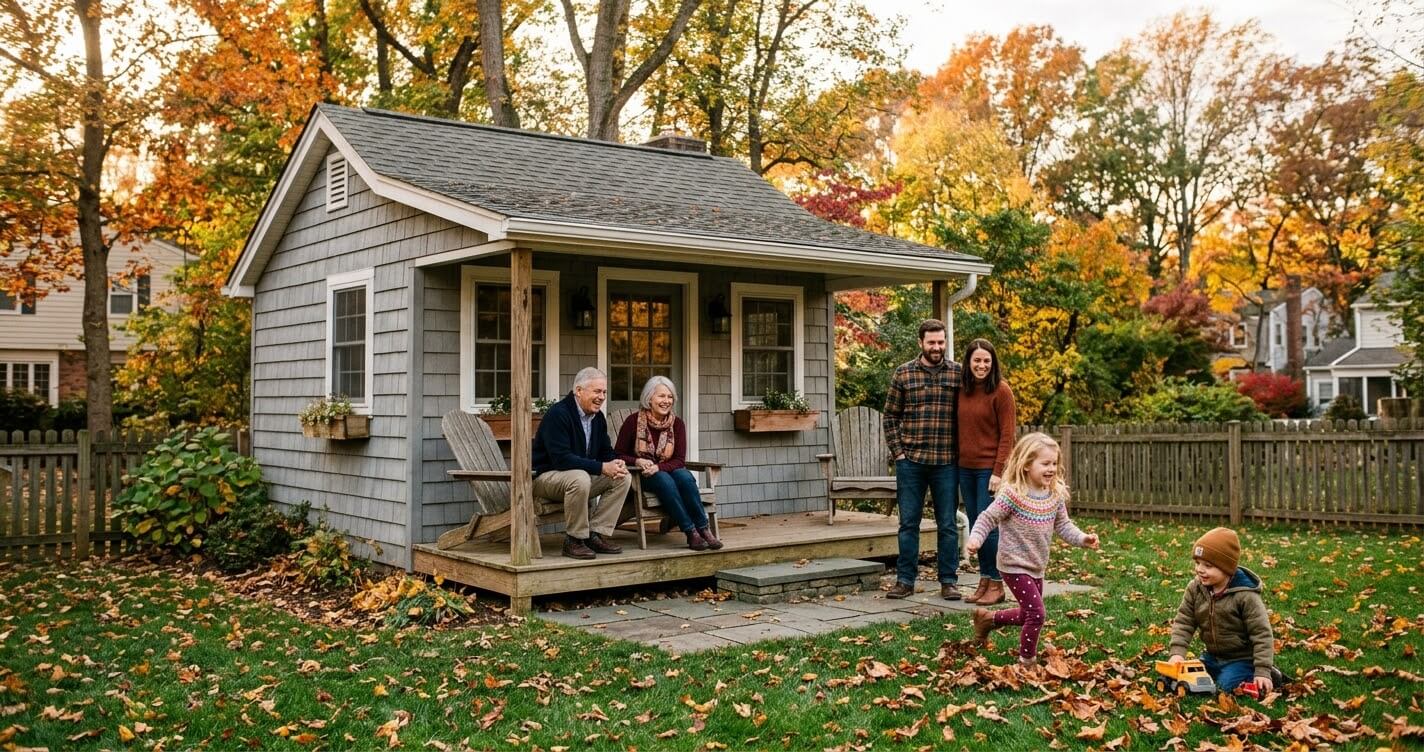
For homeowners in Fairfax County who have been waiting to build an Accessory Living Unit, whether for aging parents, adult children, rental income, or a home office, this is the most important zoning news in years. Understanding what is being proposed, how the approval process works, and what changes if the Board votes yes on November 17 is essential to planning your next move.
Quick note on terminology: Fairfax County officially calls these units Accessory Living Units (ALUs), not ADUs. The county switched to ALUs during its zMOD zoning rewrite to avoid confusion with Affordable Dwelling Units. Outside Fairfax County, in Arlington, Alexandria, and the rest of Northern Virginia, the term ADU is standard. This article uses both terms interchangeably to match how homeowners search. For detailed background on Fairfax County’s existing rules, see our guide at Accessory Living Unit Fairfax County VA: Rules, Permits & 2026 Updates Guide.
What Is the Fairfax County ALU Zoning Amendment?
The Fairfax County ALU Zoning Amendment is a proposed rewrite of the county’s Accessory Living Unit regulations, drafted by Zoning Administration Division staff and submitted for public hearings. It is not yet law. It will be heard by the Planning Commission on October 29, 2026 and by the Board of Supervisors on November 17, 2026, and only becomes enforceable if the Board votes to adopt it.
Fairfax County has had ALU rules on the books for years, but county officials and housing advocates have long acknowledged that those rules were among the most restrictive in the Washington, DC metro area. Currently, only about 160 approved ALU permits exist across all of Fairfax County, representing just 0.08% of the county’s single-family detached lots.
County staff acknowledged the problem directly. In public presentations on the proposed amendment, Zoning Administration Division staff said: “We do seem to be the outlier” when comparing Fairfax County’s ALU rules to other jurisdictions in the region.
The push to revise these rules comes from two directions. First, the Board of Supervisors has been directing staff to find ways to expand affordable housing options within the county. Second, the 2026 Virginia General Assembly session produced new legislation, including SB 531, that requires all Virginia localities to allow ADUs by January 1, 2027. Fairfax County, however, is one of several Northern Virginia jurisdictions whose existing ALU ordinances pre-date January 1, 2026, meaning those localities continue under their own local rules and are not automatically subject to the new state law. For a full explanation of how this affects Fairfax County, Arlington, and Alexandria, see our breakdown at Virginia SB 531 ADU Law: What Northern Virginia Homeowners Need to Know.
Rather than wait for state law to override local rules, the Fairfax County Board of Supervisors chose to proactively reform its own ALU ordinance. The result is this proposed amendment.
The 6 Proposed Rule Changes – Explained in Plain Language
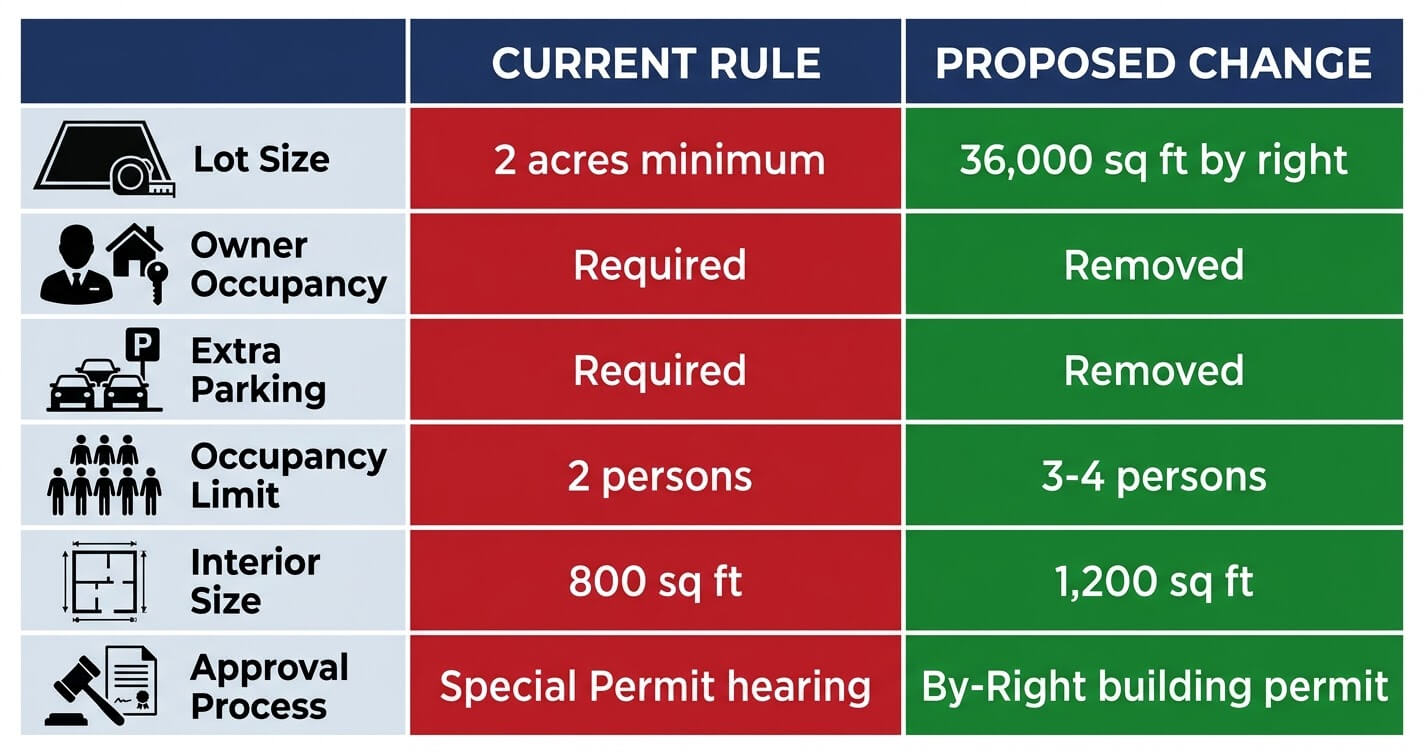
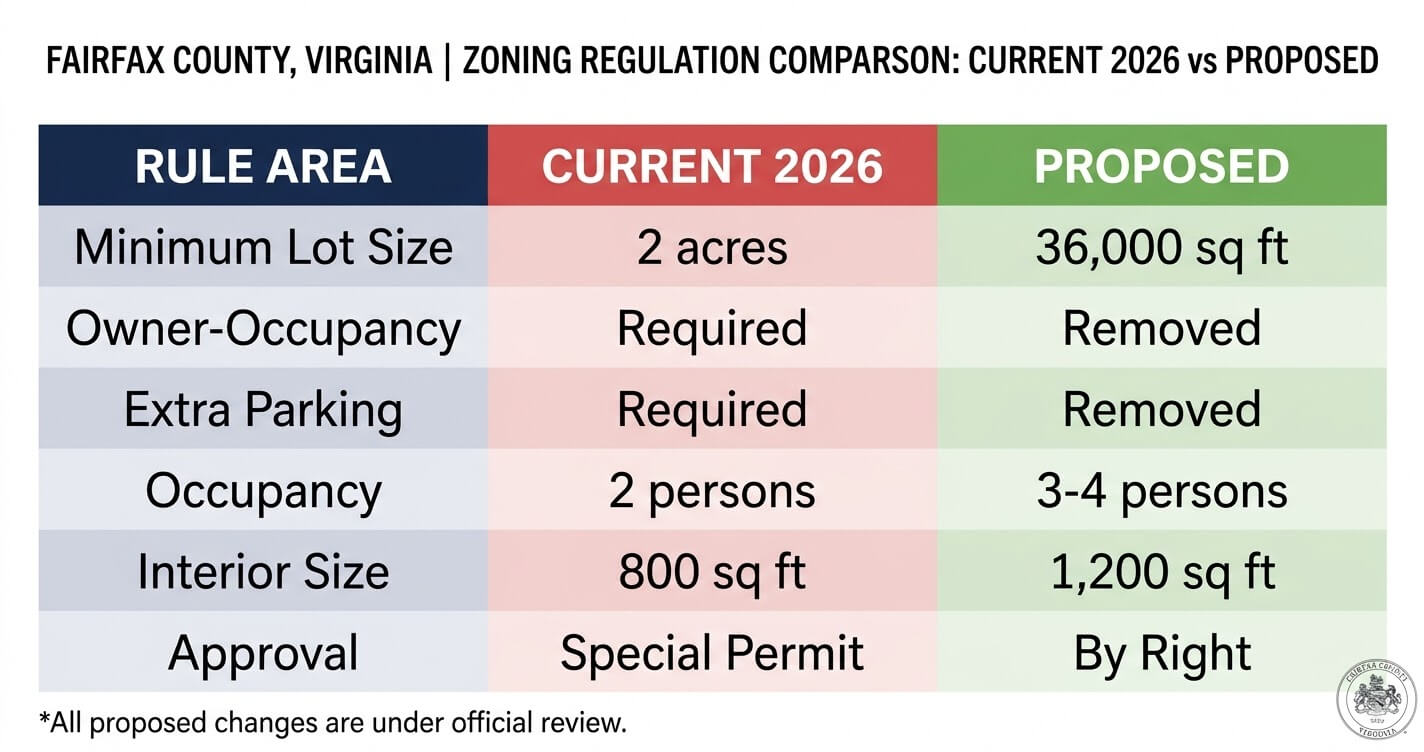
The proposed amendment includes six substantive changes: dropping the minimum lot size for detached ALUs from 2 acres to 36,000 square feet, removing the owner-occupancy requirement, eliminating the mandatory extra parking space, raising occupancy limits from 2 to 3–4 persons, increasing the interior unit size cap, and converting qualifying detached ALUs from a special permit process to a by-right approval.
Change 1: Minimum Lot Size for Detached ALUs
Current rule: Detached ALUs require a minimum lot size of 2 acres and a Special Permit with a public hearing before the Board of Zoning Appeals.
Proposed change: Detached ALUs would be allowed by right on lots of 36,000 square feet (approximately 0.83 acres) or larger, with no special permit or public hearing required. Lots under 36,000 square feet would still require a special permit.
Impact: This single change would transform ADU access in Fairfax County. Under current rules, only approximately 4.7% of single-family detached homes are eligible for a detached ALU. Under the proposed 36,000 sq ft threshold, approximately 39% would qualify; an eight-fold increase.
(Source: Fairfax County Zoning Administration Division staff report, via Excell Homes analysis)
Change 2: Owner-Occupancy Requirement Removed
Current rule: The property owner must live on the property, either in the principal dwelling or the ALU, at all times the ALU is occupied.
Proposed change: The owner-occupancy requirement would be removed entirely. A property owner could build an ALU, rent it out, and live elsewhere, or use it purely as a rental investment.
Impact: This is among the most significant practical changes. The current owner-occupancy requirement has been one of the primary reasons homeowners who want to build an ALU for purely rental purposes have not been able to do so. Removing it aligns Fairfax County with Arlington County and Alexandria, neither of which have owner-occupancy requirements.
(Source: Fairfax County Community Toolkit for ALUs Zoning Ordinance Amendment)
Change 3: Parking Requirement Removed
Current rule: A property with an ALU must provide the required number of off-street parking spaces for the principal dwelling plus one additional space for the ALU.
Proposed change: The additional parking space requirement would be removed entirely. Properties would only need to meet the standard parking requirement for the principal dwelling.
Impact: This change removes a significant practical barrier for homeowners with smaller lots or driveways that cannot physically accommodate an extra parking space. Parking was one of the most contested issues in public comment sessions. Coalition for Smarter Growth noted this is “big” among the proposed changes.
(Source: Coalition for Smarter Growth)
Change 4: Occupancy Limit Increased
Current rule: An ALU is limited to a maximum of 2 occupants.
Proposed change: Staff propose a maximum of 3 occupants, with 4 presented as an alternative option for the Board to consider.
Impact: A 3-person limit is more practical for multigenerational use cases, such as an elderly parent living with one adult child and one grandchild, that the current 2-person cap effectively prevents. For rental ALUs, a 3-person occupancy also increases the pool of eligible tenants.
Change 5: Interior ALU Size Cap Raised
Current rule: Interior ALUs are capped at 800 square feet OR 35% of the principal dwelling floor area, whichever is less.
Proposed change: The cap would be raised to 1,200 square feet OR 40% of the principal dwelling, whichever is less, making it consistent with the existing detached ALU size limit. An additional option for the BZA to approve a larger size is also included.
Impact: For homeowners converting a finished basement or creating an interior unit in a larger home, the current 800 sq ft cap often means the resulting unit is too small to be functional as a full living space. The proposed 1,200 sq ft limit would make interior ALUs significantly more livable.
Change 6: Administrative Permit and Renewal Requirements Removed
Current rule: ALUs require approval recordation in county land records. Permits require periodic renewal. Administrative review is required.
Proposed change: The renewal requirement, the administrative permit requirement for qualifying lots, and the recordation requirement would all be removed. ALUs on lots of 36,000 sq ft or larger would be allowed by right with only a building permit.
Impact: This reduces the friction of building an ALU considerably. Previously, homeowners faced an administrative gauntlet before construction could begin. By-right approval on qualifying lots means the process becomes similar to adding any other structure; you need a building permit, not a public hearing.
Quick Reference: All 6 Changes at a Glance
Who Does This Actually Affect? The Lot Size Breakdown
If the amendment passes, approximately 39% of Fairfax County single-family detached homes would become eligible to build a detached ALU by right, compared to only 4.7% under current rules. That is an eight-fold increase in eligible properties, representing tens of thousands of Fairfax County homes. The 36,000 square foot threshold is roughly equivalent to a 0.83-acre lot.
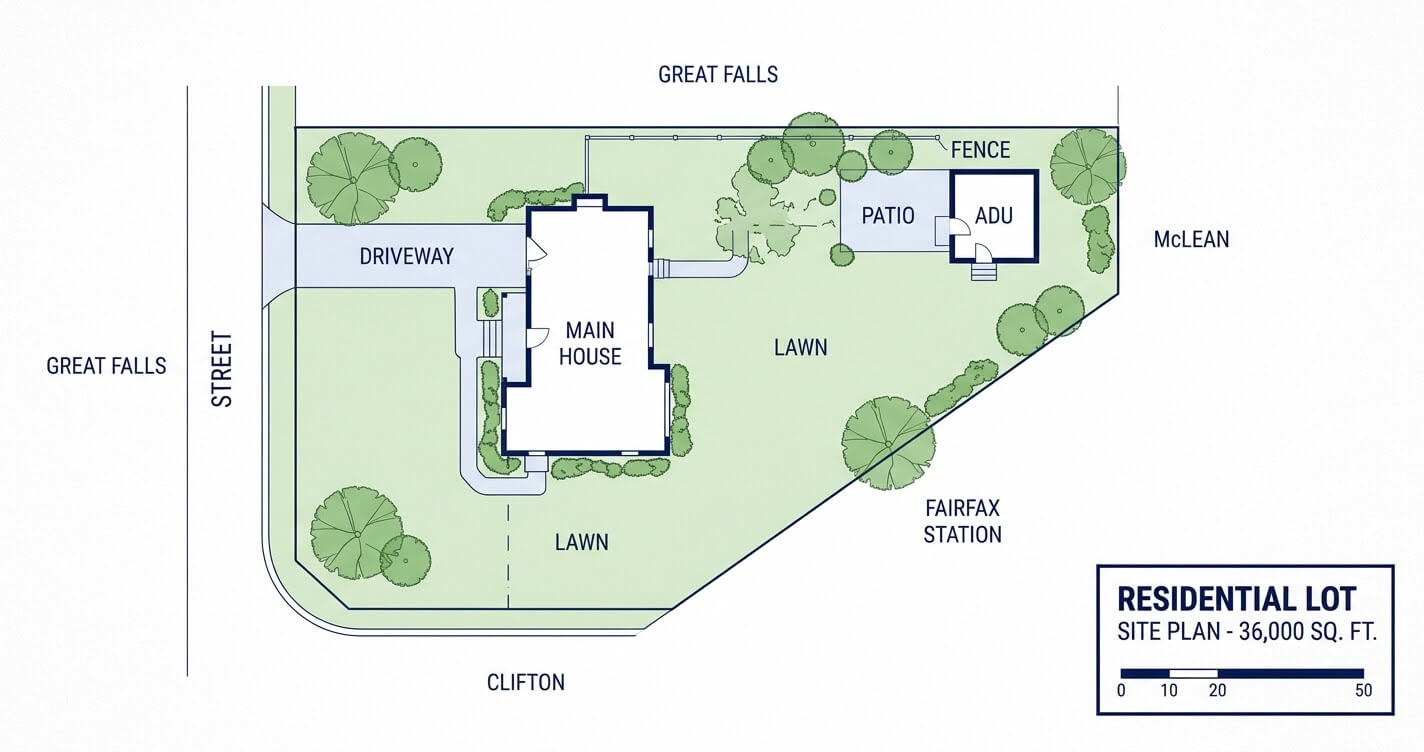
The 36,000 square foot minimum is approximately 0.83 acres. To put this in practical context, a standard suburban Fairfax County lot of 10,000–15,000 square feet, which covers most neighborhoods in Annandale, Burke, Herndon, and Reston, would not meet the by-right threshold for a detached ALU. However, those homeowners would still benefit from the other proposed changes: removed owner-occupancy requirements, removed extra parking, and higher interior size caps.
Neighborhoods in Fairfax County where lots commonly exceed 36,000 square feet, and where the by-right detached ALU provision would be most impactful, include:
- Great Falls – large wooded residential lots, many exceeding 1–5 acres
- McLean – estate-sized lots throughout much of the community
- Clifton – rural-residential properties with multi-acre lots
- Fairfax Station – wooded properties frequently exceeding 0.8–2 acres
- Parts of Springfield, Chantilly, and Centreville with original large-lot subdivisions
For homeowners on smaller lots, below 36,000 sq ft, the proposed amendment still brings meaningful relief. The special permit process would remain, but the owner-occupancy and parking requirements would be removed regardless of lot size. Interior ALU rules, which affect any single-family home that could convert basement or bonus room space, are also improved under the proposal.
If you are unsure whether your Fairfax County property meets the 36,000 sq ft threshold, a zoning determination from Fairfax County Planning & Development is the definitive way to confirm eligibility. USHDB’s design-build team can also review your property as part of an initial ADU consultation in Northern Virginia.
Thinking about building an ADU in Fairfax County? Get a free eligibility review from USHDB before the November 17 vote. → Request a Free ADU Consultation Today
The Approval Process: What Happens Between Now and November 17
The Fairfax County ALU zoning amendment must pass through a two-stage public hearing process before it can become law. First, the Planning Commission holds a public hearing on October 29, 2026 and makes a recommendation to the Board. Then, the Board of Supervisors holds its own hearing on November 17, 2026 and makes the final decision. The Board can adopt, modify, or reject the amendment.
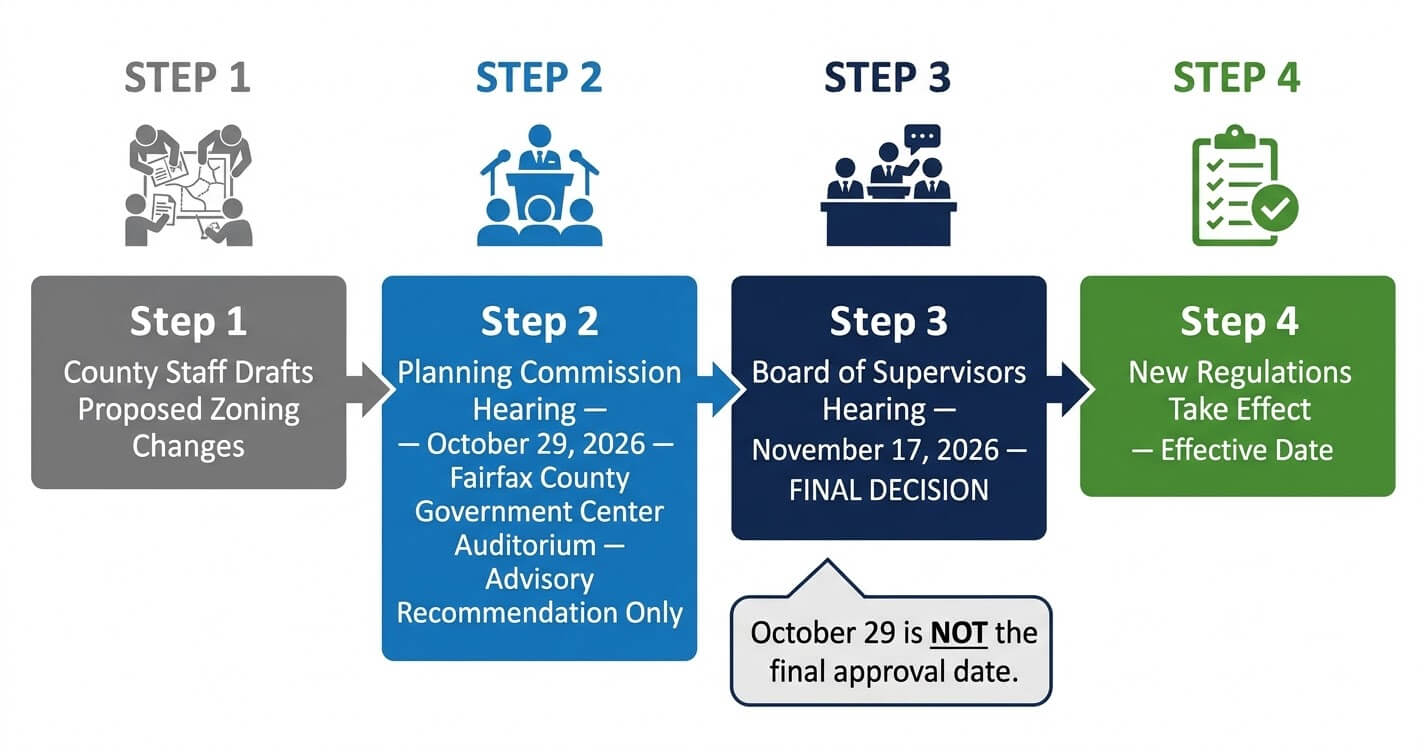
Step 1 — County staff drafts proposed zoning changes.
The Zoning Administration Division, led by Casey Judge and Carmen Bishop, researched and developed the amendment over multiple months, including public webinars, a community engagement toolkit, and a white paper. This phase is complete.
Step 2 — Planning Commission public hearing: October 29, 2026.
The Planning Commission reviews the amendment, takes public testimony, and makes a recommendation to the Board of Supervisors. This is an advisory step; the Planning Commission does not have authority to adopt the amendment.
Hearing details: Fairfax County Government Center Auditorium, 12000 Government Center Parkway, Fairfax, VA 22035. To be placed on the speakers list, contact the Office of the Clerk to the Planning Commission at 703-324-2865 (TTY 711), or appear in person on the date of the hearing.
Step 3 — Board of Supervisors public hearing: November 17, 2026
This is the final and binding hearing. The Board of Supervisors has full authority to adopt the amendment, reject it, or adopt it with modifications. If adopted, the amendment could take effect as early as November 18, 2026, or the Board may specify a later effective date such as December 1 or January 1, 2027.
Hearing details: Fairfax County Government Center, same location. To be placed on the speakers list, contact the Office of the Clerk to the Board of Supervisors at 703-324-3151 (TTY 711).
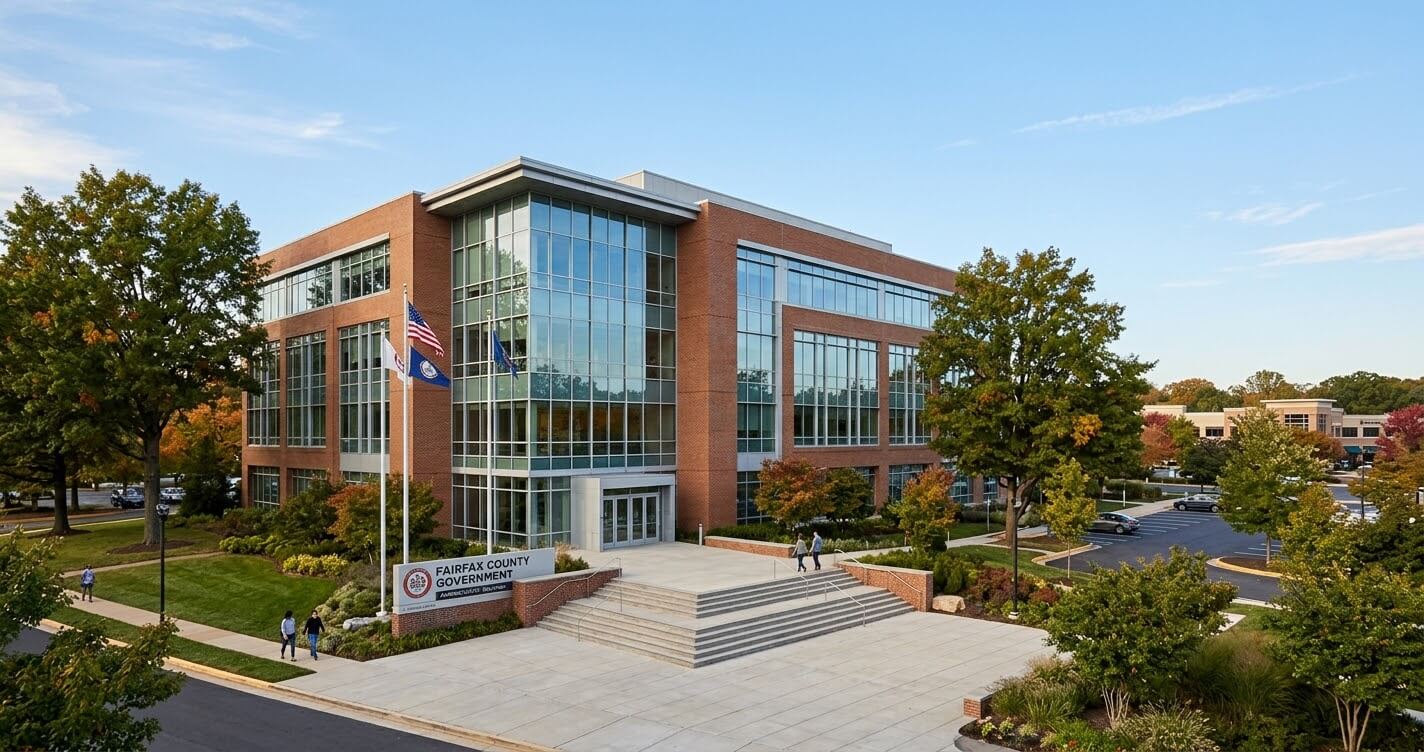
Important – October 29 is NOT the final approval date. Multiple local news sources have reported on this process in a way that could cause homeowners to believe October 29 is the decision date. It is not. The Planning Commission’s role is advisory only. The Board of Supervisors vote on November 17 is the legally binding decision.
Step 4 — If adopted, the new regulations take effect on the specified effective date.
Fairfax County has used both next-day effective dates and delayed effective dates for previous zoning amendments. The Board could choose to have the new ALU rules take effect immediately on November 18, or set a delayed date to allow staff and applicants to prepare.
(Source: Fairfax County Planning & Development, proposed amendments page)
Current Fairfax County ALU Data: Why Change Is Overdue
There are currently only 160 approved ALU permits in all of Fairfax County, representing just 0.08% of single-family detached lots in the county. This figure is strikingly low given that Fairfax County has one of the highest median home values and household incomes in the United States, a significant housing affordability challenge, and over 231,000 single-family detached homes.
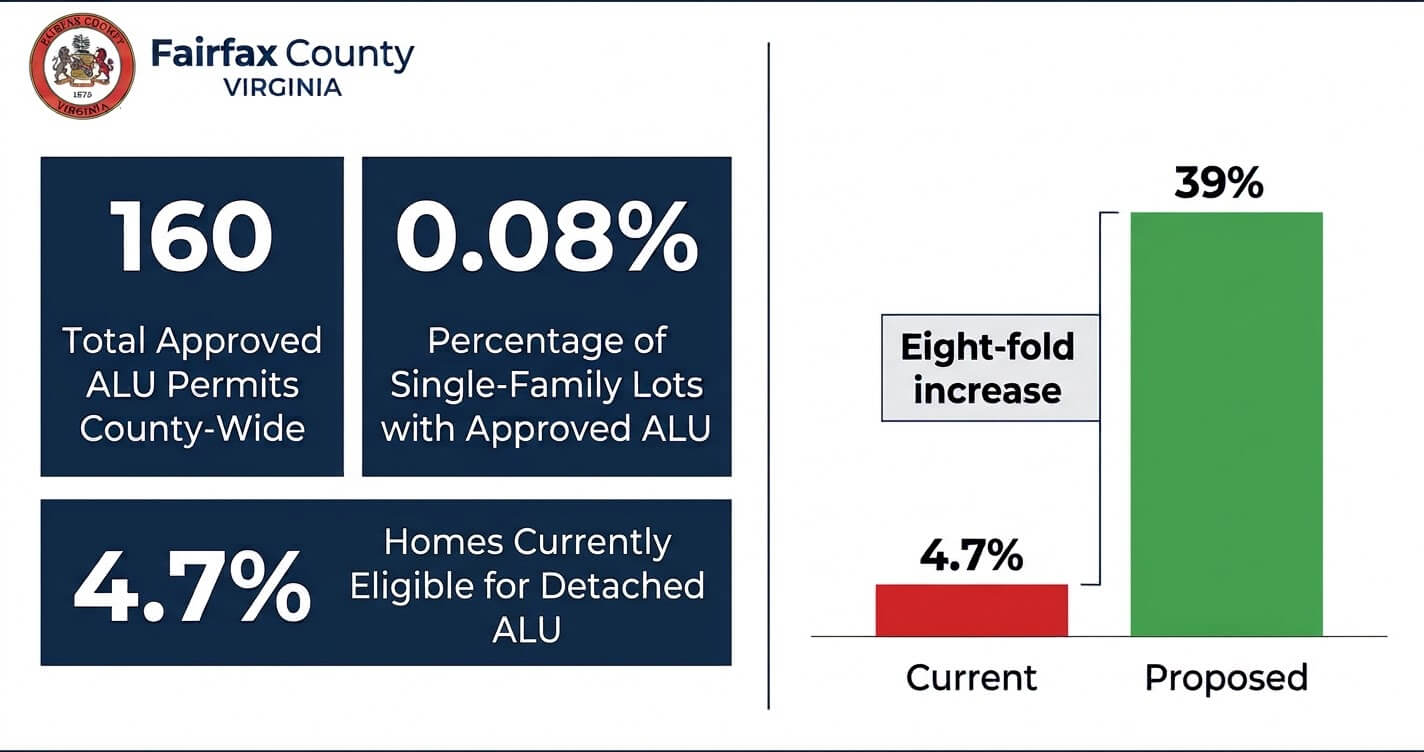
To understand why Fairfax County is proposing this change, it helps to see the county’s ALU numbers in context. The current rules, specifically the 2-acre minimum lot size for detached ALUs and the mandatory Special Permit process, have effectively made detached ADUs inaccessible to the vast majority of Fairfax County homeowners.
What This Means If You Want to Build an ADU in Fairfax County
If the Board of Supervisors adopts the amendment on November 17, homeowners with lots of 36,000 square feet or larger can apply for a detached ALU with a standard building permit, no special permit hearing, no owner-occupancy requirement, and no extra parking space needed. Homeowners on smaller lots will also benefit from the removed owner-occupancy rule, removed parking requirement, and higher interior size cap.
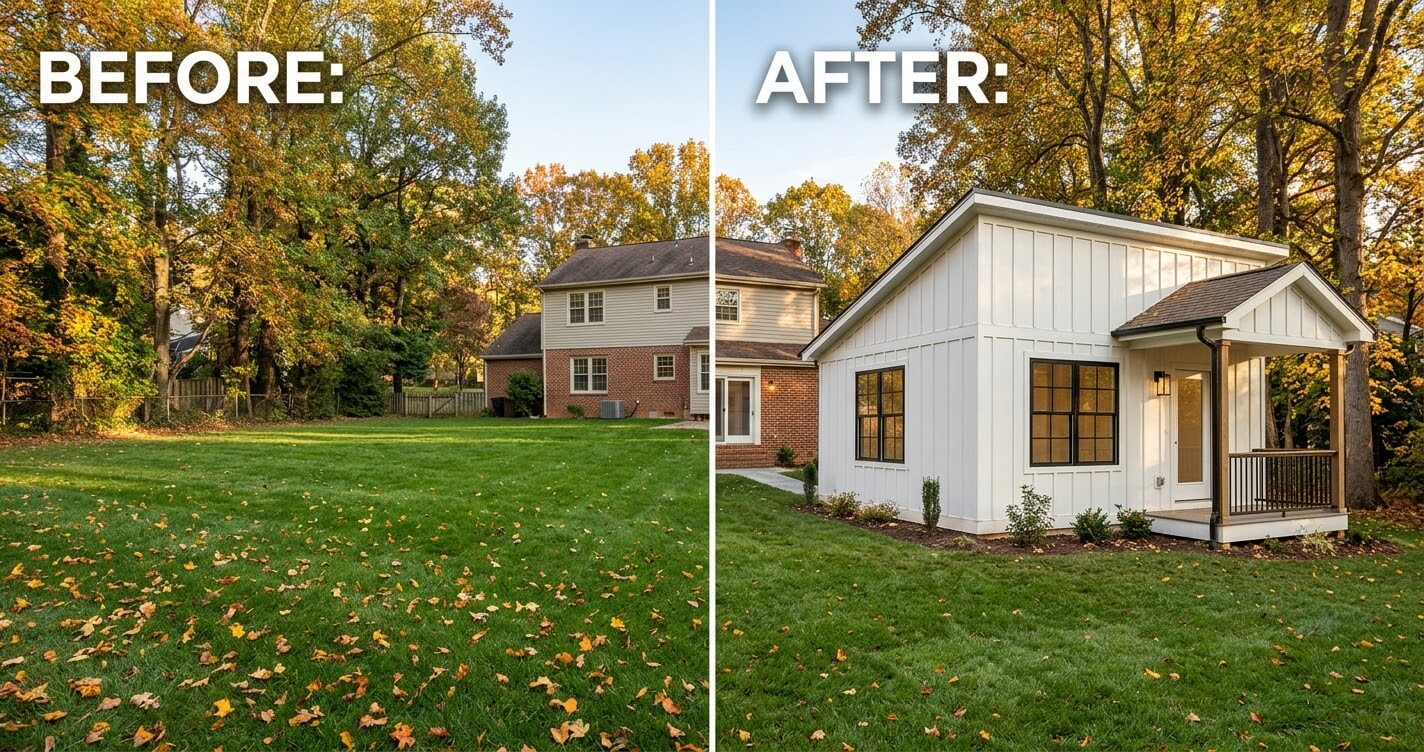
Here is what the practical path looks like under the proposed rules, assuming your lot meets the 36,000 sq ft threshold:
- Get a zoning determination confirming your lot size and eligibility for a by-right detached ALU.
- Work with a design-build firm to develop plans that meet the size, setback, and height standards.
- Submit for a standard building permit – no public hearing, no BZA application.
- Receive permit (typical timeline for residential structures: several weeks rather than months).
- Complete construction and receive a Certificate of Occupancy.
For homeowners on lots under 36,000 sq ft, the special permit process through the Board of Zoning Appeals still applies for detached ALUs. However, the removed owner-occupancy requirement, removed parking requirement, and cleaner interior conversion rules make the entire process less burdensome than under current rules.
One important step homeowners can take right now, before the November 17 vote: Verify your lot size and start the design process. The demand for ADU design and permitting services typically surges after major zoning changes. Homeowners who begin the planning process before the amendment passes will be ahead of that rush. USHDB’s design-build team handles every step of the ADU process in Fairfax County, from lot eligibility review through final inspection. Learn more at our ADU Builder Northern Virginia page.
Get ahead of the rule change. Our design-build team can review your Fairfax County property now and tell you exactly what you can build. → Contact USHDB Now
Frequently Asked Questions
What is the difference between an ALU and an ADU in Fairfax County?
In Fairfax County, the official term is Accessory Living Unit (ALU). The county adopted this term during its zMOD zoning rewrite to avoid confusion with Affordable Dwelling Units, which are a separate category in county housing policy. Outside Fairfax County, in Arlington, Alexandria, Falls Church, and across the rest of Northern Virginia, the term ADU (Accessory Dwelling Unit) is standard. The structures are functionally identical: a secondary, smaller dwelling unit on a residential property, either attached to or detached from the principal home.
When will the new Fairfax County ADU rules take effect?
That depends entirely on the Board of Supervisors vote on November 17, 2026. If the Board adopts the amendment, it could specify an effective date as early as November 18. Alternatively, the Board could choose a delayed effective date, such as December 1 or January 1, 2027, to allow staff and applicants to prepare. If the Board votes to reject or substantially revise the amendment, the current rules remain in place until further action. (Source: Fairfax County Board of Supervisors hearing process)
Does this amendment apply to interior ALUs or only detached ones?
Both. The proposed changes to owner-occupancy requirements, parking requirements, occupancy limits, and the size cap increase from 800 sq ft to 1,200 sq ft all apply to interior ALUs as well as detached ones. The lot size change (36,000 sq ft threshold for by-right approval) is specific to detached ALUs, since interior ALUs do not require a Special Permit under current rules.
Can I still build a detached ADU if my lot is under 36,000 square feet?
Yes, but with more process. Lots under 36,000 sq ft would still require a Special Permit with a public hearing before the Board of Zoning Appeals for a detached ALU. However, even on smaller lots, the removed owner-occupancy requirement, removed parking requirement, and higher occupancy limit would apply. Interior ALU conversions on smaller lots are also improved under the proposal.
Does removing the owner-occupancy requirement mean I can rent both my house and my ADU?
If the amendment passes as proposed, yes, a property owner would no longer need to reside on the property to have an active ALU. You could, in principle, rent the principal dwelling to one tenant household and rent the ALU to another, or live elsewhere and rent the ALU out. This is a significant shift from current rules and brings Fairfax County into line with other NoVA jurisdictions. For more on ADU rental income potential in Northern Virginia, see our guide at ADU Rental Income Northern Virginia 2026.
What happens if the Board of Supervisors rejects the amendment on November 17?
If the Board votes to reject the amendment, current Fairfax County ALU rules remain in effect. The 2-acre minimum lot size, the owner-occupancy requirement, the mandatory Special Permit, and all existing standards would continue to apply. The Board could also choose to table the vote, refer it back to staff for revisions, or adopt a modified version that changes some proposals but not others. The Fairfax County Board of Supervisors has both the authority and a track record of making substantive modifications to proposed zoning amendments at public hearings.
How does this compare to ADU rules in Arlington County and Alexandria?
Arlington County recently voted unanimously to allow detached ADUs on one-family properties without prior county permission, a significant step that makes Arlington’s rules already more permissive than what Fairfax County is proposing. Arlington has no owner-occupancy requirement and no mandatory parking. Alexandria also lacks an owner-occupancy requirement. If Fairfax County’s amendment passes, the three largest NoVA jurisdictions will have broadly comparable ADU rules for the first time. For the full comparison, see our article on ADU rules in Northern Virginia by jurisdiction.
Crux of the Matter
The Fairfax County ALU zoning amendment, going before the Board of Supervisors on November 17, 2026, represents a generational shift in how Fairfax County approaches accessory dwelling units. If adopted, it would make roughly 39% of Fairfax County single-family homes eligible for a detached ADU by right, remove the owner-occupancy barrier, eliminate the extra parking requirement, and streamline approvals for tens of thousands of homeowners who currently have no viable path to building one.
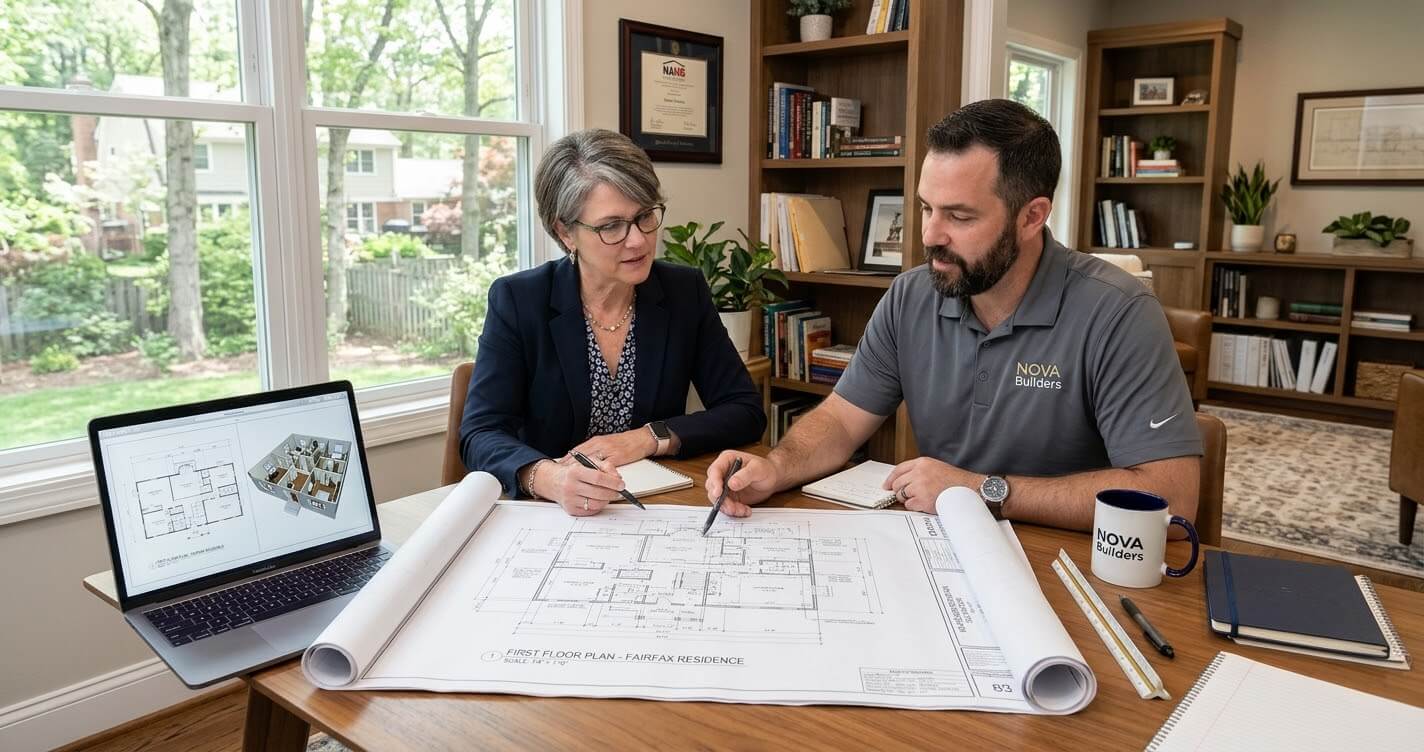
Whether you are considering an ADU for a parent, an adult child, rental income, or a home office, October and November 2026 are the most important months for Fairfax County ADU rules 2026 in recent history. The time to review your property’s eligibility, start the design process, and understand your options is now, before the vote, and before demand surges.
USHDB is a Northern Virginia design-build contractor with deep experience in the ADU permit and construction process across Fairfax County, Arlington County, and Alexandria. Our team can review your lot, explain what the current and proposed rules mean for your specific property, and manage the full build from design through final inspection. Learn more about our ADU builder services in Northern Virginia, or visit our Accessory Living Unit Fairfax County guide for a complete breakdown of current rules.
Ready to plan your Fairfax County ADU? Contact USHDB today for a free project consultation.
