
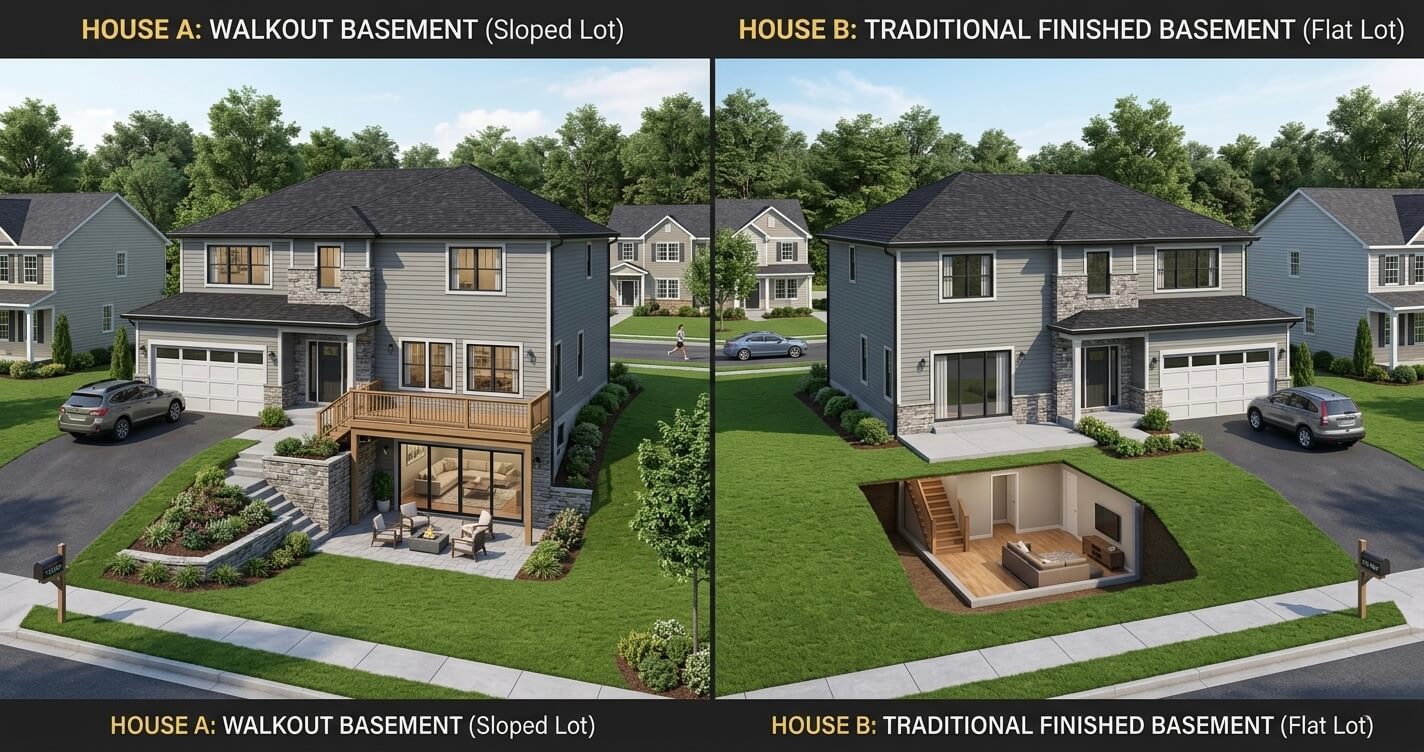
Basement renovations are rapidly increasing across Northern Virginia, especially in high-demand areas like Arlington, McLean, and Fairfax where homeowners want to maximize usable space without expanding the home footprint.
When comparing walkout basement vs. finished basement Northern Virginia, the decision often comes down to cost, property value, and long-term usability. Each option serves a different purpose, and choosing the right one depends on your lot type, budget, and how you plan to use the space.
What Is a Walkout Basement?
A walkout basement is a basement level that includes direct access to the outside through a full-sized door. It is typically constructed on sloped lots, allowing one side of the basement to be at ground level.
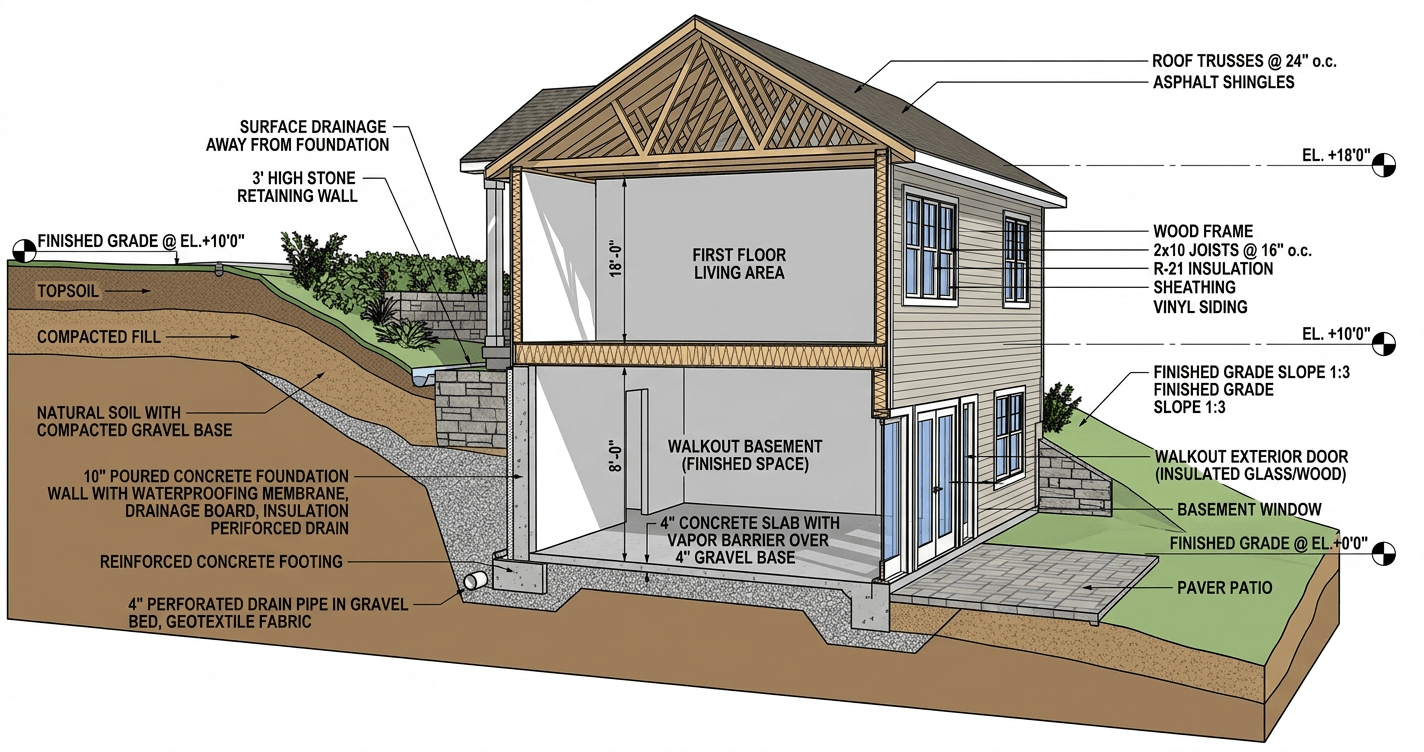
This type of basement naturally allows more daylight through windows and doors, making the space feel more open and livable. Structurally, it functions as a partially above-ground level and can be designed to operate as a separate living area with independent entry.
What Is a Finished Basement?
A finished basement is a lower-level interior space that has been fully converted into a livable area. It does not require direct exterior access and is enclosed within the home’s foundation.
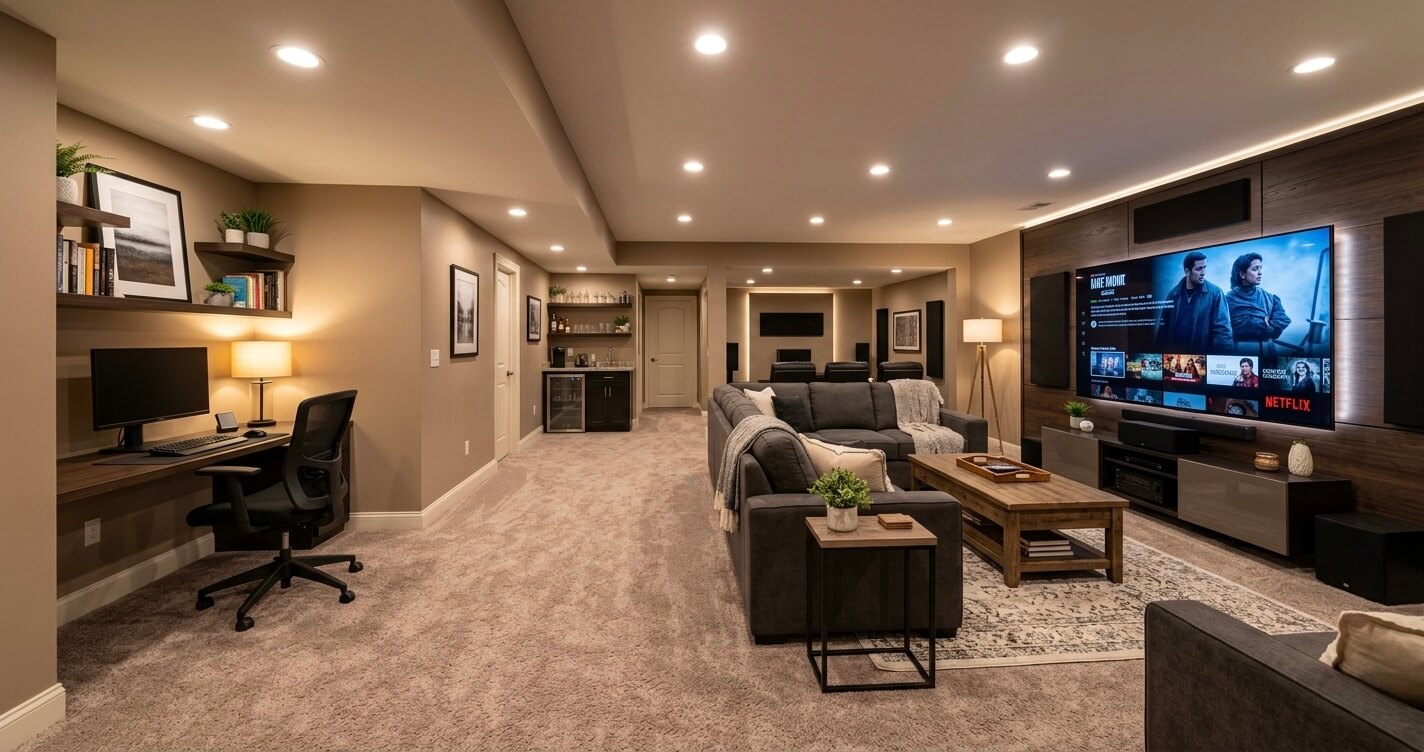
These spaces are commonly used for home theaters, offices, gyms, or guest rooms. A finished basement includes flooring, walls, lighting, and HVAC integration, making it one of the most common upgrades for expanding usable indoor space.
Walkout Basement vs. Finished Basement in Northern Virginia (Key Differences)
When evaluating walkout basement vs. finished basement Northern Virginia, the differences are primarily structural, functional, and financial:
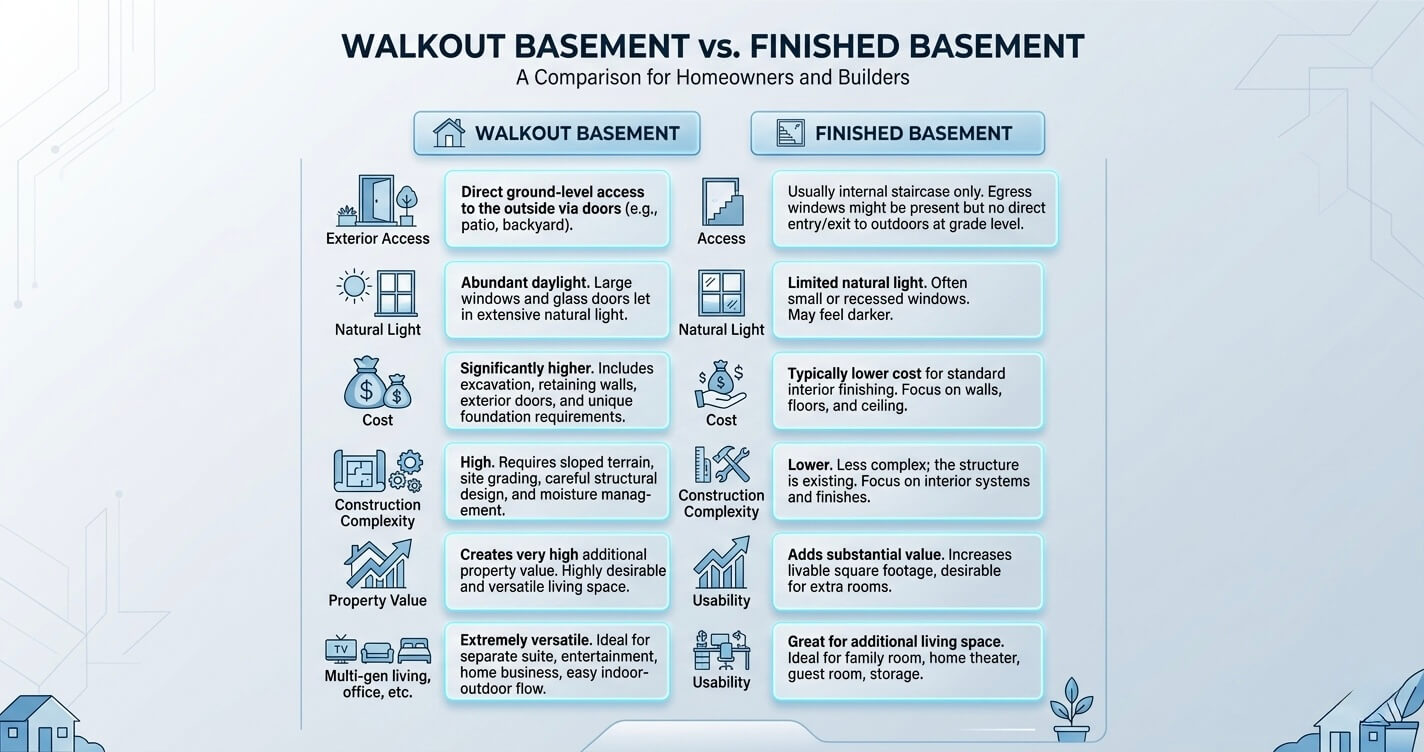
- Exterior Access
- Walkout Basement: Direct outdoor entry
- Finished Basement: No exterior door required
- Natural Light
- Walkout Basement: High natural light due to doors and windows
- Finished Basement: Limited natural light, relies more on artificial lighting
- Construction Complexity
- Walkout Basement: Requires excavation, grading, and structural modification
- Finished Basement: Interior construction within existing structure
- Cost Range
- Walkout Basement: Higher due to structural work
- Finished Basement: More budget-friendly, interior-focused
- Property Value Impact
- Walkout Basement: Strong resale appeal and potential for separate unit use
- Finished Basement: Adds functional living space and moderate resale value
- Permit Requirements
- Walkout Basement: More extensive approvals due to structural changes
- Finished Basement: Standard interior renovation permits
Cost Difference between Walkout and Finished Basements
The cost gap between these two options is significant, especially in a high-cost region like Northern Virginia.
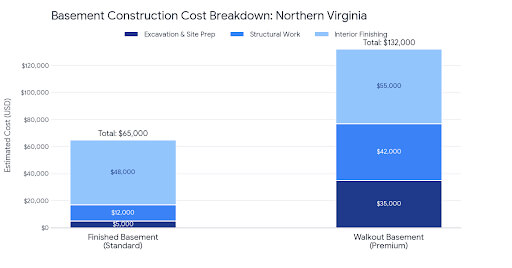
A walkout basement typically involves excavation, grading, foundation wall modifications, and drainage adjustments. Because of this, costs generally fall in the range of $100 to $300 per square foot, depending on site conditions and structural complexity.
In contrast, a finished basement focuses on interior upgrades such as flooring, insulation, drywall, and electrical work. These projects usually range between $30 to $100 per square foot, making them a more budget-friendly option for homeowners.
According to the Remodeling Cost vs. Value Report, basement remodeling projects consistently show strong returns, especially when they increase usable living space.
Labor and material costs in Northern Virginia, particularly in areas like Arlington, McLean, and Fairfax, are higher than the national average, which can further widen the cost difference between a walkout and a finished basement.
For a broader understanding of budgeting considerations, you can also explore Home Addition Cost in Northern Virginia.
Which Option Adds More Home Value?
Both options can improve property value, but they do so in different ways depending on how buyers perceive usability and accessibility.
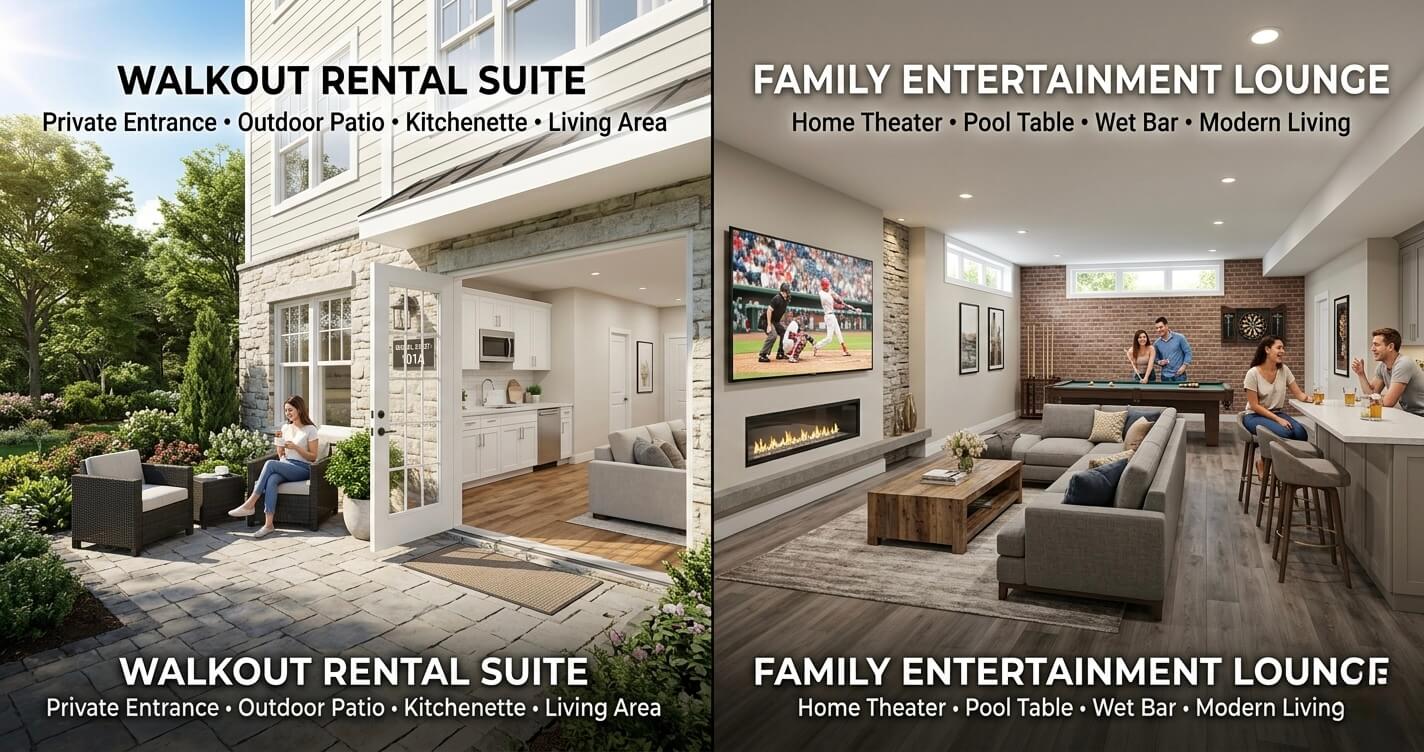
A walkout basement generally has stronger resale appeal because it feels closer to a main-level living space rather than a traditional lower level. The presence of natural light, direct outdoor access, and the ability to function as a semi-independent unit often enhances curb appeal and perceived square footage. In some cases, it may also support rental or multi-generational living setups, which are increasingly attractive in Northern Virginia markets like Arlington, McLean, and Fairfax.
A finished basement, on the other hand, adds value by increasing functional interior space. While it may not offer the same level of visual appeal as a walkout design, it remains highly desirable for buyers looking for move-in-ready homes with dedicated areas for work, entertainment, or guests. Its return on investment is typically tied to usability rather than structural transformation.
Buyer preference data also supports this distinction. According to NAHB housing studies, finished basements are among the most requested home features, particularly when designed as flexible living spaces.
In Northern Virginia, the added value ultimately depends on how well the basement aligns with buyer expectations, whether that’s enhanced accessibility and natural light (walkout) or practical, finished living space (standard basement conversion).
Best Situations for a Walkout Basement
- Properties with naturally sloped lots that allow ground-level access
- Homes where a separate entrance is required for privacy or functionality
- Projects aiming to create an independent living area or guest suite
- Homeowners planning for rental-friendly layouts or future flexibility
Best Situations for a Finished Basement
- Properties with flat terrain where exterior access is not feasible
- Homeowners looking for a more budget-friendly upgrade
- Spaces intended for entertainment, home theaters, or personal offices
- Families needing additional indoor living space without structural changes
Permit and Construction Considerations in Northern Virginia
Permitting and construction requirements vary significantly between walkout and finished basements, mainly due to the level of structural modification involved.
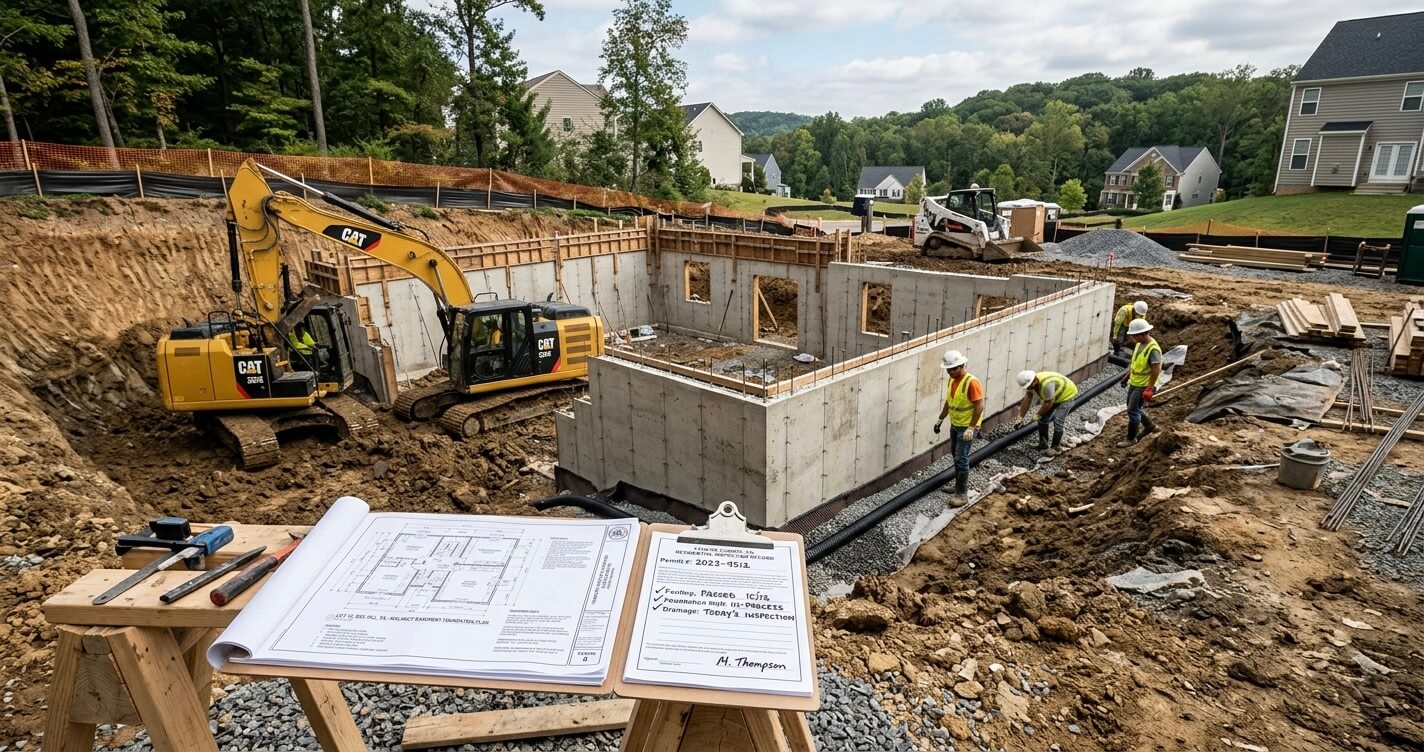
A walkout basement typically requires major structural changes, including excavation, foundation wall alterations, grading, and drainage planning. These changes trigger more detailed plan reviews and multiple inspections during construction. Because you are modifying the building envelope, approvals can take longer and may involve stricter compliance checks.
A finished basement, by contrast, is usually treated as an interior renovation. While permits are still required for electrical, plumbing, and structural adjustments, the process is generally more straightforward and faster to approve.
Regardless of the type, safety compliance is critical. For example, egress window requirements must be met for any bedroom space to ensure emergency exit access. Inspection stages typically include framing, electrical, insulation, and final approval.
For reference, Northern Virginia permitting guidelines can be reviewed here.
From a cost and timeline perspective, more complex permits and inspections often translate into longer project durations and higher overall expenses, especially for walkout basement construction.
Timeline Comparison
Project timelines differ notably due to construction complexity and approval processes:
- Walkout Basement
- Longer construction timeline due to excavation and structural work
- Permit approvals can extend project start times
- Weather conditions (rain, soil stability) can cause delays
- Typically spans several months depending on scope
- Finished Basement
- Faster completion since work is primarily interior
- Fewer structural approvals required
- Minimal weather-related delays
- Often completed within a few weeks to a couple of months
In general, longer timelines tend to increase labor and project management costs, making walkout basements more time-intensive and expensive compared to finished basements.
How to Choose Between Walkout and Finished Basement
Choosing the right option depends on aligning your property conditions with your long-term goals:
- Budget
- Choose a finished basement if you need a cost-effective upgrade
- Consider a walkout basement if you can invest in structural changes
- Lot Slope
- Sloped properties are better suited for walkout basements
- Flat lots are more practical for finished basement conversions
- Intended Use
- Walkout basements work well for separate living spaces or private access
- Finished basements are ideal for entertainment, offices, or family use
- Long-Term Plans
- Walkout basements offer more flexibility for future layout changes
- Finished basements provide immediate functional space
- Property Value Goals
- Walkout basements may enhance resale appeal through accessibility and natural light
- Finished basements improve livability and overall usable square footage
For additional guidance, you can explore How to Choose the Right Contractor in Northern Virginia to ensure your project aligns with local building requirements and quality standards.
Work With a Northern Virginia Basement Remodeling Team
Choosing between a walkout and finished basement is not just a design decision, it’s a structural and regulatory one that requires local expertise. A professional team that understands Northern Virginia soil conditions, zoning expectations, and county permitting standards can help prevent costly delays and design limitations.
Working with an experienced design-build firm like US Home Design Build ensures that both planning and construction are handled under one coordinated process. This approach is especially important in areas such as Arlington, McLean, and Fairfax, where property layouts, slope conditions, and permit requirements can vary significantly from one neighborhood to another.
A qualified local team can help evaluate whether your home is better suited for a walkout conversion or a fully finished basement, while also managing engineering, design, and construction under one streamlined workflow. This reduces miscommunication between contractors and helps keep timelines and budgets aligned with expectations.
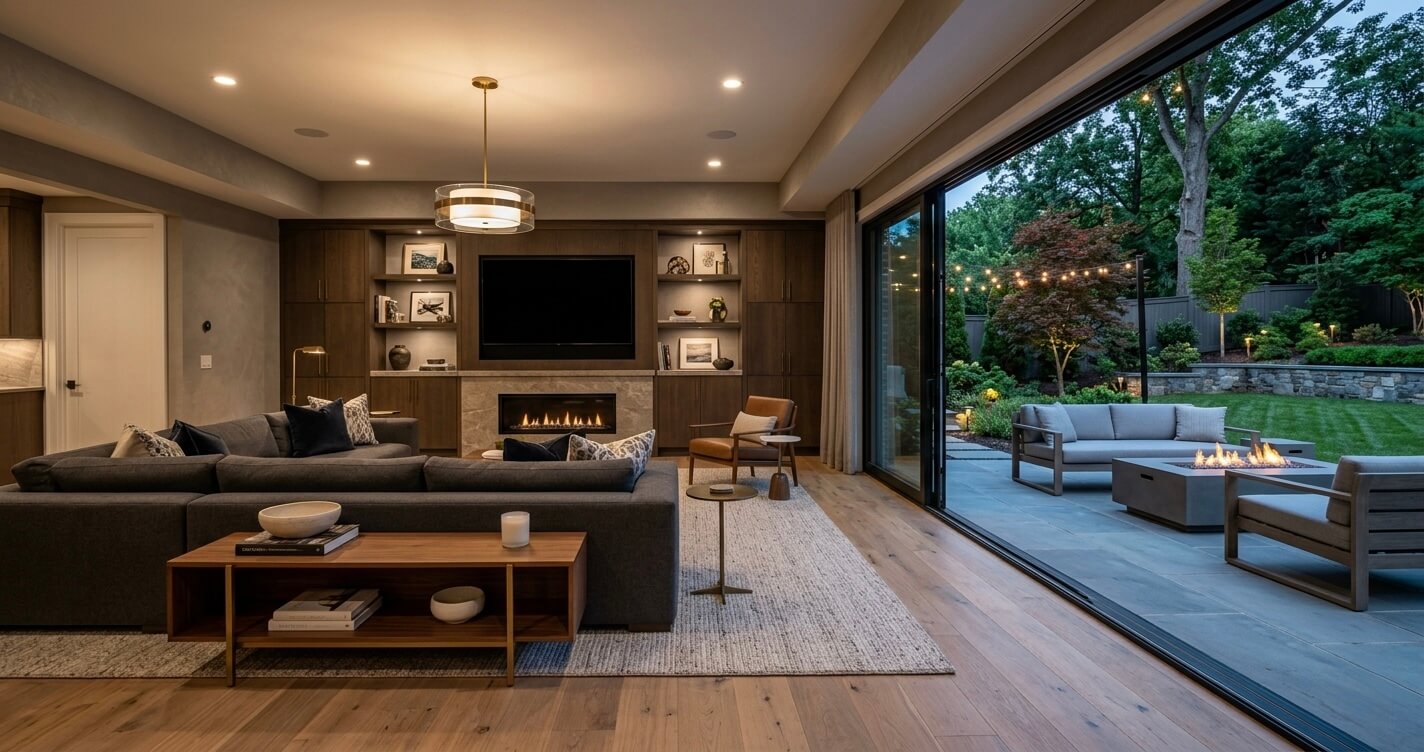
If you’re considering a basement upgrade in Northern Virginia, scheduling a professional consultation is often the best first step to understand feasibility, cost range, and design possibilities tailored to your property.
Final Thoughts
When comparing options, both walkout and finished basements offer valuable but very different advantages. A walkout basement typically provides stronger accessibility, natural light, and multi-use potential, while a finished basement focuses on affordability, faster completion, and flexible interior living space.
The right choice ultimately depends on your lot conditions, budget, and long-term goals for your home. In many Northern Virginia properties, especially in Arlington, McLean, and Fairfax, these factors play a major role in determining what is structurally and financially practical.
Understanding the differences in walkout basement vs. finished basement Northern Virginia helps homeowners make more informed renovation decisions that align with both lifestyle needs and property potential.