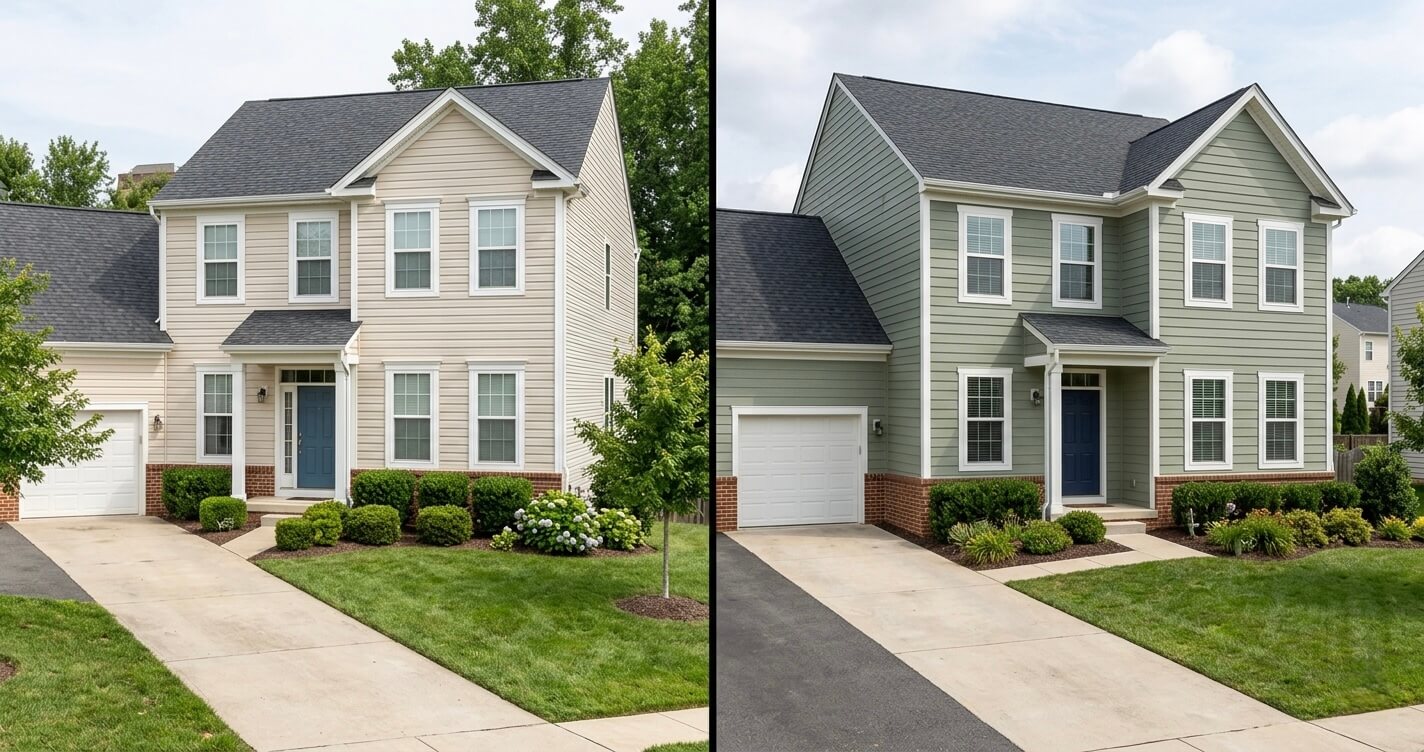
Vinyl vs. fiber cement siding Northern Virginia homeowners are choosing between in 2026 is no longer just a design decision. It is a performance-driven investment that directly impacts durability, maintenance cycles, and long-term property value. In Northern Virginia’s mixed climate, characterized by humid summers, freeze-thaw winter cycles, and periodic high-wind storm events, siding must function as both a protective envelope and an aesthetic upgrade.
Homes across Fairfax County, McLean, and Arlington face elevated buyer expectations, HOA oversight, and above-average property valuations. This means siding selection is not purely cosmetic, it influences inspection outcomes, energy efficiency, and resale positioning in a competitive housing market.
“Siding replacement costs typically range from $5 to $15 per square foot installed depending on material.” [Source: Jobsite Calcs]
From a technical standpoint, vinyl siding prioritizes affordability and low maintenance, while fiber cement offers superior structural resilience, fire resistance, and architectural depth.
For homeowners evaluating broader exterior upgrades alongside siding replacement, it is useful to consider how these costs align with “Home Addition Cost in Northern Virginia” when planning long-term investment strategies.
This guide breaks down cost, durability, maintenance requirements, and real-world performance, specifically for Northern Virginia homes.
COST COMPARISON: VINYL VS FIBER CEMENT (2026)
Understanding the cost difference between vinyl and fiber cement siding is essential for homeowners evaluating upfront investment versus long-term value in Northern Virginia.
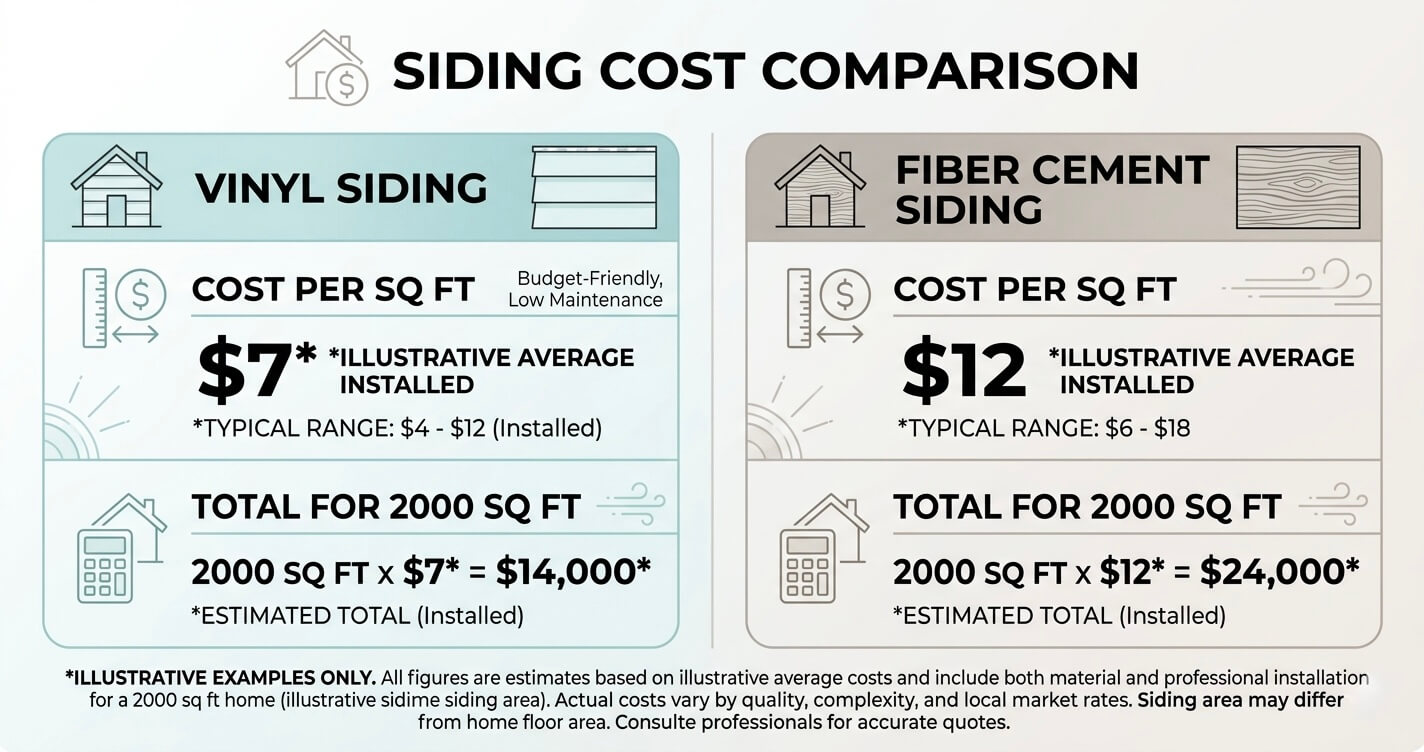
Core Cost Ranges (Installed):
- Vinyl siding: $4.50–$9.00 per square foot
- Fiber cement siding: $8.00–$16.00 per square foot
[Source: New Cost Report]
Additional Market Confirmation:
- Vinyl: $6–$12 per sq ft
- Fiber cement: $8–$14 per sq ft
[Source: Hoel Roofing]
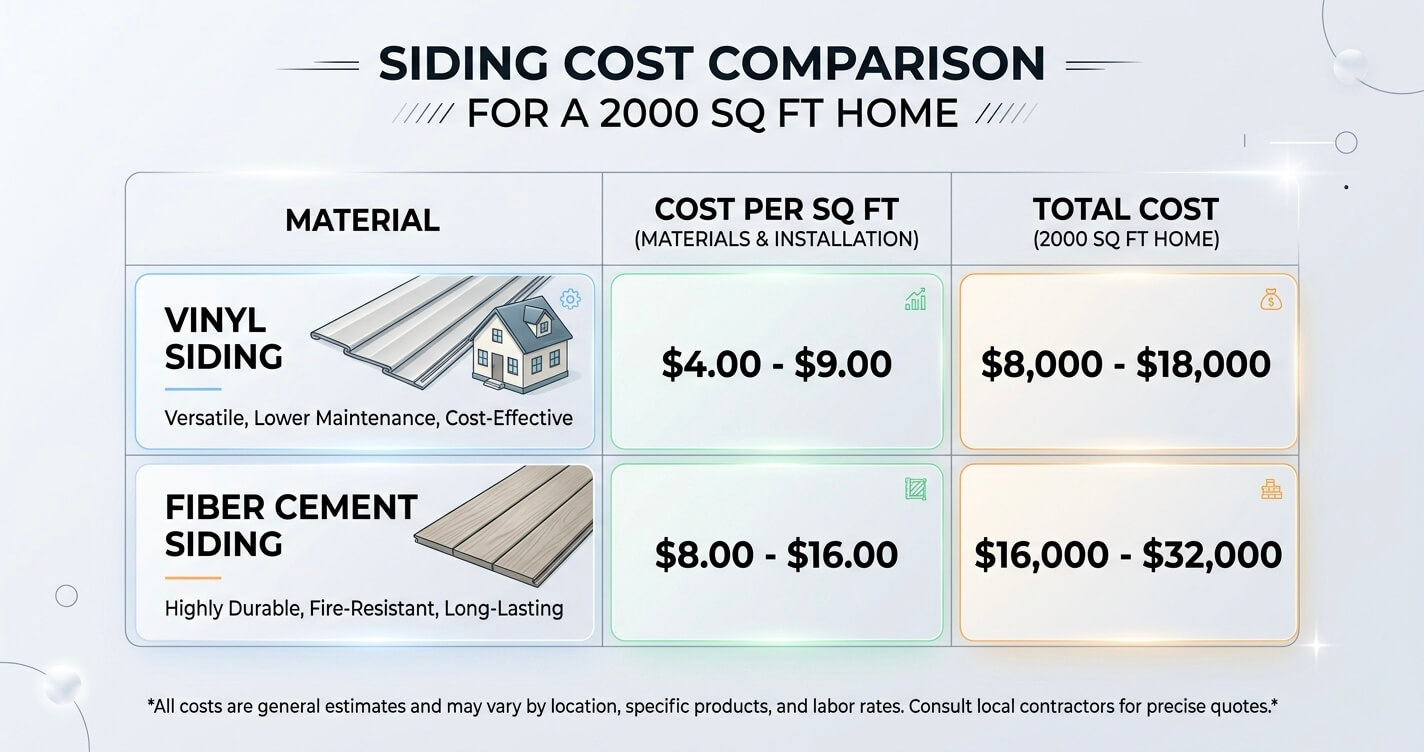
COST COMPARISON TABLE
Key Insight:
Fiber cement siding typically costs 40–60% more upfront than vinyl, primarily due to higher material weight, specialized labor requirements, and longer installation timelines. [Source: UseCalcPro]
Northern Virginia Cost Adjustment
In markets like Northern Virginia, siding installation costs trend 15–25% above national averages due to:
- Skilled labor shortages and higher wage rates
- Permit and inspection requirements
- Complex architectural styles (colonials, split-levels, custom builds)
- Material staging and access constraints on established lots
Additionally, siding replacement is often bundled with envelope upgrades such as insulation boards or moisture barriers, similar in scope complexity to projects like Roof Replacement Annandale VA, where structural detailing and code compliance increase total project cost.
DURABILITY & LIFESPAN COMPARISON
Durability is one of the most critical factors when evaluating vinyl vs fiber cement siding in Northern Virginia, particularly given the region’s demanding climate conditions.
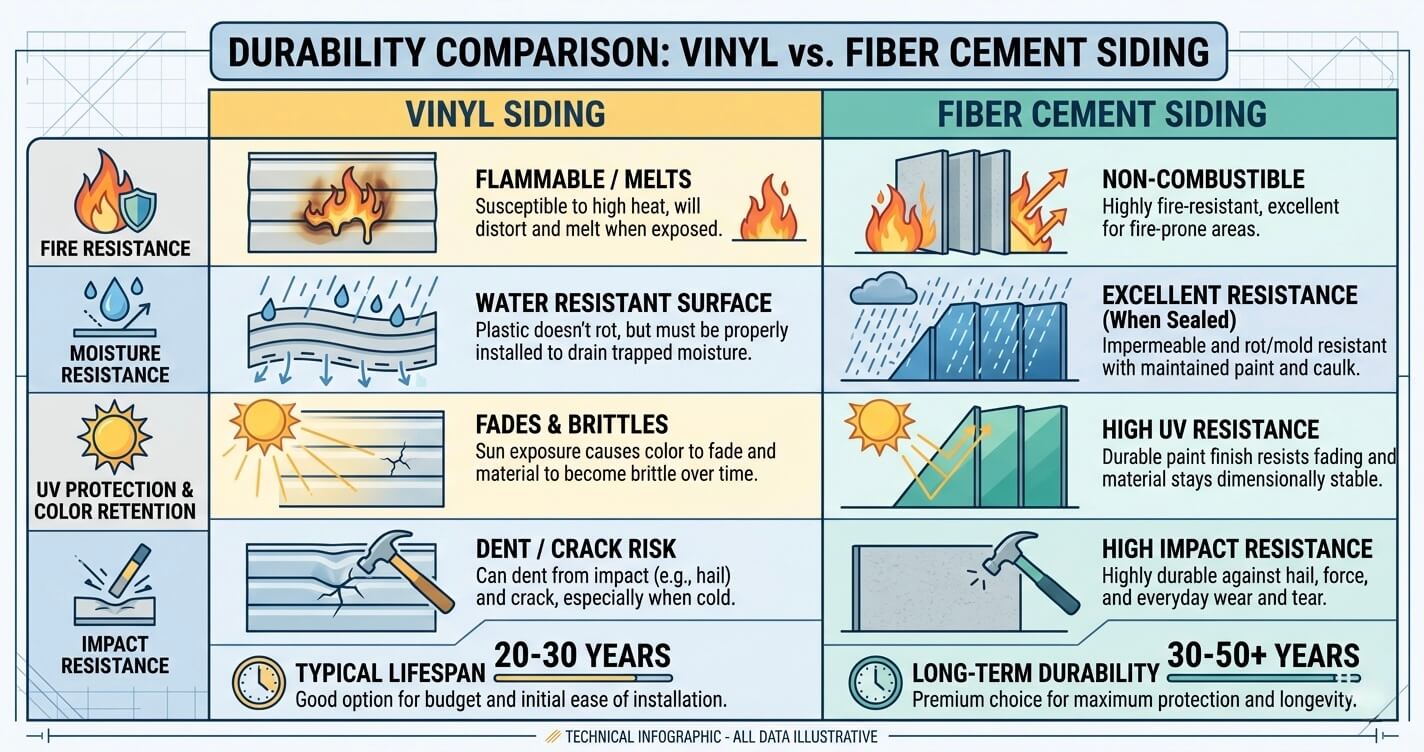
Lifespan Benchmarks:
- Vinyl siding: 20–30 years
- Fiber cement siding: 30–50+ years
Performance Breakdown
Vinyl Siding:
- Prone to cracking under low-temperature stress
- Can warp or deform under prolonged UV exposure
- Lower resistance to impact damage (hail, debris)
- Susceptible to expansion and contraction in temperature swings
Fiber Cement Siding:
- Non-combustible with Class A fire rating
- Resistant to rot, termites, and moisture intrusion
- Maintains structural integrity under UV exposure
- Minimal expansion/contraction compared to vinyl
Northern Virginia Climate Performance
Homes in Northern Virginia experience:
- Freeze-thaw cycles that accelerate vinyl fatigue and joint separation
- High summer humidity, increasing the risk of trapped moisture behind improperly installed siding systems
- Storm and wind events, where heavier, rigid materials like fiber cement provide better resistance to uplift and impact
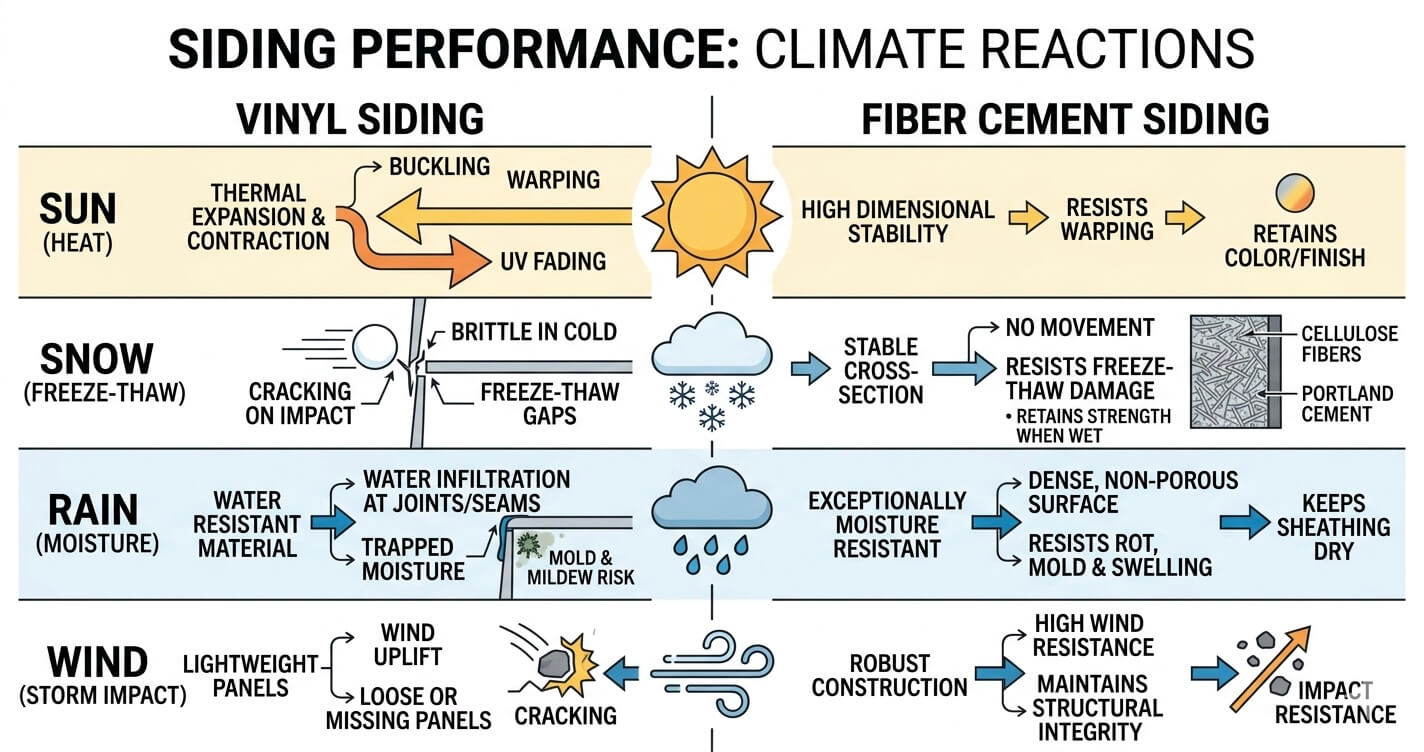
From a building envelope perspective, fiber cement functions as a more stable cladding system under these environmental stresses, while vinyl remains a viable option for cost-sensitive applications with proper installation and ventilation detailing.
MAINTENANCE & LONG-TERM COST
Maintenance requirements play a decisive role in the total lifecycle cost of siding systems, particularly in climates like Northern Virginia where seasonal stress accelerates material wear.
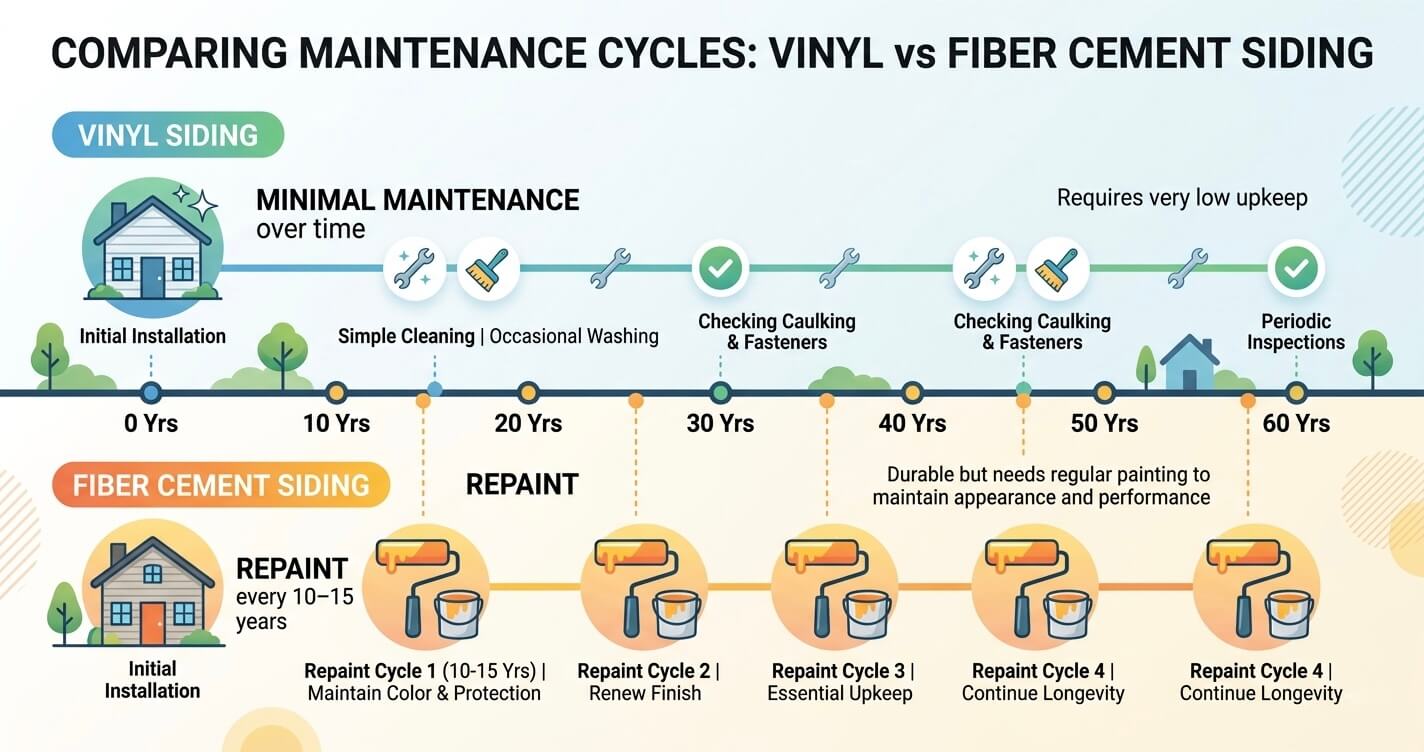
Vinyl siding is widely selected for its low-maintenance profile. It does not require painting or sealing, and routine upkeep is typically limited to periodic washing to remove dirt, algae, and environmental residue. However, while maintenance costs are minimal, repairs can be less predictable, cracked or warped panels often require full section replacement rather than localized repair.
Fiber cement siding, by contrast, demands more structured maintenance. It requires repainting approximately every 10–15 years to preserve moisture resistance and visual consistency. This introduces periodic maintenance costs, but the material itself remains structurally stable over a longer period, with significantly lower risk of deformation, rot, or pest damage.
Key Insight:
While fiber cement carries higher upfront and maintenance costs, it typically reduces full replacement frequency, making it more cost-efficient over a 30–50 year horizon.
From a building envelope perspective, siding upgrades should be evaluated alongside other exterior systems. For example, projects like Roof Replacement Annandale VA often overlap in timing and scope, allowing homeowners to optimize labor costs and improve overall structural performance in a single project cycle.
APPEARANCE & CURB APPEAL
Curb appeal is a primary driver of siding selection in high-value housing markets like Northern Virginia, where exterior presentation directly influences buyer perception and resale performance.
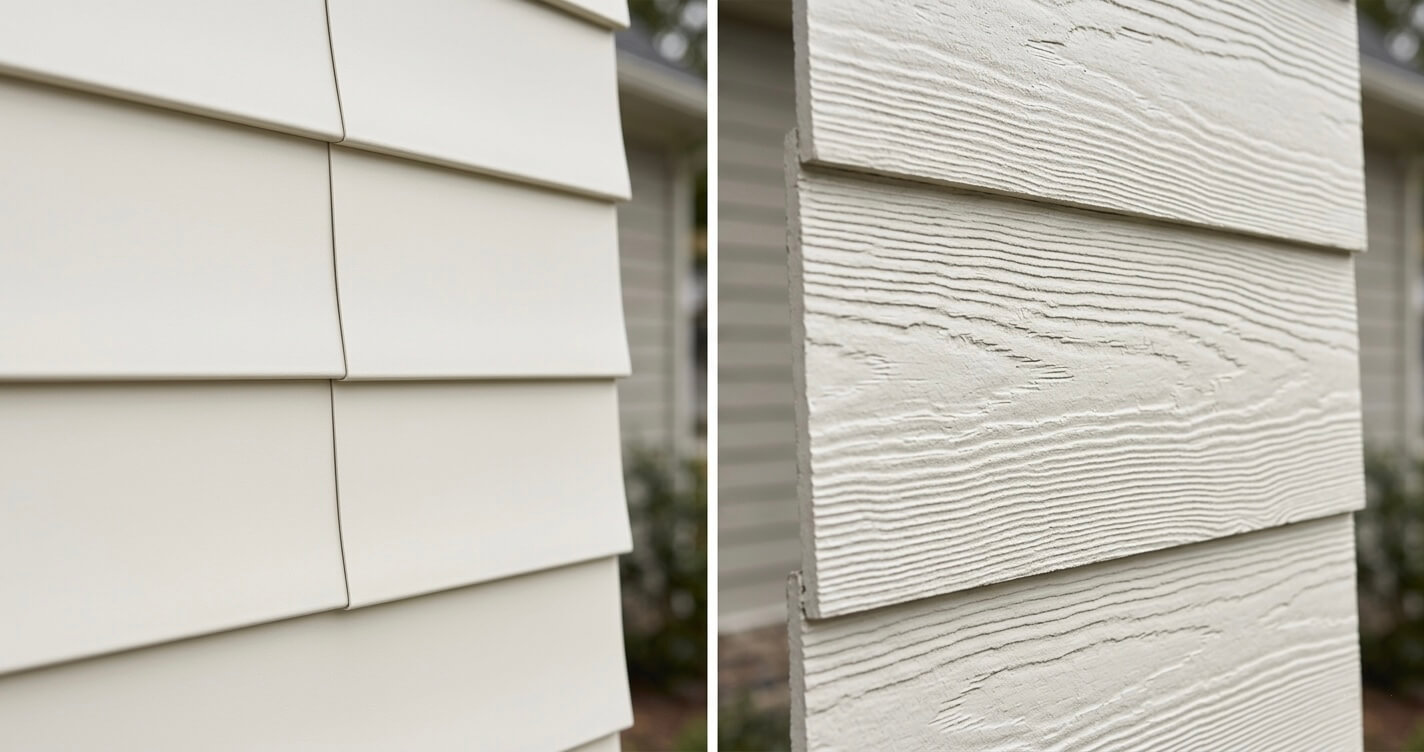
Vinyl siding offers a wide range of colors and profiles, making it adaptable to various architectural styles. Modern manufacturing has improved texture quality, but it still tends to present a more uniform and less dimensional finish. In certain neighborhoods, particularly higher-end communities, vinyl may be perceived as a budget-oriented material despite its practicality.
Fiber cement siding provides a significantly more refined aesthetic. It is engineered to replicate the depth, grain, and shadow lines of natural wood, delivering a more authentic and architecturally consistent appearance. This makes it especially suitable for colonial, craftsman, and custom-built homes where material authenticity contributes to overall design integrity.
Northern Virginia Buyer Insight
In premium markets such as McLean and Arlington, buyers consistently prioritize exterior finishes that signal durability and quality. Fiber cement siding often enhances perceived home value by aligning with these expectations; particularly in neighborhoods where comparable homes feature upgraded façades.
As a result, siding choice is not just a design decision; it is a positioning strategy within the local real estate market.
INSTALLATION COMPLEXITY & TIMELINE
Installation complexity is a critical factor influencing both project timeline and labor cost when comparing vinyl vs. fiber cement siding in Northern Virginia.
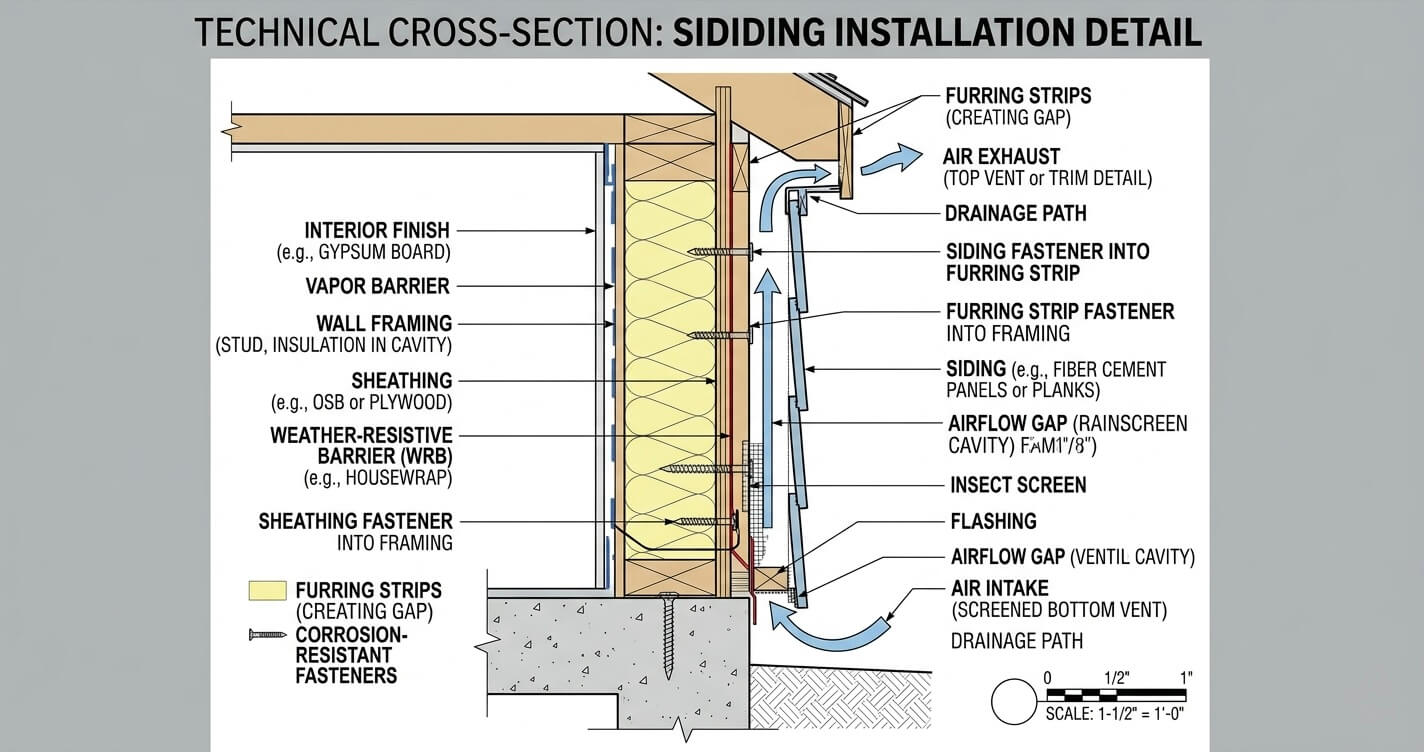
Vinyl siding installation is relatively straightforward and efficient. Lightweight panels, interlocking design systems, and minimal cutting requirements allow most projects to be completed within 3–5 days for a standard single-family home. This results in lower labor costs and reduced disruption for homeowners.
Fiber cement siding installation, however, is more technically demanding. Typical timelines range from 5–10+ days, depending on project scale and architectural complexity. The material is significantly heavier, requiring reinforced fastening systems, specialized cutting tools, and strict adherence to moisture management protocols such as flashing and weather barriers.
Technical Insight:
Fiber cement installation requires trained crews due to silica dust exposure during cutting, precise fastening patterns, and structural load considerations. Improper installation can compromise both performance and warranty coverage.
Because of these factors, labor costs are higher, but installation quality also has a greater impact on long-term durability.
From a budgeting perspective, homeowners should align siding investments with other major upgrades. Similar cost-planning considerations are addressed in projects like Kitchen Remodel Cost in McLean VA, where labor, materials, and sequencing significantly influence final pricing.
ROI: WHICH MATERIAL ADDS MORE VALUE?
Return on investment (ROI) is a central consideration when evaluating siding replacement in high-value markets like Northern Virginia.
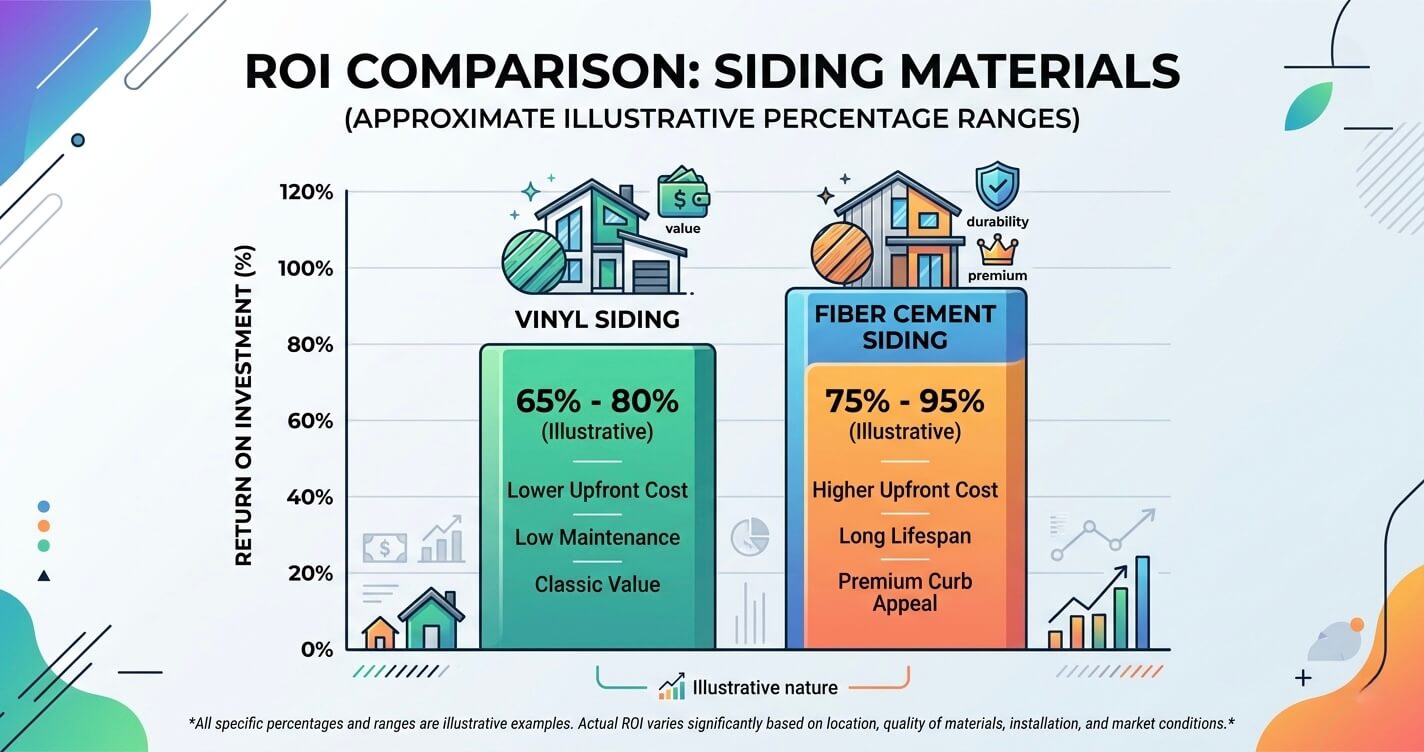
Fiber cement siding delivers an estimated 70–85% ROI at resale, making it one of the highest-performing exterior upgrades. [Source: HomeGuide]
ROI Comparison
Vinyl siding:
- Lower upfront cost with moderate ROI performance
- Attractive for short-term ownership or budget-conscious upgrades
Fiber cement siding:
- Higher initial investment with stronger resale impact
- Appeals to buyers seeking durability, aesthetics, and long-term value
Northern Virginia Market Context
In markets such as Fairfax County, McLean, and Arlington:
- Higher median home prices amplify the absolute return on exterior upgrades
- Buyers place greater emphasis on material quality and longevity
- Premium finishes can reduce time-on-market and negotiation pressure
From a strategic perspective, siding replacement should be evaluated alongside broader investment decisions. For example, comparing ROI against larger projects like Home Addition Cost in Northern Virginia helps homeowners prioritize upgrades that deliver both immediate usability and long-term financial return.
PROS & CONS SUMMARY
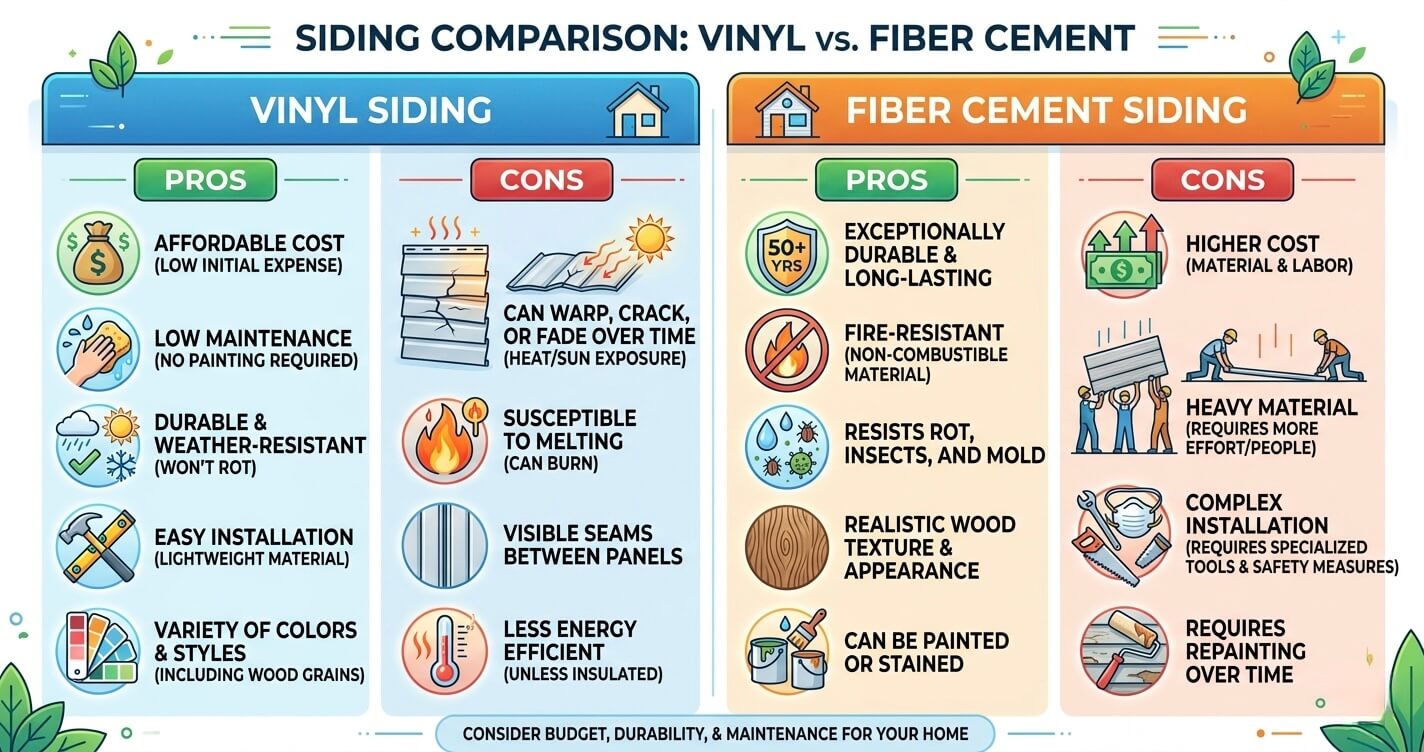
When evaluating vinyl vs. fiber cement siding in Northern Virginia, a structured comparison of advantages and limitations helps clarify which material aligns with your budget, performance expectations, and long-term ownership plans.
Vinyl Siding — Advantages
- Cost efficiency: Lower upfront investment makes it accessible for a wide range of homeowners
- Low maintenance: No repainting required; periodic cleaning is typically sufficient
- Installation speed: Lightweight panels allow faster project completion with reduced labor costs
Vinyl Siding — Limitations
- Durability constraints: More vulnerable to cracking in cold temperatures and warping under heat exposure
- Aesthetic limitations: May appear less refined in higher-end neighborhoods or alongside premium materials
- Impact resistance: Lower resistance to hail and debris compared to rigid cladding systems
Fiber Cement Siding — Advantages
- Exceptional durability: Engineered for long-term performance under temperature fluctuations and moisture exposure
- Fire and pest resistance: Non-combustible and resistant to termites and rot
- Architectural quality: Provides a high-end, wood-like finish suitable for upscale homes
Fiber Cement Siding — Limitations
- Higher initial cost: Material and labor expenses are significantly greater
- Maintenance cycle: Requires repainting approximately every 10–15 years
- Installation complexity: Demands specialized labor and precise installation practices
WHICH IS BEST FOR NORTHERN VIRGINIA HOMES?
Selecting the right siding material depends on how long you plan to stay in your home, your budget constraints, and the expectations of your local housing market in Northern Virginia.
Best Use Cases for Vinyl Siding
Vinyl siding is well-suited for:
- Budget-conscious homeowners seeking a cost-effective exterior upgrade
- Rental or investment properties where minimizing upfront cost is a priority
- Short-term ownership scenarios, where long-term durability is less critical than immediate affordability
In these cases, vinyl provides functional weather protection with minimal maintenance, making it a practical solution without significant capital investment.
Best Use Cases for Fiber Cement Siding
Fiber cement is the preferred choice for:
- Long-term homeowners planning to remain in the property for 10–20+ years
- High-value neighborhoods such as McLean and Arlington, where premium finishes influence resale value
- Homes requiring architectural consistency, particularly colonials, craftsman designs, and custom builds
In these scenarios, the higher upfront cost is offset by durability, reduced replacement frequency, and stronger buyer appeal, making fiber cement a strategic long-term investment.
FREQUENTLY ASKED QUESTIONS [FAQs]
Q1: Which is cheaper – vinyl or fiber cement siding?
Vinyl siding is significantly more affordable, typically ranging from $4–$9 per square foot, compared to $8–$14 per square foot for fiber cement. [Source: Jobsite Calcs]
Q2: Which siding lasts longer?
Fiber cement siding has a longer lifespan, typically lasting 30–50+ years, while vinyl siding generally lasts 20–30 years under standard conditions.
Q3: Which siding is better for Northern Virginia weather?
Fiber cement performs better in Northern Virginia due to its resistance to moisture, temperature fluctuations, and storm-related impacts, making it more reliable in humid and variable climates.
Q4: Does siding increase home value?
Yes. Fiber cement siding can deliver an estimated 70–85% return on investment, particularly in higher-value housing markets. [Source: HomeGuide]
Q5: Is vinyl siding worth it?
Yes. Vinyl siding remains a cost-effective solution for homeowners prioritizing affordability, low maintenance, and faster installation timelines, especially in short-term ownership scenarios.
To Sum Up
Choosing between vinyl vs fiber cement siding in Northern Virginia ultimately comes down to balancing upfront cost with long-term performance.
Vinyl siding offers a practical, budget-friendly solution with minimal maintenance and fast installation, ideal for homeowners prioritizing short-term value. Fiber cement, on the other hand, delivers superior durability, higher resale impact, and a premium aesthetic that aligns with the expectations of Northern Virginia’s high-value housing market.
In a region where both climate conditions and property values demand higher performance standards, selecting the right siding material is a decision that affects not only your home’s protection, but also its long-term market positioning.
US Home Design Build helps homeowners across Northern Virginia select, design, and install siding systems engineered for durability, compliance, and long-term value.
703-202-3520 | www.ushdb.com | McLean, VA