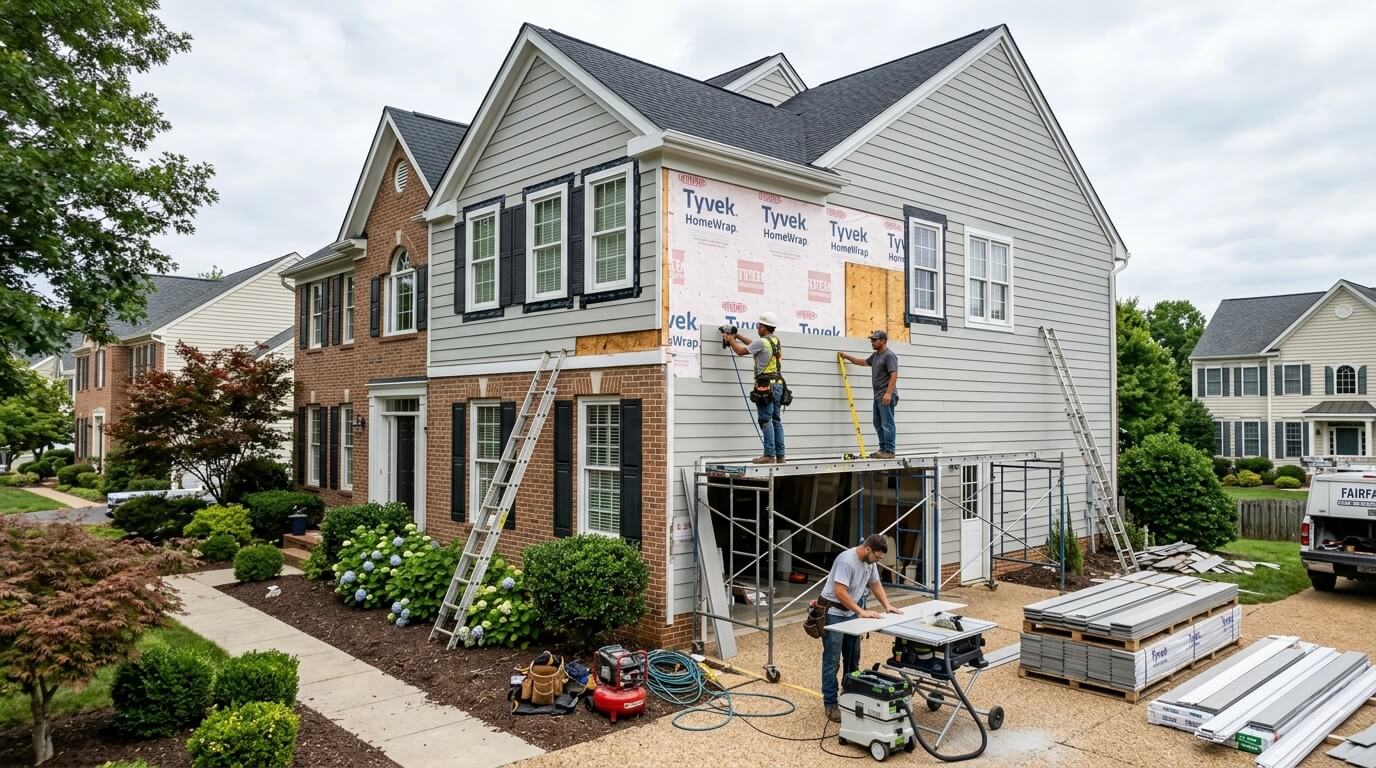
A siding permit (Fairfax County VA) is one of the most misunderstood parts of exterior home remodeling because the answer depends entirely on the scope of work involved. Many homeowners assume siding replacement is purely cosmetic, but in Fairfax County, exterior renovation work can fall under building code, zoning, moisture-management, and structural permit requirements depending on how extensive the project becomes.
Fairfax County Land Development Services explains that certain exterior replacement projects may qualify for exemption, while broader reconstruction work still requires review and permitting. Specifically, Fairfax County states that “re-siding of building/home with similar material” is generally exempt from permit requirements. [Source: Fairfax County Land Development Services]
That exemption, however, applies primarily to direct replacement scenarios where no structural or wall-system modifications occur. The moment siding work involves damaged framing, insulation upgrades, weather-resistant barrier replacement, sheathing reconstruction, or changes to exterior wall assemblies, permit requirements can change significantly.
This distinction matters throughout Fairfax County, McLean, Vienna, Arlington, Alexandria, and Northern Virginia, where many homes built between the 1960s and 1990s now require substantial exterior modernization due to aging materials and hidden moisture issues.
This guide explains exactly when a siding permit in Fairfax County VA is required, what exemptions homeowners should understand, how Fairfax County’s PLUS permitting system works, and what mistakes to avoid before beginning exterior renovation work.
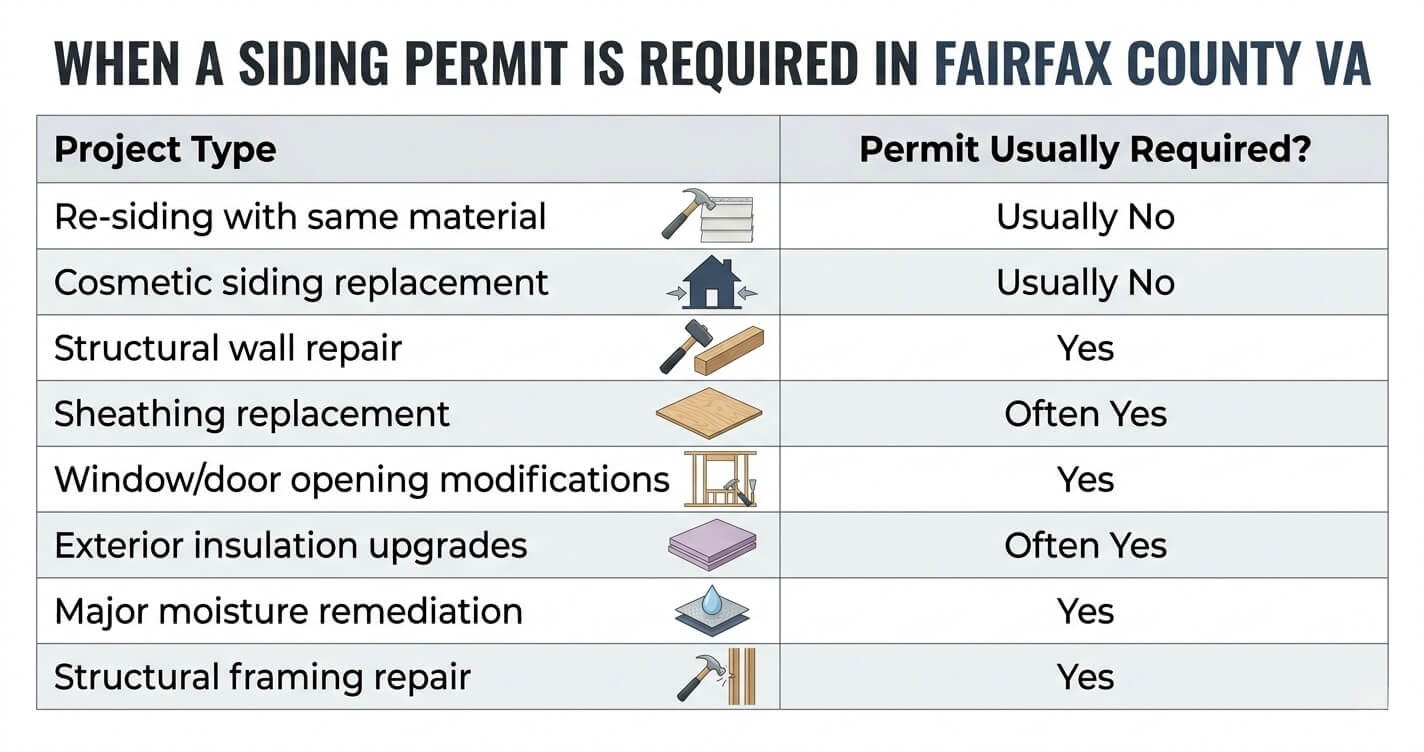
WHEN A SIDING PERMIT IS NOT REQUIRED IN FAIRFAX COUNTY VA
In many situations, homeowners can replace siding in Fairfax County without obtaining a building permit, but only when the project qualifies as a direct replacement using substantially similar materials and construction methods.
According to Fairfax County Land Development Services, “re-siding of building/home with similar material” is generally exempt from permit requirements. [Source: Fairfax County LDS]
In practical terms, this usually includes projects such as:
- replacing vinyl siding with new vinyl siding,
- replacing fiber cement siding with comparable fiber cement products,
- replacing damaged siding panels without altering the wall structure,
- or performing cosmetic exterior refreshes that do not affect framing or building systems.
The exemption generally applies only when:
- no framing modifications occur,
- no windows or door openings are changed,
- no insulation systems are upgraded,
- no moisture-damaged sheathing requires reconstruction,
- and no structural repairs become necessary after demolition begins.
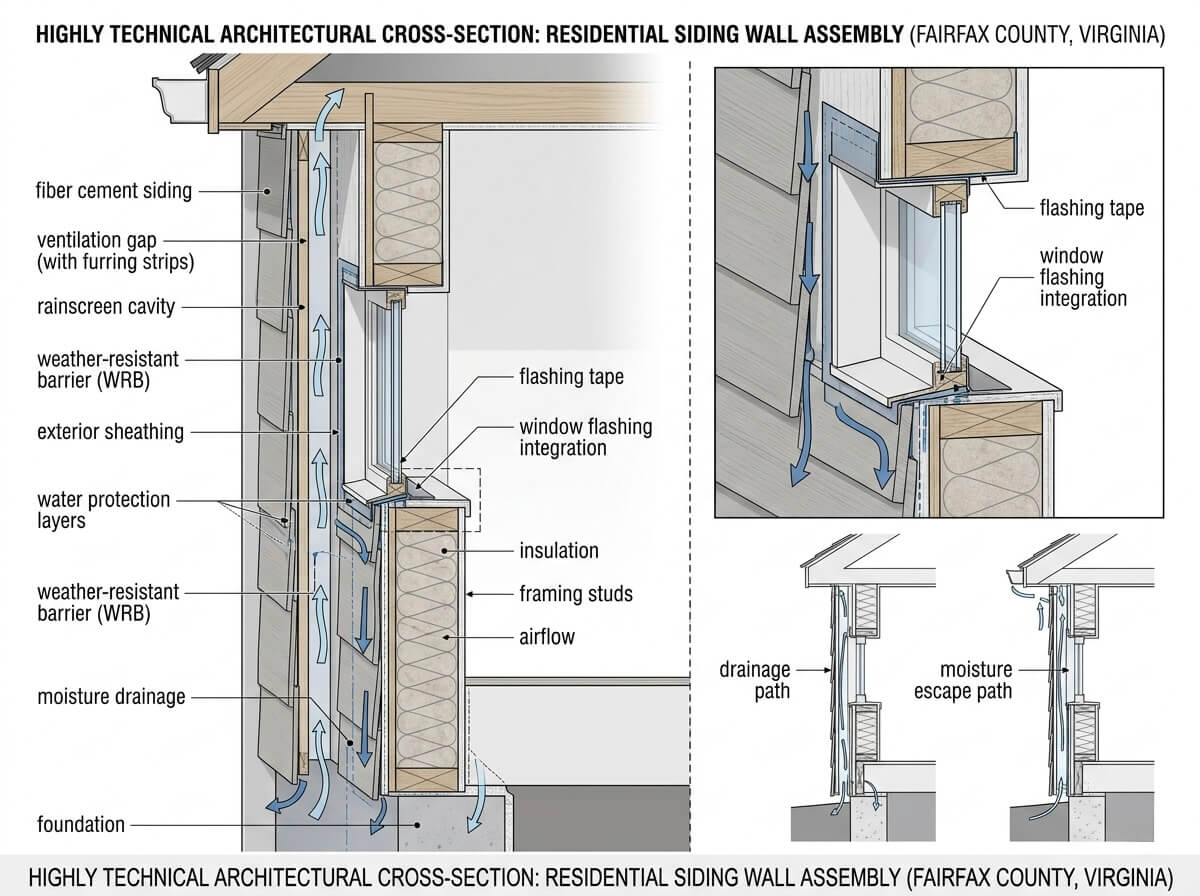
Technically, siding is far more than a decorative exterior finish. Modern siding systems function as part of the building envelope and contribute to:
- moisture management,
- thermal performance,
- drainage control,
- UV resistance,
- and long-term wall durability.
Most modern exterior systems also incorporate:
- weather-resistant barriers (WRB),
- flashing assemblies,
- rainscreen systems,
- insulation backing layers,
- and ventilation gaps designed to reduce moisture accumulation.
One of the biggest issues in Fairfax County homes built between the 1960s and 1990s is hidden water intrusion behind aging siding systems. Once siding is removed, contractors frequently uncover deteriorated sheathing, rotted framing, or improperly flashed penetrations that may trigger permit requirements once structural repair becomes necessary.
Many homeowners discover these hidden envelope and framing issues during broader projects like Full Home Renovation McLean VA, where exterior modernization exposes long-term structural deficiencies that were previously concealed behind older siding systems.
WHEN A SIDING PERMIT IS REQUIRED IN FAIRFAX COUNTY VA
While some siding replacement projects qualify for exemption, many exterior renovation projects in Fairfax County do require permits once structural, energy, or wall-system modifications are involved.
One of the most common permit-triggering situations occurs when siding removal exposes hidden structural deterioration. If contractors discover:
- rotted framing,
- deteriorated sheathing,
- moisture-damaged wall assemblies,
- or compromised structural members,
- the repair work may require a residential building permit before reconstruction can continue.
Permits are also commonly required when homeowners modify exterior wall openings. This includes:
- enlarging windows,
- changing door dimensions,
- adding new openings,
- or reframing exterior walls.
Fairfax County identifies structural alterations and renovation work as permit-regulated construction activities. [Source: Fairfax County Land Development Services]
Another increasingly common trigger involves energy-envelope upgrades. Projects that incorporate:
- continuous exterior insulation,
- redesigned wall assemblies,
- advanced rainscreen systems,
- or energy-efficiency improvements
may require building code review for compliance with current energy and moisture-control standards.
Historic districts and HOA-controlled communities can add another layer of review. Architectural approval requirements imposed by HOAs or historic overlay districts are completely separate from county permit requirements, and homeowners often need both approvals before work begins.
Large-scale exterior reconstruction projects, including:
- rebuilding wall sections,
- replacing major sheathing systems,
- correcting extensive water damage,
- or performing structural moisture remediation —
typically fall under full code review.
Once exterior wall assemblies are extensively opened, projects may become subject to:
- Virginia Uniform Statewide Building Code (USBC),
- energy code compliance,
- flashing and waterproofing standards,
- and structural inspection requirements.
Virginia enforces the Uniform Statewide Building Code statewide for residential construction and alterations. [Source: Virginia Department of Housing & Community Development]
For homeowners planning broader exterior or structural renovation work, understanding the complete Remodeling Permit Fairfax County process before demolition begins can prevent major delays, redesign costs, and code-compliance issues later in the project.
FAIRFAX COUNTY PLUS SYSTEM: HOW SIDING PERMITS ARE FILED
In Fairfax County, all residential permit applications, including projects involving exterior renovations and siding-related structural work, are processed through the PLUS (Planning and Land Use System) portal. The system serves as the county’s centralized platform for permit submission, plan review, inspections, and project tracking. [Source: Fairfax County PLUS Portal]
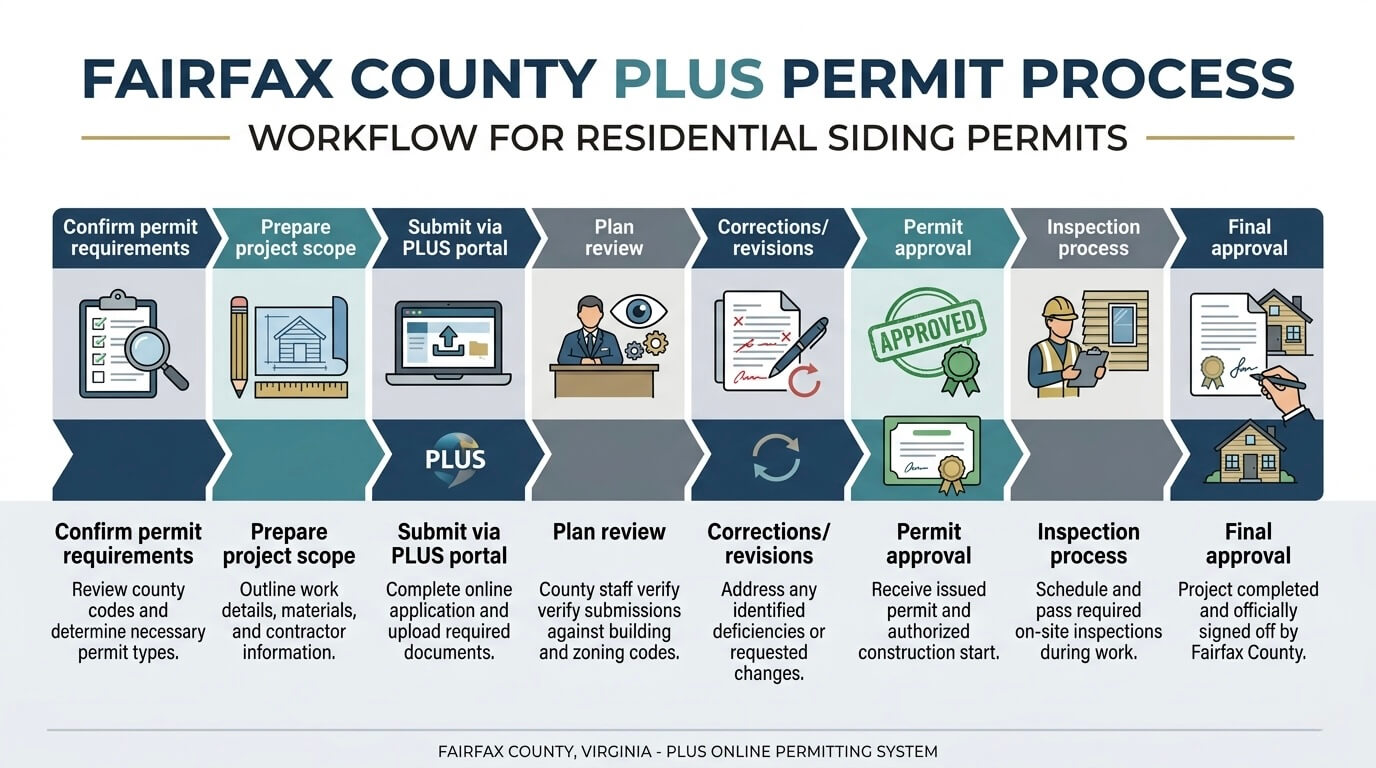
Both homeowners and contractors can submit permit applications through PLUS. However, for projects involving structural repairs, exterior wall modifications, moisture remediation, or broader building-envelope reconstruction, Fairfax County strongly encourages the use of licensed contractors familiar with local review standards and code requirements.
A typical siding-related permit submission may include:
- Detailed project description
- Property and parcel information
- Virginia contractor license information
- Scope drawings or wall-section details (when structural work is involved)
- Product specifications for siding, WRB systems, flashing, or insulation assemblies
- Site photographs or supporting documentation
Simple residential alteration permits may be reviewed within days or a few weeks, while more complex exterior reconstruction projects can require extended review periods depending on structural engineering, zoning review, or plan deficiencies.
Permit timelines are heavily influenced by:
- Project complexity
- Seasonal permit volume
- Zoning review requirements
- Accuracy of submitted plans
- Structural scope of work
Exterior renovations that alter setbacks, building footprint, lot coverage, or structural wall systems may trigger both zoning and building review simultaneously.
Experienced contractors familiar with Fairfax County’s permitting workflow can often prevent avoidable delays and revision requests. Homeowners planning broader exterior remodeling projects should also review our guide on How to Choose the Right Contractor in Northern Virginia before beginning permit submission.
COMMON SIDING MATERIALS & CODE CONSIDERATIONS
Modern siding systems in Northern Virginia serve a far greater role than exterior aesthetics alone. In current residential construction standards, siding functions as a critical component of the building envelope, managing moisture control, drainage, thermal protection, and long-term wall durability.
Below are the most common siding materials used throughout Fairfax County and their primary technical considerations:
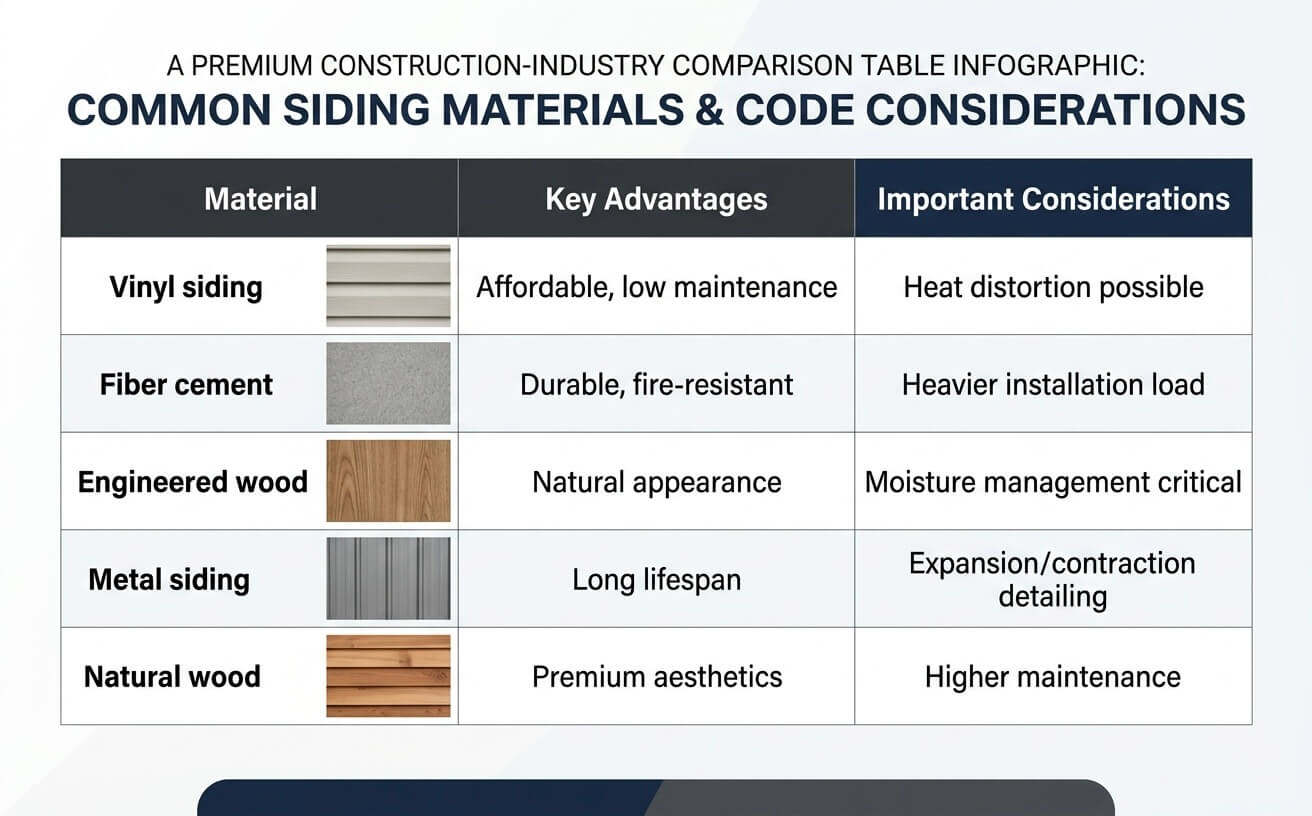
Improper siding installation is often less about appearance and more about hidden building-envelope failures. Poor flashing integration, interrupted drainage planes, insufficient ventilation gaps, or incorrectly installed weather-resistant barriers (WRBs) can trap moisture behind exterior walls, leading to mold growth, sheathing deterioration, framing damage, and insulation failure over time.
Modern code-compliant siding assemblies frequently involve:
- Continuous flashing around windows and penetrations
- Drainage plane continuity
- Vapor and moisture management layers
- Proper fastening schedules
- Exterior insulation attachment methods
- Rainscreen or ventilation-gap detailing
The International Residential Code (IRC) treats exterior wall coverings as part of the overall weather-resistive envelope and establishes standards for moisture control and flashing integration. [Source: International Residential Code (IRC)]
Siding integration becomes even more technically important during vertical additions and major structural renovations. Homeowners planning expansion projects should also review our guide on Second Story Addition in Northern Virginia to better understand how exterior wall systems interact with larger structural modifications.
COMMON MISTAKES HOMEOWNERS MAKE WITH SIDING PERMITS
One of the most common siding permit mistakes in Fairfax County VA is assuming that all siding projects are automatically exempt from permitting requirements. While direct replacement using similar materials is often exempt, the situation changes immediately once structural repair, moisture remediation, insulation upgrades, or wall modifications become part of the project scope.
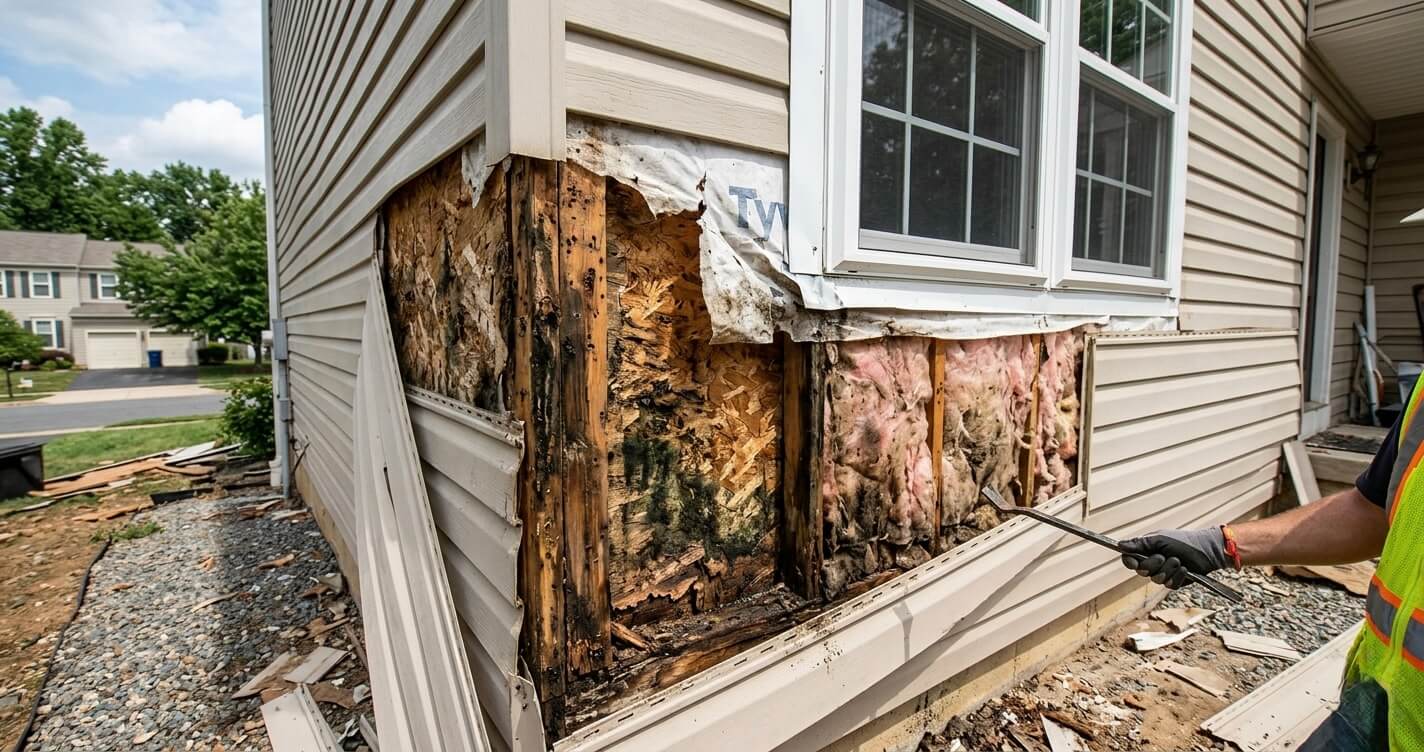
Another major mistake is beginning demolition before verifying permit requirements. Many homeowners only discover hidden water intrusion, deteriorated sheathing, or rotted framing after existing siding has been removed. At that point, structural repairs may legally require permit approval before work can continue.
Hiring unlicensed contractors is another recurring issue in Northern Virginia exterior remodeling projects. Contractors without proper licensing or permit experience may incorrectly advise homeowners that permits are unnecessary, creating significant liability if violations are later discovered during resale inspections, insurance claims, or county enforcement actions.
Homeowners also frequently confuse HOA approval with county permit approval. HOA architectural approval does not replace Fairfax County code compliance or building permit requirements. Both processes operate independently.
Unpermitted exterior or structural work can create serious long-term risks, including:
- Failed home inspections during resale
- Insurance coverage disputes
- Code enforcement violations
- Delayed property transactions
- Costly corrective reconstruction
Fairfax County Code Compliance may issue violations when unpermitted work is identified through inspections, complaints, or property investigations. [Source: Fairfax County Code Compliance]
Community discussions across Northern Virginia homeowner forums and Reddit threads also reveal widespread confusion around siding permit exemptions. Many homeowners report receiving conflicting verbal guidance from contractors, reinforcing the importance of verifying permit requirements directly through Fairfax County Land Development Services before work begins.
HOW TO PLAN A SIDING REPLACEMENT PROJECT CORRECTLY
A successful siding replacement project in Fairfax County begins long before demolition starts. Proper planning is critical because modern siding systems are directly connected to moisture management, wall durability, structural protection, and long-term building-envelope performance.
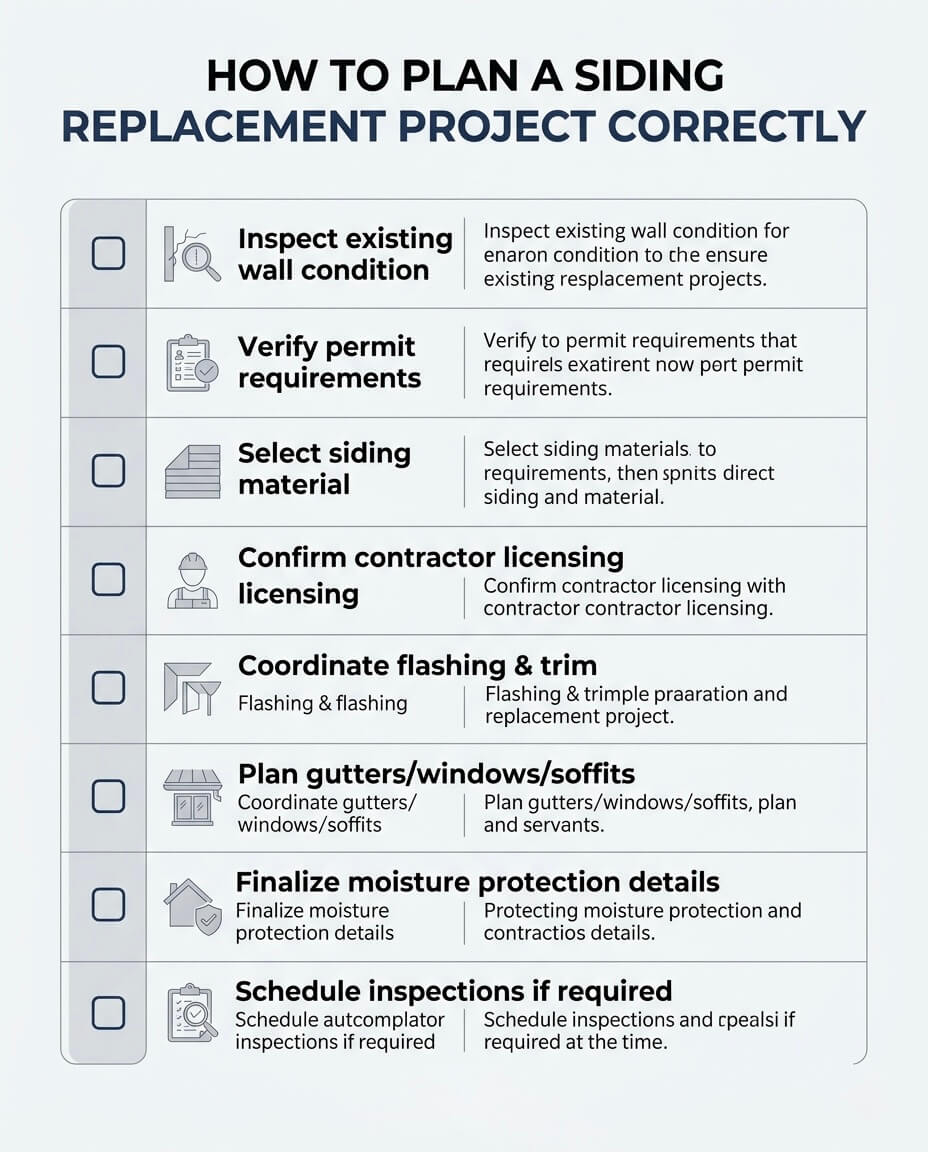
Step 1 — Assess Existing Conditions
Before selecting materials or requesting contractor estimates, homeowners should inspect the current wall assembly for:
- Water intrusion damage
- Deteriorated sheathing
- Failed flashing systems
- Mold or moisture staining
- Framing deterioration around windows and penetrations
Homes built throughout Fairfax County between the 1960s and 1990s frequently conceal hidden envelope damage behind older siding systems, particularly around improperly flashed windows and roof-wall transitions.
Step 2 — Confirm Permit Requirements Early
Homeowners should verify permit requirements directly with Fairfax County Land Development Services (LDS) before demolition begins. [Source: Fairfax County Land Development]
This step is especially important if the project may involve structural repair, insulation upgrades, sheathing replacement, or exterior wall reconstruction.
Step 3 — Finalize Material Selection
Material decisions should balance:
- Durability
- Moisture resistance
- Maintenance requirements
- Thermal performance
- Long-term climate suitability for Northern Virginia
Step 4 — Verify Contractor Licensing
Always confirm:
- Virginia Class A contractor license
- General liability insurance
- Workers’ compensation coverage
- Local Fairfax County project experience
Step 5 — Coordinate Exterior Details Before Installation
Proper siding integration depends heavily on coordinating:
- Flashing systems
- Trim details
- Gutters and soffits
- Window integration
- Drainage transitions
Most siding failures originate not from the siding material itself, but from improper moisture detailing around penetrations and transition points.
The same principle applies across all remodeling projects: proper planning before demolition prevents the majority of costly mid-project surprises. Homeowners planning broader renovations can also review our “Kitchen Remodel Before After Fairfax VA” project breakdown for a real-world example of how early planning dramatically improves construction outcomes.
FAQs [SIDING PERMIT FAIRFAX COUNTY VA]
Q1: Do I need a siding permit in Fairfax County VA?
Sometimes. Fairfax County generally exempts “re-siding of building/home with similar material,” but permits may still be required if structural repairs, insulation upgrades, wall modifications, sheathing replacement, or major exterior reconstruction are involved.
Q2: Can I replace vinyl siding without a permit?
In many cases, yes. Direct replacement of vinyl siding with similar material is often permit-exempt if no framing, sheathing, insulation, or structural wall modifications are involved. However, hidden damage discovered during demolition can change permit requirements quickly.
Q3: What happens if hidden wall damage is discovered?
If siding removal exposes rotted framing, deteriorated sheathing, water intrusion damage, or structural deterioration, Fairfax County may require building permits for repair work before reconstruction can continue.
Q4: Does HOA approval replace county permits?
No, HOA approval and Fairfax County permit approval are entirely separate processes. A project may receive HOA approval but still require county permits and inspections for code compliance.
Q5: Who should pull the siding permit?
Licensed contractors familiar with Fairfax County’s PLUS permitting system typically handle permit applications for projects involving structural work, wall reconstruction, or code-related exterior modifications. Experienced contractors also help reduce delays caused by incomplete submissions or failed inspections.
FINAL THOUGHTS
Whether a siding permit (Fairfax County VA) is required depends less on the siding material itself and far more on the scope of work occurring behind the exterior surface.
Simple like-for-like siding replacement projects may qualify for permit exemption. However, once a project involves structural repair, sheathing replacement, insulation upgrades, wall modifications, moisture remediation, or broader exterior reconstruction, Fairfax County permit and inspection requirements can change significantly.
The safest approach is always to confirm permit requirements before demolition begins — not after hidden conditions are exposed during construction.
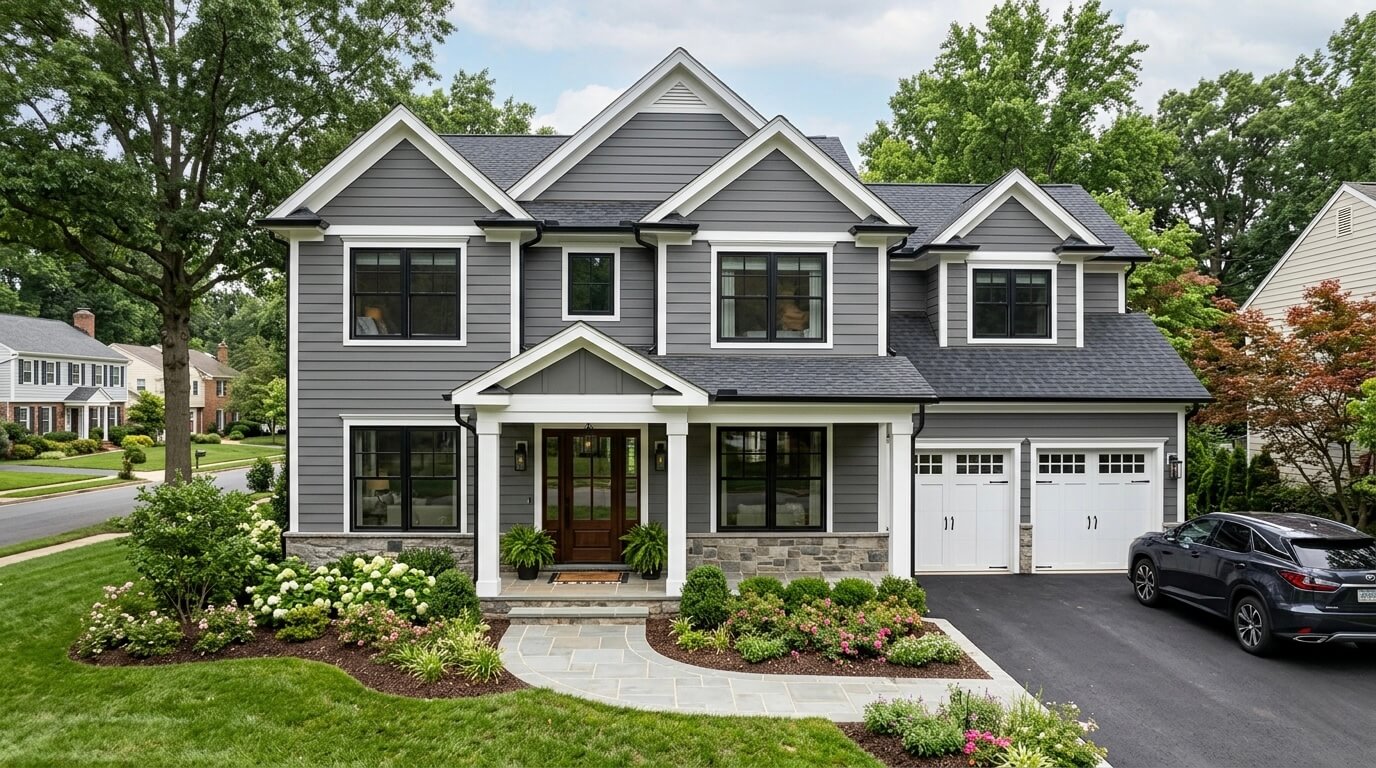
US Home Design Build works with homeowners across Fairfax County, McLean, Vienna, Arlington, Alexandria, and throughout Northern Virginia to plan and execute exterior renovation projects that are properly scoped, code-compliant, and built for long-term durability.
703-202-3520 | US Home Design Build | 8200 Greensboro Dr #900, McLean 22102