
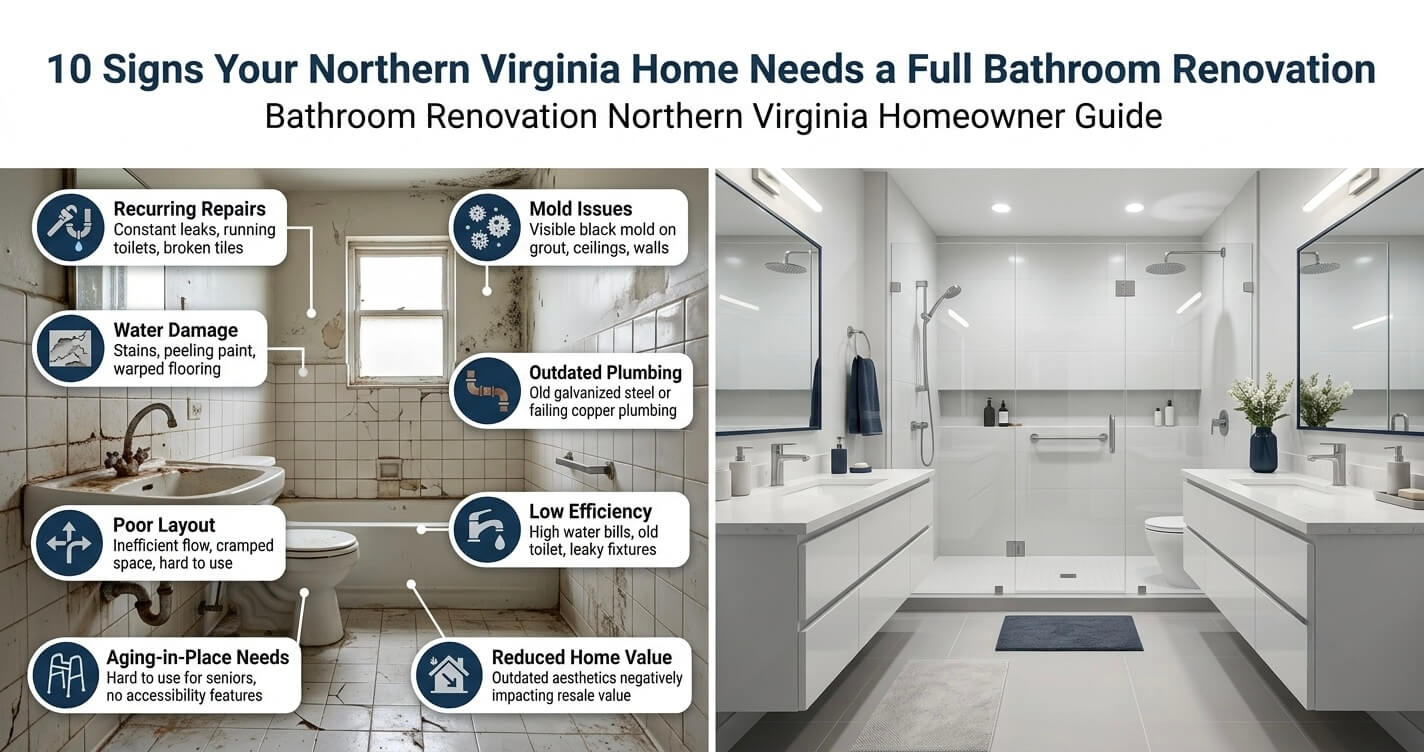
Bathrooms are one of the most heavily used spaces in any home, which means they often show signs of wear and functional decline long before other rooms do. In many Northern Virginia communities, including Fairfax, McLean, Vienna, Burke, Reston, and Falls Church, homeowners are living in houses that were built decades ago. While these homes may have strong structural foundations, many still contain aging bathrooms with outdated layouts, deteriorating plumbing systems, insufficient ventilation, and finishes that no longer meet modern expectations.
According to the Harvard Joint Center for Housing Studies, Americans spent approximately $603 billion on home remodeling and repair projects in 2024, reflecting continued investment in improving existing homes rather than relocating.
One challenge many homeowners face is determining when routine maintenance stops being cost-effective. Replacing a faucet, regrouting tile, or repainting walls can temporarily improve appearance and functionality. However, when underlying issues such as moisture intrusion, plumbing deterioration, recurring mold growth, poor layouts, or water damage begin to accumulate, a series of small repairs can quickly become more expensive than a comprehensive renovation.
A professional bathroom renovation Northern Virginia homeowners invest in is not simply about updating aesthetics. It often addresses hidden infrastructure problems, improves water efficiency, enhances ventilation, increases storage, supports aging-in-place goals, and helps preserve long-term property value.
At US Home Design Build, our design-build team has worked with homeowners throughout Northern Virginia who initially planned minor repairs but later discovered that a full renovation offered a more practical and cost-effective long-term solution. Understanding the warning signs early can help homeowners avoid escalating repair costs while making informed decisions about future improvements.
If you’re already considering updates to an aging bathroom, exploring professional bathroom remodeling Northern Virginia services can help you evaluate whether repairs or a full renovation make the most financial sense.
Sign #1: You Keep Paying for the Same Repairs
If the same bathroom problems continue returning every few months, a full renovation may be more cost-effective than ongoing repairs. Repeated leaks, cracked grout, loose fixtures, damaged caulking, and recurring plumbing issues often indicate underlying problems that cosmetic fixes cannot permanently solve. When repair costs begin accumulating year after year, homeowners should evaluate whether renovation offers a better long-term return on investment.
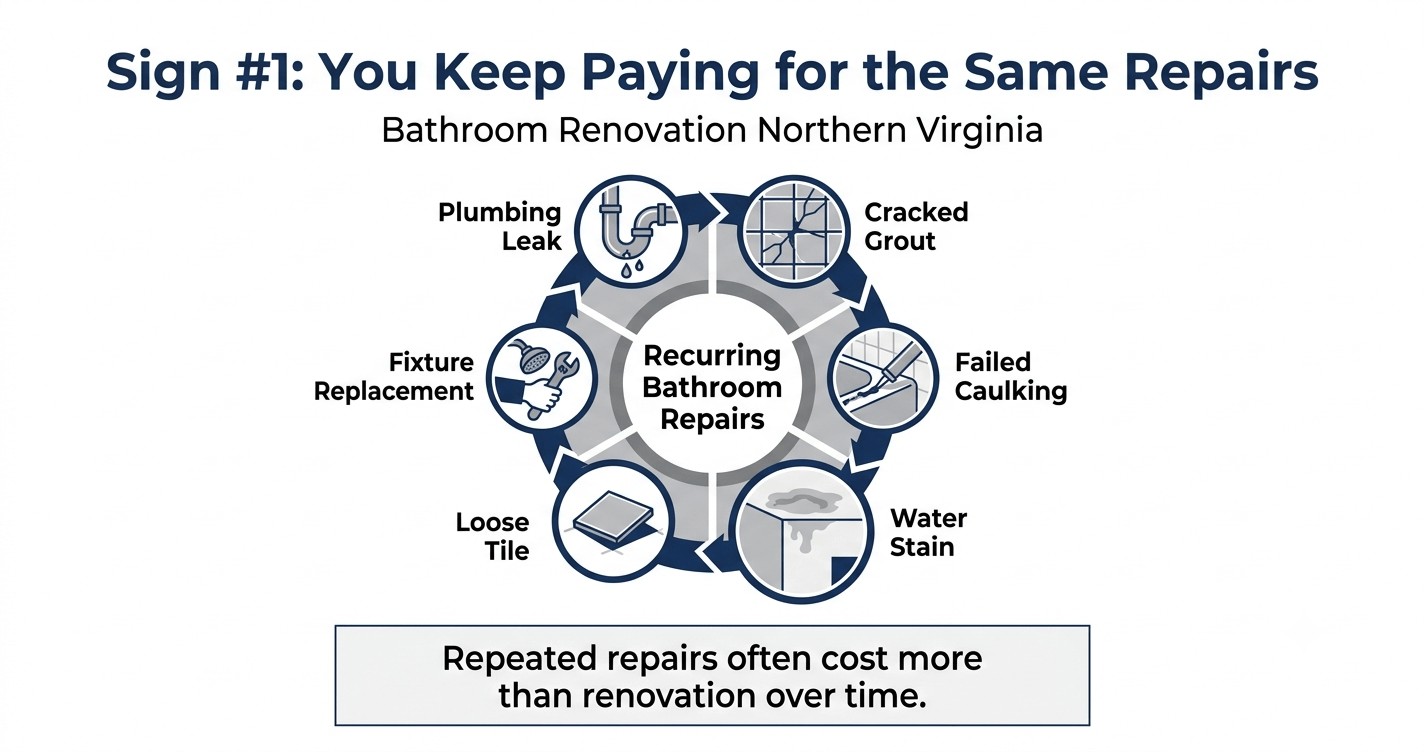
Many Northern Virginia homeowners fall into what contractors often call the “repair cycle.” A faucet begins leaking, so it gets replaced. A few months later, grout starts cracking around the shower enclosure. Shortly afterward, water stains appear on a nearby wall or ceiling. Individually, these issues may seem minor. Together, however, they often indicate a larger system failure that should not be ignored.
One common example involves aging plumbing systems found in older homes throughout Fairfax County, Vienna, and Falls Church. While replacing an individual fixture may temporarily resolve a leak, deteriorating supply lines hidden behind walls can continue causing moisture-related damage throughout the bathroom.
Repeated grout and tile failures can also signal structural movement, inadequate waterproofing, or moisture intrusion beneath finished surfaces. In these situations, homeowners may spend hundreds or even thousands of dollars on recurring repairs without addressing the actual source of the problem.
The National Association of Home Builders (NAHB) consistently identifies bathroom remodeling among the most common interior renovation projects undertaken by homeowners, largely because bathrooms contain numerous systems, including plumbing, electrical, ventilation, waterproofing, and finish materials, that naturally age over time.
Warning Signs That Repairs Are Becoming a Temporary Fix
Homeowners should consider a professional renovation assessment if they notice:
- The same plumbing leak occurring repeatedly.
- Grout cracking shortly after repairs.
- Caulking requiring constant replacement.
- Water stains returning after previous repairs.
- Frequent fixture replacements.
- Soft flooring developing near tubs or showers.
- Rising annual maintenance expenses.
In many cases, these recurring issues cost significantly more over a five- to ten-year period than a properly planned bathroom renovation.
The Hidden Cost of Delayed Renovation
A common mistake homeowners make is evaluating each repair independently rather than looking at the cumulative cost. Spending a few hundred dollars several times per year may not feel significant in the moment. However, repeated repairs often fail to address hidden water damage, aging plumbing, or deteriorating subfloor materials that continue worsening behind finished surfaces.
Homeowners who are evaluating renovation budgets may also find it helpful to review a detailed bathroom remodel cost Northern Virginia guide to better understand how project scope, materials, plumbing modifications, and design choices influence overall investment.
Expert Insight
From a design-build perspective, recurring repairs typically indicate that one or more core systems within the bathroom have reached the end of their practical lifespan. When waterproofing, plumbing, ventilation, and finishes begin failing simultaneously, renovation frequently becomes the more financially responsible solution.
Sign #2: Your Bathroom Layout No Longer Works for Your Family
A bathroom that feels cramped, inefficient, or difficult to use often has a layout problem rather than a cosmetic problem. If family members constantly compete for space, storage is inadequate, or daily routines feel inconvenient, a renovation may provide solutions that repairs cannot achieve. Functional improvements are often among the most valuable benefits of a full bathroom renovation.
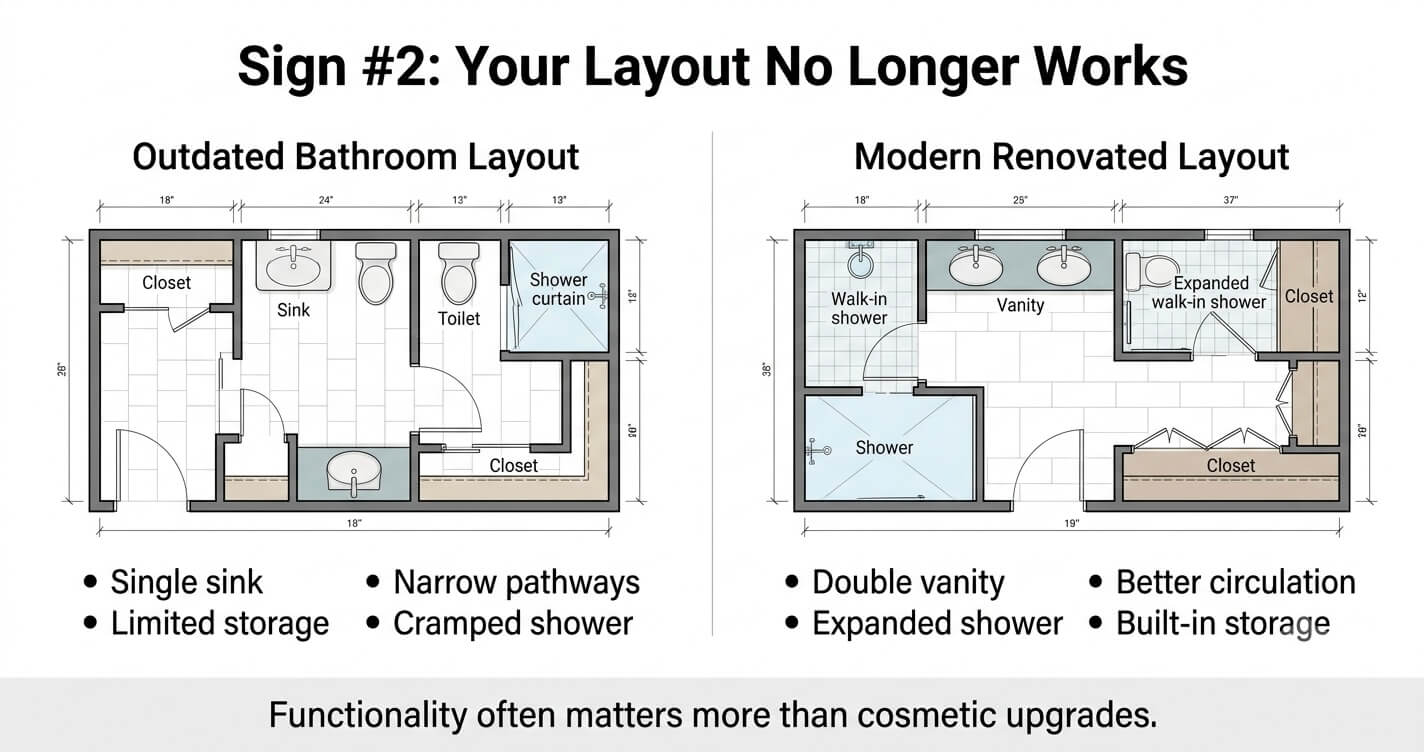
Many bathrooms in older Northern Virginia homes were designed for households with different lifestyle needs than today’s families. What worked well for a family in the 1970s or 1980s may no longer support modern routines, storage demands, accessibility requirements, or multi-user functionality.
As families grow and lifestyles change, homeowners frequently discover that their bathroom’s physical layout creates daily frustration. The room may technically function, but inefficient design can negatively impact comfort and convenience every day.
For example, a single-sink vanity may create bottlenecks during busy mornings. Limited storage can lead to cluttered countertops. Small shower enclosures may feel restrictive compared to modern preferences. Poor fixture placement can make movement difficult, especially when multiple family members share the space.
Common Layout Problems in Older Northern Virginia Bathrooms
Some of the most common layout-related complaints include:
- Insufficient storage space.
- Narrow walkways.
- Small shower enclosures.
- Oversized bathtubs that rarely get used.
- Lack of double vanities.
- Poor lighting distribution.
- Awkward door swings.
- Limited accessibility.
These issues are especially common in homes built several decades ago throughout Fairfax County, Annandale, Burke, Reston, and Vienna.
When Renovation Creates More Value Than Cosmetic Updates
Replacing tile, painting walls, or upgrading fixtures may improve appearance, but these changes do little to improve functionality if the room’s layout remains inefficient.
A full renovation allows homeowners to:
- Reconfigure floor plans.
- Expand shower areas.
- Add storage solutions.
- Improve lighting placement.
- Install dual-sink vanities.
- Enhance accessibility.
- Create better traffic flow.
These improvements can significantly improve daily quality of life while also increasing buyer appeal in competitive Northern Virginia real estate markets.
According to the National Association of Realtors (NAR), bathroom upgrades remain among the renovation projects that buyers consistently evaluate when comparing homes. Functional layouts, modern finishes, and updated features often contribute positively to perceived property value.
Local Consideration for Northern Virginia Homeowners
In high-value housing markets such as McLean, Great Falls, Vienna, and Fairfax, homeowners often prioritize renovations that improve both daily usability and long-term resale potential. Modern bathroom layouts featuring larger showers, improved storage, better lighting, and accessible design features frequently align more closely with current buyer expectations than the original layouts found in older homes.
If your bathroom functions adequately but creates daily frustration due to poor space planning, it may be worthwhile to discuss layout improvement options with an experienced design-build team before investing further in cosmetic upgrades. In many cases, redesigning the space can deliver far greater long-term value than simply replacing finishes while keeping an outdated floor plan intact.
Sign #3: Visible Water Damage Is Appearing
Visible water damage is often a symptom of a larger hidden problem. Stained ceilings, peeling paint, warped flooring, soft drywall, or damaged trim frequently indicate that moisture is escaping areas designed to remain dry. When water damage becomes visible, homeowners should assume the issue has already existed behind surfaces for some time.
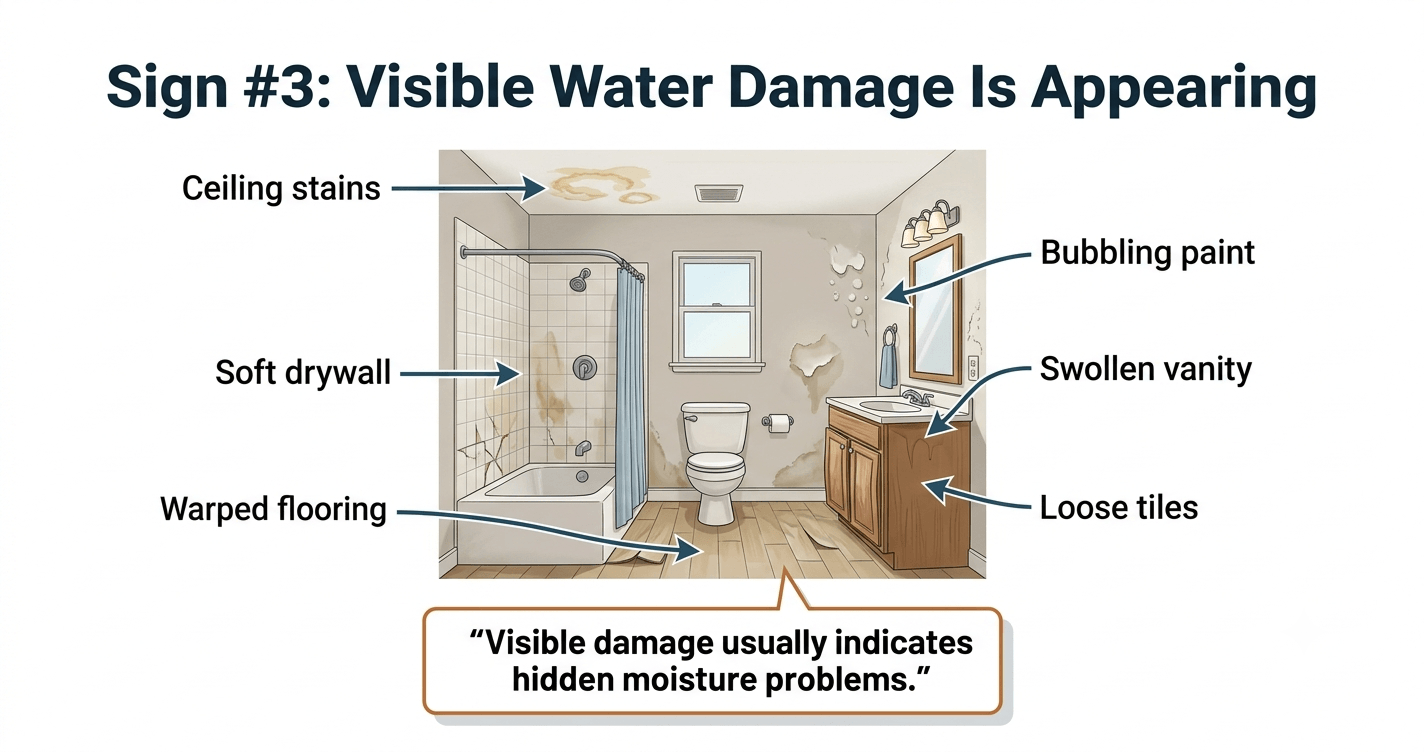
Water is one of the most destructive forces affecting residential interiors. Unlike cosmetic wear and tear, moisture problems can compromise drywall, insulation, framing, subflooring, cabinetry, and even structural components if left unaddressed.
Many homeowners initially focus on treating the visible symptom, a stained ceiling, cracked paint, or swollen baseboard. However, these signs often represent only a small portion of the actual damage. In bathrooms, moisture frequently travels behind walls, beneath flooring systems, and around plumbing penetrations before becoming noticeable.
For homeowners considering a bathroom renovation Northern Virginia project, visible water damage is often one of the clearest indicators that a more comprehensive solution may be necessary.
Common Signs of Water Damage in Bathrooms
Some of the most common warning signs include:
- Yellow or brown ceiling stains.
- Bubbling or peeling paint.
- Soft drywall around showers and tubs.
- Warped or buckling flooring.
- Swollen vanity cabinets.
- Loose tile installations.
- Deteriorating trim or baseboards.
- Persistent musty odors.
While any one of these issues deserves attention, multiple symptoms occurring simultaneously typically suggest ongoing moisture intrusion.
Why Water Damage Often Goes Undetected
Bathrooms contain numerous areas where water can escape without being immediately visible. Common sources include:
- Failed shower waterproofing systems.
- Leaking plumbing connections.
- Cracked grout lines.
- Improperly sealed fixtures.
- Damaged tub surrounds.
- Worn caulking joints.
- Ventilation failures causing excessive condensation.
In older Northern Virginia homes, especially those built before modern waterproofing standards became common, hidden moisture issues are particularly prevalent.
According to the U.S. Environmental Protection Agency (EPA), moisture control is one of the most important factors in preventing building deterioration and indoor environmental problems. Excess moisture can damage construction materials and create conditions that support mold growth.
Water Damage vs. Surface Wear
Homeowners sometimes confuse water damage with normal aging. The difference is important.
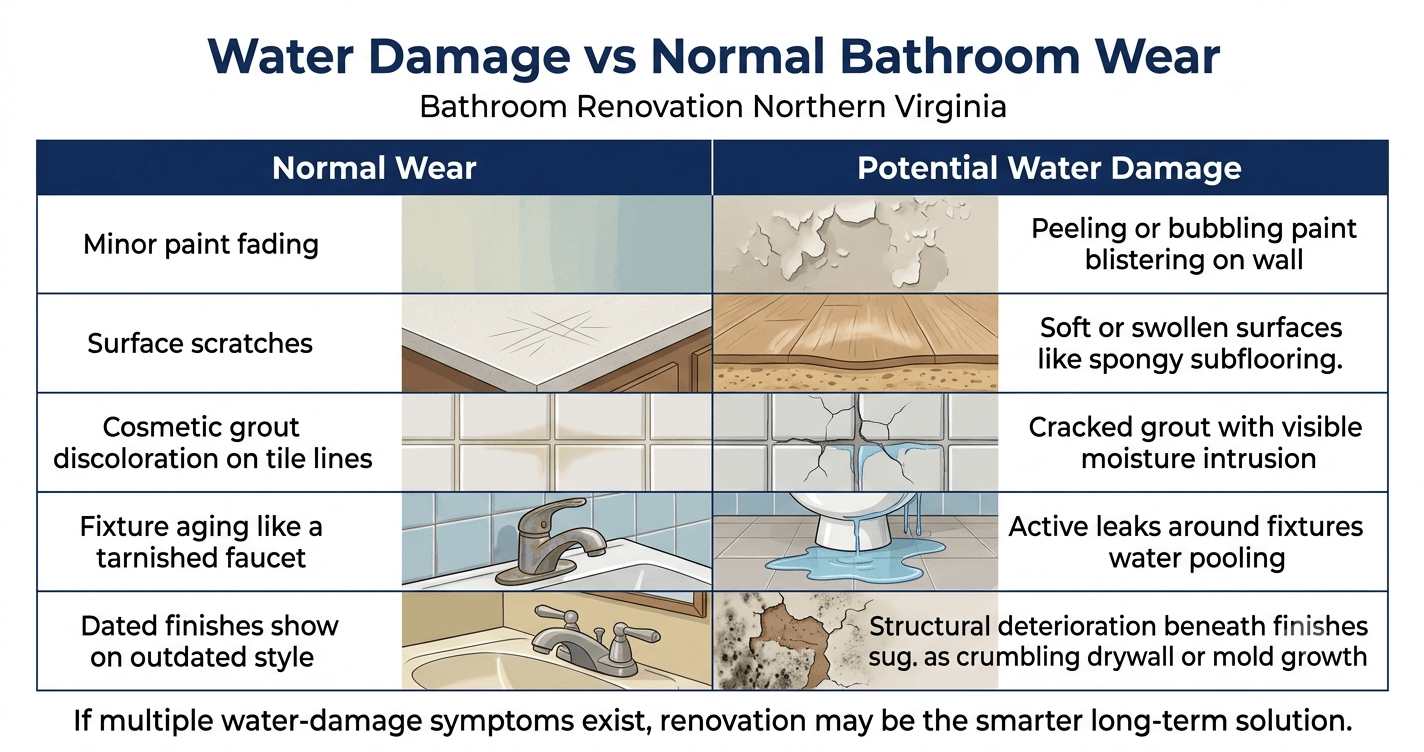
When moisture has already begun affecting walls, flooring, or cabinetry, simply replacing finishes rarely solves the underlying issue.
Local Considerations in Northern Virginia
Northern Virginia’s humid summers can intensify moisture-related problems, particularly in bathrooms with older ventilation systems. Homes throughout Fairfax County, Burke, Annandale, Reston, and Falls Church often contain bathrooms that were designed before current moisture-management standards became common.
As a result, water damage discovered during a renovation frequently reveals hidden issues that homeowners were unaware existed.
Expert Insight
From a design-build perspective, visible water damage should never be viewed as merely a cosmetic concern. Once moisture reaches structural materials, delaying corrective action typically increases both repair complexity and overall project costs.
Sign #4: Mold Keeps Coming Back
Recurring mold growth is usually a sign that the underlying moisture source has not been resolved. While cleaning visible mold may temporarily improve appearance, mold often returns when ventilation, waterproofing, plumbing, or humidity-control issues remain unaddressed. Persistent mold problems frequently require renovation-level solutions rather than surface treatments.
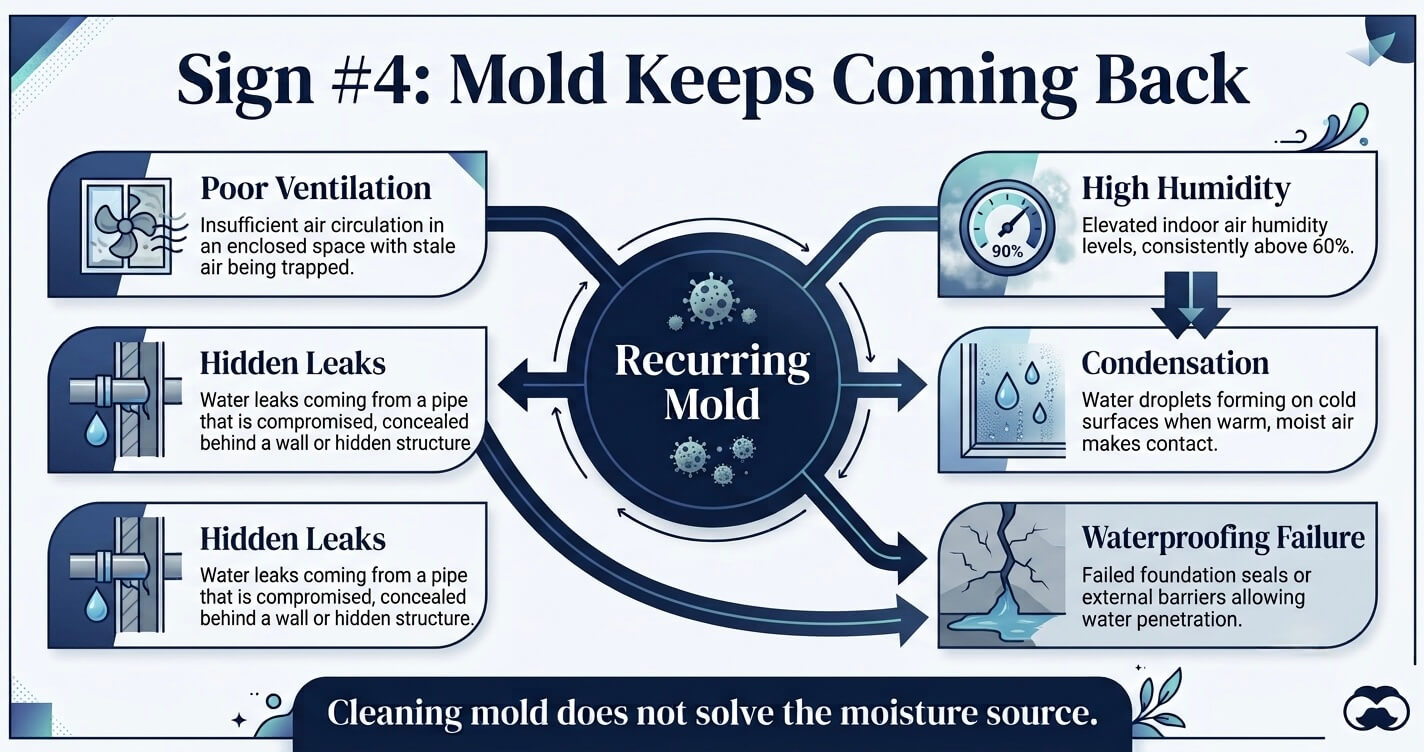
Many homeowners are surprised when mold reappears shortly after being cleaned. The reason is simple: mold is rarely the primary problem. Moisture is.
Bathrooms naturally generate significant humidity through showers, baths, and daily use. When that moisture cannot escape efficiently, it creates an environment where mold can repeatedly develop on walls, ceilings, grout lines, caulking, and other surfaces.
A recurring mold issue is often one of the strongest indicators that a full bathroom renovation Northern Virginia homeowners undertake should focus on improving moisture management rather than simply updating finishes.
Why Mold Continues Returning
Common causes include:
- Inadequate exhaust ventilation.
- Leaking plumbing systems.
- Poor waterproofing behind tile.
- Hidden wall moisture.
- Condensation buildup.
- Improperly sealed shower systems.
- High indoor humidity levels.
In many cases, visible mold represents only a fraction of the total problem. Moisture may remain trapped behind finished surfaces where homeowners cannot easily detect it.
Health and Indoor Air Quality Considerations
According to the U.S. Environmental Protection Agency (EPA), mold can grow on virtually any surface when moisture is present for an extended period. The agency emphasizes that controlling moisture, not simply cleaning mold. is the most effective long-term solution.
The presence of recurring mold may also affect indoor air quality and create unpleasant odors that make bathrooms feel persistently damp or unhealthy.
Ventilation Problems in Older Bathrooms
One of the most common causes of recurring mold in Northern Virginia homes is inadequate ventilation.
Older bathrooms often contain:
- Undersized exhaust fans.
- Inefficient ventilation systems.
- Fans venting improperly.
- No dedicated exhaust system at all.
Without sufficient airflow, moisture remains trapped inside the room long after showers have ended.
According to ENERGY STAR, properly sized and efficiently operating bathroom ventilation systems play an important role in reducing excess humidity and protecting indoor environments.
When Mold Indicates a Larger Renovation Need
A full renovation may be warranted when mold is accompanied by:
- Water stains.
- Soft drywall.
- Tile failures.
- Plumbing leaks.
- Musty odors.
- Deteriorating caulk and grout.
- Repeated remediation efforts.
In these situations, replacing finishes alone often results in the same problems returning within a relatively short period.
Homeowners experiencing both mold issues and moisture damage may also be evaluating broader renovation needs beyond a single room. In some cases, recurring moisture problems throughout the home are addressed as part of a larger full home renovation Northern Virginia project.
Expert Insight
The goal of a successful bathroom renovation is not merely to eliminate visible mold. It is to identify and correct the moisture conditions that allowed mold to develop in the first place.
Sign #5: Your Plumbing System Is Outdated
Older plumbing systems can create reliability, efficiency, and maintenance challenges that become increasingly expensive over time. Frequent leaks, inconsistent water pressure, corroded pipes, and aging supply lines are often signs that the plumbing infrastructure itself may need upgrading during a bathroom renovation.
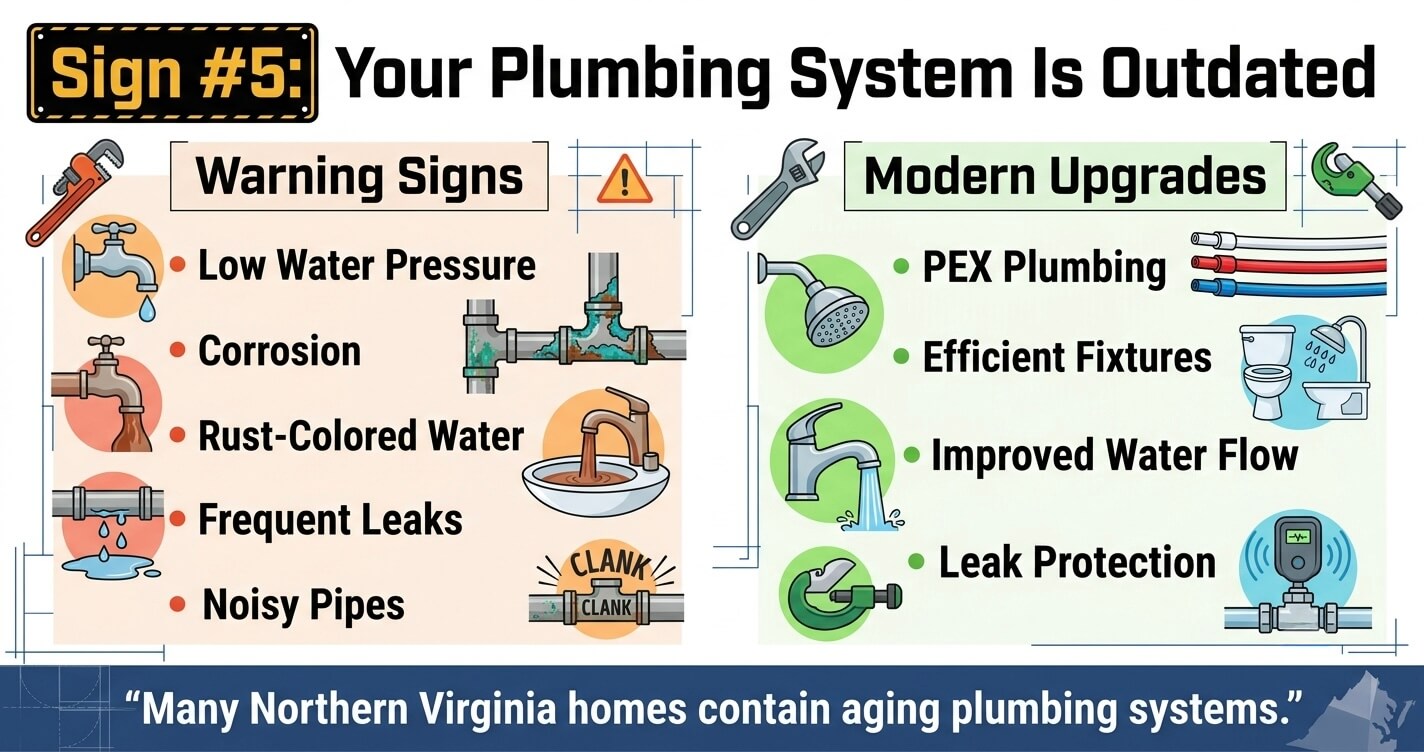
While homeowners typically notice visible finishes first, plumbing systems are often the hidden component that determines whether a bathroom can continue functioning reliably for years to come.
Many homes throughout Northern Virginia were built decades before modern plumbing materials and installation standards became common. As these systems age, they become more vulnerable to corrosion, leaks, pressure fluctuations, and water-efficiency concerns.
A comprehensive bathroom renovation Northern Virginia homeowners invest in often provides the ideal opportunity to modernize plumbing systems before failures occur.
Common Signs of Aging Plumbing
Warning signs may include:
- Frequent plumbing leaks.
- Low water pressure.
- Rust-colored water.
- Corroded pipe connections.
- Slow drainage issues.
- Noisy plumbing.
- Fixture failures.
- Increasing repair frequency.
While individual problems can sometimes be repaired, recurring issues throughout the bathroom often indicate system-wide aging.
Hidden Risks Behind Bathroom Walls
One challenge with plumbing deterioration is that much of it remains hidden until damage becomes visible.
Problems may develop behind:
- Shower walls.
- Tub surrounds.
- Vanity cabinets.
- Ceiling cavities.
- Floor systems.
By the time symptoms appear, moisture may already be affecting surrounding construction materials.
Water Efficiency and Modern Plumbing Upgrades
Outdated plumbing fixtures can also increase water consumption.
According to the EPA WaterSense Program, WaterSense-labeled products are independently certified to use less water while maintaining performance standards.
Modern bathroom renovations frequently incorporate:
- Water-efficient faucets.
- High-efficiency toilets.
- Updated shower systems.
- Improved shutoff systems.
- Modern supply lines.
- Leak-resistant plumbing materials.
These upgrades can improve both reliability and long-term operating costs.
Renovation vs. Continued Plumbing Repairs
A useful rule of thumb is that isolated plumbing issues can often be repaired. However, when homeowners experience multiple plumbing problems across different fixtures and systems, a renovation may offer better long-term value.
Repeatedly repairing aging components without addressing the broader plumbing infrastructure can result in higher cumulative costs and a greater risk of unexpected failures.
When plumbing issues are affecting multiple rooms or systems, homeowners may also consider larger remodeling projects that improve both functionality and infrastructure throughout the home.
Expert Insight
From a construction standpoint, renovating a bathroom often provides the most cost-effective opportunity to access walls, upgrade aging plumbing, improve water efficiency, and reduce the likelihood of future leak-related damage. Waiting until a major plumbing failure occurs typically limits options and increases overall repair expenses.
Sign #6: Your Bathroom Feels Dark, Dated, and Functionally Obsolete
A bathroom that feels outdated is not just an aesthetic issue. Older bathrooms often lack the lighting, storage, functionality, and efficiency features that modern homeowners expect. When multiple design elements have reached the end of their useful life, a full renovation frequently delivers greater value than a series of cosmetic upgrades.
Many homeowners initially consider renovating because they dislike the appearance of their bathroom. However, visual aging is often accompanied by deeper functional shortcomings that affect everyday use.
Bathrooms designed twenty or thirty years ago were built around different homeowner expectations. Storage needs were lower, lighting standards were less sophisticated, accessibility features were uncommon, and many materials now considered outdated were widely accepted.
As a result, homeowners throughout Fairfax County, Vienna, Reston, Burke, McLean, and Falls Church often find themselves living with bathrooms that technically function but no longer support modern lifestyles.
Common Signs of an Outdated Bathroom
Some of the most common indicators include:
- Insufficient lighting around mirrors.
- Limited vanity storage.
- Builder-grade finishes nearing the end of their lifespan.
- Outdated tile patterns and materials.
- Small framed shower enclosures.
- Inefficient fixture layouts.
- Lack of charging stations or modern conveniences.
- Poor integration of storage solutions.
While none of these issues may require immediate attention individually, they often collectively reduce both functionality and homeowner satisfaction.
Why Lighting Matters More Than Most Homeowners Realize
Lighting is one of the most overlooked aspects of bathroom performance.
Many older bathrooms rely on a single overhead fixture that creates shadows around mirrors and work areas. Modern bathroom design typically incorporates layered lighting strategies that combine:
- Ambient lighting.
- Task lighting.
- Accent lighting.
- Natural daylight enhancement.
According to the U.S. Department of Energy, LED lighting technologies can significantly reduce energy consumption while providing improved illumination quality and longer service life compared to traditional lighting options.
Modern Buyer Expectations Continue to Evolve
Today’s buyers often evaluate bathrooms based on more than appearance alone. They frequently prioritize:
- Walk-in showers.
- Efficient storage solutions.
- Contemporary lighting.
- Easy-to-maintain materials.
- Water-efficient fixtures.
- Functional layouts.
In competitive Northern Virginia housing markets, outdated bathrooms may make a home feel older than it actually is, even when the property’s structure remains sound.
Beyond Cosmetic Upgrades
Simply replacing countertops or repainting walls may improve appearance temporarily. However, homeowners often discover that outdated layouts, inadequate storage, poor lighting, and aging infrastructure continue creating frustration.
A complete bathroom renovation Northern Virginia homeowners undertake allows multiple problems to be addressed simultaneously rather than piecing together individual upgrades over several years.
Homeowners exploring design upgrades may also benefit from reviewing professional bathroom remodeling Northern Virginia services to understand how layout, lighting, storage, and material selections can be integrated into a cohesive renovation plan.
Expert Insight
The most successful bathroom renovations improve both aesthetics and functionality. While finishes help create visual impact, improvements to lighting, storage, circulation, and usability often generate the greatest day-to-day value for homeowners.
Sign #7: You’re Planning to Age in Place
If you intend to remain in your home for the next decade or longer, your bathroom should support changing mobility and accessibility needs. Renovating proactively is typically less expensive, less disruptive, and more flexible than attempting emergency modifications later.
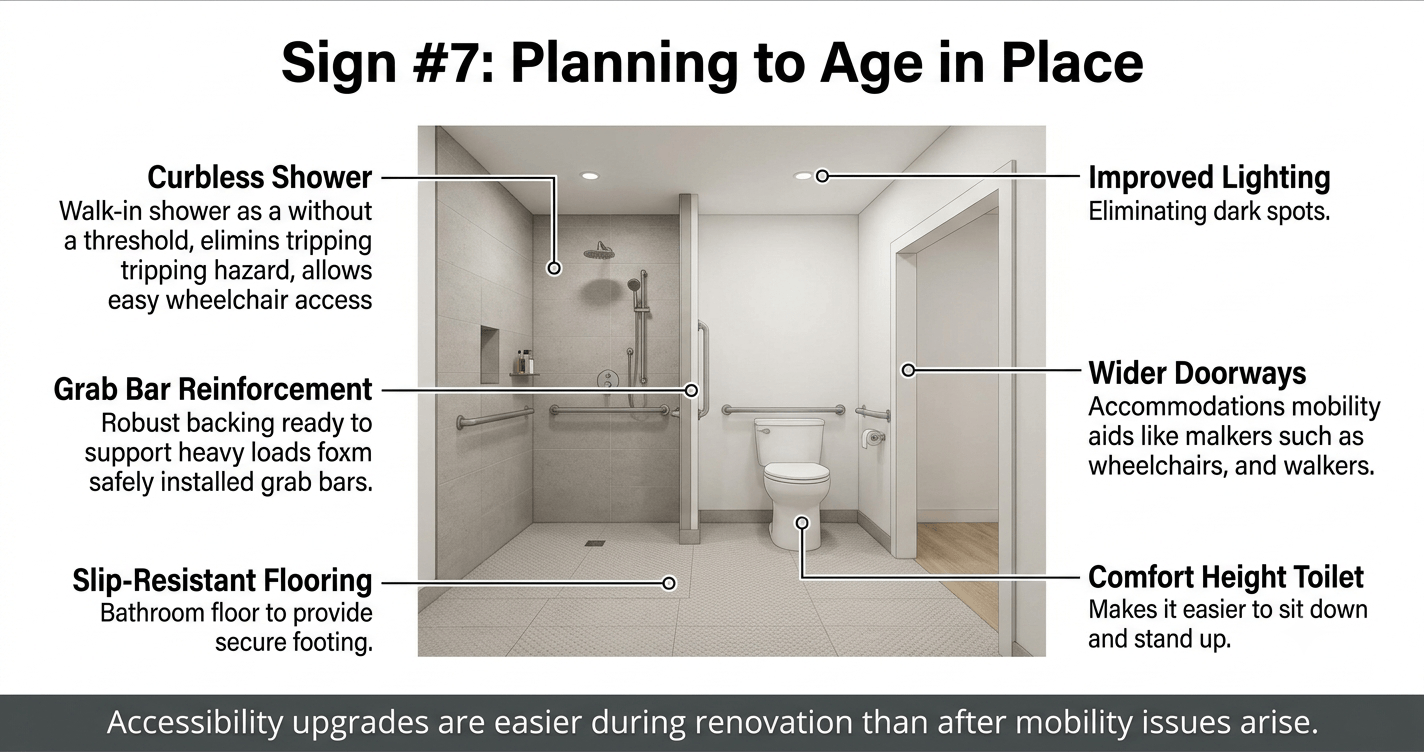
A growing number of Northern Virginia homeowners are choosing to remain in their existing homes rather than relocate. This trend has increased demand for bathrooms that support long-term comfort, safety, and accessibility.
Unfortunately, many older bathrooms were not designed with aging-in-place principles in mind.
Common features found in older bathrooms, including high tub walls, narrow doorways, slippery flooring, and limited maneuvering space, can become increasingly challenging as homeowners age.
What Does Aging in Place Mean?
According to the Centers for Disease Control and Prevention (CDC), falls are one of the leading causes of injury among older adults. Many of these incidents occur within the home, making safety-focused design an important consideration.
Aging in place refers to designing or modifying a home so that residents can continue living safely and comfortably as their mobility needs evolve.
Bathroom Features That Support Long-Term Accessibility
Modern bathroom renovations often incorporate:
- Curbless showers.
- Slip-resistant flooring.
- Grab bar reinforcement within walls.
- Wider door openings.
- Comfort-height toilets.
- Handheld shower systems.
- Improved lighting.
- Barrier-free entry designs.
Importantly, many of these features can be integrated into a bathroom without creating an institutional appearance.
Why Planning Ahead Matters
Many accessibility improvements are significantly easier and less expensive to implement during a full renovation than after a mobility issue develops.
For example:
- Reinforcing shower walls during renovation is relatively straightforward.
- Expanding doorways is easier when finishes are already being replaced.
- Reconfiguring layouts is more practical when plumbing and fixtures are being relocated.
- By planning proactively, homeowners gain flexibility while avoiding future disruption.
Local Considerations for Northern Virginia Homeowners
Many homeowners in McLean, Great Falls, Vienna, and Fairfax choose to invest in long-term usability rather than relocating from neighborhoods they have lived in for years.
As a result, accessibility-focused bathroom renovations have become increasingly common throughout Northern Virginia’s established residential communities.
Homeowners evaluating long-term lifestyle needs may also be interested in broader home remodeling Northern Virginia solutions that improve accessibility throughout the property.
Expert Insight
Accessibility planning works best when it is integrated into the renovation process from the beginning. Even homeowners who have no immediate mobility concerns can benefit from incorporating flexible design features that support future needs.
Sign #8: Your Water and Energy Efficiency Is Falling Behind Modern Standards
Older bathrooms often consume significantly more water and energy than modern designs. Aging toilets, outdated shower systems, inefficient ventilation, and older lighting technologies can increase operating costs while providing lower performance than today’s available alternatives.
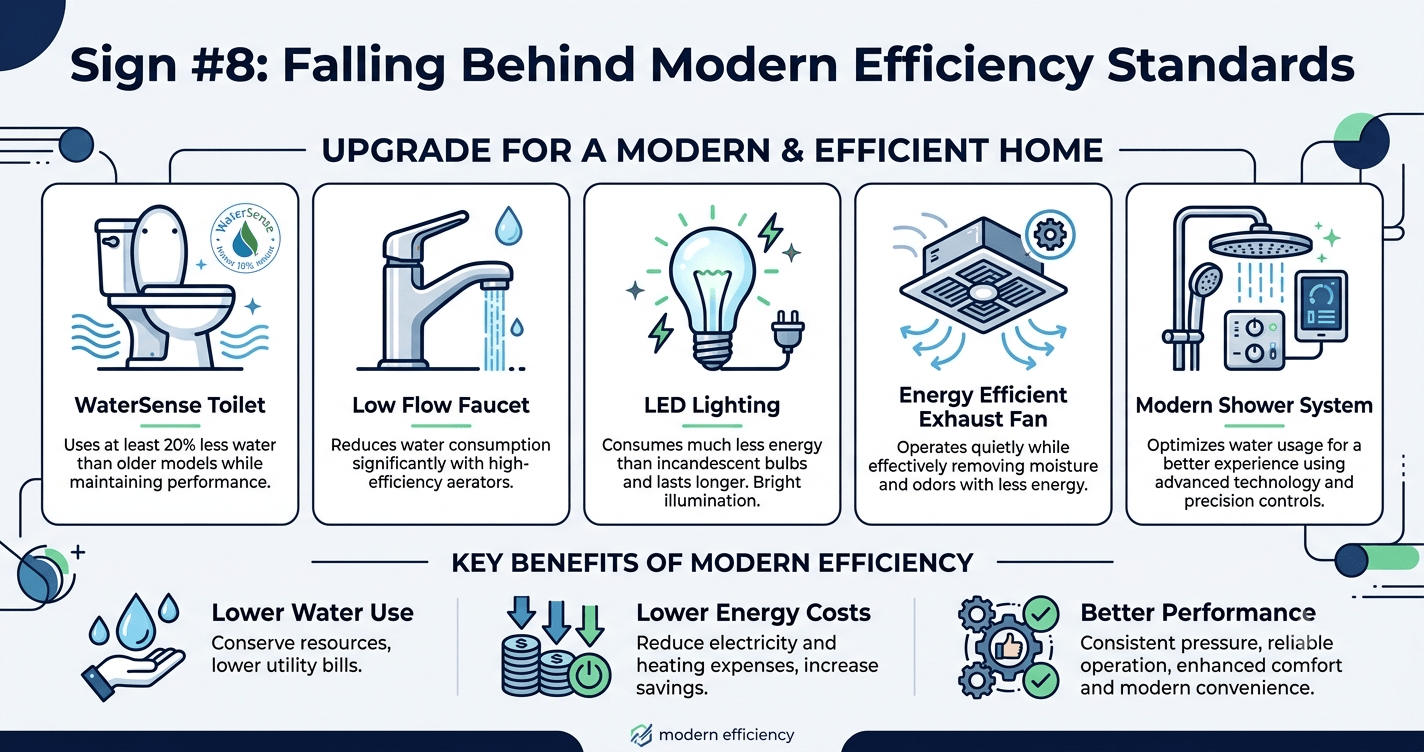
Many homeowners focus primarily on visible improvements during a renovation. However, one of the most practical long-term benefits of a bathroom remodel is improved efficiency.
As plumbing fixtures and mechanical systems age, they frequently become less efficient while requiring more maintenance.
A comprehensive bathroom renovation Northern Virginia homeowners undertake can improve both resource efficiency and overall functionality without sacrificing comfort.
Common Sources of Bathroom Inefficiency
Older bathrooms often contain:
- High-water-use toilets.
- Inefficient faucets.
- Outdated showerheads.
- Older exhaust fans.
- Incandescent or halogen lighting.
- Plumbing systems prone to leakage.
Even small inefficiencies can accumulate over time, particularly in households where bathrooms are used multiple times throughout the day.
Water Efficiency Improvements
The EPA WaterSense Program reports that WaterSense-labeled fixtures are independently certified to use less water while maintaining performance standards.
Modern bathroom renovations frequently include:
- High-efficiency toilets.
- Water-saving faucets.
- Low-flow shower systems.
- Leak-resistant fixture technologies.
- Smart plumbing controls.
These upgrades can help reduce unnecessary water consumption while maintaining user comfort.
Energy Efficiency Opportunities
Bathrooms also contribute to household energy use through lighting, ventilation, and hot water consumption.
According to the U.S. Department of Energy, LED lighting uses significantly less energy than traditional incandescent lighting while offering longer operational lifespans.
Additional efficiency upgrades may include:
- LED lighting systems.
- Energy-efficient ventilation fans.
- Better insulation around plumbing.
- Moisture-control improvements.
- Smart lighting controls.
Efficiency and Home Value
Modern buyers increasingly appreciate homes that incorporate efficient building systems and updated fixtures.
While efficiency alone may not justify a renovation, it often becomes an important secondary benefit when homeowners are already addressing issues such as outdated layouts, plumbing concerns, water damage, or aging finishes.
Expert Insight
Efficiency upgrades are most valuable when integrated into a larger renovation strategy. Rather than focusing solely on reducing utility usage, homeowners should view efficiency improvements as part of a broader effort to enhance comfort, reliability, durability, and long-term home performance.
Sign #9: Your Bathroom Is Hurting Your Home’s Resale Value
An outdated bathroom can negatively influence how buyers perceive the entire home. While buyers may overlook minor cosmetic flaws, aging bathrooms with visible wear, outdated layouts, poor lighting, or older fixtures are often viewed as future renovation expenses. In competitive Northern Virginia real estate markets, a dated bathroom can reduce buyer interest and weaken negotiating power.
Bathrooms and kitchens consistently rank among the most scrutinized spaces during home showings. Buyers often use these rooms to evaluate how well a property has been maintained and whether significant upgrades will be required after purchase.
A bathroom does not need to be luxurious to support resale value. However, it should feel functional, clean, well-maintained, and reasonably aligned with current market expectations.
For homeowners considering a bathroom renovation Northern Virginia project, resale value should be viewed as one component of the decision-making process rather than the sole reason for renovating.
Why Buyers Pay Close Attention to Bathrooms
Bathrooms contain multiple systems that buyers associate with potential future costs, including:
- Plumbing.
- Waterproofing.
- Ventilation.
- Flooring.
- Cabinetry.
- Lighting.
- Fixtures.
When buyers notice outdated finishes, signs of moisture damage, inadequate storage, or aging fixtures, they often assume additional hidden issues may exist behind finished surfaces.
This perception can affect both buyer confidence and purchase offers.
Bathroom Upgrades and Market Appeal
According to the National Association of Realtors (NAR) Remodeling Impact Report, bathroom renovation projects are among the home improvements that homeowners and prospective buyers consistently value because they improve both functionality and daily living experiences.
The report highlights a broader trend: buyers generally prefer move-in-ready homes that require fewer immediate upgrades.
Features Buyers Frequently Expect Today
Modern buyers often look for:
- Walk-in showers.
- Updated vanities.
- Efficient lighting.
- Adequate storage.
- Contemporary finishes.
- Water-efficient fixtures.
- Neutral design palettes.
- Functional layouts.
Many bathrooms built several decades ago simply were not designed around these expectations.
Northern Virginia Market Considerations
In highly competitive markets such as McLean, Vienna, Fairfax, Great Falls, and Reston, buyers often compare multiple properties within similar price ranges.
When one home offers updated bathrooms and another requires substantial renovation work, the updated property may have a significant advantage in attracting attention and generating stronger offers.
This does not mean every homeowner should renovate solely for resale purposes. However, when an aging bathroom is already experiencing functional problems, renovation may simultaneously improve daily living and market competitiveness.
Homeowners evaluating renovation ROI may find it helpful to review current home remodeling Northern Virginia options and understand how different improvement projects contribute to overall property value.
Expert Insight
The highest-return bathroom renovations are not necessarily the most expensive. Projects that improve functionality, address maintenance concerns, modernize finishes, and align with buyer expectations often provide the greatest overall value.
Sign #10: Multiple Problems Are Happening at the Same Time
When several warning signs appear together, a full renovation is often more practical than continuing individual repairs. Recurring leaks, water damage, mold growth, outdated plumbing, poor layouts, and aging finishes frequently share underlying causes. Addressing these issues separately can result in higher cumulative costs than solving them through a comprehensive renovation strategy.
Many homeowners delay renovation because each individual problem appears manageable.
A leak gets repaired.
A section of grout gets replaced.
A vanity gets updated.
A damaged wall gets repainted.
Viewed independently, these repairs may seem reasonable. The challenge arises when multiple issues begin occurring simultaneously throughout the same bathroom.
At that point, the bathroom may be signaling that several systems have reached the end of their effective service life.
The “Compounding Problems” Scenario
One of the most common renovation situations encountered by design-build professionals involves a combination of issues such as:
- Recurring plumbing leaks.
- Water-stained ceilings.
- Mold growth.
- Poor ventilation.
- Aging fixtures.
- Outdated layouts.
- Deteriorating flooring.
- Insufficient storage.
Individually, none of these problems may justify a complete renovation.
Collectively, however, they often indicate that the bathroom is no longer performing as intended.
Why Piecemeal Repairs Become Expensive
Every separate repair carries its own costs:
- Labor.
- Materials.
- Contractor mobilization.
- Potential disruption.
- Temporary solutions.
Repeatedly addressing symptoms rather than root causes can create a cycle of ongoing expenditures without delivering meaningful long-term improvement.
For example:
A homeowner may replace damaged drywall only to discover months later that the underlying plumbing leak was never fully resolved.
Similarly, replacing tile without correcting waterproofing deficiencies may simply delay future failures.
A Renovation Creates an Opportunity to Solve Multiple Problems Together
A comprehensive bathroom renovation allows homeowners to:
- Access hidden plumbing systems.
- Upgrade waterproofing assemblies.
- Improve ventilation.
- Reconfigure layouts.
- Modernize finishes.
- Increase storage.
- Enhance efficiency.
- Address structural concerns simultaneously.
Because these improvements occur within a coordinated project, they often provide greater long-term value than a series of disconnected repairs.
Homeowners dealing with several recurring bathroom issues may also benefit from reviewing common bathroom remodel mistakes Northern Virginia homeowners regret to avoid costly planning and budgeting errors during a future renovation.
Expert Insight
A useful rule of thumb is this: if you are experiencing three or more significant bathroom problems at the same time, it may be worthwhile to evaluate renovation options before investing additional money into temporary repairs.
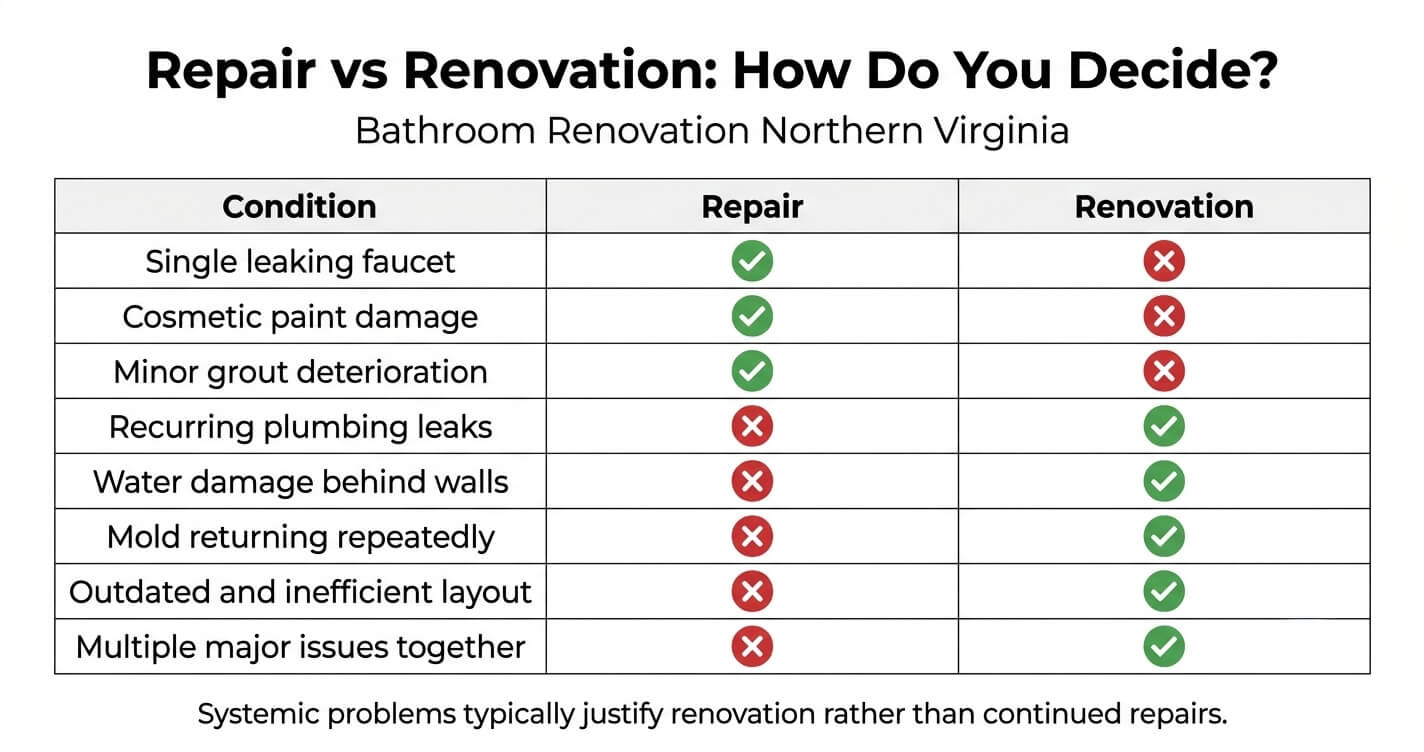
Repair vs. Renovation: How Do You Decide?
Minor cosmetic issues can often be repaired effectively. However, recurring leaks, water damage, mold growth, outdated plumbing, poor layouts, and multiple simultaneous failures frequently indicate that renovation will provide a more durable and cost-effective solution. The key is determining whether the problem is isolated or systemic.
Many homeowners struggle with one important question:
“Should I repair the bathroom or renovate it?”
The answer depends less on the severity of an individual issue and more on the overall condition of the bathroom.
If a single component has failed while the rest of the space remains functional, repair is often the logical choice.
If multiple systems are deteriorating simultaneously, renovation may provide greater long-term value.
Situations Where Repair May Be Appropriate
Repairs are often sufficient when dealing with:
- A leaking faucet.
- Minor grout repairs.
- A damaged fixture.
- Isolated cosmetic wear.
- A single plumbing component failure.
- Minor caulking replacement.
In these situations, the underlying infrastructure remains largely sound.
Situations Where Renovation May Be the Better Investment
Renovation should be considered when homeowners encounter:
- Repeated plumbing issues.
- Hidden water damage.
- Mold recurrence.
- Outdated layouts.
- Aging plumbing systems.
- Poor ventilation.
- Multiple simultaneous failures.
- Significant accessibility concerns.
These conditions often require coordinated improvements that cannot be fully addressed through isolated repairs.
Quick Comparison Table
Cost Considerations
One of the most common misconceptions is that renovation is always more expensive.
While renovation typically requires a larger upfront investment, repeated repairs can become surprisingly costly over time.
Homeowners evaluating potential project budgets may benefit from reviewing a detailed bathroom remodel cost Northern Virginia guide to understand how project scope, materials, plumbing upgrades, and design decisions affect overall costs.
Expert Insight
The most cost-effective solution is not always the least expensive short-term option. In many cases, addressing root causes through renovation prevents years of recurring maintenance expenses, unexpected repairs, and ongoing frustration.
What Does a Bathroom Renovation Cost in Northern Virginia?
Bathroom renovation costs in Northern Virginia vary significantly depending on bathroom size, material selections, plumbing modifications, layout changes, and project complexity. While no two projects are identical, understanding the major cost drivers can help homeowners establish realistic expectations before beginning the planning process.
Cost is often one of the first questions homeowners ask when considering renovation.
However, bathroom projects can vary substantially because every home presents unique conditions and goals.
For example, a project focused primarily on cosmetic upgrades will typically have a different budget profile than a renovation involving:
- Plumbing relocation.
- Structural modifications.
- Layout reconfiguration.
- Accessibility improvements.
- Custom storage solutions.
- Premium material selections.
Major Factors Affecting Bathroom Renovation Costs
Project costs are commonly influenced by:
- Bathroom size.
- Existing condition.
- Plumbing upgrades.
- Electrical work.
- Waterproofing requirements.
- Tile selections.
- Cabinetry choices.
- Fixture quality.
- Accessibility modifications.
- Permit requirements.
Homes with hidden water damage or aging plumbing systems may also require additional corrective work during construction.
Northern Virginia-Specific Considerations
Homeowners throughout Fairfax County, McLean, Vienna, Great Falls, Reston, and Burke often encounter cost factors associated with:
- Older housing stock.
- Aging infrastructure.
- Local permit requirements.
- Higher labor costs.
- Premium real estate expectations.
These factors can influence project scope and investment levels compared to national averages.
For a more detailed breakdown of pricing factors, project examples, and budgeting considerations, homeowners should review the comprehensive bathroom remodel cost Northern Virginia guide.
Homeowners considering a bathroom renovation often benefit from discussing their goals, existing conditions, budget expectations, and long-term plans with an experienced design-build team before committing to specific materials or layouts.
Expert Insight
The most successful bathroom renovation projects begin with a clear understanding of both current problems and future goals. Focusing solely on upfront costs can overlook opportunities to improve functionality, durability, efficiency, accessibility, and long-term home value.
Frequently Asked Questions
How do I know if I need a full bathroom renovation or just repairs?
If the problem is isolated to a single fixture or cosmetic issue, repairs may be sufficient. However, if you are experiencing recurring leaks, water damage, mold growth, plumbing failures, layout limitations, or multiple issues at the same time, a full renovation is often the more cost-effective long-term solution.
A professional assessment can help determine whether the issue is isolated or whether underlying systems such as plumbing, waterproofing, ventilation, or structural components are contributing to recurring problems.
What are the most common signs that a bathroom renovation is needed?
The most common warning signs include recurring repairs, visible water damage, mold growth, outdated plumbing, poor layouts, inadequate storage, inefficient fixtures, and declining functionality.
Homeowners should pay particular attention when several of these issues appear simultaneously, as this often indicates that the bathroom’s infrastructure is aging rather than a single component failing.
Does bathroom remodeling increase home value in Northern Virginia?
Bathroom remodeling can improve buyer appeal and help maintain competitive market positioning, particularly in high-demand Northern Virginia communities. Updated bathrooms often make homes more attractive to prospective buyers because they reduce the likelihood of immediate renovation expenses after purchase.
According to the National Association of Realtors (NAR), bathroom improvements remain among the renovation projects frequently valued by homeowners and buyers alike.
How long does a bathroom renovation typically take?
Most bathroom renovation timelines depend on project complexity, material availability, permit requirements, and construction scope. Simple renovations generally require less time than projects involving layout changes, plumbing relocations, or structural modifications.
The planning phase is equally important because design development, material selections, budgeting, and permit approvals often occur before construction begins.
Do I need permits for a bathroom renovation in Fairfax County?
Permit requirements depend on the type of work being performed. Cosmetic updates such as painting or replacing certain finishes may not require permits, while plumbing, electrical, mechanical, or structural modifications often do.
Homeowners should verify requirements with local authorities or work with an experienced contractor familiar with Fairfax County regulations.
Is mold always a sign that I need a bathroom renovation?
Not necessarily. Small, isolated mold issues can sometimes be resolved through improved cleaning and moisture control. However, recurring mold growth often indicates underlying ventilation, waterproofing, plumbing, or humidity-management problems that may require renovation-level solutions.
According to the EPA, controlling moisture is the most effective strategy for preventing mold growth over the long term.
Is it better to renovate a bathroom before selling a home?
The answer depends on the bathroom’s condition, local market conditions, and the overall condition of the property. Bathrooms with significant functional issues, visible damage, or highly outdated features may benefit from renovation before listing.
However, homeowners should evaluate expected costs, potential buyer expectations, and overall return on investment before proceeding.
Conclusion: Don’t Ignore the Warning Signs of an Aging Bathroom
A bathroom renovation Northern Virginia homeowners undertake is often about much more than improving appearance. Recurring repairs, water damage, mold growth, outdated plumbing, inefficient layouts, poor lighting, and accessibility concerns are all signs that a bathroom may no longer be meeting the needs of the home. Addressing these issues proactively can help prevent larger and more expensive problems in the future.
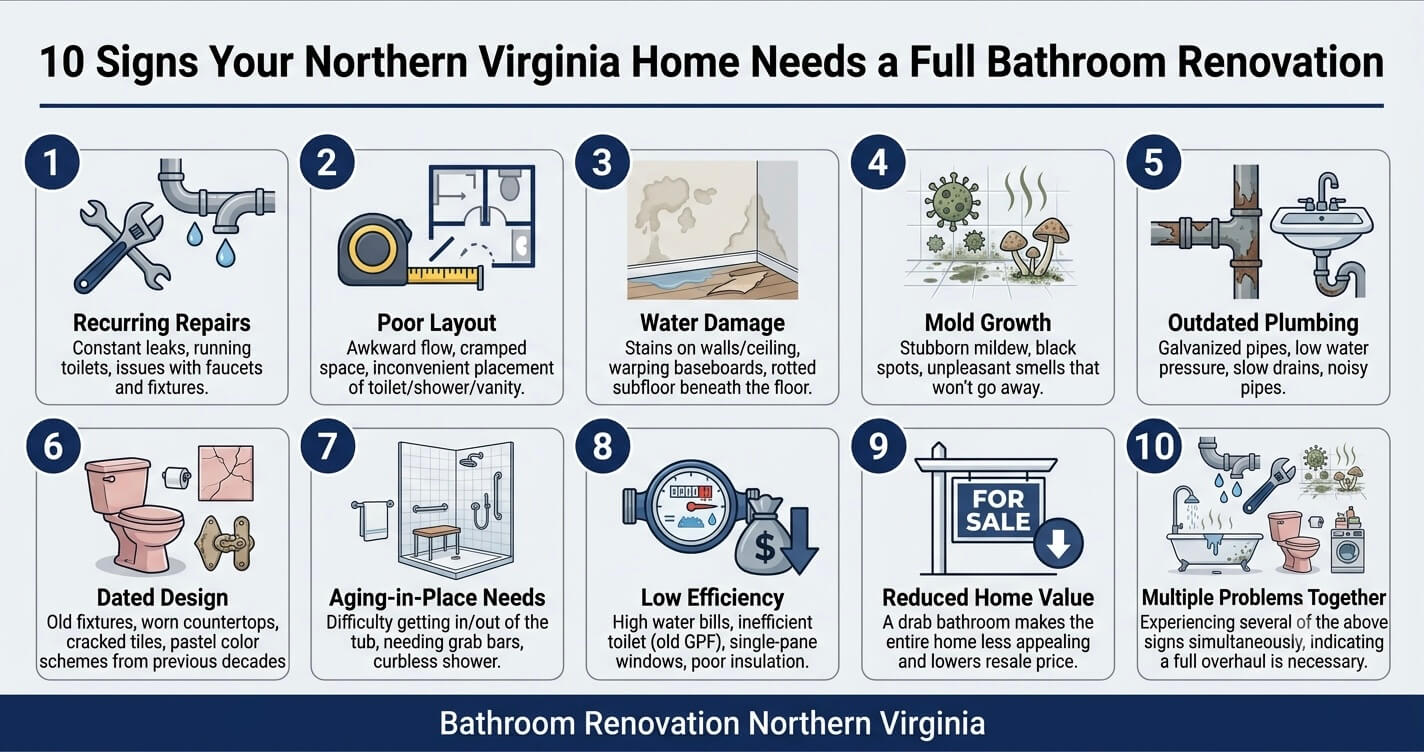
Throughout Northern Virginia, many homeowners live in properties that were built decades ago. While these homes often offer desirable locations, established neighborhoods, and strong long-term value, their bathrooms may contain aging systems and outdated designs that are increasingly difficult to maintain.
As this guide has shown, warning signs such as recurring repairs, visible water damage, persistent mold, outdated plumbing, declining efficiency, and poor functionality rarely improve on their own. In many cases, they become progressively more expensive to address as underlying issues continue to worsen behind walls, beneath flooring systems, and within aging infrastructure.
The decision to renovate should not be based solely on aesthetics. A well-planned renovation can improve:
- Daily functionality.
- Safety and accessibility.
- Water efficiency.
- Indoor air quality.
- Storage capacity.
- Long-term durability.
- Home value.
- Overall homeowner satisfaction.
For many homeowners, the most cost-effective time to renovate is before a major failure occurs.
Whether you’re dealing with one significant issue or several warning signs at the same time, evaluating your options early can help you make informed decisions and avoid unnecessary repair expenses.
At US Home Design Build, our design-build team has helped homeowners throughout Fairfax County, McLean, Vienna, Reston, Burke, Great Falls, Falls Church, and surrounding Northern Virginia communities evaluate aging bathrooms, identify underlying issues, and develop renovation plans tailored to their goals, budget, and lifestyle needs.
If you’re noticing multiple signs discussed in this guide, now may be the right time to explore your options for a professional bathroom renovation Northern Virginia project. Contact US Home Design Build to discuss your bathroom’s condition, renovation goals, budget considerations, and timeline with an experienced Northern Virginia design-build team.
