
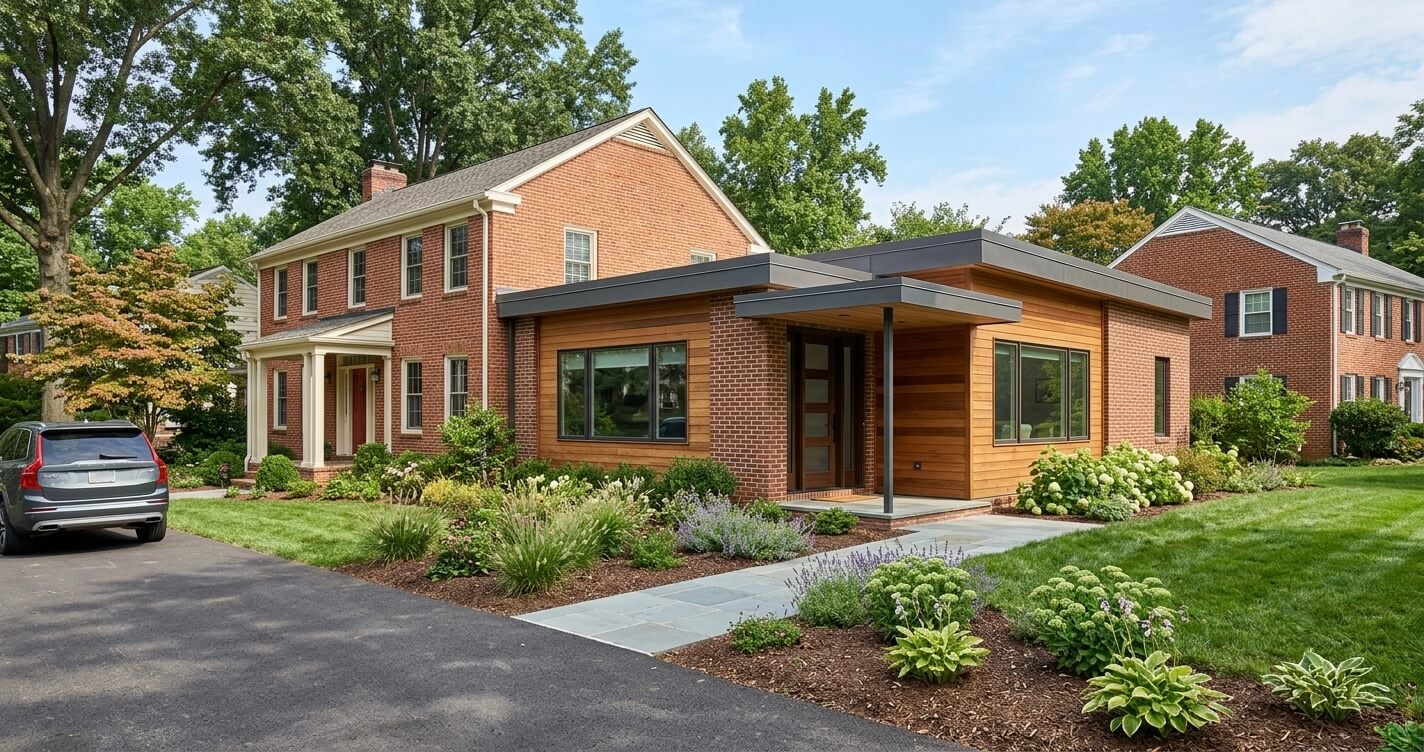
In 2026, an in-law suite addition cost Northern Virginia homeowner should budget for typically ranges from $80,000 for a basement conversion to $320,000+ for a detached suite, at $150–$380 per square foot depending on suite type, finish level, and site conditions. Most attached in-law suite additions in Fairfax County, McLean, Vienna, and Reston fall between $150,000 and $260,000 for a bedroom, full bathroom, and kitchenette.
US Home Design Build’s design-build team has planned and built in-law suites across Fairfax County, McLean, Vienna, Reston, Great Falls, and Burke for years, and the single biggest source of sticker shock is homeowners anchoring their budget to a national average that doesn’t reflect Northern Virginia’s labor rates, permitting requirements, or lot conditions. This guide breaks down real 2026 in-law suite addition cost Northern Virginia figures by suite type, what actually drives the price up or down, three real budget examples, and the mistakes that most often push a project past its original estimate.
Demand for projects like this is part of a larger national pattern. Total U.S. spending on home improvements and repairs is projected to reach $518 billion by the end of 2026, according to the Harvard Joint Center for Housing Studies’ Leading Indicator of Remodeling Activity.
In-Law Suite Addition Cost Ranges in Northern Virginia (2026)
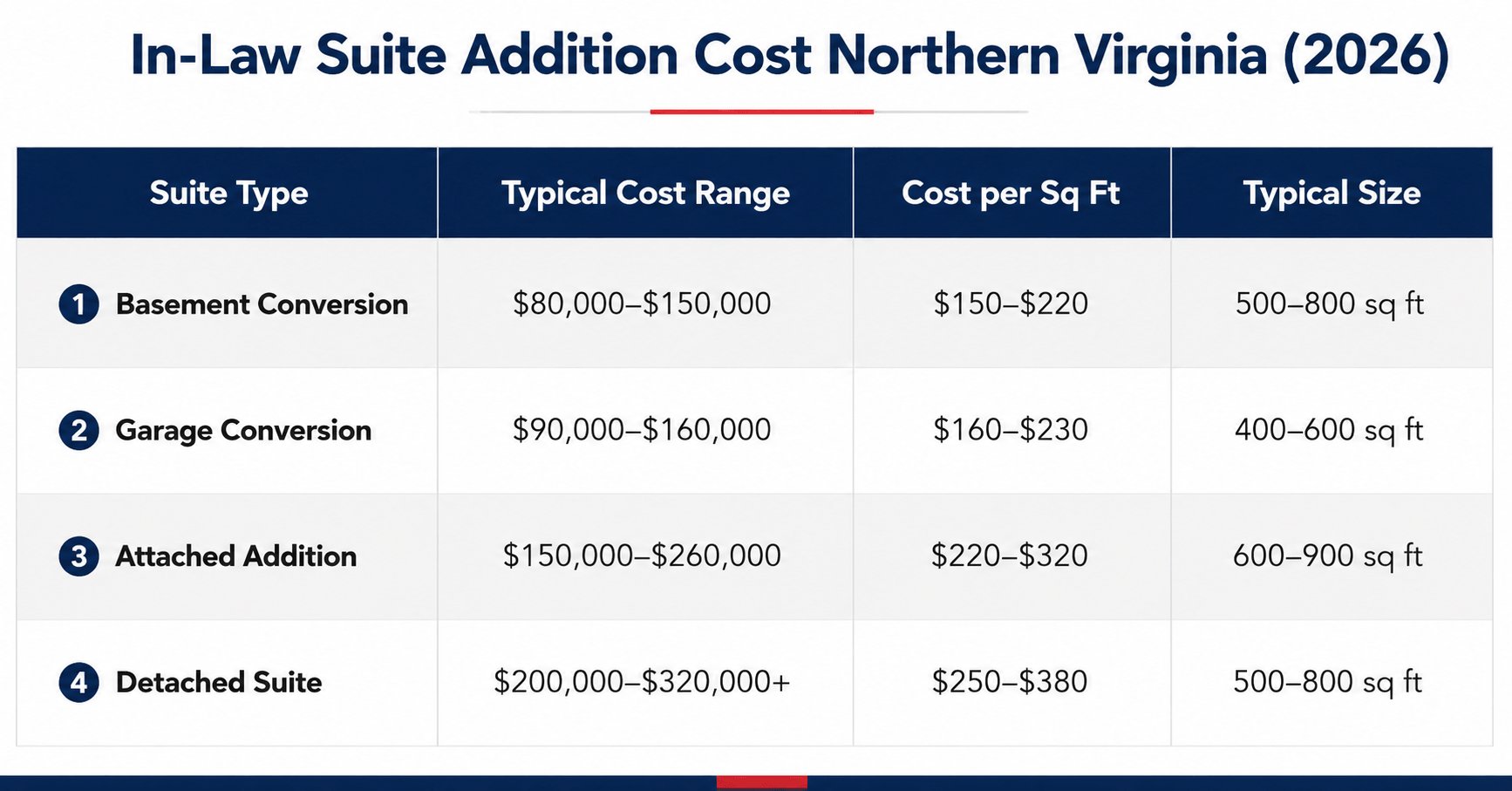
In-law suite addition cost Northern Virginia projects break into four cost tiers by suite type: basement conversions run $80,000–$150,000, garage conversions run $90,000–$160,000, attached additions run $150,000–$260,000, and detached suites run $200,000–$320,000 or more. Per-square-foot pricing ranges from about $150 for a basic basement conversion up to $380 for a high-end detached suite with full independent utility hookups.
The ranges below assume a suite between 500 and 900 square feet with a bedroom, full bathroom, living area, and at least a kitchenette, the baseline configuration most Fairfax County homeowners request. The following table breaks down typical cost, per-square-foot pricing, and size range for each suite type.
These ranges assume standard finishes and a straightforward building site. Homes that require extensive grading, retaining walls, or utility line extensions, common on sloped lots in Great Falls and parts of Vienna, should budget toward the higher end of each range.
What Drives In-Law Suite Costs Up or Down
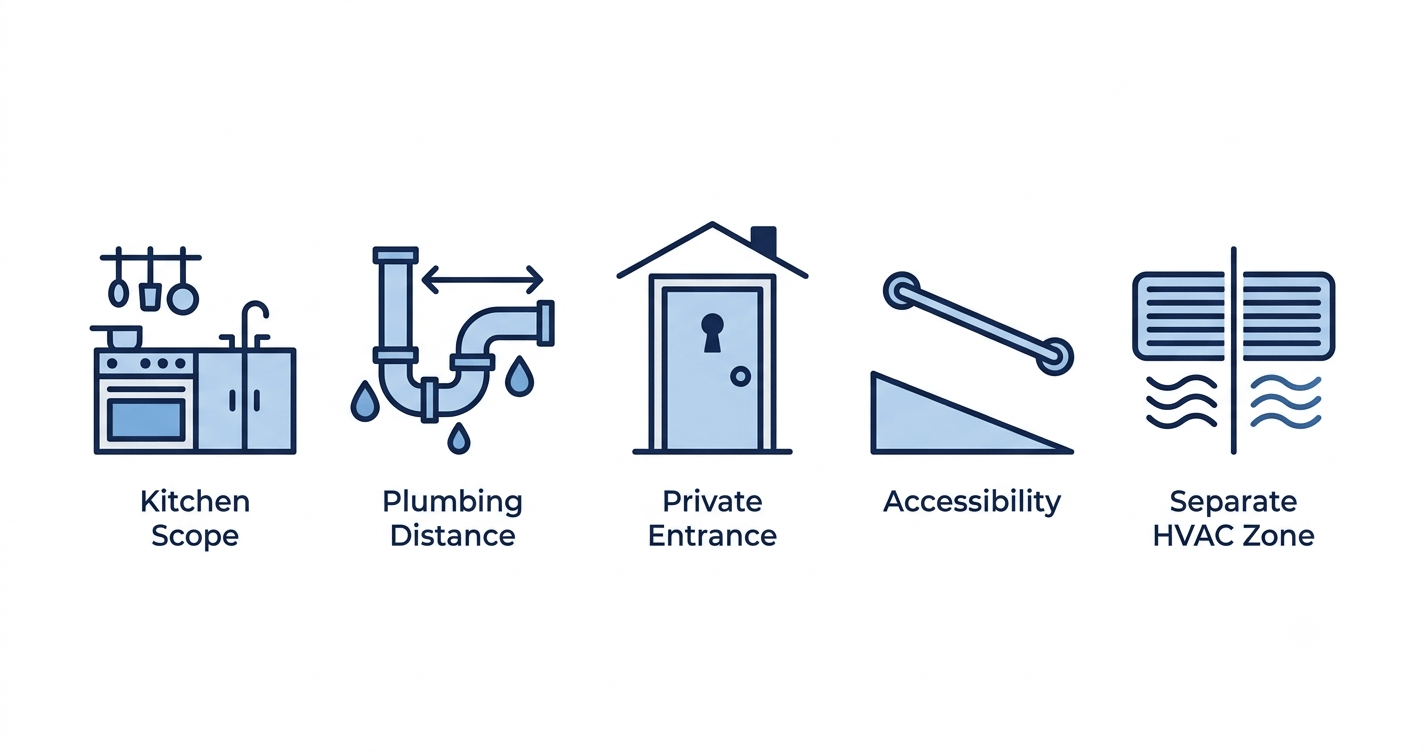
The three biggest cost drivers for an in-law suite addition are kitchen scope, distance from existing plumbing lines, and whether the suite needs a private entrance or a separate HVAC zone. Difficult site conditions; slope, soil, and utility access, can add $15,000–$40,000 before construction even starts.
- Kitchen level: a kitchenette (sink, mini-fridge, microwave) vs. a full kitchen with a range and dishwasher typically adds $15,000–$30,000
- Plumbing distance: suites located far from existing supply and waste lines require new runs, adding $5,000–$20,000
- Private entrance: a dedicated exterior door, walkway, and grading typically adds $8,000–$18,000
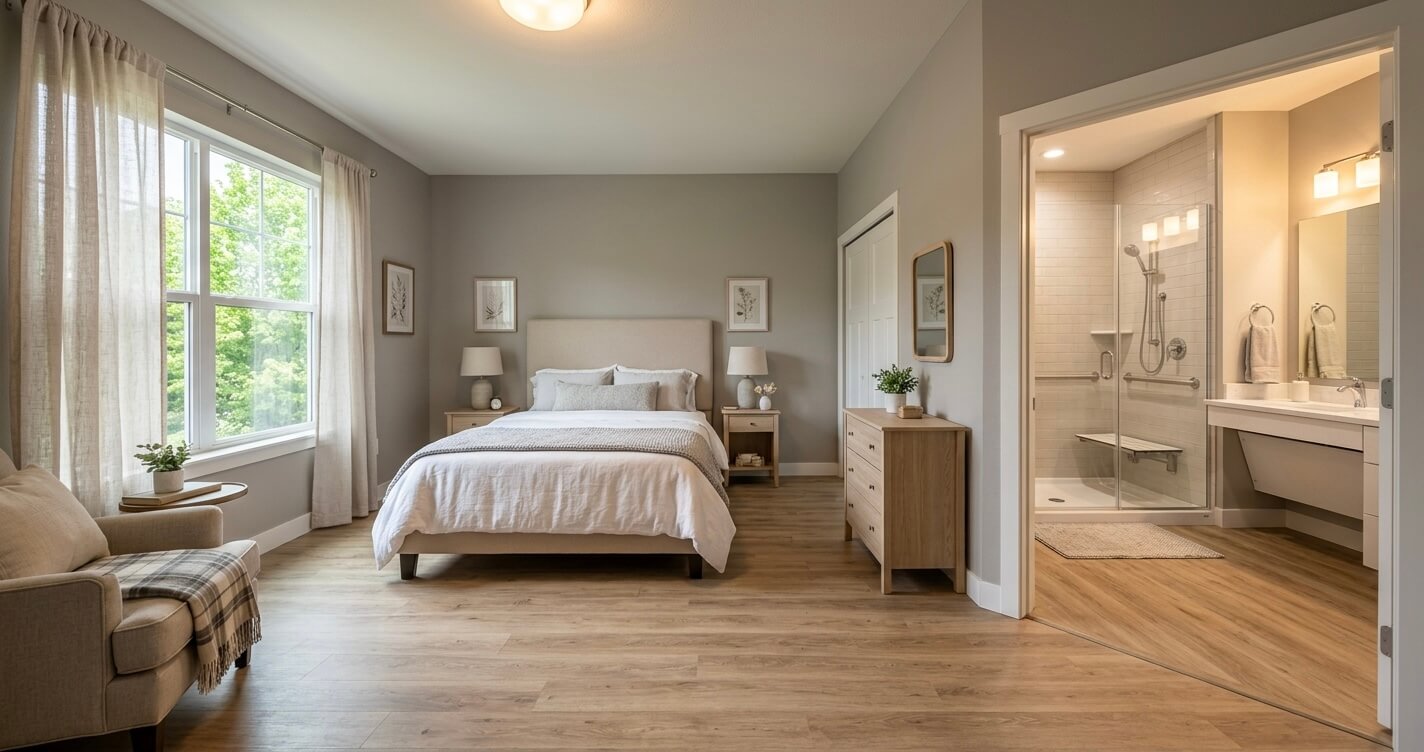
- Accessibility features: wider doorways, curbless showers, and grab bars add $10,000–$25,000
- HVAC: a separate zone or ductless mini-split system typically adds $6,000–$15,000
- Permitting complexity: Accessory Living Unit (ALU) review, egress compliance, and inspections add both cost and timeline
Cost by Suite Type: Attached vs. Basement vs. Detached
Basement conversions are the least expensive way to add an in-law suite because they use the home’s existing foundation and roofline, but they require the most extensive permitting of any suite type due to egress and full plumbing requirements. Attached additions cost more per square foot than basement conversions but avoid excavation, while detached suites cost the most because they require an independent foundation, roof, and full utility connections.
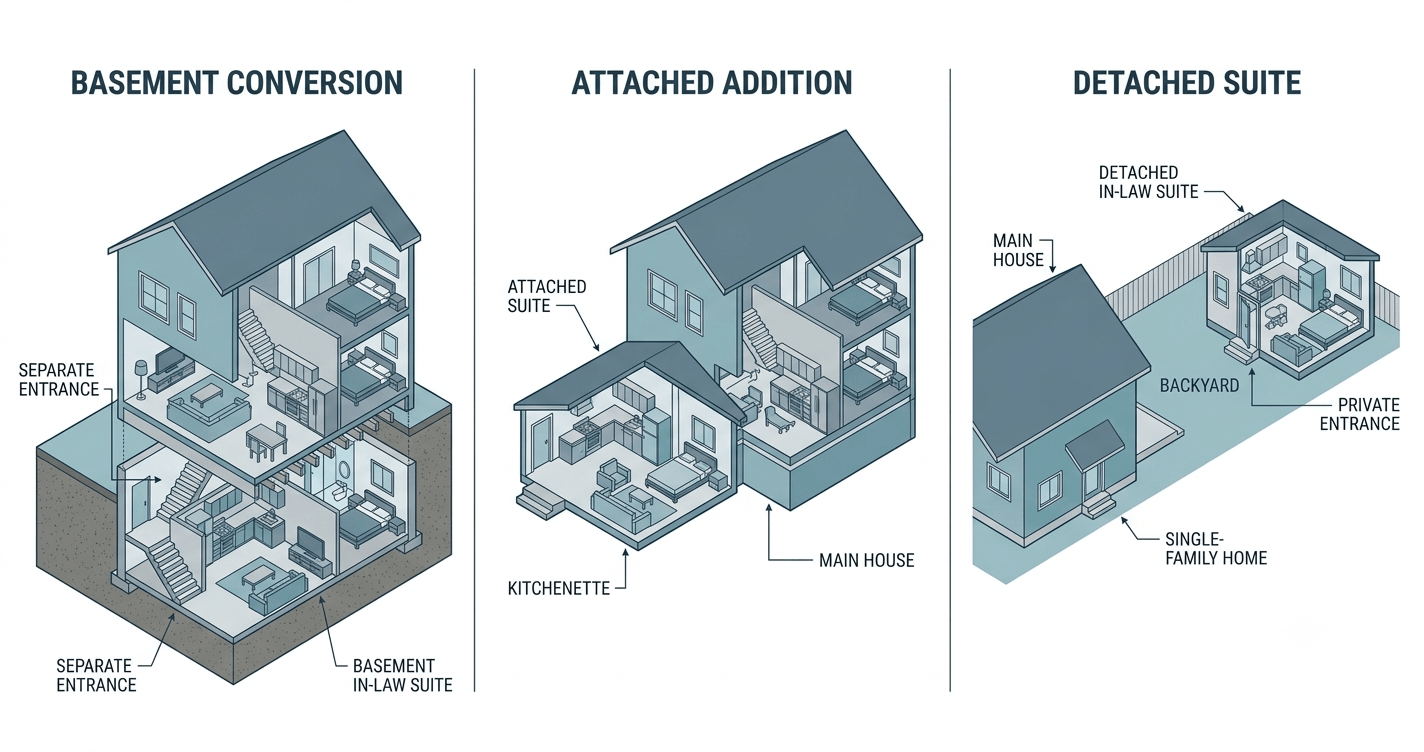
For homeowners specifically considering a basement conversion, the Basement Finishing Northern Virginia guide covers the moisture control, egress window sizing, and HVAC considerations that are unique to below-grade in-law suites in more depth.
Permit and Compliance Costs to Budget For
Permit costs for an in-law suite addition in Fairfax County typically run $1,500–$6,000, depending on suite type, and must include an Accessory Living Unit (ALU) form if the suite will function as an independent living space. Skipping this step is one of the most common reasons in-law suite projects stall mid-construction.
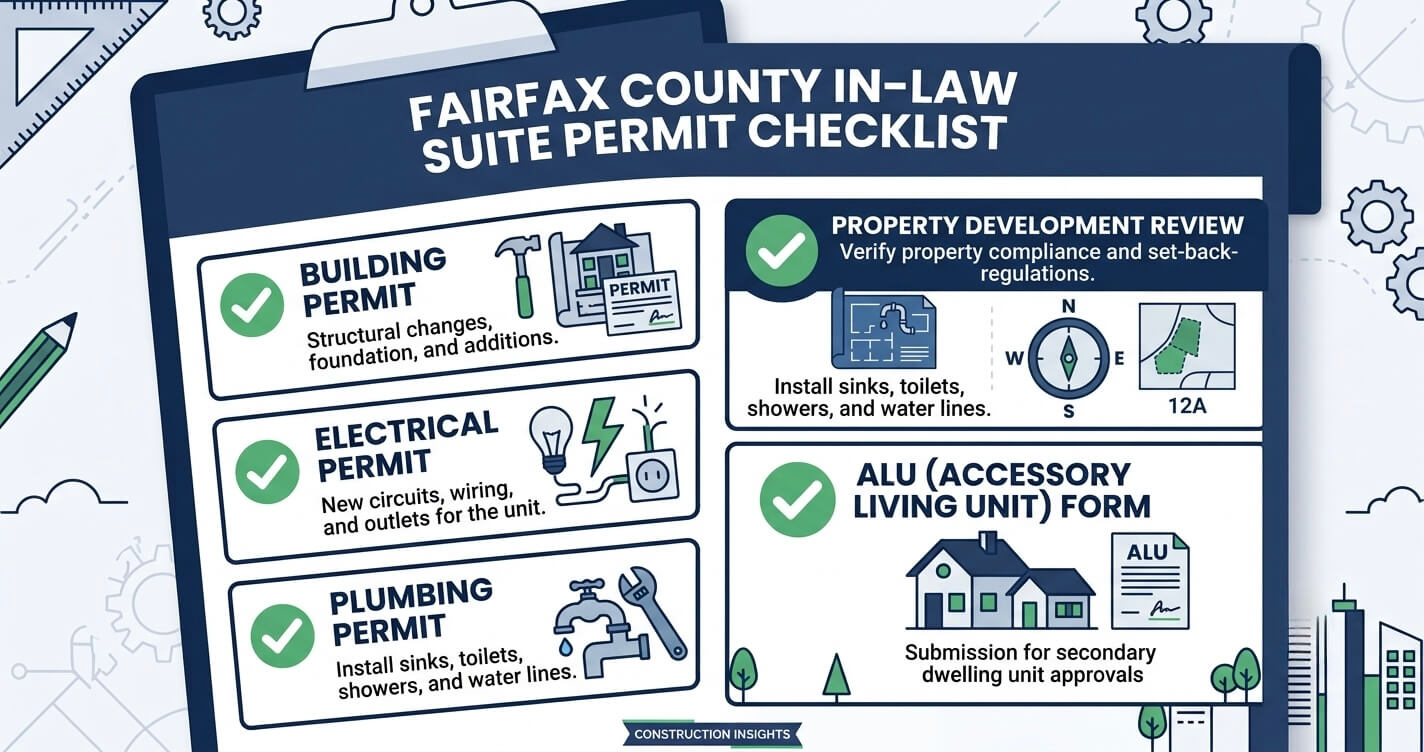
Northern Virginia’s permitting environment reflects a broader legislative shift. As of August 2025, 18 states had passed laws broadly allowing homeowners to build, and in many cases rent, accessory dwelling units, according to the National Association of Home Builders. Virginia’s ALU framework predates much of that wave, which is one reason Fairfax County’s review process is comparatively well established.
Homeowners should review the Accessory Living Unit Fairfax County VA guide for the specific zoning setbacks, lot coverage limits, and ALU form requirements that apply before finalizing a design. For a broader look at how the county’s permitting process works across project types, see Remodeling Permit Fairfax County: Do You Need One?
Homeowners considering a similar project may benefit from discussing their options with an experienced design-build team before finalizing budgets or timelines.
Three Real Budget Examples for 2026
A basic basement in-law suite conversion in Burke, VA typically totals $95,000–$115,000, a mid-range attached in-law suite addition in Fairfax County runs $175,000–$210,000, and a high-end detached in-law suite in Great Falls with premium finishes runs $260,000–$310,000. Each example assumes a full bathroom and at least a kitchenette.
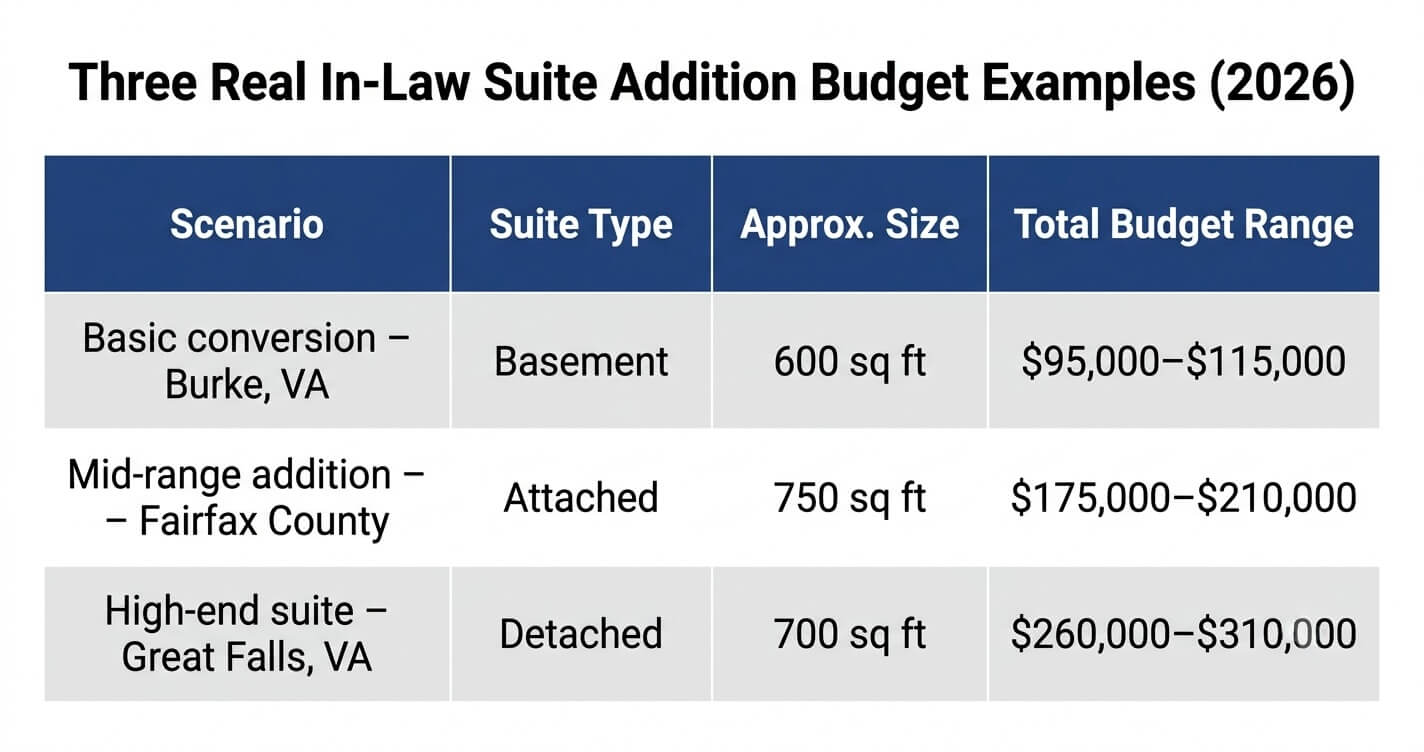
These figures reflect current 2026 in-law suite addition cost Northern Virginia data gathered from active USHDB projects and should be treated as planning benchmarks rather than fixed quotes, every lot and existing structure changes the math.
Ways to Control In-Law Suite Addition Costs Without Cutting Corners
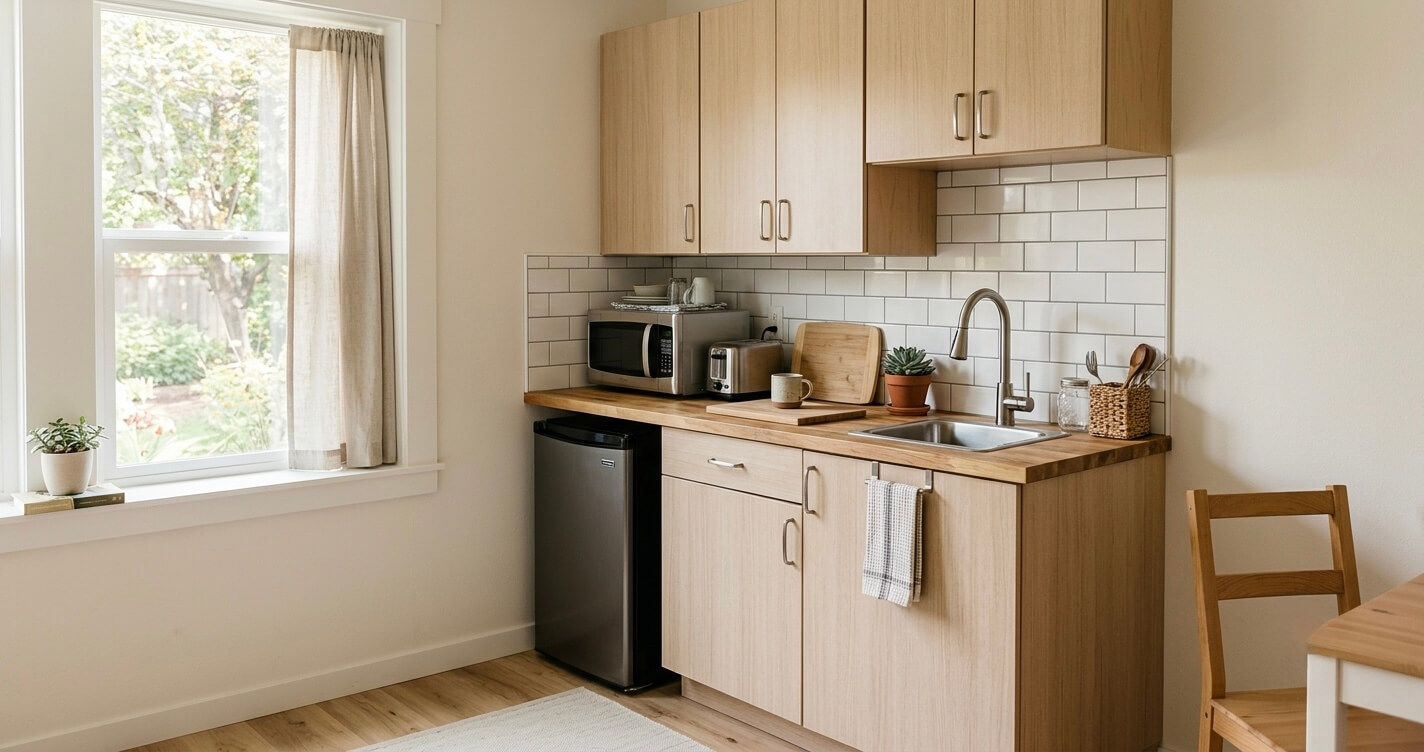
The most effective ways to control an in-law suite addition budget are choosing a basement or garage conversion over new construction, standardizing on a kitchenette instead of a full kitchen, and finalizing the design before permitting to avoid costly mid-project changes. Homeowners who lock in scope early typically stay within 5–10% of their original budget.
- Convert existing space (basement or garage) instead of building new square footage
- Choose a kitchenette over a full kitchen unless rental use is planned
- Finalize the design and finish selections before permit submission
- Group plumbing fixtures near existing supply and waste lines
- Avoid mid-construction design changes, one of the most common sources of cost overruns on addition projects
Common In-Law Suite Budgeting Mistakes to Avoid
The most common in-law suite budgeting mistakes are underestimating plumbing and electrical infrastructure costs, skipping the ALU permit form, and assuming a suite will qualify for rental income without confirming local zoning restrictions. These mistakes routinely add 15–25% to the original budget.
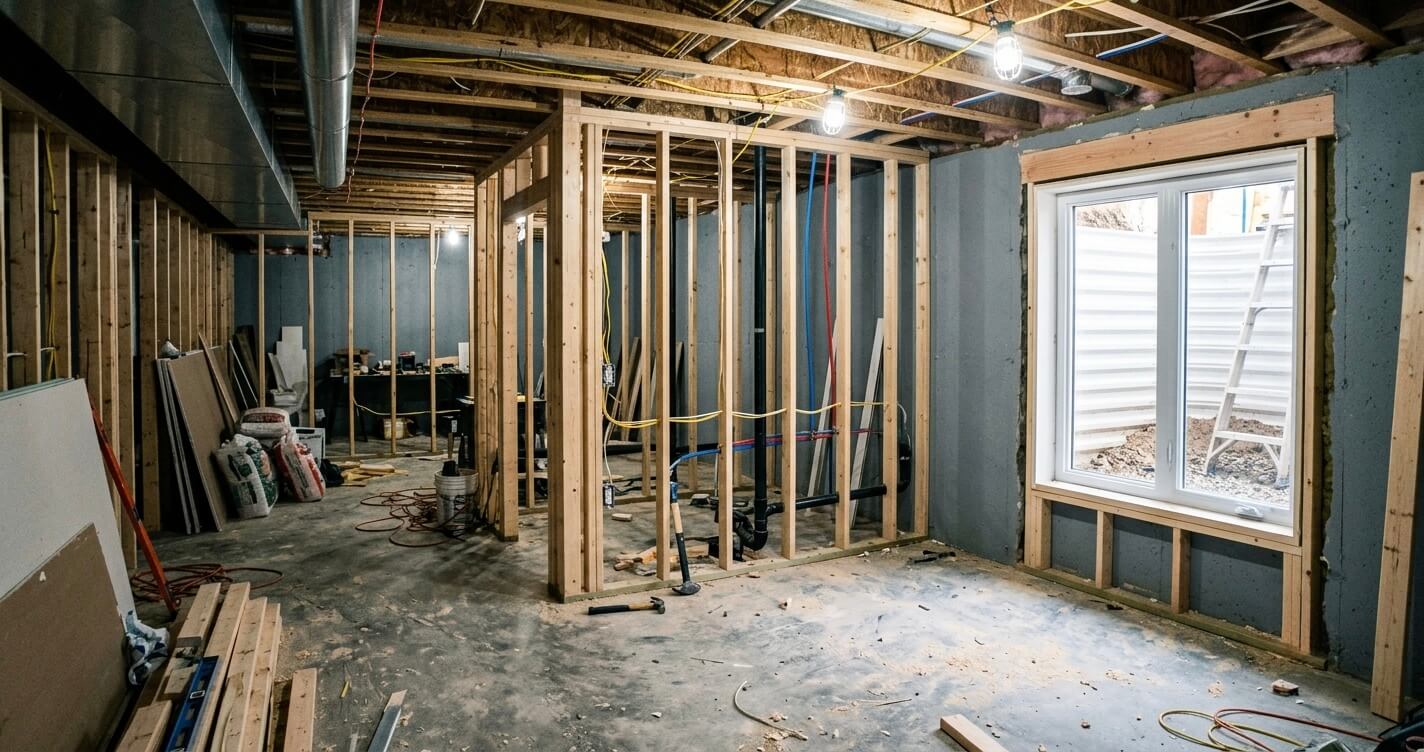
The ADU Mistakes Fairfax County VA guide covers the zoning and infrastructure planning errors that most often derail ADU and in-law suite budgets before construction even begins, including underestimating mechanical, electrical, and plumbing system costs relative to a suite’s small footprint.
In-Law Suite Addition vs. Other Addition Types: Cost Comparison
An in-law suite addition costs more per square foot than a standard room addition because it requires a full bathroom, dedicated plumbing, and often a kitchenette, costs a bedroom or family room addition doesn’t carry. Homeowners comparing options should expect an in-law suite to run $30–$80 more per square foot than a comparable non-suite addition.
For a full breakdown of costs across all addition types, see the Northern Virginia Home Addition Cost guide, which covers master suites, family rooms, and second-story additions alongside in-law suite and ADU pricing.
Is an In-Law Suite Addition Worth It in Northern Virginia?
An in-law suite addition is generally worth the investment in Northern Virginia because it serves a documented and growing need, not just a resale calculation. About 7.2% of U.S. family households were multigenerational as of the 2020 Census, a figure that has continued climbing since.
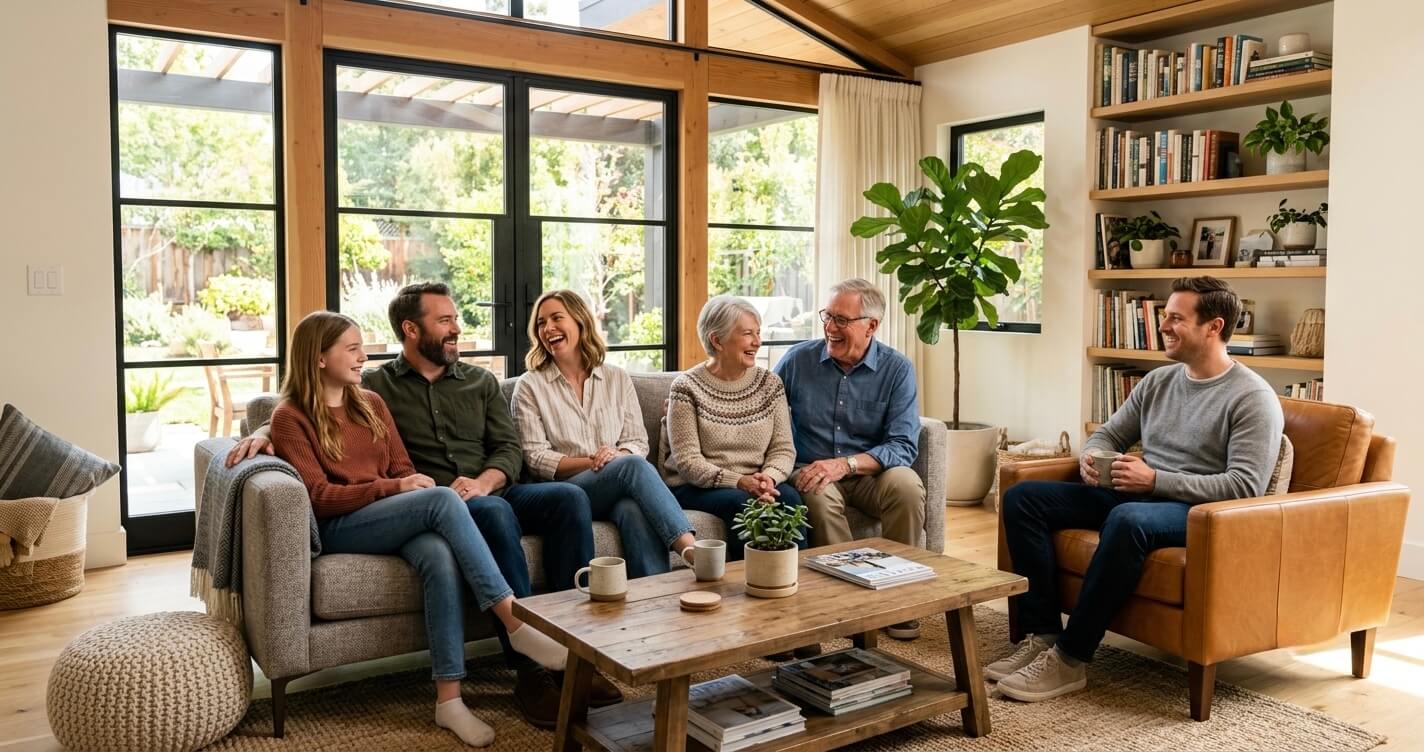
The financial case is reinforced by ownership data. By 2022, multigenerational households reached a 74.2% homeownership rate nationally, overtaking the rate for other family household types for the first time in over a decade. For Northern Virginia homeowners weighing an in-law suite addition cost Northern Virginia investment against a future sale, that shift points to durable buyer demand rather than a short-term trend.
Beyond resale, an in-law suite adds daily-use flexibility a typical addition doesn’t: space for aging parents, adult children, or long-term guests without changing the household’s living arrangement. The In-Law Suite Addition Northern Virginia service page covers the design options USHDB builds most often across Fairfax County, McLean, Vienna, and Reston.
Frequently Asked Questions
How much does an in-law suite addition cost in Northern Virginia?
An in-law suite addition cost Northern Virginia project typically ranges from $80,000 for a basement conversion to $320,000+ for a detached suite, or $150–$380 per square foot depending on suite type and finish level. Attached additions, the most common configuration, generally fall between $150,000 and $260,000.
Is a basement conversion cheaper than an attached in-law suite addition?
Yes. A basement conversion typically costs $80,000–$150,000 versus $150,000–$260,000 for an attached addition, because it uses the home’s existing foundation and roofline instead of requiring new structure. It does, however, require more extensive permitting for egress and moisture control.
Do I need a permit for an in-law suite in Fairfax County?
Yes. In-law suites in Fairfax County require building, electrical, and plumbing permits, plus an Accessory Living Unit (ALU) form if the space will function as an independent living unit. Permit costs typically run $1,500–$6,000 depending on suite type and scope.
What’s typically included in an in-law suite?
Most in-law suites include a bedroom, a full bathroom, a living area, and often a kitchenette with a sink, mini-fridge, and microwave. Homeowners planning to use the suite for rental income should budget for a full kitchen instead, which adds $15,000–$30,000.
Does an in-law suite increase home value in Northern Virginia?
Yes, generally. An in-law suite adds functional living space that appeals directly to the growing pool of multigenerational buyers in the Northern Virginia market, in addition to whatever resale value a comparable addition would provide.
How long does an in-law suite addition take to build?
Most in-law suite additions take three to seven months from permit approval to completion, depending on suite type, size, and site conditions. Basement and garage conversions are typically faster than attached or detached new construction.
Can I rent out an in-law suite in Fairfax County?
Rental use is limited and depends on the property’s zoning and ALU classification, it is not automatic. Homeowners planning to rent a suite should confirm eligibility with Fairfax County before finalizing the design, since it affects kitchen requirements and permit type.
Final Thoughts
Budgeting accurately for an in-law suite addition cost Northern Virginia project starts with knowing which suite type fits your lot, your permitting timeline, and your family’s actual needs, not a national average. The right starting point is a site-specific estimate, not a per-square-foot rule of thumb applied to a different market.
Planning a similar project in Northern Virginia? Contact US Home Design Build to discuss your goals, budget, and timeline with our design-build team.
