
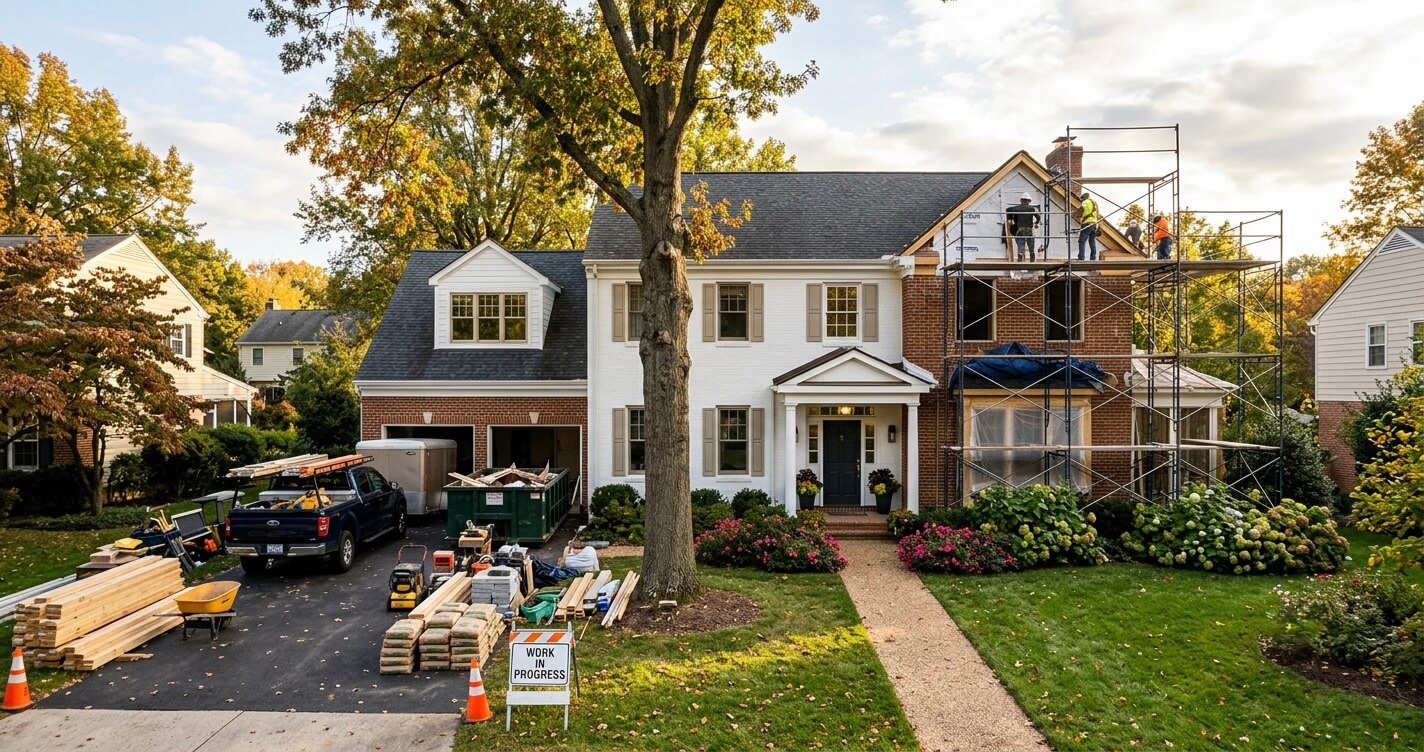
Underestimating the true budget, skipping local permits, and hiring a contractor on price alone are the three most common home renovation mistakes Northern Virginia homeowners make in 2026. Each of these errors is preventable with proper planning, and each one can add weeks to a timeline or thousands of dollars to a final invoice.
Northern Virginia’s renovation market is unlike most of the country. Fairfax County, Arlington County, McLean, Vienna, Great Falls, Reston, and Burke all combine an aging housing stock, strict local permitting systems, and some of the highest construction costs in the Mid-Atlantic. Homeowners who approach a renovation the way they would in a lower-cost, less-regulated market often run into problems that could have been avoided from the start.
With our design-build team having guided homeowners across Fairfax County, McLean, Vienna, and Arlington through kitchen remodels, additions, and full home renovations, US Home Design Build has seen the same home renovation mistakes Northern Virginia homeowners make again and again. This guide breaks down the eight most common mistakes, why they happen locally, and exactly how to avoid them.
What Are the Most Common Home Renovation Mistakes in Northern Virginia?
The most common home renovation mistakes Northern Virginia homeowners make are underestimating the total budget, skipping or rushing required permits, hiring a contractor based on price alone, ignoring site and lot conditions, and failing to plan realistic timelines. These five categories account for the majority of cost overruns and project delays reported across Fairfax County, Arlington, and the surrounding region.
Each mistake below is common enough that it shows up across nearly every project type, kitchens, bathrooms, additions, basements, and full home renovations. Understanding them before signing a contract is the single best way to protect both your budget and your timeline.
Mistake #1 – Underestimating the True Budget
Underestimating the true renovation budget is the single most common home renovation mistake Northern Virginia homeowners make. Most homeowners budget for materials and labor but fail to set aside a contingency for hidden site conditions, which is especially risky in a region with older housing stock and variable soil and drainage conditions.
National remodeling spending reached $280.1 billion on a seasonally adjusted annualized basis in the fourth quarter of 2025, accounting for 37.7% of total private residential fixed investment.
Virginia was also named among the top five states nationally for year-over-year growth in remodeling spending, with an increase of roughly $600 million, a clear signal that renovation activity, and renovation cost pressure, is intensifying across the state.
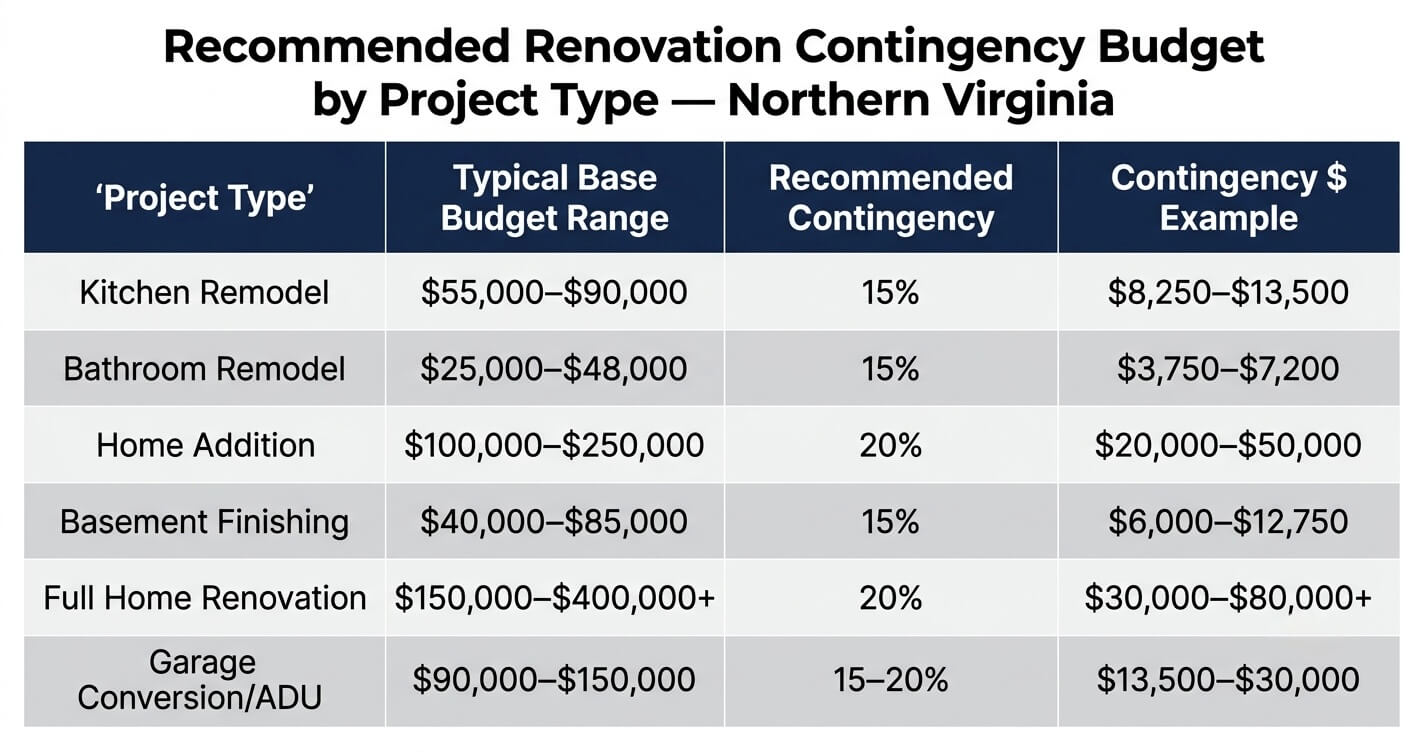
The most reliable way to avoid this mistake is to build a contingency of 10–20% into the total project budget before construction begins, with older homes and structural work sitting at the higher end of that range. Homeowners planning a project with strong resale potential should also review realistic return-on-investment data before finalizing a scope.
For a full breakdown of which projects deliver the strongest financial return in this market, see our guide to Best ROI Home Improvements Northern Virginia.
Recommended Contingency Budget by Project Type
Mistake #2 – Skipping or Rushing Local Permits
Skipping or rushing required permits is one of the most expensive home renovation mistakes Northern Virginia homeowners make, because unpermitted work can trigger stop-work orders, fines, and serious complications at resale. Fairfax County and Arlington County both enforce strict permitting requirements for structural, electrical, plumbing, and HVAC work.
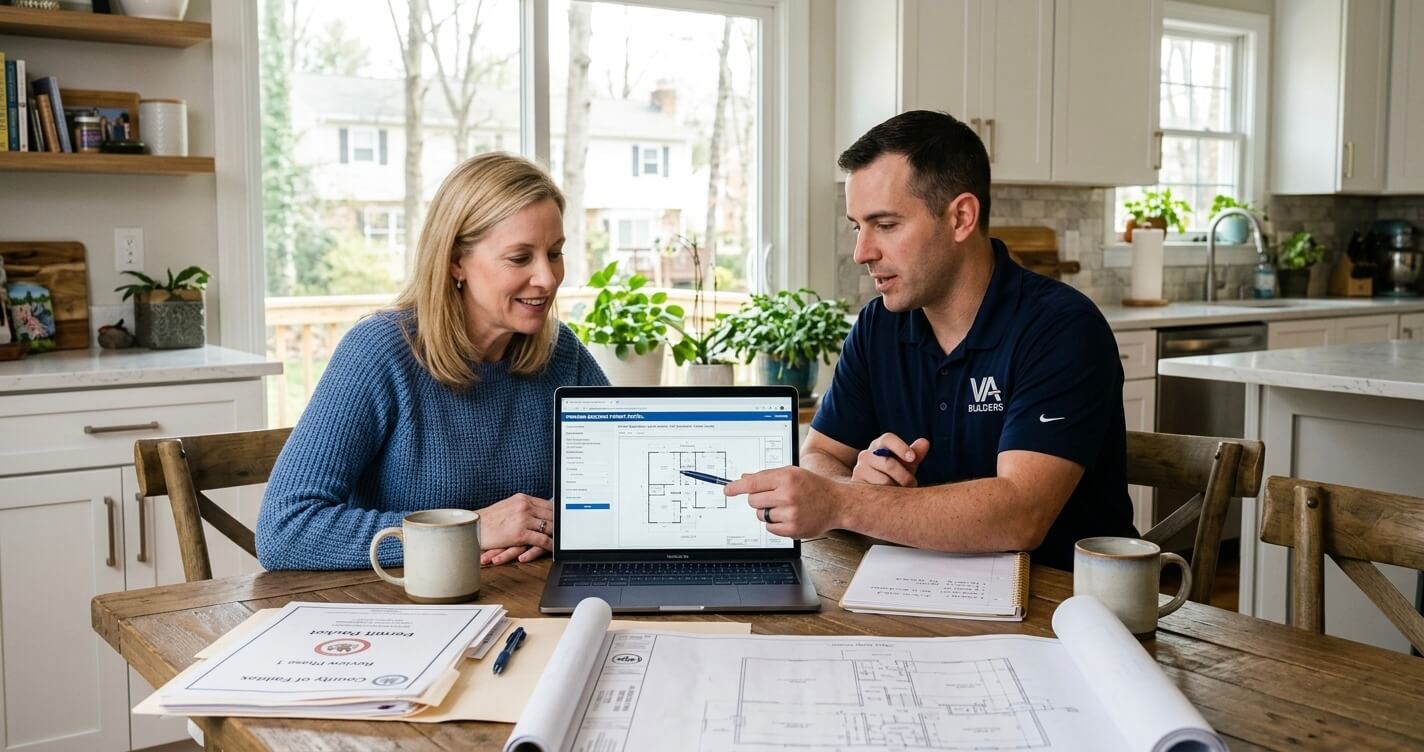
All permit applications in Fairfax County must be submitted through the PLUS (Planning and Land Use System) online portal; there is no walk-in or paper submission option. Reviews can involve Building Plan Review, Zoning, the Health Department, and the Fire Marshal depending on project scope, as detailed in our Remodeling Permit Fairfax County guide.
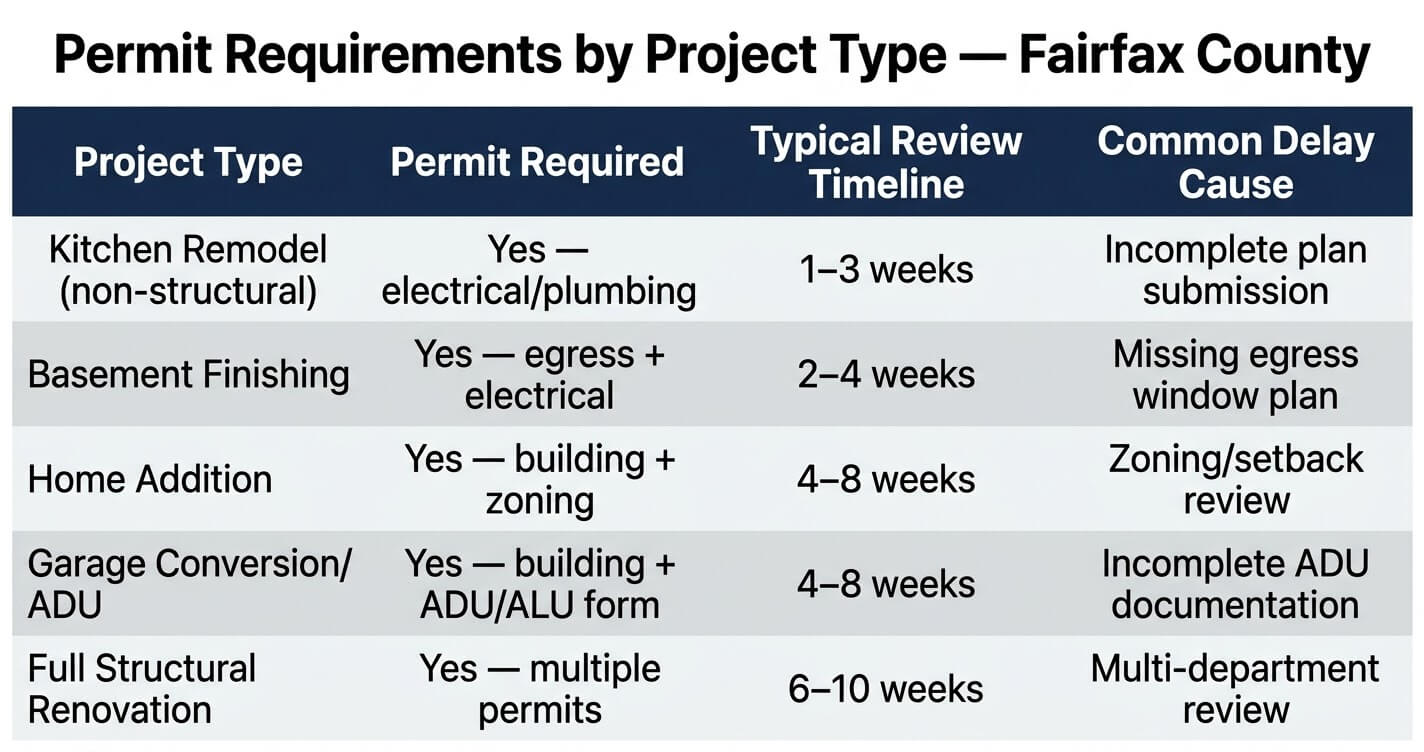
A frequent version of this mistake is assuming cosmetic-sounding work is exempt. Garage conversions, basement egress windows, and even some interior structural changes almost always require permits in Fairfax County, and skipping this step can create major issues during a future home sale when unpermitted work is discovered during a buyer’s inspection.
Permit Requirements by Project Type in Fairfax County
Mistake #3 – Choosing a Contractor Based on Price Alone
Choosing a contractor based solely on the lowest bid is a common home renovation mistake Northern Virginia homeowners regret, because unusually low quotes often mean corners are cut on permits, materials, or licensed labor. The lowest bid on paper frequently becomes the most expensive project once change orders and rework are factored in.
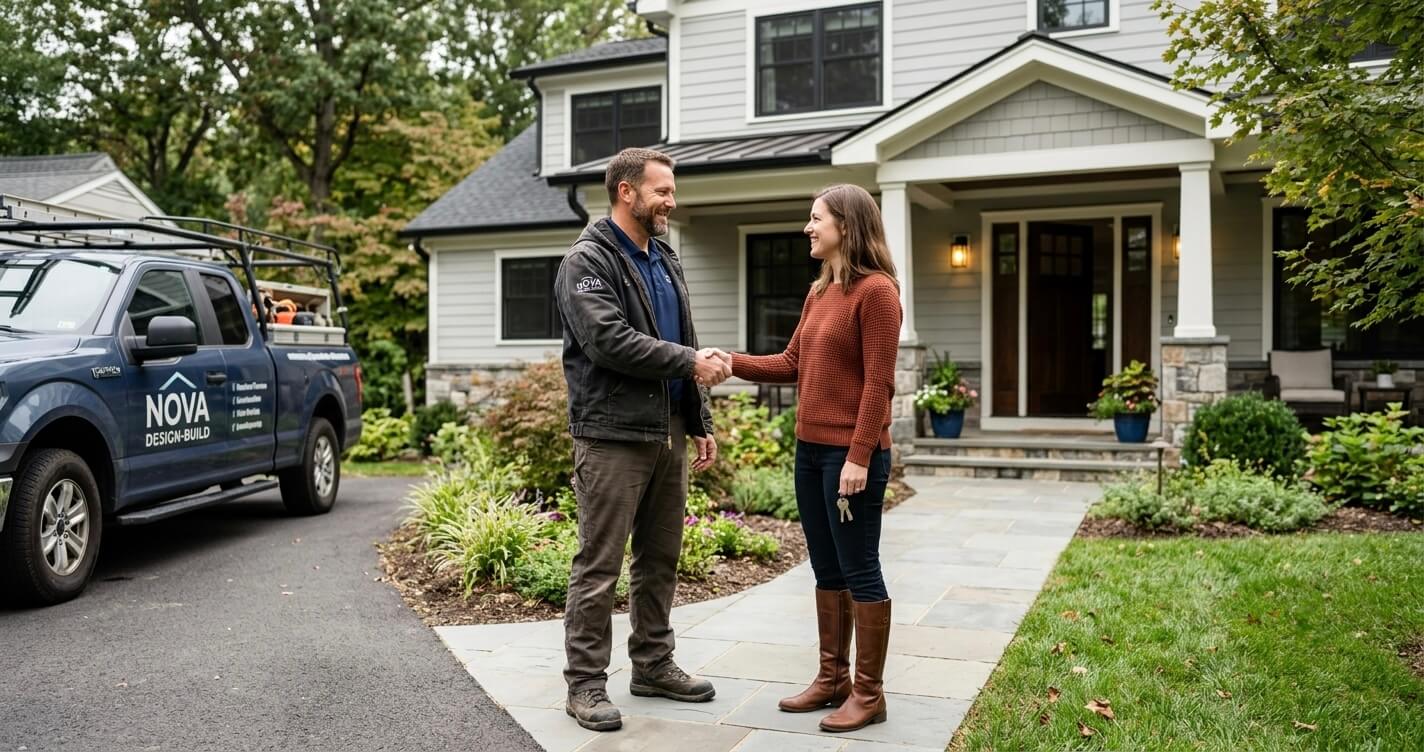
A qualified renovation partner should be able to show proof of Virginia contractor licensing, active insurance, a portfolio of completed Northern Virginia projects, and a clear process for managing permits on the homeowner’s behalf. Design-build firms in particular can reduce miscommunication risk because design and construction are managed under a single team rather than handed off between separate parties.
Homeowners weighing renovation options in Fairfax County or Arlington may benefit from discussing contractor vetting and realistic budgeting with an experienced design-build team before finalizing plans.
Mistake #4 – Ignoring Site and Lot Conditions
Ignoring site and lot conditions before finalizing a renovation plan is a costly home renovation mistake Northern Virginia homeowners make, particularly in a region where the housing stock skews older and site conditions vary significantly by neighborhood. Grading, drainage, and foundation age all affect what a renovation can safely include.
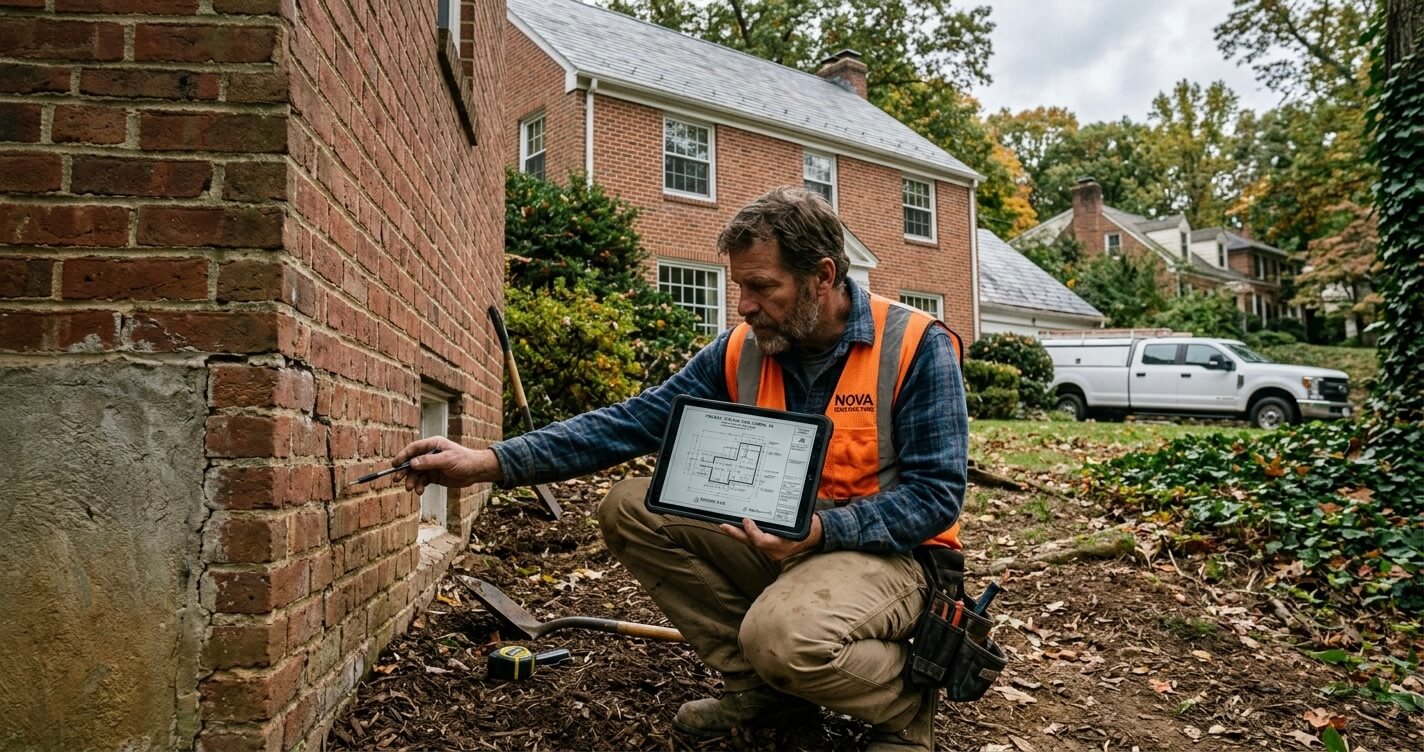
The typical age of a U.S. home rose from 31 years in 2006 to 41 years in 2023, a trend that is especially relevant in established Northern Virginia neighborhoods like McLean, Vienna, and Falls Church where many homes were built decades before current code requirements.
Our Custom Home Build Timeline Northern Virginia guide outlines how skipping a thorough site evaluation before design is one of the most common causes of expensive mid-project redesigns, a lesson that applies equally to renovations and ground-up builds.
Mistake #5 – Poor Space Planning: Renovating When an Addition Makes More Sense
Poor space planning, renovating an existing footprint when an addition would better solve the underlying problem, is a home renovation mistake Northern Virginia homeowners often make when they focus on a single room instead of the home’s overall layout. A kitchen remodel cannot fix a fundamentally undersized floor plan.
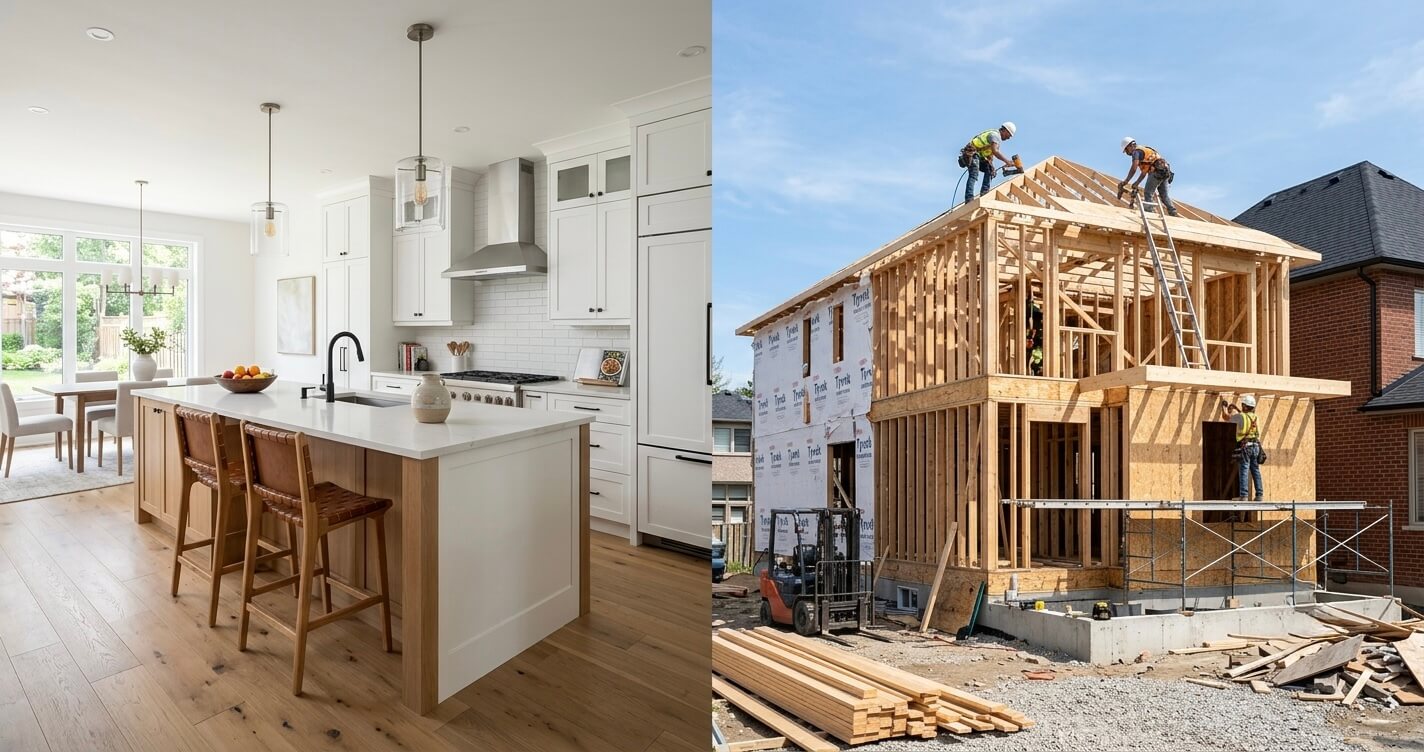
Homeowners comparing their options should evaluate both paths before committing. Our Kitchen Remodeling Vienna VA guide breaks down when an open-concept renovation is sufficient, while our Home Additions Northern Virginia service page covers when expanding the footprint is the better long-term investment.
Mistake #6 – Overlooking Realistic Timeline Expectations
Overlooking realistic timeline expectations is a frequent home renovation mistake Northern Virginia homeowners make, since permit review, material lead times, and seasonal scheduling all extend timelines well beyond the construction phase alone. A mid-size renovation in Fairfax County commonly takes several weeks longer than homeowners initially expect.
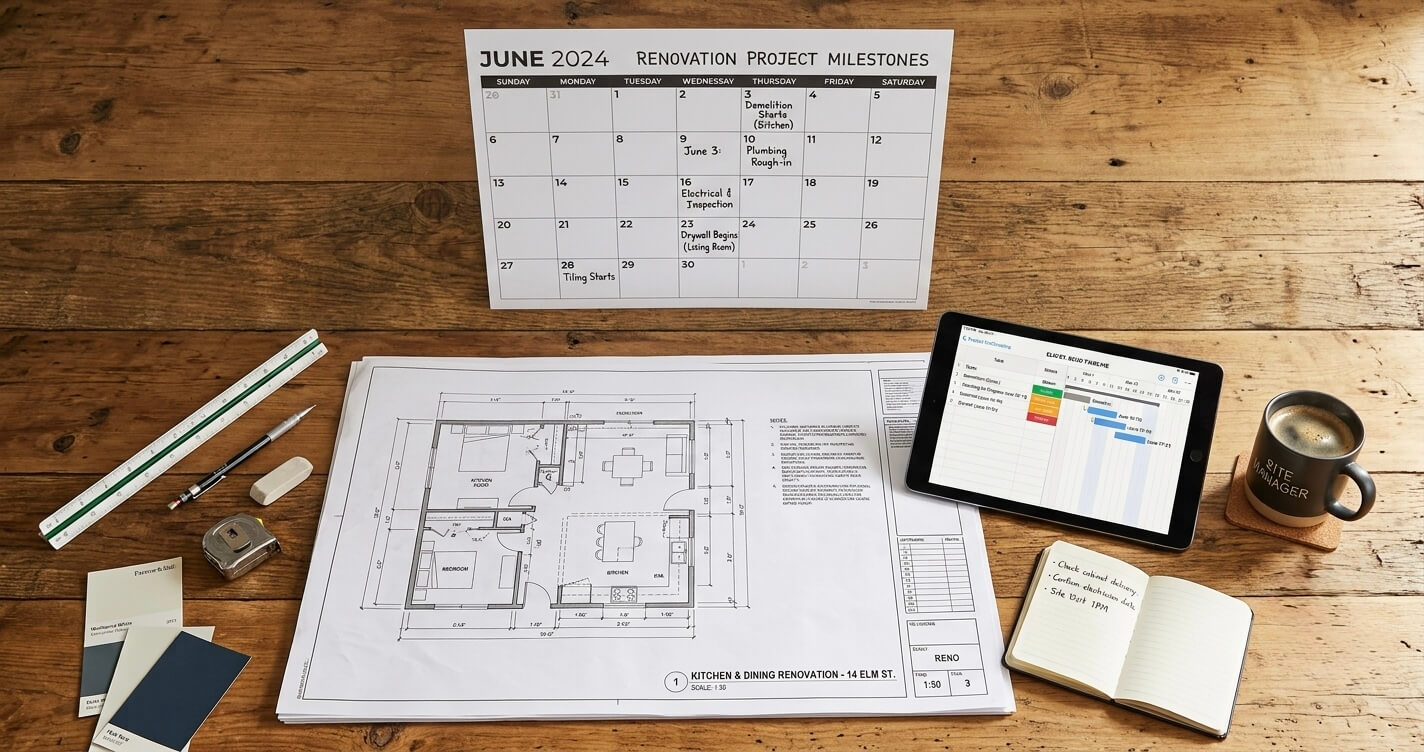
Permit review alone can add anywhere from one to ten weeks depending on project scope, and this happens before any construction crew arrives on-site. Homeowners who build permit review and material ordering into their planning timeline from the outset avoid the frustration of an open-ended project.
Mistake #7 – Allowing DIY or Unlicensed Work on Structural, Electrical, or Plumbing Elements
Allowing DIY or unlicensed work on structural, electrical, or plumbing elements is a home renovation mistake Northern Virginia homeowners should avoid entirely, since this work is required by code to be permitted and inspected. Unpermitted structural or electrical work can fail a home inspection and delay or derail a future sale.
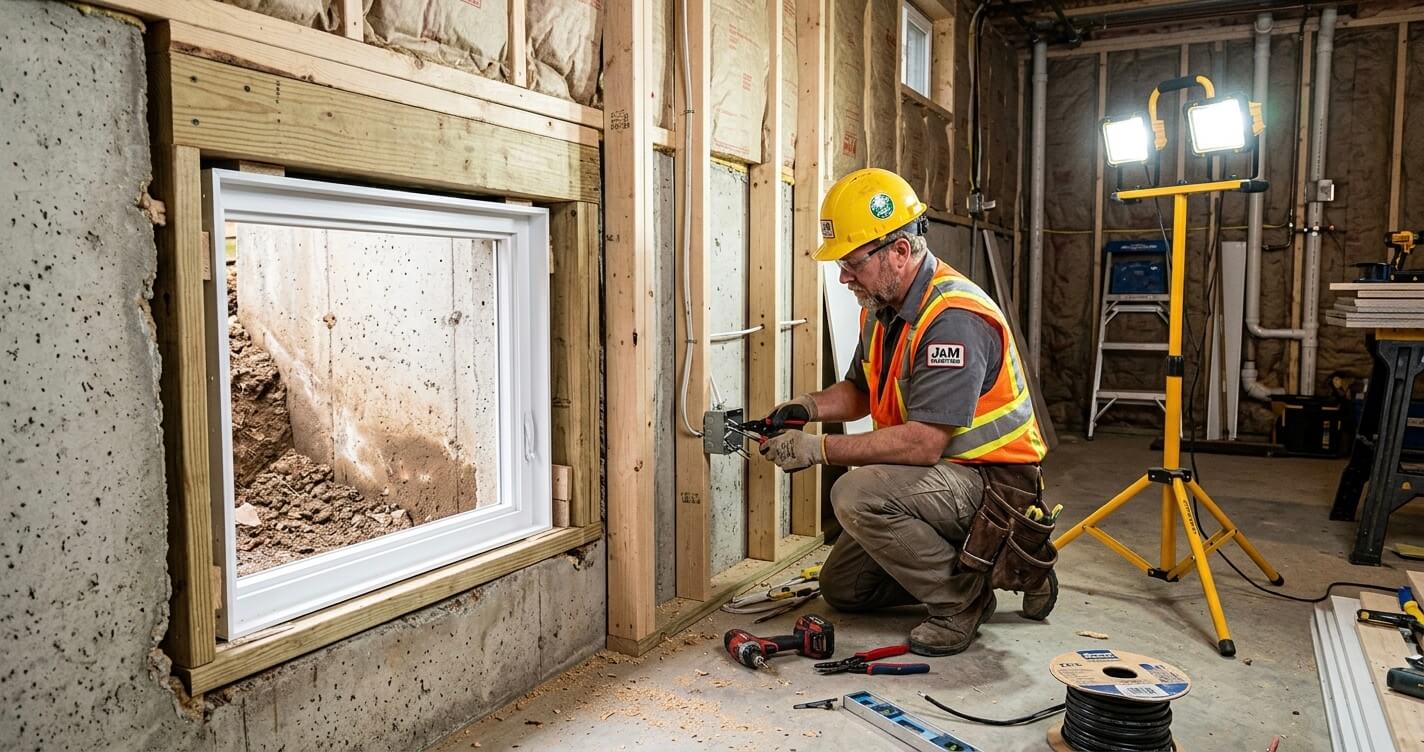
This mistake is especially common on basement finishing projects, where homeowners attempt to save money on electrical or egress window installation. Both elements are safety-critical and are among the first items a Fairfax County inspector will check.
Mistake #8 – Failing to Plan for Resale Value and Long-Term ROI
Failing to plan for resale value and long-term ROI is a home renovation mistake Northern Virginia homeowners make when they select projects based purely on personal preference rather than market data. Not every renovation dollar returns equally at resale, and the right choice depends heavily on how long a homeowner plans to stay.
A commonly used industry benchmark is the 30% rule: keeping total renovation costs below approximately 30% of a home’s current market value to avoid over-improving beyond what the neighborhood supports at resale. Our full breakdown in Renovate vs. Sell Northern Virginia compares renovation ROI against the cost of moving in today’s mortgage rate environment.
How to Avoid These Mistakes When Renovating in Northern Virginia
The most effective way to avoid home renovation mistakes in Northern Virginia is to build a realistic contingency budget, confirm every required permit before construction begins, and work with a licensed design-build team that manages both design and construction under one process. These three steps address the root cause of the majority of renovation problems reported by Northern Virginia homeowners.
Renovation Mistake Prevention Checklist
| Mistake Category | Prevention Step | Responsible Party |
| Budget | Set 10–20% contingency before construction | Homeowner + Contractor |
| Permits | Confirm all required permits via Fairfax County PLUS portal | Contractor |
| Contractor Selection | Verify licensing, insurance, and portfolio | Homeowner |
| Site Conditions | Complete site/lot evaluation before design | Contractor |
| Space Planning | Compare renovation vs. addition options | Homeowner + Designer |
| Timeline | Build in permit review and material lead time | Contractor |
| Code Compliance | Use licensed trades for structural/electrical/plumbing | Contractor |
| Resale Value | Apply the 30% rule before finalizing scope | Homeowner |
Frequently Asked Questions
What is the biggest home renovation mistake homeowners make in Northern Virginia?
The biggest home renovation mistake Northern Virginia homeowners make is underestimating the total budget by not setting aside a contingency for hidden site conditions. This is especially common in older neighborhoods across Fairfax County, McLean, and Vienna, where grading, drainage, and outdated systems are frequently discovered only after construction begins.
Do I need a permit for a home renovation in Fairfax County?
Yes, most home renovation projects in Fairfax County require a permit, including electrical, plumbing, structural, and egress-related work. Full permit requirements by project type are outlined in our Remodeling Permit Fairfax County guide.
How much should I budget for unexpected renovation costs?
Most Northern Virginia renovation projects should include a contingency of 10–20% of the total base budget, with older homes and structural projects sitting at the higher end of that range. This buffer covers hidden site conditions, material price changes, and code-related upgrades discovered mid-project.
Is it better to renovate or add onto my home in Northern Virginia?
Whether to renovate or add on depends on whether the existing footprint can realistically solve the layout problem, or whether more square footage is genuinely needed. Our Home Additions Northern Virginia page and Renovate vs. Sell Northern Virginia guide both break down this decision in detail.
How do I choose a reliable renovation contractor in Northern Virginia?
A reliable renovation contractor in Northern Virginia should provide proof of Virginia licensing, active insurance, a completed portfolio of comparable local projects, and a documented process for managing permits with the county. Avoid selecting a contractor based on price alone, since unusually low bids often signal cut corners.
How long does a typical home renovation take in Northern Virginia?
A typical home renovation in Northern Virginia takes several weeks to several months longer than homeowners initially expect, largely due to permit review timelines that can range from one to ten weeks depending on project scope. Building this review period into the overall project timeline from the start prevents unrealistic expectations.
Can renovation mistakes affect my home’s resale value?
Yes, renovation mistakes such as unpermitted work or over-improving beyond neighborhood value can directly reduce resale value or complicate a future sale. Unpermitted structural or electrical work is a common issue discovered during buyer inspections and can delay closing or require costly retroactive permitting.
Final Thoughts on Avoiding Home Renovation Mistakes in Northern Virginia
Avoiding the most common home renovation mistakes Northern Virginia homeowners make comes down to three fundamentals: realistic budgeting, proper permitting, and choosing a contractor with proven local experience. Homeowners who plan for contingency costs, confirm permit requirements early, and evaluate renovation-versus-addition options before committing to a scope consistently avoid the delays and cost overruns that derail less-prepared projects.
Planning a similar project in Northern Virginia? Contact US Home Design Build to discuss your goals, budget, and timeline with our design-build team.