
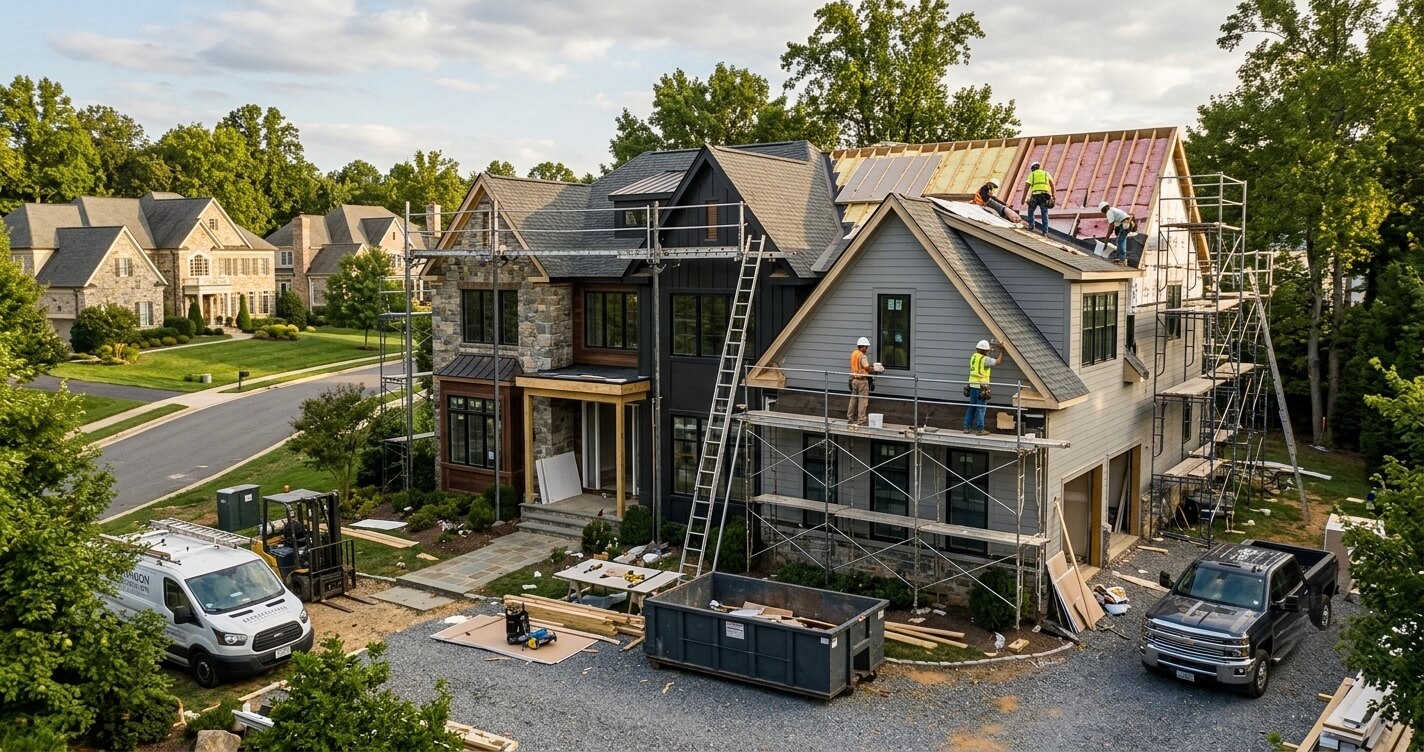
Homeowners across Fairfax County, Arlington, McLean, Vienna, Reston, Burke, and surrounding Northern Virginia communities are investing heavily in their homes. With housing inventory remaining limited and many homeowners choosing to renovate rather than relocate, remodeling projects have become one of the most significant financial decisions a family can make.
Yet the most costly home renovation mistakes Northern Virginia homeowners make often happen long before construction begins. In many cases, budget overruns, permit delays, contractor disputes, and disappointing results can be traced back to planning decisions made during the earliest stages of a project.
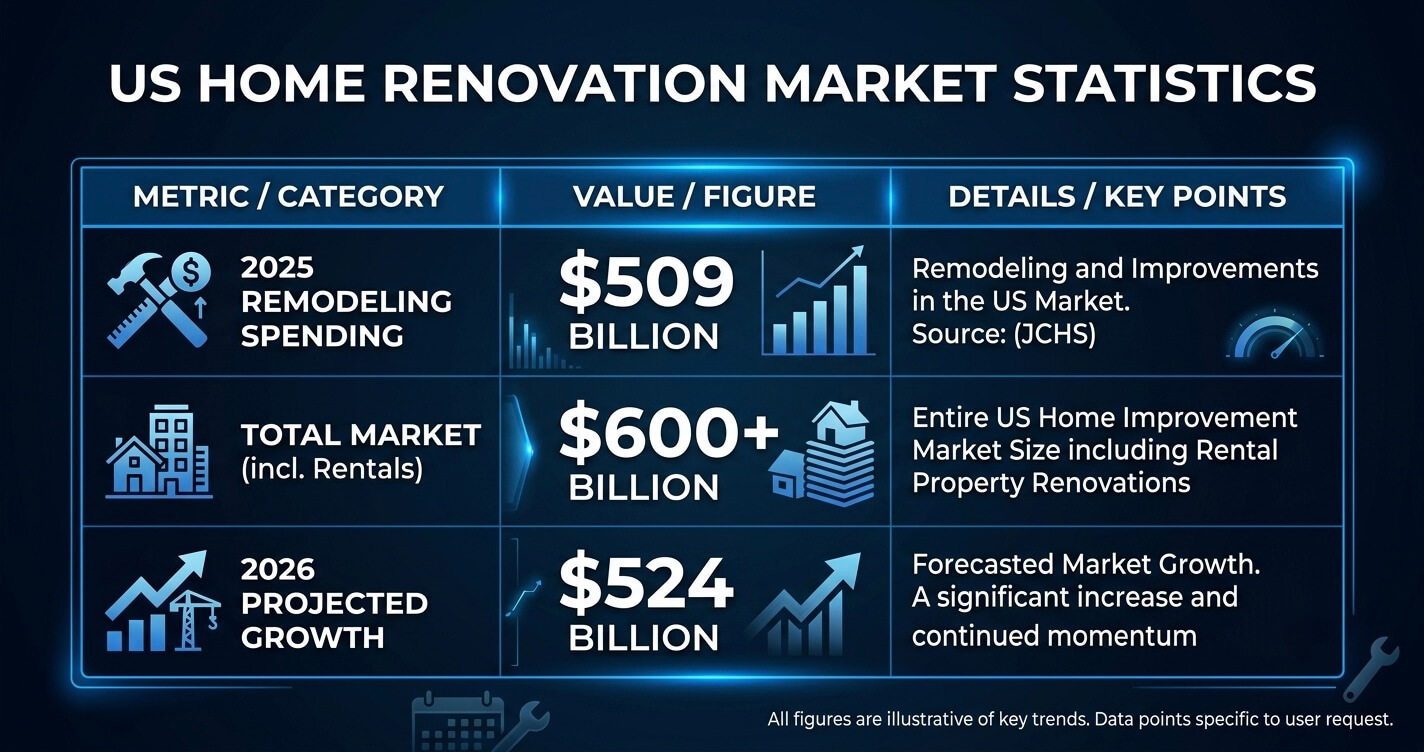
The stakes are high. According to Harvard University’s Joint Center for Housing Studies (JCHS), homeowner spending on remodeling and repairs is projected to reach approximately $509 billion nationally in 2025, while total remodeling market activity, including rental properties, is expected to exceed $600 billion. [Source: Harvard Joint Center for Housing Studies]
Northern Virginia presents additional challenges that many homeowners underestimate. The region combines aging housing stock, complex zoning requirements, multiple permitting authorities, active homeowners associations, and some of the highest construction labor costs in the Mid-Atlantic. A renovation project that might proceed smoothly elsewhere can encounter significant complications when local regulations, permitting requirements, and project coordination are not fully understood.
Whether you’re planning a kitchen remodel, basement finishing project, home addition, bathroom renovation, or whole-house transformation, avoiding common mistakes can save thousands of dollars and months of unnecessary delays.
This guide examines the most common home renovation mistakes Northern Virginia homeowners make in 2026 and provides practical strategies to help you avoid them before they impact your timeline, budget, and long-term investment.
Why Home Renovation Mistakes in Northern Virginia Are More Costly Than Elsewhere
Every renovation market has its challenges, but Northern Virginia presents a combination of regulatory, structural, and economic factors that leave homeowners with far less room for error.
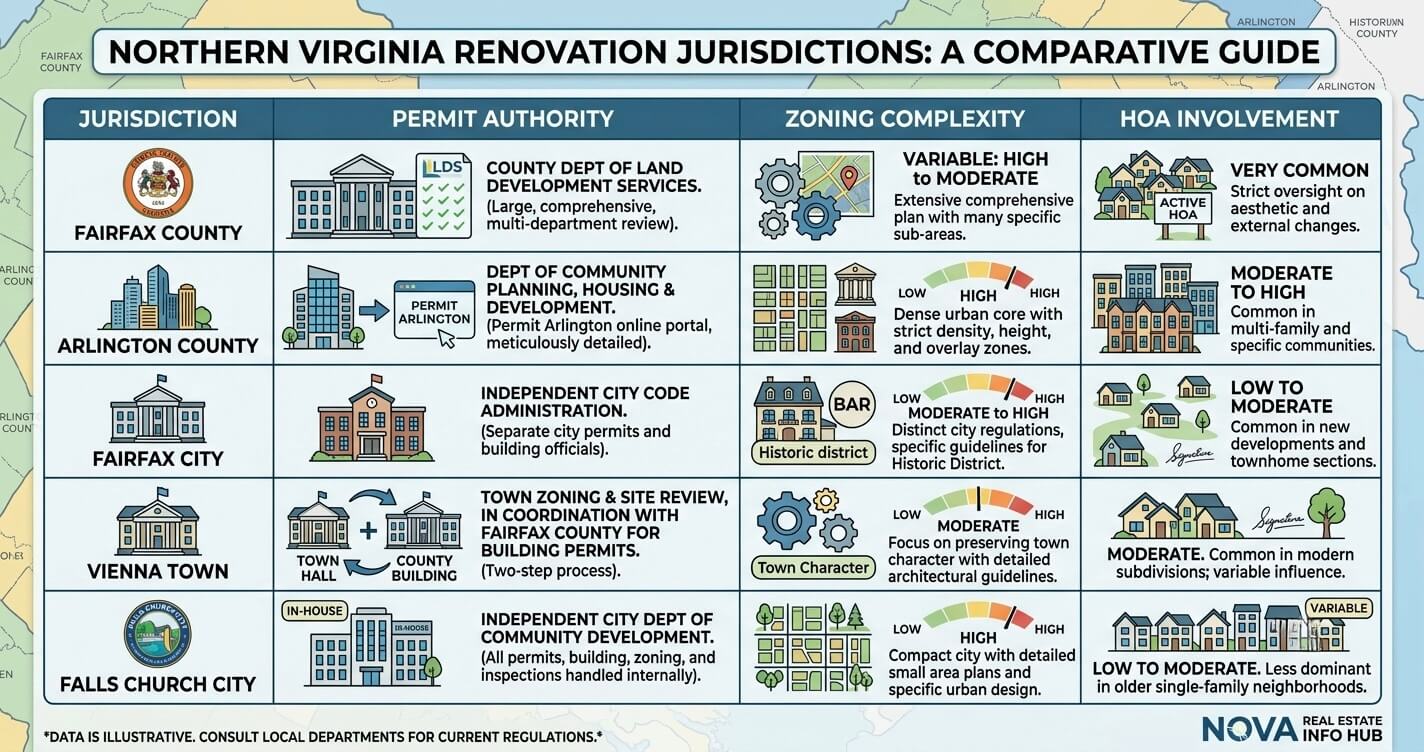
Many home renovation mistakes Northern Virginia homeowners face are compounded by the region’s complex permitting and development environment. Unlike areas where permitting processes are relatively centralized, Northern Virginia consists of multiple jurisdictions, each with its own requirements, review procedures, and approval timelines. Fairfax County, Arlington County, Fairfax City, Falls Church, and other municipalities all maintain separate building and zoning processes that homeowners must navigate correctly.
Fairfax County Land Development Services (LDS): Click Here
In addition to local government approvals, many neighborhoods operate under active homeowners associations (HOAs). Obtaining a county permit does not automatically satisfy HOA requirements, and homeowners frequently discover that separate architectural review approvals are required before construction can begin.
The region’s housing stock also contributes to renovation complexity. Homes built throughout the 1960s, 1970s, and 1980s in communities such as Annandale, Burke, and portions of Reston often conceal aging electrical systems, outdated plumbing infrastructure, insufficient insulation, and structural conditions that only become visible once demolition begins.
At the same time, Northern Virginia continues to experience strong demand for qualified remodeling professionals. High demand means reputable contractors often maintain full project pipelines, making careful planning and contractor selection even more important.
Taken together, these factors create an environment where mistakes involving budgeting, permitting, contractor selection, design planning, or scheduling can have larger financial consequences than homeowners initially expect.
Mistake #1 – Choosing the Cheapest Contractor Without Vetting Credentials
One of the most expensive mistakes homeowners make is selecting a contractor primarily because they submitted the lowest bid.
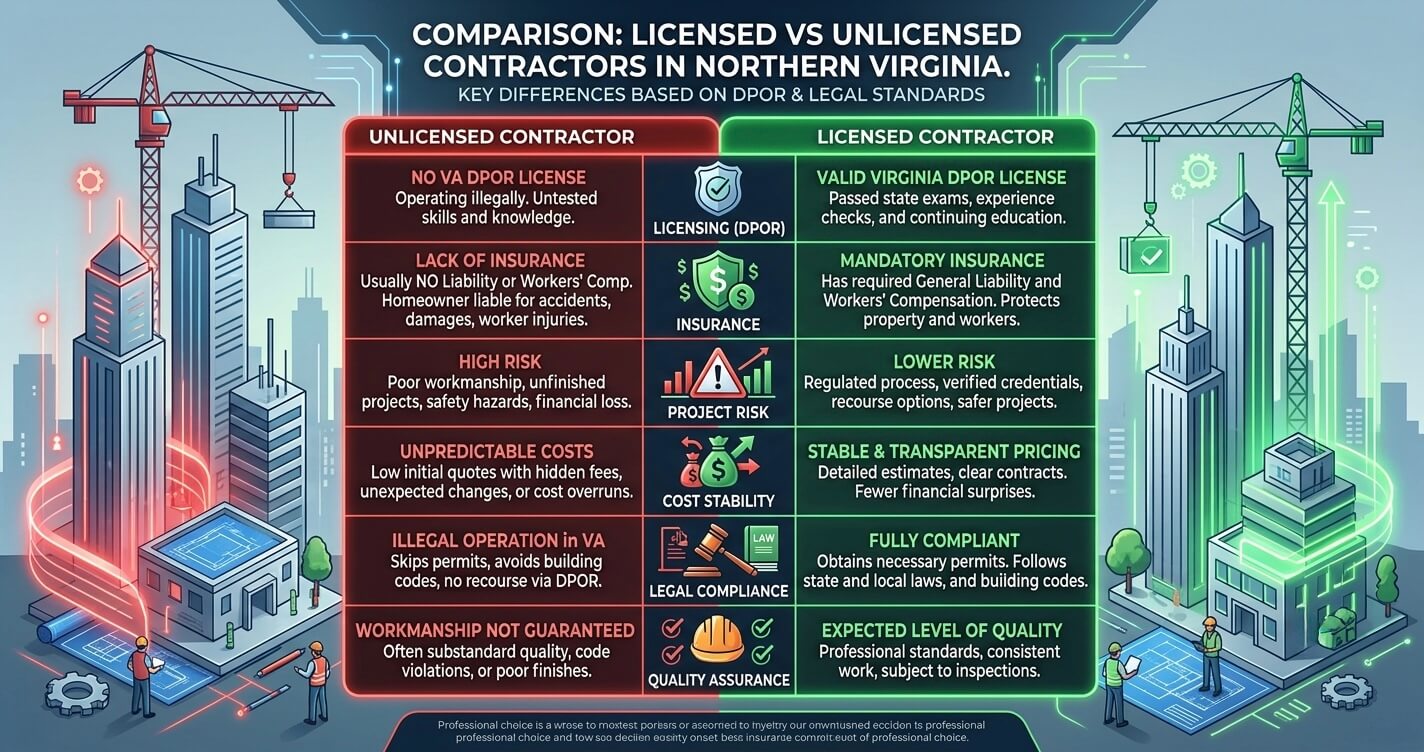
While saving money is a reasonable goal, unusually low proposals often indicate missing scope items, inadequate insurance coverage, insufficient project management resources, or licensing deficiencies that may not become apparent until construction is underway.
This risk becomes even more significant in Northern Virginia’s highly active remodeling market. According to the National Association of Home Builders (NAHB), the Remodeling Market Index (RMI) recorded a score of 60 during the third quarter of 2025, indicating that a majority of professional remodelers viewed current market conditions as good. [Source: National Association of Home Builders (NAHB)]
Strong market conditions generally mean experienced contractors have steady demand. When a proposal appears dramatically lower than competing bids, homeowners should carefully investigate why.
Virginia also maintains contractor licensing requirements that homeowners should verify before signing any agreement. Under Virginia law, contractors performing qualifying work must hold an active license issued by the Virginia Department of Professional and Occupational Regulation (DPOR).
Virginia DPOR License Lookup: Click Here
Additionally, Fairfax County advises homeowners to verify contractor credentials before beginning construction projects. [Source: Fairfax County Land Development Services]
Consider a common scenario seen throughout the region. A homeowner receives three renovation proposals for a major remodeling project. Two bids fall within a similar range, while a third comes in significantly lower. Tempted by the apparent savings, the homeowner chooses the cheapest option. Several weeks later, communication becomes inconsistent, subcontractors stop appearing on site, and previously excluded costs begin appearing as change orders. By project completion, the homeowner has spent more than the higher original proposals while enduring months of avoidable delays.
The lesson is straightforward: evaluate contractors based on licensing, insurance, project management processes, communication standards, references, and relevant experience, not price alone.
Homeowners planning a renovation should strongly consider consulting experienced Home Renovation Contractors Northern Virginia and fully licensed design-build professionals before signing any construction agreement.
Working with experienced home renovation contractors in Northern Virginia who maintain appropriate licensing, insurance coverage, and established project management systems can significantly reduce risk from the outset.
Mistake #2 – Underestimating the True Cost of a Northern Virginia Renovation
One of the most expensive home renovation mistakes Northern Virginia homeowners make is treating an initial estimate as the final project cost.
Many homeowners focus exclusively on visible expenses such as labor, cabinetry, flooring, fixtures, and finishes while overlooking the numerous secondary costs that often emerge throughout the renovation process.
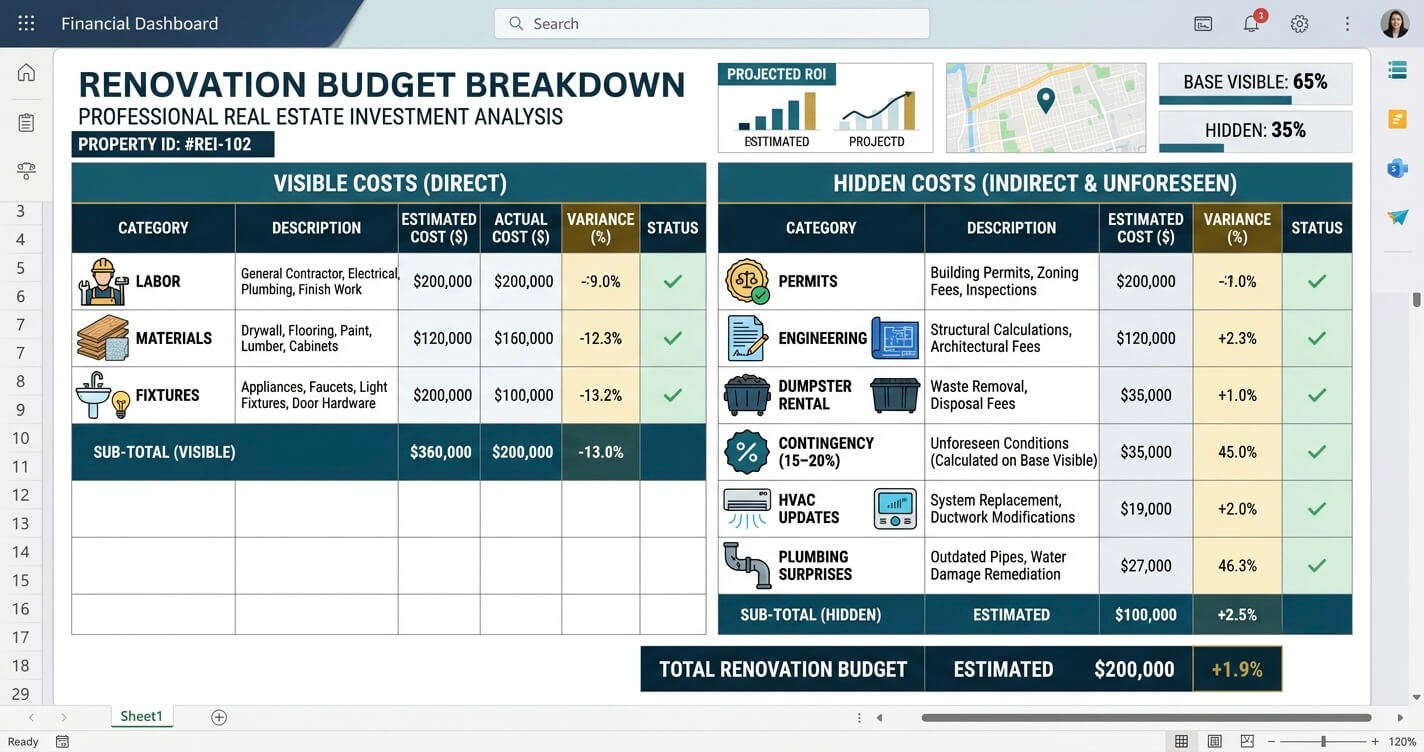
Permit fees are one example. Depending on project scope, homeowners may encounter costs associated with building permits, electrical permits, plumbing permits, mechanical permits, inspections, and plan reviews. [Source: Fairfax County Land Development Services]
Older Northern Virginia homes can create even greater budget uncertainty. Once walls, ceilings, or flooring are opened, contractors may discover outdated wiring, deteriorated plumbing systems, structural deficiencies, moisture intrusion, or previous unpermitted modifications that require correction before work can continue.
Material procurement is another commonly underestimated expense. While homeowners often focus on product pricing, they may not account for storage costs, shipping charges, supply-chain disruptions, or extended lead times. Custom cabinetry, specialty windows, and premium finish materials frequently require weeks, or even months, to arrive after ordering.
Additional expenses can include:
- Engineering and structural drawings
- Dumpster rental and debris removal
- Temporary utility modifications
- Temporary housing accommodations during major renovations
- Permit revisions and resubmissions
- Landscaping repairs following exterior work
For this reason, experienced renovation professionals typically recommend maintaining a contingency reserve of approximately 15–20 percent above the projected budget, particularly for older homes where hidden conditions are more likely.
A comprehensive, itemized estimate should clearly identify labor costs, material allowances, permit responsibilities, contingency planning, and assumptions regarding existing conditions. Vague verbal quotes rarely provide enough detail for homeowners to accurately evaluate project risk.
Budget problems also tend to accelerate when homeowners expand project scope midway through construction. A renovation that begins as a kitchen update can quickly evolve into structural modifications or additional square footage.
Understanding potential expansion costs before Home Additions Northern Virginia begins allows homeowners to make informed decisions rather than reactive ones.
Mistake #3 – Skipping Permits or Misunderstanding Fairfax County’s Permitting Rules
Among the most legally consequential home renovation mistakes Northern Virginia homeowners make is skipping the permit process, or assuming their contractor’s verbal assurance is sufficient proof that permits are unnecessary.
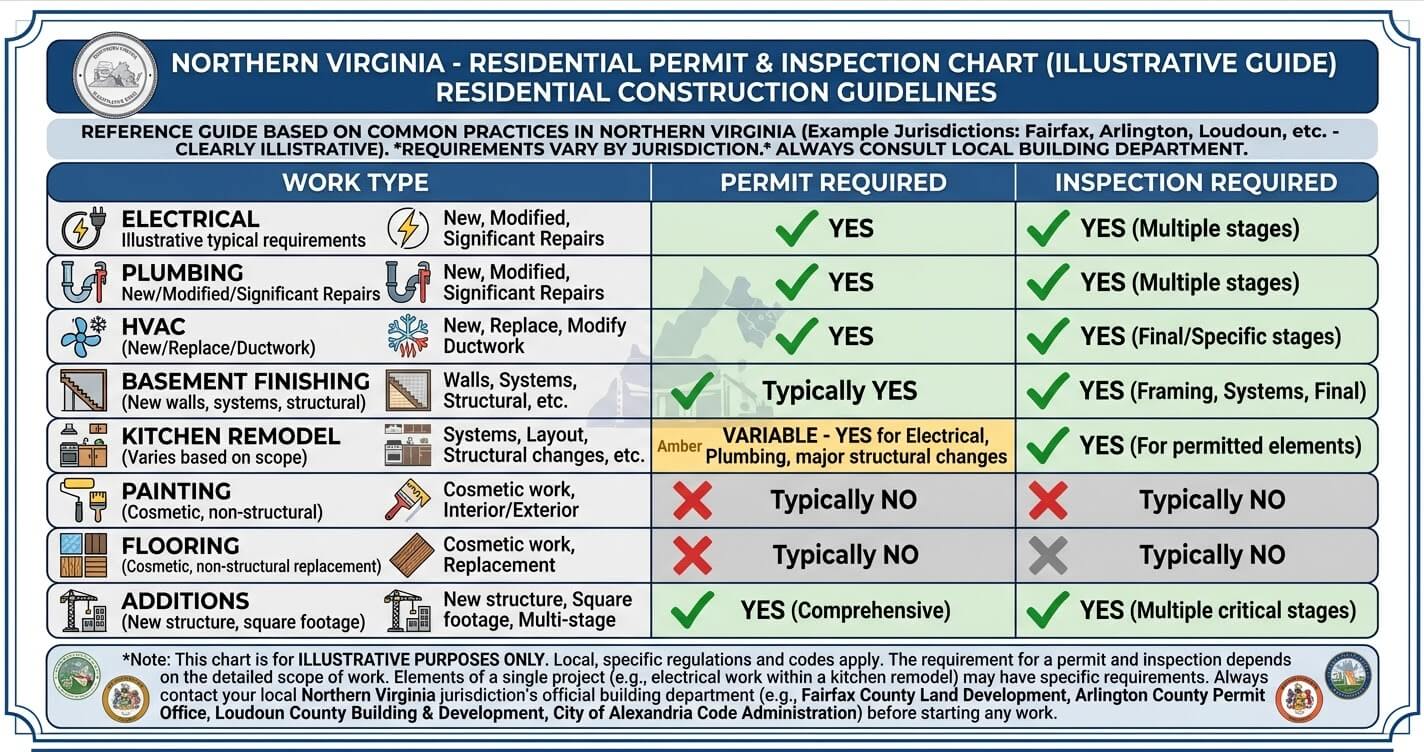
In Northern Virginia, permits are required for a wide range of residential construction activities, including structural modifications, additions, basement finishing projects, electrical upgrades, plumbing alterations, HVAC work, deck construction, and many forms of exterior remodeling. While exact requirements vary by jurisdiction, homeowners should never assume that a project is exempt simply because similar work was completed elsewhere without permits.
In Fairfax County, permit applications are administered through the county’s Planning and Land Use System (PLUS), which serves as the primary platform for permit submission, plan review, inspections, and project approvals. [Source: Fairfax County PLUS System]
One of the most common red flags homeowners encounter is a contractor who suggests “saving time and money” by avoiding permits altogether. While that recommendation may initially sound appealing, it often creates far greater costs later. Unpermitted work can trigger stop-work orders, fines, mandatory corrections, and in some cases the removal of completed construction.
The risks extend beyond the construction phase. During future resale transactions, home inspectors, appraisers, lenders, and title professionals frequently identify unpermitted improvements. When documentation cannot be produced, homeowners may be forced to obtain retroactive approvals or disclose compliance issues to potential buyers.
Basement renovations provide a particularly common example. Many homeowners assume that finishing an unfinished basement is a straightforward cosmetic project. In reality, basement work frequently involves electrical systems, egress requirements, HVAC modifications, plumbing installations, and life-safety considerations that require permits and inspections. Homeowners considering projects of this nature should understand the permitting requirements before hiring contractors or finalizing plans.
For example, homeowners researching Basement Finishing Contractors Northern Virginia should review permitting requirements early in the planning process because finished basements often involve multiple inspection categories.
Another point of confusion involves municipal boundaries. Fairfax County acts as the building official for both the Town of Vienna and the Town of Clifton. Homeowners living within those jurisdictions should not assume that permit administration occurs exclusively through town offices.
Additionally, HOA approval and permit approval are entirely separate processes. Receiving county authorization does not eliminate the need for architectural review approval from an applicable homeowners association. In many Northern Virginia communities, both approvals must be secured before construction begins.
Ultimately, permits exist to verify that renovations meet applicable building, safety, electrical, plumbing, and structural standards. Skipping that process may appear to accelerate a project, but it often creates significant legal, financial, and resale complications later.
Mistake #4 – Prioritizing Aesthetics Over Functionality in Your Renovation Design
This is a home renovation mistake Northern Virginia homeowners repeat in nearly every project category, from kitchen remodels to second-story additions.
The influence of social media, design television, and online inspiration platforms has made homeowners more design-conscious than ever. While visual appeal is certainly important, many renovation projects fail to achieve their long-term goals because planning decisions prioritize appearance over day-to-day usability.
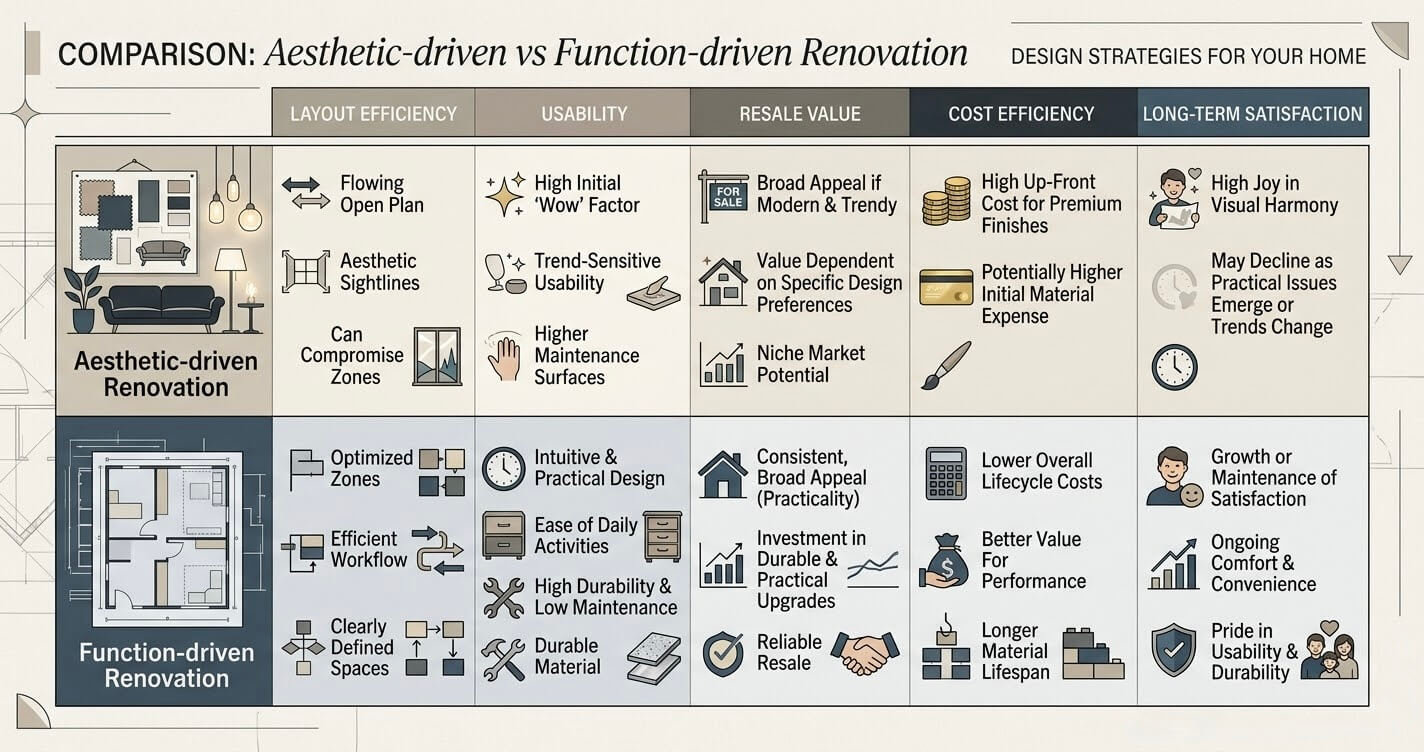
A renovation should not simply look impressive on completion day; it should improve how the household functions for years afterward.
Kitchen remodeling provides one of the clearest examples. Homeowners often request oversized islands, highly customized layouts, or visually striking features because they perform well in photographs. However, once construction is complete, those same design choices may create circulation problems, reduce storage capacity, restrict appliance access, or interfere with how family members actually use the space.
Homeowners exploring Kitchen Remodeling Northern Virginia projects should evaluate how traffic flows through the room, how meals are prepared, where storage is needed most, and whether the proposed design supports daily routines rather than simply current design trends.
The same principle applies to larger expansion projects. Many homeowners focus primarily on adding square footage without carefully considering how new spaces integrate with the existing home. Poorly planned additions can create awkward transitions, inefficient room layouts, and circulation bottlenecks that reduce overall functionality despite increasing total living area.
This challenge becomes especially important when planning a Second Story Addition Northern Virginia project, where structural limitations, stair placement, room configuration, and overall home flow must be considered together rather than independently.
A common mistake is designing for a hypothetical lifestyle rather than an actual one. For example:
- A family that primarily eats in the kitchen adds a formal dining room that sees little use.
- Remote workers sacrifice office space to create larger entertaining areas.
- Growing families prioritize decorative features instead of storage solutions.
- Homeowners invest heavily in trend-driven finishes while neglecting workflow improvements.
This is where the design-build approach often creates substantial value. Because designers, estimators, engineers, and construction professionals collaborate throughout planning, potential conflicts are identified before construction begins. The result is a renovation that balances aesthetics, functionality, structural feasibility, and budget considerations simultaneously.
From both a usability and resale perspective, function-driven renovations consistently outperform projects designed solely around visual trends. Buyers may appreciate attractive finishes, but they ultimately pay for spaces that work efficiently and solve real lifestyle challenges.
Mistake #5 – Overlooking Zoning Restrictions and HOA Requirements Before Planning
Zoning and HOA complications are among the home renovation mistakes Northern Virginia homeowners discover too late.
Many homeowners invest time and money into architectural plans before verifying whether the proposed project can legally be built on their property. Unfortunately, discovering zoning restrictions after design work is completed can result in expensive redesigns, project delays, or complete scope changes.
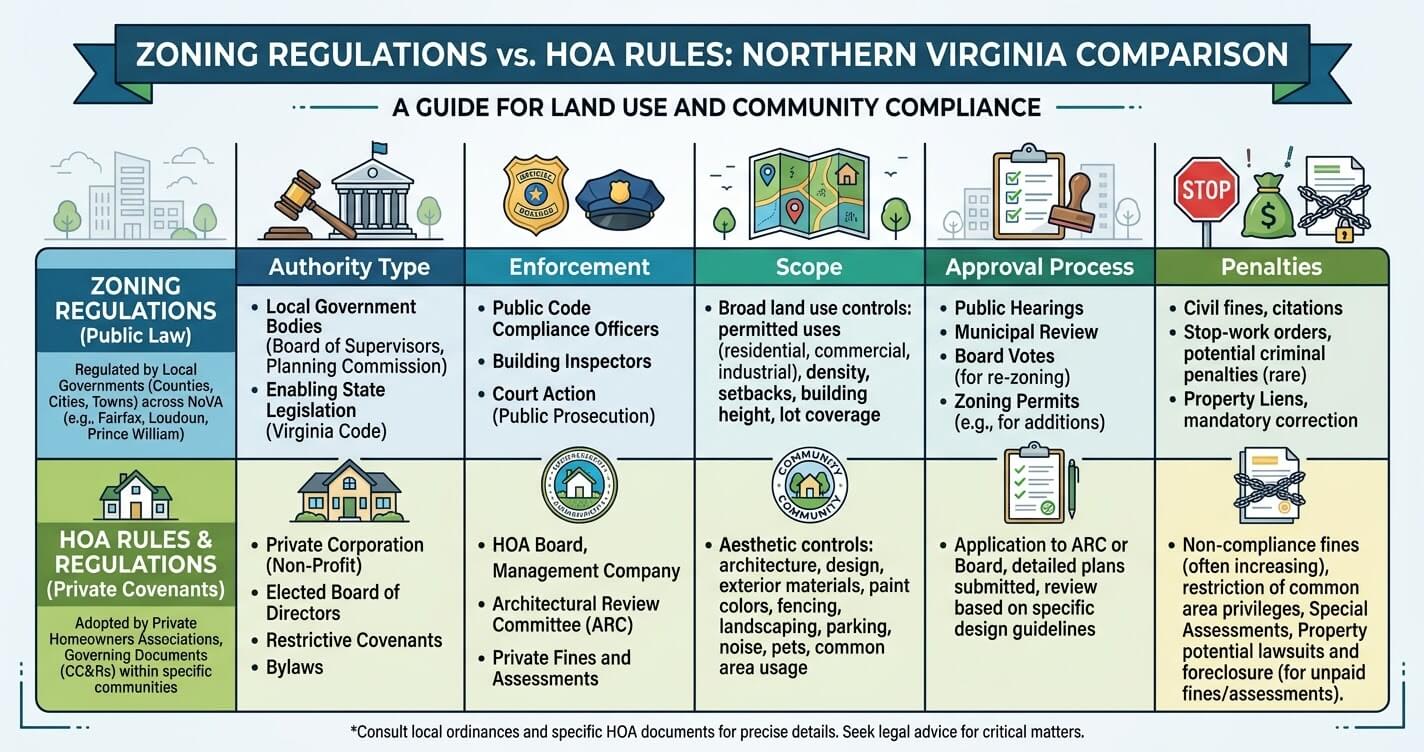
Unlike building permits, which focus primarily on construction safety and code compliance, zoning regulations govern how property can be developed and used. These regulations vary significantly between Fairfax County, Arlington County, Falls Church, Fairfax City, and other Northern Virginia jurisdictions.
Before planning an addition, exterior renovation, ADU, garage conversion, or major expansion, homeowners should understand several key zoning concepts.
Setbacks determine the minimum distance a structure must maintain from property boundaries.
Lot coverage limitations regulate how much of a property’s total area may be occupied by structures and impervious surfaces.
Height restrictions can affect second-story additions, pop-top projects, and roof modifications.
Resource Protection Areas (RPAs) and environmental overlays may impose additional limitations on properties located near streams, wetlands, or environmentally sensitive areas.
These restrictions often influence project feasibility long before permit applications are submitted.
This is particularly important for homeowners considering Home Addition Contractors Northern Virginia because additions frequently trigger zoning reviews before construction plans can proceed through permitting.
HOA requirements create an additional layer of complexity. Many neighborhoods throughout McLean, Vienna, Reston, Great Falls, and surrounding communities maintain architectural review committees responsible for evaluating exterior modifications.
Depending on the community, approval may be required for:
- Additions
- Exterior paint changes
- Deck construction
- Window replacements
- Roofing materials
- Driveway modifications
- Landscaping changes
A common misconception is that county permit approval automatically satisfies HOA requirements. In reality, these are separate approval processes governed by different authorities.
Experienced design-build teams typically evaluate zoning constraints, HOA requirements, setback limitations, and permitting considerations during pre-construction planning. Addressing these issues early helps homeowners avoid investing in designs that later require significant revisions.
The most successful projects begin with feasibility verification before architectural design, not after.
Mistake #6 – Making Major Design Changes After Construction Has Begun
Mid-project scope changes are a home renovation mistake Northern Virginia homeowners often attribute to poor contractor communication, but they usually originate during the planning phase.
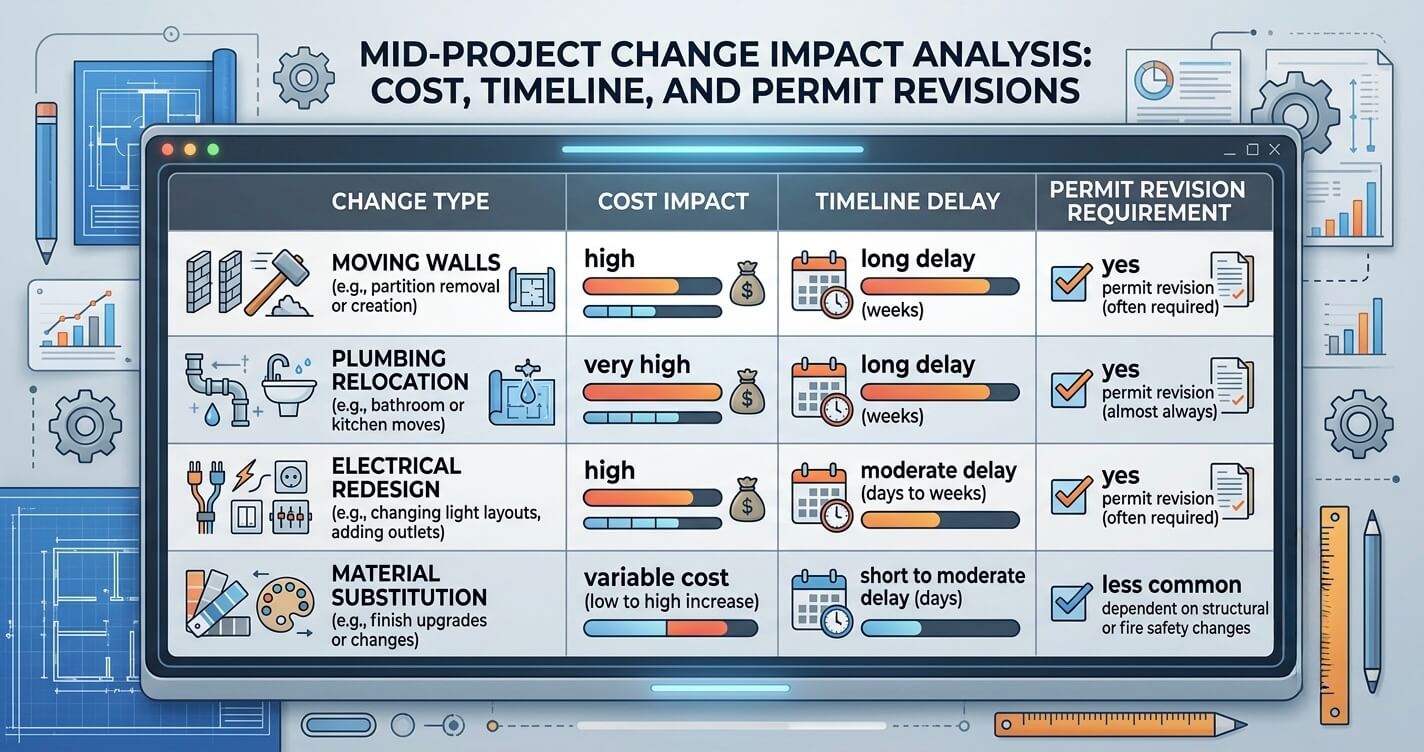
Construction projects function as interconnected systems. Every decision regarding layout, materials, structural components, mechanical systems, and finishes affects multiple downstream activities. When homeowners make significant changes after demolition or construction has already begun, the consequences extend far beyond the cost of the new feature itself.
A seemingly simple modification can trigger revised drawings, additional engineering reviews, permit amendments, new material orders, schedule disruptions, and rework of completed construction.
For example, moving a kitchen island after framing may require revisions to electrical layouts, lighting plans, flooring installation sequences, HVAC duct routing, plumbing locations, and countertop fabrication measurements. What appears to be a minor adjustment can quickly impact multiple trades and extend project timelines.
In Fairfax County, permit modifications involving structural, electrical, plumbing, or mechanical changes may require amended plans and additional review through the county’s PLUS system. [Source: Fairfax County PLUS System]
The financial impact can be substantial because homeowners are often paying for both the new work and the removal or modification of previously completed work.
One of the primary advantages of the design-build approach is that potential conflicts are identified and resolved before construction begins. Designers, estimators, engineers, and construction professionals collaborate during pre-construction planning, reducing the likelihood of costly revisions later.
Homeowners can significantly reduce change orders by finalizing the following before construction starts:
- Floor plans
- Cabinet layouts
- Fixture selections
- Finish materials
- Appliance specifications
- Lighting plans
- Structural modifications
- Budget allowances
The more decisions made before groundbreaking, the smoother the construction phase tends to be. In most cases, successful renovations are won during planning, not during construction.
Mistake #7 – Assuming a Renovation Timeline That Doesn’t Account for Northern Virginia Realities
One of the most common sources of homeowner frustration is unrealistic expectations regarding project timelines.
Many homeowners estimate renovation schedules based solely on active construction time while overlooking the substantial planning, permitting, procurement, and inspection activities required before and during construction.
In Northern Virginia, timelines are influenced by several factors that homeowners cannot fully control.
Permit review periods vary depending on jurisdiction, project complexity, required approvals, and review workloads. Larger projects involving additions, structural modifications, or significant mechanical work often require multiple review cycles before permits are issued. [Source: Fairfax County Land Development Services]
Material procurement also plays a significant role. While stock materials may be available immediately, custom cabinetry, specialty windows, engineered products, stone fabrication, and imported finishes frequently require lead times ranging from several weeks to several months.
Contractor scheduling presents another challenge. According to the National Association of Home Builders’ Remodeling Market Index (RMI), remodeling demand has remained strong, meaning reputable contractors often maintain project backlogs. [Source: National Association of Home Builders (NAHB)]
Weather conditions can further affect schedules. Exterior work such as roofing, additions, siding replacement, foundation construction, and deck building may experience delays during winter weather events or periods of heavy rainfall.
Homeowners should think of renovation schedules in four separate phases:
- Design and Planning
- Permitting and Approvals
- Material Procurement
- Construction and Inspections
Each phase requires contingency time.
The most successful projects establish realistic completion windows rather than fixed completion dates. Clear communication with contractors regarding milestones, potential risks, and schedule assumptions helps prevent misunderstandings and allows homeowners to plan accordingly.
A realistic timeline is not pessimistic, it is professional project management.
Mistake #8 – DIYing Electrical, Plumbing, or Structural Work in Your Northern Virginia Home
The popularity of DIY content has convinced many homeowners that complex renovation work is easier than it actually is.
While cosmetic improvements can often be completed successfully by skilled homeowners, electrical, plumbing, HVAC, and structural work introduce safety, code compliance, liability, and inspection considerations that require professional oversight.
Virginia contractor licensing regulations exist for a reason. Licensed contractors, electricians, plumbers, and HVAC professionals undergo training, testing, and regulatory oversight designed to protect public safety. [Source: Virginia Department of Professional and Occupational Regulation (DPOR)]
In Fairfax County, permitted work involving electrical, plumbing, mechanical, and structural systems must comply with applicable building codes and inspection requirements. [Source: Fairfax County Land Development Services]
A common misconception is that completing work personally eliminates risk because labor costs are reduced. In reality, improperly installed systems can create significantly larger expenses later through failed inspections, property damage, insurance disputes, or corrective reconstruction.
Bathroom renovations provide a frequent example. Projects that appear cosmetic often involve plumbing relocation, waterproofing systems, electrical upgrades, ventilation requirements, and code-compliant fixture installation.
Homeowners planning Bathroom Remodeling Northern Virginia projects should understand that even seemingly minor modifications can trigger permit and licensed-trade requirements.
Generally speaking, homeowners can often handle:
- Interior painting
- Trim installation
- Cabinet hardware replacement
- Basic landscaping
- Cosmetic decorating upgrades
However, structural framing modifications, load-bearing wall removal, electrical panel work, plumbing system alterations, HVAC modifications, and major bathroom or kitchen infrastructure changes are best left to licensed professionals.
In a region where home values routinely exceed national averages, protecting the integrity of the property’s systems and structure is usually the smarter long-term investment.
Mistake #9 – Renovating Without Considering Resale Value in the Northern Virginia Market
Not every renovation dollar produces the same return.
While homeowners should certainly prioritize improvements that enhance their quality of life, major renovation decisions should also consider how future buyers are likely to evaluate the property.
Ignoring resale ROI is a home renovation mistake Northern Virginia homeowners making equity-driven decisions cannot afford.
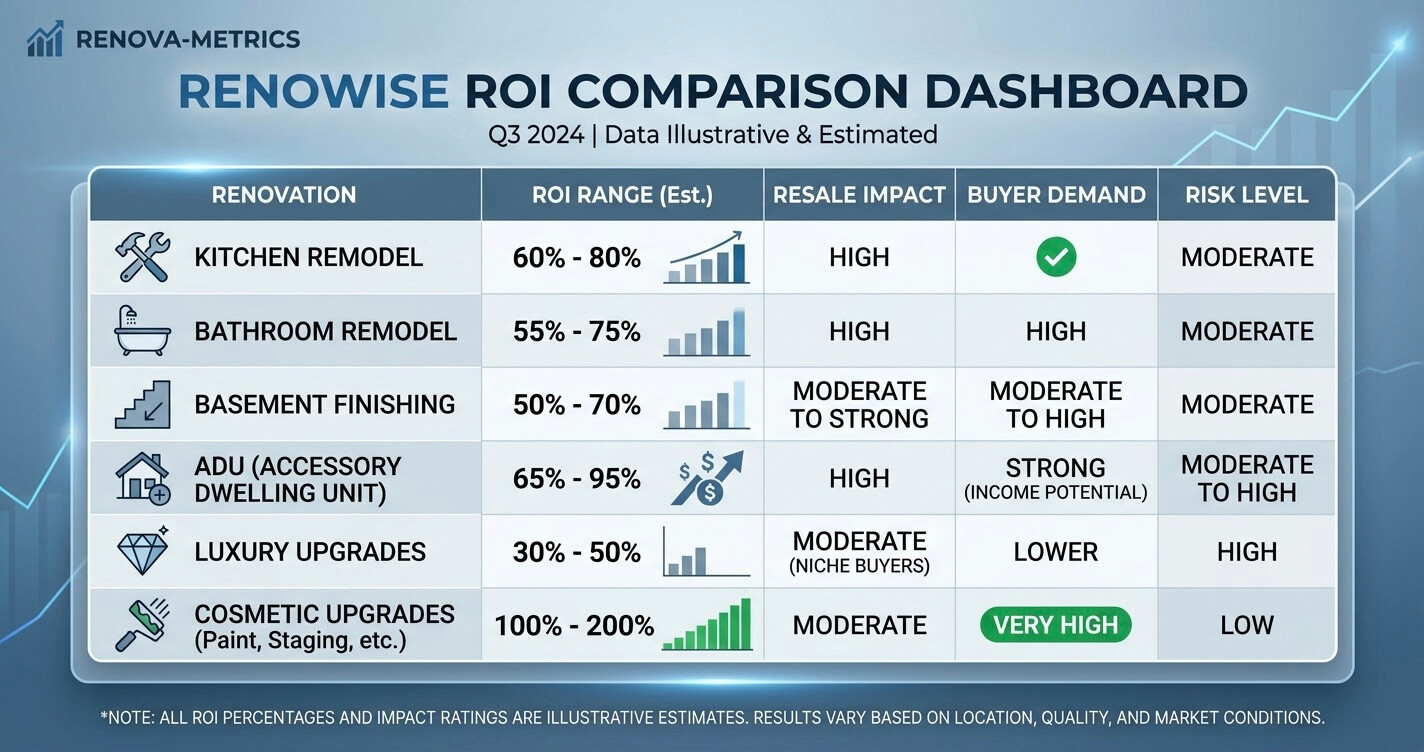
Northern Virginia remains one of the country’s most competitive real estate markets, but buyers still evaluate properties based on functionality, condition, layout, and value relative to comparable homes.
Historically, projects that tend to perform well include:
- Kitchen renovations
- Bathroom remodels
- Finished basements
- Energy-efficiency improvements
- Functional additions that increase livable square footage
- Exterior curb appeal upgrades
Finished basements often provide particularly strong value because they increase usable living space without expanding a home’s footprint.
Homeowners researching Basement Finishing Contractors Northern Virginia frequently view basement projects as both a lifestyle improvement and a long-term equity investment.
Similarly, accessory dwelling units are becoming increasingly attractive where zoning regulations permit them, offering flexibility for multigenerational living, guest accommodations, and potential rental income opportunities.
Homeowners evaluating these options may wish to explore ADU Builder Northern Virginia services during the planning process.
On the other hand, highly customized renovations can sometimes exceed neighborhood value thresholds. Ultra-luxury finishes, unusual layouts, and overly personalized design choices may not generate proportional returns when the property is eventually sold.
According to Remodeling Magazine’s Cost vs. Value analysis, renovations that improve functionality and livability often outperform purely cosmetic trend-driven upgrades from an ROI perspective. [Source: Remodeling Cost vs. Value Report]
The goal is not to renovate exclusively for future buyers. Instead, homeowners should seek a balance between personal enjoyment and market practicality. Projects that improve both daily living and long-term property value tend to deliver the strongest overall return on investment.
Frequently Asked Questions
Do I need a permit for a kitchen remodel in Fairfax County?
Yes. In Fairfax County, most kitchen remodeling projects require permits if they involve electrical, plumbing, mechanical, or structural changes. These permits are issued through Fairfax County Land Development Services (LDS) and are processed via the PLUS system. Even if a project appears minor, any modification to wiring, plumbing lines, or ventilation systems typically requires inspection approval to ensure compliance with local building codes. Purely cosmetic updates such as painting or replacing cabinets without altering utility connections may not require permits, but homeowners should always verify scope before starting work.
How do I verify if a contractor is licensed in Virginia?
Contractor licensing in Virginia can be verified through the Virginia Department of Professional and Occupational Regulation (DPOR) License Lookup tool. This system allows homeowners to confirm whether a contractor holds an active and valid license and whether it is in good standing. For projects in Northern Virginia, especially Fairfax County, this verification step is essential before signing any agreement, as unlicensed contracting can lead to legal and financial risks. [Source: DPOR]
What is a realistic contingency budget for a renovation in Northern Virginia?
A realistic contingency budget for renovation projects in Northern Virginia typically ranges between 15% and 20% of the total project cost. This is particularly important for older homes in areas such as Burke, Annandale, and Falls Church, where hidden conditions are frequently discovered during demolition. These may include outdated electrical systems, deteriorated plumbing, moisture intrusion, or previous unpermitted modifications that must be corrected before work continues.
What happens if I complete unpermitted work on my home?
Unpermitted work can create significant legal and financial complications. In Fairfax County and surrounding jurisdictions, homeowners may face stop-work orders, monetary penalties, and requirements to remove or reconstruct non-compliant work. Additionally, unpermitted renovations often create issues during property resale, as inspectors, appraisers, and lenders may require documentation or flag the property for compliance review, which can delay or negatively impact the transaction.
Do HOA approvals replace county permits?
No. HOA approvals and county permits serve entirely different purposes and must be obtained separately. HOA approval ensures compliance with community architectural guidelines, while county permits ensure adherence to building codes, zoning regulations, and safety standards. In most Northern Virginia communities, both approvals are required before construction can legally begin, particularly for exterior modifications or structural work.
What is a design-build contractor and why does it matter?
A design-build contractor integrates design, engineering, budgeting, and construction under a single coordinated team. This approach reduces communication gaps between designers and builders, minimizes costly mid-project changes, and improves overall project efficiency. In complex jurisdictions like Fairfax County, this model is especially valuable because it ensures that designs are both structurally feasible and code-compliant before construction begins, reducing delays during permitting and execution.
Which renovation projects provide the best ROI in Northern Virginia?
In Northern Virginia’s competitive housing market, the highest return on investment typically comes from kitchen remodels, bathroom upgrades, basement finishing, and well-planned additions that increase functional living space. Energy-efficiency improvements and exterior curb appeal upgrades also perform strongly. According to Remodeling Magazine’s Cost vs. Value Report, projects that improve functionality and align with neighborhood property values generally outperform highly customized or luxury-focused renovations in resale scenarios. [Source: Remodeling Magazine’s Cost vs. Value Report]
The Final Verdict
The most expensive home renovation mistakes Northern Virginia homeowners make rarely involve selecting the wrong paint color or countertop material.
Instead, they typically stem from inadequate planning, insufficient budgeting, unrealistic scheduling expectations, poor contractor selection, permit misunderstandings, zoning oversights, and decisions made without considering long-term functionality or resale value.
Northern Virginia presents a uniquely complex renovation environment. Fairfax County permitting requirements, Virginia DPOR licensing regulations, municipal zoning restrictions, HOA review processes, and strong contractor demand all create challenges that require careful preparation.
The homeowners who successfully complete renovation projects in Northern Virginia without budget overruns, permit delays, or major construction disputes are usually those who invest significant effort before construction begins. They verify contractor credentials, establish realistic budgets, understand permitting obligations, finalize designs early, and work with professionals who understand the local regulatory landscape.
For homeowners planning a renovation, the good news is that every mistake discussed in this guide is preventable.
With the right planning process, realistic expectations, and experienced project partners, homeowners can transform their properties while protecting both their investment and their peace of mind.
Homeowners exploring renovation options can learn more about Home Renovation Contractors Northern Virginia and the design-build process.
Planning a kitchen remodel, home addition, basement finish, bathroom renovation, ADU project, or whole-home transformation in Northern Virginia?
Contact US Home Design Build to discuss your project goals, budget, timeline, and design vision with our experienced design-build team. We proudly serve homeowners throughout Fairfax County, Arlington, McLean, Vienna, Reston, Burke, Great Falls, Falls Church, and surrounding Northern Virginia communities.