
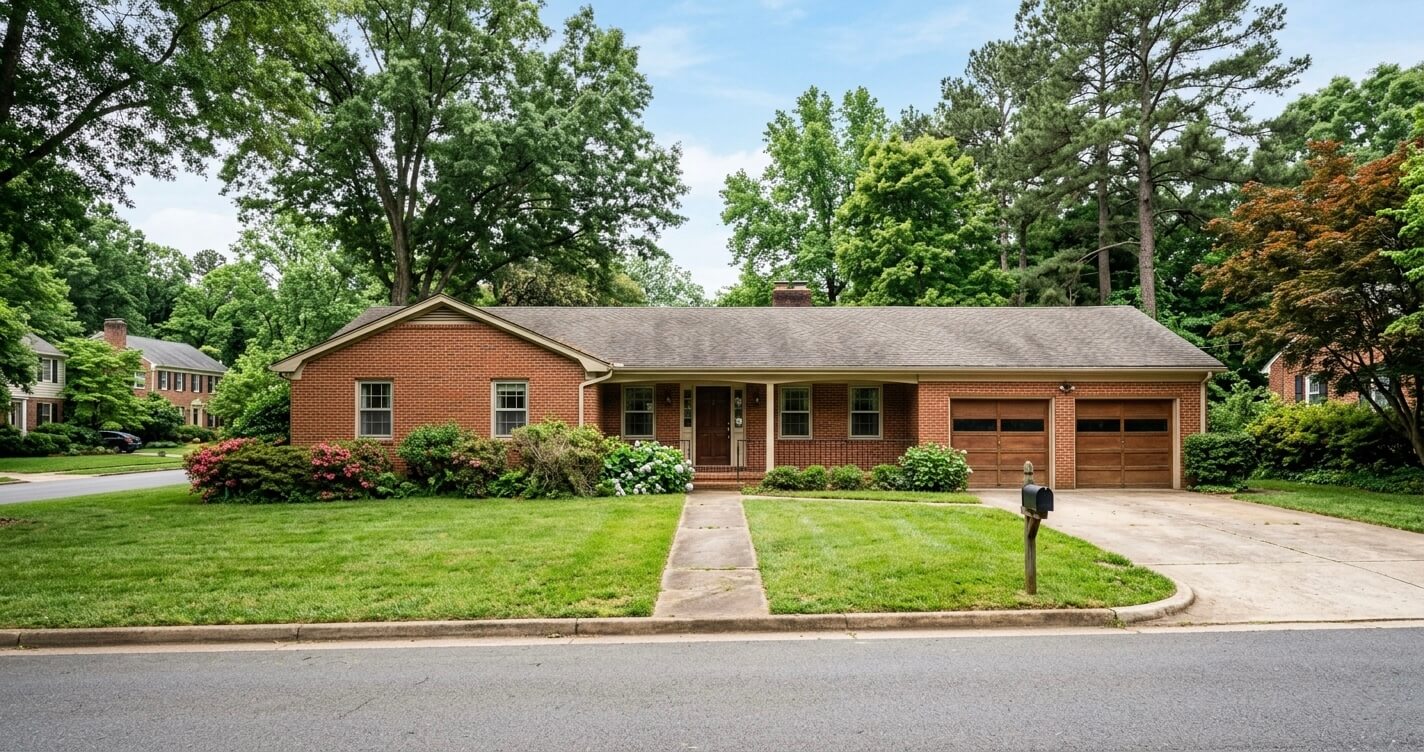
A McLean homeowner with a 1,960-square-foot ranch-style home faced a challenge that has become increasingly common throughout Northern Virginia. The location checked every box: proximity to Washington, DC, access to highly rated Fairfax County schools, and a well-established neighborhood with mature trees and larger lots. The house itself, however, no longer supported the family’s needs.
What began as a comfortable three-bedroom home had become increasingly constrained as the family’s space requirements evolved. Additional bedrooms were needed, a dedicated home office had become a necessity, and the home’s original layout no longer reflected how the family actually lived.
Rather than entering one of the region’s most competitive housing markets, the homeowners explored the possibility of expanding their existing property. After evaluating several options, a second story addition McLean VA project emerged as the most practical solution. By building upward instead of outward, the family could nearly double its usable living space while preserving the backyard, maintaining their school district, and avoiding the disruption of moving.
This case study walks through the project’s planning process, structural considerations, permit requirements, construction phases, budget expectations, and final outcome. While every property presents unique challenges, the lessons from this project reflect many of the same factors homeowners encounter when considering a second-story addition in Fairfax County.
For homeowners evaluating similar options, working with experienced second story addition contractors in Northern Virginia can help determine whether an existing structure is a strong candidate for vertical expansion.
The Starting Point – What the Home Looked Like Before
Homes built throughout McLean during the 1960s frequently share a number of characteristics that make them strong candidates for second-story additions. Many were constructed on substantial foundations, feature relatively simple roof structures, and sit on lots where preserving outdoor space has become increasingly important.
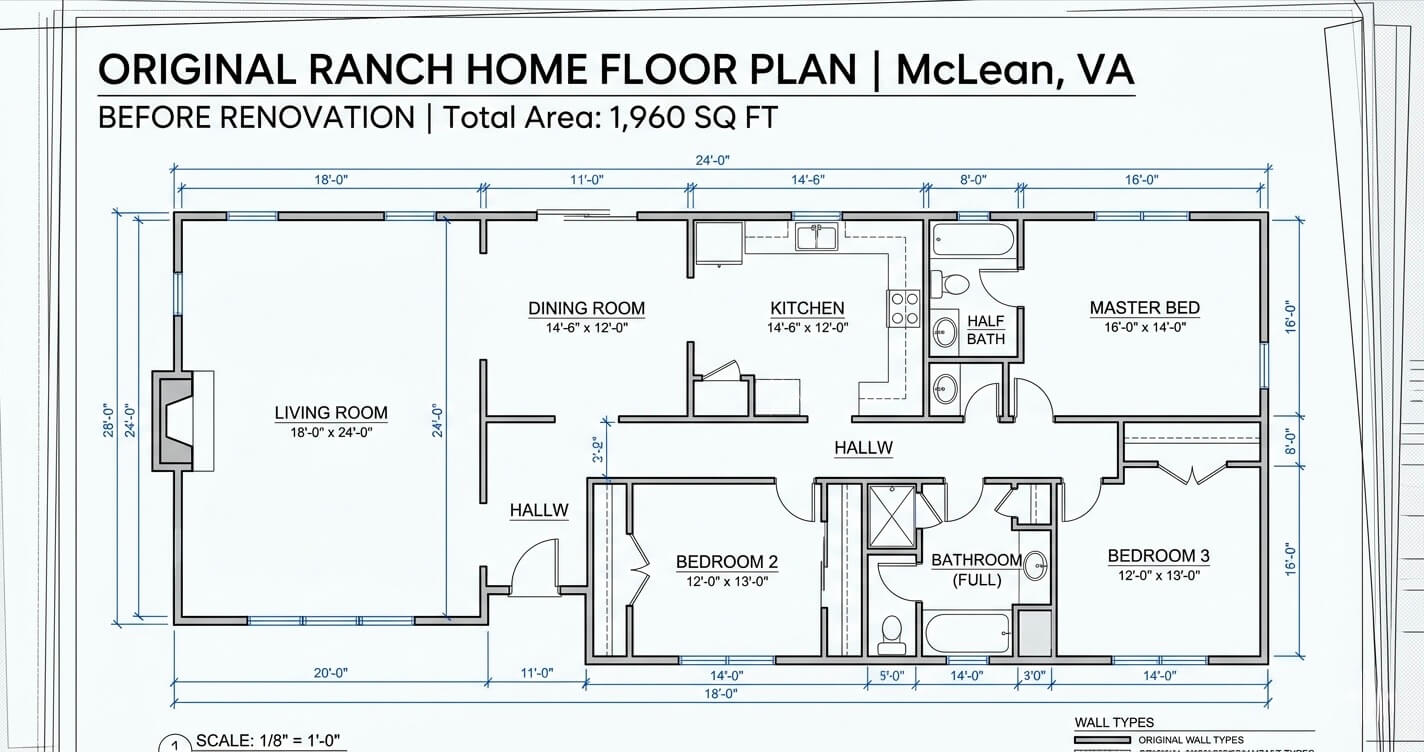
This property followed a similar pattern.
The home was originally constructed in approximately 1968 as a single-story ranch residence containing roughly 1,960 square feet of finished living area. The existing floor plan included three bedrooms, one-and-a-half bathrooms, a combined living and dining space, and a modest kitchen layout typical of homes built during that period.
Although the lot measured approximately 0.35 acres, the homeowners placed significant value on maintaining usable backyard space. Early design discussions examined whether a rear addition could solve the family’s space needs. Preliminary feasibility studies showed that a substantial ground-level expansion would consume a meaningful portion of the backyard and alter how the family used the property.
From a structural perspective, the home presented several favorable characteristics.
Following a preliminary assessment, the existing foundation appeared to be in sound condition with no significant signs of settlement or structural distress. The exterior walls and load paths were consistent with construction methods commonly seen in Fairfax County ranch homes of that era. While the original roof framing would ultimately need to be removed as part of the addition, the property’s overall structural profile suggested that a second-story expansion was technically achievable.
The homeowners established several clear objectives for the project:
- Create a new primary suite with an ensuite bathroom and walk-in closet
- Add two additional bedrooms
- Incorporate a dedicated home office
- Increase the overall bathroom count
- Preserve outdoor living space
- Improve the home’s long-term functionality without relocating
From a design-build perspective, these goals aligned closely with many second-story addition projects completed throughout Fairfax County. When homeowners need significant square footage increases while preserving lot usability, vertical expansion often provides the greatest return on investment.
Why This McLean VA Homeowner Chose to Build Up Instead of Move
One of the first conversations that occurs during any home addition consultation is whether expanding an existing property makes more sense than purchasing a larger home.
In this case, several factors pointed toward renovation rather than relocation.
The family had grown to five members, and the original three-bedroom layout no longer provided adequate private space. Bedrooms were being used for multiple functions, storage needs had increased, and remote work requirements created additional pressure on the home’s layout.
The backyard represented another important consideration.
Because the property’s lot depth was relatively limited, a large rear addition would have reduced the family’s outdoor living area significantly. Maintaining yard space was a priority, which immediately made a full-width ground-floor expansion less attractive.
The financial analysis also favored renovation.
When evaluating larger homes within the same McLean neighborhoods, the homeowners found that purchasing a comparable property with the desired square footage would involve substantially higher acquisition costs, transaction expenses, moving costs, and potential competition from other buyers.
For homeowners considering broader expansion options, exploring various types of home additions Northern Virginia projects can help clarify whether building upward, outward, or reconfiguring existing space provides the best long-term solution.
The homeowners also placed significant value on factors that cannot easily be measured financially.
Their children were already established within local schools. Neighborhood relationships had developed over several years. Daily commuting patterns were familiar and efficient. Preserving these advantages became an important part of the decision-making process.
During early design consultations, the discussion shifted from how to find more space to how to unlock the potential already present within the property. After reviewing zoning conditions, lot constraints, structural considerations, and budget objectives, the concept of a full second-story addition emerged as the most effective solution.
Homeowners in McLean and throughout Fairfax County who are weighing a similar decision may find it useful to discuss their specific home’s structural characteristics and space goals with an experienced design-build team before committing to any approach.
For a deeper comparison of these two approaches, homeowners may also find value in reviewing the differences between home renovation vs moving in Northern Virginia.
Designing the Second Story Addition – What We Planned and Why
Successful execution of a second story addition McLean VA project begins long before construction starts. Structural feasibility, floor plan integration, roof design, and architectural consistency must all be evaluated before final plans are developed.
The design process began with a comprehensive structural assessment.
Engineers reviewed the home’s foundation system, load-bearing wall locations, framing configuration, and anticipated loads associated with a full second-story expansion. This evaluation established the framework for all subsequent design decisions.
The approved concept added approximately 1,960 square feet above the existing footprint, effectively doubling the home’s finished living area.
The new second floor was designed to include:
- A primary suite with an ensuite bathroom
- A walk-in closet
- Two secondary bedrooms
- A dedicated home office
- A full hallway bathroom
- New circulation space connected by a centrally located staircase
One of the most significant architectural decisions involved the roof.
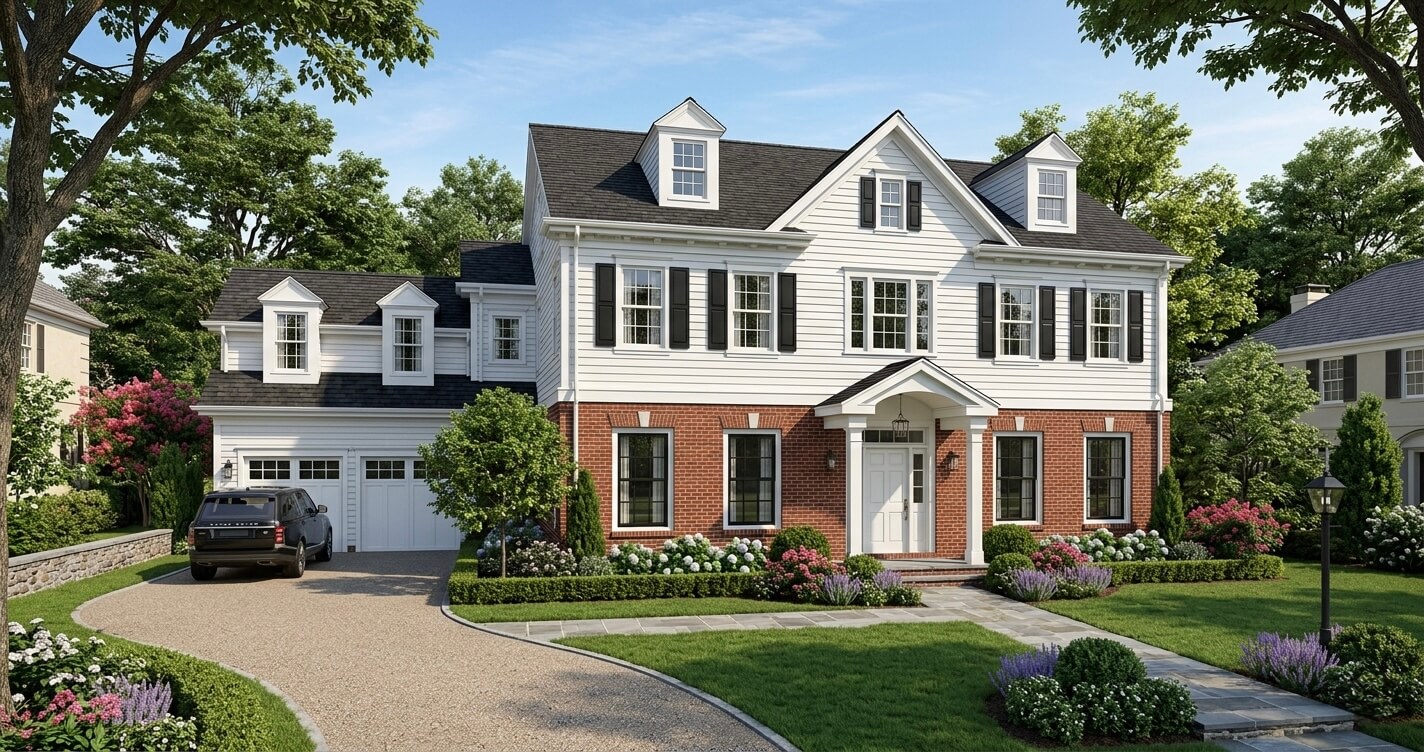
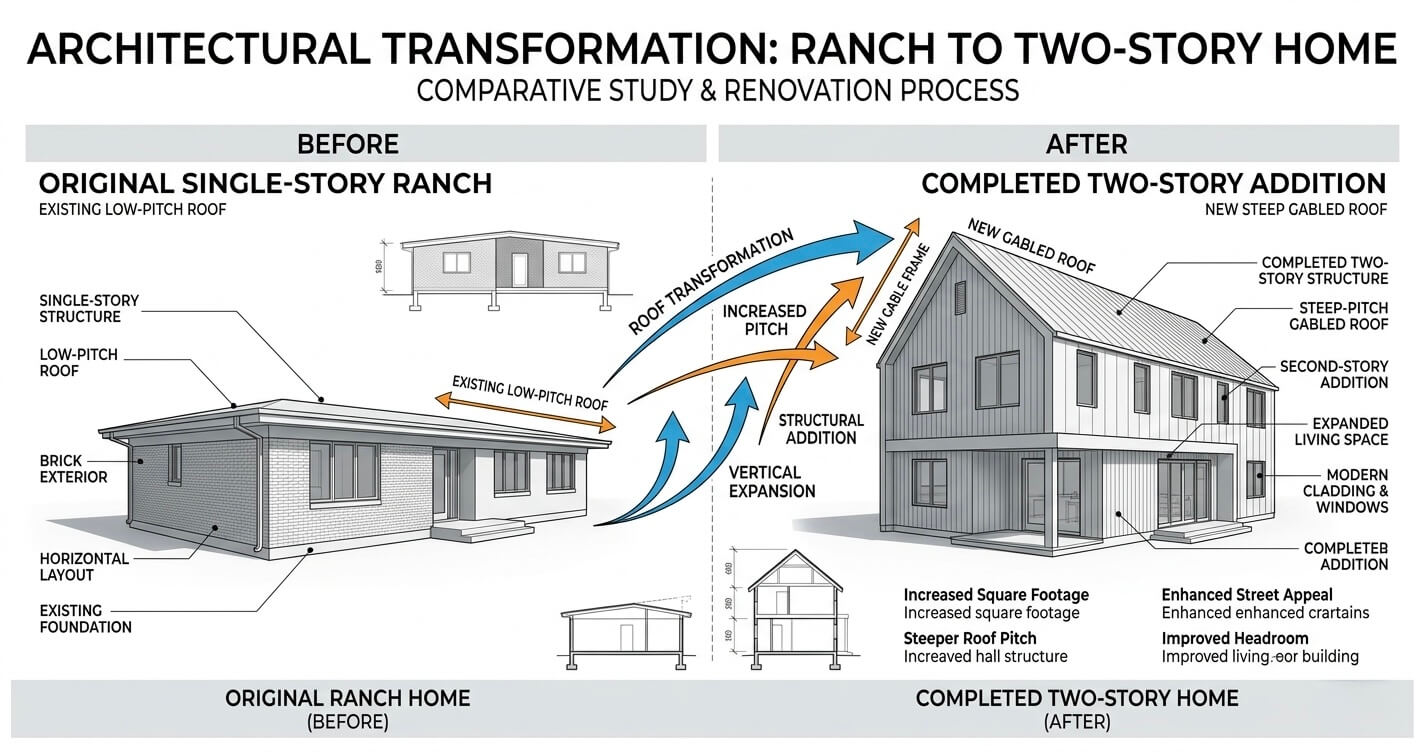
The original ranch structure utilized a low-pitch roof configuration that was not suitable for the intended addition. Rather than attempting to replicate the existing profile, the design team developed a new gabled roof system that improved both functionality and curb appeal.
The revised roofline allowed the second floor to feel like an integrated part of the home’s architecture rather than an obvious addition. This approach is often critical in higher-value neighborhoods where architectural consistency contributes significantly to perceived property value.
Because the project included a new primary suite, many of the same planning principles commonly used in a master suite addition project influenced the design process, particularly regarding privacy, circulation, and storage.
Exterior material selections were equally important.
The lower level retained its existing brick character while the upper level incorporated HardiePlank siding to create a transitional style that blended traditional and modern design elements. Window placement, trim details, and façade proportions were carefully coordinated to ensure the completed home appeared cohesive and intentional.
Homeowners looking for broader inspiration may also find useful ideas in this guide to home addition design ideas for Northern Virginia homeowners.
Navigating the Permit Process for a Second Story Addition in Fairfax County
Permitting is one of the most important, and frequently underestimated, phases of any second-story addition project.
In Fairfax County, a second-story addition is classified as a major structural alteration and requires a residential addition permit, detailed construction drawings, engineering documentation, and multiple trade permits before work can begin. Fairfax County processes these applications through its Planning and Land Use System (PLUS), which serves as the county’s centralized platform for permit submission, review, and approvals.
For homeowners seeking a deeper understanding of local requirements, our guide to obtaining a remodeling permit Fairfax County provides additional detail.
For this project, permit submissions included:
- Residential addition building permit
- Structural engineering documentation
- Electrical permit applications
- Plumbing permit applications
- Mechanical permit applications
- Architectural construction plans
One advantage of this particular project was that the home’s footprint remained unchanged.
Because the addition was constructed above the existing structure, several zoning complications commonly associated with rear and side additions were reduced. Nevertheless, zoning compliance still required verification of building height limitations, setback requirements, and other applicable county regulations.
The review process involved coordination among multiple departments responsible for building code compliance, zoning review, plan examination, and trade permit approvals. Fairfax County’s review workflow is designed to ensure that structural, electrical, mechanical, plumbing, and life-safety requirements are fully addressed before construction begins.
For projects of this scale, homeowners should generally expect several weeks of permitting activity before construction can begin. Building permit timelines vary based on project complexity, review comments, and submission completeness.
An additional consideration for all current Fairfax County projects is compliance with Virginia’s building code requirements. Fairfax County requires all building permit applications submitted after January 17, 2025, to comply with the 2021 Virginia Uniform Statewide Building Code (USBC).
From a design-build perspective, managing permitting on behalf of homeowners remains one of the most valuable aspects of the project delivery process. Coordinating drawings, responding to plan review comments, obtaining approvals, and scheduling inspections can significantly affect both project timelines and overall construction efficiency.
How the Second Story Addition Was Built – Phase by Phase
Constructing a second story addition McLean VA project involves far more than simply building another level on top of an existing home. Every phase must be carefully sequenced to maintain structural stability, protect the existing residence, satisfy inspection requirements, and minimize disruption to the homeowners.
For this project, construction followed a phased design-build approach that allowed engineering requirements, permit milestones, and field operations to remain aligned throughout the build.
Phase 1 – Structural Preparation and Foundation Verification
Before any demolition began, the project team completed a final structural review based on the approved engineering plans.
The objective during this phase was to confirm that the existing structure could safely support the additional loads created by the new second floor, roof system, finishes, and occupants.
Engineers reviewed:
- Existing foundation dimensions
- Foundation wall condition
- Load-bearing wall locations
- Floor framing configuration
- Proposed load transfer paths
- Concentrated point loads created by new structural members
One advantage frequently seen in well-built Fairfax County ranch homes from the 1960s is that many were originally constructed with robust foundations and conservative framing methods. In this case, engineering analysis determined that foundation reinforcement was not required before proceeding.
Temporary interior bracing and support systems were installed to maintain structural integrity during the roof removal process. These supports play a critical role in redistributing loads while major structural components are being modified.
Phase 2 – Roof Removal and New Structural Framing
Roof removal represents one of the most significant milestones in any second-story addition project.
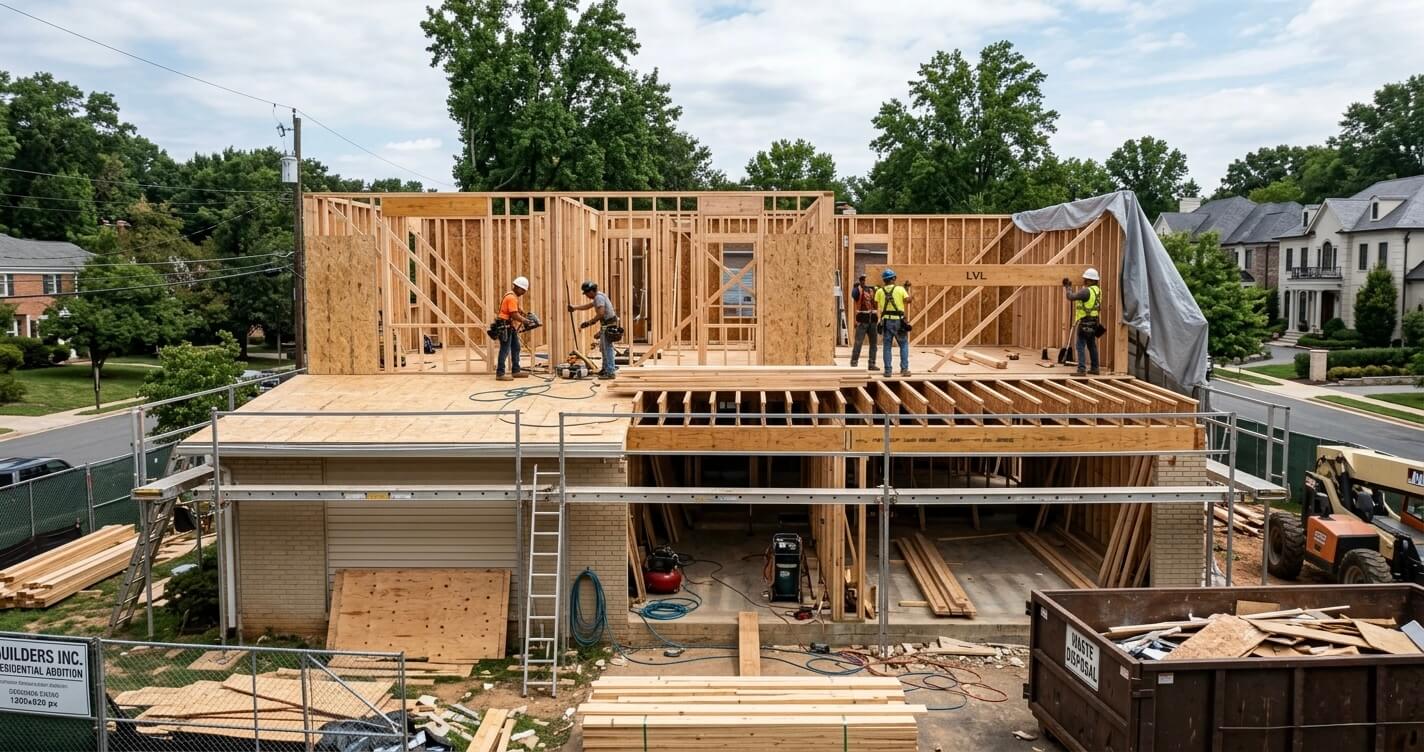
Once the existing roof structure is removed, the project transitions from renovation into full structural reconstruction.
The original roof framing was carefully demolished and removed from the site. Temporary weather protection measures were coordinated throughout the process to minimize exposure to rain and moisture intrusion.
With the roof removed, crews installed the new second-floor structural system.
This phase included:
- New engineered floor framing
- Structural beams specified by engineering plans
- Load-bearing wall framing
- Floor sheathing installation
- Structural connectors and hold-down systems
Special attention was given to maintaining continuous load paths from the new roof system all the way to the foundation. This is one of the most important structural principles governing second-story additions and is essential for both gravity loads and lateral wind resistance.
Once the second-floor walls were framed, construction moved to installation of the new gabled roof structure.
The revised roof design delivered several benefits:
- Increased ceiling heights
- Improved attic ventilation opportunities
- Enhanced curb appeal
- Better architectural proportions
- More efficient water drainage
By the conclusion of this phase, the home had largely assumed its final structural form.
Phase 3 – Mechanical, Electrical, and Plumbing Rough-Ins
After framing inspections were completed, attention shifted to the mechanical systems that would support the new living spaces.
Electrical work included:
- New branch circuits
- Additional lighting circuits
- Smoke detector integration
- AFCI and GFCI protection where required by code
- Dedicated circuits for bathroom equipment and office spaces
The electrical contractor also verified that the home’s existing service capacity could accommodate the increased load demands created by the expanded floor area.
Plumbing rough-ins were installed for:
- Primary suite bathroom
- Hallway bathroom
- New supply lines
- Drain-waste-vent systems
- Fixture connections
HVAC planning required particular attention.
A common mistake in second-story additions is assuming that simply extending an existing HVAC system will adequately serve the new space. In practice, airflow balance, static pressure limitations, and temperature differentials often create comfort challenges.
For this project, the design incorporated both ductwork extensions and a dedicated mini-split system serving the primary suite. This hybrid approach improved temperature control while reducing strain on the existing mechanical system.
After rough-in work was completed, inspections verified compliance before walls were enclosed.
Phase 4 – Insulation, Air Sealing, and Drywall
Building performance depends heavily on what happens before drywall is installed.
The project team completed extensive air-sealing measures around penetrations, framing transitions, and mechanical openings before insulation installation began.
Insulation assemblies were selected to satisfy current Virginia energy code requirements and improve long-term comfort throughout the home.
This phase included:
- Exterior wall insulation
- Attic insulation
- Air sealing measures
- Fire blocking
- Draft stopping where required
Once inspections were approved, drywall installation proceeded throughout the new second floor.
At the same time, crews began construction of the new staircase connecting both levels.
Stair design required careful coordination because it affected circulation patterns, structural framing, headroom requirements, and overall floor plan functionality.
Phase 5 – Interior Finishes
With drywall complete, the project entered the finish stage.
This phase included:
- Interior painting
- Trim installation
- Flooring installation
- Door installation
- Bathroom tile work
- Fixture installation
- Cabinetry and vanity installation
The primary suite received upgraded finish selections, including a walk-in shower, large-format tile surfaces, and custom closet organization systems.
Throughout the finishing phase, the objective was to create visual continuity between the original home and the newly constructed spaces.
Phase 6 – Exterior Finishing
Exterior work focused on integrating the addition seamlessly into the existing structure.
New HardiePlank siding was installed on the second floor to complement the existing brick exterior while introducing a more contemporary architectural appearance.
Additional work included:
- Window installation
- Exterior trim detailing
- Gutters and downspouts
- Roofing completion
- Flashing systems
- Exterior caulking and weatherproofing
Because the project involved a completely new roof assembly, proper flashing details and water management strategies were critical components of long-term durability.
For homeowners interested in roofing considerations associated with major additions, additional information can be found in USHDB’s guide to roofing Northern Virginia projects.
Phase 7 – Final Inspections and Project Closeout
The final stage focused on inspections, documentation, and homeowner orientation.
County inspectors reviewed:
- Structural components
- Electrical systems
- Mechanical systems
- Plumbing systems
- Life-safety requirements
- Energy code compliance
Following approval of all final inspections, the project team completed a comprehensive punch-list review with the homeowners.
Any remaining adjustments were addressed before project closeout.
From contract execution through final inspection, the overall project duration was approximately five months, excluding pre-construction design and permitting activities.
Second Story Addition McLean VA: Real Project Budget Breakdown
Budget planning is often one of the first questions homeowners ask when evaluating a second story addition McLean VA project.
The challenge is that no two additions are identical. Existing structural conditions, finish selections, engineering requirements, permit complexity, and mechanical upgrades can all influence the final cost.
For a project similar in scope to this case study, representative cost ranges may include:
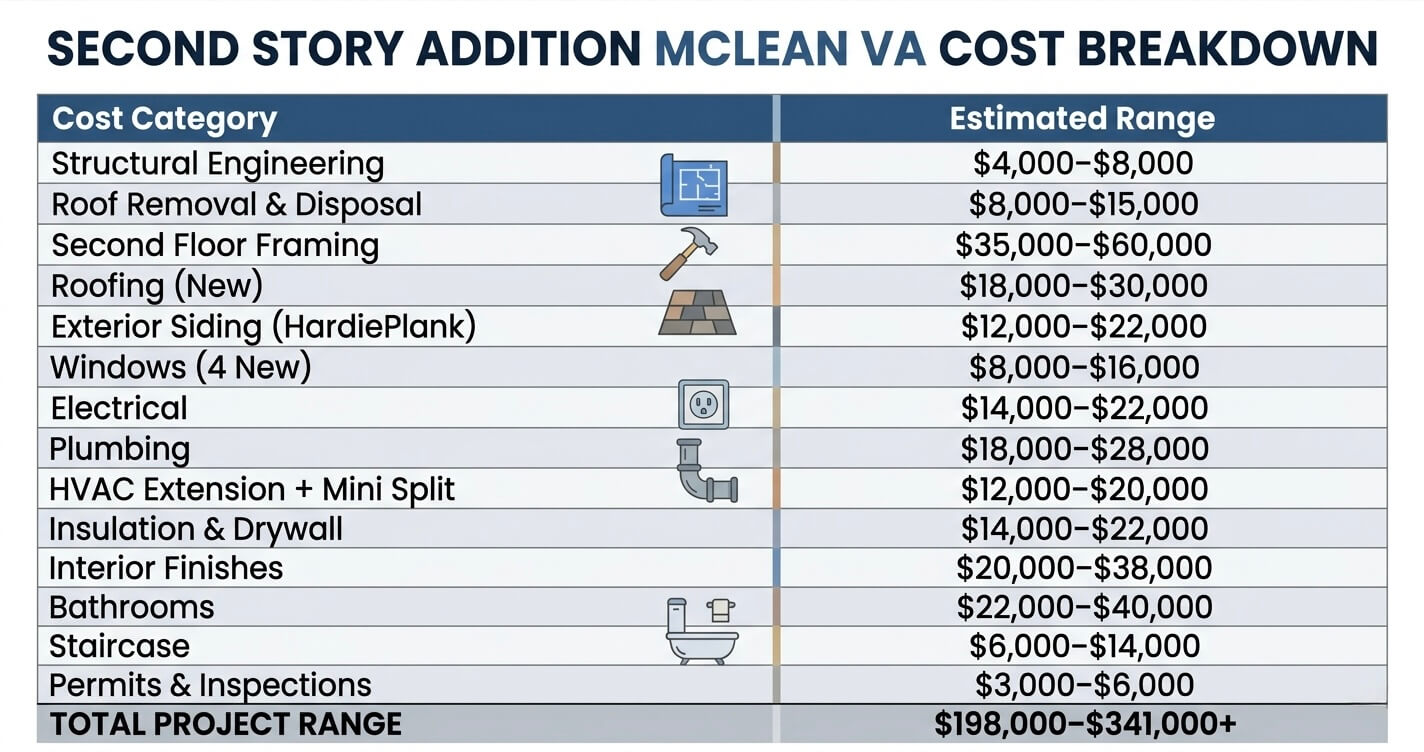
Homeowners looking for a broader market analysis should also review our detailed guide to second story addition cost in Northern Virginia.
One reason addition costs have increased nationwide is the continued rise in construction expenses.
According to the National Association of Home Builders (NAHB), construction costs accounted for 64.4% of the average sales price of a new home in 2024—the highest share recorded since the organization began tracking the metric in 1998.
This trend affects not only new homes but also major renovation and addition projects throughout Northern Virginia.
For homeowners considering a second-story addition, one of the most important budget planning strategies is maintaining a contingency reserve.
Even after thorough design and engineering evaluations, existing homes can reveal hidden conditions once demolition begins. A contingency allowance of approximately 15% to 20% provides flexibility for unforeseen conditions without disrupting the overall project.
In this case study, the absence of foundation reinforcement requirements represented one of the most significant cost savings. Projects requiring foundation modifications can add tens of thousands of dollars to overall budgets depending on site conditions and engineering requirements.
The After: What the McLean VA Home Looks Like Today
The most successful additions are those that no longer look like additions.
Following completion of this second story addition McLean VA project, the home underwent a dramatic transformation in both appearance and functionality.
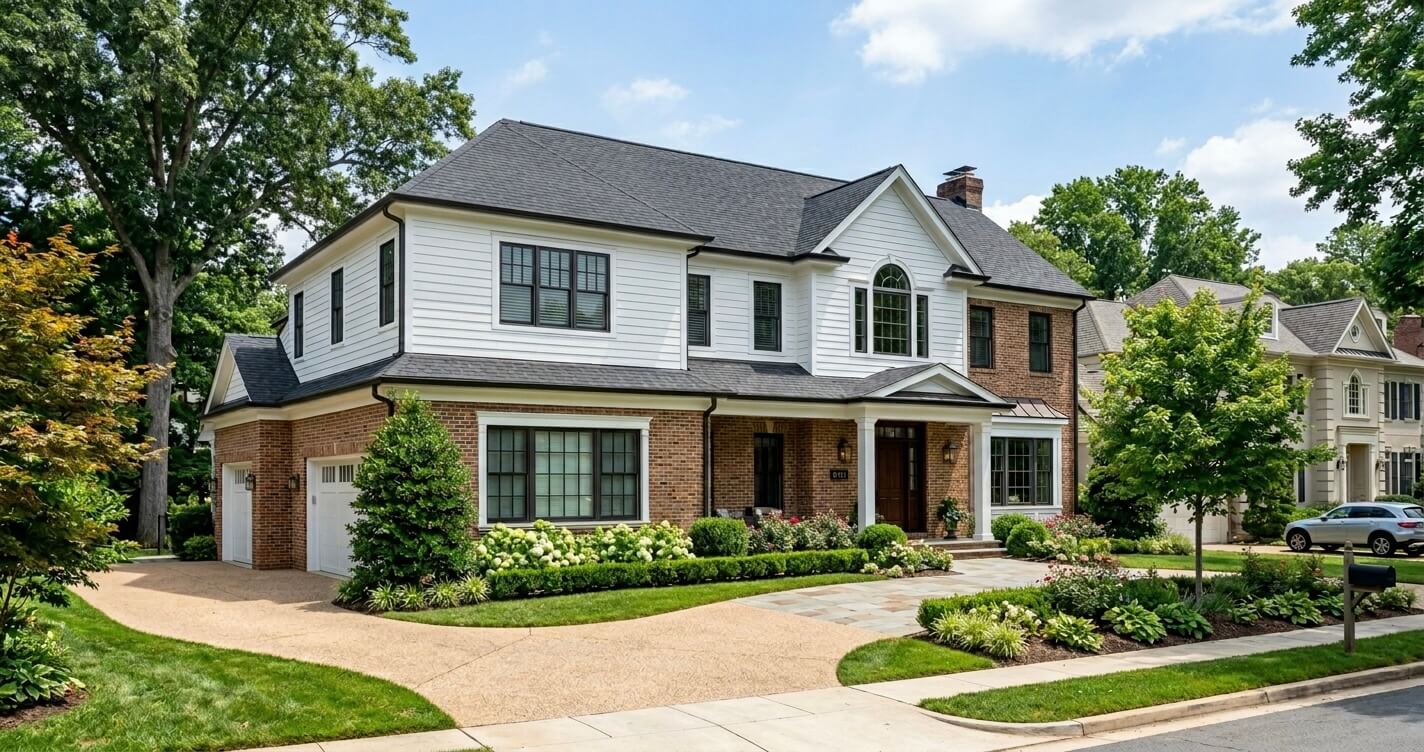
The original single-story ranch profile was replaced with a fully integrated two-story design featuring:
- A new gabled roof system
- Updated architectural proportions
- Expanded window openings
- Improved exterior detailing
- Modernized curb appeal
Rather than appearing as a structure that had been modified over time, the completed home presents itself as though it was originally designed as a two-story residence.
The interior transformation was equally significant.
Finished living space increased from approximately 1,960 square feet to nearly 3,920 square feet.
The revised floor plan delivered:
- Five total bedrooms
- Three-and-a-half bathrooms
- A dedicated home office
- Expanded storage capacity
- Improved circulation throughout the home
The addition of a private primary suite created a clear separation between owner and secondary bedroom spaces, something the original floor plan could not provide.
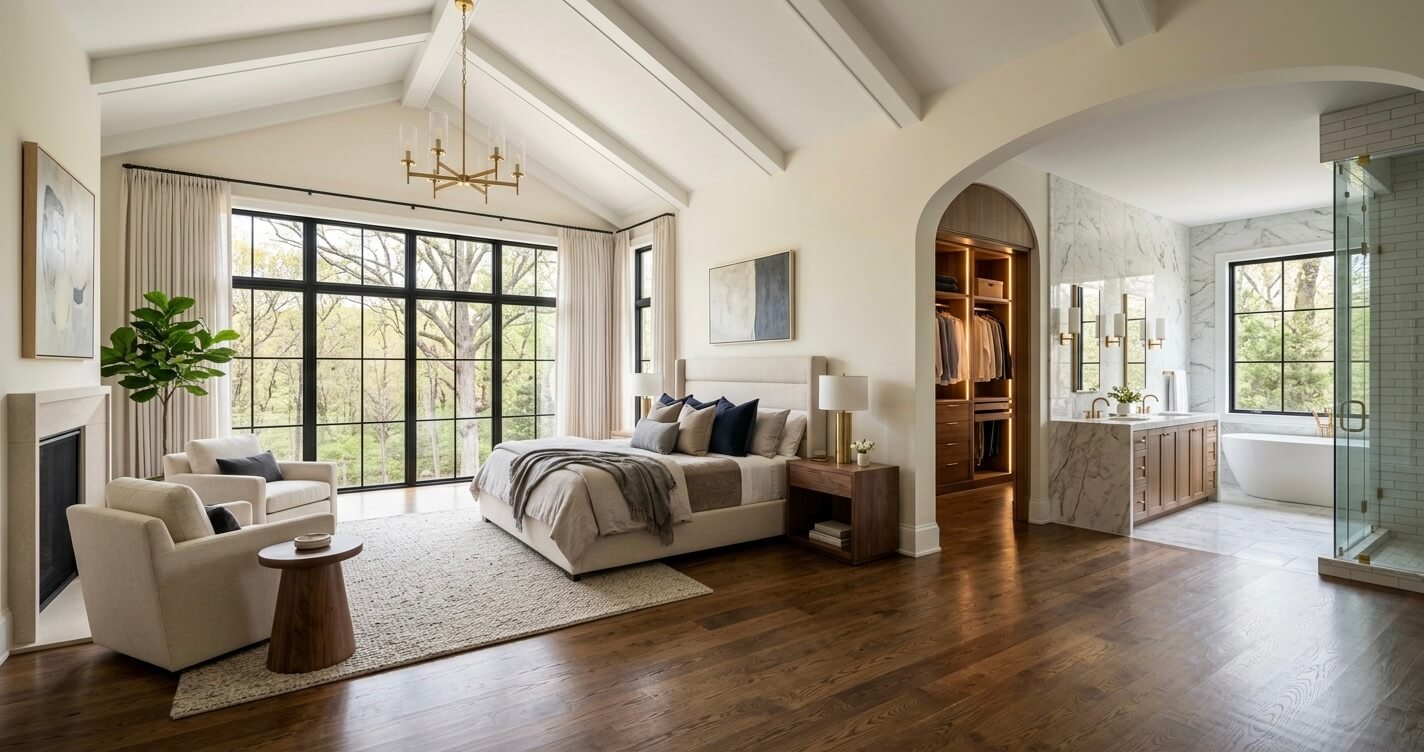
Beyond the functional improvements, the project significantly enhanced the property’s overall market positioning.
Throughout McLean, larger homes on established lots generally command stronger buyer demand than smaller ranch-style properties occupying similar parcels. While resale value should never be the sole motivation for an addition, creating usable square footage in a high-value market often supports long-term property appreciation.
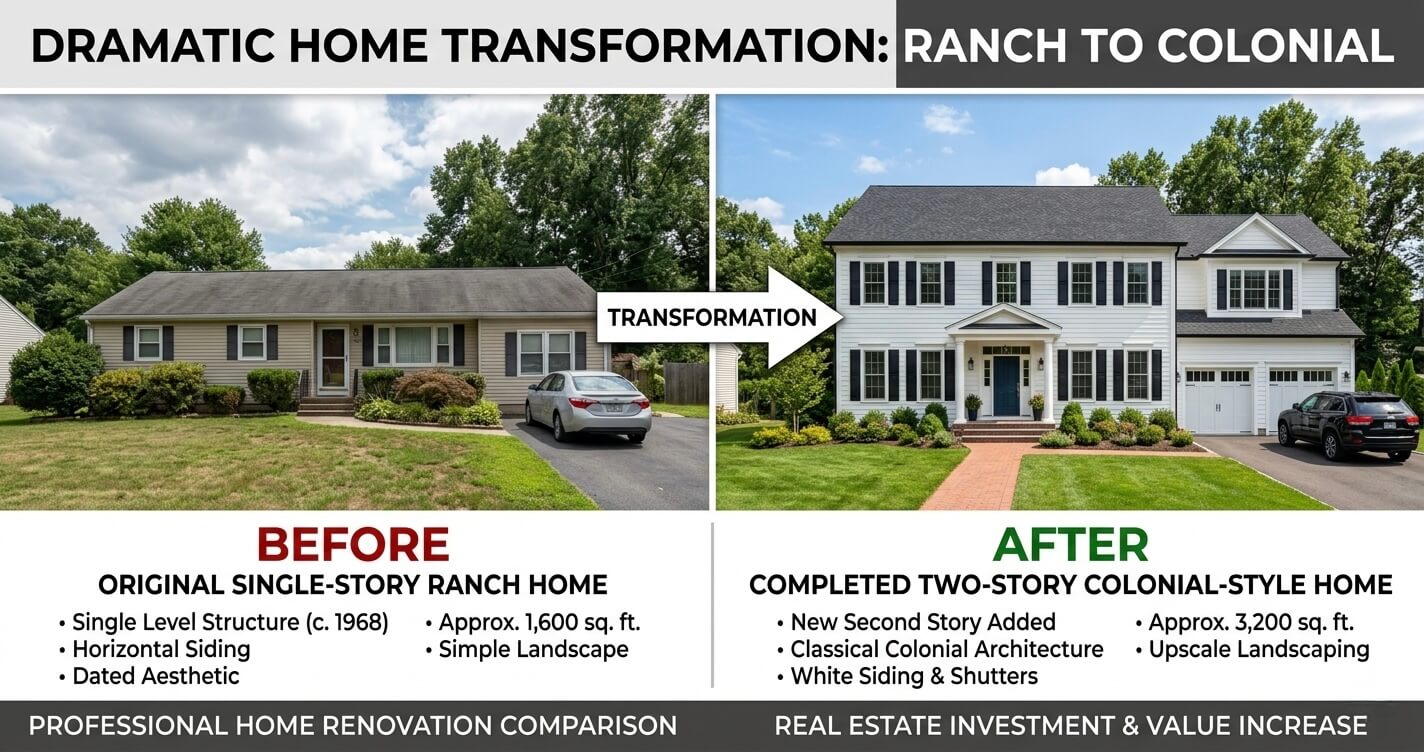
The finished result demonstrates one of the primary advantages of vertical expansion: substantial gains in living space without sacrificing outdoor usability or requiring relocation.
What This Project Taught Us – Lessons for McLean VA Homeowners
Each project reinforces lessons that can help future homeowners make better decisions.
This second story addition McLean VA project highlighted several principles that consistently influence project success.
Lesson 1: Structural Evaluation Must Come Before Budget Planning
Homeowners often focus on pricing before understanding structural feasibility.
In reality, foundation conditions, framing requirements, and load-bearing considerations can significantly influence project scope and cost.
A qualified structural assessment should always occur before final budgets are established.
Lesson 2: Roof Removal Is the Critical Milestone
Few construction events have greater scheduling implications than roof removal.
Once the existing roof is removed, weather exposure becomes a major project risk.
Careful sequencing, temporary protection systems, and proactive scheduling are essential to maintaining project momentum during this phase.
Lesson 3: HVAC Strategy Deserves Early Attention
Heating and cooling challenges are among the most common issues encountered after poorly planned second-story additions.
Proper HVAC design should evaluate:
- Existing equipment capacity
- Airflow requirements
- Zoning opportunities
- Supplemental conditioning systems
Addressing these questions early prevents comfort problems after occupancy.
Lesson 4: Permitting Requires Realistic Expectations
Permit review timelines are rarely compressed simply because a homeowner wants construction to start sooner.
Fairfax County reviews additions carefully because they involve structural, life-safety, energy, zoning, and trade requirements.
Successful projects incorporate permitting into the schedule rather than treating it as an obstacle.
Lesson 5: Architectural Integration Requires Intentional Design
Making an addition look original is never accidental.
Roof geometry, window proportions, trim details, siding transitions, and façade composition all influence whether the finished home appears cohesive.
This project succeeded because these design decisions were addressed during planning rather than after construction began.
For homeowners interested in seeing how similar planning principles apply to other expansion projects, USHDB’s family room addition case study in Northern Virginia provides another useful example.
Is a Second Story Addition Worth the Investment in McLean VA?
For homeowners evaluating a major renovation, one question inevitably rises above all others:
Will the investment make sense?
The answer depends on far more than resale value alone.
A second story addition McLean VA project should be evaluated through three separate lenses:
- Financial performance
- Functional value
- Lifestyle preservation
The most successful projects typically deliver benefits across all three categories.
Understanding the Financial Equation
McLean remains one of Northern Virginia’s highest-value residential markets, where land availability is limited and larger homes often command substantial premiums over smaller homes on comparable lots.
That market dynamic is important because it affects how additional square footage is valued.
When homeowners increase bedroom count, bathroom count, and overall livable area while maintaining neighborhood quality and lot characteristics, they are often improving some of the factors that drive residential value.
However, second-story additions should never be viewed as short-term investment vehicles.
Unlike stock portfolios or commercial real estate investments, residential renovations deliver value in multiple forms, including:
- Improved functionality
- Increased comfort
- Better space utilization
- Reduced moving costs
- Enhanced lifestyle flexibility
- Potential long-term resale benefits
From a design-build perspective, homeowners who approach additions as a combination of lifestyle improvement and property enhancement typically make better long-term decisions than those focused solely on resale calculations.
Comparing Addition Costs to Moving Costs
A financial comparison should include more than construction expenses.
Many homeowners initially compare the cost of an addition against the purchase price of a larger home. In reality, the calculation is much broader.
Potential relocation expenses may include:
- Real estate commissions
- Closing costs
- Moving expenses
- Mortgage refinancing impacts
- Property tax adjustments
- Temporary housing costs
- Utility transfer expenses
In higher-value housing markets, these transaction-related costs can become substantial before a homeowner gains a single square foot of additional living space.
For many families, the ability to remain in a preferred neighborhood while obtaining the space they need becomes one of the strongest arguments for building rather than moving.
Homeowners exploring this broader decision framework may also find value in reviewing our guide to home renovation Northern Virginia projects.
National Remodeling Data and Resale Performance
Industry studies consistently show that major home additions can recover a meaningful percentage of their cost at resale, although actual performance varies by market, project quality, timing, and buyer demand.
According to the annual Cost vs. Value Report published by Zonda Media, projects that increase usable square footage and improve overall functionality often perform better than purely cosmetic upgrades because they directly affect how a home lives and functions.
It is important to recognize that resale performance is heavily influenced by project execution.
Homes that appear architecturally cohesive and functionally integrated typically perform better than additions that feel disconnected from the original structure.
This case study demonstrates that principle clearly.
The goal was never simply to add square footage.
The objective was to create a home that felt purpose-built for the family’s future needs while maintaining long-term market appeal.
The Bigger Question: Is It Worth It?
For the homeowners in this project, the answer was yes.
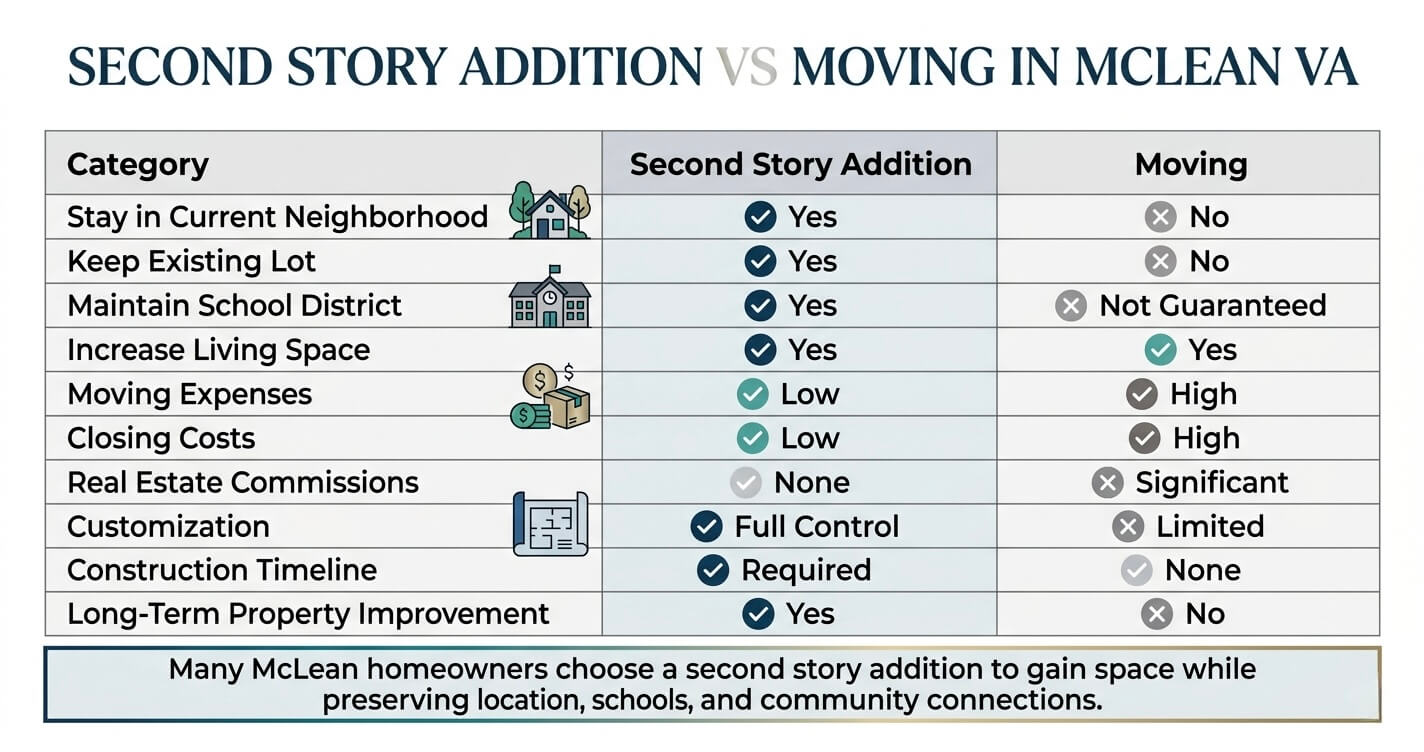
The addition delivered:
- Nearly double the livable square footage
- Two additional bedrooms
- A dedicated home office
- A private primary suite
- Improved functionality
- Enhanced curb appeal
- Continued access to the neighborhood they already loved
Viewed through that lens, the project’s success cannot be measured solely in dollars per square foot.
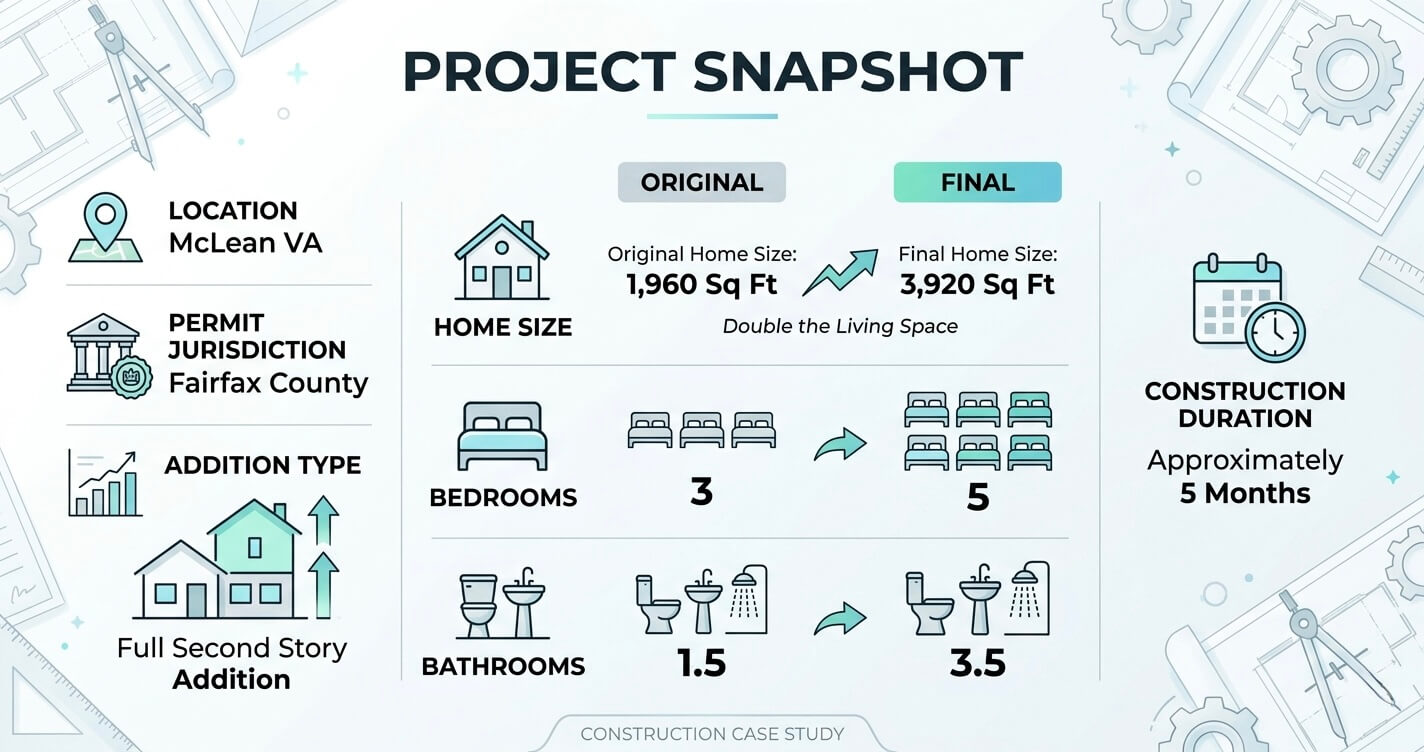
The addition fundamentally changed how the family uses and experiences their home.
Frequently Asked Questions
How much does a second story addition cost in McLean VA?
Project costs vary significantly depending on structural conditions, square footage added, finish selections, engineering requirements, and mechanical upgrades.
For projects similar in scope to this case study, homeowners should generally expect investment levels that reflect the complexity of adding an entirely new level to an existing structure. Because McLean is one of Northern Virginia’s premium residential markets, costs often trend toward the upper end of regional construction ranges.
For a more detailed breakdown, see our guide to second story addition cost in Northern Virginia.
How long does a second story addition take in Fairfax County?
Project duration depends on design complexity, permit review timelines, weather conditions, and material availability.
A typical timeline may include:
– Design and engineering: several weeks
– Permit review and approval: varies by project
– Construction: approximately four to seven months
The most accurate timeline can only be determined after evaluating the property’s specific conditions and project scope.
Do I need a permit for a second story addition in McLean VA?
Yes. A second story addition McLean VA project requires permits through Fairfax County because it involves structural modifications, life-safety systems, electrical work, plumbing work, and mechanical systems.
Typical permit requirements include:
– Residential addition permit
– Structural documentation
– Electrical permits
– Plumbing permits
– Mechanical permits
Projects must also comply with applicable Virginia building code requirements and local zoning regulations.
Can I stay in my home during a second story addition?
The answer depends on the construction phase.
Some homeowners remain in the home during portions of the project, particularly during early preparation work.
However, major structural phases involving roof removal, framing operations, utility disruptions, and extensive interior modifications often make temporary relocation the safer and more practical option.
Each project should be evaluated individually based on scope and sequencing.
Will the new second floor match my existing home’s appearance?
When properly designed, yes.
The key is architectural integration.
Successful second-story additions coordinate:
– Roof design
– Window proportions
– Exterior materials
– Trim details
– Massing and scale
– Architectural style
The objective should be to create a finished home that appears cohesive rather than visibly modified.
This level of integration must be addressed during the design phase rather than after construction begins.
Does my foundation need reinforcement before adding a second story?
Not necessarily. Many homes throughout Fairfax County possess foundations capable of supporting additional loads without significant modifications.
However, assumptions should never replace engineering analysis.
A structural engineer should evaluate:
– Foundation dimensions
– Existing condition
– Soil considerations
– Load-bearing capacity
– Proposed structural loads
Only after this assessment can reinforcement requirements be determined accurately.
How do I choose the right contractor for a second story addition in McLean VA?
Second-story additions are among the most technically demanding residential projects.
Homeowners should look for a contractor that can demonstrate experience with:
– Structural renovation
– Engineering coordination
– Permit management
– Architectural design integration
– Construction sequencing
– Local code compliance
Many homeowners find that a design-build approach simplifies communication and accountability by placing design, permitting, and construction under a coordinated project delivery framework.
What is the ROI on a second story addition in McLean VA?
There is no universal ROI figure because resale performance depends on market conditions, project quality, neighborhood characteristics, and buyer demand.
However, additions that increase functional square footage, improve bedroom and bathroom counts, and integrate seamlessly with the existing home generally create stronger long-term value than projects that simply add space without improving usability.
The strongest returns often occur when homeowners simultaneously improve both functionality and overall architectural appeal.
To Sum Up
A second story addition McLean VA project represents one of the most transformative investments a homeowner can make without leaving the property they already love.
For the family featured in this case study, the addition transformed a 1,960-square-foot ranch into a nearly 3,920-square-foot home capable of supporting changing needs, modern work patterns, and long-term family growth.
The success of the project was not simply the result of adding another floor.
It depended on careful engineering analysis, thoughtful architectural planning, coordinated permitting, disciplined construction sequencing, and attention to design details that allowed the finished home to feel cohesive and intentional.
Projects of this scale require far more than basic remodeling expertise.
They demand an integrated approach that considers structural performance, building science, code compliance, aesthetics, and homeowner goals from the earliest planning stages through final inspection.
For homeowners throughout McLean, Fairfax County, and Northern Virginia who have outgrown their current home but want to preserve their location, a second-story addition can provide a compelling alternative to moving.
When properly planned and executed, the result is more than additional square footage.
It is a home that functions better, adapts to future needs, and continues serving the family for years to come. Planning a second story addition in McLean, Fairfax, or elsewhere in Northern Virginia? Contact US Home Design Build to discuss your home’s structure, your family’s goals, and what a project like this could look like for your property.
