
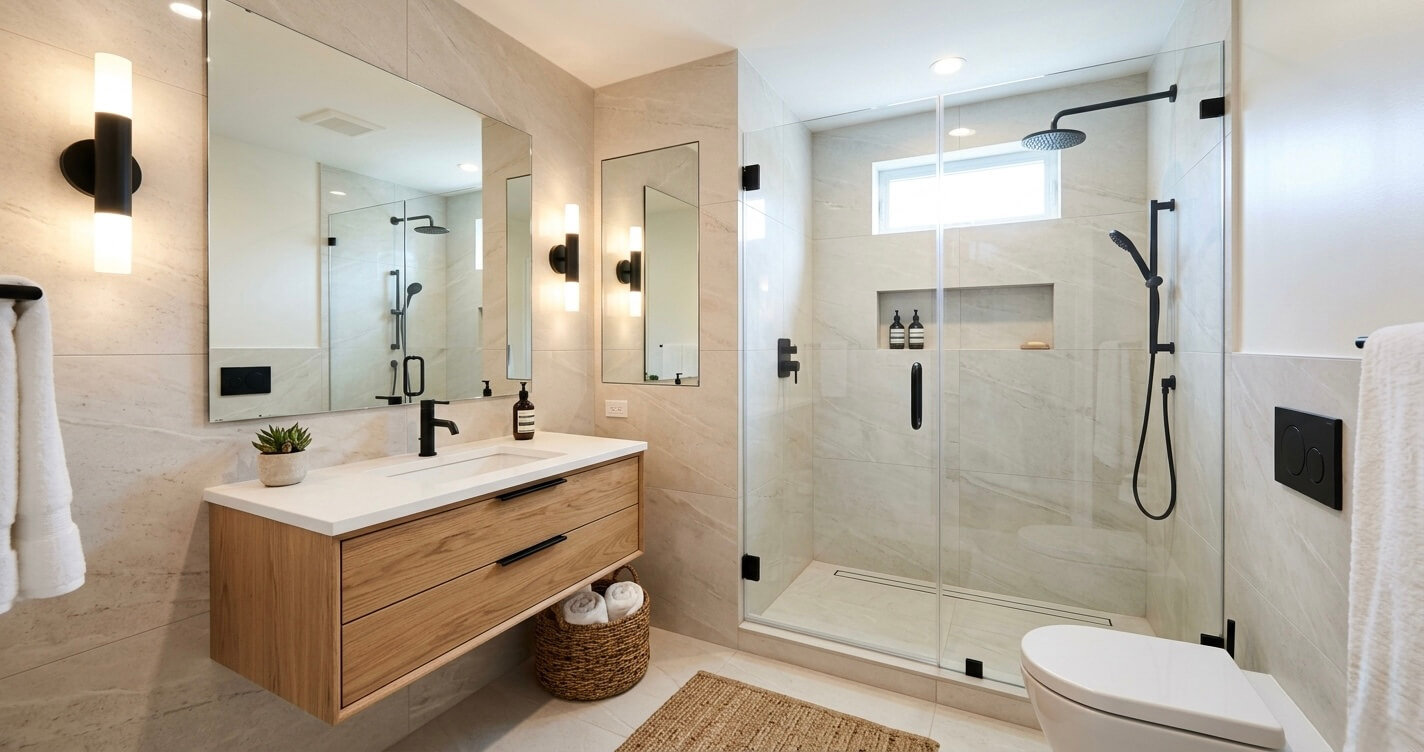
Many Arlington homeowners are discovering that the most valuable square footage in their home is often the space they use every day. As a result, interest in small bathroom design ideas Arlington VA continues to grow as homeowners look for ways to improve functionality without expanding their home’s footprint.
This trend is particularly relevant in Arlington because much of the area’s housing stock was built between the 1940s and 1980s. Homes in neighborhoods such as Bluemont, Lyon Park, Douglas Park, Arlington Forest, and Westover were often designed with compact bathrooms that reflected the standards and fixture sizes of previous generations. While these homes remain highly desirable because of their location and character, many contain bathrooms that no longer meet modern expectations for storage, comfort, and efficiency.
The demand for bathroom renovations is also being driven by broader remodeling trends. According to the National Association of Home Builders (NAHB), bathroom remodeling remains one of the most common interior renovation projects undertaken by American homeowners, reflecting ongoing demand for functional and updated living spaces. [Source: National Association of Home Builders (NAHB)]
At the same time, Arlington’s strong property values have encouraged many homeowners to improve existing homes rather than compete in Northern Virginia’s highly competitive housing market. Instead of adding square footage, many are investing in smarter layouts, better storage solutions, upgraded lighting, and modern fixtures that make a small bathroom feel significantly larger.
US Home Design Build has seen this shift firsthand. Increasingly, Arlington homeowners are prioritizing efficient design and intelligent space planning over physical expansion. In many cases, a well-designed 45-square-foot bathroom can outperform a poorly planned bathroom twice its size.
THE BIGGEST DESIGN MISTAKES IN SMALL BATHROOMS
One of the most common misconceptions in bathroom remodeling is that square footage alone determines functionality. In reality, many small bathrooms fail because of poor design decisions rather than limited space. Understanding these mistakes is often the first step toward creating a successful small bathroom remodel Arlington VA project.
Oversized vanities are among the most frequent problems. Homeowners often install large cabinets for storage, only to sacrifice valuable floor area and circulation space. In compact bathrooms, a floating vanity typically provides both storage and a more open visual appearance.
Another common issue is the traditional swinging bathroom door. A standard door can consume up to 10 square feet of usable floor area when opened. Pocket doors or out-swing doors frequently create a more efficient layout.
Lighting is another major factor. Many older Arlington homes rely on a single ceiling fixture that creates shadows and makes the room feel smaller. Layered lighting, including recessed fixtures, vanity lighting, and accent lighting, improves both functionality and perceived size.
Excessive visual clutter also reduces the effectiveness of a small bathroom. Open shelving filled with personal items often creates a crowded appearance. Built-in niches, recessed medicine cabinets, and concealed storage solutions provide a cleaner and more organized design.
Poor ventilation is frequently overlooked during bathroom remodeling. Without proper exhaust capacity, moisture accumulation can damage finishes and encourage mold growth. The U.S. Department of Energy recommends proper ventilation as an important component of moisture control and indoor air quality. [Source: U.S. Department of Energy]
Bad Design vs. Smart Design Comparison
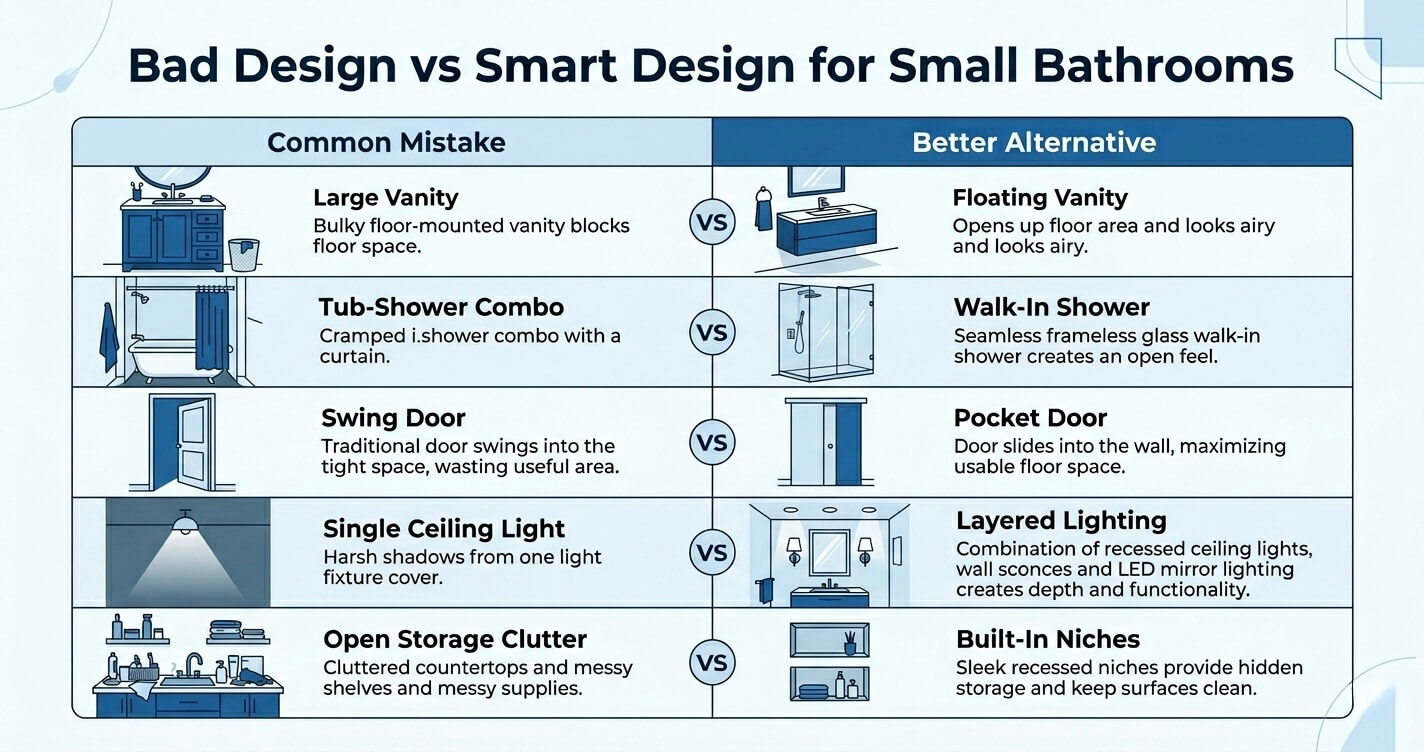
The most successful bathroom designs remove unnecessary visual weight while maximizing storage, movement, and light.
BEST SMALL BATHROOM LAYOUTS FOR ARLINGTON HOMES
Choosing the right layout is often the most important decision in any bathroom design Arlington VA project. While finishes and fixtures affect appearance, layout determines how effectively the room functions every day.
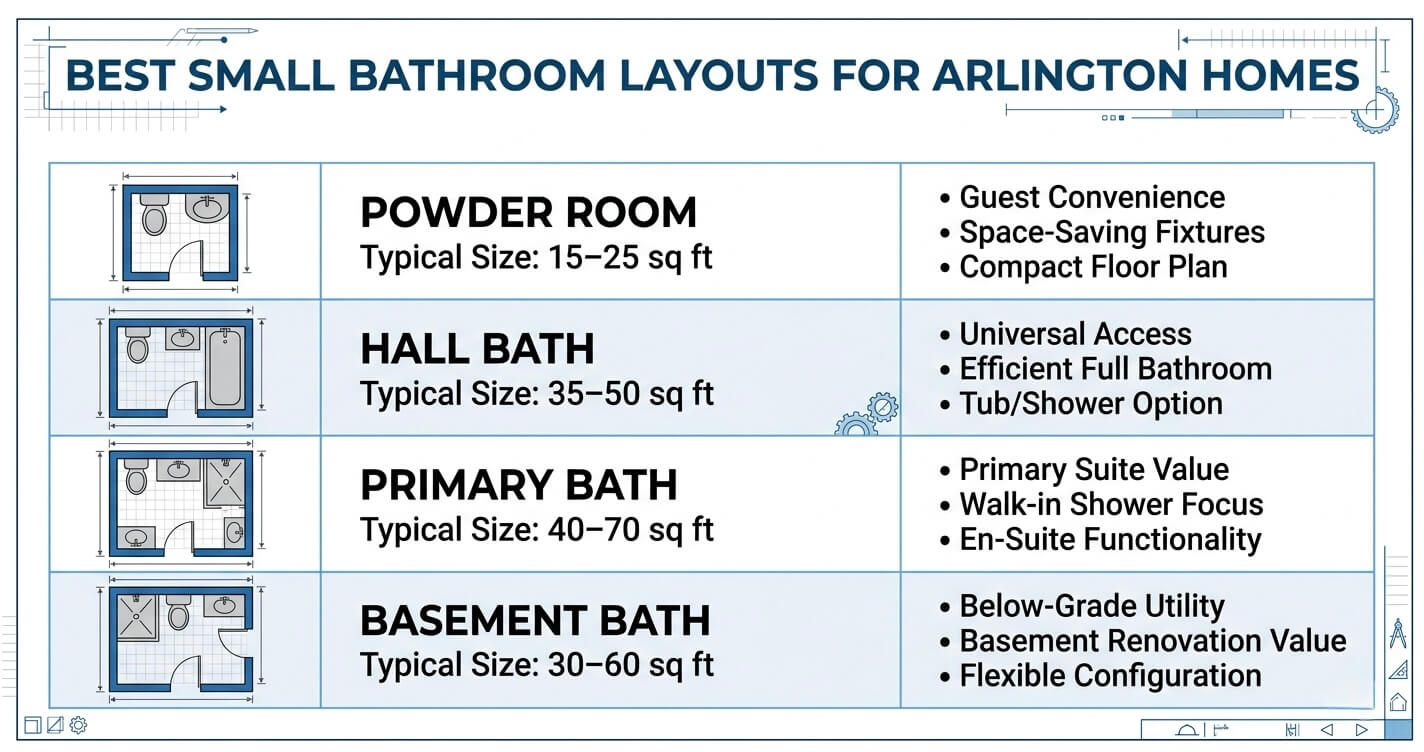
Layout #1: 5×8 Hall Bathroom
The classic 5×8 bathroom remains one of the most common configurations in Arlington’s older homes. A tub-shower combination positioned along one wall, paired with a compact vanity and toilet, creates an efficient layout that maximizes every square foot. Replacing a bulky vanity with a floating model can dramatically improve circulation.
Layout #2: Powder Room Optimization
Small powder rooms typically range from 15 to 25 square feet and benefit from wall-mounted sinks, floating vanities, and oversized mirrors. Strategic lighting and lighter finishes help these compact spaces feel significantly larger.
Layout #3: Small Primary Bathroom
For homeowners remodeling a small primary bathroom, walk-in showers with frameless glass enclosures often provide the best balance between comfort and space efficiency. Recessed storage and floating vanities further reduce visual clutter.
Layout #4: Basement Bathroom Layout
Basement bathrooms require careful coordination of plumbing, ventilation, and ceiling clearances. Compact fixtures and efficient layouts help maximize usable floor space while accommodating existing mechanical systems.
Layout #5: Jack-and-Jill Bathroom
A shared bathroom serving two bedrooms can benefit from dual-access doors, separated vanity zones, and efficient storage solutions that allow multiple users to access the space simultaneously.
Small Bathroom Layout Comparison
The best small bathroom layouts focus on circulation, storage integration, and visual openness. In Arlington homes where expansion is often impractical, thoughtful layout planning consistently delivers a higher return than simply increasing square footage.
SPACE-SAVING DESIGN IDEAS THAT WORK
One of the biggest misconceptions in small bathroom remodeling is that creating a larger-feeling space requires physically expanding the room. In reality, many of the most successful small bathroom design ideas Arlington VA homeowners implement focus on improving visual openness, storage efficiency, and circulation without adding square footage.
Floating vanities remain one of the most effective solutions because they expose additional floor area beneath the cabinet, creating a more spacious appearance while maintaining storage capacity. Similarly, recessed medicine cabinets and built-in shower niches relocate storage into wall cavities rather than consuming valuable floor space.
Frameless glass shower enclosures continue to outperform framed alternatives in compact bathrooms because they preserve uninterrupted sight lines throughout the room. Combined with large-format porcelain tile and continuous flooring transitions, they create a more expansive visual field with fewer grout lines and interruptions.
Pocket doors are another high-impact upgrade. Unlike traditional swing doors, pocket doors slide directly into the wall cavity, recovering usable floor area and improving fixture placement flexibility.
Wall-mounted toilets, although more complex to install, create additional visible floor area while simplifying cleaning. Corner sinks, corner storage cabinets, and vertical shelving systems further maximize otherwise underutilized space.
Water efficiency should also be considered during planning. According to the Environmental Protection Agency’s WaterSense program, water-efficient fixtures can significantly reduce household water consumption while maintaining performance standards. [Source: EPA WaterSense]
Space-Saving Feature Comparison
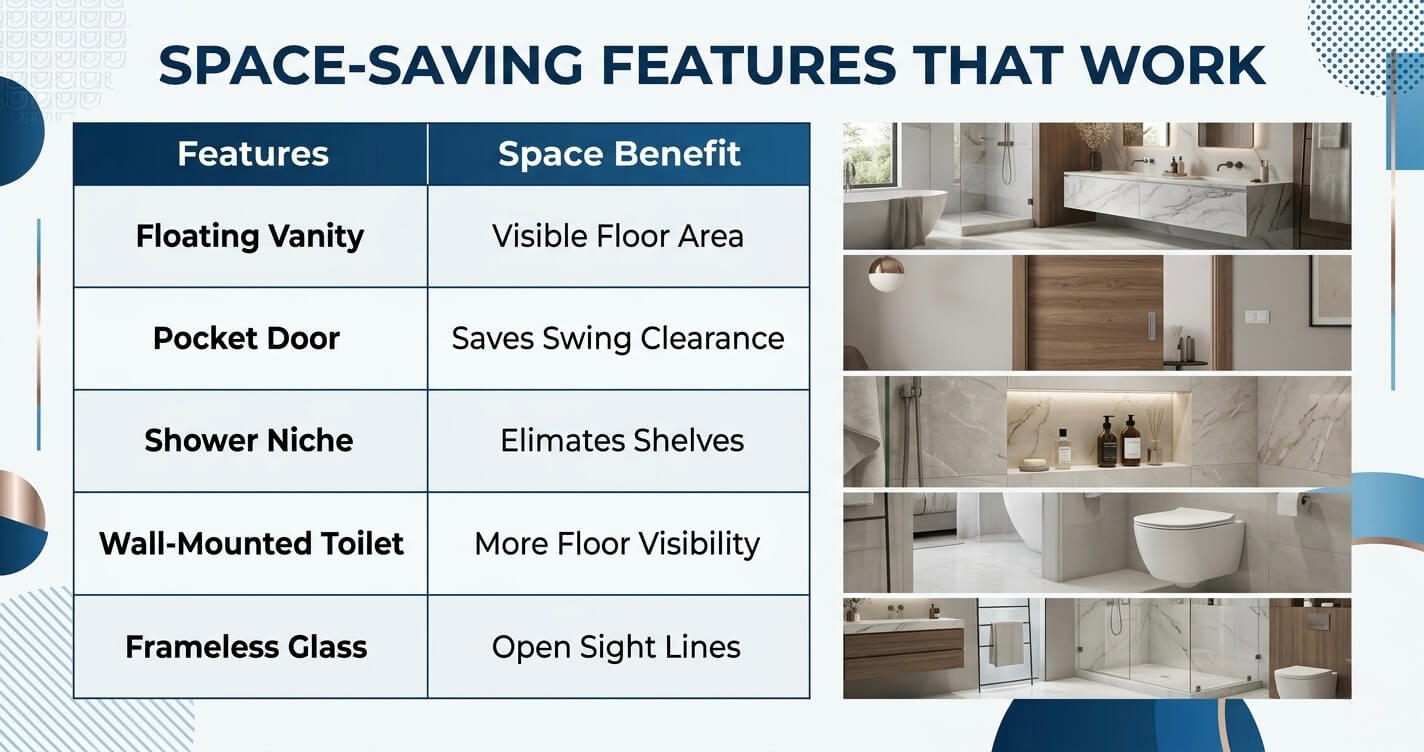
When combined strategically, these design elements can dramatically improve functionality and visual spaciousness without altering the bathroom’s footprint.
TOP SMALL BATHROOM DESIGN TRENDS FOR 2026
Homeowners planning a small bathroom remodel Arlington VA project in 2026 are increasingly prioritizing designs that blend functionality, wellness, and modern aesthetics. While maximizing space remains a primary objective, current trends emphasize creating bathrooms that feel luxurious regardless of size.
One of the strongest design movements continues to be the spa-inspired bathroom. Soft natural color palettes, textured materials, and warm wood accents are replacing the cold, highly polished finishes that dominated previous years. Earth tones, greige palettes, and natural stone-inspired porcelain surfaces help create a calming environment while maintaining timeless appeal.
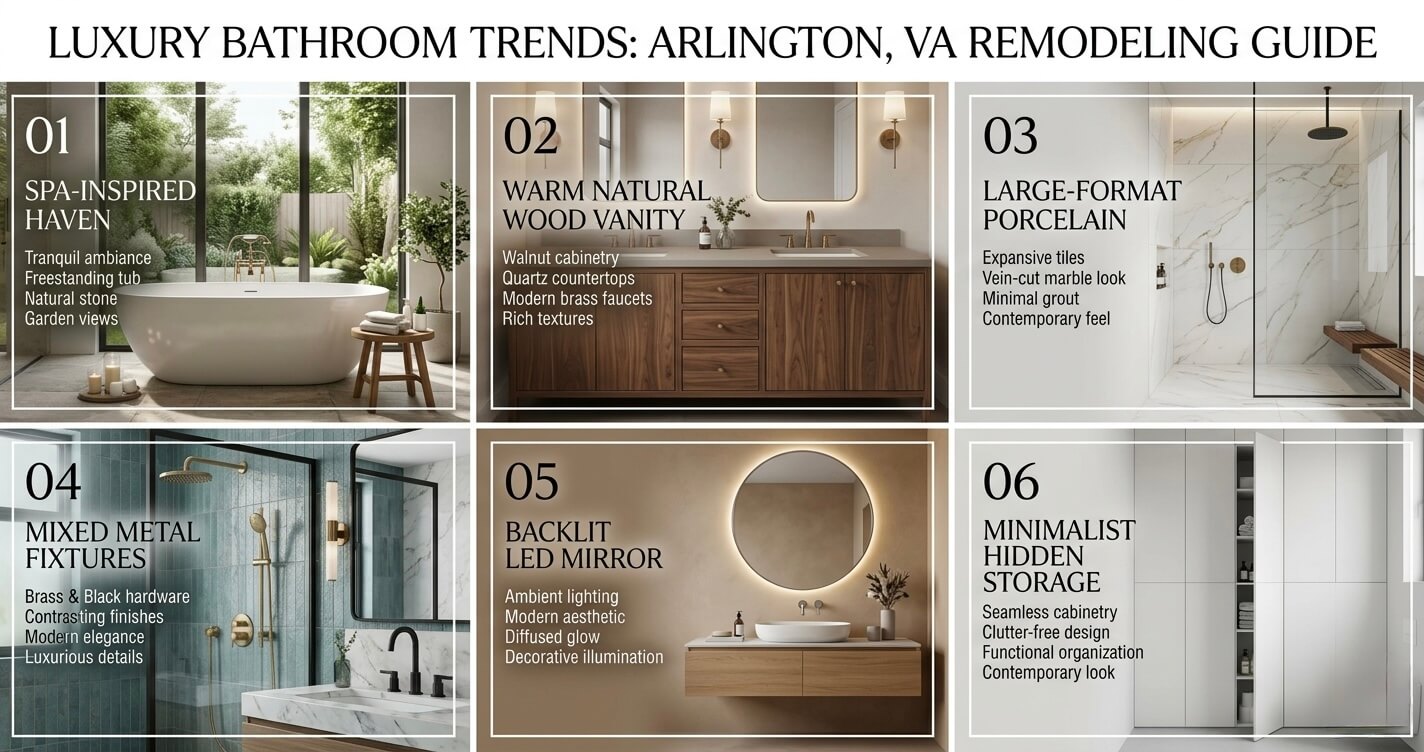
Large-format porcelain tile remains one of the most requested finishes because it reduces grout lines and creates a cleaner visual appearance. Many Arlington homeowners are extending the same tile from the shower floor to surrounding walls, enhancing continuity throughout compact spaces.
Floating vanities continue gaining popularity because they combine modern styling with practical space-saving benefits. Likewise, backlit mirrors have become a preferred lighting solution, offering both task illumination and ambient lighting without consuming additional wall space.
Mixed-metal fixtures are also emerging as a prominent trend. Designers increasingly pair matte black, brushed brass, and brushed nickel finishes to create subtle visual contrast without overwhelming smaller rooms.
Storage remains a major priority. Minimalist built-in storage systems, recessed shelving, concealed medicine cabinets, and integrated vanity organizers help maintain clean sight lines while reducing clutter.
Modern ventilation technology is another growing trend. Quiet, energy-efficient exhaust systems improve indoor air quality, control moisture, and contribute to long-term durability.
For homeowners seeking broader inspiration, many of these concepts align with current Top Remodeling Trends in Northern Virginia.
Collectively, these trends demonstrate a shift toward bathrooms that feel larger, brighter, and more efficient while supporting long-term comfort and functionality.
HOW MUCH DOES A SMALL BATHROOM REMODEL COST IN ARLINGTON VA?
One of the most common questions homeowners ask is how much a small bathroom renovation Arlington VA project will cost. While bathroom size influences pricing, the largest cost drivers are typically finish selections, plumbing modifications, electrical upgrades, and labor requirements rather than square footage alone.
In Arlington’s remodeling market, costs vary significantly based on project scope and material quality.
Small Bathroom Remodel Cost Range – Arlington VA
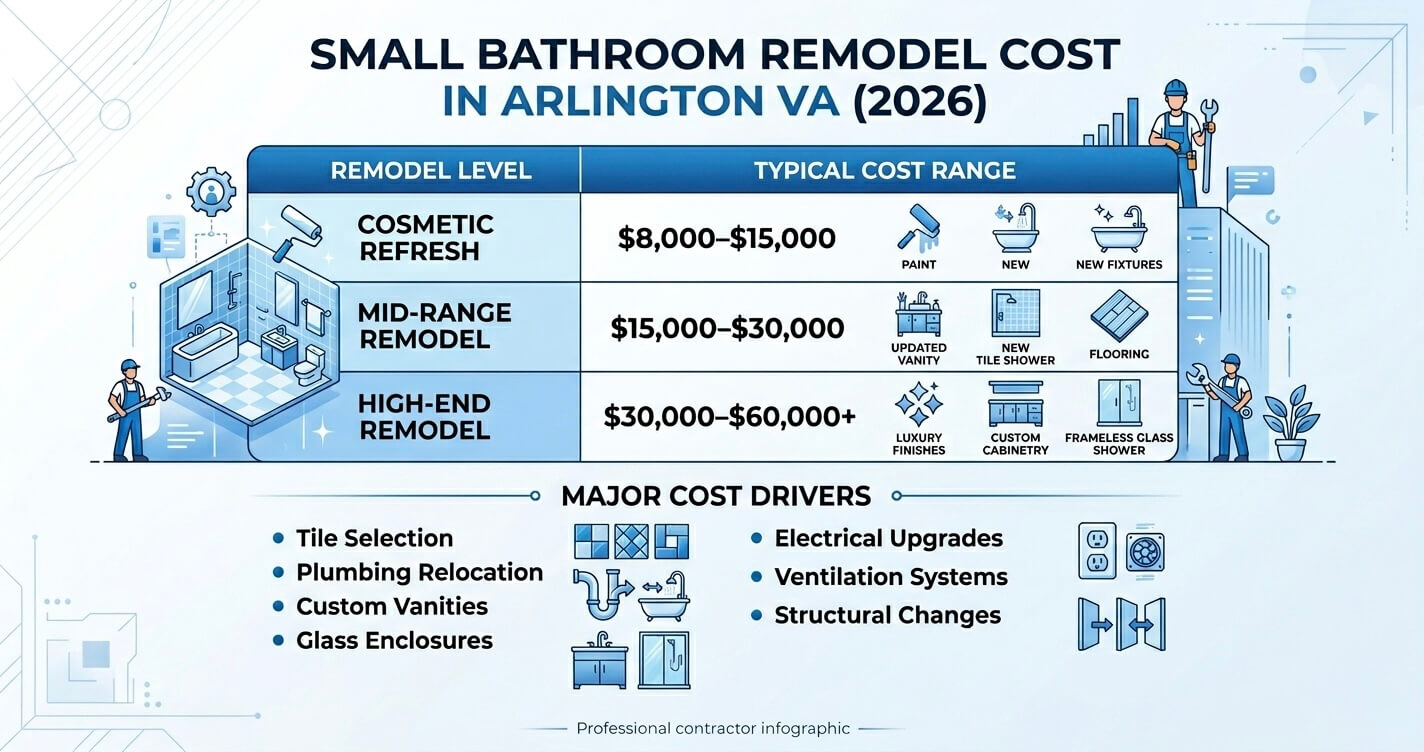
A cosmetic refresh generally includes painting, fixture replacement, updated lighting, vanity upgrades, and minor finish improvements while maintaining the existing layout.
Mid-range remodels often include new tile, updated plumbing fixtures, improved storage solutions, upgraded ventilation, enhanced lighting, and partial plumbing or electrical modifications.
High-end renovations frequently involve complete layout reconfiguration, custom vanities, premium tile installations, frameless glass enclosures, heated flooring systems, luxury fixtures, and substantial plumbing or electrical relocation.
Several factors can significantly influence total project cost:
- Tile selection and installation complexity
- Relocation of plumbing fixtures
- Custom cabinetry and millwork
- Frameless glass shower systems
- Electrical upgrades and lighting improvements
- Ventilation system upgrades
- Structural modifications
- Water damage remediation discovered during demolition
Homeowners should also account for permitting requirements, especially when plumbing, electrical, or structural work is involved.
For broader budgeting guidance across multiple renovation types, see our guide to Home Addition Cost in Northern Virginia.
While every project is unique, investing in thoughtful planning and professional design typically delivers the highest return by maximizing both functionality and long-term value within a limited footprint.
PERMITS & CODE REQUIREMENTS IN ARLINGTON VA
Many homeowners are surprised to learn that even relatively small bathroom renovations may require permits depending on the scope of work. Understanding permit requirements before construction begins helps avoid costly delays, failed inspections, and potential issues during future property sales.
In Arlington County, permits are generally required whenever a bathroom remodel involves modifications to plumbing systems, electrical wiring, structural framing, ventilation systems, or load-bearing components. Cosmetic updates such as painting, fixture replacement using existing connections, or cabinet replacement typically do not require permits. However, moving plumbing fixtures, relocating electrical circuits, upgrading exhaust fans, or modifying walls often triggers permit requirements.
According to Arlington County Building & Development Services, permit review and inspections help ensure renovations comply with applicable building, electrical, plumbing, mechanical, and safety codes. [Source: Arlington County Building & Development]
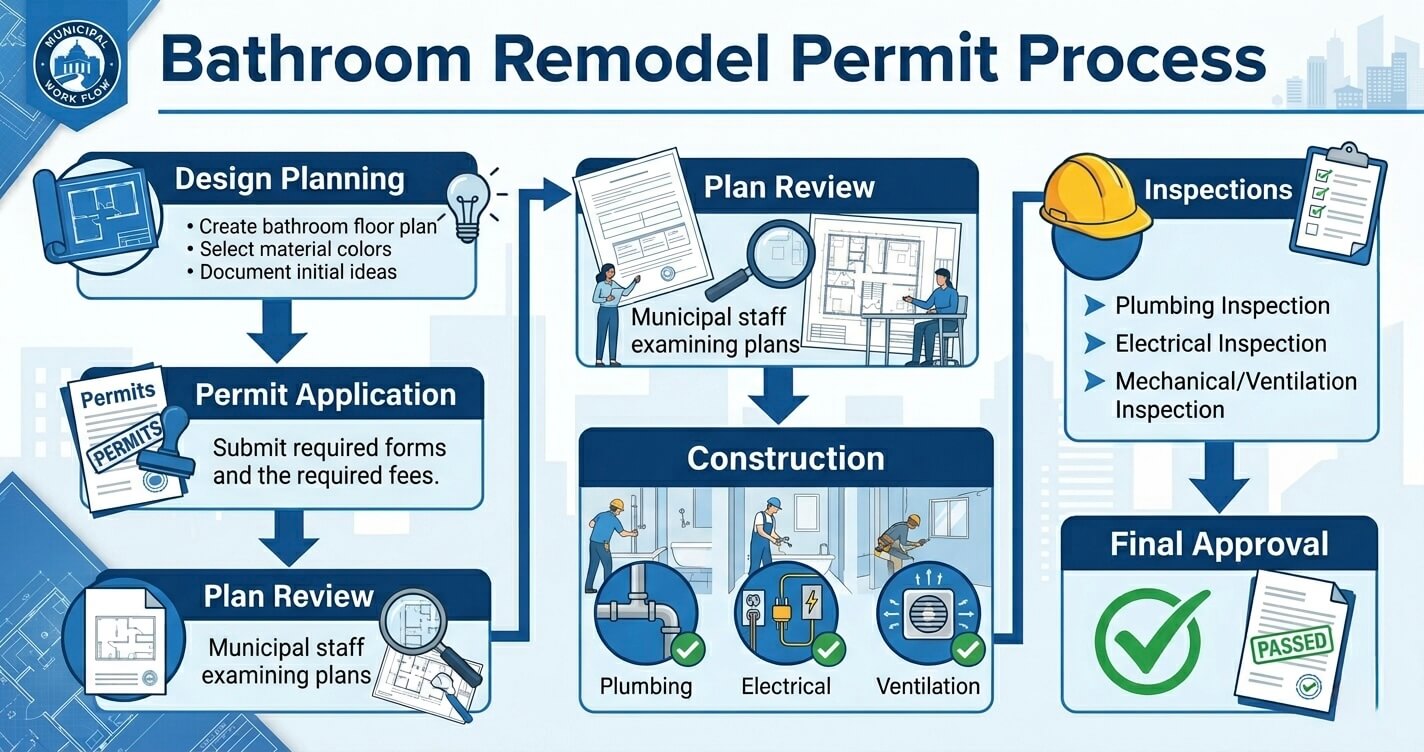
Ventilation requirements are particularly important in bathroom remodeling projects. Modern codes generally require properly sized exhaust systems capable of removing moisture and protecting indoor air quality. Electrical upgrades must also comply with current safety standards, including GFCI protection and circuit requirements.
For homeowners throughout Northern Virginia, Fairfax County Land Development Services provides similar oversight regarding permitted remodeling activities, inspections, and code compliance. [Source: Fairfax County Land Development Services]
The inspection process typically includes rough-in inspections for plumbing, electrical, or framing work followed by final inspections after fixture installation and project completion.
For additional guidance on permit requirements and remodeling compliance, see our article on Remodeling Permit Fairfax County.
Proper permitting may add time to a project, but it protects both homeowner investment and long-term property value.
HOW TO CHOOSE FINISHES FOR A SMALL BATHROOM
Selecting finishes for a small bathroom is not simply a design decision, it directly affects how large, bright, and functional the room feels. In many cases, the right finish selections can make a 40-square-foot bathroom feel substantially larger without changing the layout.
Large-format tile remains one of the most effective visual-expansion tools available. Fewer grout lines create cleaner sight lines and reduce visual fragmentation. Many Arlington homeowners are now using large-format porcelain tile on both floors and shower walls to establish continuity throughout the room.
Color selection also plays a major role. Light neutrals, warm whites, soft grays, and natural stone-inspired finishes reflect more light and create a brighter environment. Dark colors can be effective when used strategically, but they typically work best as accents rather than dominant finishes.
Vanity selection should balance storage and visual weight. Floating vanities continue to be one of the most popular choices because they expose more floor area and create a modern appearance. Quartz countertops remain highly desirable because of their durability, moisture resistance, and low maintenance requirements.
Mirror placement is another critical design tool. Oversized mirrors and frameless mirror designs reflect both natural and artificial light while visually extending the room.
Layered lighting should combine ambient, task, and accent illumination to eliminate shadows and improve functionality. Moisture-resistant materials, including porcelain tile, quartz surfaces, and high-quality paint systems, provide superior long-term durability in humid environments.
Finish Selection Impact Table
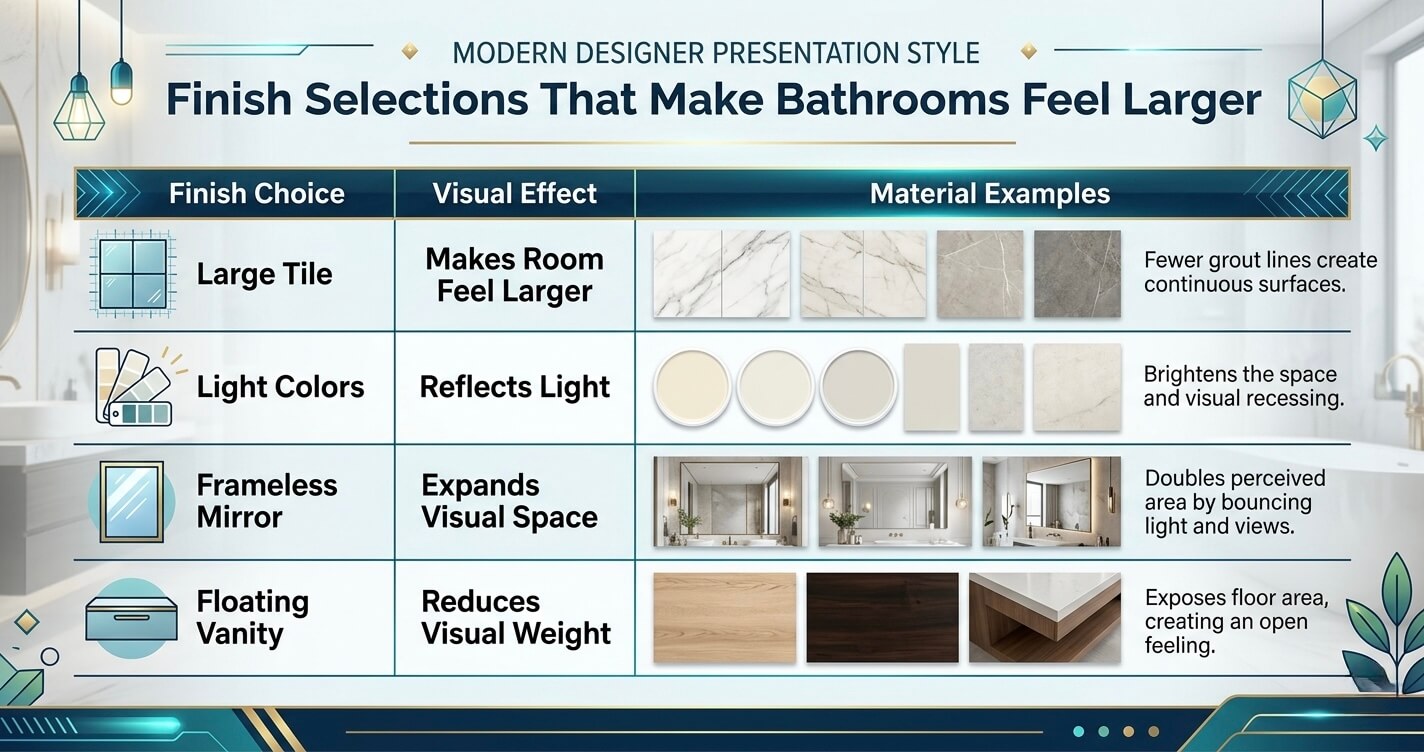
The most successful small bathroom finishes work together to maximize brightness, continuity, and visual openness while maintaining durability and easy maintenance.
HOW TO CHOOSE THE RIGHT BATHROOM REMODELING CONTRACTOR
Even the best bathroom design can fail if the contractor executing the project lacks experience, organization, or proper qualifications. Choosing the right remodeling partner is often the single most important decision homeowners make during a renovation project.
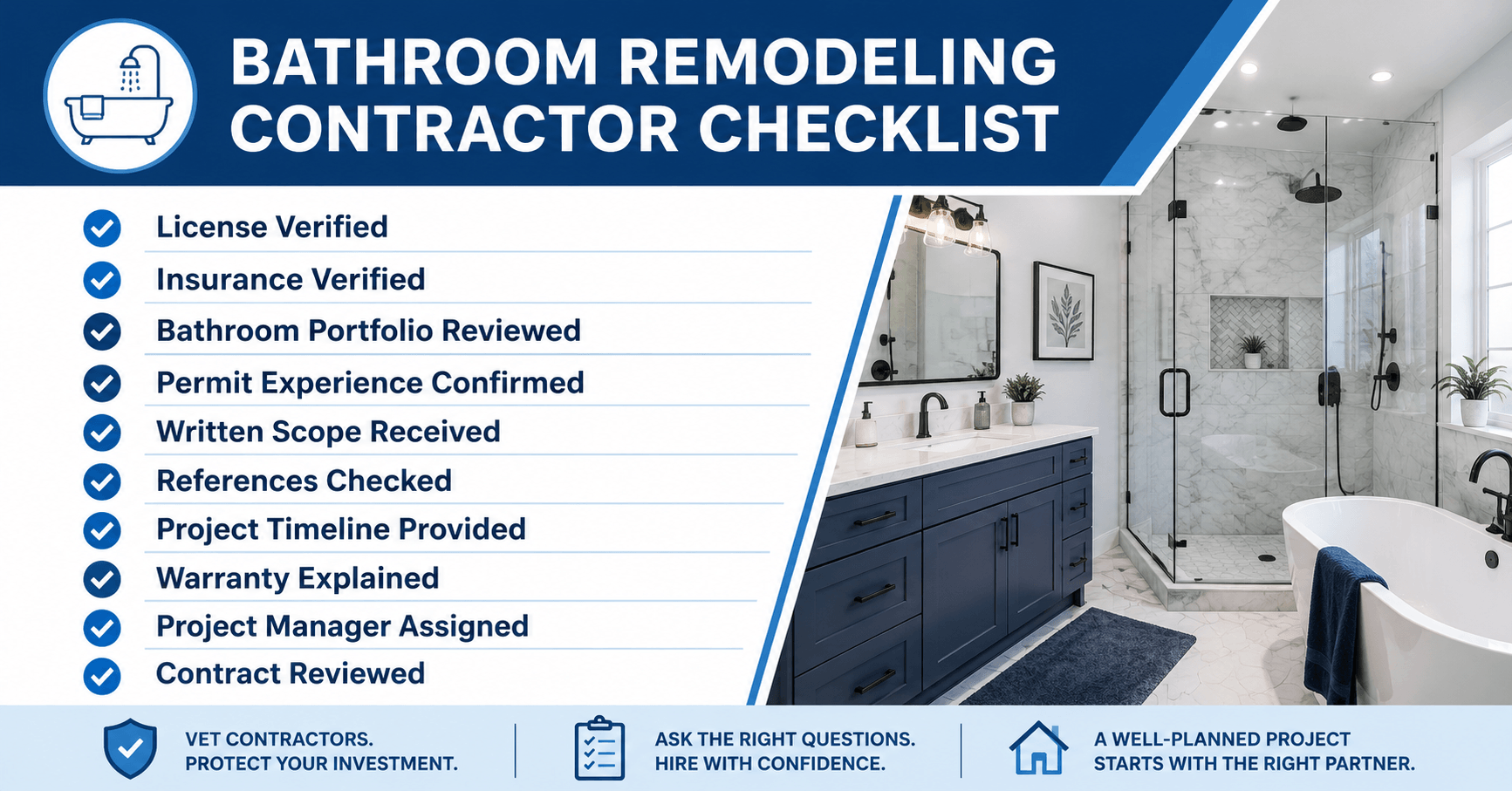
Start by verifying licensing and insurance coverage. Contractors should be properly licensed and carry adequate liability insurance and workers’ compensation coverage. This protects both the homeowner and the project if unexpected issues arise.
Next, review the contractor’s bathroom remodeling portfolio. Small bathroom projects require specialized experience because space planning, plumbing coordination, ventilation design, and storage integration become significantly more complex in compact layouts.
Permit experience is equally important. Contractors working regularly in Arlington, McLean, Falls Church, Fairfax, and Alexandria should understand local permitting requirements, inspection processes, and code compliance expectations.
Homeowners should also request a detailed written scope of work outlining materials, responsibilities, project phases, allowances, timelines, and warranty coverage. Clear documentation significantly reduces the risk of misunderstandings and change-order disputes.
For additional guidance, see our article on How to Choose the Right Contractor in Northern Virginia.
US Home Design Build utilizes a comprehensive design-build process that combines:
Consultation → Design → Permits → Construction → Warranty
This single-source delivery model creates accountability throughout every phase of the project. Homeowners benefit from coordinated planning, streamlined communication, permit management, budget oversight, and a two-year workmanship warranty covering completed work.
In complex remodeling projects, a well-organized design-build team often delivers a smoother experience than managing multiple independent consultants and contractors.
FREQUENTLY ASKED QUESTIONS [FAQs]
How can I make a small bathroom look bigger?
The most effective strategies include using large-format tile, frameless glass shower enclosures, floating vanities, oversized mirrors, layered lighting, and light-reflective finishes. Reducing visual clutter and maintaining continuous flooring also improves perceived space.
What is the best layout for a small bathroom?
The ideal layout depends on room dimensions and fixture requirements. In many Arlington homes, efficient 5×8 hall bathroom layouts and walk-in shower configurations maximize both functionality and circulation.
How much does a small bathroom remodel cost in Arlington VA?
Most small bathroom remodels range from approximately $8,000–$15,000 for cosmetic updates, $15,000–$30,000 for mid-range renovations, and $30,000–$60,000+ for high-end custom remodels.
Do I need permits for a bathroom remodel in Arlington?
Permits are often required when remodeling involves plumbing relocation, electrical modifications, ventilation upgrades, or structural changes. Arlington County determines permit requirements based on project scope.
Are floating vanities worth it?
Yes. Floating vanities create additional visible floor area, improve visual openness, simplify cleaning, and often provide a more contemporary appearance.
What tile size works best in small bathrooms?
Large-format porcelain tile is frequently recommended because it minimizes grout lines and creates a cleaner, more expansive visual effect.
Can I replace a tub with a walk-in shower?
Yes. Tub-to-shower conversions are among the most common bathroom upgrades and often improve accessibility, functionality, and visual openness.
How long does a bathroom remodel take?
Most bathroom remodeling projects take between 3 and 8 weeks depending on complexity, permitting requirements, material lead times, and the extent of plumbing or structural modifications.
TO SUM UP
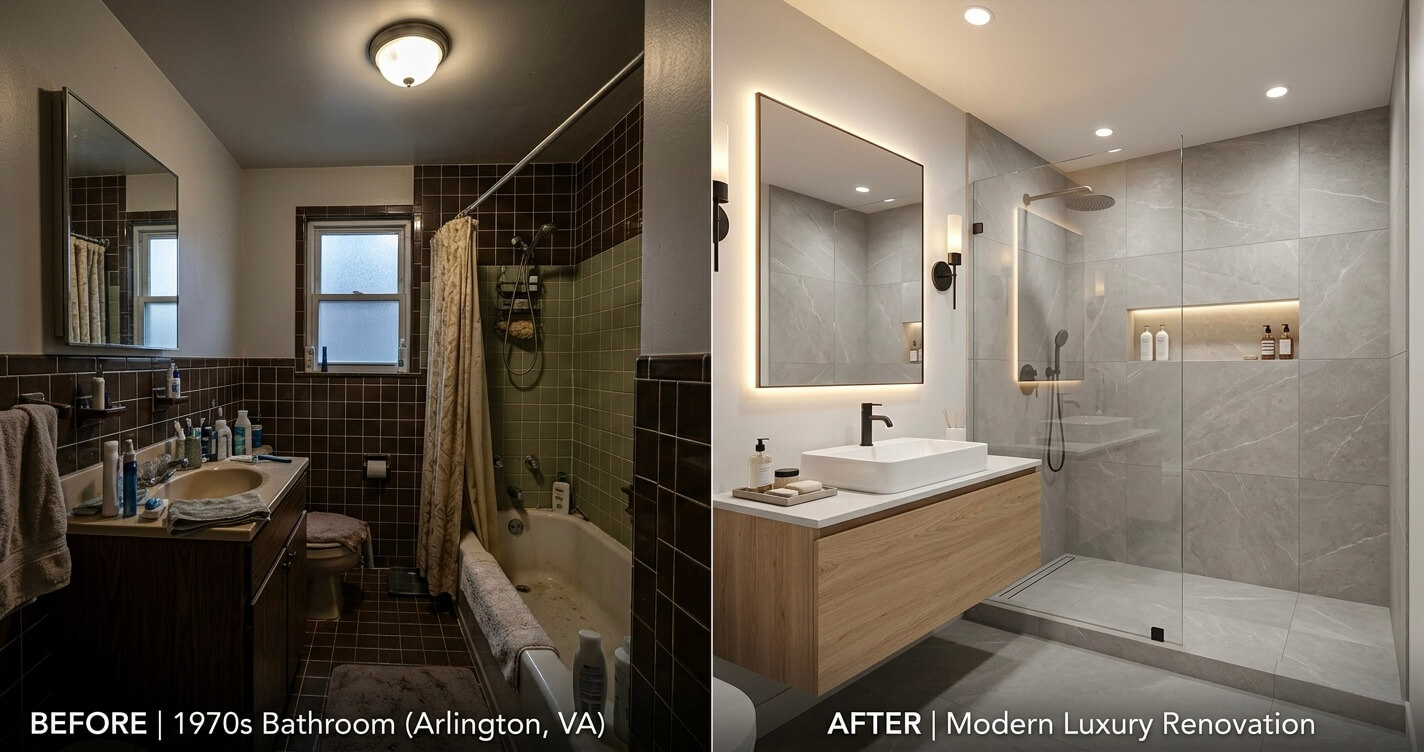
The most successful small bathroom designs are not necessarily larger, they are smarter. Strategic layouts, efficient storage systems, proper lighting, and carefully selected finishes can dramatically improve both functionality and visual spaciousness without increasing square footage.
For Arlington homeowners, layout efficiency often delivers greater value than expansion. Smart storage solutions reduce clutter, layered lighting improves usability, and thoughtful finish selections create a brighter, more open environment. Equally important, proper permitting, planning, and professional execution help protect both the renovation investment and long-term property value.
The best small bathrooms do not feel small, they feel intentional.
US Home Design Build works with homeowners throughout Arlington VA, McLean VA, Falls Church VA, Fairfax VA, Alexandria VA, and Northern Virginia on bathroom remodeling, home renovations, additions, and design-build projects.
From design and permitting through construction and warranty support, every phase is managed under one roof.
703-202-3520 | https://ushdb.com | 8200 Greensboro Dr Suite 900, McLean, VA 22102
