
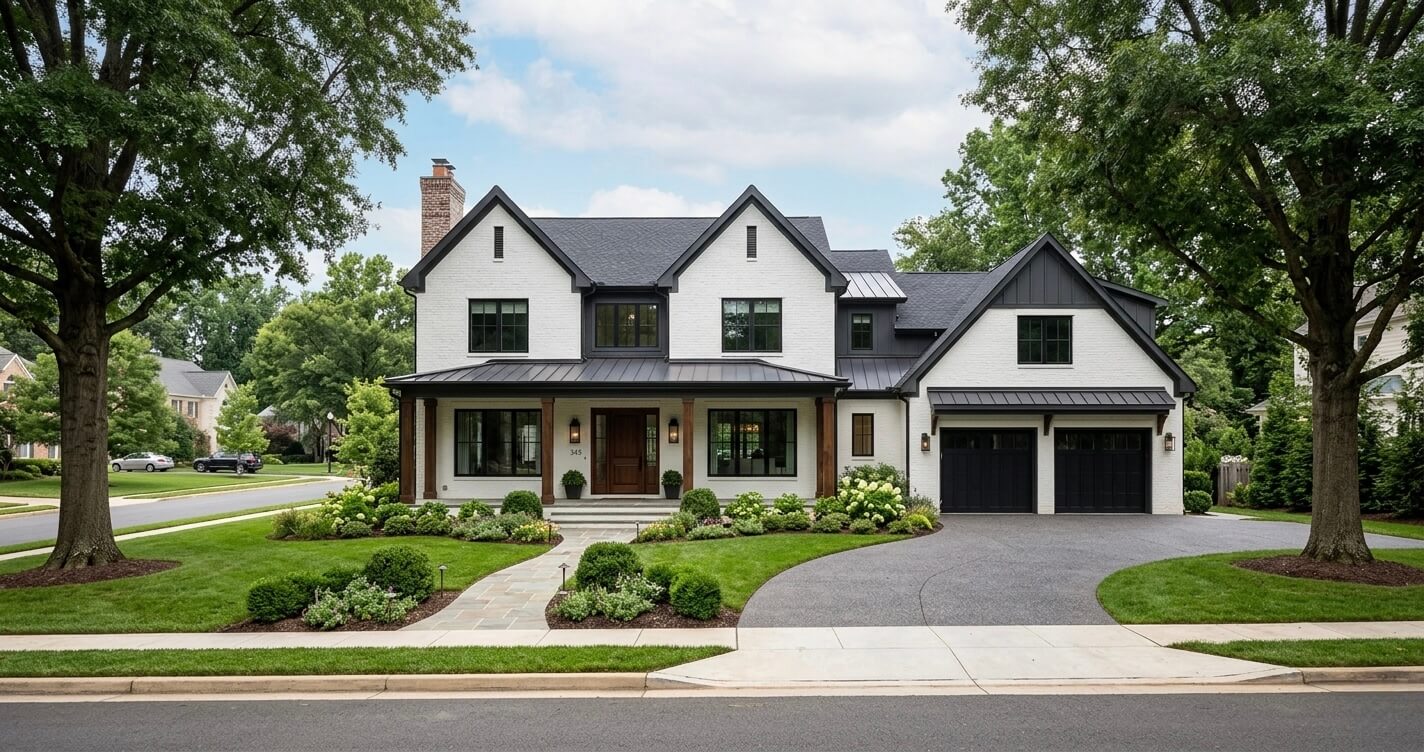
The demand for custom home construction in Vienna, VA continues to grow as more homeowners discover that building a personalized residence often provides greater long-term value than competing for limited resale inventory. For many families, especially those relocating within Northern Virginia, the challenge is no longer finding a desirable neighborhood; it is finding a home that meets modern expectations for layout, energy efficiency, storage, and technology integration.
A significant driver behind this trend is the age of the existing housing stock. Much of Fairfax County’s residential inventory was built decades ago, creating growing interest in teardown-and-rebuild projects and fully customized replacement homes. According to the U.S. Census Bureau, the median age of owner-occupied housing units in Fairfax County is several decades old, reflecting the maturity of many established neighborhoods and the increasing need for modernization. [Source: U.S. Census Bureau]
Vienna remains one of the most desirable communities in Northern Virginia due to its proximity to Tysons, convenient commuting access to Washington, D.C., highly rated schools, walkable neighborhoods, and strong local amenities. [Source: Town of Vienna Economic Development]
As a result, many homeowners are purchasing older properties specifically for the land value and rebuilding rather than entering bidding wars for newly renovated homes. This approach allows families to design a home tailored to their lifestyle, whether that means a first-floor primary suite, dedicated home office, energy-efficient mechanical systems, or expanded indoor-outdoor living spaces.
For design-build firms such as US Home Design Build, this trend has created increased demand for custom homes that maximize both property value and long-term livability while respecting the architectural character of Vienna’s established neighborhoods.
WHAT DOES “CUSTOM HOME” ACTUALLY MEAN?
The term “custom home” is often used broadly in the residential construction industry, but not all new homes offer the same level of personalization. Understanding the differences between production, semi-custom, and fully custom homes is essential when evaluating the true custom home cost in Vienna VA.
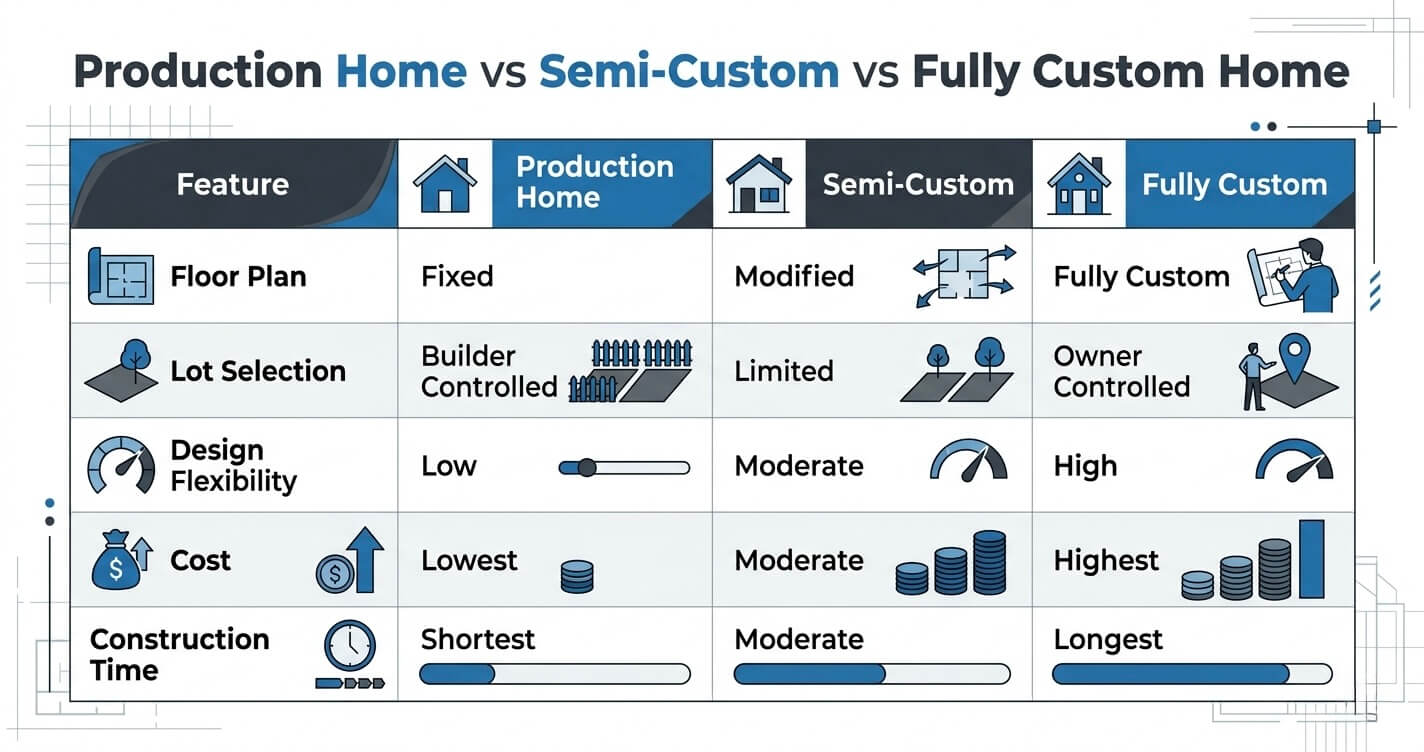
A production home is typically built from a pre-designed floor plan with limited options for customization. These homes are common in large subdivisions where the builder controls both the lots and architectural selections.
A semi-custom home offers more flexibility. Buyers can modify room layouts, choose finishes, and make certain structural adjustments, but the design still begins with a standardized template.
A fully custom home, by contrast, is designed specifically for the homeowner and the property. Every aspect of the home, from floor plan configuration and rooflines to window placement and structural engineering, is developed around the owner’s goals, lifestyle, and lot conditions.
In Vienna, fully custom homes are particularly popular because many projects involve infill lots, teardown properties, or irregularly shaped parcels where site-specific design is critical. Structural engineering must account for topography, setbacks, stormwater management requirements, and existing utility connections.
Custom homes also provide opportunities to incorporate luxury features such as high-performance building envelopes, smart-home automation, custom millwork, gourmet kitchens, home gyms, wine storage, elevator shafts, and energy-efficient mechanical systems. These features often cannot be integrated effectively into production housing models.
For homeowners seeking complete control over design, functionality, and future resale value, a fully custom home remains the highest level of residential construction available in Northern Virginia.
HOW MUCH DOES A CUSTOM HOME COST IN VIENNA VA IN 2026?
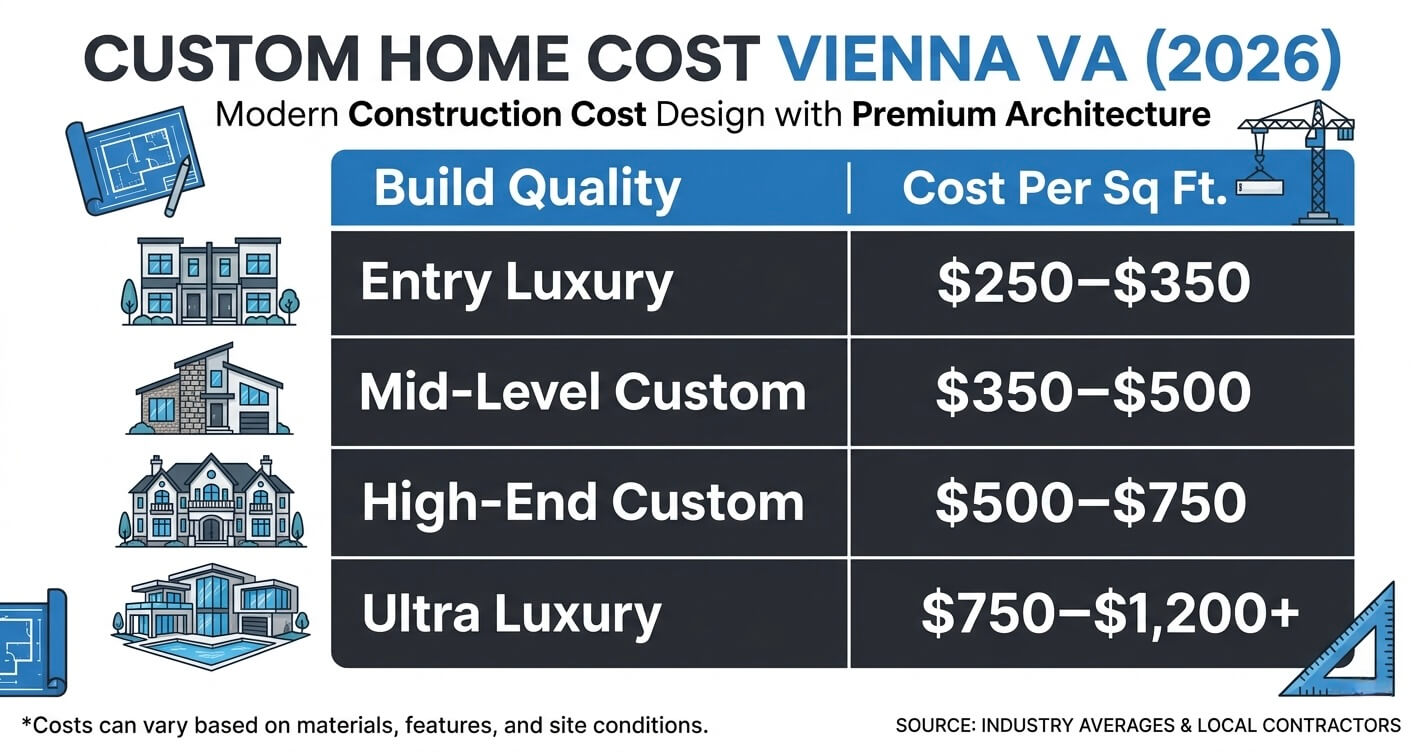
When homeowners begin researching the custom home cost Vienna VA, the first question is usually cost per square foot. While every project is unique, most custom homes in Vienna fall within several established pricing tiers based on design complexity, site conditions, finish level, and engineering requirements.
Typical Custom Home Construction Costs in Vienna VA (2026)
Example Project Cost Ranges
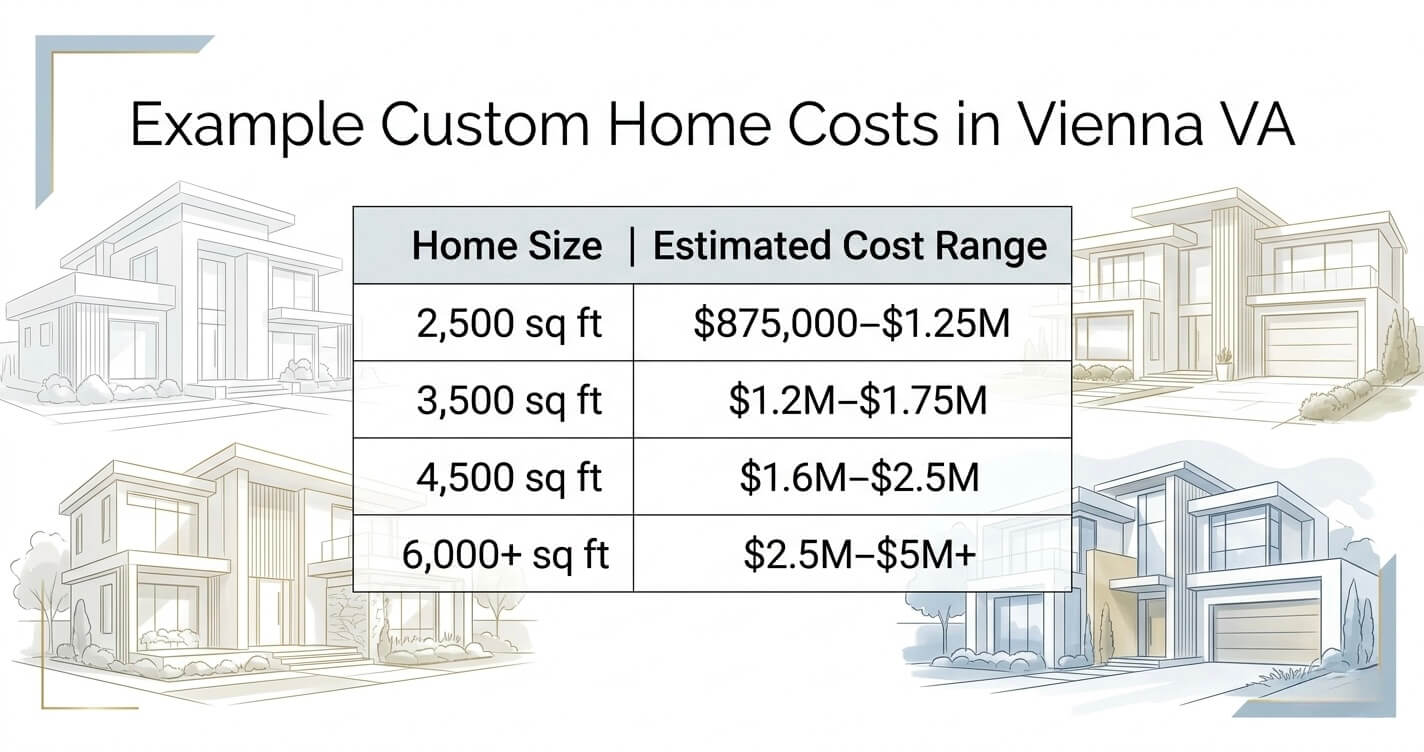
These estimates generally reflect construction costs only and may not include land acquisition, demolition, financing expenses, utility upgrades, permit fees, landscaping, pools, or specialty site improvements.
Construction costs have remained elevated due to ongoing labor shortages and material pricing pressures across the residential construction sector. The U.S. Bureau of Labor Statistics tracks construction-related pricing through its Producer Price Index (PPI), which continues to show the significant influence of labor, transportation, and building material costs on residential construction budgets. [Source: U.S. Bureau of Labor Statistics]
Several major factors influence custom home pricing in Vienna:
- Skilled labor availability in Northern Virginia
- Structural engineering requirements
- Excavation and site preparation costs
- Utility connection and upgrade expenses
- Energy-efficiency standards
- Foundation complexity
- Architectural detailing
- Roofing systems and exterior materials
- Custom cabinetry and millwork
- High-end kitchen and bath selections
Homes built on teardown lots often require additional demolition, grading, tree removal, and stormwater management work before vertical construction can begin. These site-development expenses can add tens of thousands of dollars to a project’s total budget.
For homeowners comparing building versus expanding an existing property, our guide to Home Addition Cost in Northern Virginia provides additional context regarding how major additions compare to full custom home construction costs.
Ultimately, the most accurate way to estimate a custom home’s cost is through a detailed feasibility study that evaluates the lot, zoning requirements, architectural goals, engineering needs, and finish specifications before design begins. This approach provides homeowners with realistic budgeting expectations and reduces the risk of costly surprises during construction.
THE BIGGEST FACTORS THAT INFLUENCE CUSTOM HOME COSTS
While square-foot pricing provides a useful starting point, the actual custom home cost Vienna VA is determined by dozens of project-specific variables. Two homes with identical floor areas can differ in construction cost by hundreds of thousands of dollars depending on site conditions, engineering requirements, and finish selections.
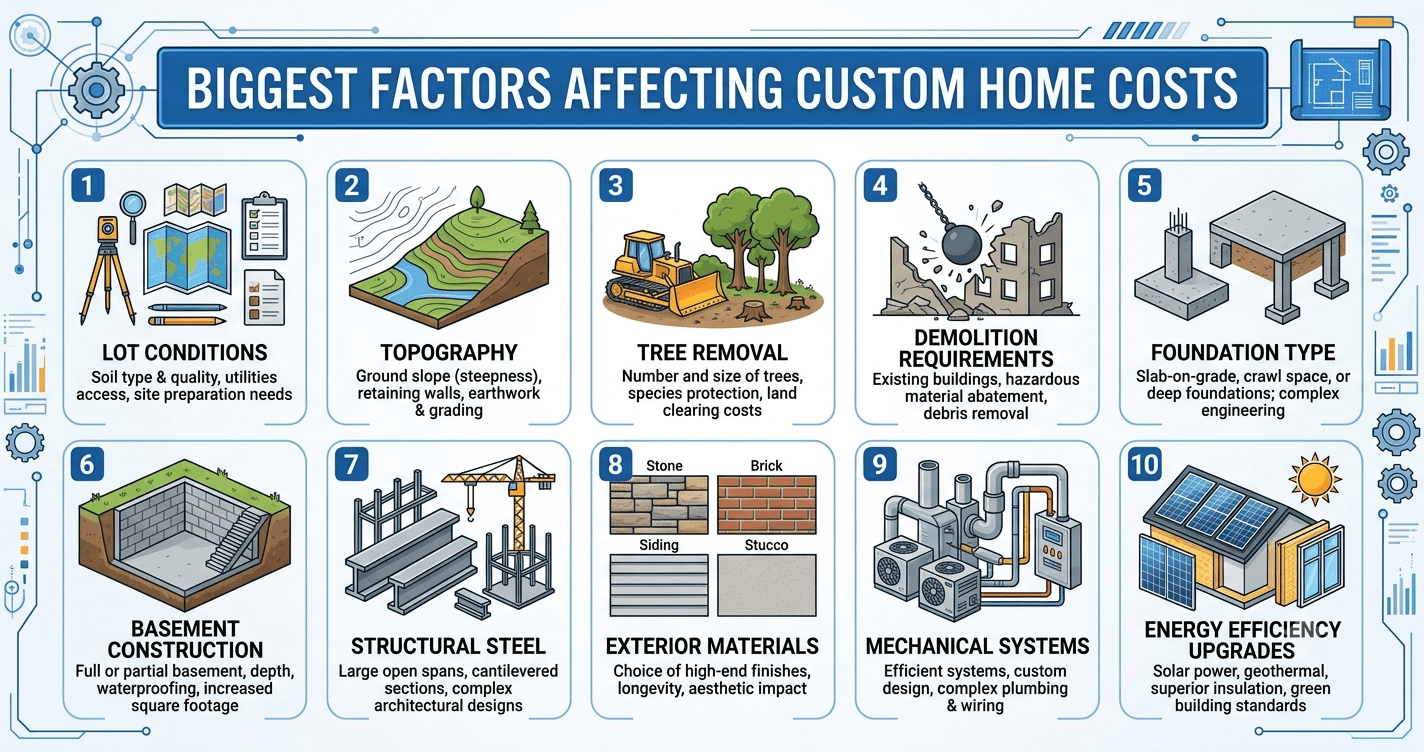
One of the most significant cost drivers is the lot itself. Vienna contains a mix of infill parcels, corner lots, and teardown properties where existing site conditions vary considerably. A relatively flat lot with existing utility connections may require minimal preparation, while a sloped property can necessitate retaining walls, extensive grading, stormwater management systems, and engineered foundations.
Tree removal is another major factor. Mature trees are common throughout Vienna’s established neighborhoods and may require arborist evaluations, preservation plans, or removal permits before construction begins. Demolition costs also vary depending on the size of the existing structure, foundation removal requirements, and site accessibility.
Foundation design significantly impacts budget. Slab-on-grade construction typically costs less than a full basement, while walkout basements on sloping lots often require substantial excavation and reinforced retaining structures. Structural steel may also be required for large open-concept floor plans, expansive window walls, cantilevered sections, or luxury architectural features.
Exterior materials further influence costs. Brick, natural stone, fiber-cement siding, premium roofing systems, and custom window packages all carry different pricing implications. Likewise, mechanical systems, including HVAC, electrical infrastructure, plumbing distribution, and whole-home automation, can represent a substantial portion of the construction budget.
High-performance building systems have become increasingly popular among Vienna homeowners seeking long-term efficiency. According to the U.S. Department of Energy, energy-efficient construction practices can reduce energy consumption and lower long-term operating expenses through improved insulation, high-performance windows, air sealing, and advanced HVAC systems. [Source: U.S. Department of Energy]
Although these upgrades increase upfront construction costs, they often provide meaningful reductions in utility expenses, improved indoor comfort, and stronger long-term resale appeal.
LAND COSTS & TEARDOWN OPPORTUNITIES IN VIENNA VA
For many homeowners researching custom home construction, the most attractive opportunities in Vienna are not vacant lots, they are existing properties purchased specifically for redevelopment.
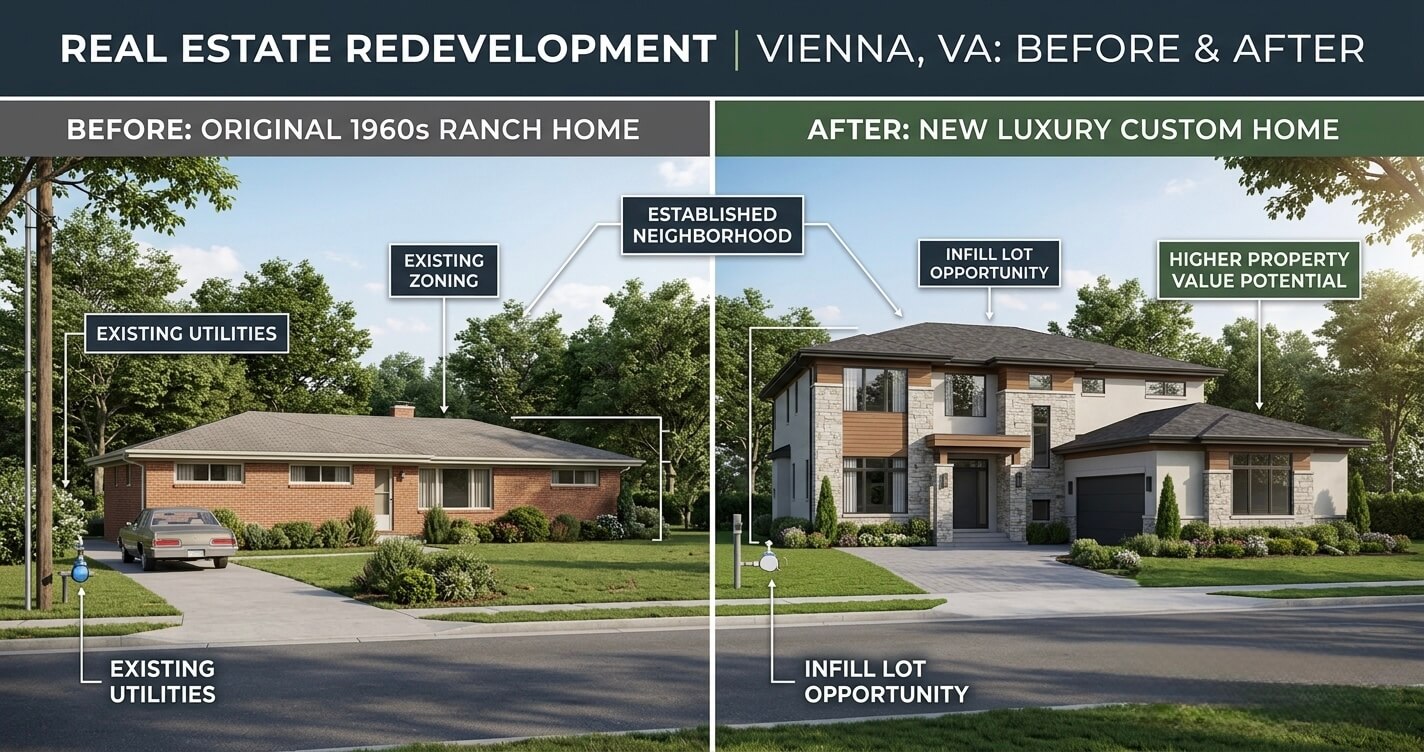
Vienna has experienced substantial redevelopment activity over the past two decades, with older homes frequently being replaced by larger, more efficient custom residences. Many custom homes constructed today occupy parcels originally developed between the 1950s and 1980s, when lot sizes were often generous but housing layouts reflected very different lifestyle expectations. [Source: Town of Vienna Planning Department]
The economics behind teardown projects are often compelling. Purchasing an older property can provide access to a desirable neighborhood, established infrastructure, mature landscaping, and utility connections that would be difficult or expensive to replicate elsewhere. Water, sewer, electric, gas, and telecommunications services are often already available, reducing portions of the site-development budget.
Existing zoning is another advantage. In many cases, homeowners can evaluate setbacks, lot coverage limitations, and development constraints before purchasing a property, providing greater certainty during planning.
Neighborhood compatibility also plays an important role. Buyers seeking to build a custom home frequently prioritize established communities near schools, parks, employment centers, and transportation corridors. Vienna offers numerous neighborhoods where newer custom homes coexist successfully alongside renovated and original residences, creating strong long-term property value potential.
Teardown projects are especially common on larger lots, corner parcels, and properties where the existing structure no longer meets modern space requirements. Rather than undertaking multiple renovations over many years, some homeowners find that rebuilding provides greater design flexibility and long-term value.
For additional insight into redevelopment activity and residential investment patterns across the region, see our guide to Top Remodeling Trends in Northern Virginia.
From a design-build perspective, evaluating land value, demolition feasibility, utility capacity, and zoning constraints early in the process can significantly improve budgeting accuracy and project success.
PERMITS, ZONING & BUILDING REQUIREMENTS
A custom home project in Vienna requires careful coordination with Fairfax County’s permitting, zoning, and inspection processes. Because Vienna is located within Fairfax County, most residential construction approvals are administered through Fairfax County agencies rather than through the Town of Vienna itself. [Source: Fairfax County Land Development Services]
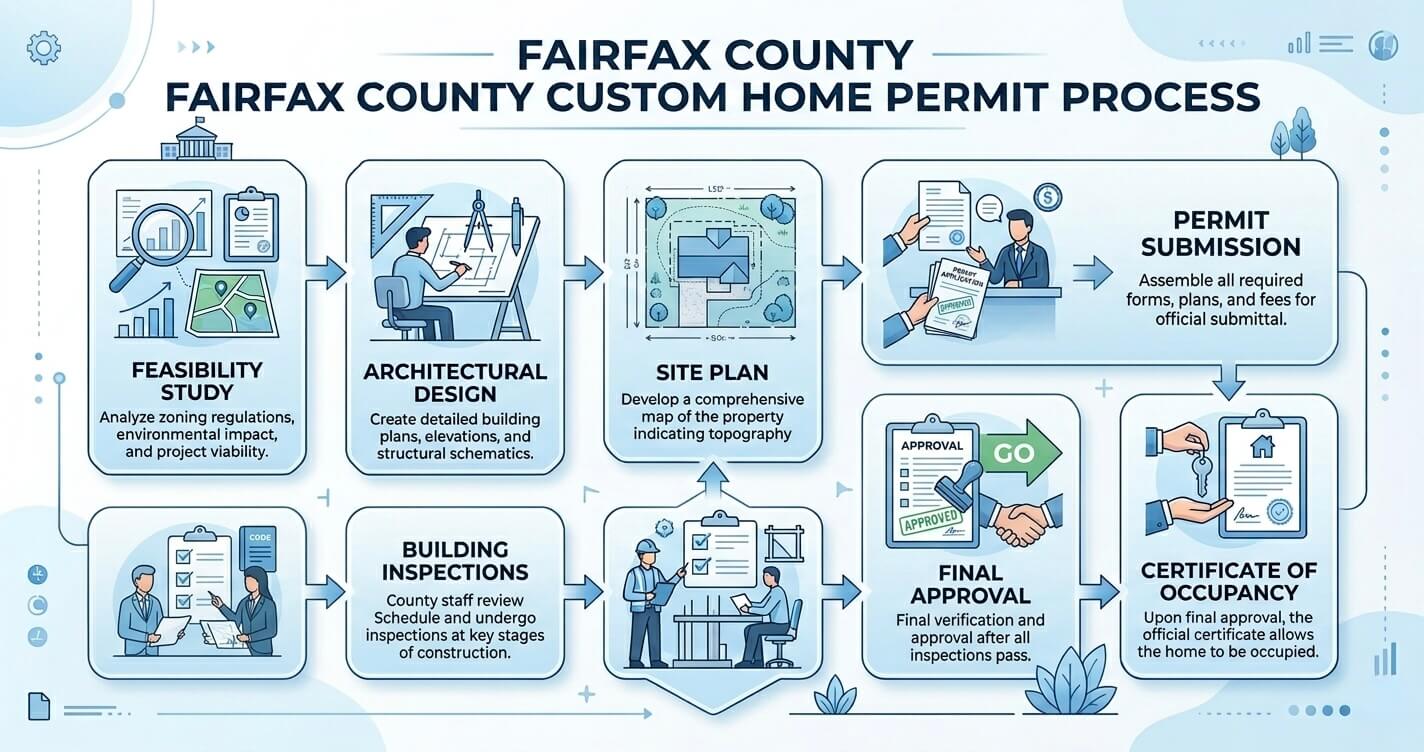
Virtually every custom home project requires a building permit and multiple trade permits covering electrical, plumbing, mechanical, and other specialized systems. Depending on the property’s characteristics, additional reviews may be required for stormwater management, grading, tree preservation, driveway modifications, or environmental compliance.
Custom home projects commonly involve:
- Building permit applications
- Site development review
- Stormwater management compliance
- Sediment and erosion control measures
- Tree preservation requirements
- Utility coordination
- Structural inspections
- Trade inspections
- Final Certificate of Occupancy approval
Fairfax County processes permit applications through its PLUS online portal.
Fairfax County PLUS Portal: https://plus.fairfaxcounty.gov
Construction must also comply with Virginia’s statewide building regulations. Residential projects are governed by the Virginia Uniform Statewide Building Code (USBC), which establishes minimum requirements for structural integrity, life safety, energy efficiency, accessibility provisions, fire protection systems, and construction practices. [Source: Virginia Department of Housing and Community Development (DHCD)]
Inspections occur throughout construction to verify compliance before a Certificate of Occupancy can be issued. Typical inspections include footing inspections, foundation inspections, framing inspections, mechanical inspections, insulation inspections, and final occupancy inspections.
For homeowners unfamiliar with the local permitting process, our guide to Remodeling Permit Fairfax County provides a useful overview of permit requirements, review procedures, and approval considerations.
One of the primary advantages of a design-build approach is that permit coordination, consultant management, plan revisions, and agency communication are handled through a single team, helping reduce delays and improve project efficiency from planning through final approval.
CUSTOM HOME TIMELINE: HOW LONG DOES IT TAKE?
One of the most common misconceptions about custom home construction is that the building phase is the entire project. In reality, a successful custom home in Vienna VA begins months before excavation starts. Site evaluation, budgeting, design development, engineering, permitting, and procurement all affect the final schedule.
For most projects in Fairfax County, homeowners should realistically expect a total timeline of approximately 14–26 months from initial consultation to move-in, depending on lot conditions, permit complexity, weather, and material availability.
Typical Custom Home Timeline in Vienna VA
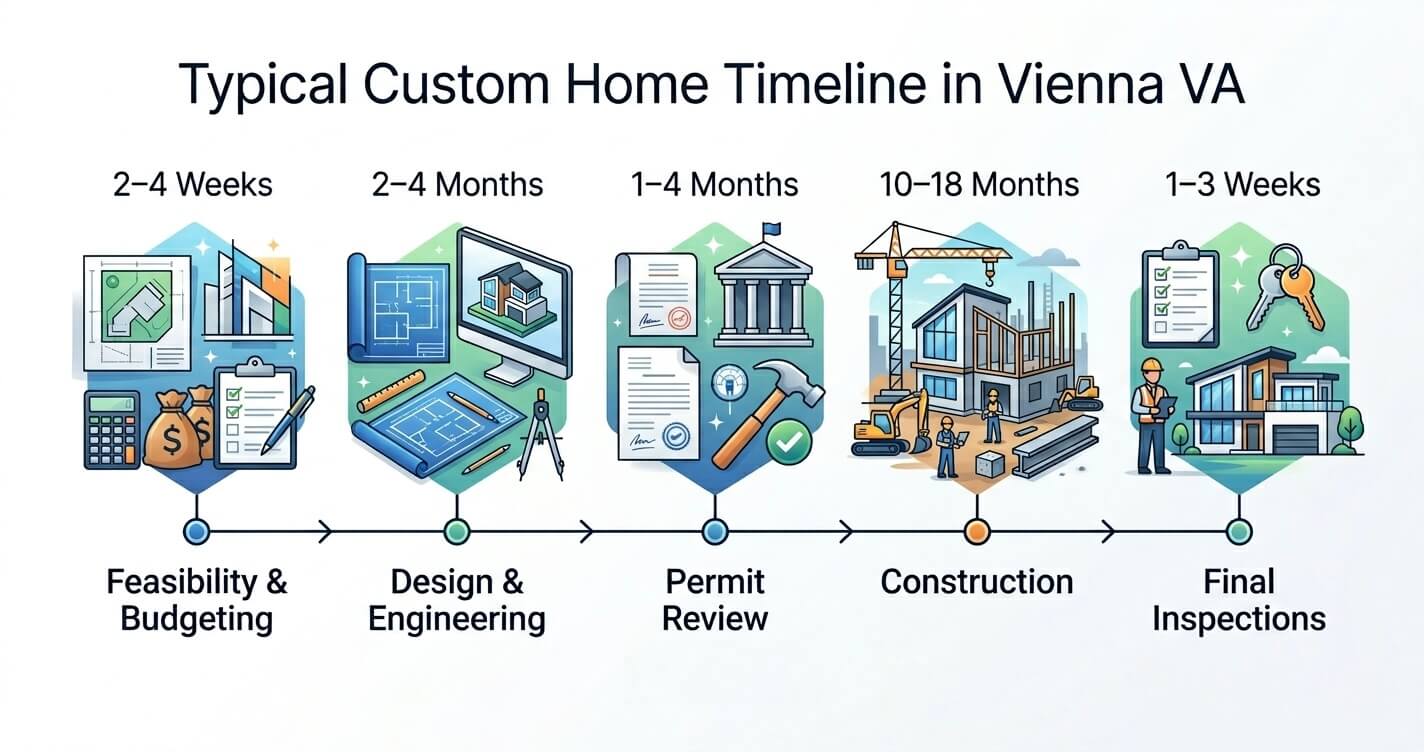
Permit review timelines can vary significantly based on project scope, stormwater requirements, tree preservation reviews, and zoning considerations. [Source: Fairfax County Land Development Services]
Material procurement is another major schedule factor. Custom windows, specialty roofing systems, structural steel components, imported tile, premium appliances, and high-performance HVAC equipment can introduce lead times ranging from several weeks to several months.
Weather also affects construction schedules throughout Northern Virginia. Extended periods of rain can delay excavation, foundation placement, grading, and exterior finishing work. Winter conditions may impact concrete placement and site access, while summer storms can temporarily interrupt framing and roofing operations.
One of the primary advantages of the design-build approach is schedule coordination. Rather than managing separate architects, engineers, consultants, and contractors, an integrated team can overlap planning activities, identify conflicts earlier, and reduce communication delays.
US Home Design Build utilizes a unified design-build process that coordinates budgeting, design, permitting, procurement, and construction under one management structure. This integrated approach helps reduce scheduling conflicts, improve accountability, and keep custom home projects moving efficiently from concept through final occupancy.
IS BUILDING A CUSTOM HOME IN VIENNA VA WORTH IT?
For many homeowners, building a custom home in Vienna VA is not simply a construction decision; it is a long-term lifestyle investment. While custom construction requires a larger upfront commitment than purchasing an existing property, it offers advantages that are difficult to replicate through remodeling or resale purchases.
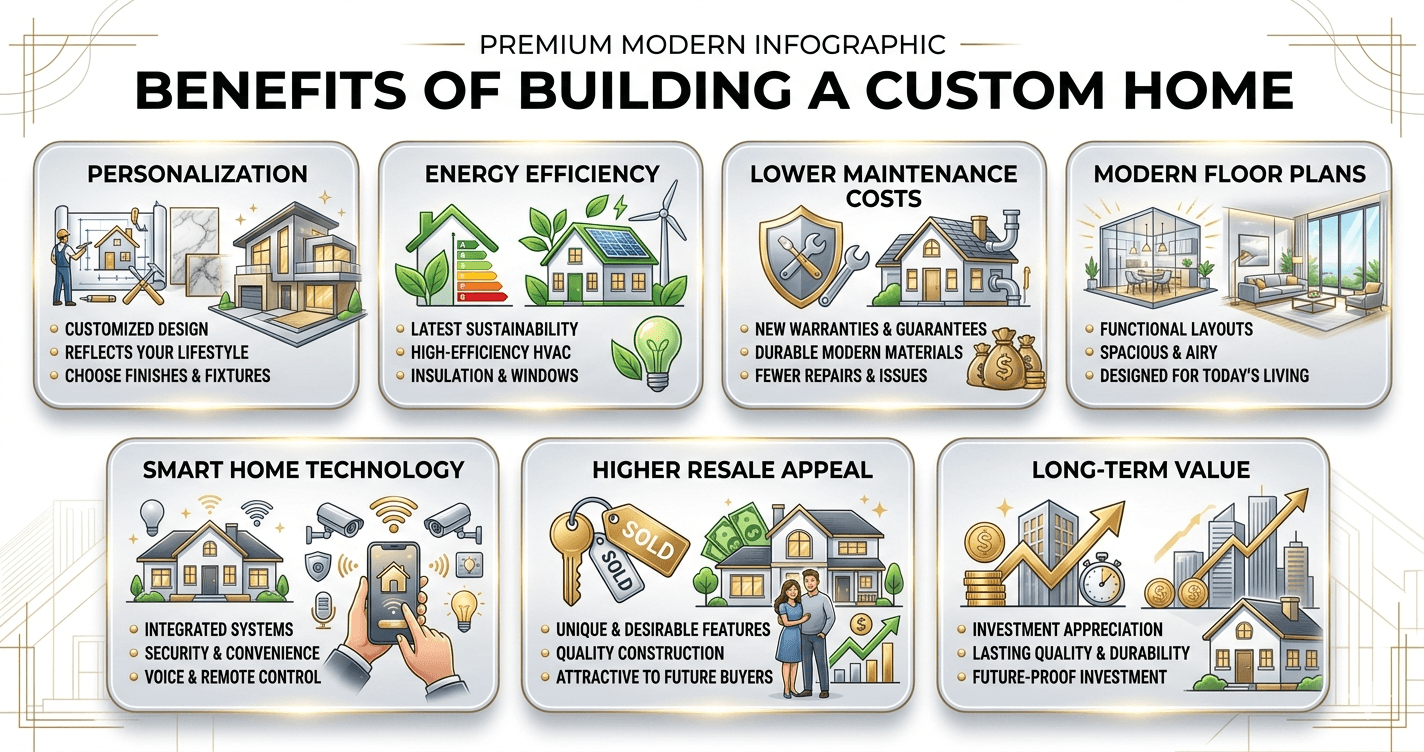
One of the most significant benefits is personalization. Every aspect of the home, from room layout and ceiling heights to energy systems and finish materials, can be tailored to the homeowner’s specific needs rather than adapted from an existing floor plan.
Energy efficiency is another major consideration. According to the U.S. Department of Energy, high-performance insulation systems, advanced air sealing, efficient HVAC equipment, and modern windows can significantly reduce long-term operating costs compared to older housing stock. [Source: U.S. Department of Energy]
Modern custom homes also generally require less maintenance during the first decade of ownership. New roofing systems, plumbing infrastructure, electrical systems, windows, and mechanical equipment reduce the likelihood of major repair expenses compared to homes built several decades ago.
Resale appeal remains a strong factor in Northern Virginia’s housing market. High-income buyers in Vienna, McLean, Arlington, Falls Church, and Fairfax frequently place a premium on newer construction because of open floor plans, larger kitchens, dedicated home offices, smart-home technology, energy efficiency, and updated building systems.
The National Association of Realtors consistently reports that homeowners value improvements that enhance functionality, livability, and long-term usability. [Source: National Association of Realtors]
For homeowners planning to remain in the property for many years, the ability to create a residence specifically tailored to their lifestyle often delivers value beyond simple financial return. The combination of personalization, efficiency, reduced maintenance, and long-term market appeal makes custom construction an attractive option throughout Northern Virginia.
HOW TO CHOOSE THE RIGHT CUSTOM HOME BUILDER
Selecting the right builder is often more important than selecting the floor plan itself. A custom home project involves thousands of decisions, dozens of subcontractors, multiple regulatory reviews, and substantial financial investment. The builder’s experience and management process directly affect the project’s outcome.
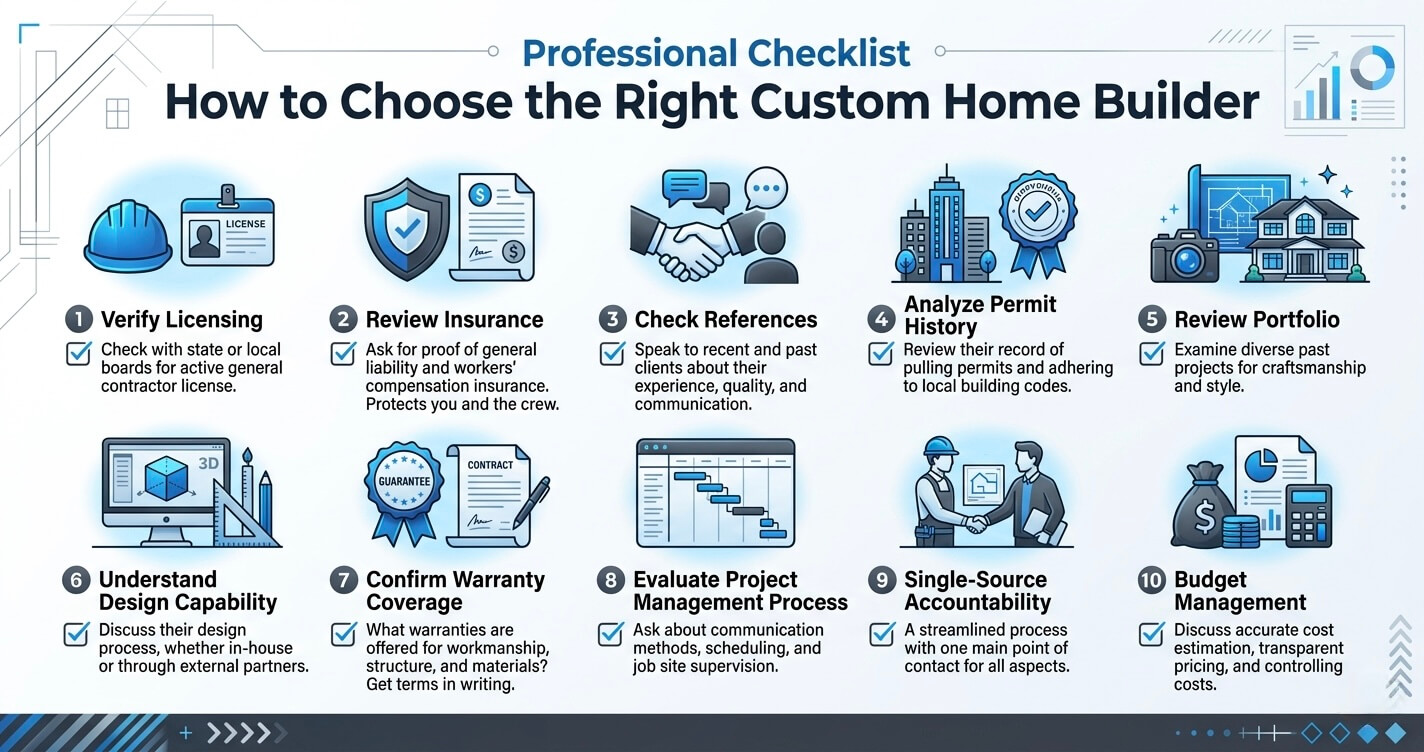
Homeowners should begin by verifying that the contractor holds the appropriate Virginia licensing and carries adequate liability and workers’ compensation insurance. Licensing status can be verified through the Virginia Department of Professional and Occupational Regulation. [Source: Virginia DPOR]
It is equally important to review recent local projects and request references from homeowners who completed similar custom homes. Builders familiar with Vienna VA, Fairfax County, McLean VA, Arlington VA, and other Northern Virginia jurisdictions generally have stronger knowledge of local permitting procedures, zoning requirements, and inspection processes.
Additional due diligence should include:
- Reviewing permit history
- Examining completed project portfolios
- Understanding design capabilities
- Requesting detailed scope documents
- Confirming project management procedures
- Evaluating warranty coverage
Common Homeowner Mistakes
- Choosing the lowest bid without reviewing scope differences
- Accepting incomplete specifications
- Hiring firms with limited permit experience
- Overlooking project management procedures
- Failing to verify warranty terms
Many successful custom home projects utilize a design-build delivery model because it creates a single point of accountability throughout the process.
For homeowners researching contractors, our guide on How to Choose the Right Contractor in Northern Virginia provides a deeper framework for evaluating firms, reviewing proposals, and avoiding common selection mistakes.
US Home Design Build follows a structured process:
Consultation → Design → Permits → Construction → Warranty
This approach combines architectural planning, permit coordination, budgeting, construction management, and quality control under one team. Homeowners benefit from single-source accountability, proactive budget management, coordinated permitting, and a two-year workmanship warranty that remains in place after project completion.
FREQUENTLY ASKED QUESTIONS [FAQs]
How much does a custom home cost in Vienna VA?
Most custom homes in Vienna VA fall between approximately $350 and $750+ per square foot, depending on design complexity, site conditions, material selections, and finish level. Luxury and ultra-luxury projects can exceed these ranges substantially.
How much does it cost per square foot to build a custom home in Vienna?
Custom home construction commonly ranges from approximately $250–$350 per square foot for entry-level luxury homes, $350–$500 per square foot for mid-level custom homes, and $500–$750+ per square foot for high-end projects. Ultra-luxury homes may exceed $1,200 per square foot.
Is it cheaper to buy or build in Vienna VA?
The answer depends on the property. Purchasing an existing home may require a lower upfront investment, but building allows homeowners to avoid major renovation costs while creating a residence specifically designed for modern living, energy efficiency, and long-term functionality.
How long does a custom home take to build?
Most custom homes require approximately 14–26 months from feasibility planning through final occupancy. Design complexity, permitting requirements, weather conditions, and material lead times can significantly influence the schedule.
Do I need permits for a custom home in Fairfax County?
Yes. New home construction requires permits, inspections, and approvals through Fairfax County Land Development Services and must comply with the Virginia Uniform Statewide Building Code.
What is included in custom home construction costs?
Construction costs generally include site preparation, foundation work, framing, roofing, exterior finishes, windows, insulation, mechanical systems, electrical systems, plumbing, interior finishes, labor, and project management. Land acquisition and financing costs are typically separate.
Can I tear down an older house and rebuild in Vienna?
Yes. Many custom homes in Vienna are built through teardown and rebuild projects on existing residential lots. Existing utility connections and established neighborhood locations often make this approach attractive.
How do I choose a custom home builder?
Evaluate licensing, insurance, local project experience, permit history, references, portfolio quality, project management systems, warranty coverage, and communication practices. Builders with design-build capabilities can often provide greater coordination throughout the process.
CRUX OF THE MATTER
Building a custom home in Vienna VA gives homeowners complete control over layout, functionality, efficiency, finishes, and long-term value. While costs can vary significantly based on site conditions, design complexity, and construction quality, understanding the process early helps establish realistic expectations and avoid costly surprises later.
Key takeaways include:
- Custom home costs in Vienna VA commonly range from approximately $350–$750+ per square foot.
- Lot conditions, demolition requirements, and design decisions have major impacts on budget.
- Fairfax County permitting, inspections, and code compliance are critical project components.
- Design-build delivery can simplify planning, budgeting, permitting, and construction management.
The best custom homes are not simply larger; they are designed specifically for the way their owners want to live.
US Home Design Build works with homeowners throughout Vienna VA, McLean VA, Fairfax VA, Arlington VA, Falls Church VA, and across Northern Virginia on custom homes, major renovations, additions, and design-build construction projects.
From feasibility studies and architectural design through permitting, construction, and warranty support, their team manages every phase under one roof.
703-202-3520 | https://ushdb.com | 8200 Greensboro Dr Suite 900, McLean, VA 22102
