
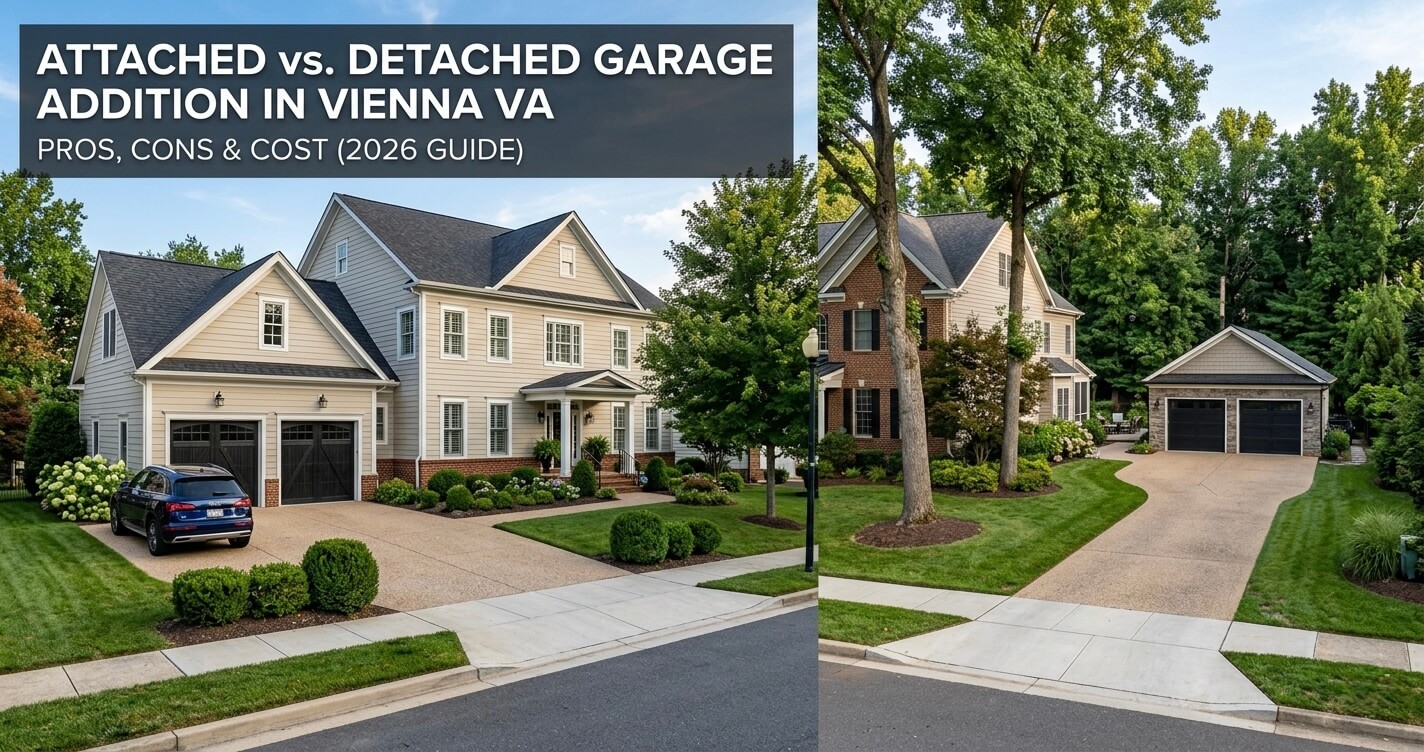
An attached vs detached garage Vienna VA decision is no longer just about where vehicles are parked. Across Northern Virginia, garage additions have become strategic home investments driven by rising property values, limited housing inventory, EV adoption, storage shortages, and the growing need for flexible multi-purpose space. In established neighborhoods throughout Vienna VA, McLean, and Fairfax County, many homeowners are choosing to expand their existing property rather than compete in an increasingly expensive housing market.
According to the U.S. Census Bureau, home values across Fairfax County remain among the highest in Virginia, continuing to support large-scale renovation and addition projects. [Source: U.S. Census Bureau — QuickFacts Fairfax County]
Today’s garage additions frequently serve functions far beyond vehicle storage. Homeowners are increasingly designing garages to accommodate EV-ready charging infrastructure, workshop areas, fitness spaces, organized storage systems, and even future conversion opportunities for guest suites or accessory dwelling units (ADUs). As a result, the decision between an attached and detached garage now involves zoning strategy, structural integration, long-term property planning, and architectural compatibility with the existing home.
The right solution depends on several project-specific factors, including lot configuration, setback limitations, intended use, budget range, drainage conditions, and the overall design goals of the property. This guide breaks down the pros, cons, cost considerations, permit requirements, and long-term value implications of attached vs detached garage additions in Vienna VA and throughout Northern Virginia.
WHAT IS THE DIFFERENCE BETWEEN AN ATTACHED AND DETACHED GARAGE?
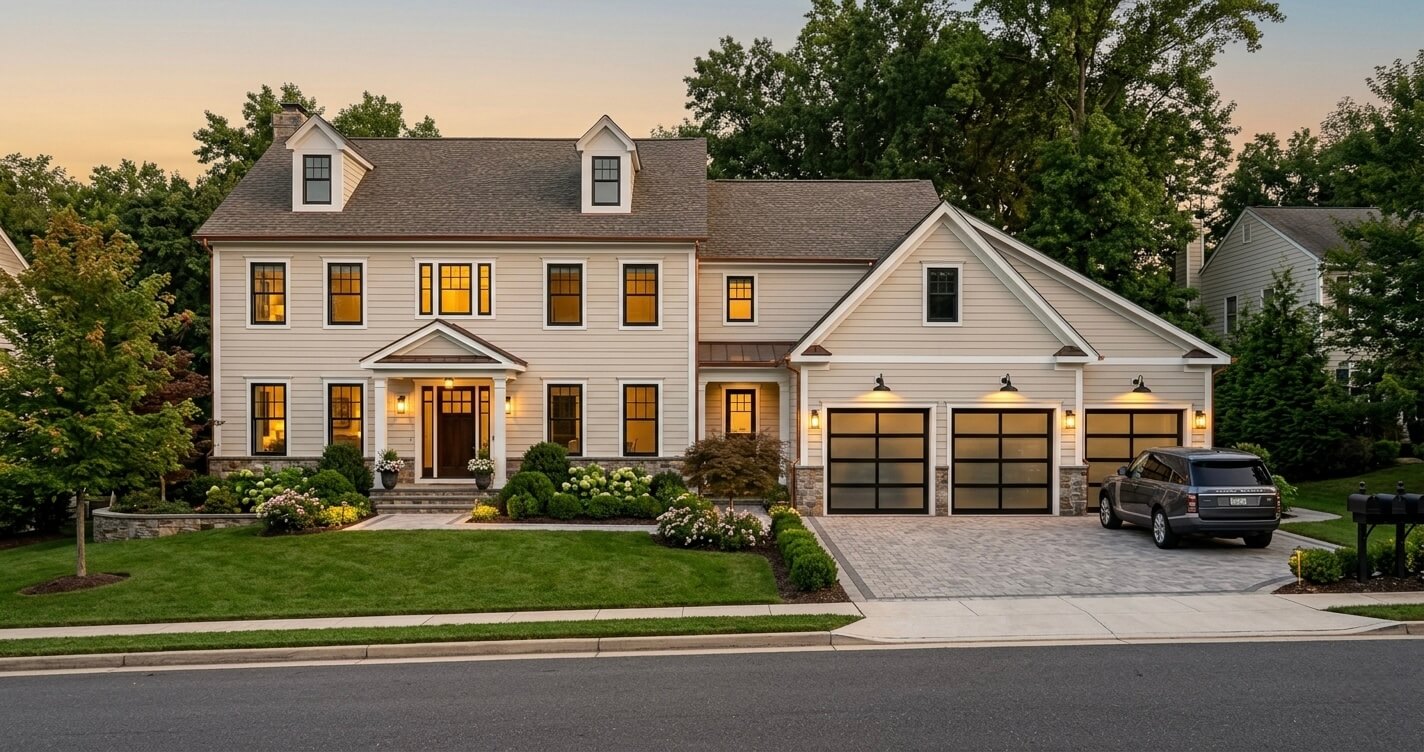
An attached garage is physically connected to the main house and shares at least one structural wall with the existing residence. In most Vienna VA homes, attached garages are integrated into the home’s roofline, electrical system, and architectural layout, allowing direct indoor access between the garage and living space. Because they become part of the primary structure, attached garages typically require close coordination between new and existing framing systems, roofing transitions, drainage management, and foundation elevations.
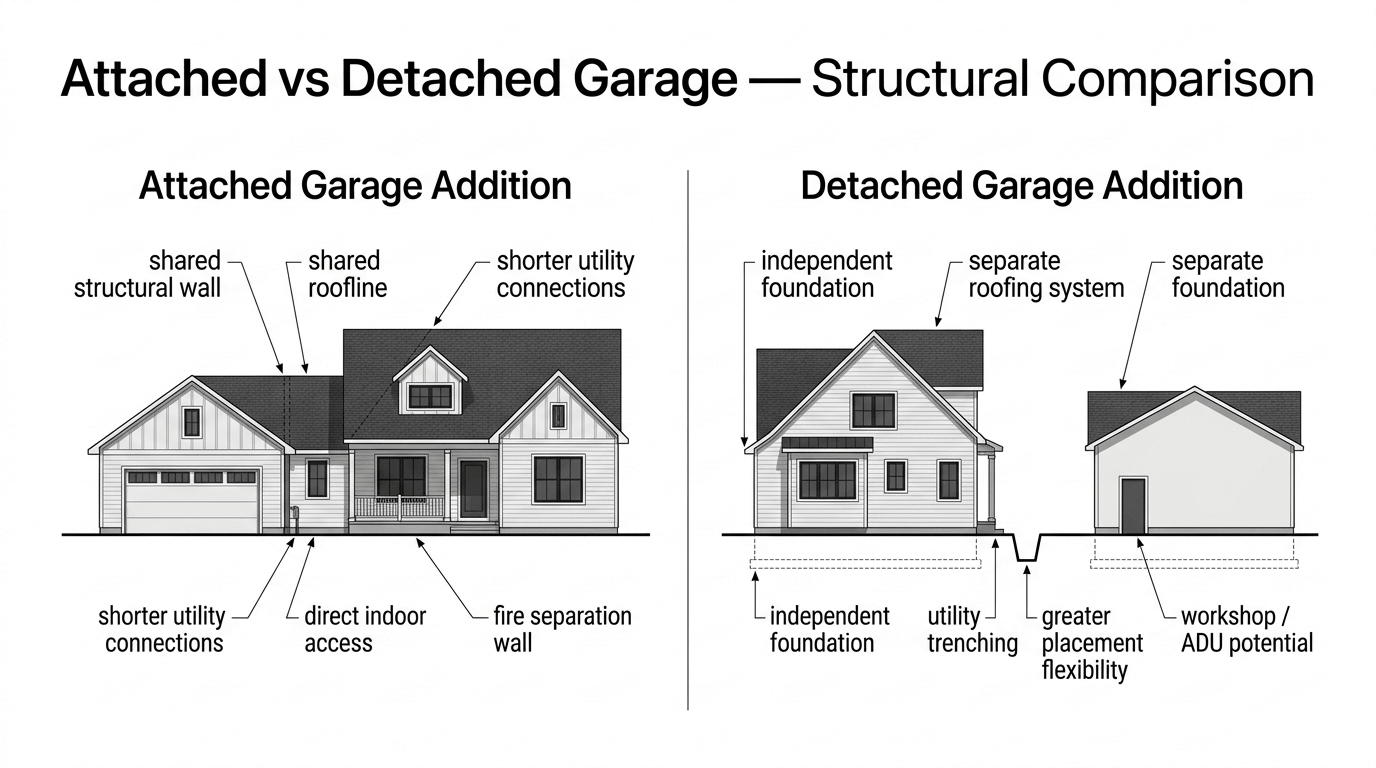
A detached garage, by contrast, is an independent freestanding structure built separately from the home itself. Detached garages use their own foundation and framing system and generally provide greater flexibility in placement across the lot. This configuration is often preferred on larger Vienna VA properties where homeowners want additional separation for workshops, storage, home gyms, or future conversion flexibility.
From a technical standpoint, the difference between attached and detached construction extends far beyond appearance alone. Garage additions must account for utility routing, HVAC considerations, grading and drainage, setback compliance, and fire separation requirements. Under the International Residential Code (IRC), garages attached to residential structures must comply with specific fire-resistance separation standards intended to slow the spread of fire and fumes between the garage and living areas. [Source: International Residential Code (IRC) — Garage Separation Requirements]
Attached garages often provide superior convenience for daily living, especially during winter weather and heavy rain. Detached garages, however, offer greater flexibility for noise isolation, architectural independence, and long-term multi-purpose use. Structural integration also becomes especially important when garage additions are combined with broader remodeling projects such as a Second Story Addition in Northern Virginia, where foundation capacity and framing coordination become significantly more complex.
ATTACHED GARAGE ADDITION: PROS & CONS
Attached garage additions remain one of the most common expansion projects in Vienna VA because they offer strong day-to-day convenience while integrating directly into the home’s existing layout. For many homeowners, especially in neighborhoods with smaller lots or limited rear-yard depth, an attached configuration is often the most practical and space-efficient option.
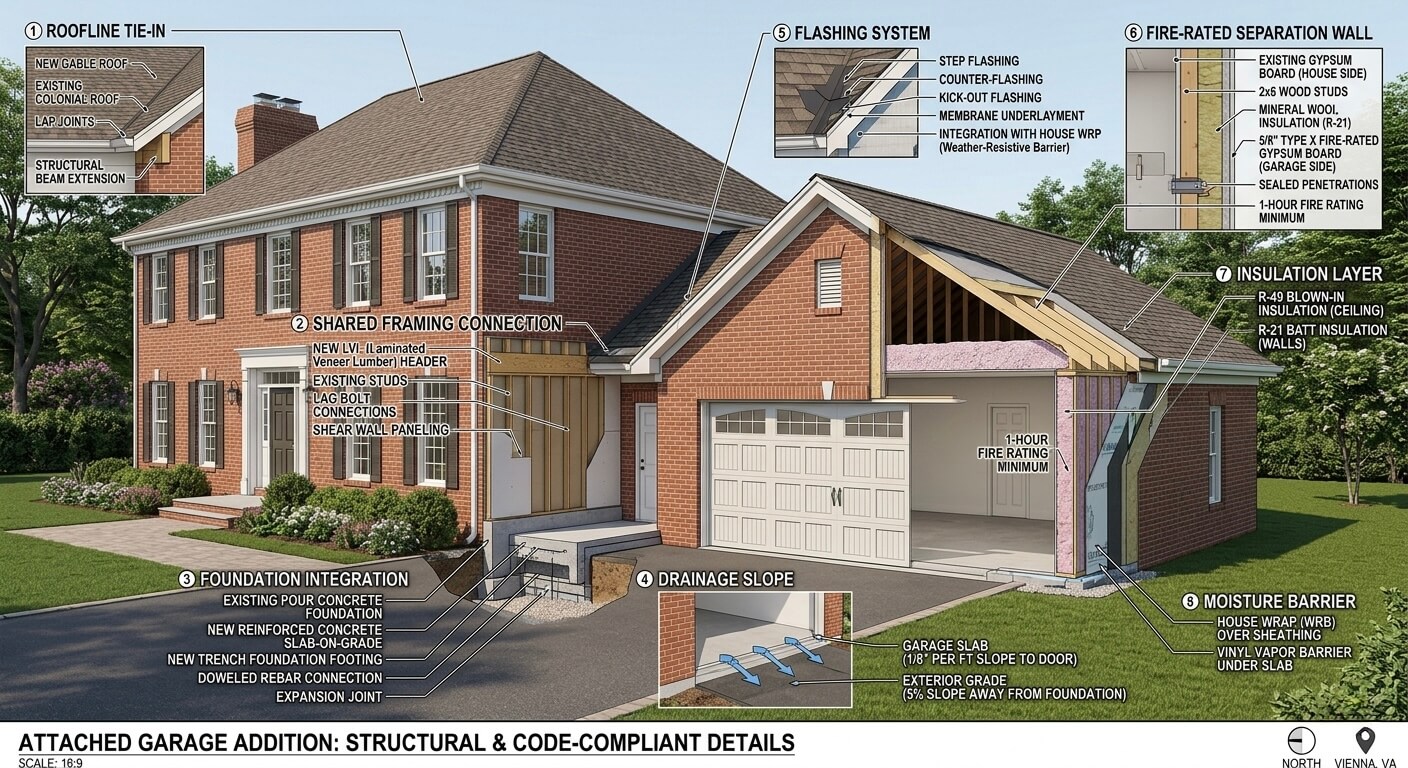
One of the primary advantages of an attached garage is direct indoor access to the home. This improves usability during winter weather, heavy rain, and extreme summer temperatures while also enhancing security and convenience for daily vehicle access. Attached garages can also reduce certain utility costs because electrical integration, HVAC extensions, and plumbing connections, when needed, are typically easier to route from the existing structure. In many cases, homeowners can leverage portions of the home’s existing infrastructure rather than constructing completely independent systems.
Attached garages may also appear less visually intrusive on narrower Vienna VA lots because they become part of the overall home massing rather than introducing a second standalone structure elsewhere on the property. However, this integration introduces significant technical complexity that many homeowners underestimate early in the planning phase.
Unlike detached structures, attached garage additions must tie directly into the existing home’s framing, roofing systems, drainage paths, and foundation elevations. Improper integration between old and new foundations can create differential settling, roofline inconsistencies, moisture intrusion problems, and long-term structural movement. In older Northern Virginia homes built between the 1960s and 1990s, existing framing conditions often require additional engineering reinforcement before expansion can safely occur.
Permit complexity also increases substantially for attached garages. Structural modifications frequently trigger building review, zoning review, and energy code compliance requirements through Fairfax County permitting processes. Homeowners planning these projects should understand the broader Remodeling Permit Fairfax County requirements before finalizing design plans.
Additionally, attached garages must comply with fire-separation standards, including fire-rated wall assemblies, protected penetrations, and code-compliant door ratings between garage and living spaces. Vehicle vibration, equipment noise, and exhaust management also become more important considerations when the garage directly adjoins occupied areas of the home.
DETACHED GARAGE ADDITION: PROS & CONS
Detached garage additions have become increasingly popular in Vienna VA and throughout Northern Virginia because they offer greater architectural flexibility, better functional separation, and stronger long-term adaptability compared to attached garage structures. On larger suburban lots, detached garages are often preferred by homeowners who want expanded utility space without directly altering the structural footprint of the main house.
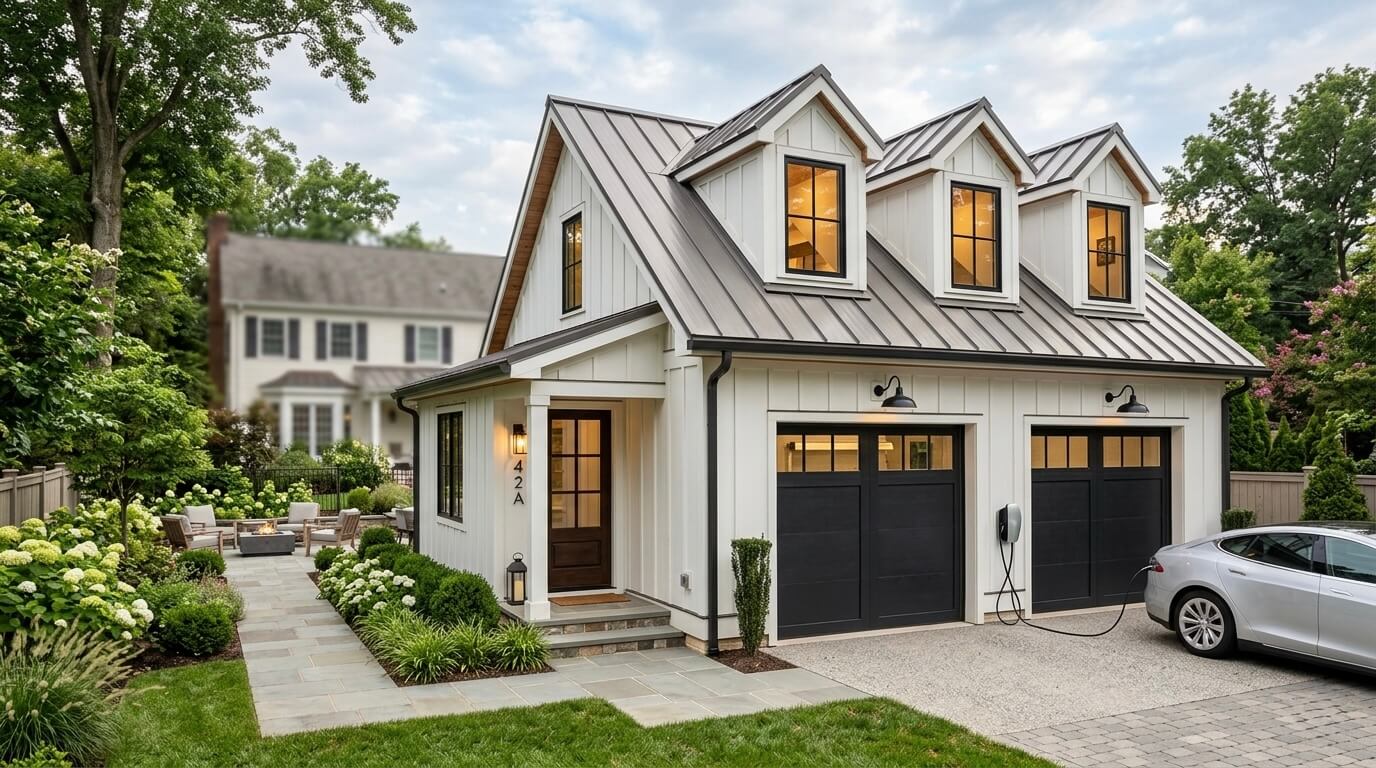
One of the biggest advantages of a detached garage is placement flexibility. Because the structure is independent from the home, designers have greater freedom to optimize rooflines, building orientation, driveway alignment, and overall site positioning. This flexibility can be particularly valuable on irregular lots or properties with challenging grading conditions. Detached garages also eliminate many of the structural tie-in complexities associated with attached construction, since they rely on their own independent foundation and framing system rather than connecting directly into existing structural assemblies.
Detached garages also provide significantly better noise separation. This makes them ideal for workshops, fitness spaces, hobby rooms, woodworking areas, equipment storage, or other uses that could create vibration, fumes, or operational noise inside the primary residence. In higher-end Vienna VA neighborhoods, detached garages are increasingly designed with future flexibility in mind, including potential studio space, home office conversion, or accessory dwelling unit (ADU) opportunities where zoning permits allow.
However, detached construction generally introduces higher site-development costs. Utility trenching for electrical service, internet, plumbing, or sewer connections often requires extensive excavation and coordination across the property. Additional grading, drainage planning, walkway construction, and driveway extensions can further increase project complexity and cost.
Unlike attached garages, detached structures also expose homeowners to weather conditions during daily use because there is no direct indoor connection to the home itself. Zoning limitations can create additional constraints as well. Fairfax County zoning regulations closely regulate accessory structures through setback requirements, lot coverage limits, building placement restrictions, and height controls. [Source: Fairfax County Zoning Ordinance]
For homeowners already planning broader property upgrades, detached garages are often incorporated into larger projects such as a Full Home Renovation McLean VA, where the garage becomes part of a coordinated long-term property improvement strategy.
GARAGE ADDITION COST IN VIENNA VA (2026)
Garage addition costs in Vienna VA vary substantially depending on structure type, site conditions, utility requirements, finish quality, and zoning complexity. In Northern Virginia’s premium remodeling market, attached garages generally cost less per square foot than detached garages because they can leverage portions of the existing home’s infrastructure. Detached structures, however, often require entirely independent systems, additional site work, and separate structural assemblies.
Typical Garage Addition Costs in Vienna VA (2026)
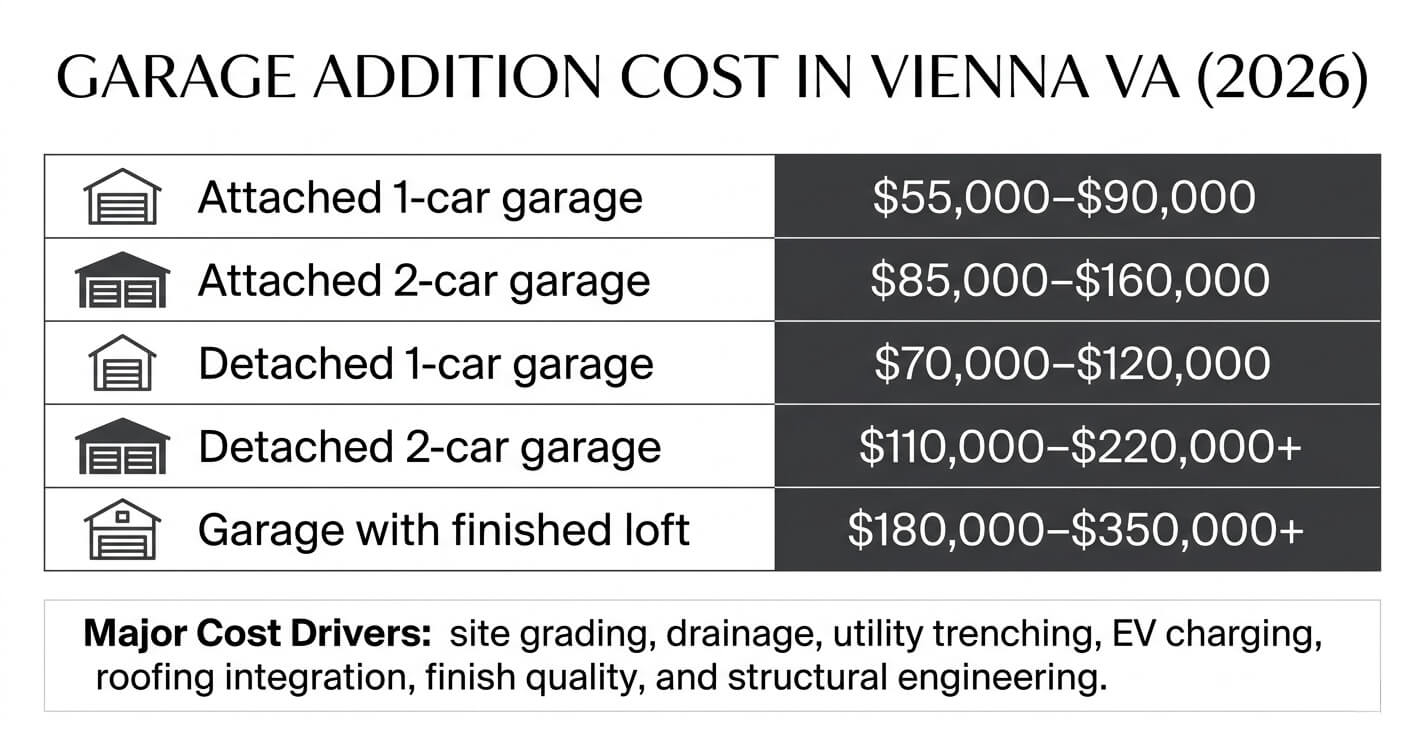
Several major factors drive pricing variation across Vienna VA and Fairfax County projects. Site conditions are often one of the largest variables, particularly on sloped lots that require grading, retaining walls, stormwater management, tree removal, or drainage correction. Foundation requirements also play a significant role, especially where frost-depth compliance, reinforced slab systems, or expansive soil conditions require additional engineering.
Utility extensions can substantially increase costs in detached garages. Electrical service upgrades, EV charging infrastructure, internet trenching, plumbing lines, and HVAC systems frequently require extensive underground routing. Exterior integration also affects pricing, particularly when homeowners want the new structure to visually match the existing home through coordinated siding, roofing materials, trim profiles, masonry, and window alignment.
Interior finish quality further impacts budget ranges. Premium insulated garage doors, epoxy flooring systems, custom cabinetry, integrated storage solutions, smart garage automation, and conditioned workshop spaces can significantly elevate overall project cost.
According to the Harvard Joint Center for Housing Studies, remodeling and construction costs throughout the Washington DC metro region remain substantially above national averages due to labor demand, material pricing volatility, and permitting complexity. [Source: Harvard Joint Center for Housing Studies — Improving America’s Housing Report]
A key pricing distinction between attached and detached garages is structural duplication. Detached garages typically cost more per square foot because they require independent foundations, additional exterior walls, separate roofing systems, and utility trenching rather than tying directly into the existing residence.
ZONING & PERMIT REQUIREMENTS IN VIENNA VA
Garage additions in Vienna VA typically require multiple layers of zoning review and permit approval before construction can begin. Because these projects alter the property’s structural footprint, site coverage, and utility systems, Fairfax County evaluates garage additions through both building-code and zoning-compliance standards.
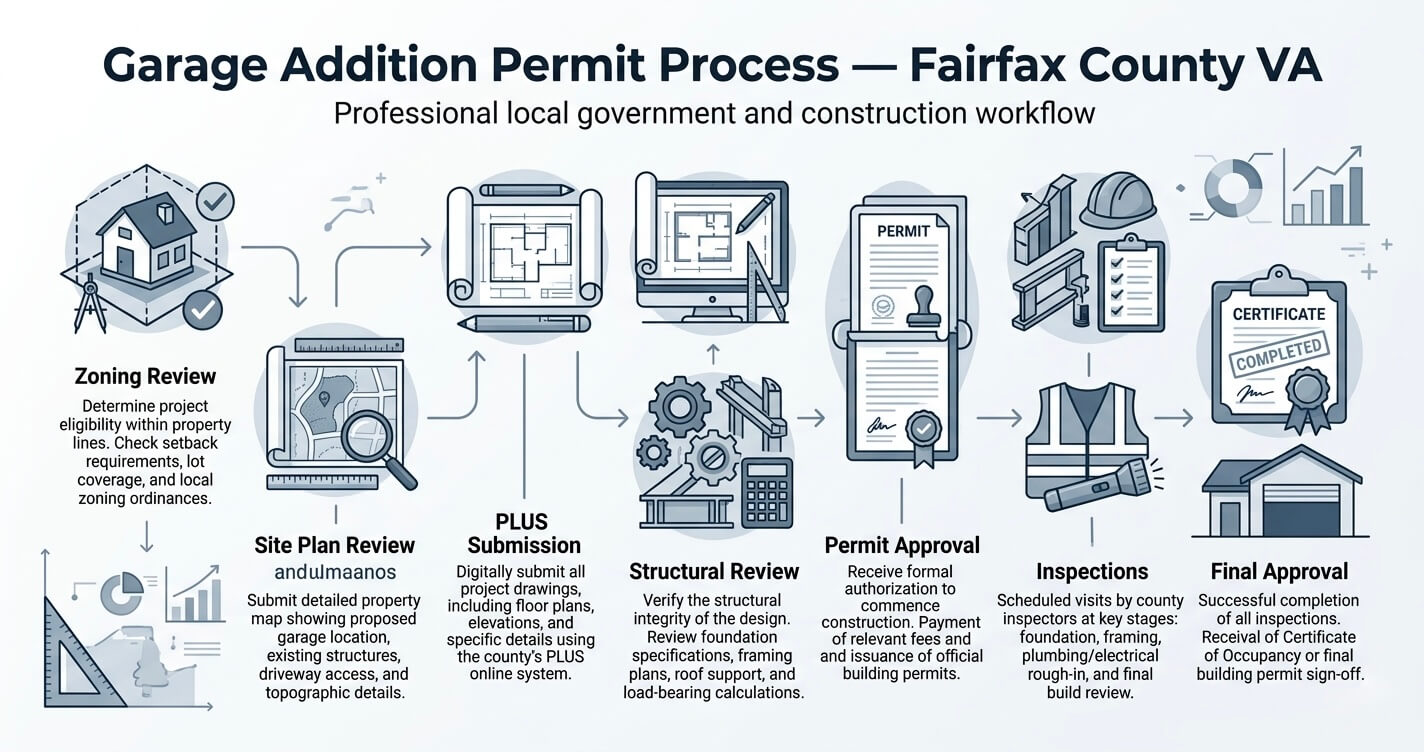
Most projects require a building permit as the primary approval document. Additional permits may also be necessary depending on project scope, including electrical permits for new circuits and EV charging systems, mechanical permits for conditioned garage space, and plumbing permits where water or sewer connections are installed. Zoning review is often required to verify compliance with setback requirements, height limitations, lot coverage restrictions, driveway access standards, and stormwater considerations.
Fairfax County Land Development Services (LDS) serves as the governing permit authority for residential garage additions throughout Vienna VA and surrounding communities. [Source: Fairfax County LDS]
All permit applications are submitted digitally through Fairfax County’s PLUS (Planning and Land Use System) portal.
Attached garage additions frequently trigger additional technical review because they become physically integrated into the primary residence. These projects may require energy-code compliance analysis, structural review, fire-separation detailing, and framing evaluation to ensure compatibility between existing and new construction systems.
Detached garages, while structurally independent, often face stricter accessory-structure zoning review. Setback compliance, maximum building coverage, driveway placement, drainage management, and overall site layout become especially important during detached garage approvals.
One of the most common homeowner misconceptions is assuming HOA approval replaces county permits. In reality, homeowners association approvals and Fairfax County permit approvals are entirely separate processes, and satisfying one does not eliminate the need for the other.
For homeowners evaluating contractors for these projects, understanding How to Choose the Right Contractor in Northern Virginia is critical because experienced local contractors are far more familiar with Fairfax County zoning workflows, revision requirements, and permit-review expectations.
WHICH OPTION IS BETTER FOR VIENNA VA HOMEOWNERS?
Choosing between an attached vs detached garage in Vienna VA depends less on which structure is universally “better” and more on how the property is configured, how the homeowner intends to use the space, and what long-term goals the renovation is meant to support.
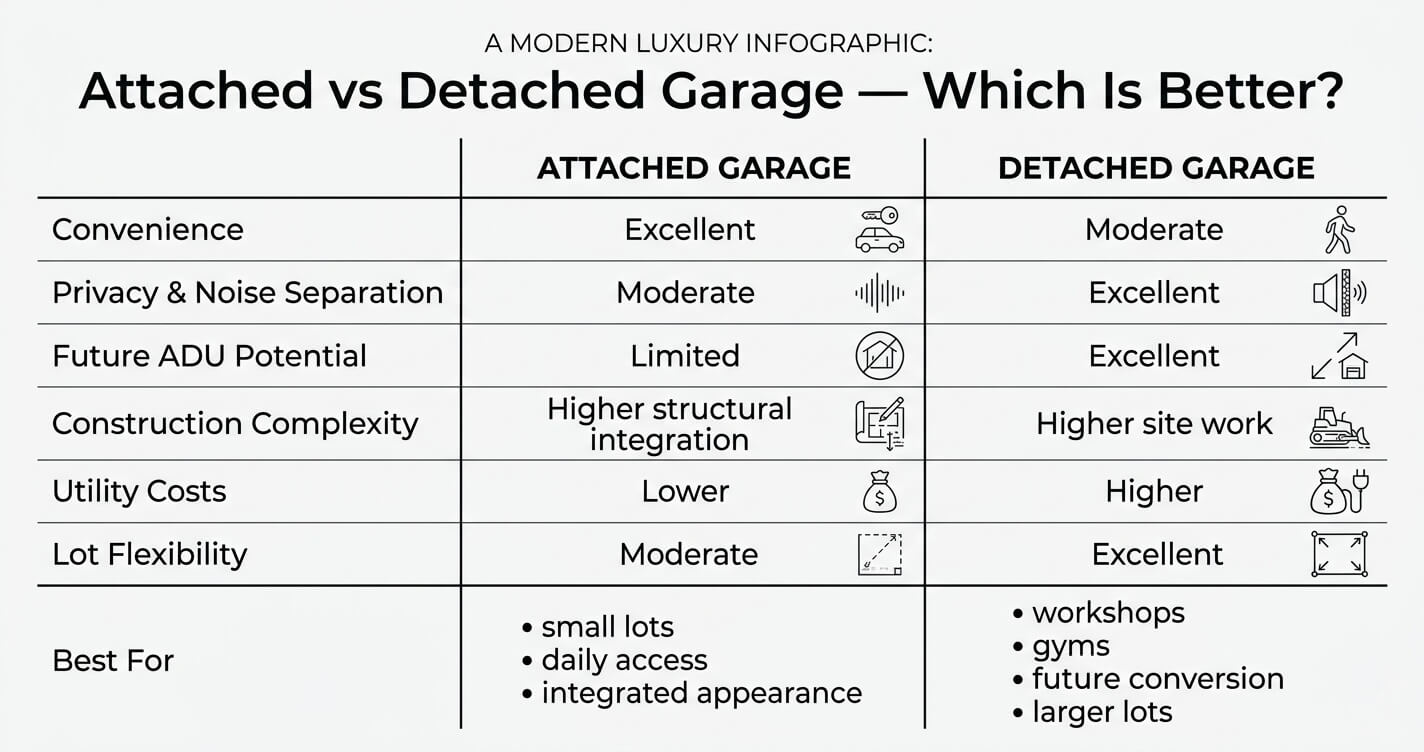
Attached garages are generally the better solution for smaller lots, especially in established Vienna VA neighborhoods where yard depth and setback flexibility are limited. They provide direct indoor access to the home, lower utility extension costs, and a more integrated architectural appearance. For homeowners prioritizing daily convenience, weather protection, and efficient access between the garage and living areas, attached garages are typically the most practical option. They also tend to appeal strongly to mainstream buyers at resale because integrated garages are now considered an expected feature in many Northern Virginia housing markets.
Detached garages, however, often provide greater long-term flexibility. They are especially well suited for larger lots where homeowners want dedicated workshop space, home gyms, hobby rooms, equipment storage, or future conversion potential. Detached structures also create stronger noise separation and greater privacy while preserving the original structural layout of the main residence.
Lifestyle planning has become increasingly important in garage design decisions. Homeowners now frequently incorporate EV charging infrastructure, fitness equipment, climate-controlled storage, workshop ventilation, and future multigenerational living flexibility into early project planning. In older Vienna VA neighborhoods, detached garages can also preserve the architectural balance of the original home more effectively than large attached expansions that substantially alter the existing roofline and facade proportions.
From a long-term investment standpoint, well-designed garage additions can improve curb appeal, day-to-day functionality, and resale competitiveness when the structure is properly scaled, architecturally integrated, and aligned with neighborhood expectations.
COMMON GARAGE ADDITION MISTAKES TO AVOID
Garage additions in Vienna VA involve far more technical complexity than many homeowners initially expect. While the finished structure may appear straightforward, many of the most expensive project failures originate from planning mistakes that occur long before construction begins.
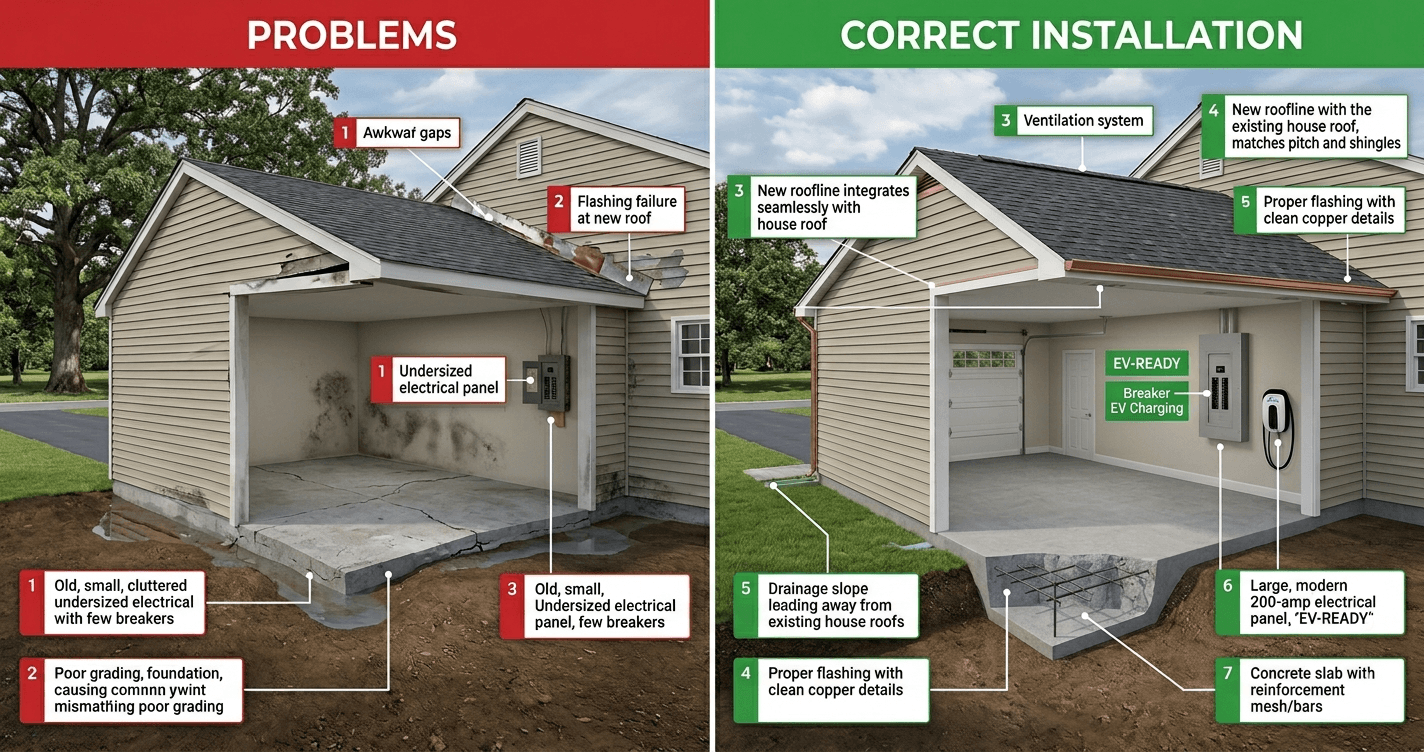
One of the most common mistakes is ignoring zoning setbacks and lot coverage restrictions during early design planning. Homeowners frequently assume there is enough space to build without first verifying property-line offsets, easements, height limits, or accessory-structure regulations through Fairfax County zoning review.
Drainage and grading issues are another major source of problems. Improper site preparation can lead to standing water, foundation settlement, slab cracking, erosion, and long-term moisture intrusion. These risks become especially significant on sloped Northern Virginia lots where stormwater movement must be carefully managed around new foundations and driveway surfaces.
Electrical planning is also commonly underestimated. Many older homes lack sufficient panel capacity for modern EV charging systems, workshop equipment, or conditioned garage spaces. Failing to address electrical upgrades during construction can create expensive retrofit costs later.
Architectural integration is another overlooked area. Poor roofline transitions, mismatched siding materials, and improper flashing details can make additions appear visually disconnected from the original home while also increasing the risk of moisture penetration. Oversized garages that overwhelm the lot or dominate the front elevation can negatively affect curb appeal and neighborhood compatibility.
Homeowners should also plan for future flexibility. Garages designed only for immediate storage needs may become functionally obsolete as family needs evolve toward home gyms, workshop space, office use, or future ADU conversion possibilities.
From a technical perspective, many garage failures originate from poor moisture management, slab movement, inadequate ventilation, or improperly detailed flashing systems rather than the framing structure itself. Garage foundations and structural systems must comply with Virginia’s Uniform Statewide Building Code (USBC). [Source: Virginia DHCD — USBC]
FREQUENTLY ASKED QUESTIONS [FAQs]
Q1: Is an attached or detached garage cheaper in Vienna VA?
Attached garages are usually less expensive because they share portions of the home’s existing structural and utility systems. Detached garages typically require independent foundations, separate roofing systems, additional exterior walls, and utility trenching, all of which increase overall construction costs.
Q2: Do I need permits for a garage addition in Vienna VA?
Yes. Most garage additions in Vienna VA require building permits, zoning review, and trade permits through Fairfax County Land Development Services (LDS). Depending on project scope, electrical, plumbing, and mechanical permits may also be required.
Q3: How much does a detached garage cost in Northern Virginia?
Detached garage additions in Vienna VA generally range from approximately $70,000 to $220,000+ depending on garage size, site conditions, finish quality, utility connections, and whether loft or conditioned space is included.
Q4: Can a detached garage become an ADU later?
Potentially yes. Some detached garages may later qualify for accessory dwelling unit (ADU) conversion depending on zoning regulations, lot conditions, setback compliance, parking requirements, and local Fairfax County or Alexandria ADU rules.
Q5: Which garage type adds more resale value?
Both attached and detached garages can improve resale value when professionally designed and properly permitted. Attached garages often appeal more strongly to mainstream residential buyers due to convenience, while detached garages may offer greater flexibility for workshops, studios, or future living-space conversion.
TO CONCLUDE
Choosing between an attached vs detached garage in Vienna VA involves far more than aesthetics alone. The right solution must balance zoning restrictions, lot configuration, structural feasibility, utility planning, future flexibility, construction budget, and long-term property value.
Attached garages often prioritize convenience, weather protection, and architectural integration with the main home. Detached garages, by contrast, typically provide greater flexibility, stronger noise separation, workshop potential, and future expansion opportunities for evolving homeowner needs.
The most successful garage additions are carefully planned around how the property will function not only today, but also years into the future. The best garage additions are not simply built for parking; they are designed as long-term functional extensions of how a homeowner lives and uses their property.
US Home Design Build works with homeowners across Vienna VA, McLean VA, Fairfax County, Arlington, and Northern Virginia to design and build garage additions that are structurally sound, properly permitted, and tailored for long-term value.
703-202-3520 | US Home Design Build | 8200 Greensboro Dr #900, McLean VA 22102