
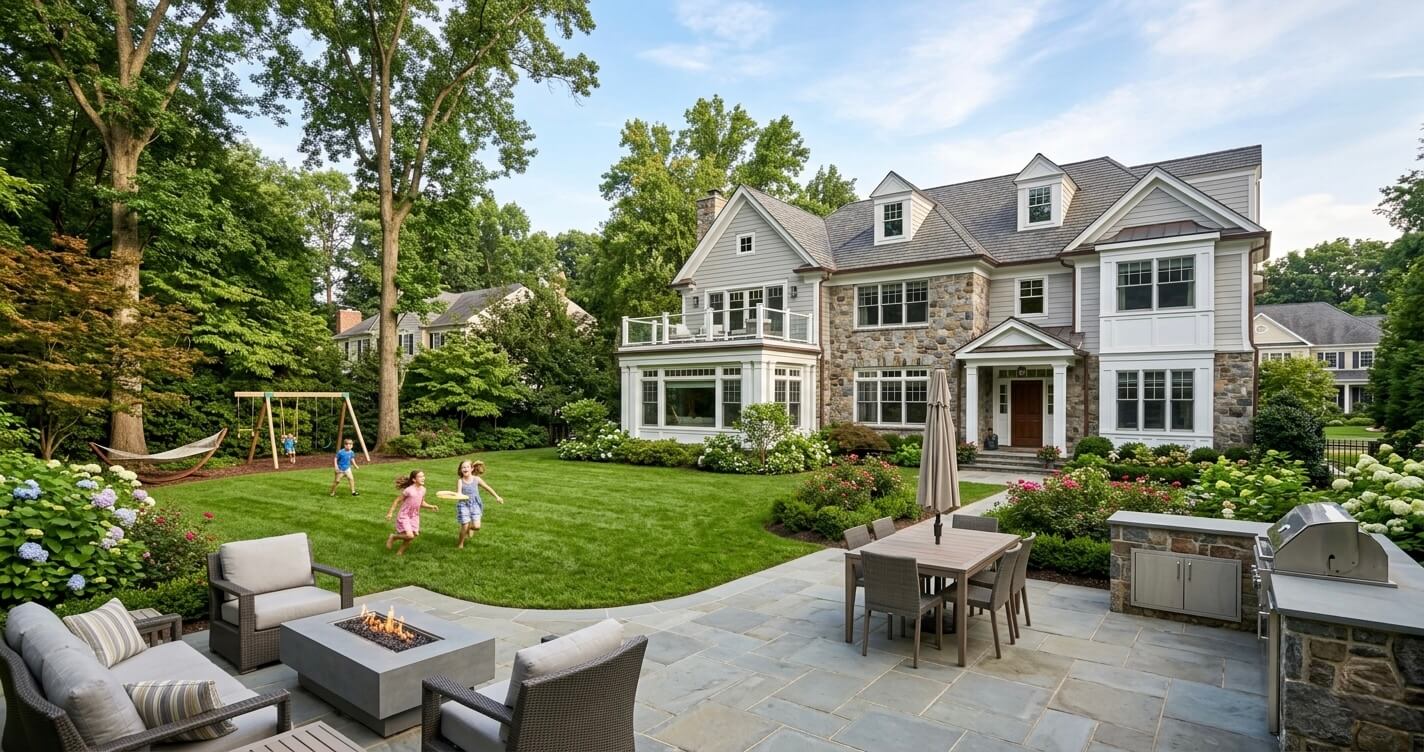
For many homeowners in McLean, Fairfax, Vienna, and throughout Northern Virginia, the problem is not the neighborhood, it is the house. A growing family may need an additional bedroom, dedicated home office, guest suite, or expanded living area, yet the thought of sacrificing the backyard where children play, pets roam, and families gather outdoors can make a traditional addition feel like the wrong solution.
At the same time, moving has become increasingly expensive and disruptive. Between rising home values, higher interest rates, moving costs, and the challenge of finding a comparable property in a preferred school district, many homeowners are choosing to improve their existing homes rather than relocate. According to the Harvard Joint Center for Housing Studies (JCHS), remodeling and home improvement spending continues to represent a substantial portion of homeowner investment nationwide, reflecting the growing preference for improving existing homes rather than moving to new properties.
The good news is that gaining additional square footage does not always require expanding dramatically into your yard. The right home addition design ideas can transform how your family lives without reducing valuable outdoor space. From second-story additions and attic conversions to finished basements and carefully designed bump-outs, there are multiple ways to add functional living space while preserving your property’s usability.
For homeowners exploring Home Additions Northern Virginia, understanding the available design strategies is the first step toward making an informed investment. Whether you are considering a growing family’s needs, multigenerational living arrangements, or simply improving daily functionality, a thoughtful design-build approach can help maximize both indoor and outdoor living.
Many Northern Virginia homeowners have already taken this path, as demonstrated in this Family Room Addition Case Study, where strategic planning allowed the homeowners to gain meaningful living space while maintaining the character and usability of their property.
Why Northern Virginia Homeowners Are Rethinking Home Addition Design Ideas
Northern Virginia presents a unique set of challenges and opportunities for homeowners considering an addition. Communities such as Fairfax, Arlington, McLean, Vienna, Burke, Annandale, and Great Falls contain many established neighborhoods where homes were built decades ago on lots that are desirable but not necessarily expansive. While these properties often offer mature landscaping and prime locations, they can leave limited room for conventional horizontal expansion.
At the same time, Northern Virginia remains one of the most competitive housing markets in the Mid-Atlantic region. Homeowners who purchased years ago often benefit from favorable mortgage rates and substantial home equity, making renovation a more attractive option than entering today’s housing market. Data from the U.S. Census Bureau’s American Housing Survey indicates that a significant share of homeowners who undertake major renovations and additions do so because they prefer improving their current home rather than relocating, a trend that is particularly relevant in high-cost housing markets such as Northern Virginia.
This trend is especially evident as multigenerational living becomes more common. Families increasingly seek dedicated spaces for aging parents, adult children, long-term guests, and flexible work-from-home arrangements. These lifestyle shifts require additional square footage, but not necessarily a larger property.
Local zoning regulations also influence decision-making. Fairfax County, Arlington County, and other jurisdictions impose setback requirements that limit how close additions can be built to property lines. In many cases, homeowners discover that their desired rear addition may not fit within zoning constraints without variances or redesigns.
Because of these factors, many of today’s most effective home addition design ideas focus on maximizing existing structures, building vertically, or strategically utilizing underused areas of the home. Choosing among the right home addition design ideas starts with understanding what your lot, existing structure, and local zoning regulations will realistically allow.
A qualified design-build team can evaluate these variables early in the planning process, helping homeowners identify solutions that achieve their goals while avoiding costly surprises later.
Two Approaches: Building Up vs. Building Out
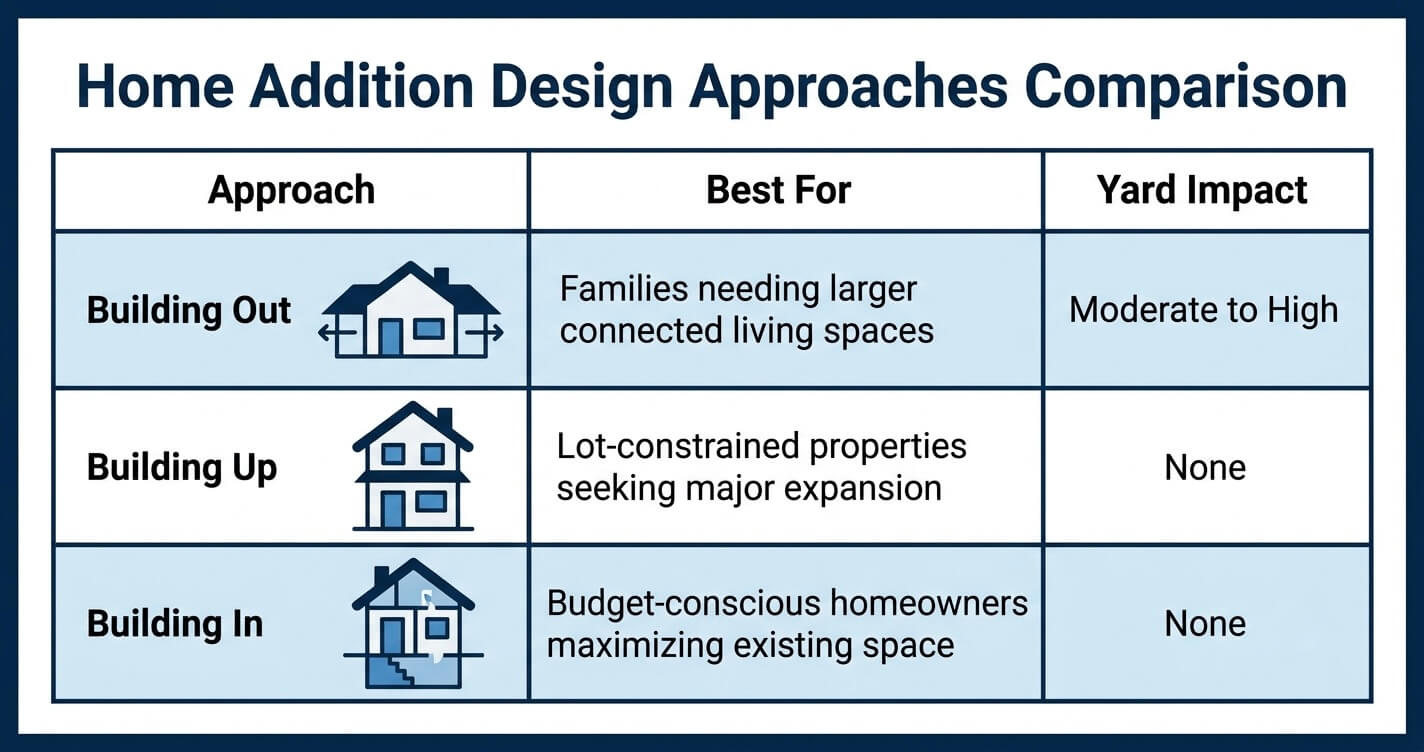
Before selecting a specific addition type, homeowners should first understand the three primary ways additional living space can be created: building out, building up, or building within the existing structure. Each strategy offers distinct advantages depending on the property’s constraints, budget, and long-term goals.
Building Out (Horizontal Expansion)
Building out involves extending the home’s footprint through rear additions, side additions, bump-outs, sunrooms, or enclosed porches. This approach often creates seamless connections to existing living spaces and can be structurally simpler than adding an entire second level.
However, horizontal additions consume yard space and are frequently limited by setback requirements. For homeowners with modest lot sizes, even a relatively small addition can significantly impact outdoor functionality.
Building Up (Vertical Expansion)
Building up adds square footage without increasing the home’s footprint. Common examples include second-story additions, room-over-garage additions, and attic conversions.
For properties where yard preservation is a priority, vertical additions are often among the most effective solutions. Although they typically involve greater structural complexity and engineering requirements, they frequently provide substantial long-term value. The National Association of Realtors’ Remodeling Impact Report has consistently found that room additions and second-story additions rank among the remodeling projects associated with strong homeowner satisfaction and favorable cost recovery potential, making them attractive long-term investments for many homeowners.
Homeowners interested in long-term property performance may also benefit from reviewing these Best ROI Home Improvements in Northern Virginia.
Building In (Internal Expansion)
The third option is building within the home’s existing footprint. Finished basements, attic conversions, and garage conversions create livable space without affecting the exterior footprint at all.
Because the foundation, roof structure, and utility connections already exist, internal projects can often deliver excellent value while preserving every square foot of outdoor space.
The ideal strategy ultimately depends on your home’s structure, local zoning restrictions, family needs, and investment objectives.
Home Addition Design Idea #1 – Second Story Addition
Among all available home addition design ideas, a second-story addition is often the most effective option for homeowners who need significant additional living space without sacrificing any portion of their yard.
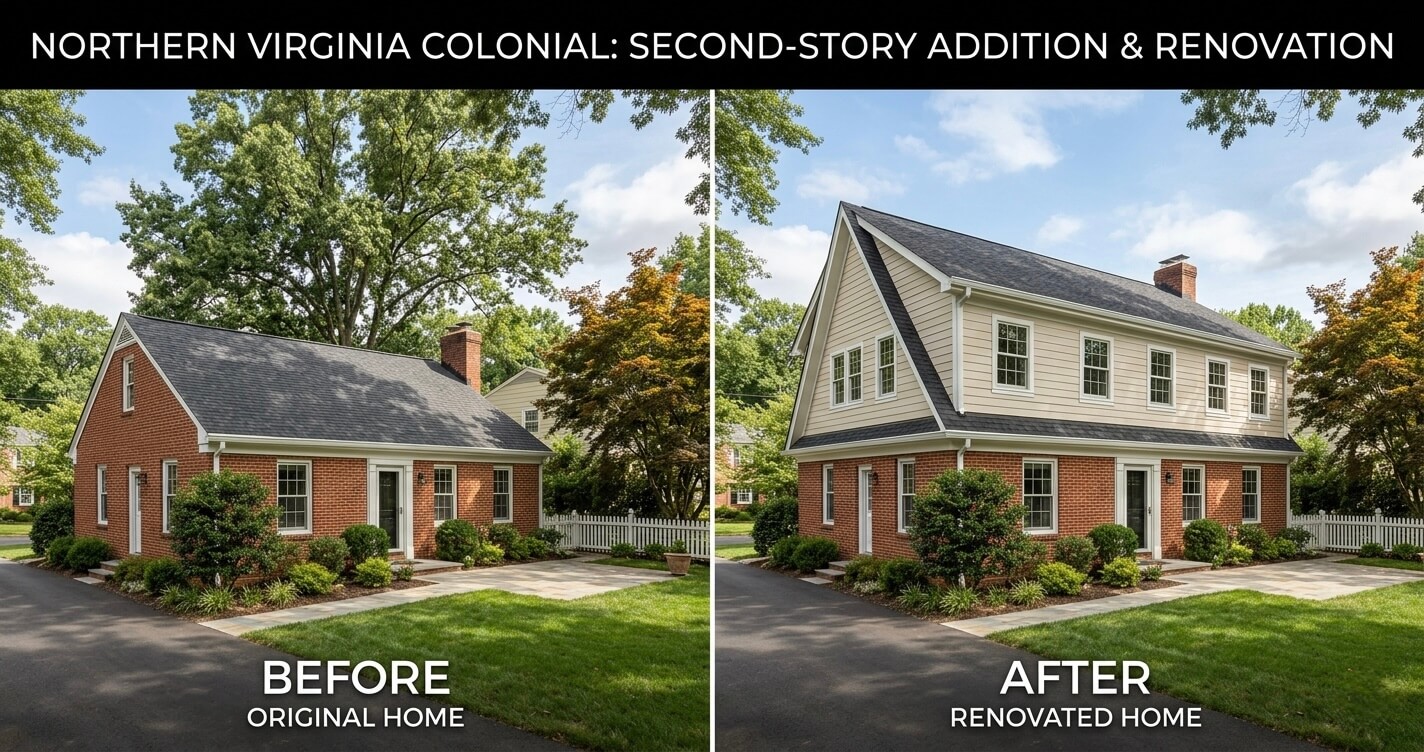
Because the expansion occurs vertically rather than horizontally, the home’s footprint remains unchanged. This allows homeowners to dramatically increase square footage while preserving outdoor amenities such as patios, gardens, play areas, and landscaping.
A typical Second Story Addition may include:
- Additional bedrooms
- A new primary suite
- Expanded bathrooms
- Dedicated home office space
- Children’s bedrooms and playrooms
- Flexible family living areas
For many Northern Virginia homeowners, particularly those living in older colonial-style homes throughout McLean, Vienna, Great Falls, and Fairfax County, a second-story addition can effectively double usable living space while maintaining the property’s existing lot utilization.
However, these projects require careful structural evaluation. Engineers must assess whether the existing foundation, load-bearing walls, and framing system can support the additional weight. In some cases, reinforcement measures may be necessary before construction begins.
Design integration is equally important. A successful second-story addition should appear as though it was always part of the original home. Achieving this requires careful attention to roofline continuity, exterior cladding materials, window proportions, architectural detailing, and interior circulation. Stair placement is particularly critical because it affects both functionality and how much existing first-floor space must be reconfigured.
From a permitting perspective, second-story additions require comprehensive construction documents and structural drawings. Fairfax County, Arlington County, and neighboring jurisdictions require full building permit approval before work can begin.
Although second-story additions are among the more complex home expansion projects, they remain one of the most powerful solutions for homeowners seeking substantial square footage gains while preserving valuable outdoor space. For many lot-constrained properties, they represent the ideal balance between lifestyle improvement, property value enhancement, and yard preservation.
Home Addition Design Idea #2 – Finished Basement
For homeowners seeking additional square footage without altering the home’s exterior footprint, a finished basement is often one of the most cost-effective solutions available. Unlike traditional additions that require new foundations, roofing systems, and exterior walls, basement finishing leverages space that already exists within the home’s structural envelope.
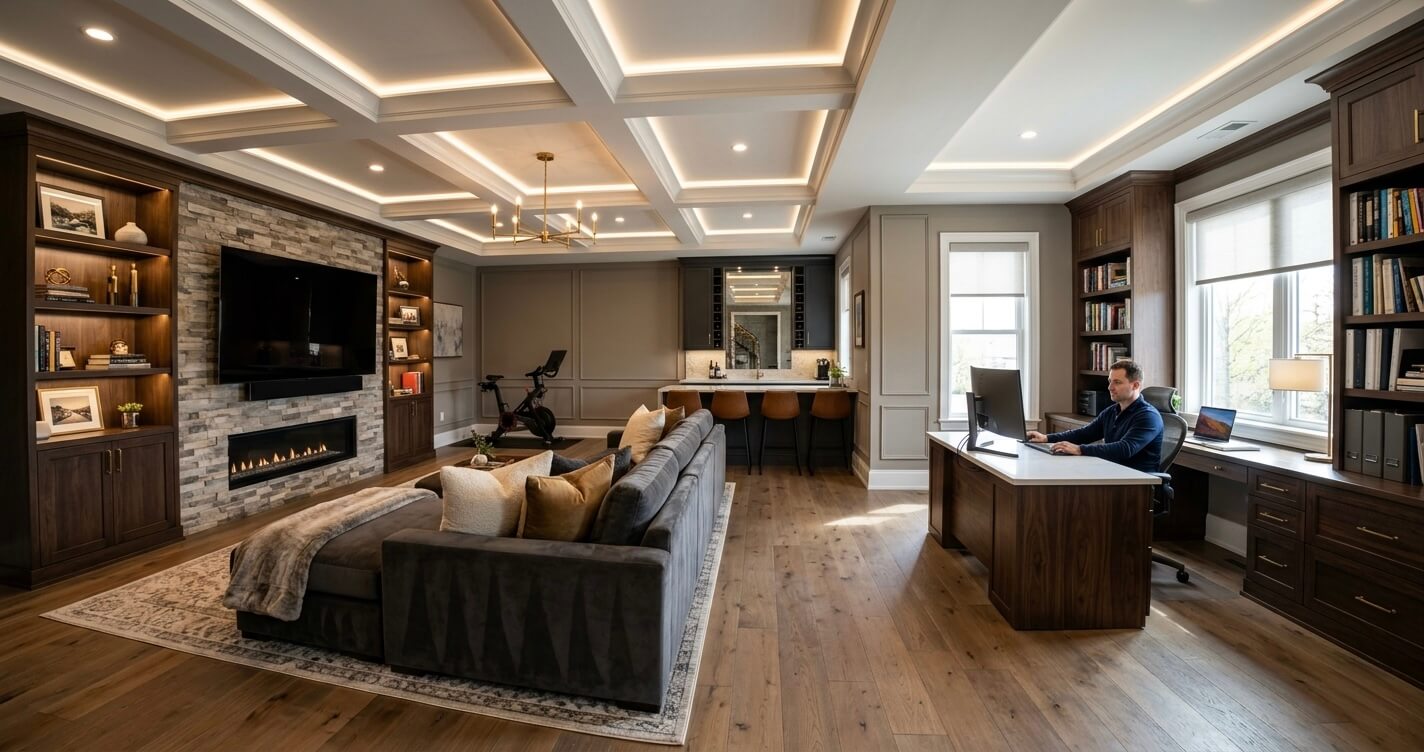
In Northern Virginia, unfinished basements are commonly transformed into highly functional living areas that support modern lifestyles. Popular uses include recreation rooms, home theaters, fitness areas, children’s playrooms, guest bedrooms, private home offices, wet bars, and flexible multipurpose spaces that can evolve with a family’s needs over time.
One of the greatest advantages of basement finishing is that it has absolutely no impact on yard space. Homeowners can gain hundreds or even thousands of square feet of usable living area while preserving every square foot of outdoor space.
However, successful basement projects require more than simply adding drywall and flooring. Moisture management is one of the most important technical considerations in the Mid-Atlantic region. Proper waterproofing, drainage management, vapor control, insulation strategies, and HVAC planning all play critical roles in creating a comfortable and durable finished space.
Homeowners considering basement bedrooms should also understand local code requirements. Fairfax County and surrounding jurisdictions require compliant egress windows or emergency escape openings for sleeping areas, while ceiling height standards and mechanical clearances can affect layout possibilities in older homes.
Because basement finishing often intersects with electrical, plumbing, HVAC, and structural considerations, homeowners should evaluate the project holistically rather than treating it as a simple cosmetic upgrade. Those considering a basement renovation as part of a broader home improvement strategy may benefit from consulting an experienced design-build team before finalizing project scope, layout, and budget expectations.
Home Addition Design Idea #3 – Bump-Out Additions
Not every home requires a large-scale addition to solve a space problem. In many cases, a carefully designed bump-out can dramatically improve functionality while using only a small amount of additional land.
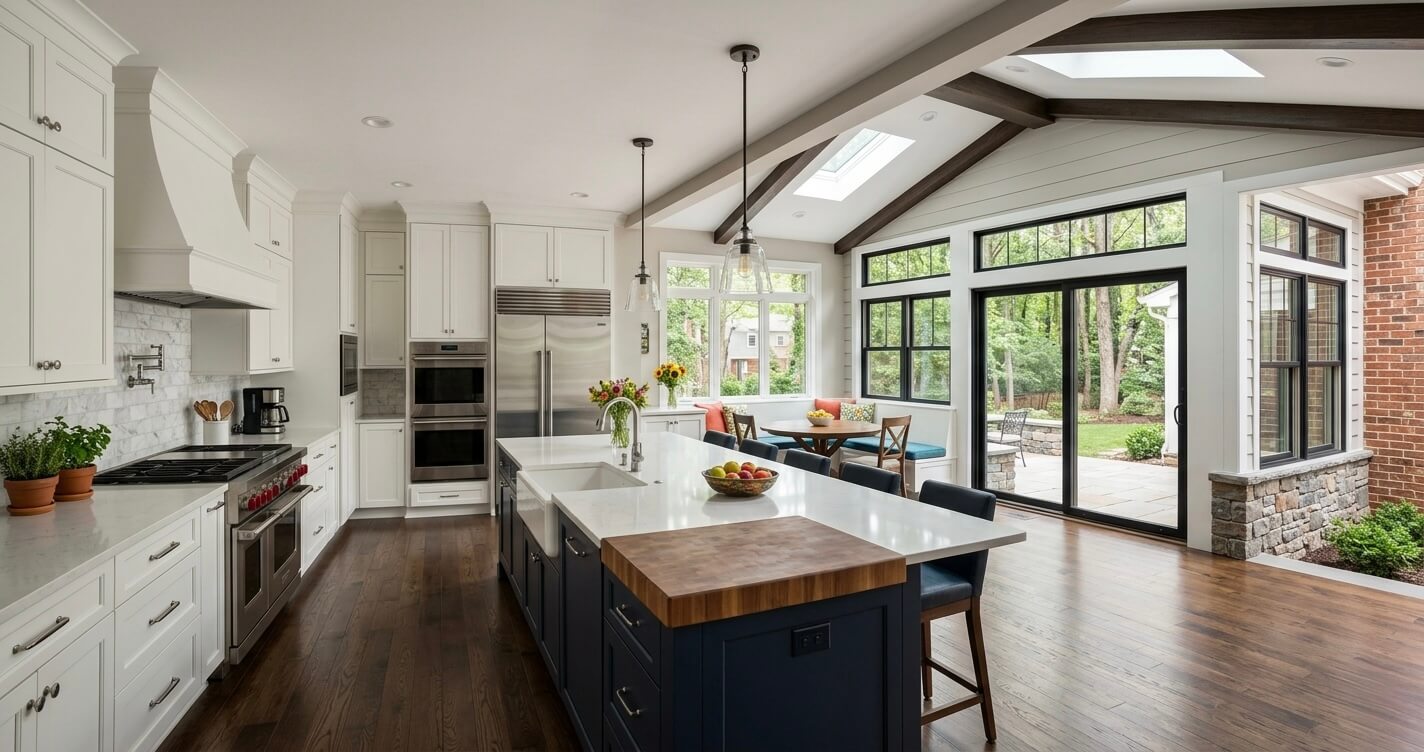
A bump-out is a targeted extension of an existing room rather than the creation of an entirely new room. These additions typically extend between two and ten feet beyond the current exterior wall, creating additional space exactly where it is needed most.
Among today’s most practical home addition design ideas, bump-outs are especially popular because they focus on solving specific layout limitations rather than maximizing raw square footage.
Common applications include:
- Expanding a kitchen to accommodate an island or breakfast nook
- Enlarging a primary bathroom to add a double vanity or walk-in shower
- Extending a bedroom to create a walk-in closet
- Increasing dining room capacity for larger gatherings
- Creating additional space for built-in storage solutions
Because bump-outs extend only as far as necessary, they often preserve significantly more yard space than a traditional rear addition. For homeowners with setback limitations or smaller lots, this can make the difference between an approved project and one that requires extensive redesign.
From a construction perspective, bump-outs vary considerably depending on size. Smaller extensions may utilize cantilevered framing systems that project from the existing structure without requiring a full foundation. Larger bump-outs typically require pier foundations, crawlspaces, or full foundation systems depending on engineering requirements and soil conditions.
Exterior integration is particularly important in Northern Virginia neighborhoods where architectural consistency and HOA compliance are closely monitored. Matching roofing materials, siding profiles, masonry details, window styles, and trim elements helps ensure the addition feels like a natural continuation of the original home rather than an obvious afterthought.
Although bump-outs are smaller than full additions, they still typically require building permits, zoning review, and inspections in Fairfax County, Arlington County, and neighboring jurisdictions.
Home Addition Design Idea #4 – Attic Conversion
Many Northern Virginia homeowners are surprised to discover that some of the most valuable expansion opportunities already exist within their homes.
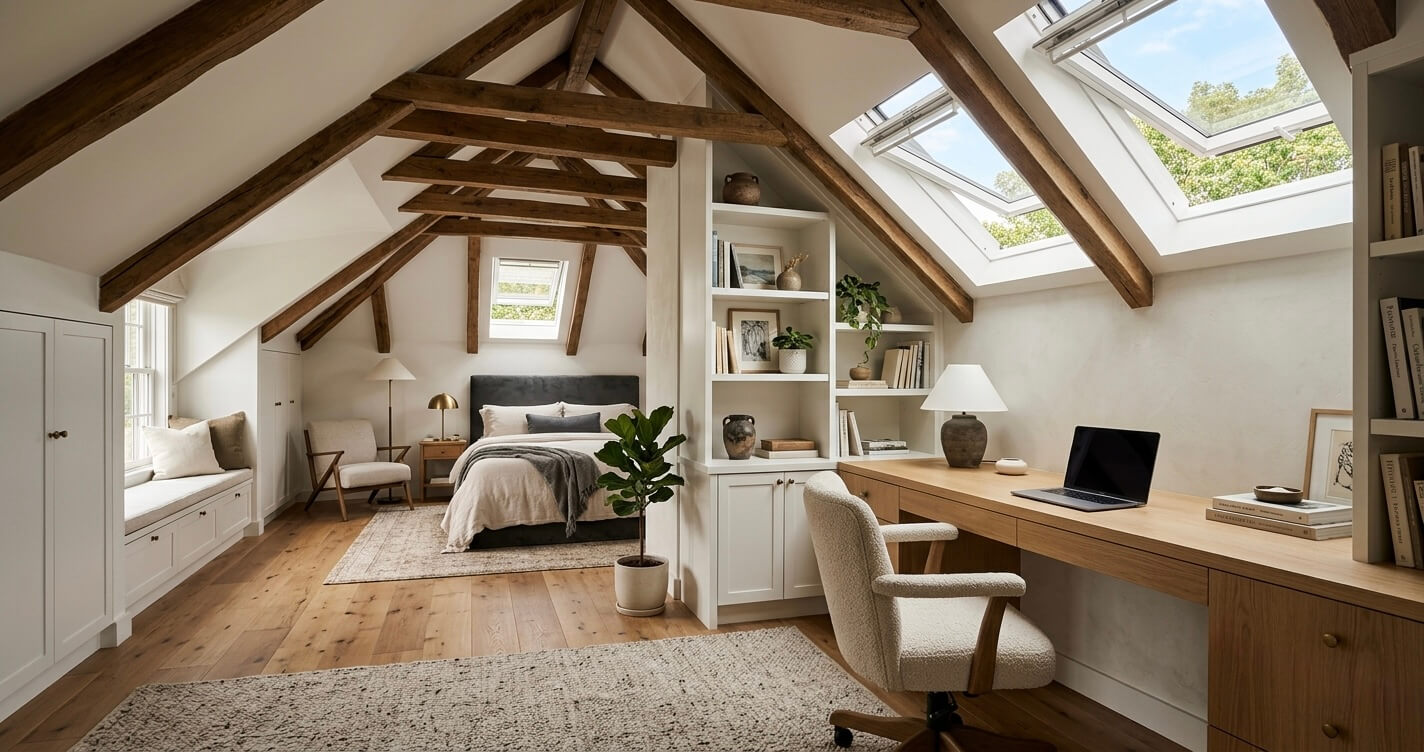
Attic conversions transform underutilized storage space into fully functional living areas without increasing the home’s footprint. For homeowners looking to add living space while preserving every inch of their yard, an attic conversion can offer an exceptional balance of efficiency and value.
This approach is particularly effective in colonial-style homes built throughout Fairfax, Vienna, Burke, and surrounding communities during the 1970s, 1980s, and 1990s. Many of these homes were constructed with sizable attic volumes that can potentially be adapted into conditioned living space.
Depending on structural conditions and available headroom, converted attics can become:
- Home offices
- Guest bedrooms
- Children’s playrooms
- Reading lofts
- Hobby spaces
- Secondary family rooms
- Private primary suites
However, not every attic is immediately suitable for conversion. Several technical requirements must be evaluated before planning begins.
Adequate ceiling height is one of the first considerations. Building codes generally require sufficient headroom throughout habitable areas, which often necessitates dormers, roof modifications, or structural adjustments in certain homes.
Floor systems also require careful review. Attics originally designed for storage frequently lack the load-bearing capacity necessary for daily occupancy and may require reinforcement of floor joists and framing components.
Additional considerations include insulation upgrades, ventilation improvements, HVAC extensions, electrical service expansion, fire safety measures, and emergency egress compliance for bedroom spaces.
One of the primary design challenges is staircase integration. Creating safe access to the attic while minimizing disruption to the existing floor plan requires thoughtful architectural planning and space allocation.
Because the roof structure, foundation, and exterior walls already exist, attic conversions can often deliver substantial living space more efficiently than entirely new additions while maintaining complete preservation of the yard.
Home Addition Design Idea #5 – Sunroom and Screen Porch Additions
Some homeowners do not necessarily need additional bedrooms or enclosed square footage. Instead, they want more space to relax, entertain, and enjoy Northern Virginia’s changing seasons. In these situations, sunrooms and screen porches can provide an ideal solution.
Among today’s most versatile home addition design ideas, these additions create a seamless transition between indoor comfort and outdoor living.
While the terms are sometimes used interchangeably, there are important differences between the available options.
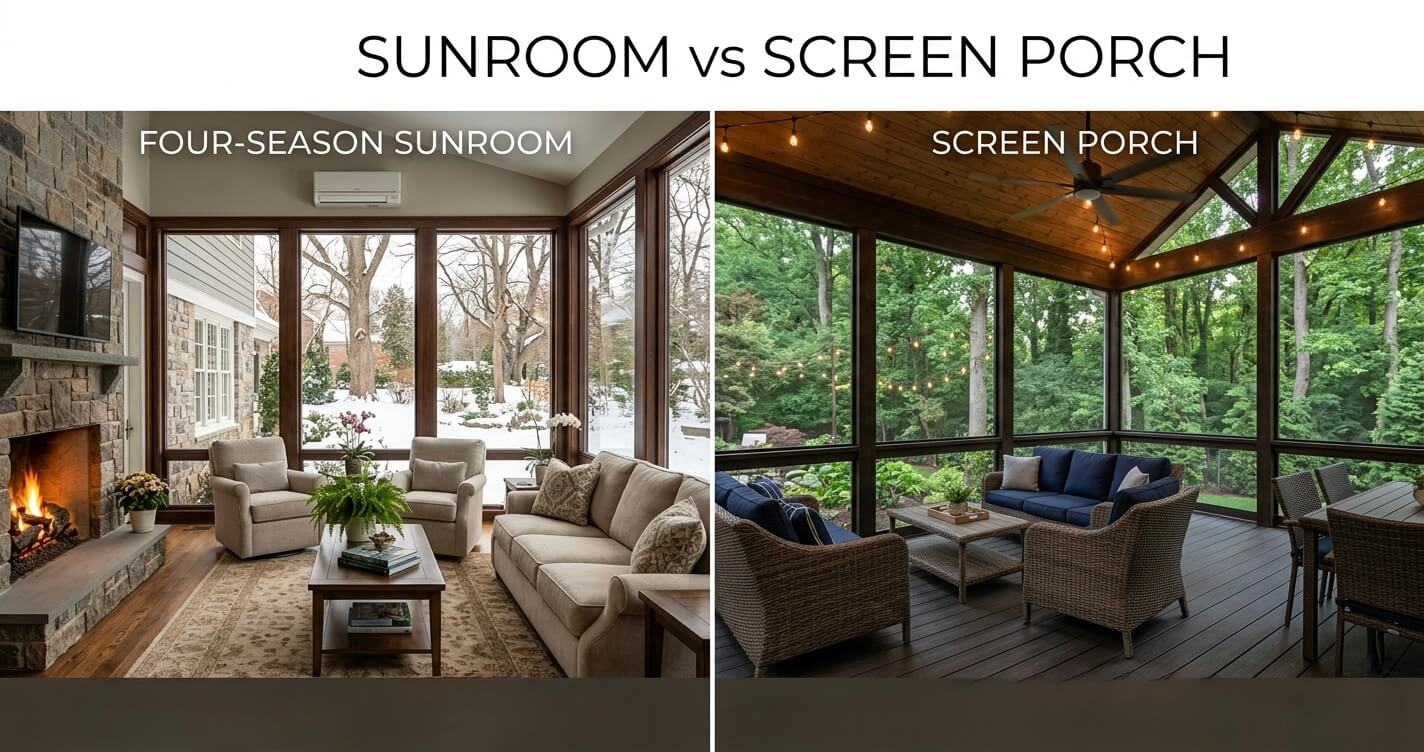
A Screen Porch Addition is typically designed as a three-season space enclosed with screened walls that provide protection from insects while maintaining natural airflow. These spaces are highly popular for outdoor dining, entertaining, and enjoying spring, summer, and fall weather.
A Sunroom Addition is generally a fully enclosed structure featuring insulated walls, energy-efficient windows, and HVAC integration that allows year-round use. Four-season sunrooms can function as true extensions of the home’s conditioned living area and may contribute to official habitable square footage calculations when designed to meet applicable code requirements.
Many homeowners also choose enclosed patio conversions that bridge the gap between traditional sunrooms and outdoor living spaces.
Although these additions do increase the home’s footprint, they often have less impact on usable yard space than conventional room additions. In many cases, they are constructed over existing decks, patios, or hardscaped areas that are already outside the property’s primary green space.
Design continuity is critical to maximizing value. Features such as matching flooring transitions, expansive glass walls, coordinated ceiling finishes, and direct access from primary living areas can help the new space feel fully integrated with the home rather than visually separated.
Homeowners should also understand that zoning setbacks still apply, even for sunrooms and screen porches. Conditioned spaces must additionally comply with energy code requirements, insulation standards, and mechanical system regulations.
For many Northern Virginia homeowners, these additions represent an attractive middle ground, adding meaningful living functionality while preserving much of the outdoor space that originally made the property desirable.
Home Addition Design Idea #6 – In-Law Suite Additions
The demand for multigenerational living solutions has increased significantly across Northern Virginia in recent years. Aging parents, adult children returning home, long-term guests, and changing family dynamics have encouraged many homeowners to seek flexible living arrangements that provide privacy while keeping loved ones close.
Research from the National Association of Home Builders (NAHB) shows that multigenerational living continues to gain popularity across the United States, contributing to increased demand for in-law suites, secondary living quarters, and flexible family-oriented floor plans.
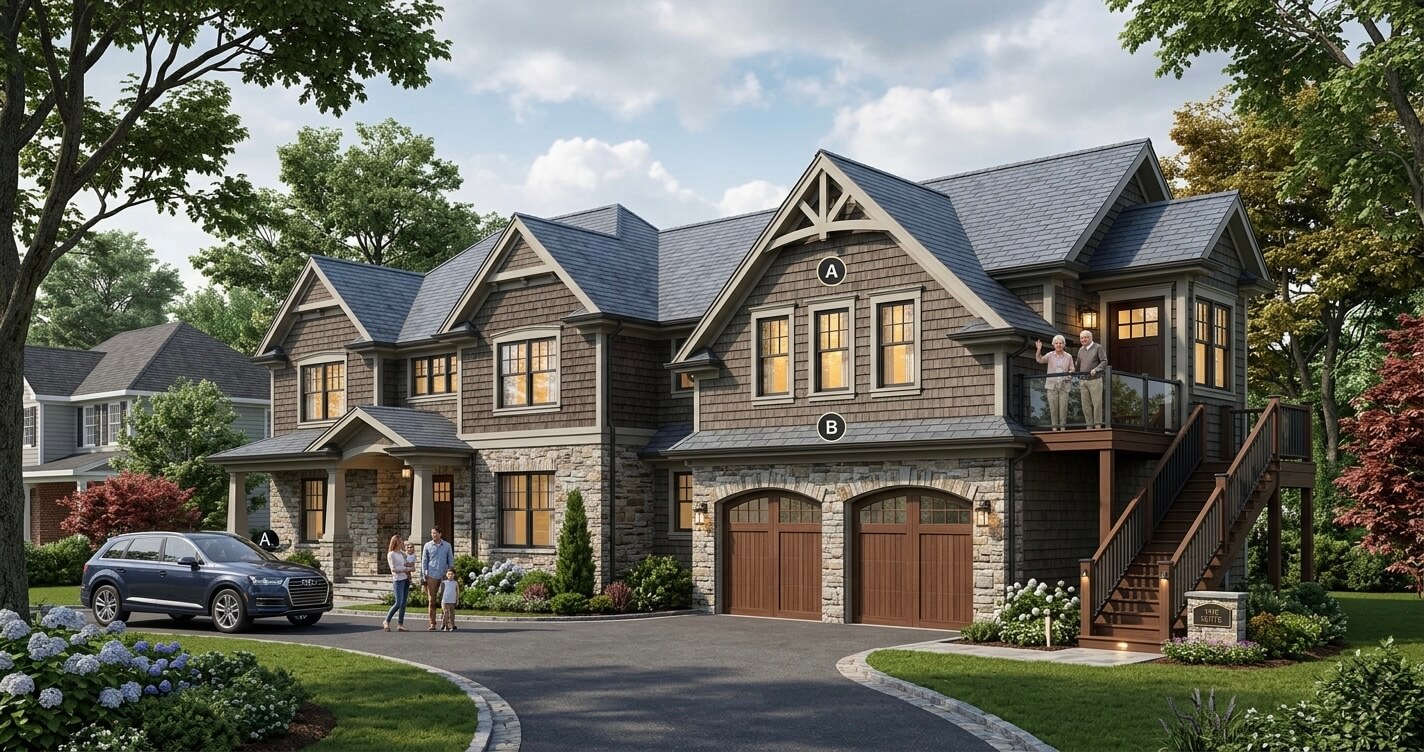
An In-Law Suite Addition can be one of the most effective ways to create independent living space without requiring a move to a larger home. Depending on the property and family goals, homeowners generally pursue one of two approaches.
The first is a main-level attached suite that includes a bedroom, bathroom, sitting area, and potentially a kitchenette connected directly to the primary residence. The second is an above-garage suite, which places new living space over an existing garage structure while minimizing additional land disturbance.
For homeowners concerned about preserving outdoor space, above-garage additions are particularly attractive because they leverage an existing foundation and footprint rather than extending into the yard.
Design considerations often include:
- Separate versus shared entrances
- Kitchenette requirements
- Accessibility planning
- Sound isolation between living areas
- Independent HVAC zoning
- Bathroom and laundry accommodations
Homeowners should also understand the distinction between an attached in-law suite and a detached Accessory Dwelling Unit (ADU). While attached suites remain part of the primary residence, detached units are subject to different zoning and regulatory requirements.
Homeowners exploring those options may benefit from consulting an experienced ADU Builder familiar with Northern Virginia regulations.
Budget planning is equally important. Families evaluating this type of project may find it helpful to review this guide to In-Law Suite Addition Cost Northern Virginia to better understand the variables that influence project pricing.
When designed thoughtfully, an in-law suite can provide flexibility, privacy, and long-term value while preserving the outdoor spaces that homeowners already enjoy.
Home Addition Design Idea #7 – Garage Conversion
For homeowners who rarely use their garage for vehicle storage, converting that space into finished living area can be one of the fastest ways to gain additional square footage without affecting the home’s footprint.
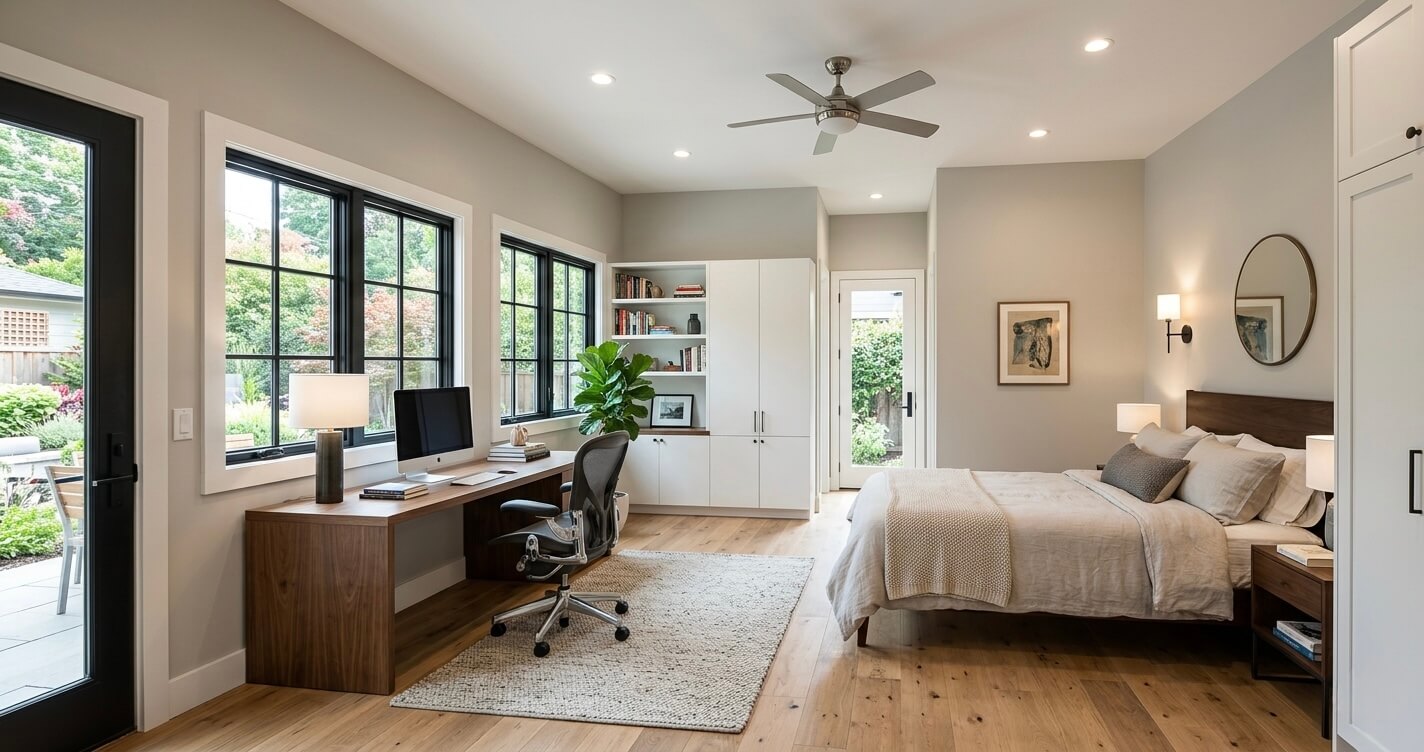
Garage conversions are particularly attractive because the basic structure already exists. The foundation, walls, and roof are already in place, reducing the amount of new construction required compared to a traditional addition.
Common garage conversion projects include:
- Home offices
- Guest suites
- Children’s playrooms
- Fitness rooms
- Hobby studios
- Media rooms
- Flexible multipurpose spaces
While these projects can often be more economical than new additions, they still require significant upgrades to meet residential building standards. Typical improvements include insulation installation, HVAC extensions, electrical upgrades, flooring systems, drywall finishing, and window modifications to provide natural light and emergency egress where required.
The primary trade-off is the loss of covered parking and storage space. In Northern Virginia’s climate, homeowners should carefully consider how vehicles, seasonal equipment, and household storage needs will be accommodated after the conversion is complete.
Permit approval is generally required because the project changes the use classification of the space. In addition, many HOA-governed communities in Reston, Burke, Vienna, and similar neighborhoods may impose design standards that affect exterior modifications.
For households that have already outgrown their interior living space, however, a garage conversion can provide substantial functional benefits without sacrificing a single square foot of yard area.
How to Choose the Right Home Addition Design Approach for Your Northern Virginia Property
Selecting the right addition strategy involves more than deciding how much space you need. The most successful projects balance structural feasibility, zoning compliance, budget considerations, long-term value, and day-to-day functionality.
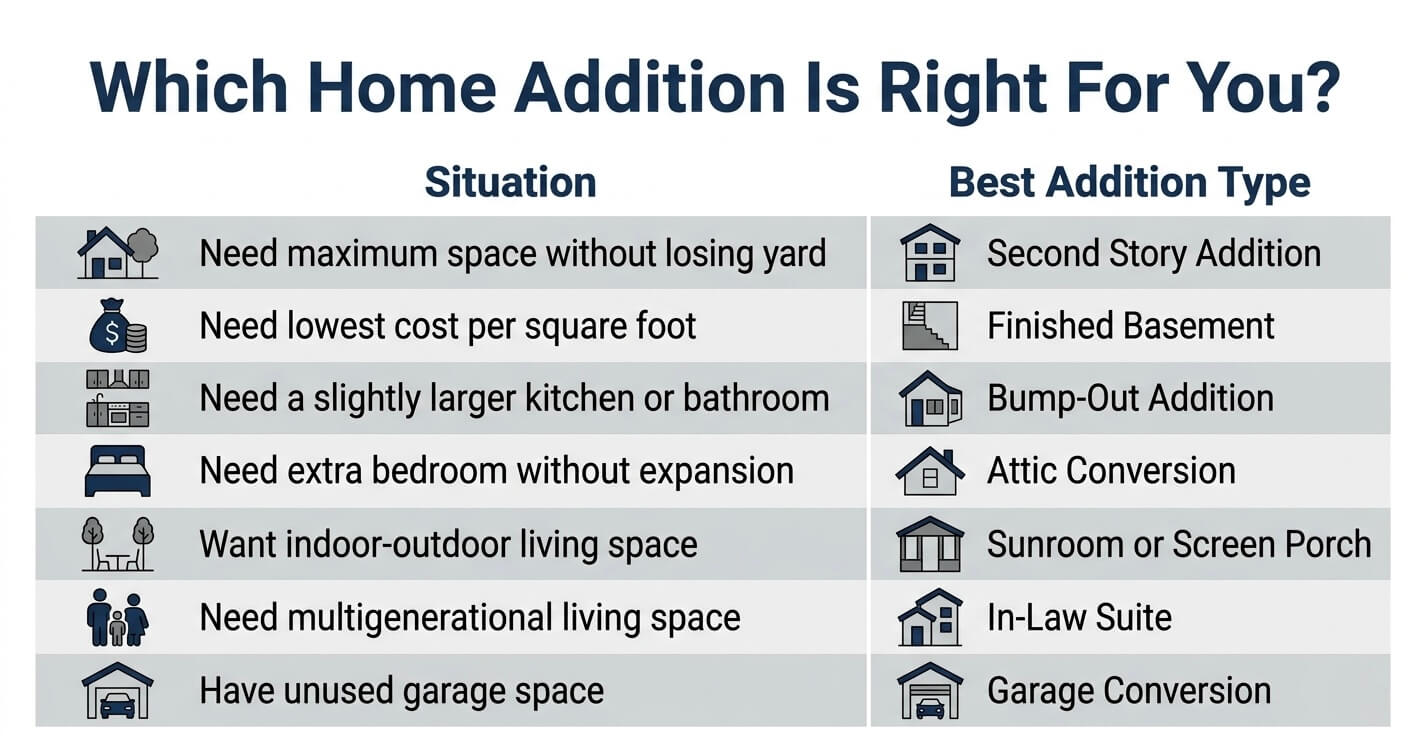
Many homeowners begin researching home addition design ideas focused solely on square footage, only to discover that lot restrictions, structural limitations, or HOA requirements ultimately influence the final solution.
Lot Size and Setback Requirements
One of the most important factors is your property’s available buildable area.
Fairfax County, Arlington County, and other Northern Virginia jurisdictions impose setback requirements that regulate how close additions can be built to property lines. Depending on zoning classification, rear setbacks commonly range between approximately 25 and 35 feet, although requirements vary by property and district.
These restrictions often limit traditional rear additions, making vertical expansion strategies significantly more attractive for homeowners with smaller lots.
HOA Design Guidelines
Many Northern Virginia communities maintain architectural review standards that govern exterior renovations.
Rooflines, siding materials, window styles, exterior colors, and overall visual consistency may all require HOA approval before construction begins. Working with an experienced design-build firm can streamline this process and reduce the likelihood of costly redesigns.
Structural Capacity
Not every home can support every addition type.
Second-story additions, attic conversions, and above-garage suites often require structural analysis to verify load-bearing capacity. Homes constructed before the mid-1980s may require foundation reinforcement or framing upgrades before vertical additions can proceed safely.
Aligning the Addition with Your Goals
Every addition serves a different purpose.
A finished basement may provide maximum square footage for the investment. An in-law suite may support multigenerational living. A sunroom may enhance daily enjoyment of the home. A second-story addition may dramatically improve long-term functionality and resale potential.
The most effective approach is the one that solves your family’s actual needs while respecting the property’s physical and regulatory limitations.
Homeowners in Northern Virginia who are evaluating home addition design ideas but aren’t sure which approach fits their lot, budget, and goals may benefit from a consultation with an experienced design-build team before finalizing any plans.
For homeowners considering comprehensive expansion options, exploring Home Additions Northern Virginia can provide additional insight into available solutions and project planning considerations.
Do You Need a Permit for a Home Addition in Northern Virginia?
The short answer is yes.
Virtually every structural home addition project in Fairfax County, Arlington County, and surrounding jurisdictions requires permit approval before construction begins. Whether the project involves a second-story addition, in-law suite, bump-out, sunroom, garage conversion, or significant structural renovation, local authorities typically require review to ensure compliance with building and zoning regulations.
Depending on project scope, approvals may include:
- Building permits
- Electrical permits
- Mechanical (HVAC) permits
- Plumbing permits
- Zoning review
- Structural review
One of the most common mistakes homeowners make is assuming that a smaller addition does not require permits. In reality, even modest projects that alter structural components, occupancy classifications, or building systems generally require official approval.
Beginning work without permits can result in stop-work orders, penalties, delayed project completion, difficulties during future home sales, and costly corrective work.
Permit timelines vary based on project complexity and current municipal workloads, but homeowners should generally anticipate review periods ranging from approximately three to eight weeks.
Arlington County homeowners seeking additional guidance may find this overview of Addition Permit Requirements in Arlington County helpful when planning future projects.
One advantage of working with a design-build firm is that permitting, documentation, code coordination, and agency communication are typically managed as part of the overall project process, reducing administrative burdens on the homeowner.
Frequently Asked Questions
What are the best home addition design ideas for homeowners who don’t want to lose yard space?
The best home addition design ideas for preserving outdoor space focus on vertical expansion or utilizing existing square footage. Second-story additions, attic conversions, finished basements, garage conversions, and above-garage suites can all add significant living area without increasing the home’s footprint. Bump-out additions can also be effective when only a modest amount of extra space is needed.
Can I add a second story to my existing home in Northern Virginia?
In many cases, yes. However, a structural assessment is required to determine whether the existing foundation, framing system, and load-bearing walls can safely support an additional level. Homes throughout Fairfax, McLean, Vienna, and surrounding communities are often good candidates, but every property requires individual evaluation.
Do I need a permit for a home addition in Fairfax County or Arlington County?
Yes. Virtually all structural home additions require permits. This includes second-story additions, finished basements involving egress modifications, bump-outs, in-law suites, garage conversions, and sunroom projects. Permit requirements help ensure code compliance, safety, and legal documentation for future resale.
How much does a home addition cost in Northern Virginia?
Costs vary widely depending on project type, square footage, structural requirements, finishes, site conditions, and permitting considerations. Because Northern Virginia construction costs are generally higher than national averages, homeowners should obtain project-specific estimates rather than relying on generalized online pricing ranges.
What is the difference between a bump-out and a room addition?
A bump-out extends an existing room by a relatively small amount, typically between two and ten feet, to improve functionality. A room addition creates an entirely new room with its own walls, roof structure, and foundation system. Bump-outs generally require less construction and use less yard space.
Can I build an in-law suite without losing yard space?
Often, yes. Above-garage in-law suites are particularly effective because they utilize an existing structural footprint rather than extending into the yard. Attached suites can also be designed strategically to minimize impact on outdoor living areas.
How long does a home addition take to complete in Northern Virginia?
Timelines vary by project type. Finished basements may take six to ten weeks, while bump-outs often require four to eight weeks. Larger projects such as second-story additions commonly take three to six months. Permit review periods should also be factored into the overall schedule.
Will a home addition increase my property value in Northern Virginia?
Well-designed additions generally increase market value, particularly when they add bedrooms, bathrooms, flexible living space, or multigenerational accommodations. The amount of value gained depends on construction quality, design integration, neighborhood expectations, and overall market conditions.
To Sum Up
Adding living space does not have to come at the expense of the outdoor areas that make your property enjoyable. In many cases, the most effective solutions are not the largest additions, but the ones that make the smartest use of the space you already have.
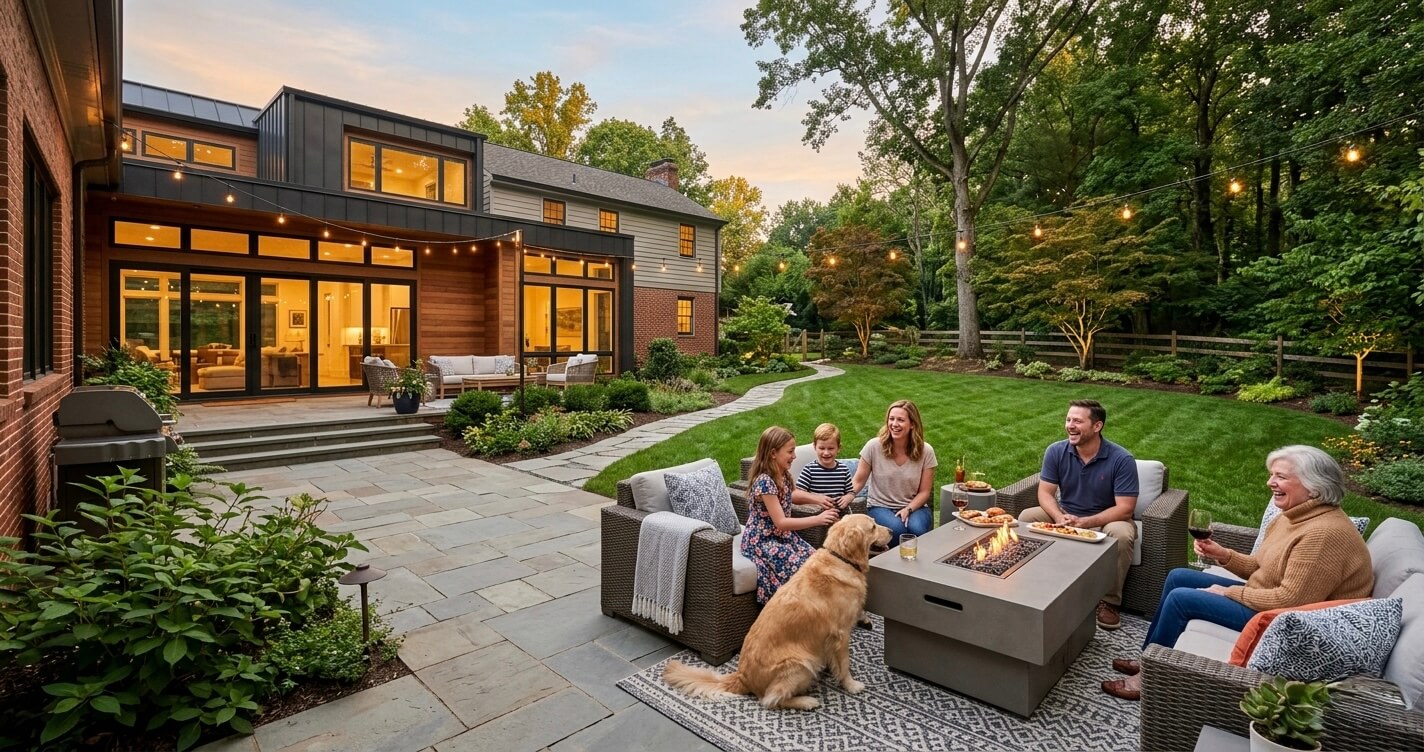
For Northern Virginia homeowners dealing with modest lot sizes, setback restrictions, HOA requirements, or rising housing costs, vertical and internal expansion strategies often provide significantly greater value than traditional footprint-expanding additions. Second-story additions, attic conversions, finished basements, garage conversions, and above-garage suites can all create meaningful living space while preserving valuable yard area.
The key is understanding that successful additions are driven by design strategy rather than square footage alone. Structural feasibility, zoning regulations, property constraints, family needs, and long-term goals must all be considered before selecting a direction.
Ultimately, finding the right home addition design ideas for your specific home starts with an honest conversation about what is structurally possible, what zoning allows, and what your family actually needs.
Planning a home addition in Northern Virginia? Contact US Home Design Build to discuss your goals, budget, and timeline with our team. We proudly serve homeowners throughout McLean, Fairfax, Vienna, Arlington, Great Falls, Burke, Clifton, and surrounding communities.