
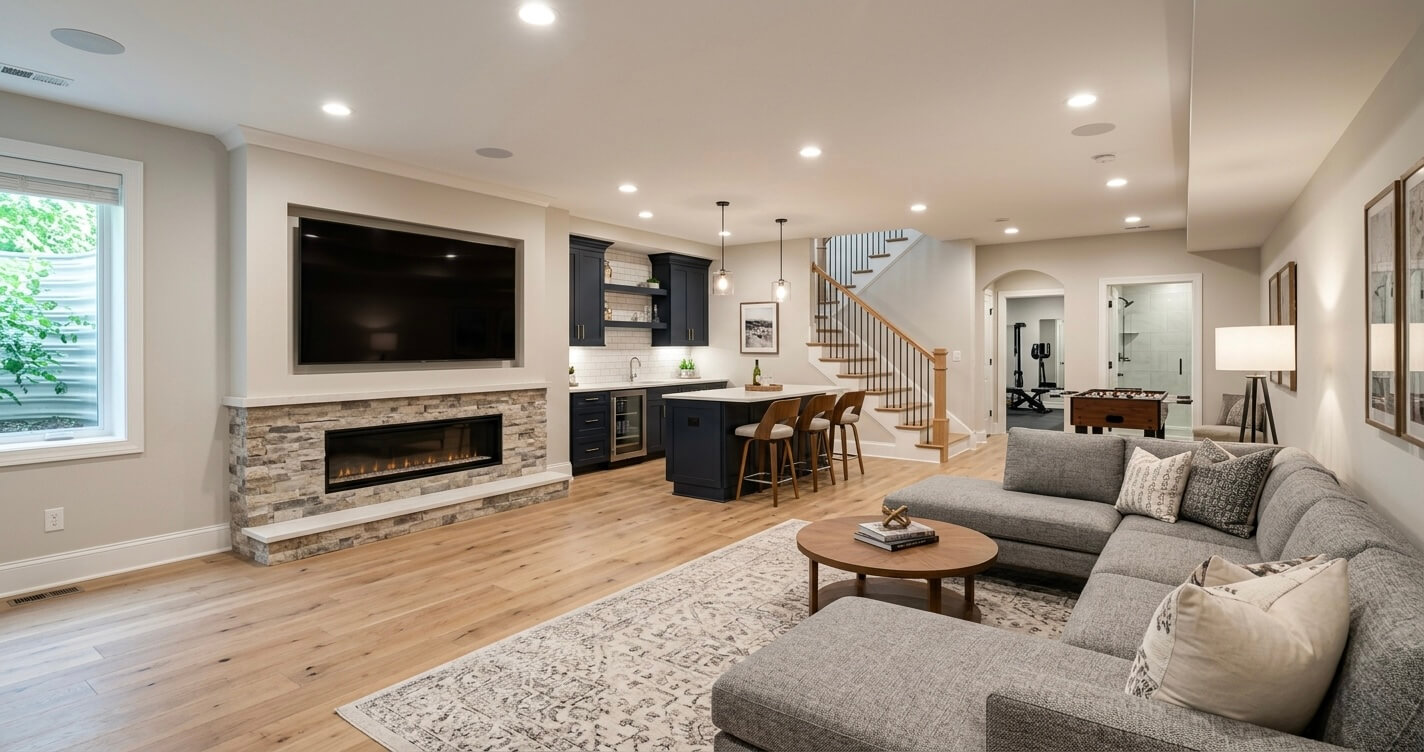
A Fairfax County homeowner sets aside $40,000 to finish an unfinished basement. The plan seems straightforward: add a recreation room, a small office, and a bathroom, then wrap up construction in six weeks. Three months later, the project is over budget, inspections reveal unpermitted work, and portions of the newly finished space must be opened back up to satisfy code requirements.
Scenarios like this help explain why basement finishing mistakes Northern Virginia homeowners make can become surprisingly expensive. Unlike many parts of the country, Northern Virginia presents a unique combination of aging housing stock, moisture-prone foundation systems, strict permitting requirements, and evolving building code standards that directly affect basement projects.
Homes built throughout Arlington, Annandale, Burke, and Fairfax during the 1960s through 1980s often contain foundation conditions, drainage patterns, and mechanical layouts that require careful evaluation before any framing or drywall work begins. A basement that appears ready for finishing may still have hidden moisture issues, ventilation challenges, or code compliance concerns waiting behind the walls.
This guide covers seven of the most common planning mistakes homeowners make before starting a basement finishing project and explains how to avoid costly delays, budget overruns, and future resale complications. Drawing on practical remodeling experience throughout Northern Virginia, these insights can help homeowners make more informed decisions before construction begins.
Mistake #1: Skipping the Moisture Assessment Before Doing Anything Else
Before discussing layouts, flooring, or finishes, homeowners should determine whether the basement environment is actually ready to be finished.
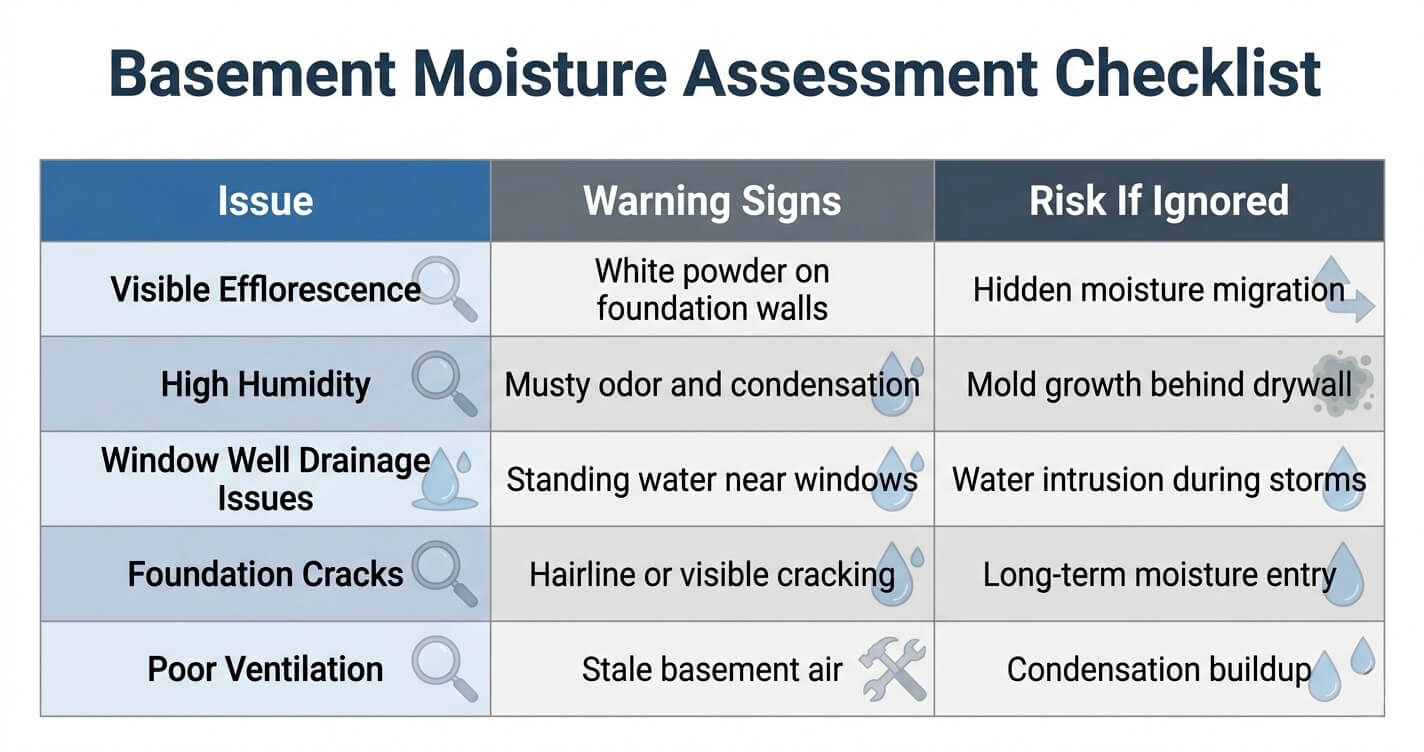
Northern Virginia’s clay-heavy soils and humid seasonal climate create conditions where moisture can migrate through foundation walls even when no visible water is present. According to the U.S. Environmental Protection Agency’s Mold and Moisture Guidance, moisture problems should be identified and corrected before installing drywall, insulation, flooring, or other finish materials because mold can begin growing on damp surfaces under the right conditions.
Many homeowners walk into a basement, see dry concrete floors, and assume the space is suitable for construction. Unfortunately, moisture-related problems often develop behind future walls rather than out in the open.
This is particularly common in older homes throughout Annandale, Burke, and Fairfax Station where block foundation walls were frequently used. Concrete masonry units can allow water vapor to migrate through wall assemblies over time, creating elevated humidity levels inside finished wall cavities.
A proper moisture assessment should include:
- Visual inspection of foundation walls and floor slabs
- Relative humidity testing
- Evaluation of exterior drainage and grading conditions
- Inspection of window wells
- Identification of efflorescence (mineral deposits left behind by moisture movement)
- Assessment of ventilation and air circulation patterns
Homeowners should also understand the difference between condensation and active water intrusion. Condensation occurs when humid indoor air contacts cool basement surfaces. Active water intrusion originates from water movement through the building envelope. The corrective measures for these issues are completely different, making accurate diagnosis essential before construction begins.
What Happens When Homeowners Frame Over a Wet Basement
One of the most expensive mistakes occurs when moisture issues are concealed behind insulation and drywall.
Consider a realistic scenario: a homeowner finishes a basement during winter because everything appears dry. Six months later, summer humidity combines with hidden moisture migration behind the walls. Mold begins developing inside insulation cavities, drywall starts showing staining, and portions of the finished basement require demolition to correct the problem.
Addressing moisture concerns before framing may involve relatively minor drainage improvements, dehumidification strategies, or waterproofing measures. Discovering mold after completion can require removal of drywall, insulation, trim, flooring, and sections of the framing system.
From a risk-management perspective, moisture testing is often one of the most cost-effective investments homeowners can make before beginning a basement finishing project.
Mistake #2: Assuming a Permit Isn’t Needed
One of the most serious basement finishing mistakes Northern Virginia homeowners make is assuming permits only matter for major additions.
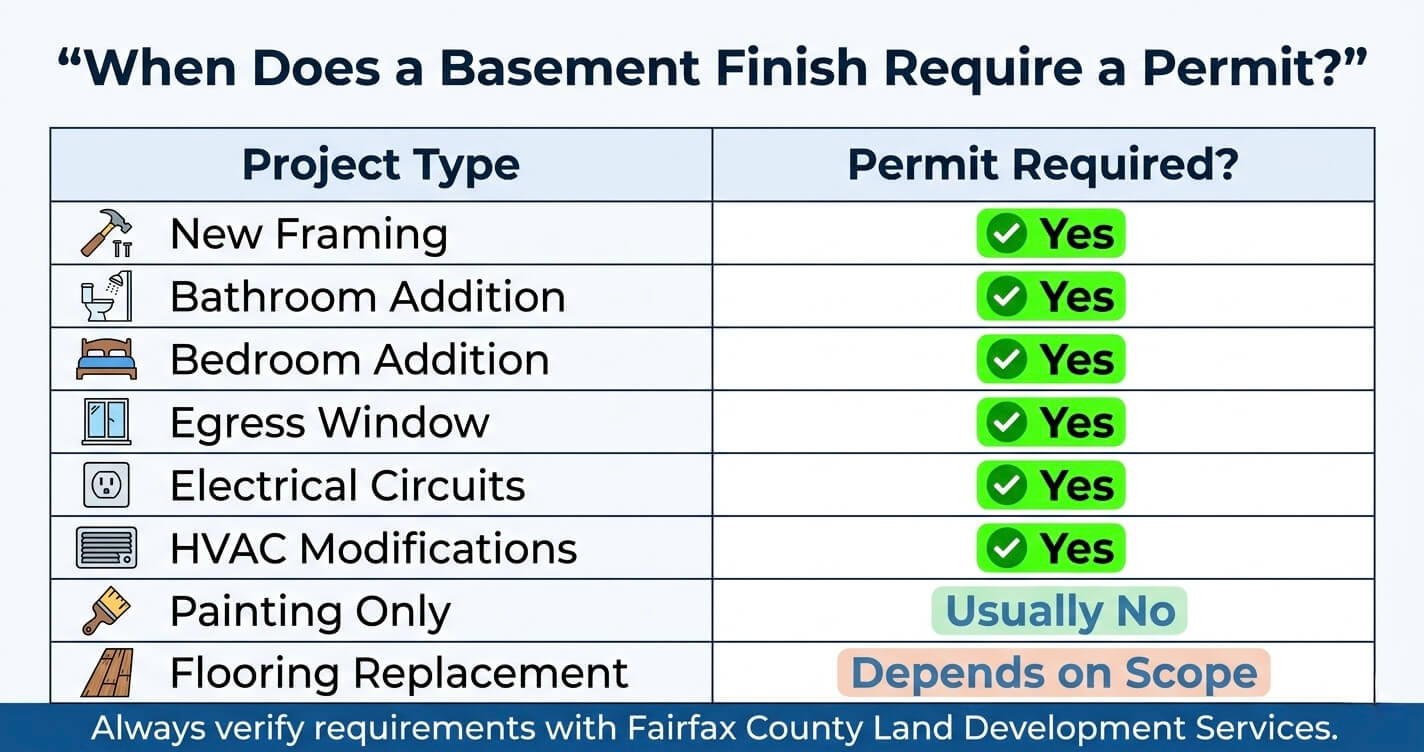
In Fairfax County and throughout Northern Virginia, basement finishing projects generally require permits whenever work involves framing, electrical systems, plumbing systems, HVAC modifications, or changes to habitable living space. Permit requirements are administered through Fairfax County Land Development Services.
Common permit-triggering improvements include:
- Basement bathrooms
- Basement bedrooms
- Egress window installation
- Wet bars
- New electrical circuits
- Electrical panel upgrades
- HVAC modifications
- Interior wall framing
During the review process, plans are evaluated for compliance with the Virginia Uniform Statewide Building Code, which governs structural, electrical, plumbing, mechanical, fire safety, and life-safety requirements throughout the Commonwealth.
For basement bedrooms specifically, homeowners should understand that emergency escape and rescue openings must comply with applicable code requirements. The International Code Council (ICC) provides guidance regarding residential egress requirements.
While some contractors may offer to “save money” by avoiding permits, this should be viewed as a significant red flag. Reputable contractors understand that permits protect both homeowners and future buyers by ensuring that work is properly reviewed and inspected.
What an Unpermitted Basement Finish Can Cost You at Resale
The consequences of unpermitted work often surface years after construction is complete.
Home inspectors frequently identify finished basement modifications during resale transactions. If permits cannot be documented, buyers may request additional inspections, demand repair credits, or require verification that concealed work meets current standards.
Potential consequences include:
- Delayed home sales
- Reduced buyer confidence
- Mandatory corrective work
- Additional inspections
- Insurance complications following property damage claims
In some situations, local jurisdictions may require portions of finished construction to be opened so inspectors can evaluate concealed electrical, plumbing, or framing work.
Homeowners planning a basement project should also understand that permit requirements apply regardless of whether the space is intended as a recreation room, guest suite, home office, or walkout basement conversion. For additional project-planning considerations, see USHDB’s Walkout Basement Guide (INSERT WALKOUT BASEMENT URL HERE).
Mistake #3: Underestimating the True Cost of a Quality Basement Finish
Budget assumptions are often based on national remodeling articles or online calculators. Unfortunately, these tools rarely reflect actual construction conditions in Northern Virginia.
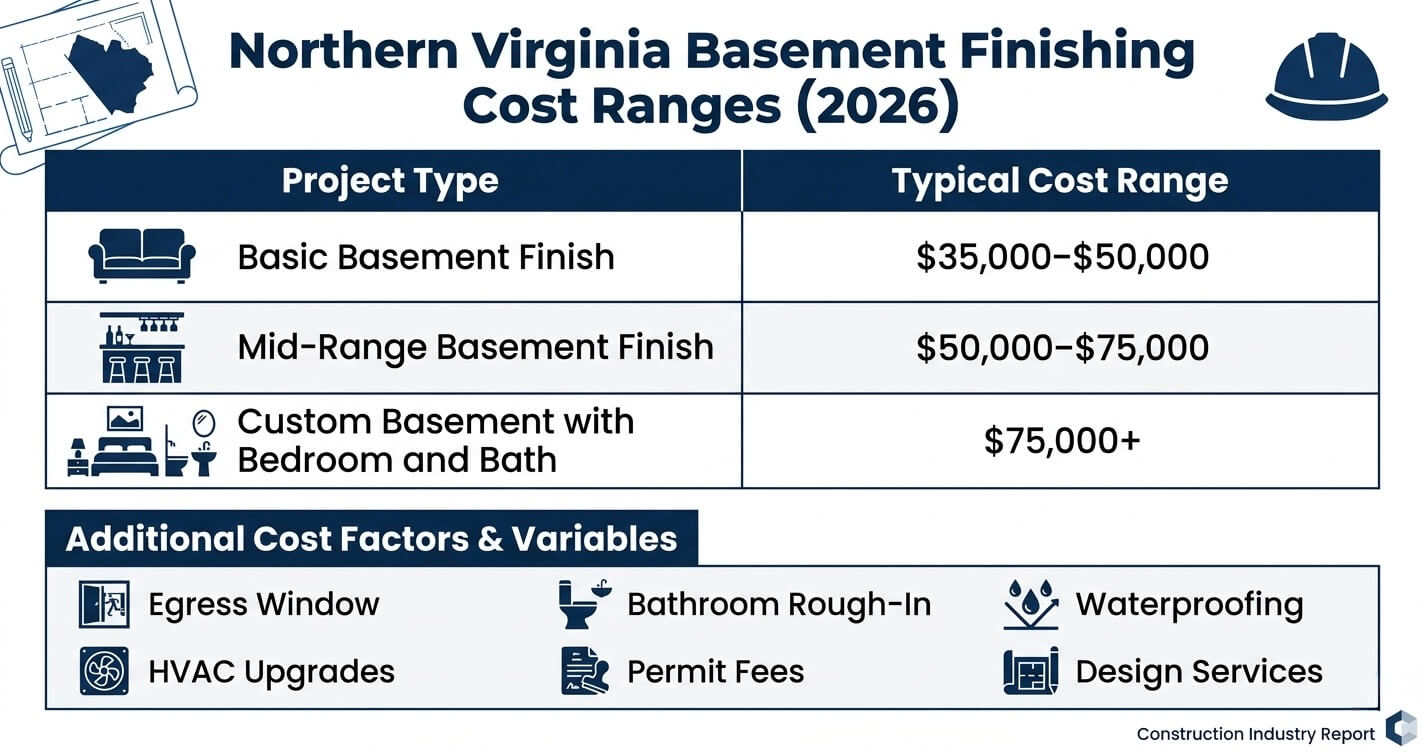
Depending on project size, layout complexity, mechanical requirements, and finish selections, many basement finishing projects fall into ranges such as:
- Entry-level finish: approximately $35,000–$50,000
- Mid-range finish with multiple rooms and bathroom: approximately $50,000–$75,000
- Custom basement with premium finishes, bedroom, bathroom, wet bar, or entertainment space: $75,000+
These figures vary significantly based on existing site conditions and project scope.
Homeowners frequently underestimate costs associated with code compliance upgrades, moisture mitigation, and specialty features. Basement bedrooms requiring code-compliant egress windows can substantially increase project costs depending on excavation requirements and foundation conditions.
The Budget Items Most Homeowners Forget to Include
Underbudgeting consistently ranks among the most financially damaging basement finishing mistakes Northern Virginia families encounter.
Some of the most commonly overlooked cost categories include:
- Egress window installation
- Bathroom rough-ins
- HVAC zoning upgrades
- Waterproofing improvements
- Permit fees
- Architectural design services
- Electrical panel upgrades
- Utility room separation requirements
- Insulation and energy-code compliance upgrades
Another common mistake is confusing a contractor proposal with a complete project budget. Construction pricing often excludes furniture, technology systems, specialty finishes, contingency allowances, and homeowner-requested changes that occur after work begins.
This is one reason many homeowners choose a design-build approach. USHDB’s Basement Finishing Services help homeowners evaluate design feasibility, budgeting requirements, permitting needs, and construction considerations before work begins. By addressing scope, design, feasibility, permitting requirements, and budgeting simultaneously, potential conflicts can often be identified before construction starts.
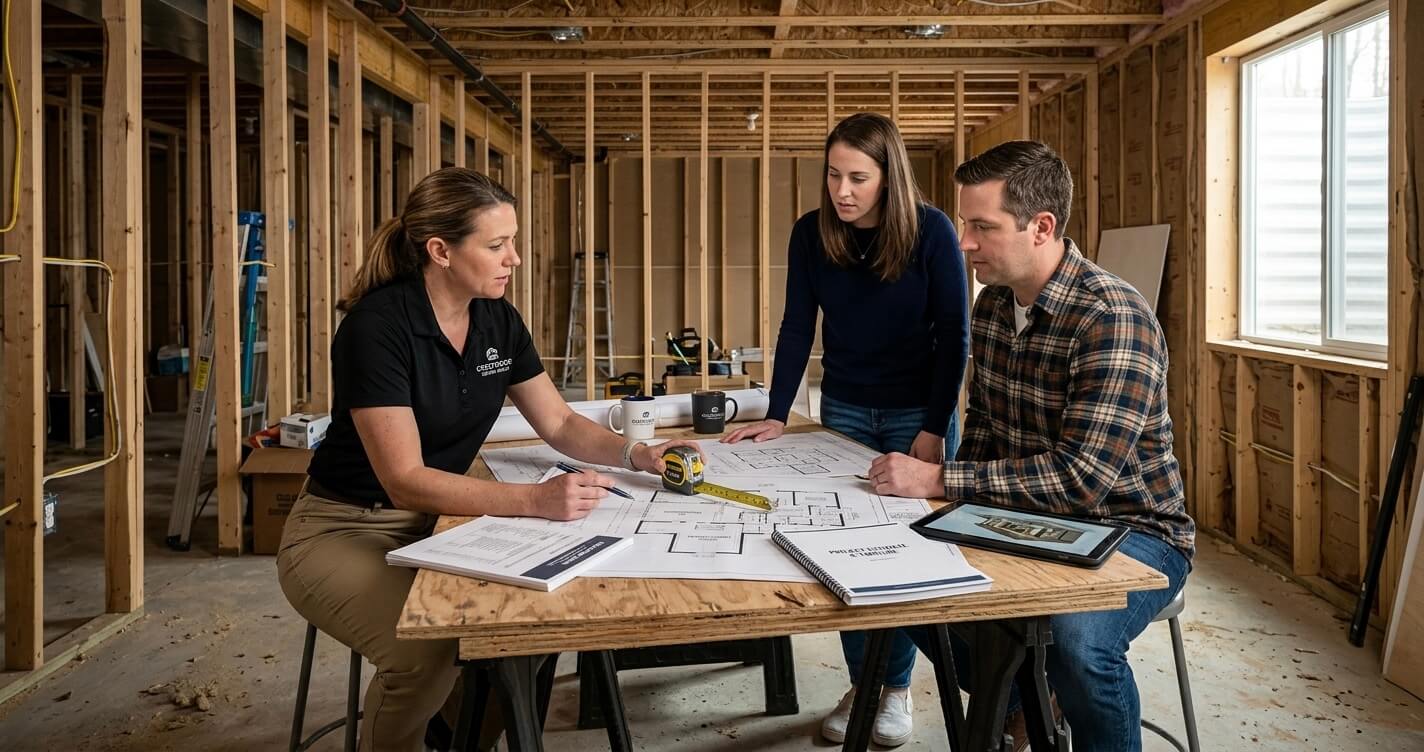
For homeowners comparing options, US Home Design Build’s Basement Finishing Services and broader Home Remodeling Services provide additional information about planning and budgeting considerations for Northern Virginia renovation projects.
Homeowners considering a basement finishing project in Northern Virginia may benefit from working through scope and budget with an experienced design-build contractor before committing to a specific layout or timeline. Early planning often helps identify permitting requirements, moisture concerns, mechanical upgrades, and hidden cost drivers before they become expensive surprises during construction.
Mistake #4: Planning the Layout Without Accounting for Ceiling Height and Mechanicals
Many homeowners begin planning a basement around furniture layouts, entertainment areas, or inspiration photos they’ve seen online. The problem is that basement design is often dictated by physical constraints rather than wish lists.
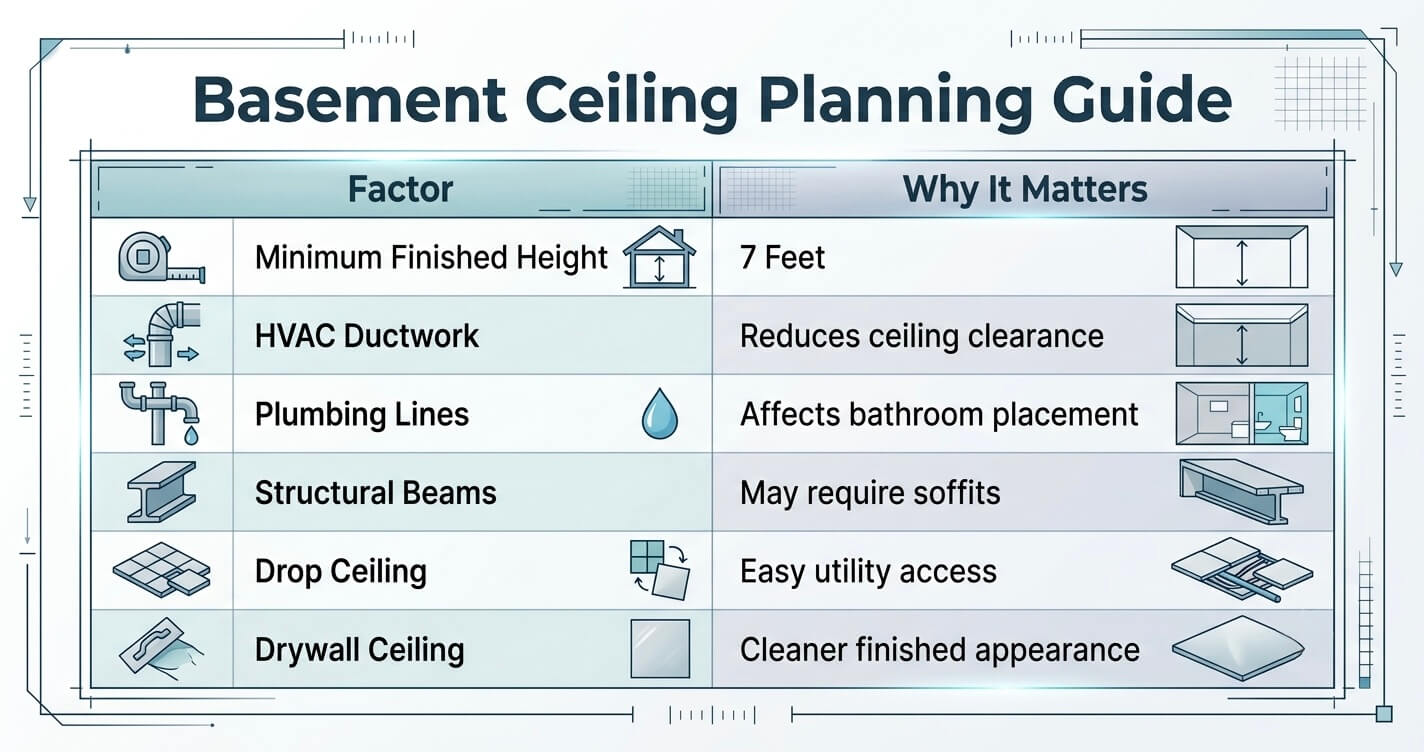
The Virginia Residential Code, based on the International Residential Code, generally requires habitable rooms to have a minimum finished ceiling height of 7 feet. While that may sound achievable, many older Northern Virginia homes start with only 7’2” to 7’4” of clearance before framing, drywall, flooring, and ceiling finishes are installed.
This challenge is particularly common in older Fairfax and Arlington neighborhoods where homes built during the 1960s and 1970s often feature lower basement ceiling heights than newer construction. By comparison, many homes in McLean, Vienna, and Great Falls were built with taller walk-up basements that provide greater design flexibility.
Working around Ductwork, Pipes, and Beams without Ruining the Design
Mechanical systems frequently determine what is realistically possible in a basement layout. Ductwork, plumbing drain lines, water supply lines, support beams, and HVAC trunks often occupy valuable ceiling space.
Before finalizing a floor plan, homeowners should evaluate whether soffits, drop ceilings, or drywall ceilings make the most sense. Drop ceilings can provide future access to utilities, while drywall ceilings often create a cleaner appearance. Soffits are commonly used to conceal isolated mechanical runs while preserving ceiling height elsewhere.
Common planning mistakes include placing a bedroom beneath a low-hanging duct chase or designing a bathroom far from existing plumbing rough-ins. Addressing these constraints during the design phase helps avoid expensive revisions after construction begins. Working with a Design-Build Contractor early in the planning process often helps identify layout limitations before construction documents are finalized.
Mistake #5: Choosing the Wrong Flooring for a Below-Grade Space
Flooring decisions have a major impact on both the appearance and long-term durability of a finished basement. Yet flooring-related problems remain one of the most frequently overlooked categories of basement finishing mistakes Northern Virginia homeowners make.
Unlike above-grade living spaces, basements are built directly over concrete slabs that are naturally affected by ground moisture and seasonal temperature fluctuations. Even when a basement appears dry, concrete can continue releasing moisture vapor over time.
Because of this, solid hardwood flooring is generally not recommended for below-grade applications. Changes in humidity can cause hardwood to expand, contract, cup, warp, or develop gaps. Northern Virginia’s climate compounds this challenge, with humid summers followed by cold winter conditions placing additional stress on flooring materials.
The National Wood Flooring Association notes that moisture management is critical for wood flooring performance and that below-grade environments require special consideration.
The Best Flooring Options for Finished Basements in This Climate
Several flooring materials perform significantly better in below-grade conditions.
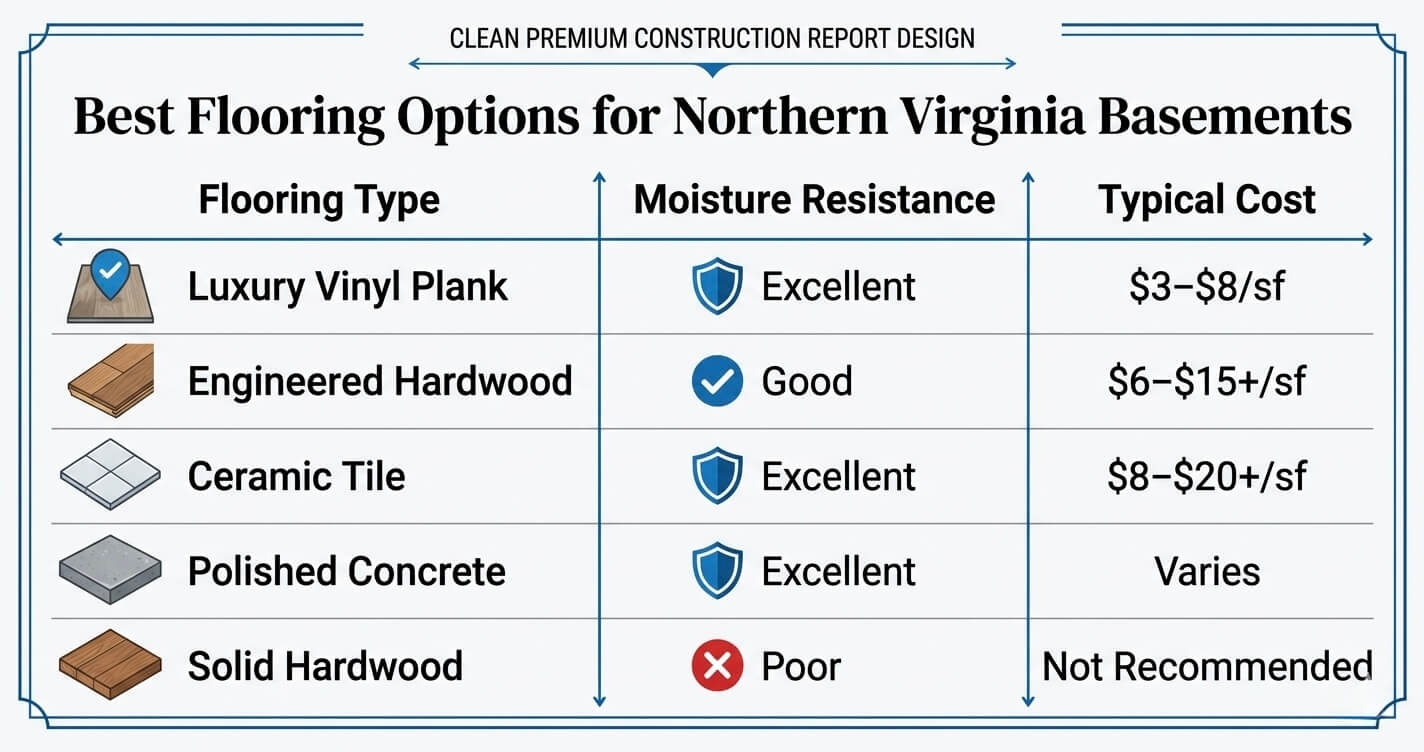
Popular choices include:
- Luxury Vinyl Plank (LVP): Typically $3–$8 per square foot installed, durable and highly moisture resistant.
- Engineered Hardwood: Generally $6–$15+ per square foot installed, offers the appearance of hardwood with improved dimensional stability.
- Ceramic or Porcelain Tile: Often $8–$20+ per square foot installed, highly resistant to moisture and long-lasting.
- Polished Concrete: Costs vary but can provide a modern, low-maintenance solution with excellent durability.
Regardless of material selection, proper vapor barriers and underlayment systems are essential. The U.S. Department of Energy’s Building America Program emphasizes moisture control and proper subfloor preparation for below-grade spaces.
Homeowners should also consider maintenance requirements. Tile and polished concrete offer excellent durability, while engineered hardwood may require greater attention to humidity management. LVP remains one of the most popular choices because it balances appearance, performance, maintenance, and affordability.
Mistake #6: Ignoring Egress Requirements for Sleeping Rooms
Many homeowners assume that adding a closet automatically transforms a basement room into a bedroom. In reality, code compliance is far more important than furniture placement or room labeling.
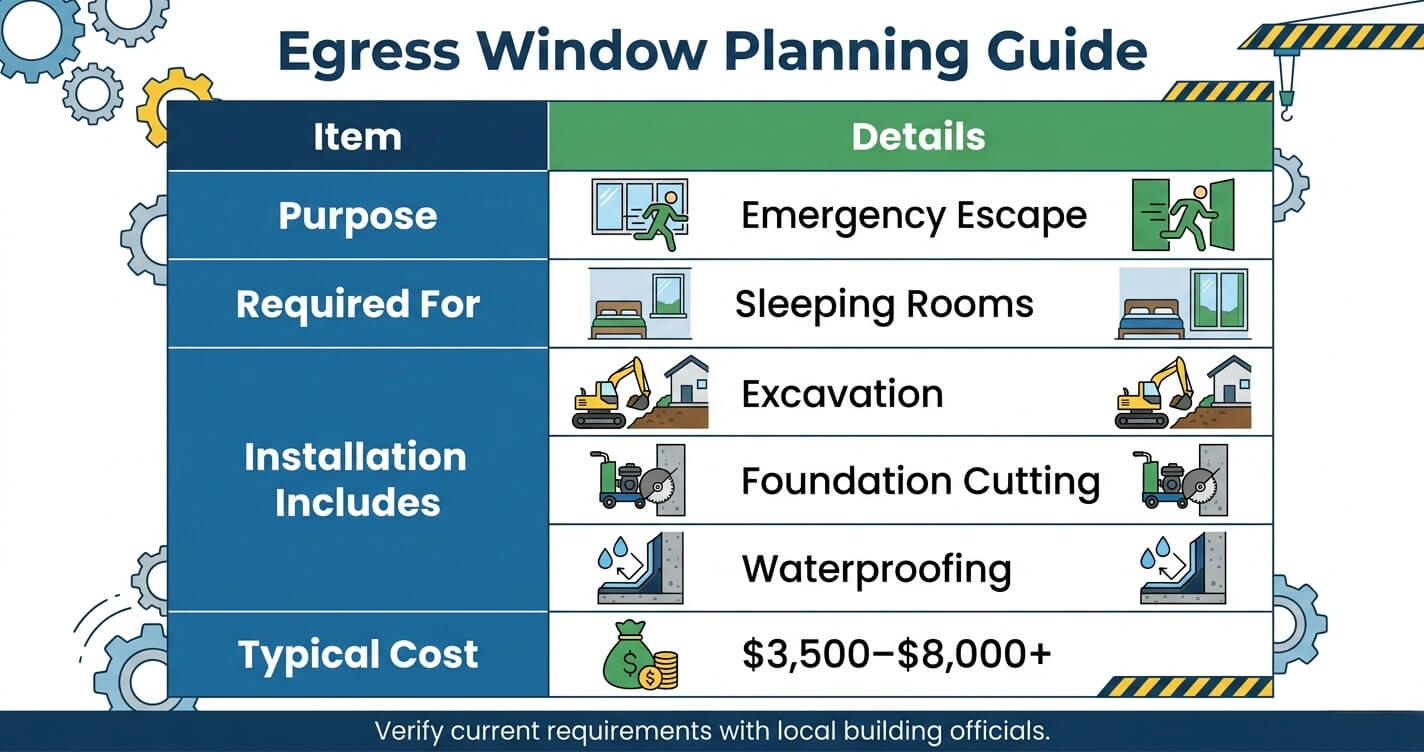
The Virginia Residential Code requires sleeping rooms to include a code-compliant emergency escape and rescue opening, commonly referred to as an egress window. Requirements are based on standards established through the International Residential Code (IRC) and the International Code Council (ICC).
Although homeowners should always verify current local requirements, egress openings generally must meet minimum standards for opening area, opening height, opening width, and sill height to provide occupants with a safe emergency exit route.
Egress compliance is one of those basement finishing mistakes Northern Virginia homeowners often don’t discover until the project is nearly complete.
Why an Egress Window Changes Your Budget and Timeline
Installing an egress window is far more involved than replacing a standard basement window.
A typical installation may require:
- Excavation outside the foundation
- Cutting through the concrete or masonry foundation wall
- Waterproofing the opening
- Constructing a code-compliant window well
- Installing drainage components
- Completing inspections and approvals
Depending on foundation depth, site accessibility, soil conditions, and drainage requirements, Northern Virginia homeowners often spend approximately $3,500–$8,000+ for a professionally installed egress window.
The stakes are significant. A basement room finished without a compliant egress opening cannot legally be marketed as a bedroom during a real estate transaction and may fail inspection during permitting or resale evaluations.
Fairfax County inspectors routinely review emergency escape requirements during basement finishing inspections through Fairfax County Land Development Services. As a result, homeowners should incorporate egress planning into the initial design rather than treating it as a last-minute addition.
Designing for egress from the beginning typically reduces costs, minimizes delays, and helps ensure that future bedrooms meet both safety and resale requirements. Homeowners should also familiarize themselves with local permitting requirements outlined in our Basement Finishing Permit Fairfax County VA Guide before creating bedroom layouts.
Mistake #7: Hiring Based on Price Alone Without Vetting the Contractor
When homeowners gather estimates for a basement finishing project, it’s natural to compare prices. The mistake is assuming the lowest bid automatically represents the best value.
In reality, contractor selection errors round out the most consequential basement finishing mistakes Northern Virginia homeowners make during the planning phase. A significantly lower proposal often means something has been omitted from the scope, whether that’s permit costs, design services, project management, quality materials, or code-compliant installation practices.
The real cost of hiring an unqualified contractor frequently appears later in the form of failed inspections, permit violations, schedule delays, abandoned projects, or expensive rework.
Before signing any agreement, homeowners should verify contractor licensing through the Virginia Department of Professional and Occupational Regulation (DPOR). Basement finishing projects involving structural work, electrical systems, plumbing systems, or mechanical modifications generally require a properly licensed contractor under Virginia’s contractor licensing regulations.
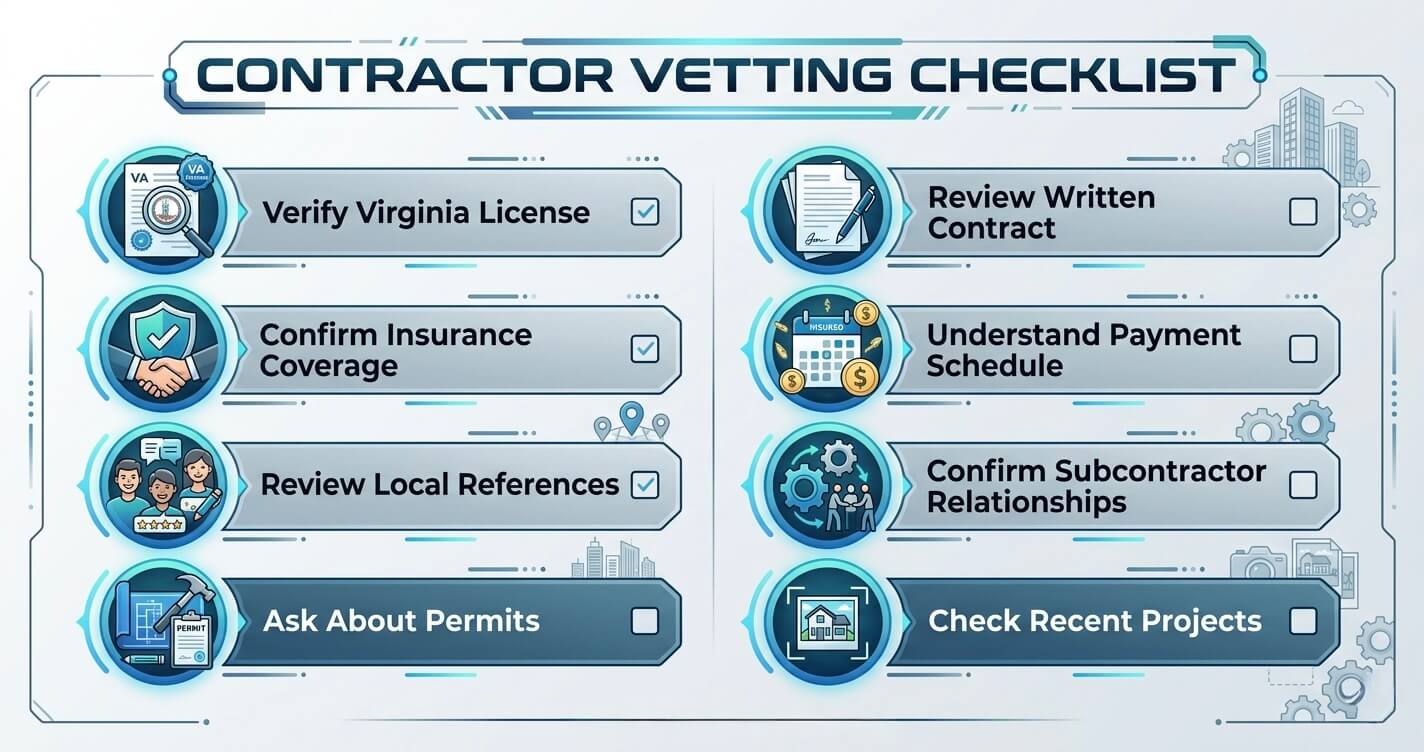
Every homeowner should ask:
- What is your Virginia contractor license number?
- Can you provide proof of liability insurance and workers’ compensation coverage?
- Who pulls permits for your projects?
- Do you regularly work with the same subcontractors?
- Can you provide recent local references from Northern Virginia homeowners?
These questions often reveal more about a contractor’s professionalism than the price itself.
Red Flags That Should Stop a Homeowner Before Signing Anything
Several warning signs should immediately raise concerns.
Common red flags include:
- No written contract
- Refusal to pull permits
- Requests for unusually large upfront payments
- Pressure to begin work before paperwork is finalized
- No verifiable local references
- No proof of insurance
- Vague project scope descriptions
Homeowners should also understand the difference between a traditional contractor and a design-build firm. A design-build approach integrates design, budgeting, permitting, and construction under one team, creating a single point of accountability throughout the project. This often reduces communication gaps and helps identify potential issues before construction begins.
For additional guidance, homeowners can review How to Choose a Home Remodeling Contractor in Northern Virginia for a more detailed contractor evaluation framework.
Bonus: What to Do Before You Call a Contractor
A productive contractor consultation begins long before the first meeting.
Homeowners can significantly improve project planning by gathering a few key details in advance.
Before reaching out to contractors:
- Measure or estimate your basement square footage.
- Identify approximate ceiling heights and any visible obstructions.
- Determine how the space will be used: bedroom, home office, gym, media room, recreation area, bathroom, or guest suite.
- Document any moisture concerns, water intrusion history, staining, or humidity issues.
- Establish a realistic budget range rather than focusing on a single number. Reviewing a detailed Basement Finishing Cost Guide for Northern Virginia Homeowners can also help establish realistic budgeting expectations before meeting with contractors.
- Review permit requirements through your local jurisdiction, such as Fairfax County Land Development Services or Arlington County Inspection Services.
- Confirm whether your homeowners association has renovation guidelines or approval requirements.
These steps help contractors provide more accurate guidance and reduce the likelihood of surprises during design and budgeting discussions.
Frequently Asked Questions
Do I need a permit to finish my basement in Fairfax County, Virginia?
In most cases, yes. Basement finishing projects that involve framing walls, electrical work, plumbing installations, HVAC modifications, bathrooms, bedrooms, or egress windows generally require permits through Fairfax County Land Development Services. Completing work without permits can create issues during inspections, insurance claims, and future home sales.
How much does basement finishing cost in Northern Virginia in 2026?
Most professionally completed basement projects in Northern Virginia fall within a broad range of approximately $35,000–$75,000+, depending on square footage, finishes, bathrooms, bedrooms, wet bars, mechanical upgrades, and site conditions. National cost calculators frequently underestimate local pricing because they don’t account for Northern Virginia labor rates, permitting requirements, and construction standards.
Homeowners looking for a more detailed breakdown can review our Basement Finishing Cost Burke VA: 2026 Pricing Guide.
How long does a basement finishing project take in Northern Virginia?
Construction itself often takes between 6 and 12 weeks for a typical basement finishing project. However, permit review and approval timelines can add an additional 2–4 weeks before construction begins, depending on project complexity and jurisdiction requirements.
What is an egress window and do I need one for my basement?
An egress window is a code-compliant emergency escape and rescue opening required for sleeping rooms under the Virginia Uniform Statewide Building Code. If a basement room functions as a bedroom or guest sleeping space, an egress window is typically required. Installation costs in Northern Virginia commonly range from approximately $3,500–$8,000+, depending on excavation requirements and foundation conditions.
What flooring is best for a basement in Northern Virginia?
Luxury Vinyl Plank (LVP) and engineered hardwood are among the most popular choices because they perform well under Northern Virginia’s seasonal humidity fluctuations. Ceramic tile and polished concrete are also strong options. Solid hardwood is generally not recommended below grade because moisture and humidity changes can cause warping, cupping, and expansion. Proper vapor barriers and underlayments remain essential regardless of flooring type.
Can I finish my basement if I have moisture issues?
Moisture problems should always be addressed before finishing begins. The U.S. Environmental Protection Agency’s Mold Guidance recommends correcting moisture sources before installing drywall, insulation, or flooring. Finishing over an active moisture problem can lead to mold growth, damaged materials, poor indoor air quality, and costly remediation work later.
How do I find a reliable basement finishing contractor in Northern Virginia?
Start by verifying licensing through the Virginia Department of Professional and Occupational Regulation (DPOR). Request proof of insurance, ask for recent local references, review permit history, and insist on a detailed written contract. Many homeowners also prefer working with a design-build firm because design, budgeting, permitting, and construction are managed under one accountable team rather than multiple disconnected parties.
CRUX OF THE MATTER
Avoiding the most common basement finishing mistakes Northern Virginia homeowners face comes down to three things: planning early, understanding local code requirements, and choosing the right contractor.
As we’ve covered, successful basement projects begin with moisture evaluation, realistic budgeting, proper permitting, thoughtful layout planning, suitable flooring selection, code-compliant egress design, and careful contractor vetting. Overlooking any one of these areas can lead to delays, unexpected costs, inspection failures, or long-term performance issues.
When approached strategically, basement finishing remains one of the most practical ways to add usable living space and improve a home’s functionality without the expense of a major addition. Whether the goal is creating a home office, guest suite, media room, gym, or multigenerational living area, proper planning significantly increases the likelihood of a successful outcome.
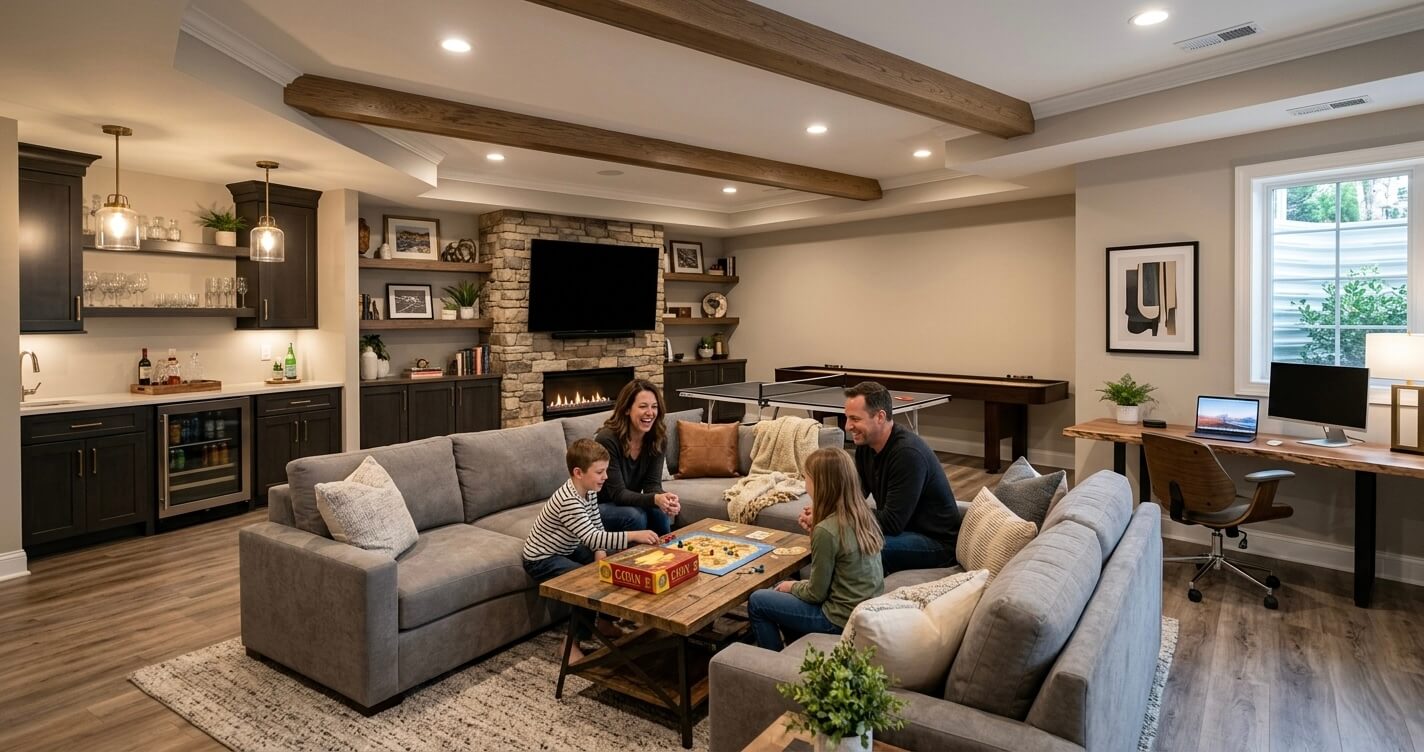
Planning a basement finishing project in Northern Virginia?
Contact US Home Design Build to discuss your goals, budget, and timeline with our team. We serve homeowners throughout Fairfax County, McLean, Vienna, Arlington, Burke, Annandale, Great Falls, Reston, and the surrounding Northern Virginia area.
You can also explore our Basement Finishing Services, Home Remodeling Services, Basement Finishing Permit Fairfax County VA Guide, and Basement Finishing Cost Burke VA: 2026 Pricing Guide for additional planning guidance and project insights.
