
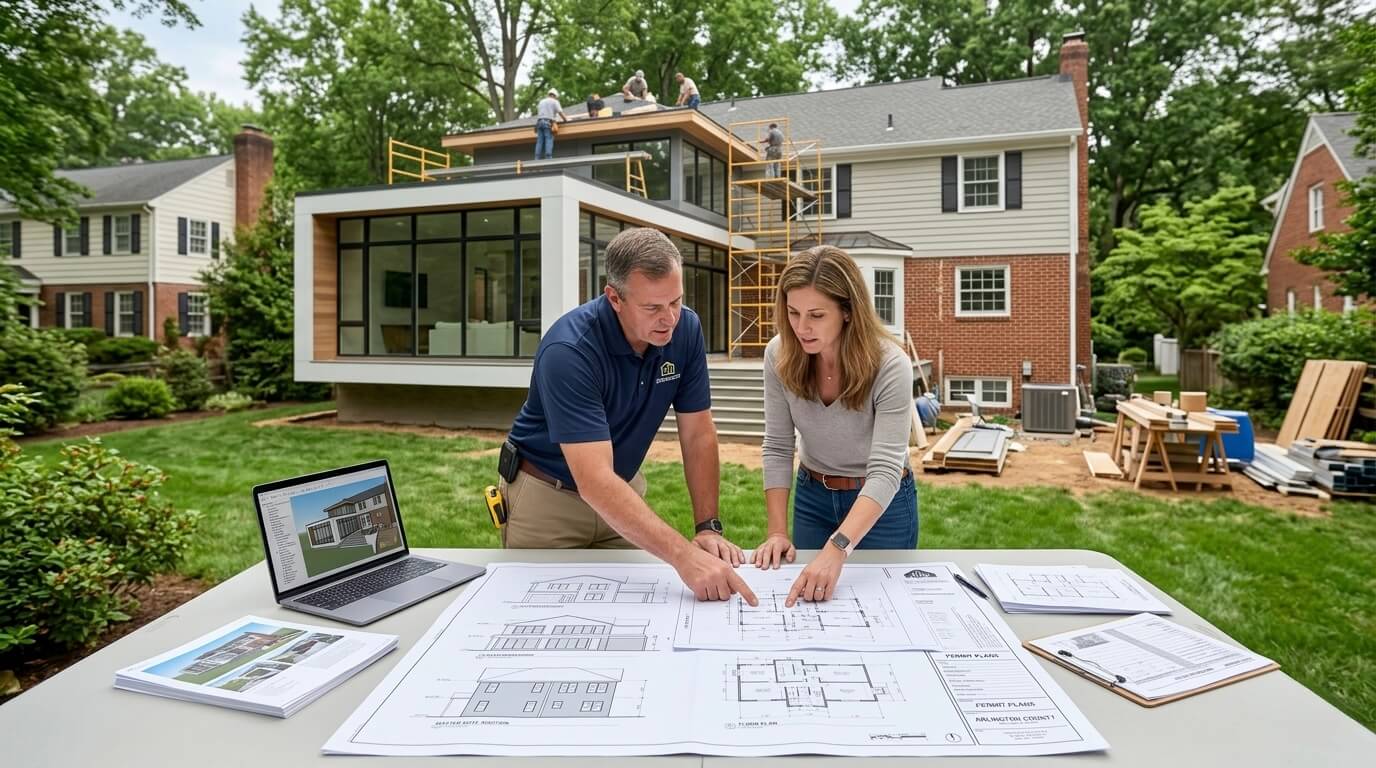
As housing prices continue to rise across Northern Virginia, many homeowners are choosing to improve their existing homes rather than enter a competitive real estate market. This trend has contributed to growing demand for master suite additions throughout Arlington, where many homes were originally built decades ago and often lack the spacious primary bedrooms, walk-in closets, and luxury bathrooms that modern homeowners expect.
According to the National Association of Home Builders (NAHB), homeowners continue investing in additions and renovations that improve functionality and long-term livability rather than relocating.
Many Arlington neighborhoods, including Ballston, Clarendon, Rosslyn, and Crystal City, contain mature housing stock where expanding the primary suite can significantly improve daily comfort without sacrificing location advantages such as school districts, commuting access, and established communities.
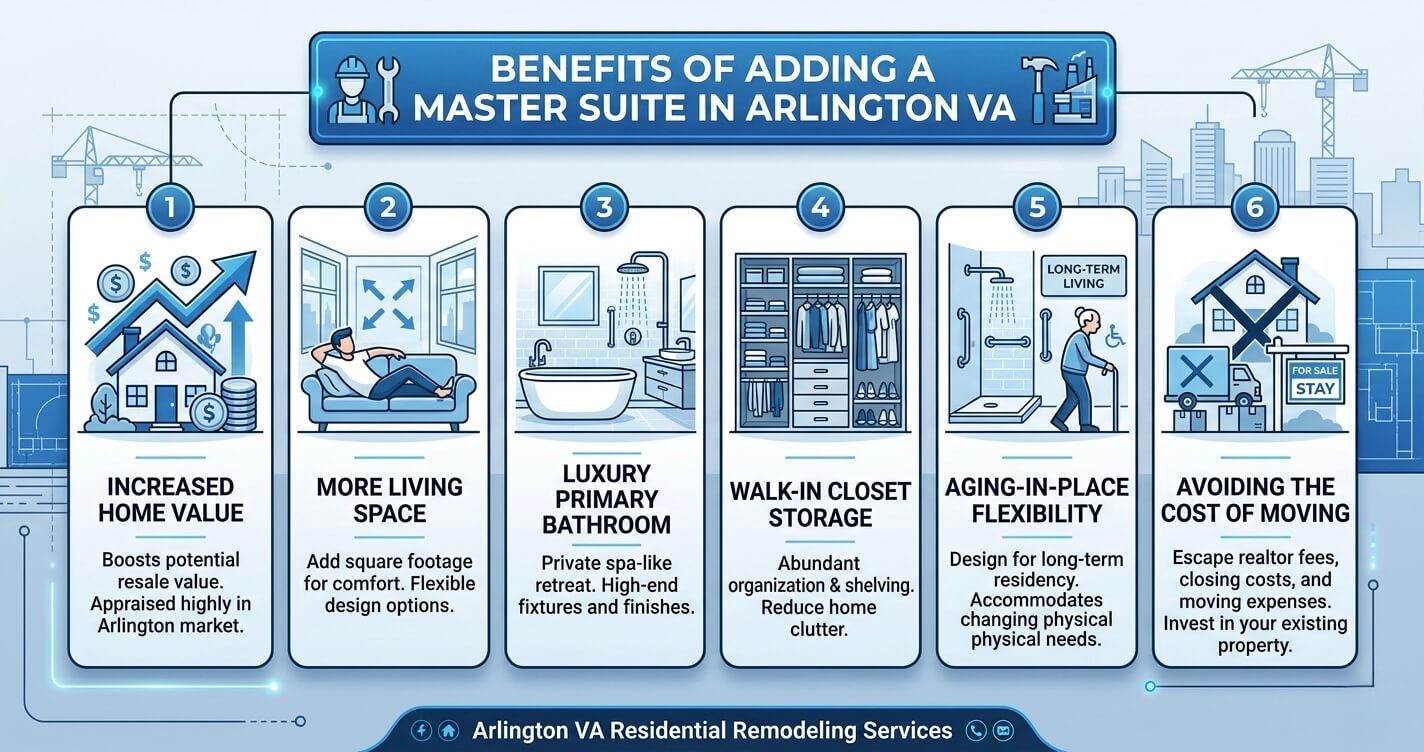
A master suite addition can provide several benefits:
- Increased bedroom and closet space
- Dedicated primary bathroom facilities
- Improved home functionality
- Enhanced privacy from secondary bedrooms
- Greater appeal to future buyers
- Potential long-term property value improvements
For many homeowners, expanding an existing home is often more practical than moving, especially when mortgage rates, transaction costs, and inventory limitations are considered.
The demand for larger, more personalized living spaces also aligns with broader residential design preferences highlighted in recent Top Remodeling Trends in Northern Virginia.
Before construction begins, however, understanding the permit process is essential. Many homeowners underestimate how closely Arlington County reviews structural additions, which is why permit planning should begin during the earliest design stages.
MASTER SUITE ADDITION PERMIT ARLINGTON COUNTY VA: WHAT PROJECTS REQUIRE APPROVAL?
One of the most common misconceptions homeowners have is assuming a bedroom addition automatically qualifies as a simple remodeling project. In reality, most projects associated with a master suite addition permit Arlington County VA involve structural modifications that require formal review, permitting, inspections, and code compliance verification.
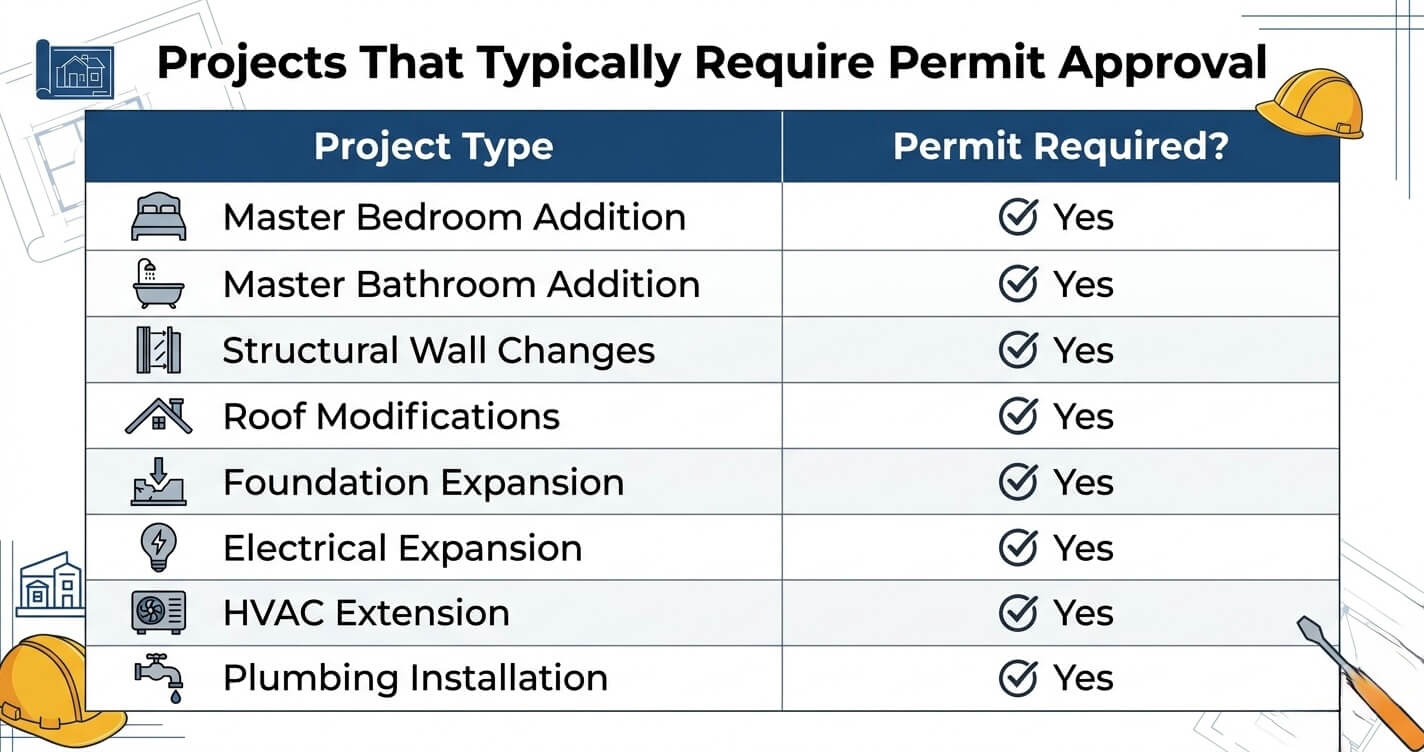
According to Arlington County’s Building Program, residential additions generally require permit approval whenever construction alters structural systems, increases conditioned living space, modifies foundations, changes roof structures, or impacts electrical, plumbing, or mechanical systems. Source:
Typical projects that require permits include:
In most cases, permit requirements extend beyond the building permit itself. Depending on the scope of work, homeowners may also require separate electrical, plumbing, mechanical, or trade permits.
Projects that affect lot coverage, setbacks, building height, or zoning compliance may undergo additional review before approval is granted.
Understanding these requirements early helps homeowners avoid expensive redesigns later. It also allows architects, engineers, and contractors to develop plans that align with Arlington County’s review standards from the outset.
For homeowners planning a master suite addition, obtaining the proper approvals is not simply a regulatory requirement; it is a critical step in ensuring safety, code compliance, future resale value, and long-term project success.
UNDERSTANDING ARLINGTON COUNTY’S PERMIT REVIEW PROCESS
The Arlington County permit process is designed to verify that residential additions meet zoning regulations, building codes, structural standards, safety requirements, and construction best practices before work begins.
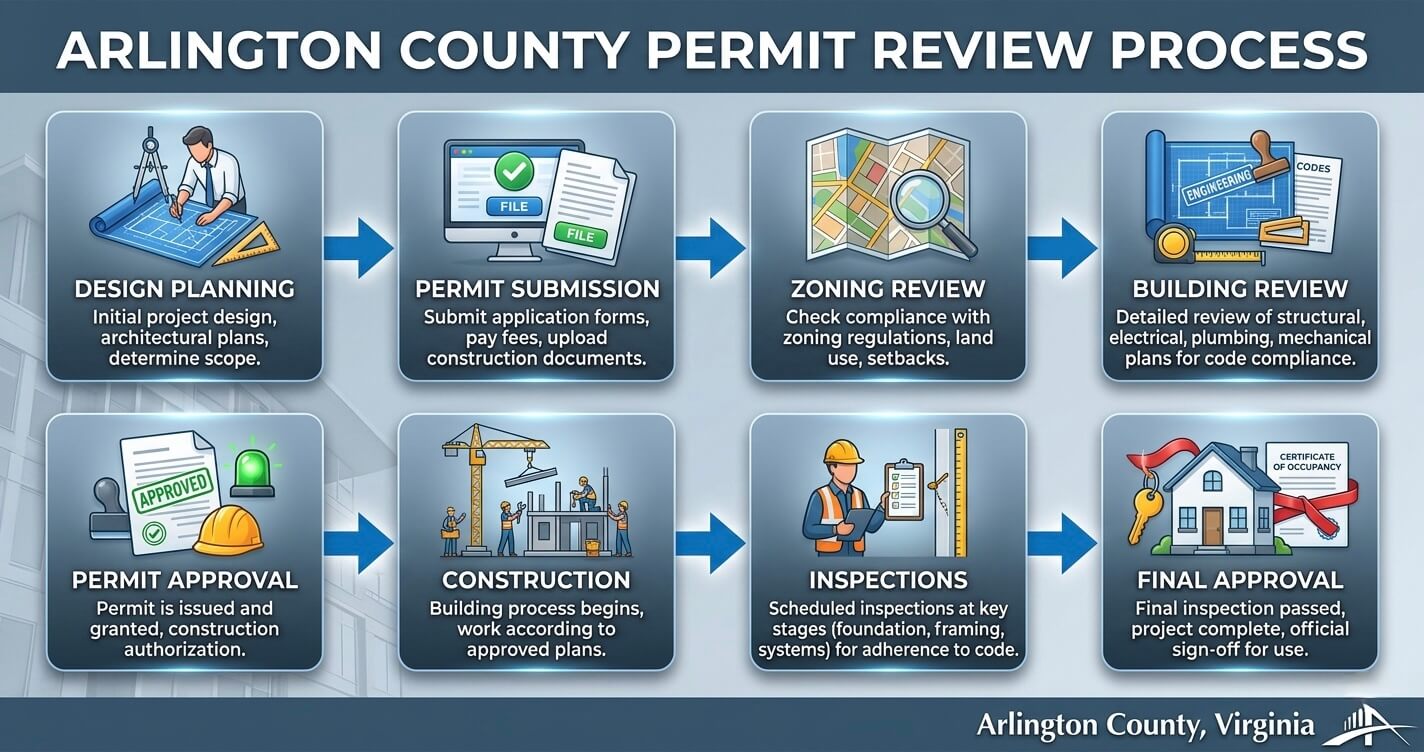
Although every project is unique, most master suite additions follow a similar review sequence:
Design → Permit Submission → Review → Approval → Construction → Inspections → Final Approval
The process typically begins with architectural design and site planning. During this phase, project teams prepare floor plans, elevations, structural details, engineering documents, and supporting materials required for permit review.
Once plans are submitted, Arlington County reviews the project through multiple departments. Depending on the scope, review may include:
- Zoning compliance verification
- Structural plan review
- Building code review
- Energy code review
- Mechanical system review
- Electrical system review
- Plumbing review
If reviewers identify deficiencies, correction requests may be issued before approval can proceed. Prompt responses from designers and contractors can significantly reduce delays.
After permits are approved, construction may begin. However, approval does not eliminate county oversight. Inspections are performed throughout the project to verify compliance with approved plans and applicable codes.
Typical inspections may include:
- Footing inspections
- Foundation inspections
- Framing inspections
- Electrical inspections
- Plumbing inspections
- Mechanical inspections
- Final building inspection
Only after all required inspections have been successfully completed can the addition receive final approval.
Homeowners who understand this process early are generally better prepared to manage timelines, coordinate contractors, and avoid unnecessary delays during construction. [Source: Arlington County Building Program]
ZONING REQUIREMENTS THAT IMPACT MASTER SUITE ADDITIONS
Obtaining a building permit is only one part of the approval process for a master suite addition. Before Arlington County can issue permits, the proposed addition must also comply with applicable zoning regulations. In many cases, zoning requirements become the first obstacle homeowners encounter when planning a home expansion.
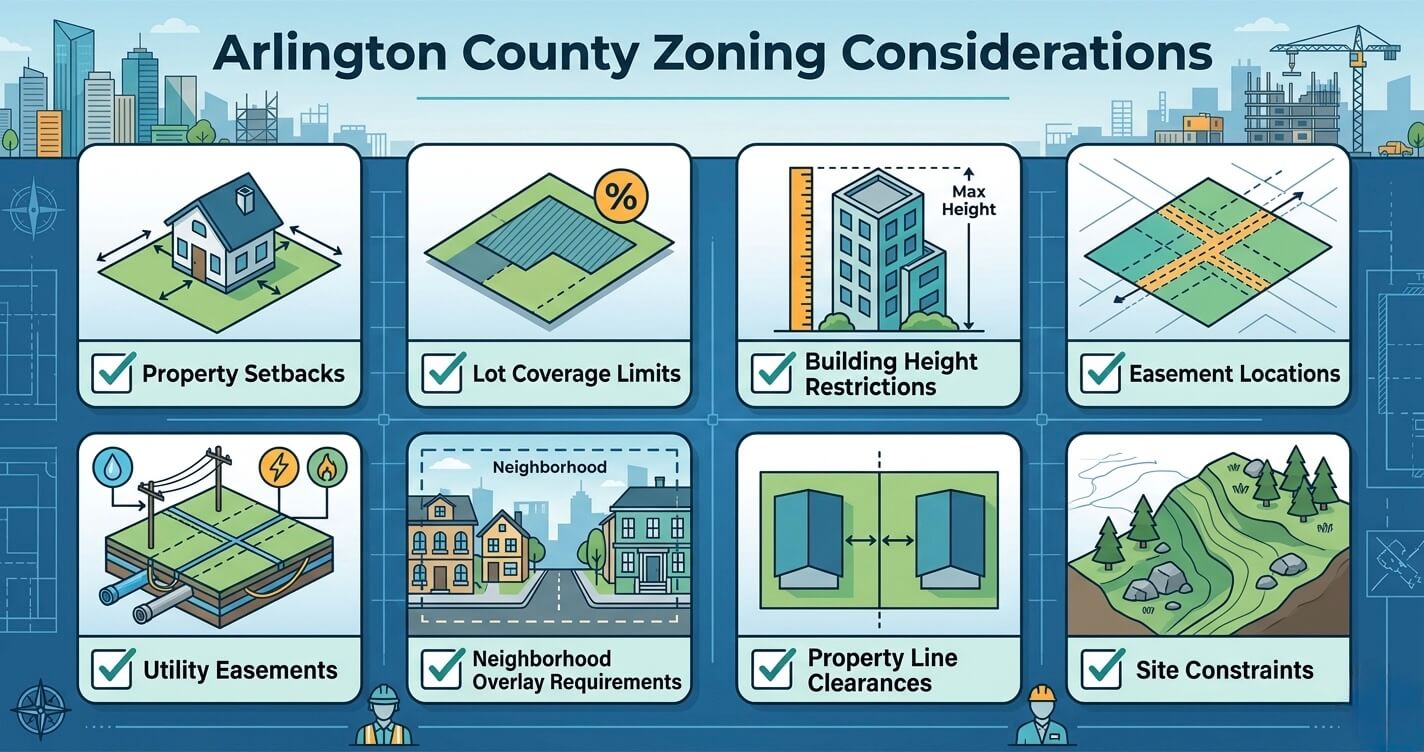
Arlington County zoning regulations are intended to manage neighborhood character, density, building placement, and land use compatibility. Depending on the location and size of the proposed addition, homeowners may encounter restrictions related to setbacks, lot coverage, building height, easements, and other property-specific limitations.
Key zoning considerations often include:
- Front, rear, and side setbacks: Minimum distances that structures must maintain from property lines.
- Lot coverage limitations: Restrictions on the percentage of the lot that can be occupied by structures.
- Building height requirements: Controls designed to preserve neighborhood scale and sightlines.
- Easements: Utility, drainage, or access easements that may limit where additions can be constructed.
- Neighborhood-specific regulations: Historic districts, overlay districts, or special zoning conditions may introduce additional requirements.
- Property-specific constraints: Irregular lot shapes, topography, stormwater concerns, and existing site conditions can affect approval.
Many homeowners assume that available yard space automatically means an addition can be built there. However, zoning restrictions often reduce the actual buildable area available for expansion.
For this reason, site surveys and zoning evaluations should be completed early in the planning process. Identifying limitations before architectural design begins can prevent costly redesigns and permit delays later.
Because every property is unique, professional design-build teams often coordinate zoning reviews during preliminary planning to ensure the proposed master suite addition aligns with Arlington County requirements before permit submission.
COMMON PERMIT MISTAKES THAT DELAY MASTER SUITE ADDITIONS
Even well-planned projects can experience delays when permit applications contain missing information or fail to satisfy review requirements. Understanding the most common permit-related mistakes can help homeowners reduce review cycles and keep projects moving forward.
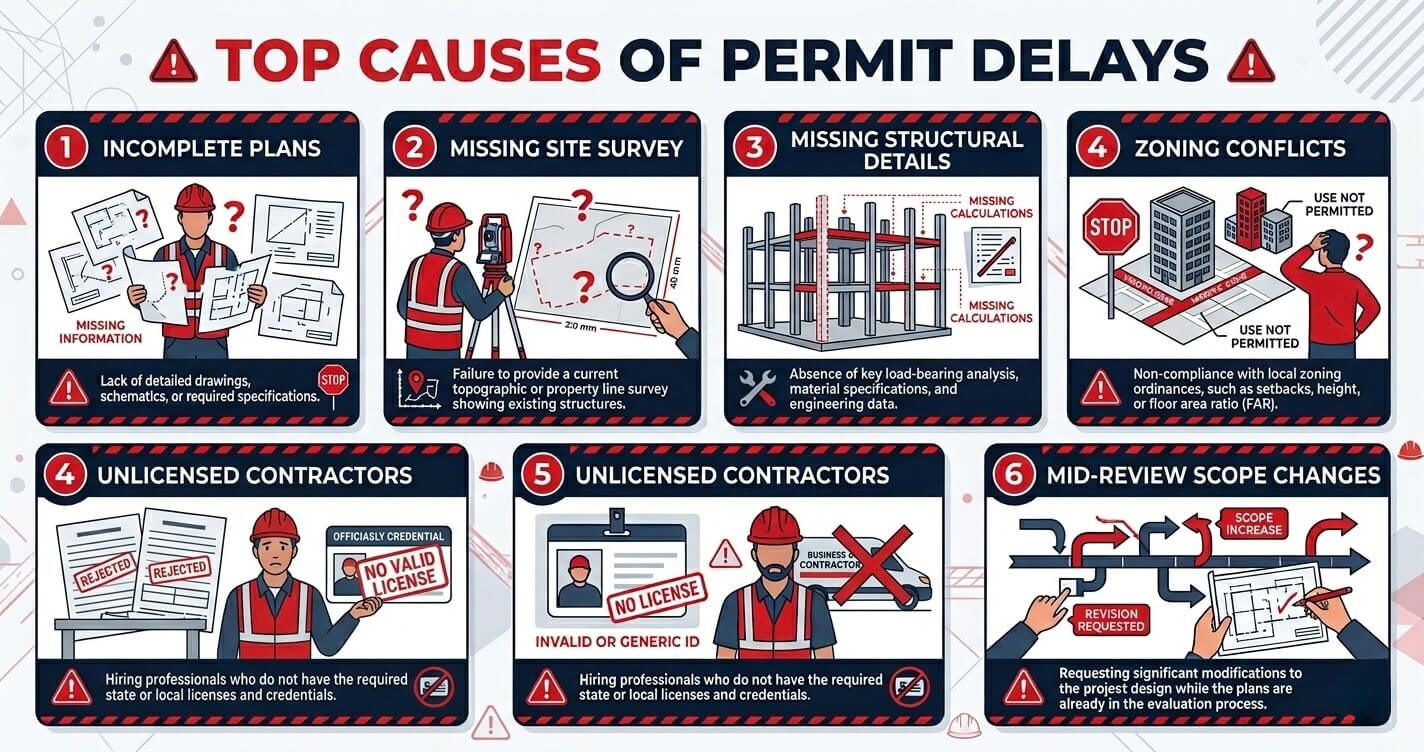
One of the leading causes of permit delays is the submission of incomplete construction documents. Missing elevations, structural details, floor plans, engineering calculations, or energy-code information frequently result in requests for revisions.
Another common issue involves inaccurate or outdated site surveys. Arlington County reviewers rely on survey information to verify setbacks, lot coverage, easements, and zoning compliance. Errors in these documents can significantly delay approval.
Homeowners also encounter challenges when structural engineering requirements are underestimated. Additions often require load calculations, foundation details, framing specifications, and roof integration plans. Missing engineering information typically triggers additional review requests.
Common permit mistakes include:
- Incomplete architectural plans
- Incorrect site surveys
- Missing engineering documentation
- Failure to verify zoning restrictions
- Hiring unlicensed contractors
- Significant design changes during permit review
- Incomplete permit applications
- Failure to address reviewer comments promptly
Using properly licensed professionals is particularly important. According to the Virginia Department of Professional and Occupational Regulation (DPOR), contractors performing regulated work must maintain active licensing and comply with state requirements. Source:
Perhaps the most avoidable mistake occurs when homeowners modify project scope after permit review has already begun. Major design revisions often require additional plan reviews, extending timelines and increasing costs.
A coordinated design-build approach can help minimize these risks by ensuring plans, engineering documents, permit submissions, and review responses are managed under a single process.
INSPECTIONS REQUIRED DURING CONSTRUCTION
Receiving permit approval does not conclude Arlington County’s oversight of a master suite addition project. Throughout construction, multiple inspections are performed to verify that work complies with approved plans, building codes, safety standards, and permit requirements.
Each inspection serves a specific purpose and must typically be completed before construction can proceed to the next phase. Failure to pass an inspection may require corrective work and additional review, potentially affecting project schedules.
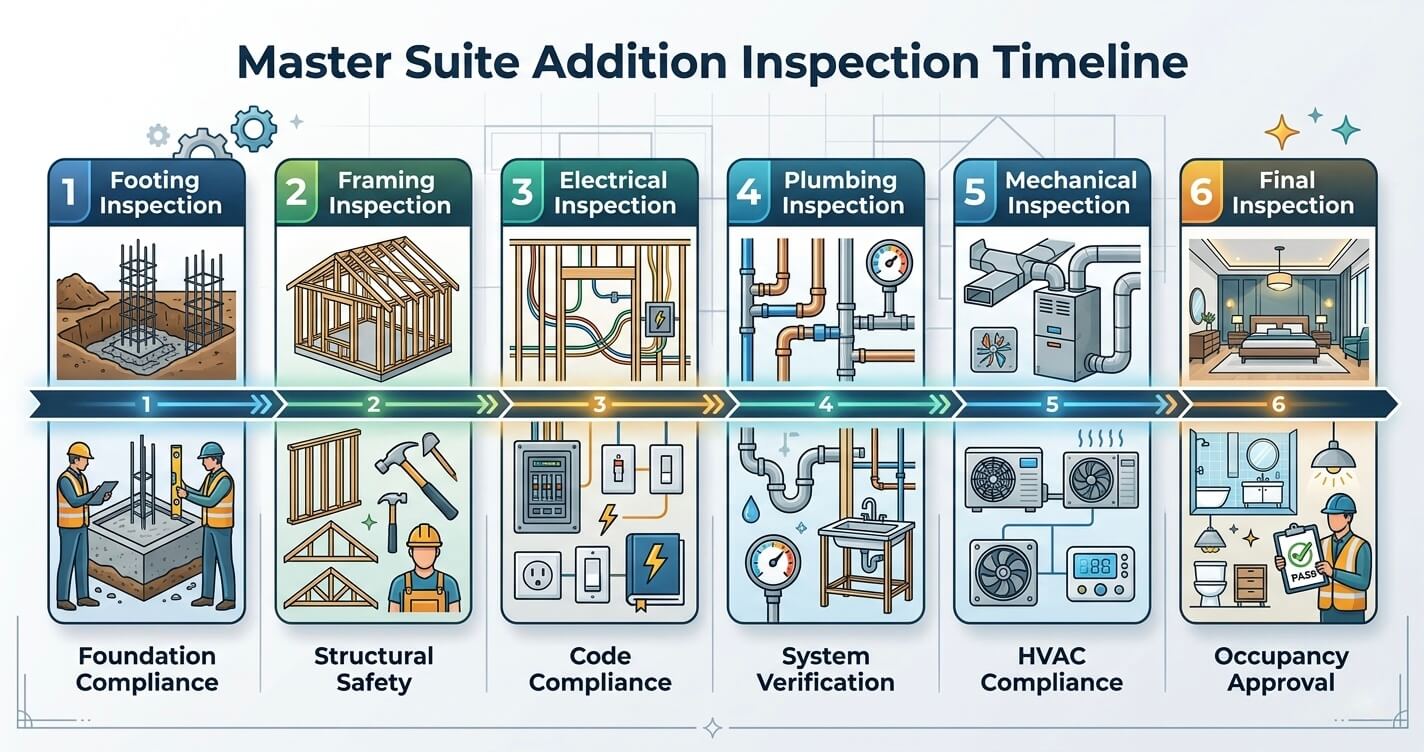
The inspection process generally begins with footing inspections, which verify excavation depth, reinforcement placement, and foundation preparation before concrete is poured.
Framing inspections occur after structural components are installed and confirm compliance with approved engineering plans. Electrical, plumbing, and mechanical inspections are then conducted to ensure systems meet applicable code requirements and safety standards.
The final inspection represents the last major milestone. During this review, inspectors verify that all approved work has been completed correctly and that the new living space is safe for occupancy.
According to Arlington County’s Building Program, inspections are an essential part of the permitting process and help ensure residential additions meet applicable building standards. Source:
Homeowners who understand inspection requirements early are typically better prepared to coordinate contractors, schedule work efficiently, and avoid unnecessary delays during construction.
HOW PERMIT REQUIREMENTS IMPACT PROJECT COSTS
Many homeowners focus primarily on construction costs when budgeting a master suite addition, but permit-related expenses can also have a meaningful impact on the overall project budget. Understanding these costs early helps create more accurate expectations and reduces the likelihood of unexpected financial surprises during the approval process.
Permit expenses often extend beyond the permit fee itself. In many cases, homeowners must also budget for surveys, engineering services, plan preparation, energy-code compliance documentation, and potential revision requests generated during plan review.
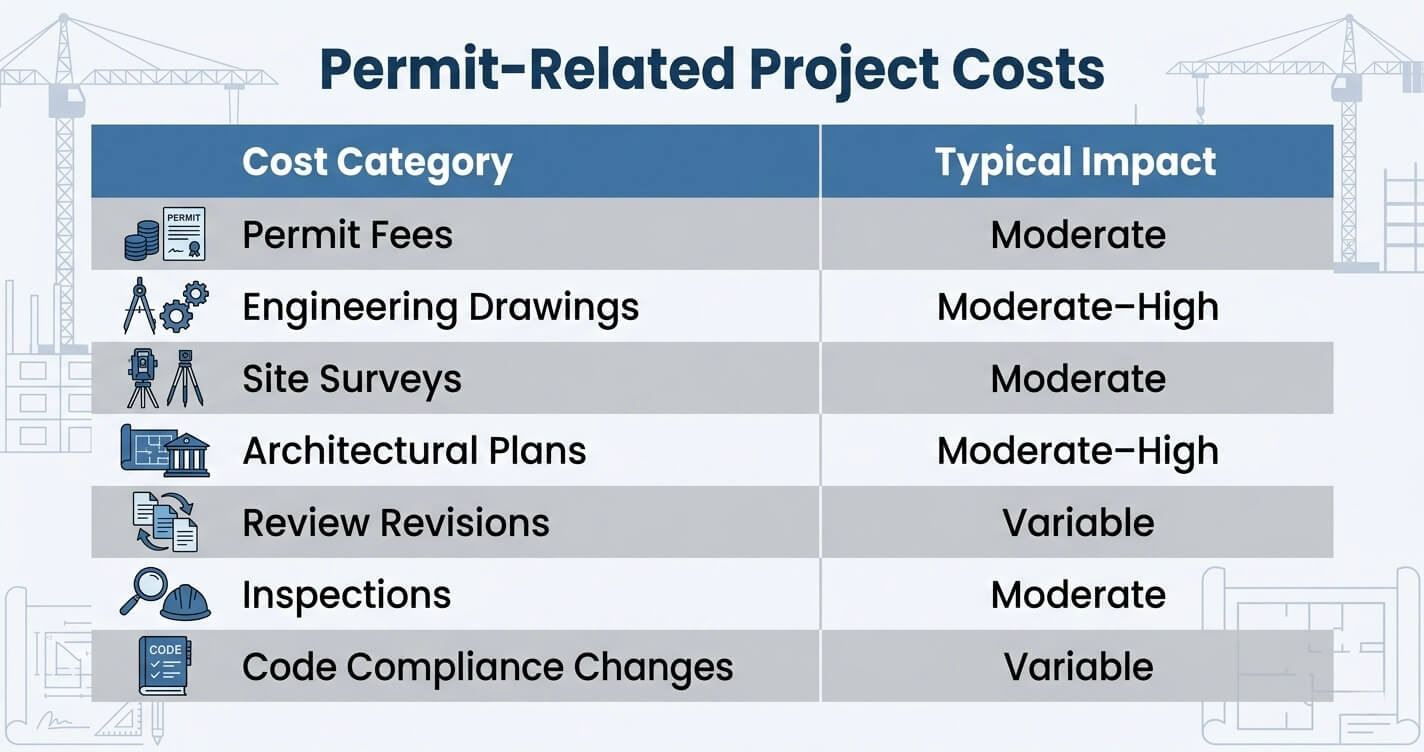
Common permit-related cost categories include:
- Building permit fees
- Zoning review requirements
- Site survey preparation
- Structural engineering services
- Architectural drawings
- Energy compliance documentation
- Plan review revisions
- Inspection coordination
Projects that require structural modifications, foundation expansion, roof alterations, or complex engineering calculations generally incur higher permitting and documentation costs than simpler renovations.
Additionally, delays caused by incomplete submissions or correction requests can increase overall project expenses by extending timelines and requiring additional professional services.
Because permit requirements are closely connected to overall project budgets, homeowners should evaluate permit planning alongside broader cost considerations. For a detailed breakdown of addition pricing factors, see Home Addition Cost in Northern Virginia.
When permit requirements are integrated into project planning from the beginning, homeowners are typically better positioned to manage costs, maintain schedules, and avoid unnecessary redesign expenses later in the process.
WHY DESIGN-BUILD FIRMS SIMPLIFY THE MASTER SUITE ADDITION PERMIT ARLINGTON COUNTY VA PROCESS
Navigating the master suite addition permit Arlington County VA process can be challenging because permitting, zoning, architecture, engineering, construction, and inspections are all interconnected. When these responsibilities are managed by multiple independent parties, communication gaps and coordination issues often create delays.
Design-build firms streamline the process by providing a single point of accountability throughout the project lifecycle.
Instead of requiring homeowners to coordinate separate architects, engineers, permit consultants, and contractors, a design-build approach integrates planning and execution under one team.
Key advantages include:
- Coordinated architectural design
- Early zoning evaluation
- Integrated engineering review
- Permit document preparation
- Submission management
- Reviewer response coordination
- Inspection scheduling
- Construction oversight
A typical design-build workflow may follow this sequence:
Consultation → Design → Engineering → Permit Submission → Construction → Inspections → Warranty
This integrated structure helps identify potential permit challenges before submission, reducing the likelihood of review comments, redesign requirements, and approval delays.
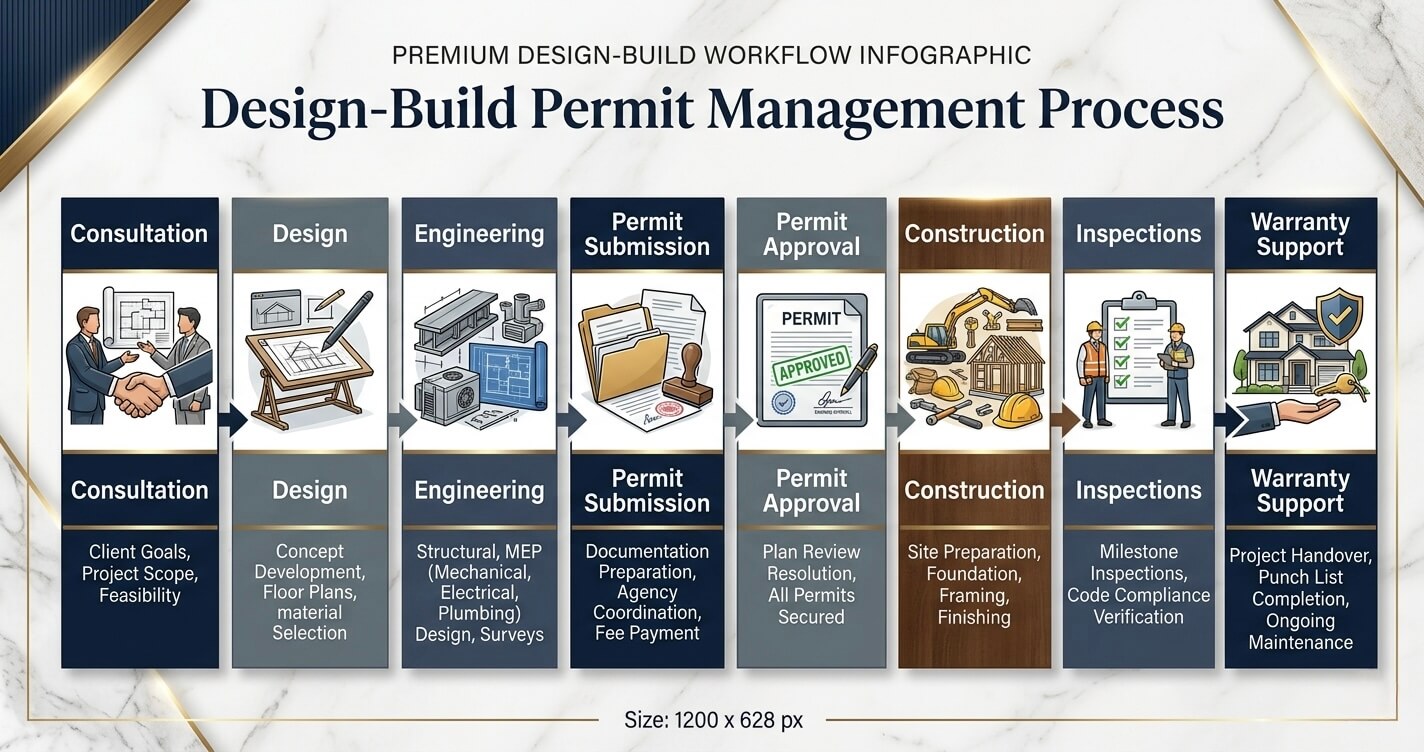
For master suite additions, where structural changes, utility expansions, and zoning compliance often intersect, proactive coordination can significantly improve project efficiency.
US Home Design Build utilizes a design-build process that combines planning, permitting, engineering, construction management, inspections, and warranty support under a single team. This approach helps homeowners navigate complex addition projects while minimizing communication breakdowns and scheduling conflicts.
Ultimately, design-build delivery provides homeowners with greater visibility, improved coordination, and a more predictable path from concept to completion.
CHOOSING THE RIGHT CONTRACTOR FOR A PERMIT-REGULATED ADDITION
Selecting the right contractor is one of the most important decisions homeowners make when planning a permit-regulated addition. Even a well-designed project can encounter delays, budget overruns, and compliance issues when managed by an inexperienced or improperly licensed contractor.
According to the Virginia Department of Professional and Occupational Regulation (DPOR), contractors performing regulated construction work in Virginia must maintain active licensing and comply with applicable state regulations.
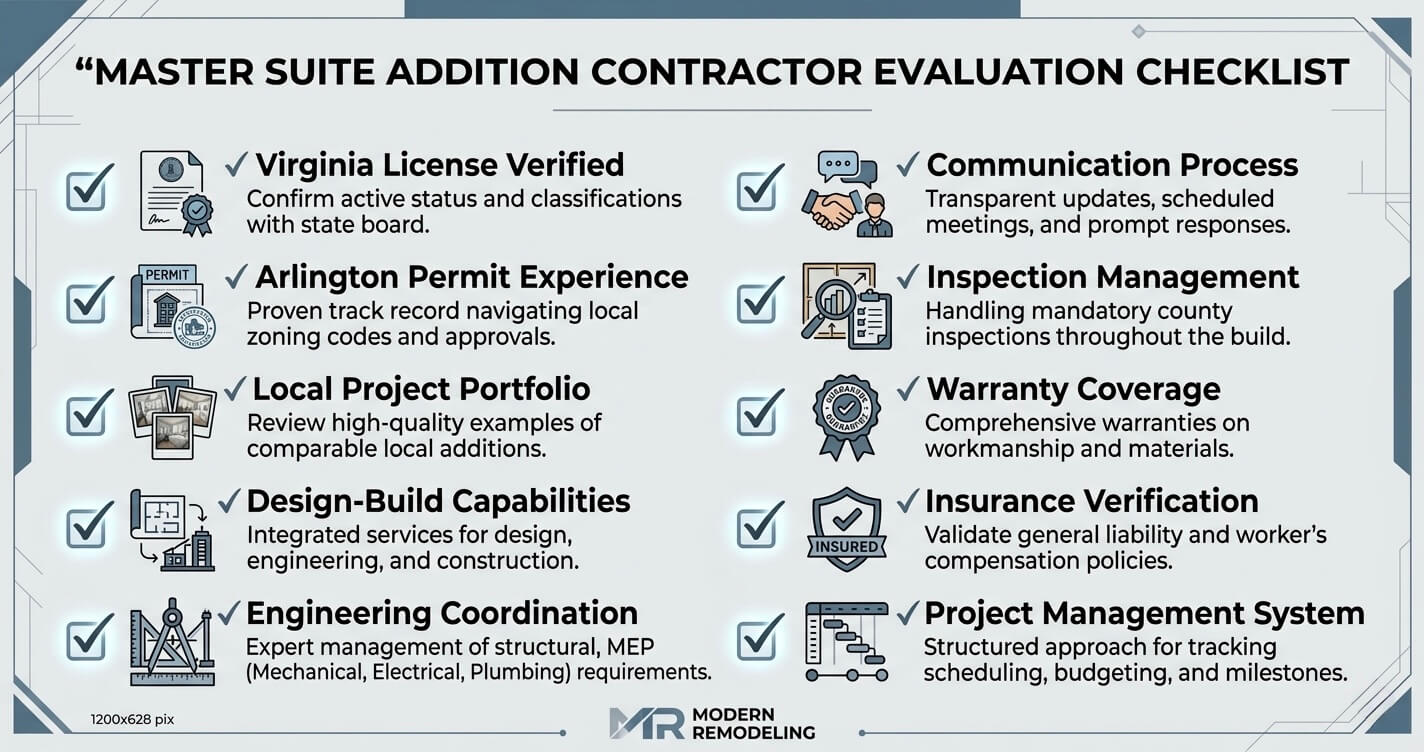
Before hiring a contractor, homeowners should verify:
- Active Virginia contractor license
- Appropriate license classification
- Insurance coverage
- Local permitting experience
- Addition-specific construction expertise
- Design-build capabilities
- Project management systems
- Communication processes
- References and portfolio quality
Permit experience is particularly important in Arlington County, where zoning review, inspections, and code compliance requirements can significantly affect project timelines.
Contractors familiar with local review procedures are often better equipped to anticipate challenges, prepare complete permit packages, and respond efficiently to reviewer comments.
Homeowners should also evaluate whether a contractor can coordinate design, engineering, permitting, and construction services as a unified process.
For additional contractor screening guidance, review How to Choose the Right Contractor in Northern Virginia.
The most successful master suite additions are typically completed by contractors who combine technical expertise, permit knowledge, communication skills, and strong project management practices throughout every phase of the project.
FREQUENTLY ASKED QUESTIONS [FAQs]
How long does a master suite addition permit take in Arlington County?
Permit review timelines vary depending on project complexity, completeness of submitted plans, and county review workload. Projects that include structural modifications, zoning reviews, and engineering requirements generally require additional review time. Source:
Do I need a permit for a master bedroom addition in Arlington VA?
Yes. Most master bedroom additions require building permits because they involve structural expansion, framing, roofing, foundations, electrical systems, or mechanical modifications. Source:
What inspections are required for a master suite addition?
Most projects require multiple inspections, including footing, framing, electrical, plumbing, mechanical, and final inspections to verify compliance with approved plans and building codes.
How much does a master suite addition permit cost?
Permit costs vary based on project size, valuation, engineering requirements, review complexity, and associated trade permits. Additional expenses may include surveys, plan preparation, and structural engineering services.
Can I start construction before permit approval?
No. Construction should not begin until all required permits have been issued and approved by the appropriate authorities.
What zoning rules affect master suite additions?
Common zoning considerations include setbacks, lot coverage limits, building height restrictions, easements, and neighborhood-specific requirements.
Do design-build firms handle permits?
Many design-build firms coordinate permit preparation, submission, review responses, inspection scheduling, and overall compliance management as part of their project delivery process.
How do I avoid permit delays?
Early planning, accurate site surveys, complete construction documents, professional engineering, and experienced permit coordination are among the most effective ways to reduce approval delays.
FINAL THOUGHTS
The master suite addition permit Arlington County VA homeowners need is often one of the most important factors influencing project timelines, budgets, and overall construction success. Understanding permit requirements early allows homeowners to avoid unnecessary delays, design revisions, and costly compliance issues later in the process.
Successful projects typically begin with a clear understanding of zoning restrictions, permit requirements, engineering needs, inspection schedules, and contractor qualifications. By addressing these factors before construction begins, homeowners can create a smoother, more predictable project experience.
Key takeaways include:
- Most master suite additions require permits
- Zoning review plays a critical role
- Inspections occur throughout construction
- Permit planning directly affects schedules
- Design-build coordination improves efficiency
- Experienced contractors help reduce risk
The most successful master suite additions begin with a well-planned permit strategy long before construction starts.
US Home Design Build works with homeowners throughout Arlington VA, McLean VA, Falls Church VA, Alexandria VA, Fairfax VA, Vienna VA, Great Falls VA, and Northern Virginia on additions, renovations, custom homes, and design-build remodeling projects.
From design and engineering through permitting, construction, inspections, and warranty support, every phase is managed under one roof.
703-202-3520 | https://ushdb.com | 8200 Greensboro Dr Suite 900, McLean, VA 22102
