
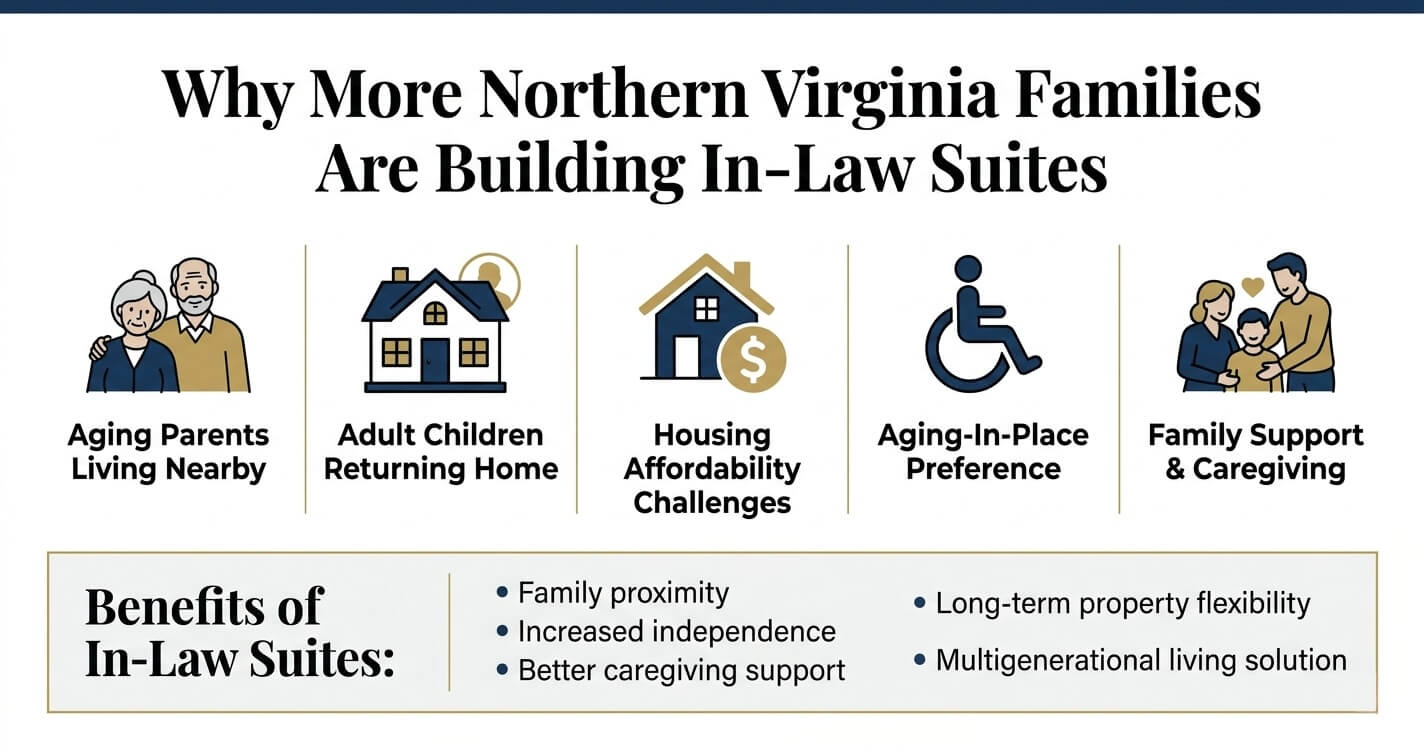
The growing demand for multigenerational living is one of the biggest factors driving interest in the in-law suite addition cost Northern Virginia homeowners are researching today. Across the country, families are increasingly seeking ways to keep aging parents, adult children, and extended family members close while maintaining privacy and independence.
According to the National Association of Home Builders (NAHB), multigenerational housing continues to gain popularity as households adapt to changing demographic, economic, and caregiving needs. Source: https://www.nahb.org
The U.S. Census Bureau also reports that multigenerational households remain a significant component of the American housing landscape, reflecting long-term shifts in how families utilize residential space.
In Northern Virginia communities such as McLean, Fairfax, Vienna, Great Falls, Arlington, and Falls Church, many homeowners are choosing to expand their existing properties rather than relocate. Rising home prices, limited housing inventory, and the desire to remain in established neighborhoods often make an in-law suite addition a practical alternative to purchasing a second property.
Modern in-law suites can serve multiple purposes beyond accommodating elderly parents. Homeowners frequently use these spaces for adult children returning home, long-term guests, live-in caregivers, home offices, or future rental flexibility where permitted by local regulations.
As highlighted in our guide to Top Remodeling Trends in Northern Virginia, flexible living arrangements and multigenerational design solutions are becoming increasingly important in residential remodeling projects throughout the region.
When thoughtfully designed, an in-law suite provides independence, convenience, and long-term value while allowing families to stay connected without sacrificing privacy.
IN-LAW SUITE ADDITION COST NORTHERN VIRGINIA: 2026 PRICE RANGES
One of the first questions homeowners ask is: What is the actual in-law suite addition cost Northern Virginia families should budget for in 2026?
The answer depends on several variables, including the type of addition, structural requirements, site conditions, utility connections, finish selections, and local permitting requirements. Because Northern Virginia remains one of the highest-cost construction markets in the Mid-Atlantic region, project budgets typically exceed national averages.
Typical 2026 Cost Ranges
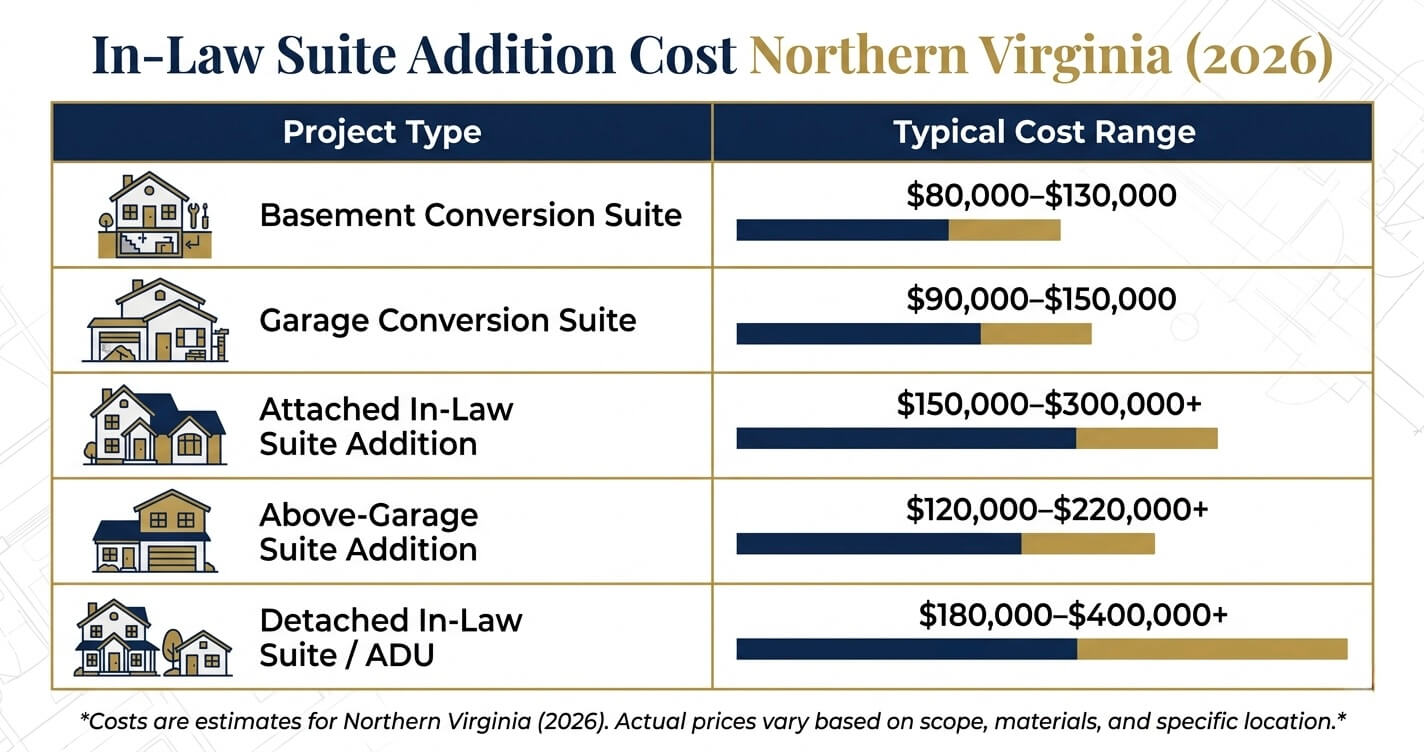
A basement conversion generally offers the lowest entry point because the structural shell already exists. However, homeowners may still need to invest in plumbing, HVAC extensions, egress windows, insulation upgrades, and bathroom installations.
Attached additions typically involve foundation work, framing, roofing integration, electrical expansion, and HVAC modifications. Detached suites or accessory dwelling units (ADUs) often represent the highest investment because they require separate structural systems, utility connections, site preparation, and more extensive permitting reviews.
Several factors contribute to higher Northern Virginia construction costs:
- Skilled labor demand
- Structural engineering requirements
- Utility extensions
- Site grading and drainage work
- Fairfax County permitting and inspections
- High-end finish selections
- Mechanical system upgrades
- Material costs and supply chain fluctuations
Homeowners comparing larger expansion projects should also review Home Addition Cost in Northern Virginia for broader budgeting considerations that often overlap with in-law suite planning.
While costs can vary significantly, investing in a properly designed in-law suite often provides long-term lifestyle benefits and additional flexibility that many families find difficult to achieve through moving alone.
ATTACHED VS DETACHED IN-LAW SUITES
One of the most important decisions affecting both functionality and budget is whether to build an attached or detached in-law suite. Each option offers unique advantages, and understanding these differences can help homeowners align their project goals with realistic expectations.
Attached vs Detached Comparison
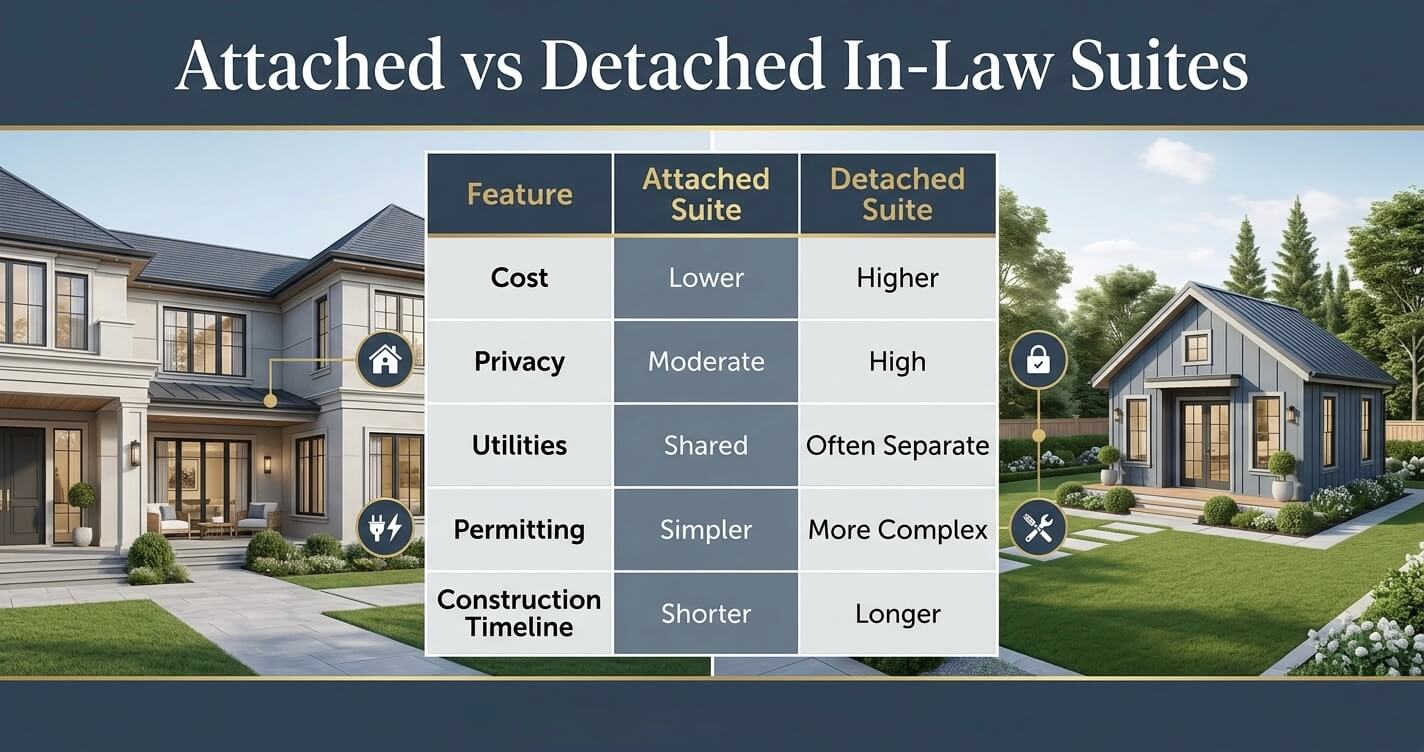
An attached in-law suite is physically connected to the primary residence and often shares structural elements, utilities, and mechanical systems. Because these additions can utilize existing infrastructure, they typically represent the most cost-effective solution for homeowners seeking multigenerational living accommodations.
Attached suites also simplify daily accessibility for elderly family members while maintaining a close connection to the main household. This approach is especially popular in communities such as McLean, Vienna, Fairfax, and Falls Church, where lot constraints may limit detached construction options.
A detached in-law suite, on the other hand, provides greater privacy and independence. These structures often function more like standalone residences, making them attractive for long-term guests, caregivers, or future housing flexibility.
However, detached suites generally involve:
- Separate foundations
- Independent roofing systems
- Additional utility infrastructure
- Increased site work
- More complex permitting reviews
- Higher overall construction costs
According to AARP, many homeowners exploring aging-in-place strategies prioritize designs that balance accessibility, independence, and proximity to family support networks.
Regardless of which option is selected, homeowners should carefully evaluate zoning requirements, site conditions, utility availability, and long-term family needs before making a final decision. In many cases, working with an experienced design-build contractor early in the planning process helps identify the most practical and cost-effective solution for both current and future use.
WHAT DRIVES THE COST OF AN IN-LAW SUITE ADDITION?
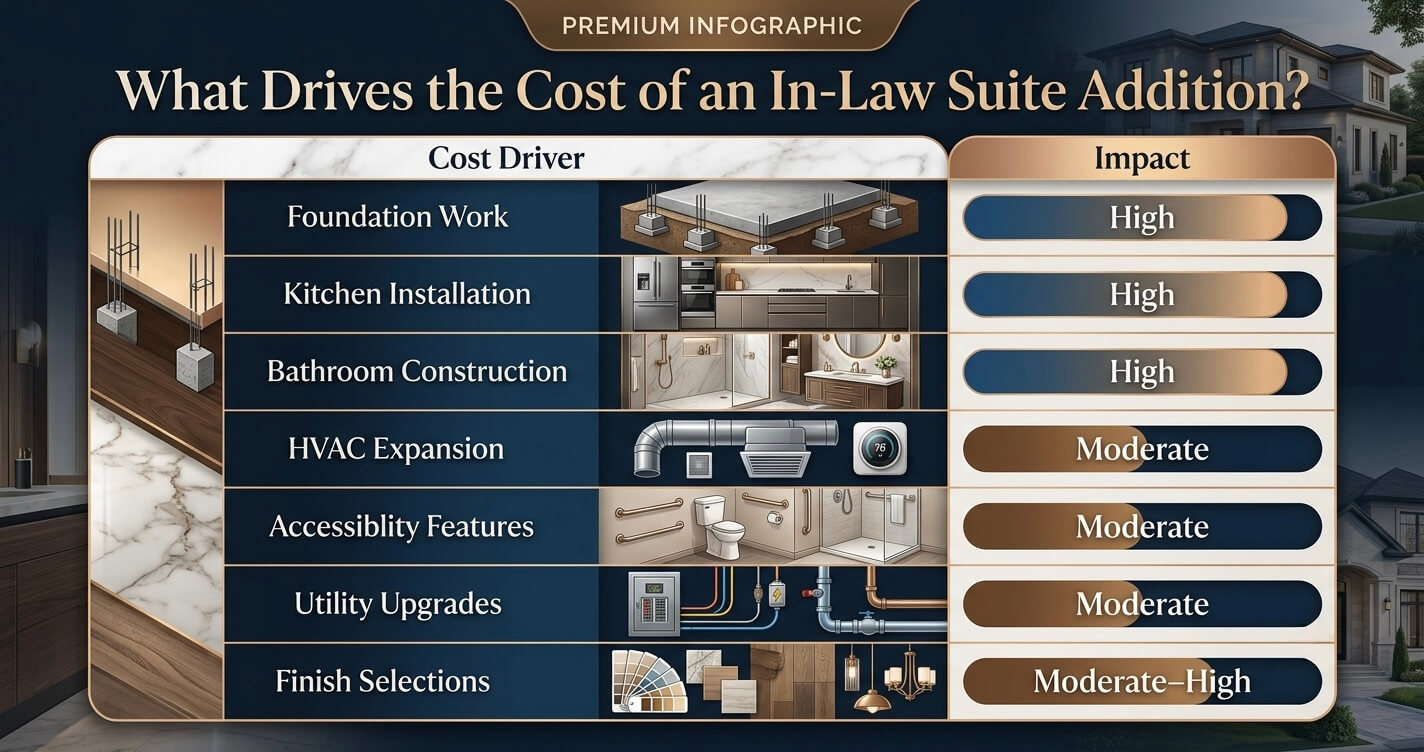
The in-law suite addition cost Northern Virginia homeowners should expect in 2026 is influenced by far more than square footage alone. While size remains a major budgeting factor, the complexity of the space, utility requirements, accessibility features, and site conditions often have an even greater impact on final project costs. Understanding these variables early can help homeowners establish realistic expectations and avoid costly surprises during design and construction.
One of the biggest cost drivers is whether the suite includes a full kitchen or a kitchenette. A complete kitchen typically requires additional plumbing, electrical circuits, ventilation, cabinetry, appliances, and finishes, significantly increasing construction costs compared with a simplified kitchenette. Similarly, adding a full bathroom requires plumbing rough-ins, waterproofing systems, fixtures, tile installation, and ventilation, making bathrooms one of the most expensive spaces per square foot to build.
Structural considerations also play a major role. New foundation work, excavation, retaining walls, and grading can substantially increase costs depending on site conditions. In Northern Virginia, sloped lots, mature trees, drainage requirements, and utility relocation can all affect project budgets.
Accessibility upgrades are becoming increasingly common as homeowners plan for multigenerational living and aging-in-place. Features such as wider doorways, curbless showers, reinforced bathroom walls, and accessible circulation spaces may add modest upfront costs while improving long-term usability and future resale appeal. Guidance from AARP emphasizes that incorporating accessibility features during initial construction is typically more cost-effective than retrofitting them later.
Additional cost considerations include separate entrances, dedicated HVAC systems, expanded electrical service, upgraded insulation, and higher-end finish selections. According to the U.S. Department of Energy, energy-efficient HVAC systems, insulation, and windows can improve comfort while reducing long-term operating costs.
Major Cost Drivers for an In-Law Suite Addition
For most projects, a successful budget balances immediate needs with long-term functionality, ensuring the suite remains comfortable, code-compliant, and adaptable for future family needs.
ACCESSIBILITY FEATURES FOR AGING-IN-PLACE DESIGN
One of the primary reasons homeowners invest in an in-law suite is to support aging parents while preserving independence, privacy, and quality of life. As a result, accessibility planning has become a critical component of modern multigenerational home design. Incorporating aging-in-place features from the beginning can improve safety, increase long-term usability, and reduce the need for expensive future modifications.
According to AARP, many homeowners prefer aging-in-place solutions that allow family members to remain close while maintaining autonomy and dignity.
A well-designed in-law suite should focus on ease of movement and reduced physical barriers. One of the most requested upgrades is a zero-threshold shower, which eliminates the need to step over a curb and improves accessibility for individuals with mobility limitations. Wider doorways and hallways can accommodate walkers, wheelchairs, and other mobility aids while creating a more spacious environment overall.
Bathroom design is especially important. Features such as comfort-height toilets, reinforced walls for future grab bars, slip-resistant flooring, and walk-in showers contribute to both safety and convenience. Lever-style door handles and faucets are also easier to operate than traditional knobs, particularly for individuals with arthritis or reduced hand strength.
Many homeowners are also prioritizing first-floor living arrangements to minimize stair usage. Designing the suite with direct access to essential spaces, including the bedroom, bathroom, kitchen area, and laundry facilities, helps support independent daily living.
Beyond immediate needs, future-proofing remains one of the smartest investments in an in-law suite project. Features that may not be required today can significantly increase comfort and usability over the next decade. Integrating accessibility into the initial design phase often adds relatively little to overall construction costs while delivering long-term value for both current occupants and future buyers.
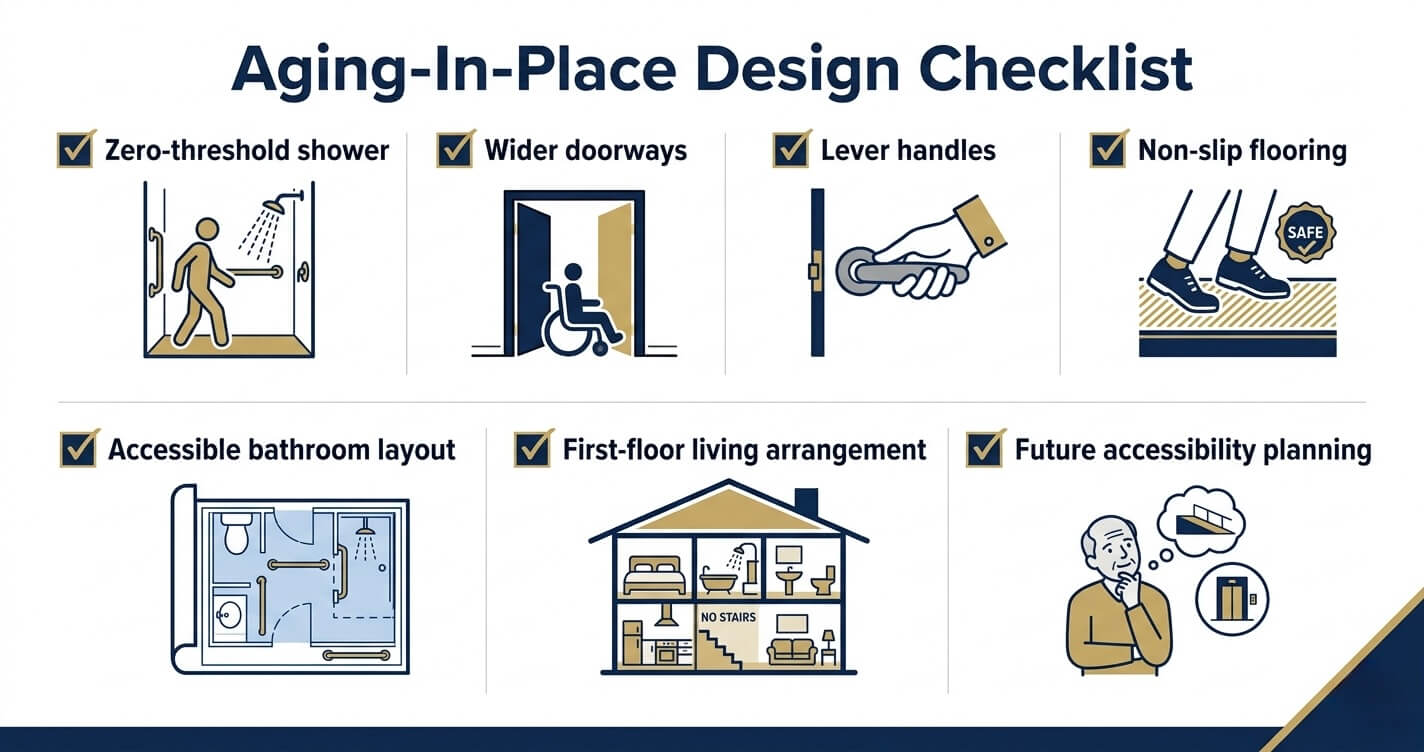
A thoughtful aging-in-place strategy ensures that the suite remains functional, adaptable, and comfortable regardless of changing family circumstances.
DESIGN FEATURES HOMEOWNERS WANT MOST IN 2026
Modern in-law suites have evolved far beyond simple guest bedrooms. Today’s homeowners are seeking spaces that combine independence, comfort, functionality, and long-term flexibility. As multigenerational living continues to gain popularity, the most successful projects are designed to function almost like a self-contained residence while remaining connected to the primary home.
One of the most requested features is a private entrance, allowing family members to come and go independently while preserving privacy for both households. Separate access points can also make the space more attractive for future use as a guest suite or flexible living area.
Kitchenettes remain highly desirable because they provide daily convenience without requiring a full-scale kitchen. Depending on household needs, these spaces may include a sink, microwave, compact refrigerator, cabinetry, and small dining area. Dedicated laundry facilities are another popular addition, helping occupants maintain greater independence.
Open-concept layouts continue to dominate residential design trends due to their flexibility and efficient use of space. Many homeowners also prioritize abundant natural light, larger windows, and improved indoor-outdoor connectivity to make smaller suites feel more spacious and welcoming.
Technology integration has become increasingly common in 2026. Smart thermostats, lighting controls, video doorbells, security systems, and voice-activated devices can improve convenience while supporting aging residents. Energy-efficient windows, insulation systems, and HVAC equipment further enhance comfort and reduce operating costs over time. According to the U.S. Department of Energy, high-performance building systems can significantly improve residential energy efficiency and indoor comfort.
Many of these features also align with the Top Remodeling Trends in Northern Virginia.
Most Requested In-Law Suite Features in 2026
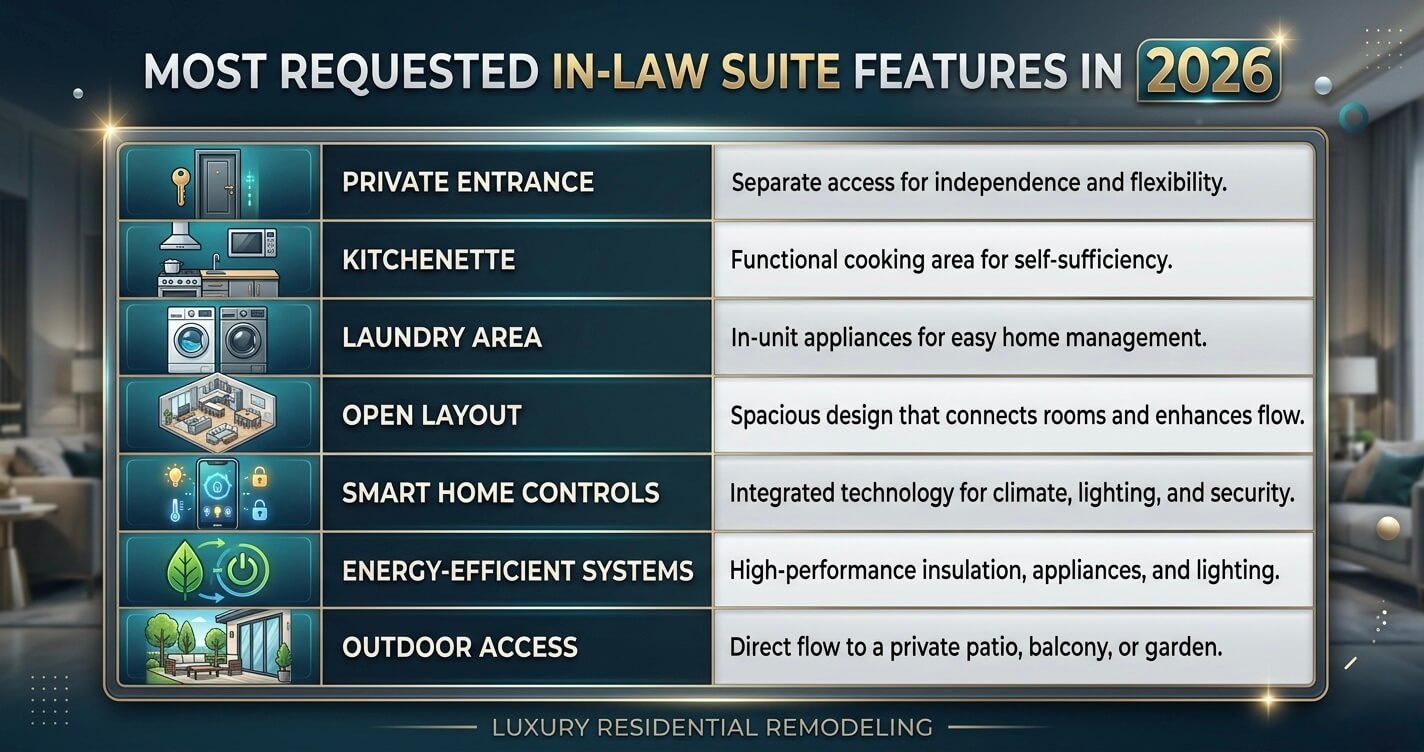
These design priorities help create spaces that serve current family needs while remaining adaptable for future generations.
PERMITS, ZONING & CODE REQUIREMENTS
Before construction begins, homeowners should understand that most in-law suite projects involve permit approvals, inspections, and compliance with local building regulations. Whether the project is an attached addition, garage conversion, basement suite, or detached accessory structure, local requirements can significantly affect both project scope and timeline.
According to Fairfax County Land Development Services, residential additions generally require building permits and inspections to ensure compliance with applicable building, electrical, plumbing, and mechanical codes.
A typical in-law suite project may require several permit categories, including:
- Building permits for structural work
- Electrical permits for new circuits and service upgrades
- Plumbing permits for kitchens and bathrooms
- Mechanical permits for HVAC installation or expansion
- Inspection approvals throughout construction
Homeowners should also be aware that zoning regulations may affect the size, location, and permitted use of an in-law suite. Requirements can vary depending on lot dimensions, setbacks, property configuration, utility connections, and whether the project functions as an accessory dwelling unit (ADU) or an attached living space.
Detached structures often face additional zoning review requirements compared with attached additions. Parking considerations, utility connections, and occupancy limitations may also influence project planning.
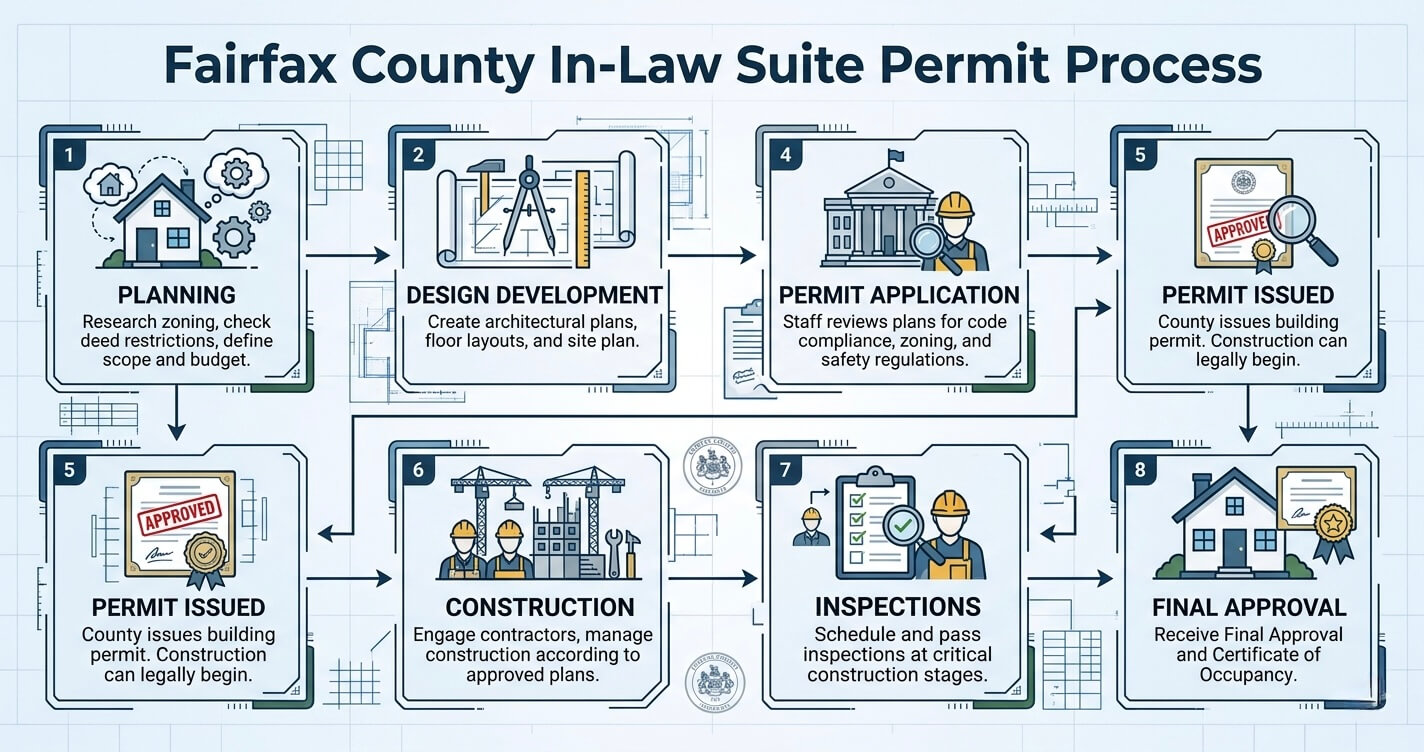
Working with experienced professionals early in the process can help identify potential challenges before design work begins. For homeowners seeking more information about local permitting requirements, this guide on Remodeling Permit Fairfax County provides additional insights.
A well-planned permit strategy helps avoid delays, failed inspections, costly revisions, and compliance issues during construction. Proper approvals also protect property value and ensure the completed suite meets all applicable safety and building standards.
HOW LONG DOES AN IN-LAW SUITE ADDITION TAKE?
One of the most common questions homeowners ask is how long an in-law suite project will take from concept to completion. While every property and design is unique, most projects follow a predictable sequence of planning, permitting, construction, and final inspections. Understanding the timeline can help homeowners coordinate family needs, financing, and living arrangements more effectively.
The timeline for an in-law suite addition cost Northern Virginia project is heavily influenced by design complexity, permit reviews, site conditions, material availability, and contractor scheduling. Larger detached suites and projects involving significant structural modifications generally require more time than basement conversions or smaller attached additions.
Typical In-Law Suite Project Timeline
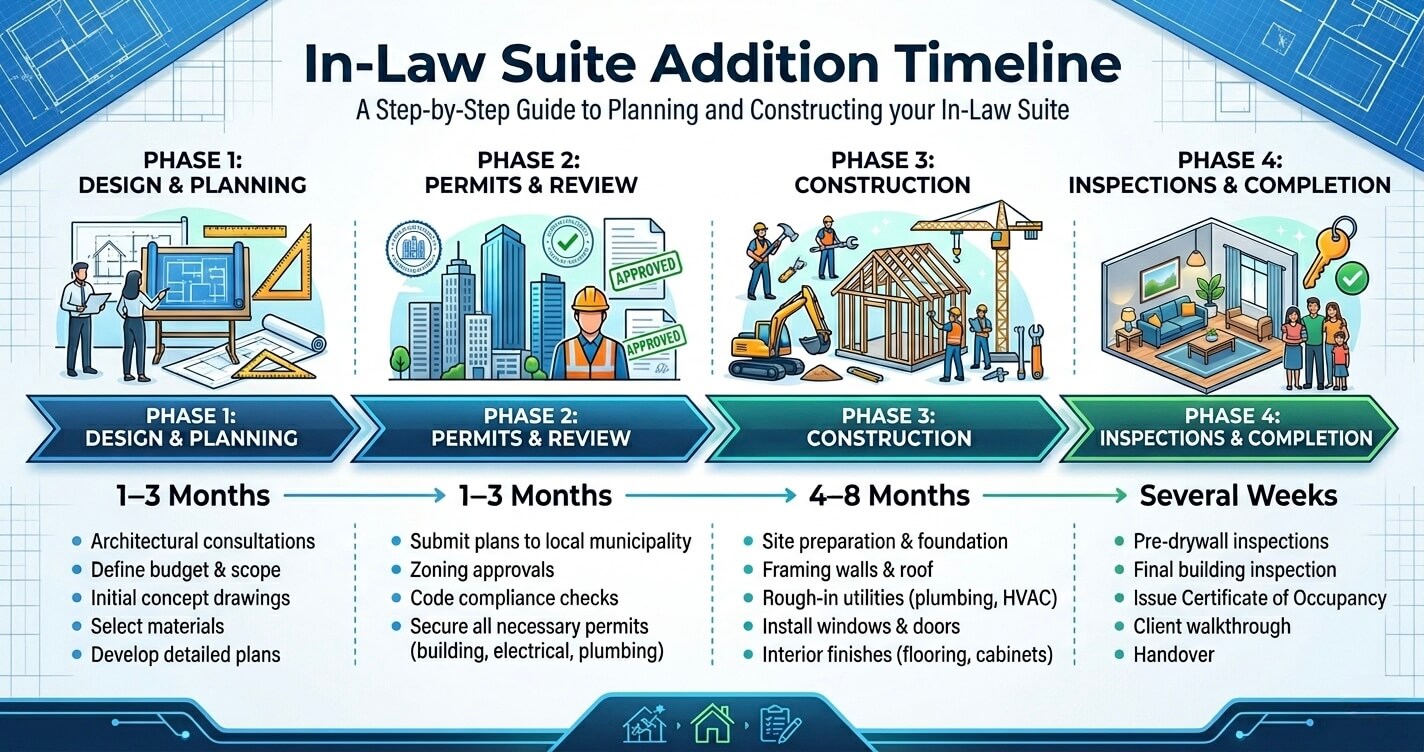
Permit review timelines can vary depending on project scope and local jurisdiction requirements. According to Fairfax County Land Development Services, residential additions typically require permit applications, plan reviews, inspections, and final approvals before occupancy.
Material lead times also continue to affect project schedules in 2026. Custom cabinetry, specialty windows, HVAC equipment, and certain finish materials can extend timelines if selections are finalized late in the process.
Weather conditions may also impact construction, particularly for projects requiring excavation, foundation work, roofing, or exterior framing. The most successful projects begin with thorough planning and realistic scheduling expectations.
While timelines vary, homeowners should generally anticipate a complete project duration of approximately six to twelve months from initial consultation through final completion.
DOES AN IN-LAW SUITE ADD VALUE TO YOUR HOME?
For many homeowners, an in-law suite is more than a family living solution; it is also a long-term property investment. While exact resale impacts vary by location, market conditions, and project quality, well-designed in-law suites often enhance both functionality and buyer appeal.
One of the primary reasons these additions are gaining popularity is the continued growth of multigenerational living. According to the U.S. Census Bureau, multigenerational households remain a significant segment of U.S. housing demand.
An in-law suite can make a property more attractive to buyers seeking flexible living arrangements for aging parents, adult children, caregivers, or extended family members. This flexibility often expands the pool of potential future buyers.
In addition to family use, some homeowners appreciate the future adaptability of the space. Depending on local regulations and zoning requirements, an in-law suite may serve as guest accommodations, home office space, caregiver quarters, or potential rental housing where permitted.
Potential Value Benefits of an In-Law Suite

Beyond resale considerations, many families view the project as an investment in convenience, independence, and quality of life. For homeowners balancing caregiving responsibilities or planning for future needs, the practical value can often exceed the purely financial return.
The strongest long-term ROI typically comes from thoughtfully designed suites that combine accessibility, privacy, energy efficiency, and seamless integration with the existing home.
CHOOSING THE RIGHT CONTRACTOR FOR AN IN-LAW SUITE PROJECT
An in-law suite addition combines many of the complexities found in both home additions and whole-home renovations. Structural work, utility upgrades, accessibility planning, permitting, and design coordination all need to be managed effectively. Choosing the right contractor is therefore one of the most important decisions in the entire project.
Homeowners should prioritize contractors with proven experience in additions, multigenerational living spaces, accessibility-focused design, and local permit requirements. Knowledge of Fairfax County regulations and Northern Virginia construction practices can help reduce delays and avoid costly mistakes during the approval process.
Design-build firms often offer significant advantages for these projects because design, budgeting, permitting, and construction are managed under a single team. This integrated approach can improve communication, streamline decision-making, and create greater accountability throughout the project lifecycle.
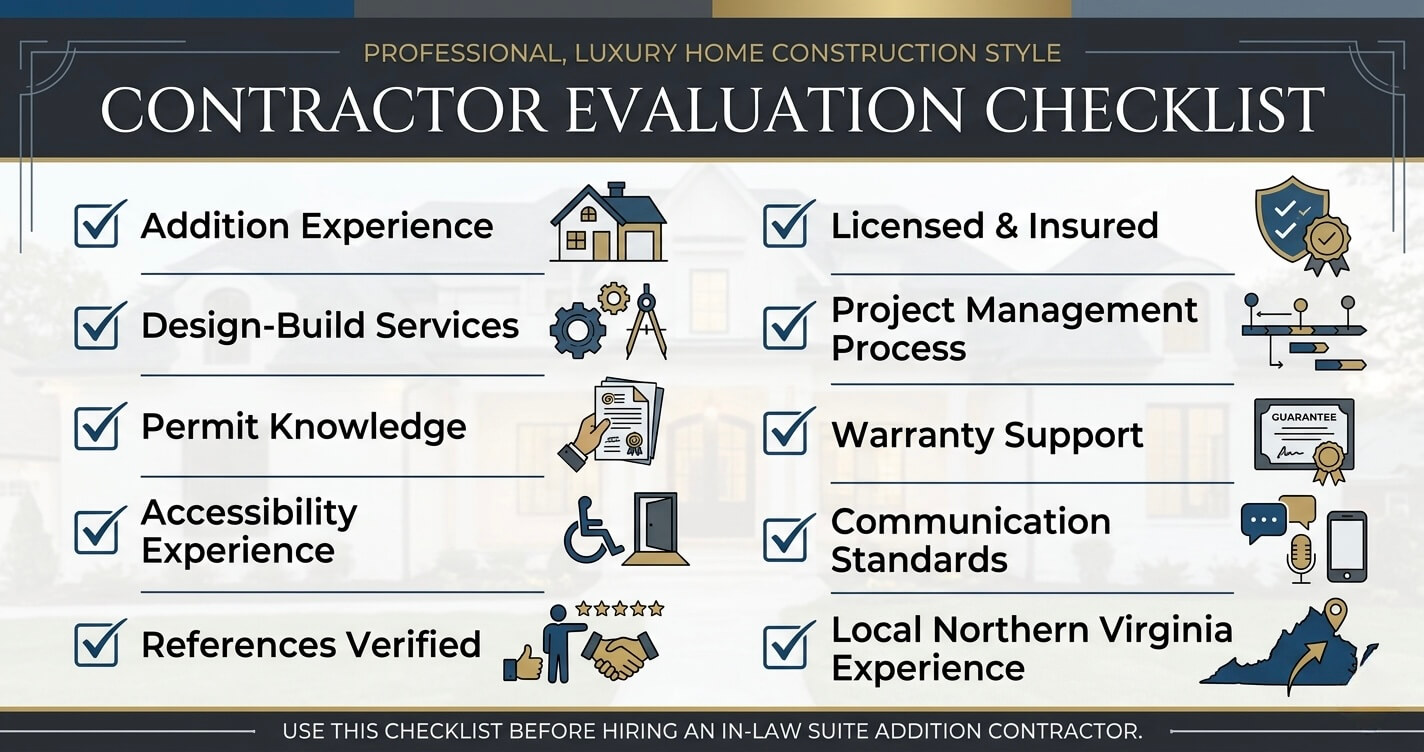
A strong contractor should also demonstrate expertise in:
- Addition planning and structural integration
- Permit and inspection coordination
- Aging-in-place design features
- HVAC, electrical, and plumbing expansion
- Project scheduling and budget management
- Ongoing homeowner communication
Homeowners seeking additional guidance should review this resource on How to Choose the Right Contractor in Northern Virginia.
At US Home Design Build, projects typically follow a comprehensive design-build workflow:
Consultation → Design → Budgeting → Permits → Construction → Warranty
This process allows homeowners to work with a coordinated team from concept development through project completion, reducing the risks often associated with managing multiple independent parties.
Selecting a contractor with the right experience, communication style, and project management capabilities can make the difference between a stressful construction experience and a successful long-term investment.
FREQUENTLY ASKED QUESTIONS [FAQs]
How much does an in-law suite addition cost in Northern Virginia?
The cost varies based on size, location, accessibility requirements, finishes, and whether the suite is attached or detached. Most projects range from approximately $80,000 for conversions to $400,000+ for larger detached suites.
Is an attached or detached in-law suite cheaper?
Attached suites are generally less expensive because they can often share existing utilities, HVAC systems, and structural components. Detached suites typically require additional site work and utility connections.
Do I need permits for an in-law suite addition?
Yes. Most in-law suite additions require building permits, inspections, and potentially electrical, plumbing, and mechanical permits.
Can an in-law suite have a full kitchen?
In many cases, yes. However, local zoning regulations, permit requirements, and property-specific conditions may affect what is allowed.
How long does an in-law suite addition take?
Most projects take approximately six to twelve months from planning through final completion, depending on complexity and permit timelines.
Does an in-law suite increase home value?
Many homeowners see increased buyer appeal and improved property functionality, particularly in markets where multigenerational living is common.
What accessibility features should be included?
Common features include wider doorways, zero-threshold showers, non-slip flooring, lever handles, and first-floor living arrangements.
Can I convert a basement into an in-law suite?
Yes. Basement conversions are among the most common and cost-effective approaches, provided the space can meet applicable building code and permit requirements.
WHAT TO REMEMBER
The in-law suite addition cost Northern Virginia homeowners should budget for depends on numerous factors, including project size, accessibility requirements, utility needs, site conditions, and overall design complexity. While costs vary significantly, many families find that an in-law suite delivers both practical living solutions and meaningful long-term value.
Whether you are planning for aging parents, accommodating adult children, or creating a flexible multigenerational living environment, thoughtful planning remains essential to project success. Accessibility features, permit compliance, energy efficiency, and professional project management all contribute to a more functional and future-ready space.
Key takeaways include:
- Cost varies by suite type and project scope
- Accessibility planning provides long-term benefits
- Permits and inspections are typically required
- Design-build coordination can simplify the entire process
- Multigenerational living continues to grow throughout Northern Virginia
The best in-law suites do more than add square footage; they create independence, flexibility, and peace of mind for the entire family.
US Home Design Build works with homeowners throughout McLean, Great Falls, Vienna, Fairfax, Arlington, Falls Church, Alexandria, and Northern Virginia on additions, renovations, custom homes, and design-build projects.
703-202-3520 | https://ushdb.com | 8200 Greensboro Dr Suite 900, McLean, VA 22102
